Finding bites, tiny black specks on sheets, or a suspicious bug near the mattress seam can turn your stomach fast. The best bed bug sprays can help you knock down active bugs quickly, but sprays only work when you choose the right formula and apply it where bed bugs actually hide. This guide ranks top-performing sprays for 2026, explains what “kills on contact” really means, and shows how to combine sprays with simple steps like vacuuming, heat, and encasements so you stop the cycle instead of chasing it.
Quick answer: the best bed bug sprays (tested types that work)
If you want the shortest path to results, look for a spray that matches your situation (contact kill, egg impact, and residual protection). The best bed bug sprays usually fall into two categories: plant oil-based products (often effective even where resistance is common) and targeted aerosols with residuals for cracks and crevices.
Top picks by use case (fast reference):
- Best overall for most homes: Ecovenger (EcoRaider) – strong contact kill, low odor, family-friendly when used as directed
- Best for cracks, crevices, and residual control: Bedlam Plus aerosol – precise application, residual effect, helps reduce egg hatch
- Best “big area” perimeter and baseboard coverage: Ortho Home Defense Max – broad coverage and longer-lasting barrier after drying
- Best natural “quick knockdown” option: MDXconcepts – peppermint oil-based, fast contact kill, short residual
- Best when eggs are a major concern: Harris Egg Kill – formulated to target eggs plus active stages
Bottom line: no spray alone guarantees total elimination. Plan on 2-4 weeks of repeat treatments paired with heat, laundering, and monitoring.
Why bed bug sprays fail (and what “best” really means)
People usually buy a spray expecting a single, satisfying “problem solved” moment. Bed bugs do not cooperate. They hide in tight spaces, lay eggs that shrug off many chemicals, and some populations have become less affected by common insecticides.
What makes bed bugs so hard to eliminate?
Bed bugs (Cimex lectularius) are flat, secretive, and built for ambush. Adults are about 4-7 mm long (apple seed-sized), and eggs are roughly 1 mm and pearl-white. They wedge into seams, screw holes, bed frames, and baseboards, often within 5-10 feet of where people sleep.
The biggest spray-related failure points look like this:
- Resistance: Many bed bug populations show reduced susceptibility to pyrethroids (a common class of insecticides). That means a “strong” spray can underperform if the local strain is resistant.
- Egg protection: Eggs are coated and tucked into crevices. Many contact sprays kill moving bugs but do little to eggs.
- Coverage errors: Spraying open surfaces while missing seams, joints, and voids is like watering the sidewalk instead of the garden.
- No follow-up: Eggs hatch in about 6-10 days under typical indoor conditions. If you do not repeat treatment, the next generation restarts the infestation.
According to guidance commonly emphasized in integrated pest management programs, combining methods beats relying on one tool. The U.S. Environmental Protection Agency bed bug guidance stresses careful inspection, targeted treatment, and repeat monitoring over “one-and-done” products.
A simple “best spray” checklist (use this before buying)
Use this mini-scorecard to avoid marketing traps:
| Feature | Why it matters | What to look for on the label |
|---|---|---|
| Contact kill | Knocks down exposed bugs fast | “Kills on contact” (but still needs targeting) |
| Residual action | Keeps working after it dries | “Residual” or “continues killing for X weeks” |
| Egg impact | Reduces re-infestation pressure | “Egg kill” or “inhibits egg hatch” |
| Crack-and-crevice use | Bed bugs live in seams and joints | Straw nozzle or precision sprayer |
| Clear directions | Misuse causes failure | Specific sites listed: seams, tufts, joints, baseboards |
Actionable takeaway: If your infestation is more than a couple of bugs, pick one contact-kill spray plus one residual/crevice product and plan a repeat schedule.
Best bed bug sprays ranked (2026 picks) + what each is best at
EcoSMART Organic Bed Bug Killer, 14 oz
EcoSMART Organic Bed Bug Killer (14 oz) is a plant-based aerosol spray using peppermint oil (3%), rosemary oil (1.5%), and other natural ingredients to kill bed bugs and eggs on mattresses and carpets, noted for safety around kids/pets and no harmful residue, but no Amazon ASIN, ratings, or price data was located in results to confirm current sales performance[1][2][3][4][5].
Ranking sprays is tricky because “best” depends on where bed bugs are hiding and how you plan to treat. A plant oil spray can outperform synthetics in some homes because it sidesteps common resistance patterns. Meanwhile, a targeted aerosol with residual can be the difference-maker in bed frames and baseboards.
Below are practical picks based on reported performance, common professional-style use cases, and the current consensus that sprays work best as part of an IPM plan. Product performance claims vary by environment and application quality, so treat these as “best fit” recommendations, not magic bullets.
1) Ecovenger (EcoRaider) – best overall balance for most households
Ecovenger is often chosen when people want a strong kill rate without harsh odor and with a more family-friendly profile when used as directed. Some lab testing and field discussions have highlighted high contact-kill performance from certain plant oil formulas, particularly where resistance to older chemistries is a concern. Summaries like the one from Jamison Pest & Lawn discuss how oil-based products can perform well against bed bugs compared with some conventional options.
Best for:
- Mattress seams (light application), bed frame joints, headboards
- Apartments where you need frequent reapplication with manageable odor
- Homes with kids and pets (still follow label directions carefully)
Limitations:
- Residual protection is typically shorter than residual aerosols
- Requires repeat applications to catch newly hatched nymphs
2) Bedlam Plus aerosol – best for cracks, crevices, and residual control
Aerosols designed for bed bugs shine in the places bed bugs actually live: tight voids, joints, and seams. Bedlam Plus is commonly used for its precision straw and residual properties, and it is frequently mentioned in practical bed bug treatment breakdowns such as those discussed by experienced pest control educators.
Best for:
- Bed frames, screw holes, baseboards, furniture joints
- Treating the “edges” of an infestation where bugs travel at night
Limitations:
- Not a substitute for laundering, encasements, and monitoring
- You still need follow-ups because eggs can be missed
3) Ortho Home Defense Max – best for baseboards and perimeter-style coverage
Some homeowners prefer a product that covers larger areas easily, especially along baseboards and room edges. Ortho Home Defense Max is popular for broad coverage and longer-lasting protection after drying, though results depend heavily on whether you apply it where bed bugs hide rather than where it is convenient to spray.
Best for:
- Baseboards, bed area perimeter, cracks along trim
- Adding a barrier after you have reduced the population
Limitations:
- If you only “outline the room,” you may not hit harborage sites
- Resistance can still matter depending on local bed bug populations
4) MDXconcepts – best natural quick knockdown
Peppermint oil-based sprays are often used for fast knockdown and for people who prefer a plant-based approach. They can be useful as part of a routine where you are vacuuming, steaming, and reapplying frequently.
Best for:
- Spot-treating visible bugs
- Treating luggage, bed frame edges, and small furniture areas (test fabrics first)
Limitations:
- Short residual means it is not “spray once and forget it”
- Needs methodical coverage and repeat treatments
5) Harris Egg Kill – best when eggs are your main problem
If you are seeing repeat activity every week, eggs may be driving the cycle. Products marketed for egg kill can be helpful in targeted locations, especially when paired with encasements and interceptors.
Best for:
- Seams, tufts, and edges where eggs are often laid
- Follow-up rounds after an initial knockdown
Limitations:
- Eggs hidden deep in cracks can still escape treatment
- Must be used with a repeat schedule and monitoring
Quick comparison chart (choose by your goal):
| Your goal | Best fit type | Example picks |
|---|---|---|
| Fast kill of exposed bugs | Contact-kill spray | Ecovenger, MDXconcepts |
| Treat deep hiding spots | Crevice aerosol with straw | Bedlam Plus |
| Longer-lasting barrier | Residual perimeter spray | Ortho Home Defense Max |
| Reduce hatch pressure | Egg-focused formula | Harris Egg Kill |
Actionable takeaway: If you can only buy one product, choose the one that matches where you found bugs. Bugs in bed frame joints call for a straw aerosol. Bugs on mattress seams call for careful, light, targeted application plus encasements.
How to apply bed bug spray the right way (step-by-step IPM plan)
Bedlam Plus Bed Bug Killer, 17 oz
Bedlam Plus is designed for cracks and crevices with a residual effect, helping to reduce egg hatch, which aligns with the article’s focus on effective bed bug treatments.
Ortho Home Defense Max Bed Bug Killer, 1 Gallon
Ortho Home Defense Max Bed Bug Killer receives generally positive feedback across retailers for killing pyrethroid-resistant bed bugs, fleas, ticks, and more with its Comfort Wand for targeted application, though results vary with some needing repeated use for full control; best as part of a comprehensive pest plan including encasements and cleaning[1][3][4][5].
Most “sprays don’t work” stories are really “sprays weren’t applied to the right places, often enough.” Bed bugs behave like tiny stowaways that prefer dark, tight shelter. If you treat the open floor but ignore the seams and joints, you leave the core population untouched.
Here is a practical, repeatable plan that mirrors integrated pest management logic: reduce clutter, remove bugs mechanically, apply targeted chemistry, then monitor and repeat.
Step 1: Confirm it is bed bugs (not mosquitoes, fleas, or mites)
Before you spray anything, make sure you are treating the right pest. Many bite patterns overlap, and treating the wrong insect wastes time.
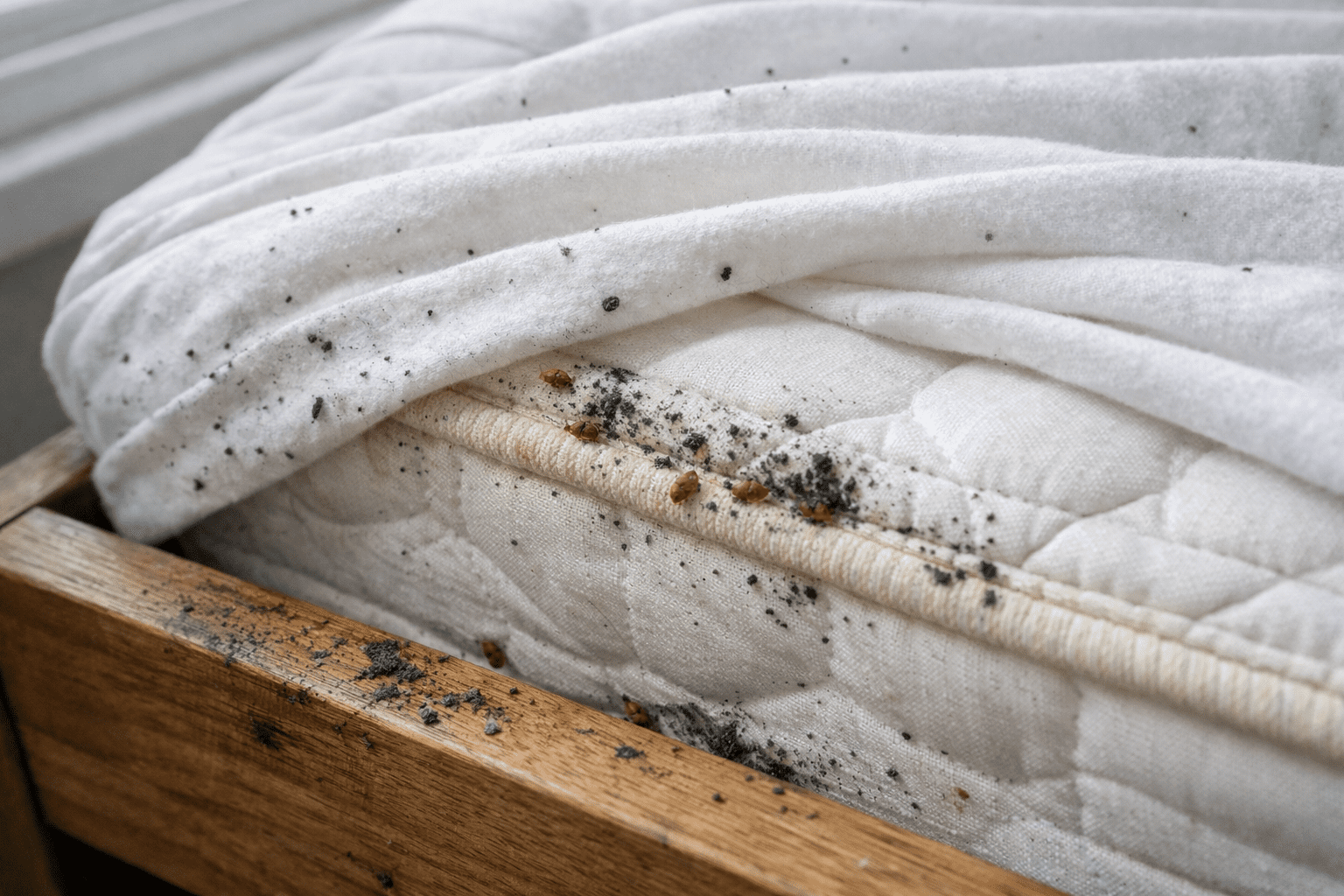
Common bed bug signs:
- Rusty or black specks on sheets (digested blood and fecal spots)
- Shed skins (translucent, paper-like) near seams
- Bugs hiding in mattress piping, headboards, and bed frames
If you are unsure, compare bite patterns and clues using our guide to Mosquito Bites vs Bed Bugs, Fleas, Spiders & Ticks.
Step 2: Prep the room so the spray can reach hiding spots
Bed bugs love clutter because it creates more hiding seams. Do this first:
- Bag bedding and clothing in sealed bags
- Wash and dry on high heat when fabrics allow
- Pull the bed away from the wall
- Remove items from under the bed and nightstands
Heat helps: A hot dryer cycle is one of the simplest kill steps for linens and clothes. For objects you cannot wash, careful steaming can help if you can reach seams and edges.
Step 3: Vacuum and mechanically remove as many as possible
Spray works better after you reduce numbers. Vacuuming seams and cracks removes live bugs and debris.
Vacuum checklist:
- Mattress seams and tufts (slow passes)
- Bed frame joints, slats, and screw holes
- Baseboards and carpet edges near the bed
Immediately seal and discard the vacuum contents outside. If you use a bagless vacuum, empty into a sealed bag and wash the canister.
Step 4: Apply spray only where bed bugs hide
Think “targeted,” not “misted everywhere.”
Where to spray (common harborage sites):
- Mattress seams, piping, labels (lightly, avoid soaking)
- Box spring edges and underside fabric seams
- Bed frame joints, headboard mounting points
- Baseboards, trim gaps, and cracks near the bed
- Nightstand joints and drawer seams
Where not to spray:
- Pillows, sheets, or skin-contact surfaces
- Electrical outlets unless the label explicitly allows it
- Entire rooms as a fog (foggers often drive bugs deeper)
The EPA bed bug guidance also warns against overusing pesticides and emphasizes label directions and targeted placement.
Step 5: Repeat on a schedule that matches egg hatch timing
A single treatment rarely catches eggs. Plan this simple schedule:
- Day 0: Vacuum + spray targeted areas
- Day 7-10: Reinspect + respray key seams and crevices
- Day 14-21: Another follow-up if you still see activity
- Day 28: Final check with interceptors and visual inspection
Monitoring tool: Bed leg interceptors help you confirm whether bugs are still moving. If you keep seeing fresh bugs after multiple rounds, it is time to escalate.
Actionable takeaway: If you do not have a follow-up plan, you do not have a bed bug plan. Put the second treatment date on your calendar immediately.
Safety, myths, and when to call a professional
MDXconcepts Organic Bed Bug Killer, 16 oz
Search results confirm the existence of MDXconcepts Organic Bed Bug Killer (16 oz) as a natural spray with ingredients like vinegar, peppermint oil, and spearmint oil, marketed as pet- and child-safe for killing bed bugs and pests, but no Amazon product page, ASIN, ratings, reviews, pricing, or third-party testing data was located; cannot recommend for affiliate purposes without verified Amazon details.
Harris Egg Kill Bed Bug Killer, 1 Quart
No Amazon product page or ASIN found in search results for Harris Egg Kill Bed Bug Killer 1 Quart; available data from manufacturer site describes aerosol version (16oz) EPA approved for luggage/clothing, killing bed bugs/eggs on contact with residual effect, safe for homes with children/pets once dry[1]. Recommend further Amazon search for current listings, ratings, and pricing.
Bed bug stress makes people overapply sprays, mix products, or reach for foggers. That is where trouble starts. Safe, effective control is more about precision than volume.
Safety rules that prevent common mistakes
Use these as non-negotiables:
- Read the label every time. Labels are legal instructions, not suggestions.
- Ventilate during and after application as directed.
- Keep kids and pets out until treated surfaces are fully dry (or per label).
- Do not mix sprays or layer multiple insecticides “for extra strength.”
- Test fabrics in an inconspicuous spot to prevent staining.
If bites are your main clue, remember that skin reactions vary widely. Some people show welts, others show nothing. That is why physical signs matter more than bite appearance alone.
Myth-busting: what people get wrong about sprays
Myth: One spray will eliminate an infestation.
Reality: Eggs hatch later, and hidden bugs avoid treated surfaces. You need repeat treatments and monitoring.
Myth: Natural sprays are always weaker.
Reality: Some plant oil formulas can perform very well, and may avoid common resistance issues seen with older chemistries.
Myth: Foggers are the fastest solution.
Reality: Foggers often fail to penetrate harborages and can scatter bed bugs into new hiding spots. Targeted crack-and-crevice work is usually more effective.
Myth: If a product is a top seller, it must be a top bed bug killer.
Reality: Marketplace search results can be messy. Sales reports have shown unrelated items sometimes appear in “bed bug” searches, which confuses shoppers. Industry sales snapshots like the ASIN-level marketplace report from ASINsight highlight how crowded and inconsistent the category can be.
When it is time to call a professional
DIY works best for light infestations caught early. Consider professional help if:
- You see bed bugs in multiple rooms
- You are still getting live sightings after 3-4 weeks of correct treatment
- You live in a multi-unit building where bugs can move between units
- Someone in the home has asthma, chemical sensitivity, or you cannot safely follow label directions
Professional programs often combine targeted insecticides with heat or steam and detailed inspections. Many pest control educators report far higher success when heat and monitoring are part of the plan.
Practical note: If you are also fighting other pests, avoid “one product for everything.” Bed bug tools differ from mosquito or ant tools. For mosquito control, see our guide to the Best Bug Zappers for Mosquitoes: Indoor & Outdoor. For kitchen and perimeter ants, our Best Ant Killers & Baits: Complete Buyer's Guide explains why baits beat sprays in most ant problems.
Quick decision table: DIY or pro?
| Situation | DIY likely ok | Call a pro |
|---|---|---|
| A few bugs found near one bed | Yes | If you cannot do follow-ups |
| Bugs in multiple rooms | Sometimes | Yes, strongly recommended |
| Reinfestation from neighboring unit | Rarely | Yes |
| Heavy clutter, many hiding sites | Difficult | Yes |
| 3+ weeks of correct DIY with live bugs | No | Yes |
Actionable takeaway: The earlier you act, the fewer products you need. Waiting often turns a small, contained problem into a whole-home project.
Key takeaways (and a simple next step)
The best bed bug sprays are the ones that match bed bug biology: they kill on contact, reach tight harborages, and support a repeat schedule that catches newly hatched nymphs. Sprays work best when paired with vacuuming, laundering, encasements, and monitoring.
Do this next (15-minute action plan):
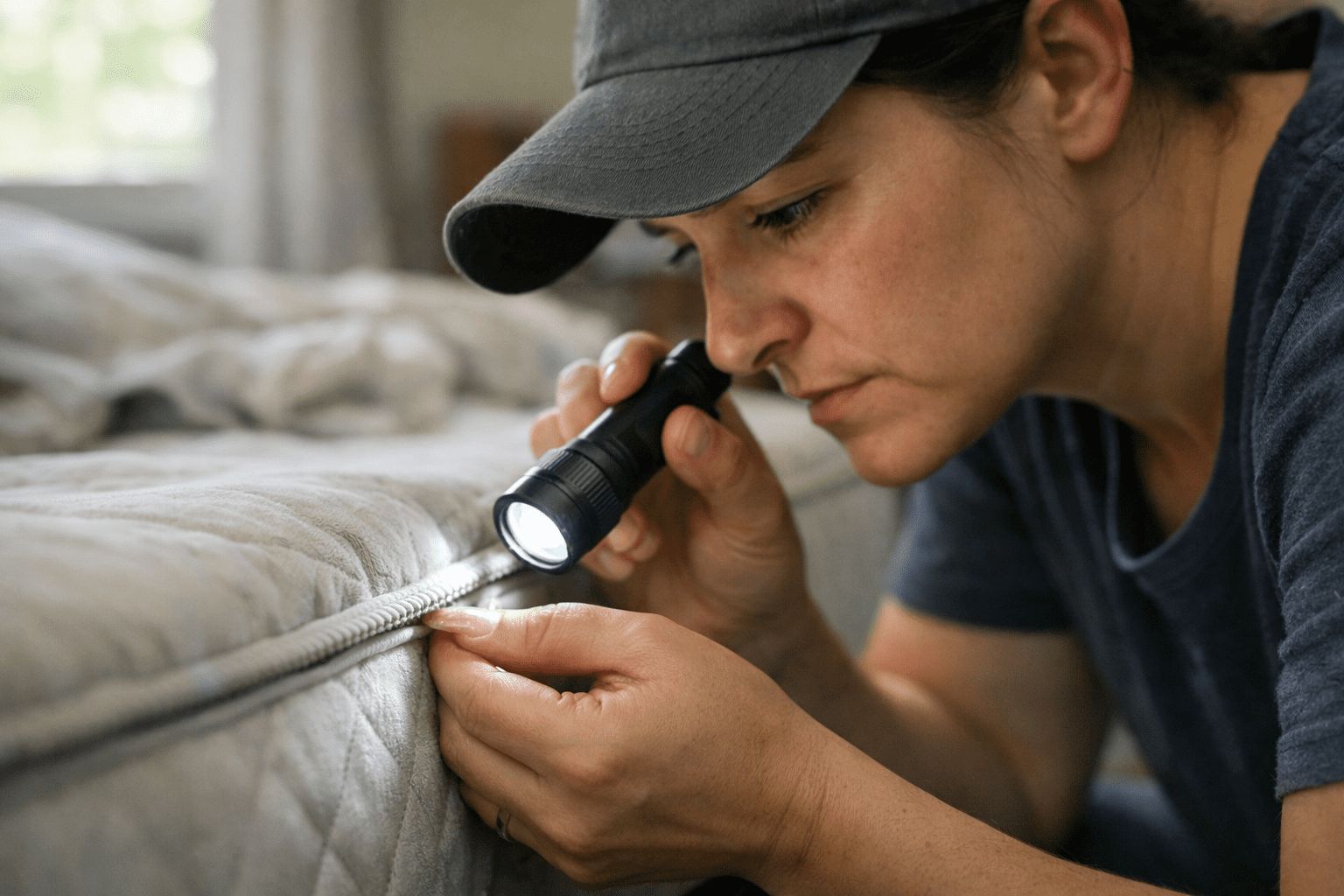
- Inspect mattress seams, bed frame joints, and baseboards with a flashlight.
- Vacuum seams and cracks, then discard contents in a sealed bag outside.
- Choose one targeted spray strategy: plant oil contact-kill for exposed bugs, plus a crevice aerosol or residual product for hiding spots.
- Schedule your follow-up treatment for 7-10 days from today.
If you are still unsure whether the marks on your skin point to bed bugs, start with Mosquito Bites vs Bed Bugs, Fleas, Spiders & Ticks. Correct ID is the fastest way to stop wasting time and start getting results.
As an Amazon Associate, I earn from qualifying purchases. Product recommendations are based on real reviews and independent research.