Finding bites, tiny black specks, or live bugs along mattress seams can make sleep feel impossible. The good news is that bed bug steamers can kill bed bugs on contact using high heat, without leaving chemical residue on your bed or furniture. The trick is choosing a steamer with enough temperature and pressure to push lethal heat into seams, tufts, and cracks where bed bugs hide. This guide explains what specs actually matter, which types of steamers work best at home, and how to steam correctly so you do not waste hours.
Quick answer: Do bed bug steamers work?
Yes – bed bug steamers work when they deliver hot, pressurized steam to hiding spots slowly and methodically.
Here’s the fast checklist to get right:
- Look for real heat at the tip: aim for 200°F+, with many effective units reaching 212°F to 275°F at the nozzle tip.
- Pressure matters for hiding places: target 43 to 65 PSI so steam pushes into fabric seams and small cracks.
- Canister steamers beat handhelds for full rooms: a 1.4 to 1.7 L tank usually gives 40 to 60 minutes of continuous steaming.
- Steam kills on contact, not “in the air”: move slowly – about 1 to 2 seconds per inch on seams and edges.
- Plan repeats: steam again in 7 to 14 days to catch newly hatched bugs.
If you suspect your “bites” are from something else, compare patterns and timing using our guide to Mosquito Bites vs Bed Bugs, Fleas, Spiders & Ticks.
Why steam kills bed bugs (and why some steamers fail)
Steam works because bed bugs (common bed bug, Cimex lectularius) cannot survive sustained high heat. Once their body temperature rises into the lethal range, proteins denature and they die quickly – including nymphs and eggs when heat actually reaches them. Reviews and field guidance summarized by sources like DIY Pest Control’s steamer guidance consistently emphasize the same reality: steam is a contact tool. It is not a room treatment.
So why do people steam for hours and still find bugs later? Usually one (or more) of these issues is happening:
The three most common reasons steam treatments miss bed bugs
- Not enough heat at the surface: Many garment steamers and low-end handhelds lose heat quickly. If the tip temperature is too low, you are basically giving bed bugs a warm shower.
- Not enough pressure to penetrate: Bed bugs wedge into seams, staples, and tiny wood gaps. Steam pressure in the 43 to 65 PSI range is far more likely to push heat into those micro-harborages, as described in roundups like Today’s Homeowner steamer testing and reviews and specialist summaries from DeBedbug’s steamer guide.
- Moving too fast: A quick swipe does not transfer enough heat. Think of steaming like ironing a stubborn wrinkle – speed is the enemy.
What steam can and cannot do (set expectations early)
Steam is excellent for:
- Mattress seams, piping, tufts, labels
- Upholstered furniture seams and folds
- Bed frames, slats, screw holes, joints
- Baseboards and floor-edge cracks you can access
Steam is weak for:
- Deep wall voids and behind heavy built-ins
- Thick, dense items where heat does not reach the center
- “One-and-done” elimination of a well-established infestation
Visual cheat sheet: steam effectiveness by location
| Area | Steam effectiveness | Why |
|---|---|---|
| Mattress seams and edges | High | Bugs cluster in seams; steam reaches them directly |
| Upholstery seams | High | Pressure helps push heat into folds |
| Baseboards (accessible gaps) | Medium-High | Works if you use a crevice tool and go slowly |
| Inside walls/outlets | Low | Steam cannot safely penetrate voids |
| Deep inside thick mattresses | Low-Medium | Heat may not reach the interior |
Actionable takeaway: Treat steam as one strong tool in a multi-step plan. If you want a chemical-free core approach, pair steaming with vacuuming, encasements, and monitoring traps.
Bed bug steamers: the specs that actually matter (buying guide)
McCulloch MC1385 Deluxe Canister Steam System
This canister steamer is designed for deep cleaning and has a high temperature and pressure, making it effective for killing bed bugs on contact.
Shopping for a steamer is confusing because product pages focus on wattage, accessories, or “sanitizing.” For bed bugs, entomologists and experienced pest techs care about three things: tip temperature, pressure (PSI), and sustained output. A unit can be powerful on paper but frustrating in practice if it cools down, spits water, or runs out every few minutes.
Minimum specs for effective home use
Use this as your baseline for a home steamer that can realistically handle a bedroom:
- Tip temperature: 200°F+ (many strong units deliver 212°F to 275°F at the tip)
- Pressure: 40+ PSI, ideally adjustable
- Tank size: 1.0 L or larger (40+ minutes is a comfortable working session)
- Continuous steam option: lockable trigger reduces hand fatigue
- Attachments: a crevice/narrow nozzle and a fabric tool are the workhorses
Why not just buy the hottest unit possible? Because control matters. Too much blast can scatter bed bugs from a seam into a nearby crack. A steamer that lets you moderate flow and keep consistent heat is often more effective than one that “hits hard” but is difficult to aim.
Canister vs handheld: which should you choose?
Handheld steamers can work for:
- A suitcase after travel
- A single chair
- A few suspicious seams and edges
But handhelds usually mean:
- Short runtime (frequent refills)
- More cooldown cycles
- More temptation to rush
Canister steamers are better for:
- Full beds, sofas, and baseboards
- Repeated treatments across multiple rooms
- Maintaining steady pressure and heat
Comparison chart: what to look for at a glance
| Feature | Handheld steamer | Canister steamer |
|---|---|---|
| Best use | Spot treatment | Whole-room DIY treatment |
| Typical runtime | 5-10 minutes | 40-60 minutes |
| Pressure consistency | Lower | Higher |
| Fatigue factor | Higher | Lower (often has trigger lock) |
| Value for infestations | Limited | Strong |
Actionable takeaway: If you are treating more than one piece of furniture or a full bed setup, a canister steamer usually saves time and improves results.
Best bed bug steamers for home use (top picks + what each is best at)
Bissell PowerFresh Steam Mop, 1940
This steam mop provides high heat and is suitable for cleaning various surfaces, including those where bed bugs may hide.
This is the section most readers want, but it helps to match the tool to the job. A steamer that is perfect for mattresses may not be the most convenient for baseboards, and a budget pick can still work if you steam slowly and repeat.
Below is a practical, at-home oriented shortlist based on commonly cited performance ranges and reviewer testing from sources like Today’s Homeowner, DeBedbug’s steamer breakdown, and consumer pest-control retailers such as Solutions Pest and Lawn’s steamer selection.
Quick comparison table (power, runtime, and best use)
| Model | Tip temp (approx.) | PSI (approx.) | Tank | Typical runtime | Best for |
|---|---|---|---|---|---|
| Vapor Clean II | ~240°F | ~65 | 1.7 L | 60+ min | Heavy infestations, full rooms |
| Vapamore MR-100 Primo | ~220°F | ~51-58 | 1.6 L | ~60 min | Best all-around home use |
| Dupray Neat | up to ~275°F | not always listed | 1.6 L | ~50 min | Mattresses, furniture, fast heat-up |
| Steamfast SF-370WH / SF-275 | ~210-212°F | ~44 | 1.4 L | 40-45 min | Budget-friendly canister option |
| Vapamore MR-75 Amico (handheld) | ~200°F | ~43.5 | 0.2 L | 5-10 min | Small areas, quick touch-ups |
What to buy if you want one “do most things” tool: a mid-to-high pressure canister model with a 1.5 L class tank and a true crevice tool.
What matters more than brand names
When readers ask, “Which steamer is best?” the more important question is, “Where are the bed bugs hiding in your home?” Bed bugs behave like expert stowaways. They prefer tight, protected spaces close to where people rest, especially along seams and joints.
Use this “match the tool to the hiding spot” guide:
- Mattress seams and box spring edges: prioritize steady heat, fabric tool, and slow passes
- Couch seams and recliners: prioritize pressure and a narrow nozzle for folds and hardware gaps
- Baseboards and bed frames: prioritize crevice tool control and long runtime
- Apartments and multi-room jobs: prioritize a larger tank and consistent pressure so you do not stop mid-treatment
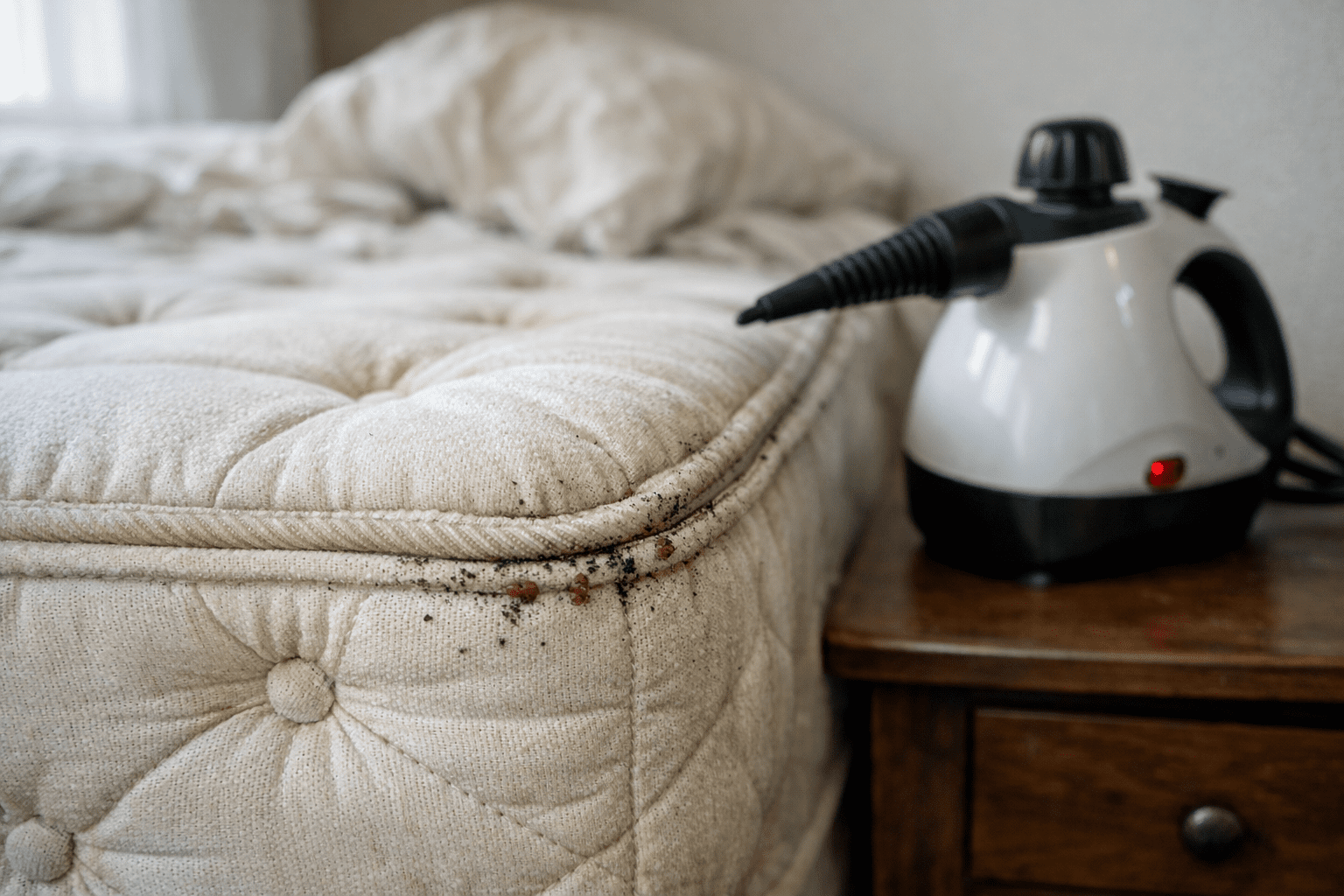
Suggested image alt text: “Canister bed bug steamer with crevice tool treating mattress seams”
Actionable takeaway: Choose a steamer you can comfortably use for 45+ minutes. Consistency beats short bursts of “maximum power.”
How to steam clean bed bugs safely (step-by-step method that works)
PurSteam World’s Best Steamers 10-in-1 Steam Mop
The PurSteam 10-in-1 Steam Mop offers versatile, chemical-free cleaning for floors, grout, upholstery, and clothes, heating in 30 seconds with multiple accessories for easy maneuverability; while Amazon ASIN and ratings could not be verified from search results, retailer reviews on Walmart (4.2/1563) and Target (4.1/22) indicate solid performance for home cleaning needs.
Most failed DIY steaming comes down to technique. Bed bugs are small – adults are roughly 4 to 7 mm long – and they flatten into spaces as thin as a credit card edge. Your job is to deliver lethal heat into those tight spaces without blasting them away.
Guidance from pest-control education sources like Sylvane’s steam-cleaner bed bug guide aligns with what field technicians do: prep, slow passes, repeat, and combine with other controls.
Step-by-step: a practical steaming routine
-
Declutter the treatment zone (15-30 minutes).
Put loose items into bags. Anything washable should go straight to hot drying. -
Vacuum first, then steam.
Vacuum removes live bugs and debris so steam reaches surfaces better. Immediately seal and discard the vacuum bag or empty the canister into a bag outside. -
Heat the unit fully and test a hidden spot.
Let the steamer reach full operating temperature. Test on a small area of fabric or finished wood to avoid warping, water marks, or glue loosening. -
Steam slowly – do not “spray and pray.”
Use about 1 to 2 seconds per inch along seams and edges. On cracks, hold the crevice tool close and move at a crawl. -
Start with the bed, then expand outward.
Bed bugs usually concentrate near where people sleep or lounge. Treat in this order:- Mattress seams, tufts, labels
- Box spring edges and underside fabric (carefully)
- Bed frame joints, screw holes, slats
- Nightstand seams and drawer joints
- Baseboards within 3 to 6 feet of the bed
-
Let surfaces dry, then install encasements and monitors.
Mattress and box spring encasements trap any survivors inside and remove hiding places. Interceptor traps under bed legs help confirm progress. -
Repeat in 7 to 14 days.
This timing helps catch bugs that hatch after your first pass.
“Do” and “don’t” list for better results
Do:
- Use a crevice tool for cracks and edges
- Keep the nozzle close, but avoid blasting air into gaps
- Work in good light so you can see seams clearly
Don’t:
- Soak mattresses or wood – excess moisture can cause mold or damage
- Steam electrical outlets or electronics
- Assume one treatment ends the problem
Visual checklist: surfaces to prioritize
- Mattress piping and corners
- Box spring staples and edge trim
- Couch seams and under cushions
- Bed frame joints and headboard mounting points
- Baseboard-to-wall seam and carpet edge
Actionable takeaway: The best technique is slow, systematic coverage. If you cannot commit to repeating and monitoring, steam alone is unlikely to finish the job.
Steam alone vs a complete bed bug plan (IPM that actually clears infestations)
Steam is powerful, but bed bug removal is rarely a single-tool problem. Bed bugs spread passively – they hitchhike on luggage, used furniture, and even visitors’ bags. Once established, they distribute into multiple hiding zones. That is why professionals use integrated pest management (IPM): multiple tactics that reinforce each other.
A good IPM plan uses steam where it shines (contact kill) and other tools where steam is weak (residual control, monitoring, isolation).
A simple IPM stack for home use
Use this layered approach:
-
Confirm it’s bed bugs.
Look for live bugs, shed skins, fecal spotting, and eggs in seams. Bite patterns alone can be misleading. If you are unsure, our comparison guide on Mosquito Bites vs Bed Bugs, Fleas, Spiders & Ticks can help you narrow it down. -
Reduce hiding places.
- Declutter around beds and couches
- Pull the bed slightly away from the wall
- Keep bedding from touching the floor
-
Heat and laundry strategy.
Drying on high heat is one of the most reliable household tools. Bag items for transport to avoid spreading bugs through the home. -
Steam + vacuum cycles.
Vacuum first, steam second, then re-check seams. Repeat weekly until monitors stay clear. -
Encasements and interceptors.
These do not “kill everything,” but they make activity visible and limit access to you. -
Consider targeted residual products or professional help.
In larger infestations, professionals may combine steam with residual insecticides, dusts, or whole-room heat. If bugs are in multiple rooms, or you keep seeing them after two to three careful cycles, it is time to call a licensed pest management professional.
When to skip DIY and call a pro
- You live in a multi-unit building and units share walls
- Bugs are showing up in multiple rooms
- You cannot reduce clutter enough to treat thoroughly
- You have repeated sightings after two weeks of correct steaming
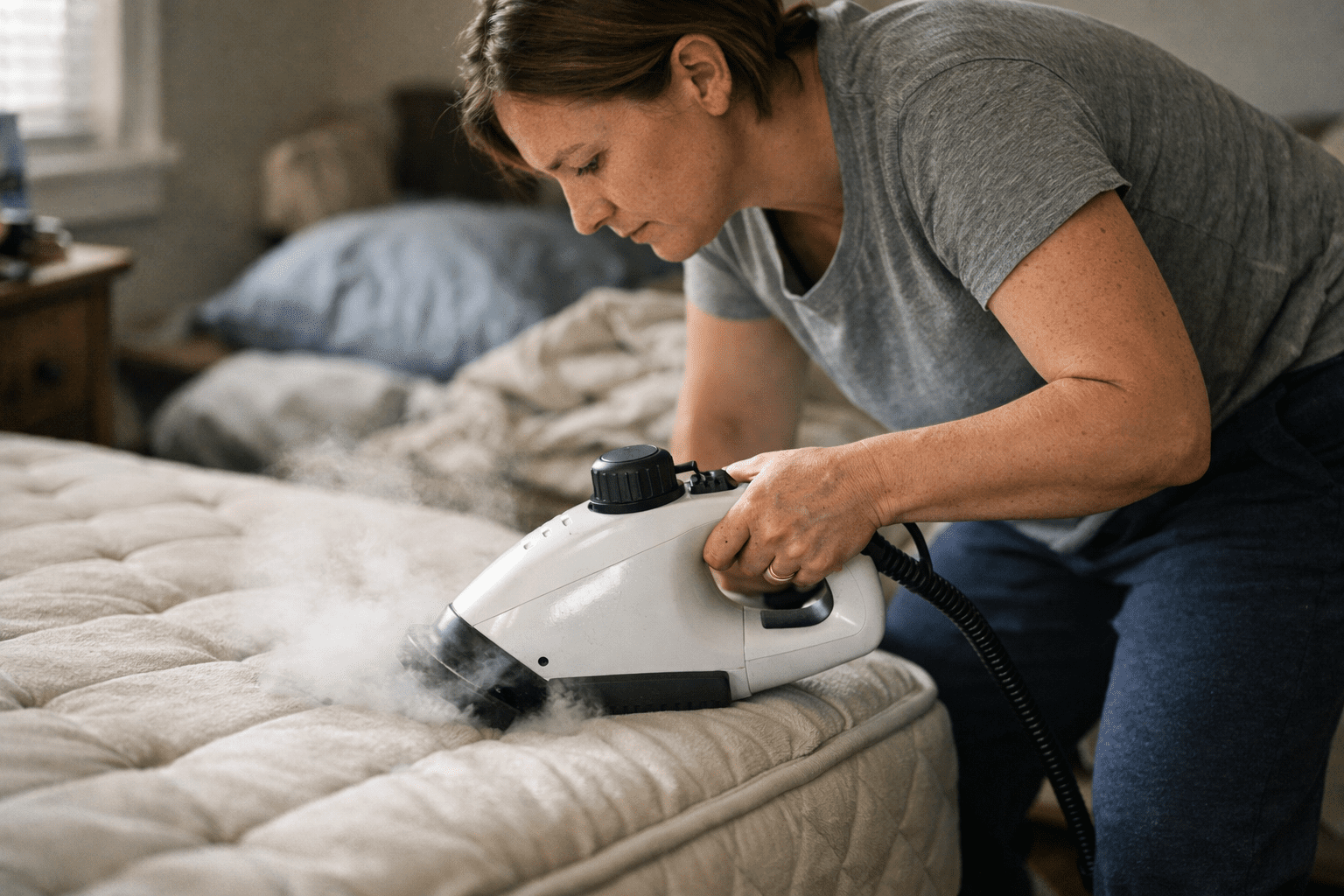
Suggested image alt text: “Bed bug integrated pest management plan with steamer, vacuum, encasement, and interceptor traps”
Actionable takeaway: Steam is best as the “active kill” step inside a broader plan. Monitoring tells you whether the plan is working.
Conclusion: the right steamer plus the right technique wins
Bed bug steamers can be a smart, chemical-free way to kill bed bugs on contact, especially along seams, edges, and furniture joints. Focus on tip temperature (200°F+), real pressure (40+ PSI), and a tank big enough to treat in one steady session. Then slow down and repeat – quick passes and one-time treatments are the most common reasons DIY steaming fails.
Next step: confirm the pest and track progress with monitors. If you are still unsure whether bites point to bed bugs or something else, use Mosquito Bites vs Bed Bugs, Fleas, Spiders & Ticks. And for another common indoor pest problem, see How to Get Rid of Mosquitoes Inside Your House for practical room-by-room fixes.
As an Amazon Associate, I earn from qualifying purchases. Product recommendations are based on real reviews and independent research.