Finding fresh soil piles and angry ants in your lawn can feel like a losing battle, but the right fire ant killers can knock down a colony fast and keep new mounds from popping up. The trick is matching the product to your goal – quick mound elimination, safer low-toxicity control, or long-term suppression across the yard. This guide breaks down what actually works (and what often disappoints), with real-world application steps, timing tips, and safety notes so you can treat confidently and avoid repeat infestations.
Quick Answer: What are the best fire ant killers for a yard?
If you want the most reliable results, use a two-step plan: broadcast bait for the whole yard plus targeted mound treatment for the worst mounds. Research and extension guidance consistently show this approach reduces colonies faster and helps prevent “whack-a-mole” reinfestations.
Best options by goal (snippet-friendly):
- Fastest mound kill (1-3 days): acephate dusts or permethrin drenches can reach near-complete control quickly when applied correctly.
- Strong control with lower toxicity profile (slower): spinosad-based mound treatments often take longer but can perform well within 1-2 weeks.
- Natural/DIY options: d-limonene (orange oil) products and orange oil + soap mixes can reduce activity, but they usually act slower than conventional products.
- Boiling water: accessible and chemical-free, but typically only eliminates about 60% of treated mounds.
For product selection beyond fire ants, compare options in our Best Ant Killers & Baits: Complete Buyer's Guide.
Why fire ants are so hard to eliminate (and why mounds keep returning)
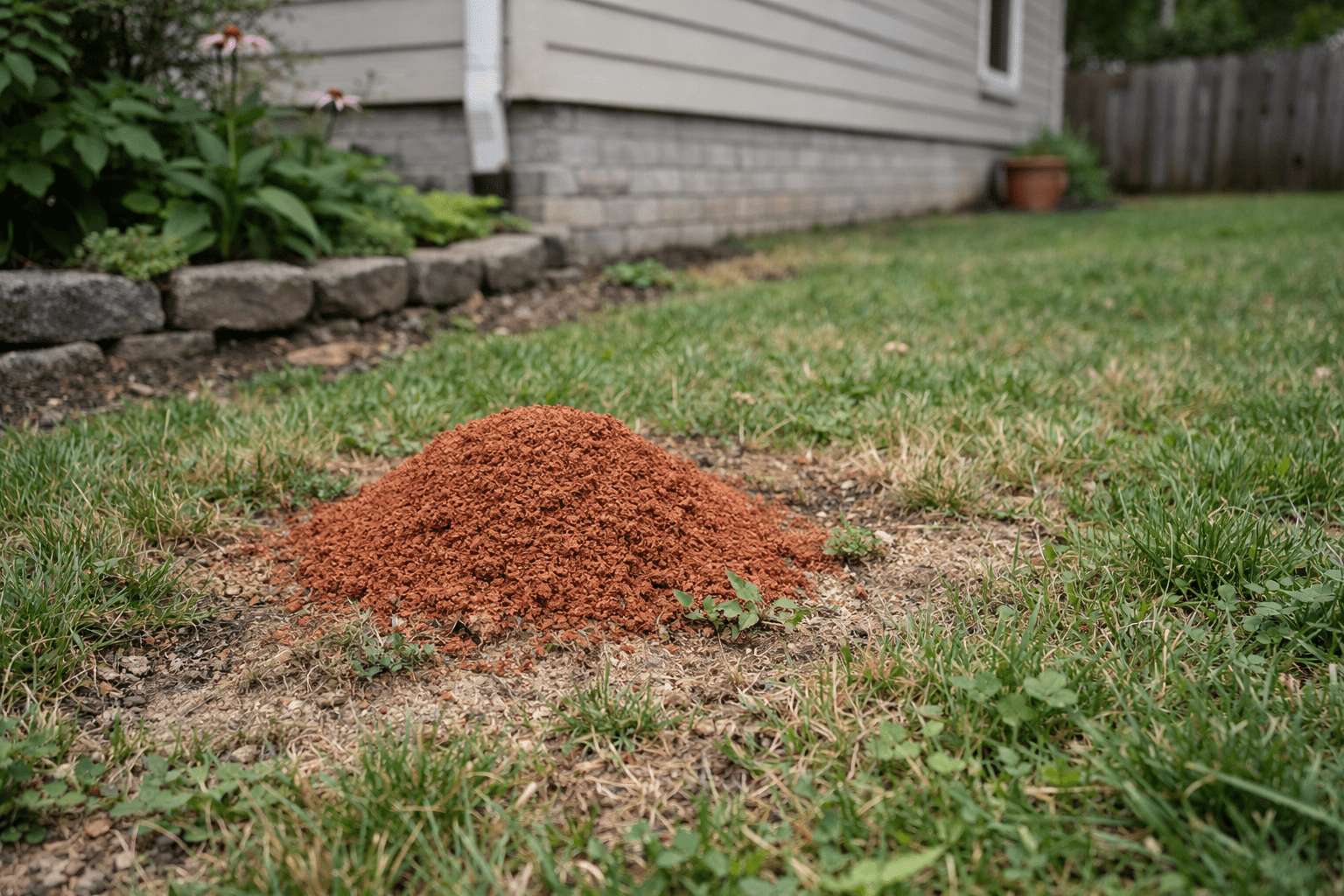
Fire ants (Solenopsis invicta and close relatives) don’t behave like “normal” nuisance ants that nest in a wall void or under one paver. A fire ant mound is more like the visible entrance to a living, shifting underground city. When you disturb it, workers move brood, protect queens, and may even reorganize tunnels to survive.
That survival ability explains a common homeowner experience: you treat one mound, it looks quieter, and then two more appear nearby a week later. Sometimes those are satellite mounds from the same colony. Other times they’re neighboring colonies expanding into the space you just cleared.
Here’s what’s actually working against you:
- Multiple queens (in some populations): some colonies can have more than one queen, which increases resilience and mound density.
- Foraging networks: workers can travel 50-100 feet or more to find food, so the “problem mound” might not be the only colony feeding in that area.
- Weather-driven movement: after heavy rain or irrigation, colonies may rebuild mounds quickly in sunnier, drier spots.
- Partial kills: treatments that only kill workers can leave queens alive, and the colony rebounds.
Visual: Fire ant reinfestation checklist
| If you see this… | It usually means… | What to do next |
|---|---|---|
| Mound collapses but ants return in 3-7 days | Queens survived or treatment didn’t reach brood | Switch to a proven mound drench or dust and re-treat |
| Several small mounds appear nearby | Satellite mounds or neighboring colonies | Add a broadcast bait to reduce yard-wide pressure |
| Ants active but mound looks “flat” | Colony may be deeper due to heat or drought | Treat in cooler hours and use enough drench volume |
Actionable takeaway: If you only treat visible mounds, you often stay stuck in a cycle. Pairing mound treatments with yard-wide baiting is what usually breaks it. For broader lawn strategies, see our guide to Best Outdoor Ant Killers for Lawns & Gardens.
Fire ant mound treatment options ranked (fastest to slowest)
Ortho Fire Ant Killer Broadcast Granules, 10 lb
Ortho Fire Ant Killer Broadcast Granules effectively kills fire ant mounds in 15 minutes and offers up to 6 months of protection while preventing new mounds, making it a reliable choice for residential lawn treatment where fire ants are an issue; however, Amazon-specific details like ASIN, ratings, and price could not be verified from available sources.[1][2][3][4]
When people search for the “best” fire ant solution, they’re usually asking one of two questions: “How fast will it work?” and “How safe is it around my home?” The honest answer is that speed and risk profile often trade places. Fast knockdown products can be more toxic or less selective, while lower-toxicity options may require patience.
Based on field research and extension trials, mound treatments generally fall into these categories:
1) Fast-acting conventional mound killers (often 1-3 days)
In comparative mound trials, acephate (dry powder) and permethrin (liquid drench) achieved complete control within 3 days under test conditions. That kind of speed is why these are common “I need this gone now” options.
Use them when:
- A mound is near a walkway, play area, or garden bed edge
- You need quick reduction in stinging risk
- You can follow the label precisely (especially around water and edible plants)
2) Solid performers that can take 7-14 days
Some active ingredients work well but don’t always deliver the dramatic overnight effect people expect. For example, carbaryl and spinosad mound treatments have shown strong control by about two weeks in trials, even if they look slower at first.
Spinosad is often appealing to homeowners seeking a reduced-risk profile compared with some older chemistries, but it still needs correct application and realistic timing.
3) Botanical and “natural” products (variable speed)
d-limonene-based products (derived from citrus oils) can reduce mound activity quickly at the right concentration, but results depend heavily on mixing rates and thorough drenching. In a trial of a d-limonene product (Citrex®), higher rates (around 4-5 oz per gallon) reduced mound activity within a few days and held up better over time than lower rates.
4) Mechanical and DIY methods (hit-or-miss)
Boiling water is the classic non-chemical approach. It can work, but it’s not as dependable as many people assume. Extension guidance commonly cites about 60% elimination of treated mounds, meaning you should expect failures and re-treatments.
Visual: Speed vs. reliability comparison
- Acephate dust: very fast, high reliability when applied correctly
- Permethrin drench: very fast, high reliability with correct volume
- Carbaryl: slower, strong control by 2 weeks
- Spinosad: slower, strong control by 2 weeks
- d-limonene products: moderate to fast, depends on rate and coverage
- Boiling water: variable, moderate success rate
Actionable takeaway: If you need rapid results, choose a proven mound killer and apply it correctly. If you’re managing a whole property, add a bait so you’re not chasing new mounds every week.
How to apply fire ant killers correctly (most failures are technique, not product)
Amdro Fire Ant Bait, 1 lb
No Amazon.com product page or ASIN found in search results for Amdro Fire Ant Bait 1 lb; available on other sites like Tractor Supply (4.2/5 from 94 reviews) and Walmart, but cannot verify Amazon details for affiliate recommendation.
Most “this didn’t work” stories come down to three issues: treating at the wrong time of day, using too little product, or failing to get the active ingredient into the colony’s core. Think of a mound as a layered structure. The ants you see on top are not the whole target. You’re trying to reach workers, brood, and queens below the surface.
Entomology trials commonly use standardized mound-treatment methods that homeowners can copy. For dry mound treatments, a typical rate is about 1 tablespoon of product per mound, regardless of mound size. For liquid drenches, volume matters: mounds under about 12 inches across often get 1 gallon, while larger mounds may need 2 gallons to soak the tunnels properly.
Step-by-step: Mound drench method (simple and effective)
- Choose the right time: early morning or late afternoon when ants are active near the surface.
- Measure the mound: estimate diameter. Plan for 1 gallon (small) or 2 gallons (large).
- Mix precisely: follow the label rate. “A little extra” can increase plant damage and runoff risk.
- Apply gently: pour the drench around the mound first, then over the top. Avoid blasting the mound and causing ants to evacuate.
- Don’t disturb first: kicking or shoveling the mound before treatment can reduce contact.
- Check at 3, 7, and 14 days: fast products should show big drops quickly. Slower products need time.
Step-by-step: Dry mound treatment (dust/granules)
- Use a dedicated measuring spoon (never a kitchen spoon).
- Apply evenly over the mound surface as directed.
- Avoid watering unless the label requires it.
- Keep people and pets away until the label says it’s safe.
Visual: Common application mistakes
- Treating at midday heat when colonies retreat deeper
- Using half the needed drench volume
- Flooding too aggressively and causing ants to move brood away
- Applying before heavy rain (or irrigating immediately) when the label warns against it
Actionable takeaway: The “right” product can fail if it never reaches the colony. Measure, mix, and apply with enough volume to soak the mound.
Baits vs. mound treatments: the yard-wide plan that actually lasts
Hot Shot Bed Bug and Flea Killer with Egg Kill, 1 Gallon
No Amazon product page found in search results for this exact item, preventing verification of ASIN, ratings, reviews, or pricing. Product available at retailers like Home Depot and Walmart with claims of killing bed bugs, fleas, and eggs via contact, but cannot recommend as Amazon affiliate without confirmed Amazon listing.
EcoSMART Organic Ant and Roach Killer, 14 oz
EcoSMART Organic Ant and Roach Killer offers a natural, plant oil-based alternative to chemical insecticides, effectively targeting ants and roaches while being safer for kids, pets, and the environment, though users should test for staining and ventilation due to strong fragrances[1][3][4]. Ideal for households seeking non-toxic pest control, but Amazon-specific ratings and pricing unavailable from current data.
Mound treatments are the fastest way to eliminate a specific colony, but they don’t always solve the bigger problem: fire ants across the property. That’s where baits come in.
Baits work because foraging workers carry the bait back into the colony and share it. Instead of trying to flood tunnels, you’re using the ants’ own food-sharing behavior against them. According to guidance from the University of Georgia Extension on fire ant bait treatments, bait performance depends heavily on correct timing and proper application.
Here’s the practical difference:
- Mound treatment: fast knockdown for a visible mound
- Broadcast bait: slower, but reduces the number of colonies across the yard
Many turf specialists recommend combining them:
- Broadcast bait once or twice during high activity seasons (often spring and fall in the South)
- Spot-treat problem mounds with a drench or dust as needed
When to choose each method
Use mound treatments when:
- Mounds are near high-traffic areas
- You need results in days, not weeks
- You’re dealing with a small number of mounds
Use broadcast baits when:
- You have multiple mounds scattered across the lawn
- New mounds appear regularly
- You want fewer treatments over the season
Visual: Decision chart
- 1-5 mounds total? Start with mound treatment.
- 6+ mounds or recurring mounds? Add broadcast bait.
- Stings happening weekly? Do both: bait + spot-treat.
For a deeper look at bait types and how to pick them, use our Best Ant Killers & Baits: Complete Buyer's Guide.
Actionable takeaway: If your yard keeps producing new mounds, you’re likely treating symptoms. A bait program reduces the source pressure across the whole lawn.
Natural and lower-toxicity fire ant killers: what to expect (and what’s a myth)
“Natural” can mean a lot of things on a label, from plant-derived oils to mineral-based dusts. Some of these options can help, especially for homeowners who want to limit conventional insecticides. The key is setting expectations: natural options can work, but they often require better coverage, repeat applications, and patience.
One reason botanicals can struggle is that many are contact killers. If the product doesn’t touch enough ants or doesn’t penetrate the mound, the colony can recover.
Options that can be worth trying
d-limonene (orange oil) mound drenches
A d-limonene product (Citrex®) showed meaningful mound activity reductions when mixed at higher rates (around 4-5 oz per gallon) in a published trial. Coverage matters, and lower rates may lead to more survivors and more “satellite” rebuilding.
Orange oil + soap mixtures
Some extension and trial summaries report promising results from orange oil combined with dish soap, likely because soap helps break surface tension and improves contact. Treat this like a contact drench: it must soak the mound.
Spinosad-based products
Spinosad is derived from a soil bacterium and is often used in reduced-risk pest management programs. In mound trials, spinosad reached strong control by about two weeks, though it may not give the fast “instant dead mound” look.
Myths to avoid
- Myth: Boiling water always works. In practice, it often eliminates only around 60% of mounds, and it can scald turf and plants.
- Myth: Natural means harmless. Concentrated oils can irritate skin, harm beneficial insects on contact, and damage plants if overapplied.
- Myth: If ants move, the colony is gone. Fire ants can relocate within the soil profile and rebuild nearby.
Visual: Natural option checklist
- Can you apply enough volume to soak the mound?
- Can you re-treat in 7-14 days if needed?
- Is the mound near ornamentals that might be sensitive to oils?
- Do you also need a yard-wide bait plan?
If you want options beyond mound drenches, see Best Natural Ant Repellents and Sprays.
Actionable takeaway: Natural products can be part of a plan, especially for spot treatments, but they work best when paired with prevention and baiting.
Safety, timing, and when to call a pro
Fire ant control is most effective when ants are actively foraging and the soil isn’t bone-dry. Many field trials are run in spring (often April-May) because moisture and moderate temperatures increase activity and improve treatment contact. If you treat during extreme heat or drought, colonies may sit deeper, and drenches may not reach the core.
Safety basics (regardless of product type)
- Read the label every time. Different formulations have different restrictions.
- Keep kids and pets away during application and until re-entry directions are met.
- Avoid treating right before heavy rain unless the label allows it.
- Protect pollinators: do not apply products to blooming plants where bees are visiting.
- Use dedicated equipment: a separate watering can or sprayer for insecticides prevents accidental reuse.
For homeowners worried that “any chemical is dangerous,” it helps to remember that mound treatments use relatively small, targeted amounts when done correctly. Public-facing safety messaging from programs like the National Fire Ant Eradication Program in Australia emphasizes that treatments can be applied safely when label directions are followed.
When professional treatment makes sense
Call a licensed pest control professional if:
- You have dozens of mounds across a large property
- Mounds are in irrigation boxes, electrical areas, or near wells
- Someone in the home has a history of severe allergic reactions
- DIY efforts have failed for 4-6 weeks despite correct application
A pro can also help set up an integrated plan that reduces reinfestation, not just the current mound count. For turf-specific guidance, North Carolina State Extension has a solid overview in their fire ants in turf management resource.
Visual: Best timing guide
- Best: mild mornings and evenings in spring or fall
- Okay: summer mornings with irrigation support
- Hard mode: drought + midday heat (expect slower, less consistent results)

Actionable takeaway: The best treatment window is when ants are active and soil has some moisture. If stings are a recurring safety issue, professional help is a practical step.
Key takeaways (printable checklist)
- Use mound treatments for fast knockdown, especially near high-traffic areas.
- For long-term control, pair mound treatments with a broadcast bait plan.
- Apply drenches with enough volume – 1 gallon for smaller mounds, 2 gallons for larger mounds is a common research-based approach.
- Expect slower timelines from many natural options and plan to re-check at 7 and 14 days.
- Avoid common failures: wrong timing, too little product, and disturbing the mound before treatment.
Conclusion
The most dependable fire ant control isn’t a single miracle product. It’s a smart combination of fast mound elimination and yard-wide suppression, applied at the right time and in the right way. Start by knocking down the most dangerous mounds, then reduce reinfestation pressure with a bait program so new colonies don’t take over the space you cleared.
Next step: If you’re building a broader backyard pest plan, pair ant control with bite prevention using How to Mosquito-Proof Your Backyard: Complete Guide and review our picks for Best Outdoor Ant Killers for Lawns & Gardens.
As an Amazon Associate, I earn from qualifying purchases. Product recommendations are based on real reviews and independent research.