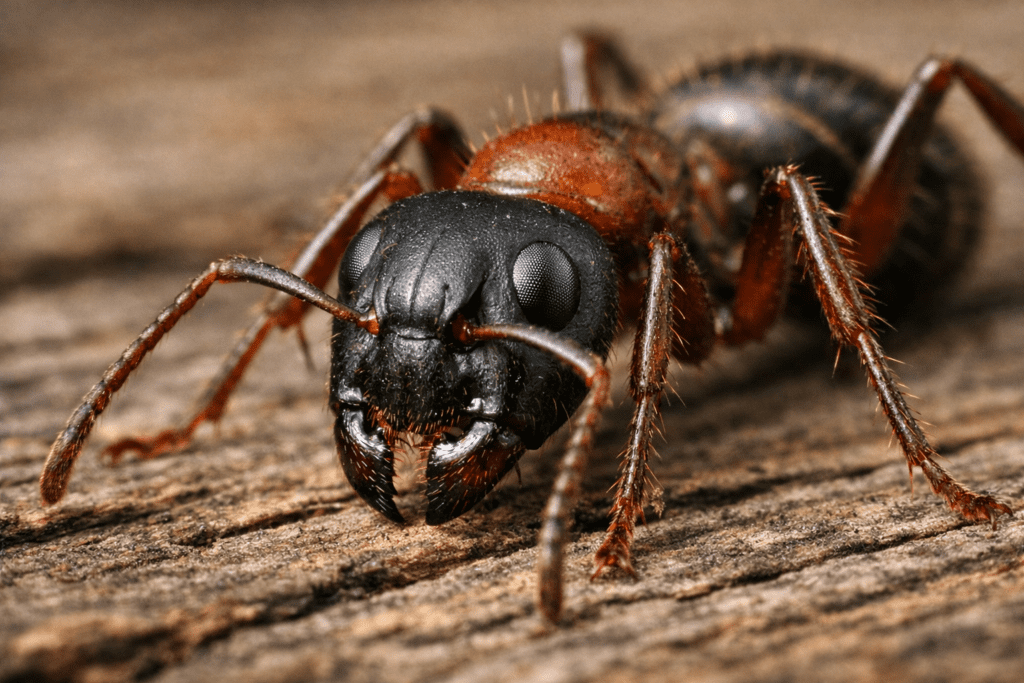
Finding tiny brown ants marching in long, tidy lines to your sink or pantry often points to Argentine ants. These invasive ants look “ordinary,” but their strength is organization: they form massive, cooperative super colonies that can stretch across yards and even neighborhoods. This guide shows how to identify them confidently, why they keep coming back, and what actually works to eliminate them without chasing the problem from one room to another. You will also learn prevention steps that reduce reinfestation long after the trails disappear.
Quick identification / quick answer
Argentine ants (Linepithema humile) are small, light to dark brown ants that form heavy trails and multi-queen “super colonies.” If you see long lines of same-sized ants indoors and outdoors, baits usually beat sprays.
Fast ID checklist
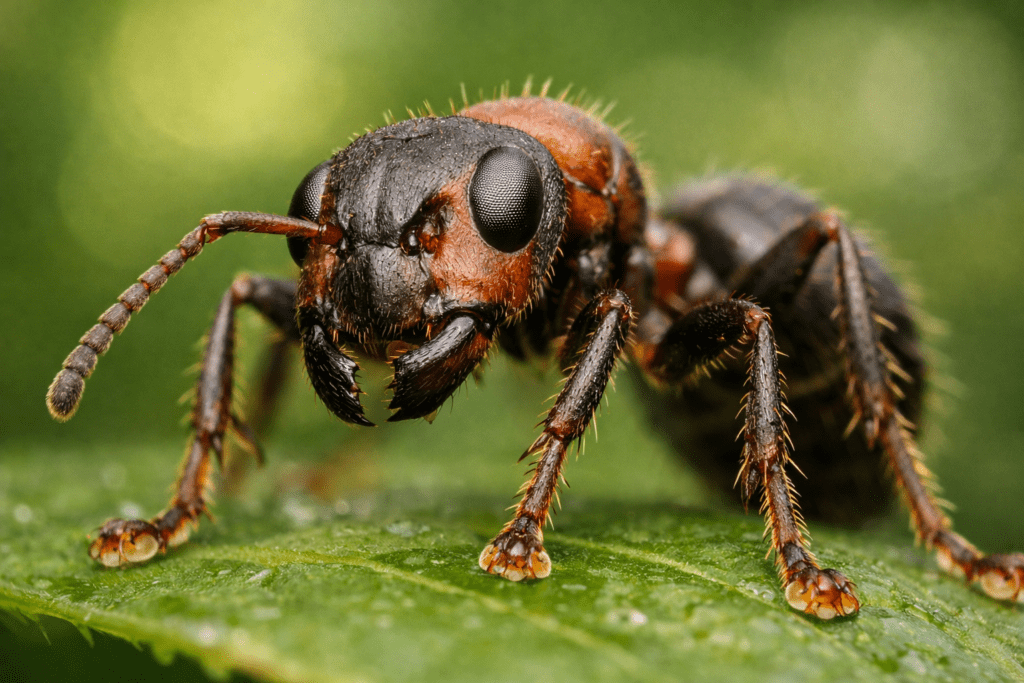
- Size: about 2.2-3.2 mm (roughly 1/16 to 3/16 inch)
- Color: uniform light to dark brown, slightly shiny
- Workers: all about the same size (little variation)
- Body feature: one node (petiole) between thorax and abdomen
- Sting: no stinger (may bite lightly)
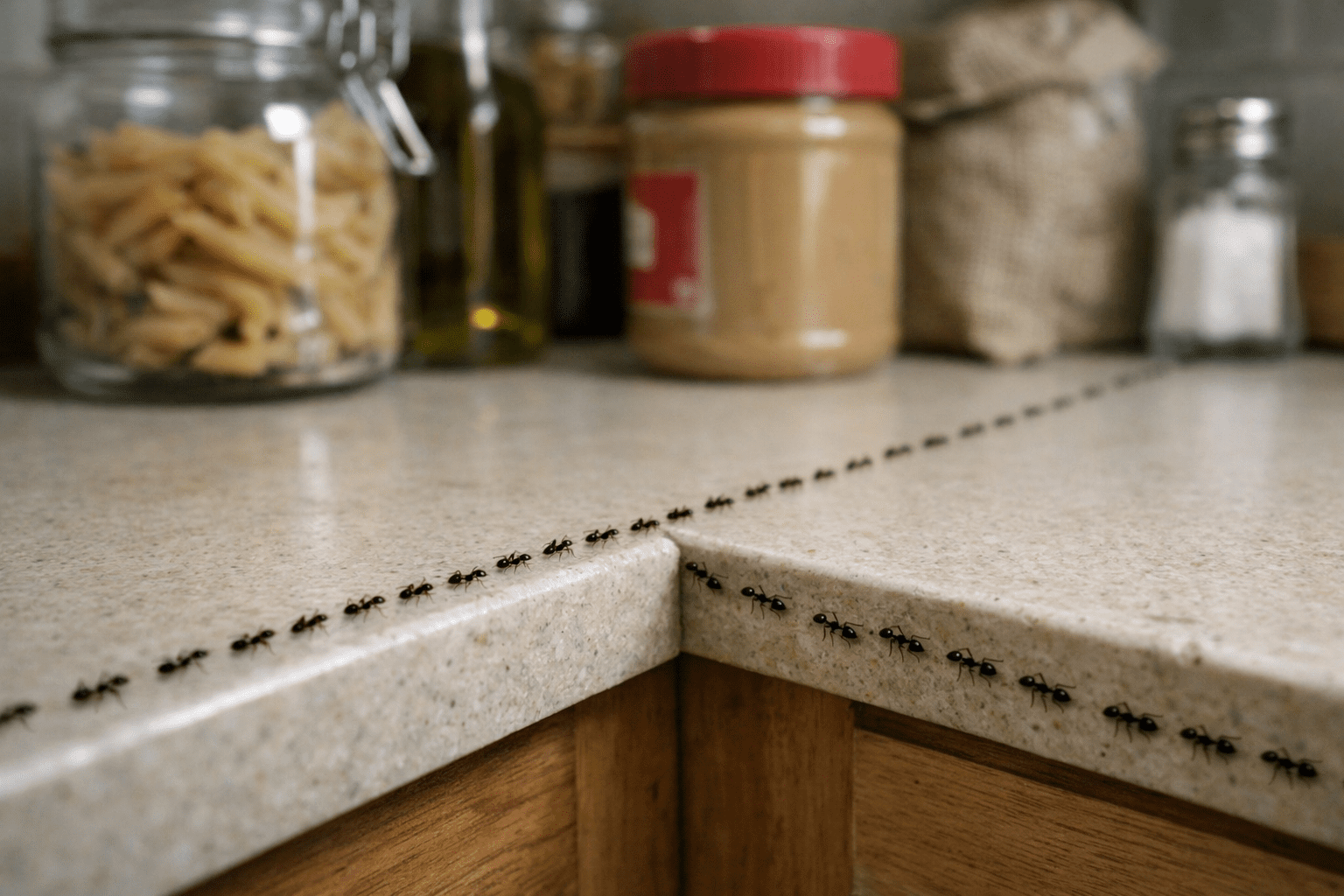
- Behavior: strong, straight trails that can run hundreds of feet
- Common hotspots: under mulch and pots, along sidewalks, near leaks, around trees with aphids
Quick action that works
- Do not rely on contact sprays for long-term control.
- Place slow-acting bait directly on active trails and refresh it for 1-2 weeks.
- Fix moisture and seal entry gaps so the colony has fewer reasons to keep scouting indoors.
How to identify Argentine ants (and not confuse them with lookalikes)
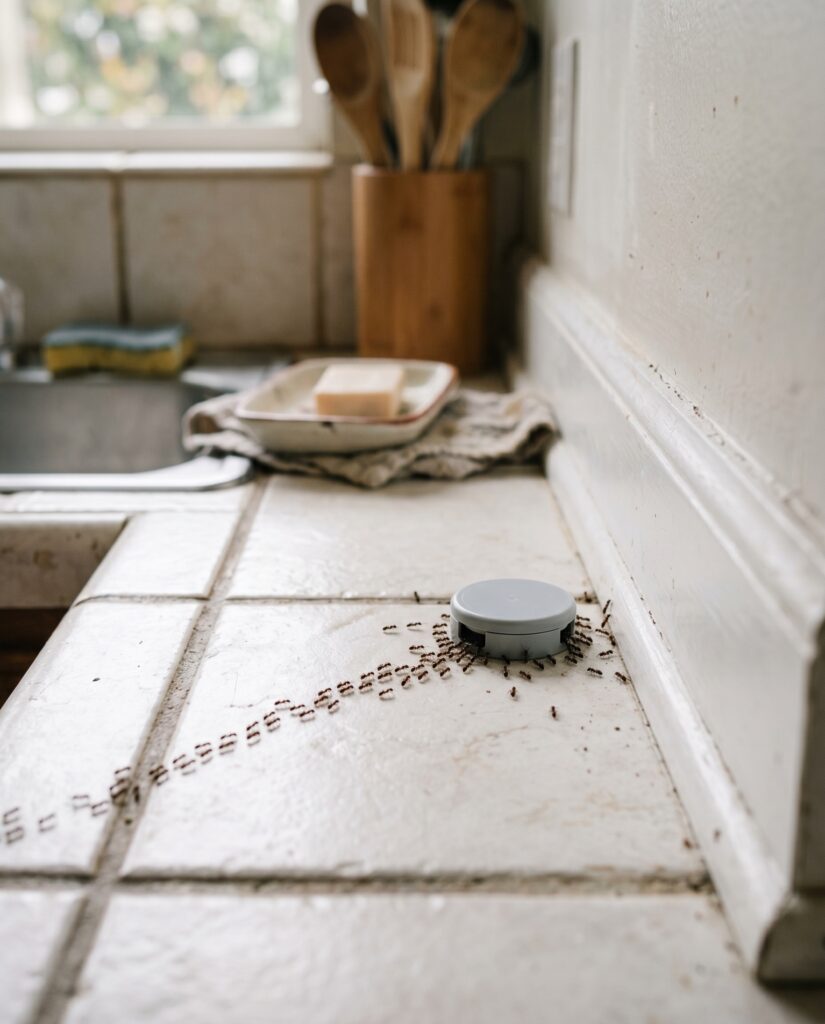
Argentine ants are the kind of pest that makes homeowners doubt their own eyes. They are small, brown, and common looking. The giveaway is not just what they look like, but how they behave. Think of them like commuters on a highway: once a trail is established, the traffic can be nonstop.
According to the University of California Riverside Biological Control program, Argentine ants thrive in irrigated landscapes and urban areas, especially where moisture and honeydew-producing insects are available. That matches what people see at home: activity surges near kitchens, bathrooms, and outdoor watering zones.
Physical traits you can check in seconds
Use this quick table while watching a trail or collecting one ant on tape for a closer look.
| Trait | What you’ll see with Argentine ants | Why it matters |
|---|---|---|
| Worker size | Uniform, small workers | Many other ants show clear size variation |
| Color | Light to dark brown | Helps narrow down common indoor invaders |
| Waist (petiole) | One node | Separates them from many two-node species |
| Sting | None | Distinguishes them from stinging ants like fire ants |
| Odor when crushed | Faint musty or greasy | Not the strong “rotten coconut” odor of odorous house ants |
Behavioral clues that are hard to miss
If you are unsure from appearance alone, behavior usually confirms it.
- Trails look organized: long, narrow lines rather than scattered wandering.
- Numbers are high: dozens can become hundreds quickly once food is found.
- They pivot to sweets: syrup, fruit, pet food, and anything sticky often triggers heavier foraging.
Argentine ants vs common lookalikes
Here’s a quick comparison chart for the most frequent mix-ups.
| Lookalike | Key difference you can spot at home |
|---|---|
| Odorous house ants | Strong odor when crushed; trails can be less “highway-like” |
| Pharaoh ants | Often more yellowish; common in hospitals and apartments |
| Carpenter ants | Much larger; may show different worker sizes |
| Fire ants | Painful sting; mound building and more aggressive behavior |
Actionable takeaway: If you see uniform small brown ants forming long trails, treat it like a colony-level problem from day one. That means baits first, not sprays.
Why Argentine ants are so hard to eliminate: super colonies explained
Terro T300 Liquid Ant Bait, 12 Baits
This product is a slow-acting bait that is effective for eliminating Argentine ants, aligning with the article’s recommendation for ant control.
Most ants fight neighboring colonies. Argentine ants often do the opposite. They tolerate one another across many nests, which lets them operate like a single giant network. Entomologists call this unicolonial behavior, and it is the reason a “small ant problem” can feel endless.
Research summarized by the University of California Riverside Biological Control program describes how Argentine ants form interconnected nests with many queens, allowing populations to rebound fast after partial treatment. In practical terms, killing the ants you see is like trimming leaves off a weed while leaving the roots.
What “super colony” means in a yard or home
A typical ant colony might have one queen or a few. Argentine ants can have hundreds to thousands of queens spread across many nest sites. Workers move freely between them, sharing food and supporting reproduction.
Here is what that structure causes:
- Satellite nests pop up wherever conditions are moist and protected.
- Trails can extend 200-350+ feet, linking food and water to multiple nest pockets.
- Reinfestation happens quickly if only one area is treated.
How they choose friends (and why it matters)
Argentine ants recognize nestmates through chemical cues on their bodies. Those cues can be influenced by diet, which helps explain why large cooperative networks form when colonies share similar food sources.
Why should a homeowner care? Because it explains two common surprises:
- You may have multiple entry points at once, even if you only see one trail.
- Outdoor food sources (like honeydew on trees) can fuel indoor pressure.
Visual: super colony “map” you can sketch in 5 minutes
Make a quick diagram before you treat. It improves bait placement.
- Mark where you first see ants indoors (sink, pantry, baseboard).
- Follow the trail to an entry gap (window track, pipe opening, door threshold).
- Outside, mark likely nest zones: mulch beds, potted plants, irrigation boxes, hose bibs.
- Note any aphid-heavy plants (sticky leaves, sooty mold).
Actionable takeaway: Successful control targets the network, not a single nest. That is why integrated steps and patient baiting beat quick knockdowns.
Where Argentine ants nest and what attracts them indoors
Advion Ant Gel Insecticide, 1 Tube (30 grams)
Advion Ant Gel is another effective bait option that targets Argentine ants, making it relevant for readers looking to eliminate super colonies.
If Argentine ants keep reappearing, it is usually because the yard is providing exactly what they need: moisture, shelter, and steady sugars. Once a trail is set, indoor kitchens and bathrooms become reliable “feeding stations.”
Argentine ants commonly nest in shallow, moist sites such as soil under rocks, landscape timbers, logs, pavers, and pots. They also use wall voids and gaps near plumbing where humidity stays higher. Many infestations spike during warm months, especially in irrigated neighborhoods where dry weather pushes ants toward indoor water sources.
Common attractants (indoors and out)
Use this checklist to find the “why” behind the trail.
Indoors
- Drips under sinks, sweating pipes, leaky fridge water lines
- Sticky residues: soda spills, fruit bowls, recycling bins
- Pet food bowls and crumbs under appliances
Outdoors
- Mulch against the foundation
- Overwatered beds and dripping spigots
- Honeydew from aphids, mealybugs, and soft scales on ornamentals
The honeydew connection matters. In orchards and gardens, Argentine ants often protect honeydew-producing pests from predators, which can worsen plant problems. That relationship is highlighted in guidance from the University of California Riverside Biological Control program.
Visual: “Top 10 hotspots” inspection list
Walk this route and write down what you find.
- Under kitchen sink and dishwasher edge
- Behind refrigerator and stove
- Pantry corners and trash pull-out
- Bathroom vanity and toilet supply line
- Window tracks and sliding doors
- Exterior hose bib and AC condensate line
- Mulch line along foundation
- Potted plants and drip trays
- Irrigation valve boxes
- Trees and shrubs with sticky leaves or ants “milking” insects
Quick prevention wins before you bait
Prevention does not replace baiting, but it makes baiting work faster.
- Fix leaks and reduce excess irrigation.
- Store sweets and pet food in sealed containers.
- Trim branches that touch the house.
- Pull mulch back 6-12 inches from the foundation when possible.
- Seal small gaps with caulk, especially around pipes and window frames.
For additional low-toxicity options, see InsectoGuide’s guide to natural ant repellents. Repellents are best used to reduce wandering after baiting, not as the main elimination tool.
Actionable takeaway: If you remove moisture and sugar access, you reduce the colony’s motivation to keep sending scouts inside.
How to get rid of Argentine ants: bait-first strategy that targets the colony
Hot Shot Bed Bug and Flea Killer, 1 Gallon
While primarily marketed for bed bugs and fleas, this product can also help in controlling various ant species, including Argentine ants, when used correctly.
Most people start with a spray because it feels immediate. With Argentine ants, that approach often backfires. Sprays can kill the ants you see but leave queens and satellite nests untouched. Worse, repellent sprays can split trails and push foragers into new routes, making the infestation feel bigger.
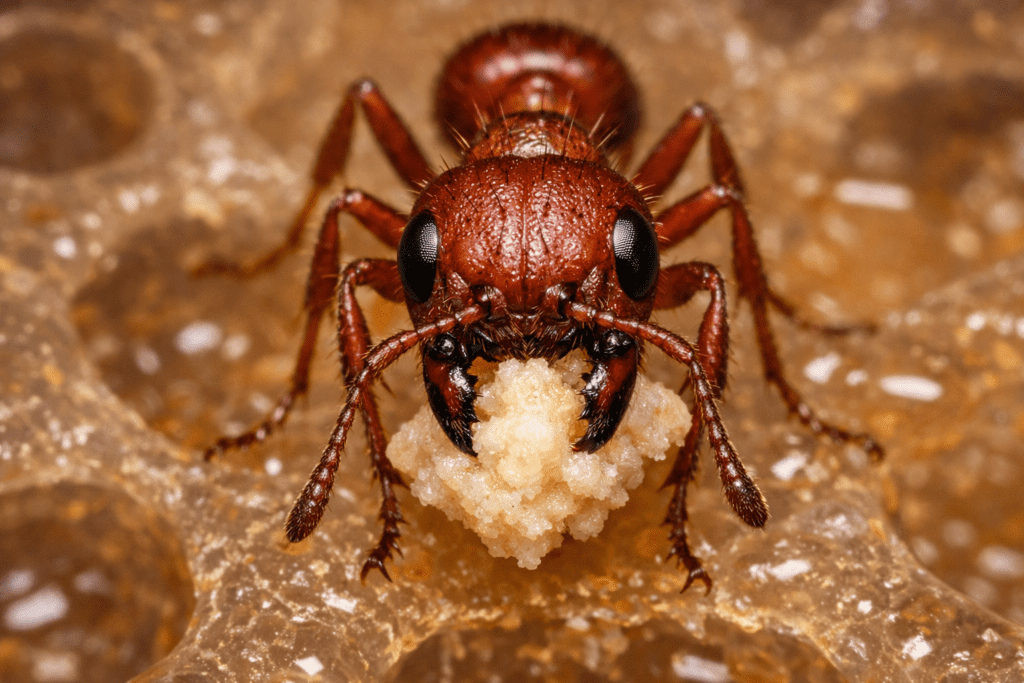
A bait-first plan works because Argentine ants share food through the colony. Slow-acting baits let workers carry the active ingredient back to queens and developing brood.
Step-by-step: a practical 14-day elimination plan
Follow this sequence for the best chance at a real reset.
-
Identify the main trails (Day 1).
Place a small piece of tape to mark trail edges so you can see changes. -
Choose the right bait type (Day 1-2).
Argentine ants often prefer sweets, but preferences can shift. Keep both on hand:- Sweet bait (gel or liquid)
- Protein or oily bait (for times when they ignore sugar)
For product selection help, use Best Ant Killers & Baits: Complete Buyer's Guide.
-
Place bait directly on the trail (Day 2).
Use multiple placements rather than one big station:- Along baseboards where trails run
- Near entry points (but out of reach of kids and pets)
- Outdoors on trails near the foundation
-
Do not spray over bait (Days 2-14).
Let ants feed. More feeding usually means better transfer. -
Refresh bait and monitor daily (Days 3-10).
Replace dried bait. Move placements if trails shift. -
Add outdoor baiting (Days 3-14).
Outdoor pressure often drives indoor activity. Consider a yard-focused approach with Best Outdoor Ant Killers for Lawns & Gardens. -
Seal and clean after activity drops (Days 7-14).
Once trails thin out, clean with soap and water to remove residues. You can also use vinegar-water for surfaces, but avoid heavy repellent cleaners during peak baiting.
Visual: control methods comparison
| Method | What it does well | Limitation | Best use case |
|---|---|---|---|
| Slow-acting baits | Reaches queens through food sharing | Takes 1-2+ weeks | Super colonies and repeat infestations |
| Contact sprays | Fast knockdown | Short-lived; may scatter trails | Spot control away from bait |
| Perimeter treatments | Reduces entry pressure | Still may not reach queens | Combined with baiting |
| Integrated approach | Most reliable long-term | Requires follow-up | Homes with recurring outdoor sources |
When to call a professional
Consider professional help if:
- Ants return after 2-3 bait cycles done correctly
- You have widespread activity across multiple rooms plus the yard
- Nests are suspected in wall voids, electrical areas, or hard-to-access plumbing chases
Pros often use non-repellent products, targeted void treatments, and growth regulators as part of a monitored plan.
Actionable takeaway: With Argentine ants, patience is part of the method. If bait consumption is high early on, that is often a good sign.

Common myths about Argentine ants (and what’s actually true)
Misinformation leads to wasted effort. Argentine ants are not dangerous in the way stinging ants are, but they are persistent and can contaminate surfaces as they forage. Clearing up a few myths helps you choose strategies that match how this species really behaves.
Myth 1: “They sting, so I need a fast killer spray.”
Argentine ants do not have a stinger. They can bite mildly, but the main issue is nuisance foraging and food contamination. If your goal is elimination, baiting is more effective than quick-kill sprays.
Myth 2: “If I kill the trail, the problem is solved.”
A visible trail is only the workforce. Argentine ants often have many queens and multiple nest pockets. Killing foragers does not remove the colony’s reproductive engine, so activity returns.
Better approach: keep bait available until trails collapse for several days in a row.
Myth 3: “There’s one nest somewhere I just need to find.”
With Argentine ants, there may be dozens of nest sites connected by trails. Trying to locate a single “main nest” can waste time while the network shifts.
What to do instead: treat trails and outdoor pressure points, then reduce moisture and honeydew sources.
Myth 4: “Odor tells you they’re Argentine ants.”
Odor is not a reliable ID tool. Odorous house ants are named for their strong smell when crushed. Argentine ants may have only a faint musty or greasy odor, and many people notice nothing at all.
Myth 5: “Native ants will eventually push them out.”
In many areas, Argentine ants displace native species through cooperative behavior and sheer numbers. That is one reason they are considered a major invasive ant in urban and agricultural settings, as described by the University of California Riverside Biological Control program.
Visual: quick “myth vs reality” recap
- Spray fixes it -> Bait fixes it
- One queen -> Many queens
- One nest -> Many connected nests
- Dangerous stings -> No sting, mainly nuisance and contamination
Actionable takeaway: When you treat Argentine ants like a typical single-colony ant, you usually end up repeating the same battle.
Conclusion: the simplest path to long-term Argentine ant control
Argentine ants are small, but their super colony structure makes them one of the most persistent household invaders. Correct identification comes from a combination of traits: uniform small brown workers, one-node waist, no sting, and heavy trail activity. The most reliable elimination strategy is bait-first, paired with moisture reduction, entry-point sealing, and outdoor pressure control.
Next step: set up a 14-day baiting plan and track trail changes daily. If you need help choosing products and placements, start with Best Ant Killers & Baits: Complete Buyer's Guide and then expand to yard control using Best Outdoor Ant Killers for Lawns & Gardens.
As an Amazon Associate, I earn from qualifying purchases. Product recommendations are based on real reviews and independent research.