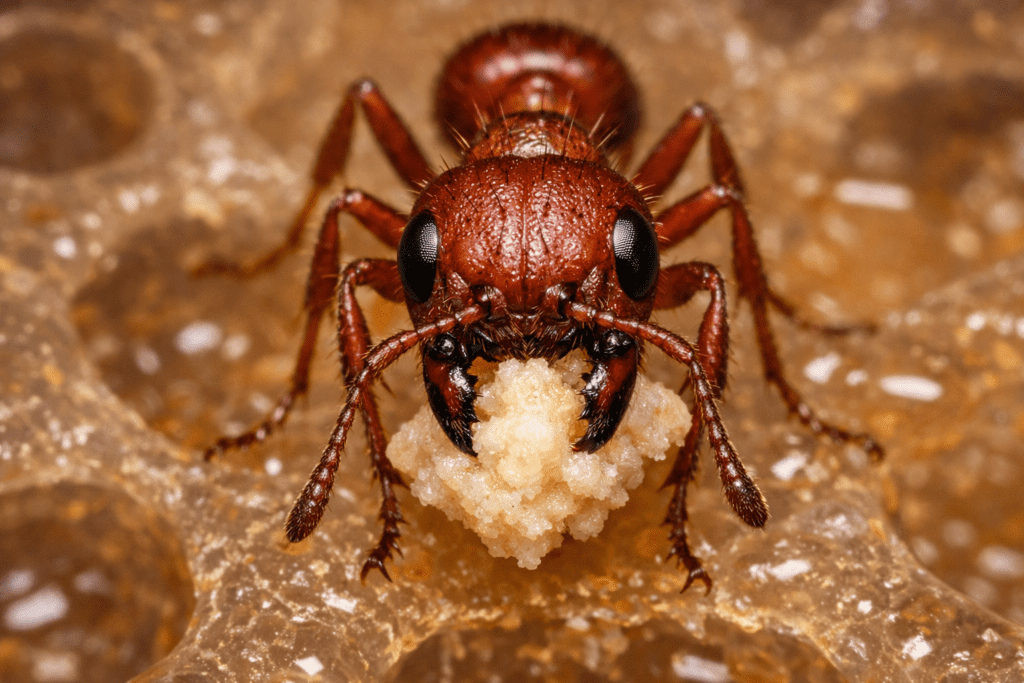
Finding a line of ants hauling crumbs across the counter can make anyone wonder about ant strength. Yes, ants really can move loads many times their own body weight, and some of their body parts can handle forces that sound almost impossible. The catch is that “lifting,” “carrying,” and “withstanding force” are different feats, and the numbers you see online often mix them together. This guide breaks down what ants can truly do, why they are built that way, and what it means for everyday pest control and backyard observing.
Readers working through this usually open DIY Ant Bait Recipes: Borax Traps That Work and Red Ants vs Black Ants: Key Differences Explained next.
Quick answer: how strong are ants?
Ant strength is best described as high strength relative to body size, not superpowers in day-to-day lifting.
Here’s the practical, science-based summary:
- Typical carrying ability: many ants can lift or carry about 10 to 50 times their body weight in real foraging situations.
- Extreme lab-measured durability: the neck joint of common field ants can withstand about 3,400 to 5,000 times body weight before failing, according to reporting on biomechanics research from Inside Science (AIP).
- Fast “snap” power: some ants produce mandible forces up to hundreds of times body weight during rapid strikes, described in a biomechanics overview from the University of Notre Dame biomechanics program.
- Why it happens: small animals benefit from scaling laws – they keep strength better than they gain mass as they get smaller.
Bottom line: ants are among the strongest animals for their size, but most ants are not routinely carrying thousands of times their weight.
Ant strength facts that are actually true (and what the numbers mean)
If you have ever watched an ant drag a crumb that looks “bigger than it is,” you have already seen the core idea: ants are small enough that physics works in their favor. But the internet often turns that into a single headline number. The reality is more interesting.
A quick “what counts as strength?” chart
| Strength claim you hear | What it usually refers to | What you should picture |
|---|---|---|
| “Ants lift 50x their weight” | Carrying/dragging while walking | A worker ant hauling food back to the nest |
| “Ants are 5,000x stronger than humans” | Structural tolerance, often neck or exoskeleton failure tests | A body part resisting a crushing load until it breaks |
| “Ant jaws hit like a bullet” | Acceleration and fast strike mechanics | A snap-jaw ant launching itself away from danger |
How strong are ants in everyday life?
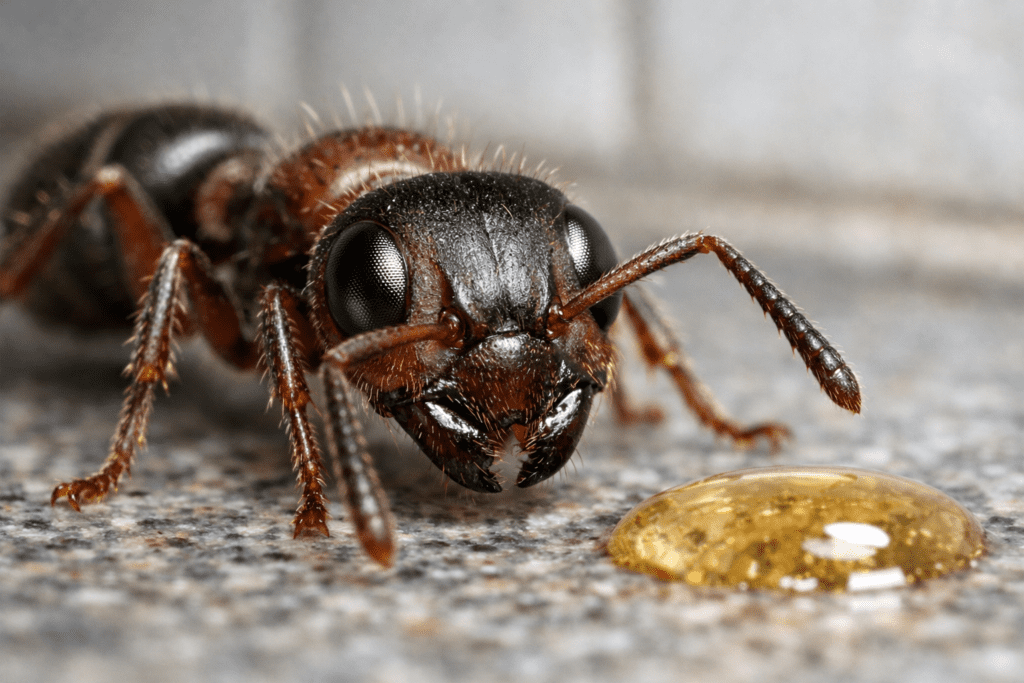
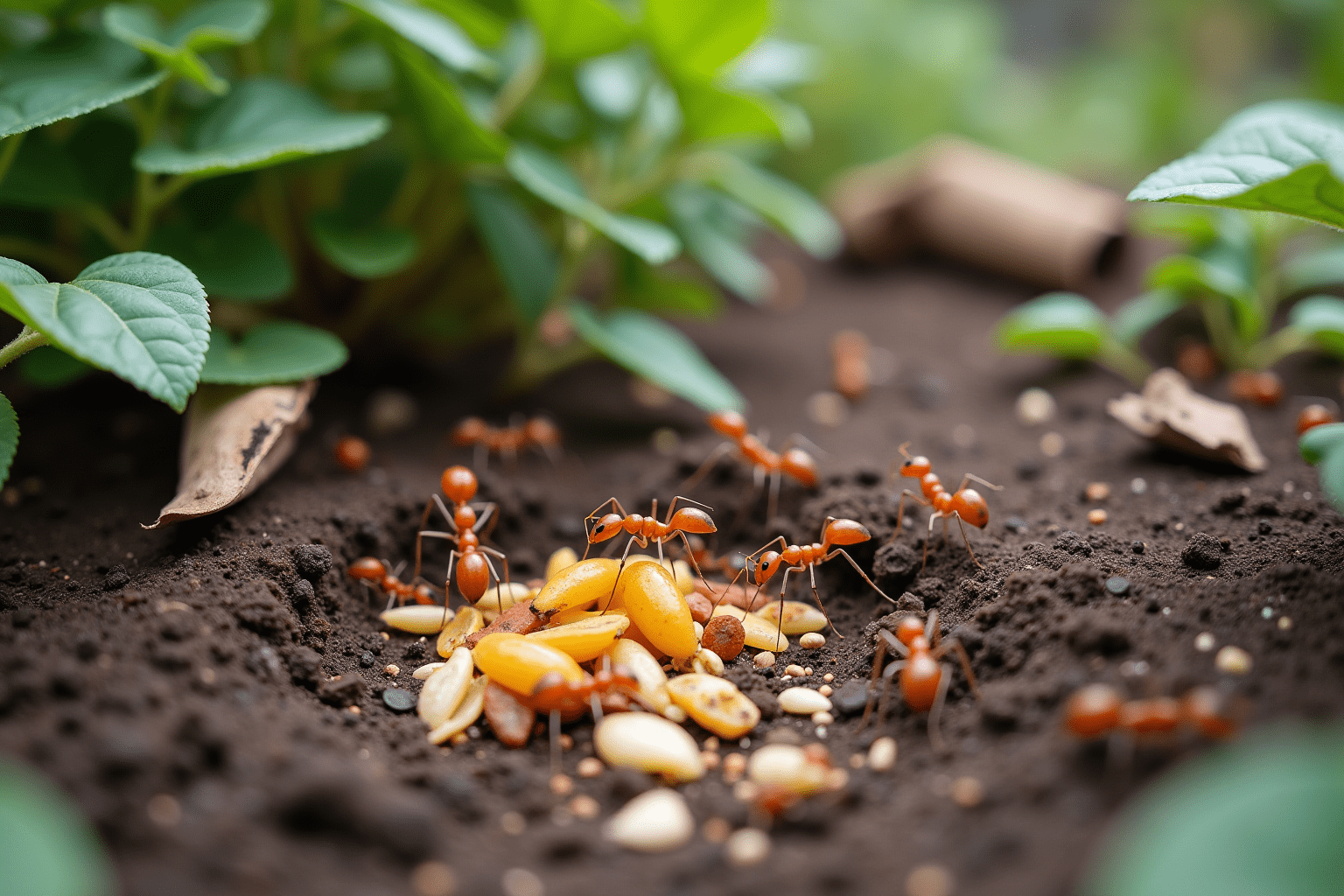
Most practical observations fall in the 10x to 50x body weight range for lifting or carrying. That is still impressive because many ants weigh only a few milligrams. A grain of rice can be a serious payload.
What ants do less often is “clean lifting” straight up, like a tiny weightlifter. Ants typically:
- Drag items (friction and leverage help)
- Carry items with the load balanced under the body
- Team-carry larger prey or food using multiple workers
For a friendly overview that matches what many people see in the yard, Washington State University’s outreach explains the scaling logic behind ant strength in Dr. Universe (WSU).
Where the huge numbers come from
The attention-grabbing measurements – like neck joints tolerating thousands of times body weight – come from controlled tests that measure how much force a structure can withstand before it fails. That is different from an ant voluntarily walking around with the same load.
Think of it like this: a car door can withstand a big force in a lab press, but that does not mean you can drive around with that force constantly applied.
Actionable takeaway
When you see a strength claim, ask one question: Is it carrying, biting, or simply not breaking under load? That single distinction clears up most myths.
Why ants are so strong: the science of size, muscle, and exoskeleton
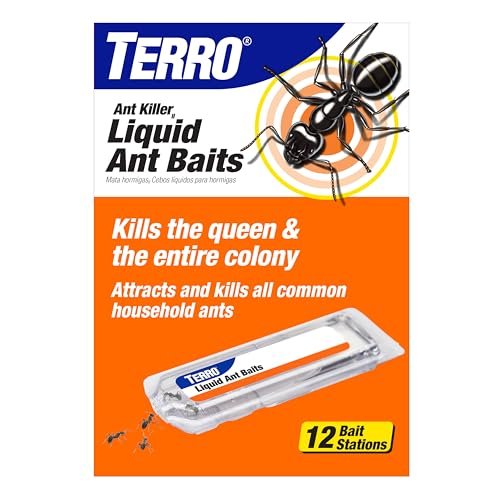
Terro, Ant Killer Bait Stations T300B – Liquid Bait to Eliminate Ants – Bait System – Stations for Effective Indoor Ant Control, 12 Count
This product is relevant as it provides an effective solution for controlling ant populations, which is a practical concern when discussing ant strength and behavior.
Ant strength makes sense once you understand scaling. It is not that ants have “magic muscle.” It is that small bodies keep strength better than they gain weight.
The scaling law in plain language
Muscle force is related to muscle cross-sectional area (roughly, how thick it is). As an animal gets bigger, its mass grows faster than its muscle area. In simple terms:
- Strength scales closer to length squared
- Mass scales closer to length cubed
So relative strength tends to be higher in small animals. This is why ants, beetles, and other small insects can look “overpowered” compared to their size.
Ant anatomy that helps them use that advantage
Ants also have design features that turn muscle into useful work:
1) A hard exoskeleton as an external frame
The exoskeleton acts like built-in armor and a rigid frame for muscle attachment. It helps transfer force efficiently and protects the body during hauling, digging, and fighting.
2) Dense muscle packing
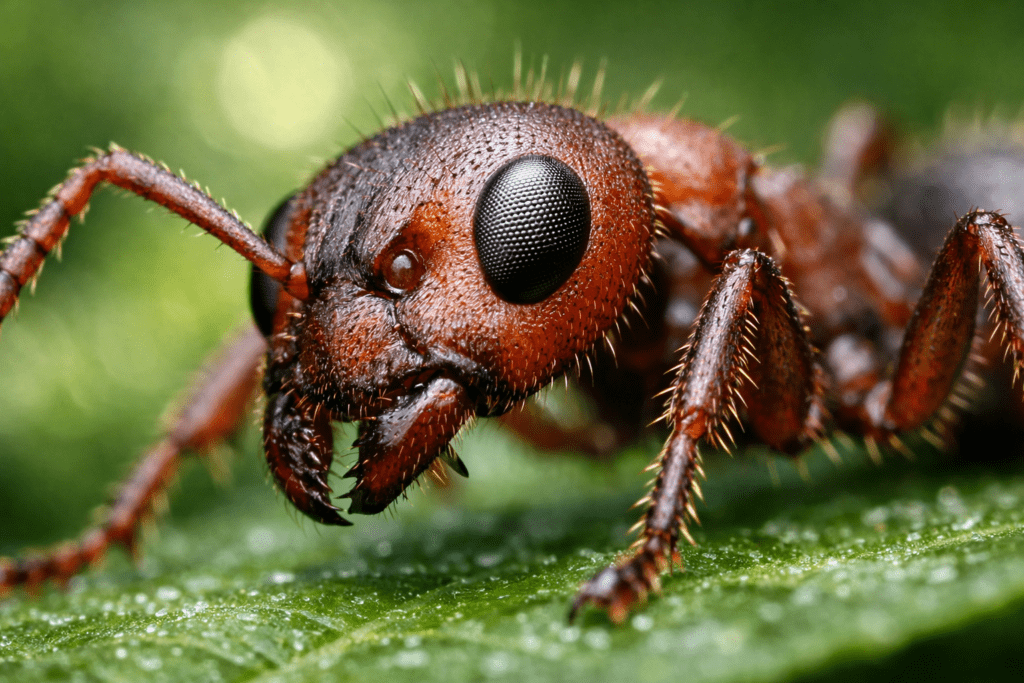
Ants pack a lot of muscle into the head, thorax, and neck region. That matters because many key tasks – carrying, biting, pulling – are head-driven.
3) Smart leverage and attachment angles
Small changes in how muscles attach can change effective leverage, like moving your grip on a wrench.
Inside Science’s coverage of neck strength research highlights that the neck joint’s ability comes largely from structural design (micro-bumps and folds that distribute load), not “stronger material” in the usual sense, as described by Inside Science (AIP).
A simple mental model: ants are “built like cranes”
A crane is not made of super-metal. It is made of a strong frame, good geometry, and efficient force transfer. Ants work the same way, just in miniature.
Actionable takeaway
If you want to understand ant strength in your own yard, focus on body size and task. Smaller workers often look relatively stronger, and different species specialize in different jobs.
Snap-jaw mandibles and neck joints: where ant strength looks unreal
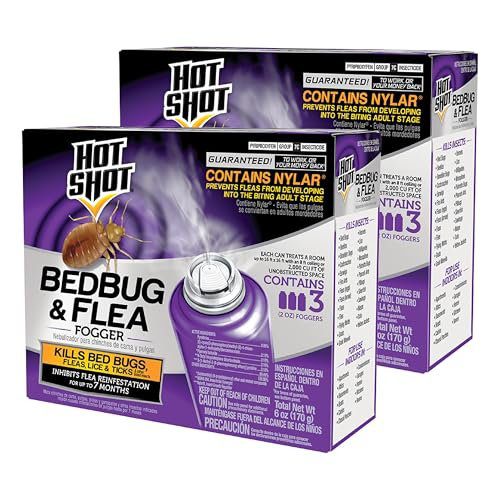
Hot Shot BedBug And Flea Fogger, Inhibits Flea Reinfestation, 2 Ounce Cans, 6 Count
While primarily for bed bugs and fleas, this spray can also help with various pests, including ants, making it a versatile pest control option.
If you have only seen ants carrying crumbs, you have not seen the “high-performance” side of ant biomechanics. Some ants use their heads like spring-loaded tools.
Mandibles: not just for biting
Ant mandibles are multi-purpose tools used for:
- Cutting and gripping food
- Digging and moving soil
- Fighting rivals
- Carrying larvae and nest material
- Emergency escape maneuvers in certain species
Biomechanics write-ups describe some ants generating mandible forces up to hundreds of times their body weight during rapid strikes, with extreme acceleration in snap mechanisms, summarized in a feature from the University of Notre Dame biomechanics program.
Not all ants do this. “Snap-jaw” style mechanisms are found in particular groups and are best thought of as a specialized tool, not a standard ant trait.
Neck strength: the “safety factor” behind heavy carrying
When an ant carries something bulky, much of the load transfers through the neck joint. That joint has to resist:
- Sudden jerks when the ant climbs
- Twisting forces when the load shifts
- Repeated stress during long carries
That is why neck durability tests can produce huge numbers. Inside Science reports field ants tolerating 3,400 to 5,000 times body weight at the neck before rupture in lab testing, via Inside Science (AIP).
Quick “specialized strength” comparison
| Feature | What it’s optimized for | What you might notice |
|---|---|---|
| Snap mandibles | Speed, rapid force delivery | Sudden jumps or quick strikes |
| Neck joint structure | Load-bearing and stability | Confident carrying of awkward items |
| Worker teamwork | Moving prey too big for one ant | Multiple ants coordinating on a crumb |
Actionable takeaway
If you are observing ants outdoors, look for head-first hauling and load wobble control. Those behaviors show how the neck and head muscles do most of the work.
What ant strength means for your home (and how to control ants effectively)
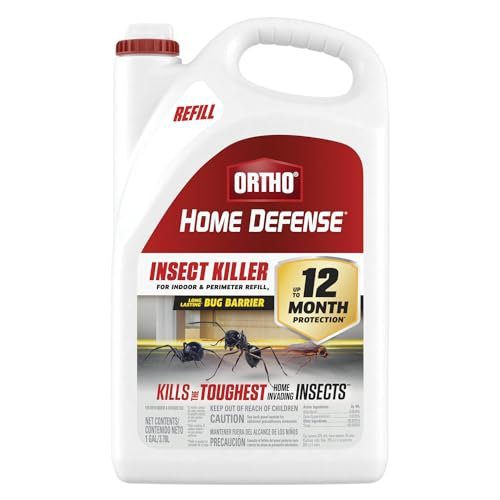
Ortho Home Defense Insect Killer for Indoor and Perimeter Refill2 – Ready-To-Use Bug Spray Refill, Kills Ants, Roaches, and Spiders, 1 gal.
This insect killer is suitable for indoor and outdoor use, providing a comprehensive solution for ant control and prevention.
Ant strength is fascinating, but most readers also want to know what it means indoors. The key point: ants do not “muscle through” your home by lifting heavy objects. They succeed through persistence, numbers, and navigation.
Why physical barriers often fail
Because ants can:
- Climb textured surfaces and tiny seams
- Pull and pry at soft materials
- Keep working for hours with many workers rotating
…blocking them with random household objects rarely works. A book on a trail is not a wall to an ant colony. They simply route around it.
What works better than “out-strengthing” ants
Entomologists typically recommend focusing on colony-level control rather than trying to stop individual workers.
Best practice steps (practical and effective):
- Identify the trail and wipe it with soapy water to reduce scent cues.
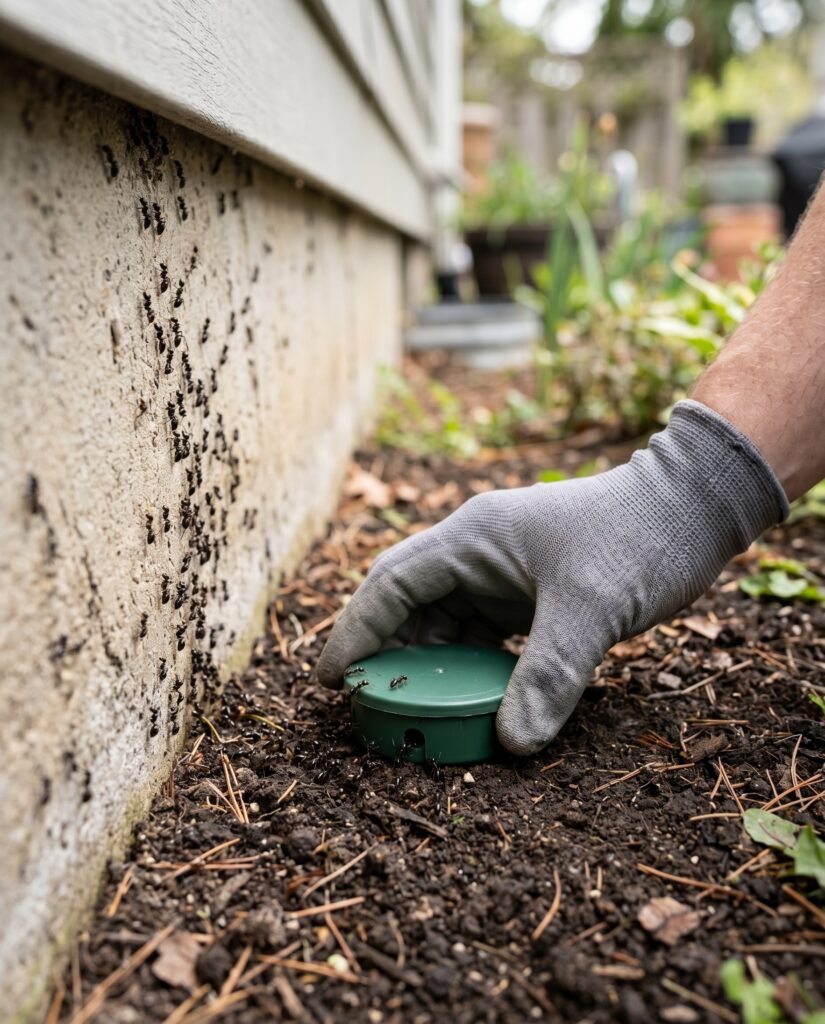
- Use slow-acting baits so workers carry the toxicant back to the colony.
- Seal entry points after activity drops, not during peak traffic.
- Fix moisture issues (leaks, damp wood) that support nesting.
For product selection and bait strategy, InsectoGuide’s Best Ant Killers & Baits: Complete Buyer's Guide explains what to use and when. If you suspect wood damage or you are seeing large black ants indoors, follow a carpenter-ant-specific plan in Carpenter Ant Treatments and Baits.
Yard infestations: strength meets soil engineering
In lawns, ant strength supports mound building and soil movement. Fire ants, in particular, can build and rebuild quickly after disturbance.
If you are dealing with mounds, use a targeted approach designed for outdoor colonies, not indoor bait placements. Start with InsectoGuide’s Fire Ant Killers for Yards for mound treatments and broadcast options.
Prefer low-tox options?
Repellents and sprays can help with short-term exclusion, especially around doors and windows. Just remember that repellents alone rarely solve a colony problem.
For plant-based and lower-tox options, see Natural Ant Repellents and Sprays.
When to call a professional
Consider professional help if:
- Ants return within 1 to 2 weeks after baiting
- You suspect carpenter ants in structural wood
- You have repeated fire ant mounds across a yard
- Someone in the home is highly sensitive to stings
Actionable takeaway
Ant strength helps ants haul food and build nests, but baiting and colony targeting beat “barrier battles” almost every time.

Safe ways to observe ant strength (plus common myths to ignore)
You do not need a lab to appreciate ant strength. With a little patience, you can observe real behavior without harming ants or turning your kitchen into a test arena.
Easy backyard observation ideas
Try these simple, low-impact activities outdoors:
1) The “payload” watch
- Place tiny food items near a trail: sesame seeds, small crumbs, or a bit of pet kibble.
- Watch what gets carried solo versus team-carried.
- Note whether ants drag or lift depending on shape.
2) The “obstacle” test
- Put a small twig across a trail.
- Watch how ants reroute, climb, or recruit help.
3) The “species difference” comparison
- Compare tiny pavement ants to larger carpenter ants in the same area.
- Notice that larger ants look stronger in absolute terms, but smaller ants often look stronger relative to size.
For kid-friendly ant facts and natural history context, Arizona State University’s education resource has a helpful collection at ASU Ask A Biologist.
Common misconceptions (and the reality)
| Myth | Reality check |
|---|---|
| “Ants carry 5,000x their weight all the time.” | Those numbers are usually failure limits of a body part, not routine carrying. |
| “Ants have special super-muscles.” | Their muscles are effective, but the big advantage is small size and good design. |
| “A bigger ant would be proportionally stronger.” | Scaling works against large bodies. Bigger animals gain mass faster than strength. |
| “All ants are equally strong.” | Strength varies by species, worker role, and even task (digging vs carrying vs fighting). |
A clear explanation of why small animals can seem disproportionately strong is also covered in accessible biophysics discussions like What is Biophysics? (Eighteenthelephant), which aligns with the scaling principles used in biomechanics.
Actionable takeaway
If you want “real” ant strength numbers, base your expectations on what you can observe: carrying and dragging are usually tens of times body weight, not thousands.
Conclusion
Ant strength is real, but it is often misunderstood. In day-to-day life, many ants can carry roughly 10 to 50 times their body weight, while lab tests show certain structures like the neck can withstand thousands of times body weight under controlled loading. Those extremes come from scaling laws, dense muscle packing, and an exoskeleton built for force transfer.
If ants are in your home, the best next step is to stop fighting individual workers and start targeting the colony. Use the strategy and product guidance in the Best Ant Killers & Baits: Complete Buyer's Guide and, if the situation fits, the focused plans for Carpenter Ant Treatments and Baits or Fire Ant Killers for Yards.
As an Amazon Associate, I earn from qualifying purchases. Product recommendations are based on real reviews and independent research.