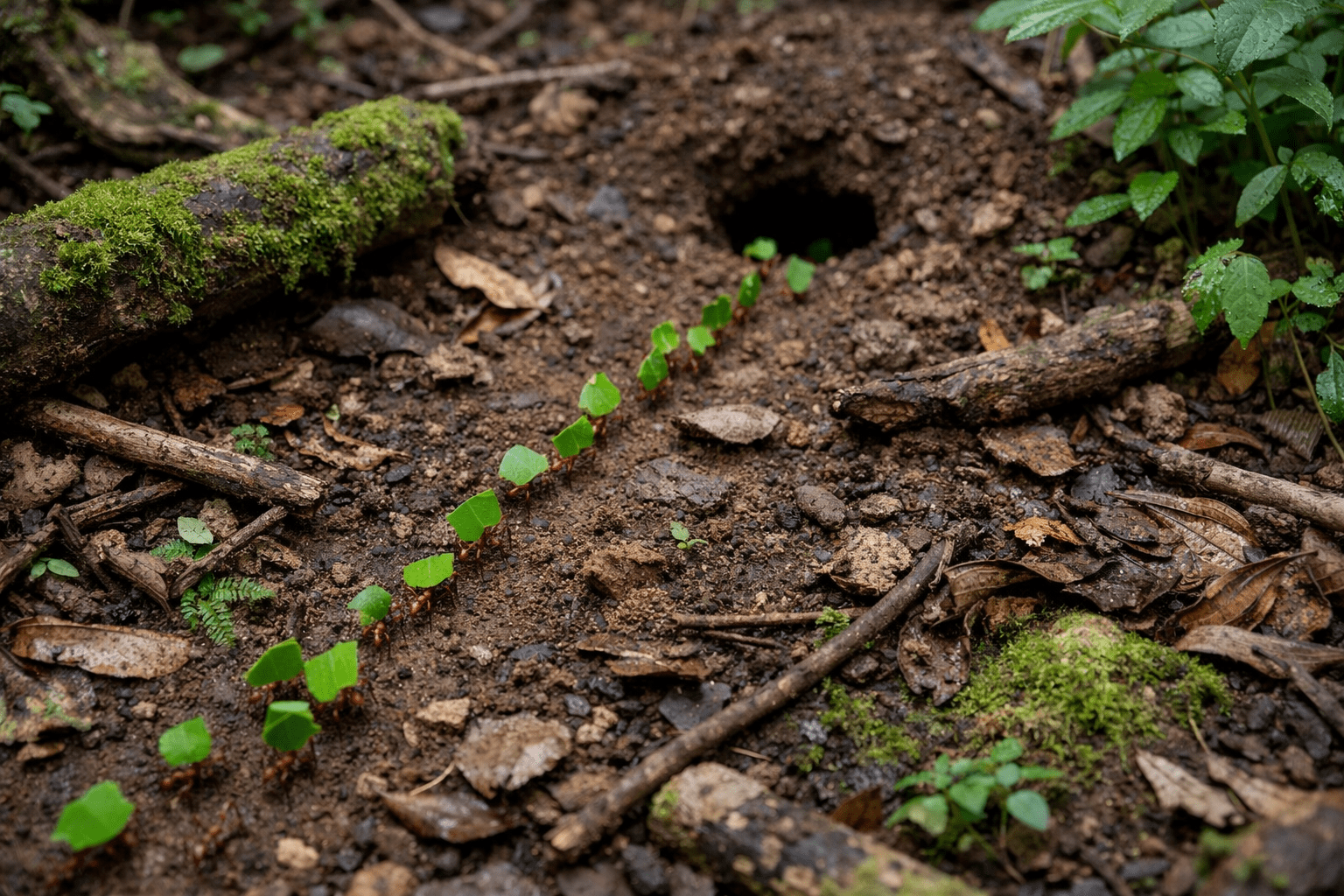
Spotting a line of ants carrying green “flags” across a trail is usually your first clue you are watching leafcutter ants. These insects are not hauling leaves home to eat like caterpillars. They are carrying plant pieces underground to feed a fungus crop that powers the entire colony. This guide shows how to identify leafcutters, what their famous fungus farms really look like, why they matter in tropical ecosystems, and what to do if they are damaging ornamental plants.
If you want the wider context, DIY Ant Bait Recipes: Borax Traps That Work and Red Ants vs Black Ants: Key Differences Explained are the natural next reads.
Quick Identification / Quick Answer
Leafcutter ants are large, tropical New World ants (mainly Atta and Acromyrmex) that cut vegetation and carry it to underground nests to grow a food fungus.
Fast ID checklist (field-friendly):
- Where: Neotropics – from the southern U.S. (occasionally) through Mexico, Central America, and much of South America
- Most obvious sign: Wide, busy foraging trails with ants carrying leaf fragments overhead
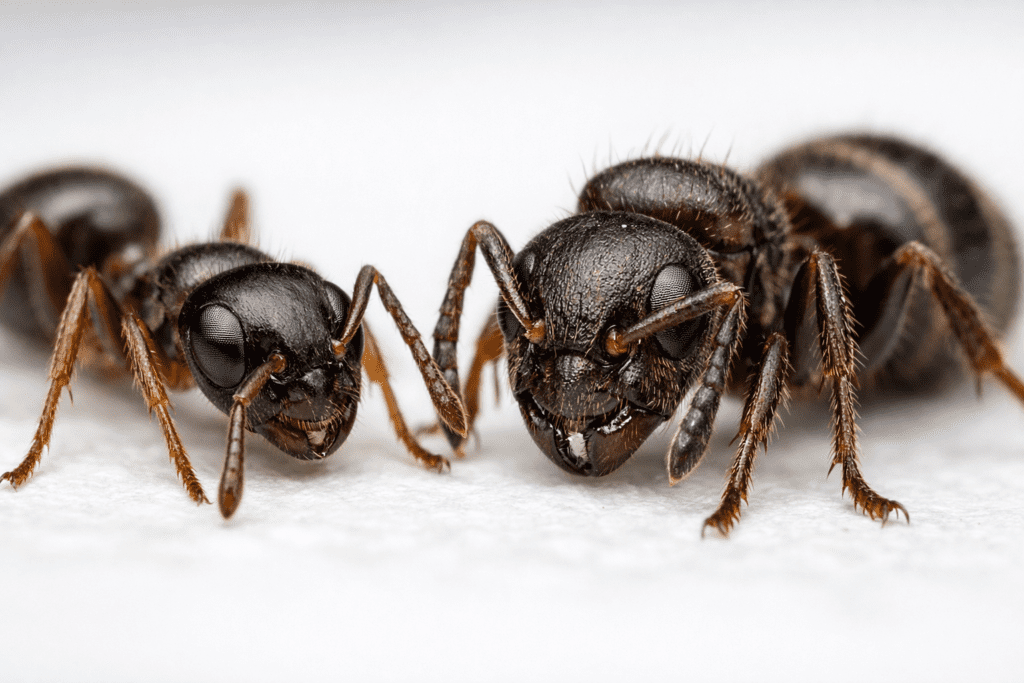
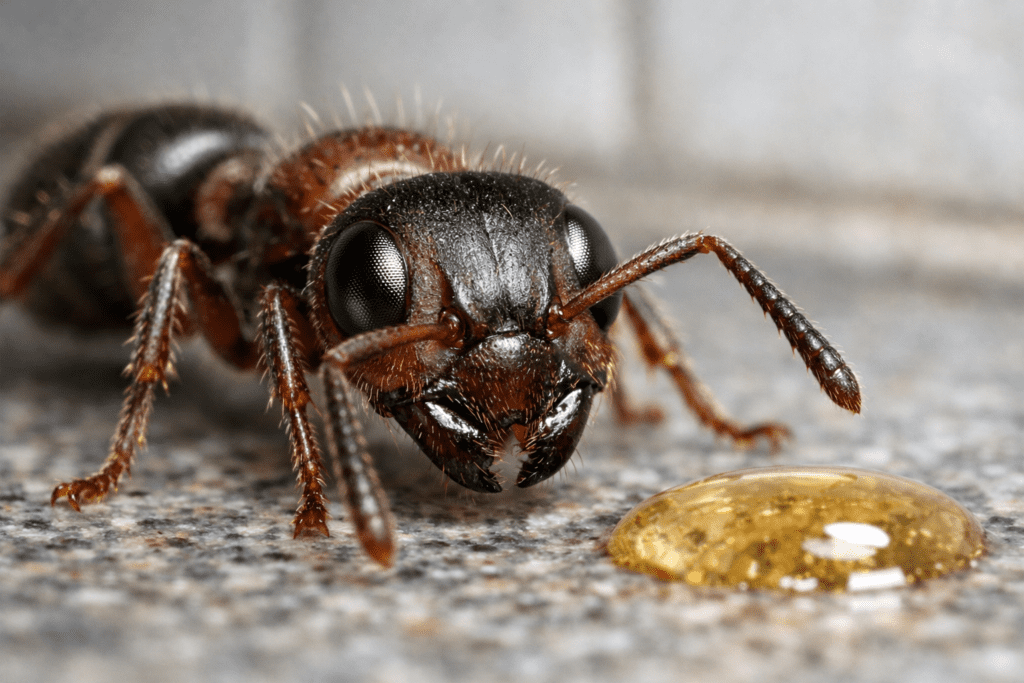
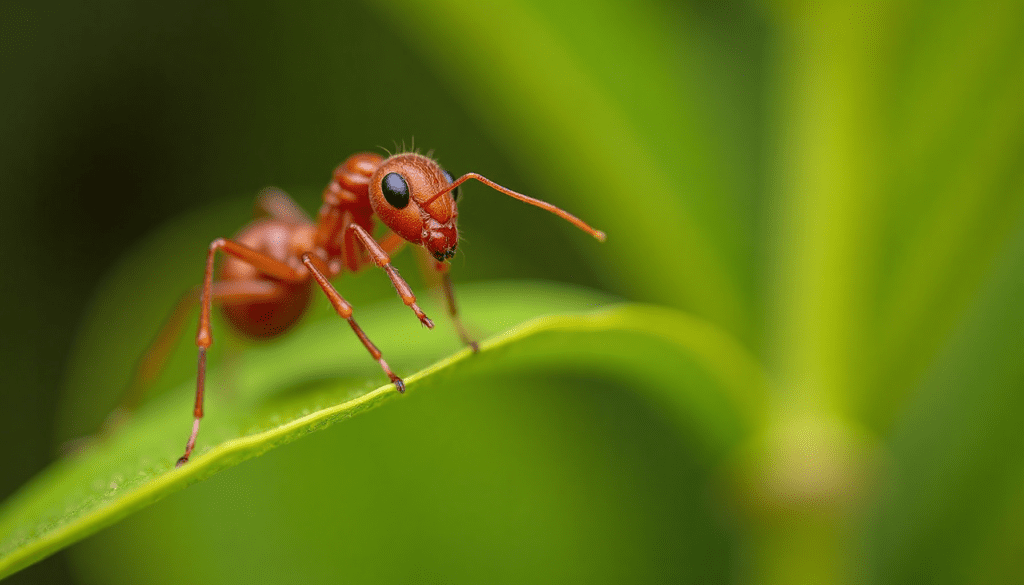
- Body clues: Reddish-brown to dark brown; elbowed antennae; strong, saw-like mandibles
- Size range: Workers vary dramatically – roughly 2 to 20 mm depending on caste
- Nest signs: Multiple entrance holes, loose soil piles, and “highways” cleared of debris
- Behavior clue: They cut leaves quickly, then disappear into the ground rather than feeding on the spot
Bottom line: If you see a steady procession of ants carrying leaf pieces to an underground nest, you are almost certainly looking at leafcutters.
Leafcutter ants identification: what to look for in the field
Leafcutters are easiest to identify by behavior first and anatomy second. Many ants can carry crumbs or dead insects. Far fewer create long, organized trails that move fresh plant material like a conveyor belt.
Key visual markers (and what they mean)
Use this quick table when you are deciding whether you have leafcutters or another large ant.
| Feature | What you might see | Why it matters |
|---|---|---|
| Foraging trail | A steady two-way “ant highway,” often at dawn/dusk | Leafcutters run organized logistics like a small city |
| Leaf fragments | Green, circular or oval cutouts held overhead | Classic sign of vegetation harvesting |
| Worker size variation | Tiny workers mixed with much larger ones | Strong caste-based division of labor |
| Nest presence | Many openings, cleared paths, soil mounds | Large subterranean fungus chambers require ventilation and excavation |
| Cutting behavior | Ant braces on leaf edge, rapidly saws with mandibles | Leafcutters are specialized for slicing plant tissue |
Similar insects people confuse with leafcutters
Misidentification is common, especially in gardens and eco-lodges.
- Carpenter ants (Camponotus): Large and impressive, but they do not carry fresh leaf pieces in mass processions. If you are dealing with wood-damaging ants indoors, see our guide to Best Carpenter Ant Treatments and Baits.
- Army ants: They form dramatic swarms, but they are predators and scavengers, not leaf-haulers.
- Grass-cutting ants: Some species cut grasses, but the signature “leaf flags” and fungus-farming lifestyle point to leafcutters.
Actionable takeaway
If you want a confident ID quickly, follow the trail. Leafcutter ants almost always lead you to an underground nest area with multiple entrances and heavy traffic.
How leafcutter ants farm fungi underground (and why they do not eat leaves)

Terro, Ant Killer Bait Stations T300B – Liquid Bait to Eliminate Ants – Bait System – Stations for Effective Indoor Ant Control, 12 Count
This product is relevant as it provides an effective solution for controlling leafcutter ants that may be damaging ornamental plants.
The most persistent myth is that leafcutters eat what they cut. They do not. Think of the leaf fragments as compost delivered to a subterranean greenhouse.
The real food is a fungus crop
Leafcutter ants cultivate a specific fungal partner, commonly referred to as Leucoagaricus gongylophorus. The ants feed the fungus with freshly cut plant material, and the fungus produces nutrient-rich structures that feed the colony’s larvae. Adult ants often sip plant sap and other liquids during processing, but the growing brood depends on the fungus.
Research summaries from the American Society for Microbiology and reporting on genomic work from the University of Wisconsin News describe this as a long co-evolutionary partnership, with ant agriculture stretching back tens of millions of years.
How the “composting” works inside the nest
A surprising detail for observers: much of the processing happens underground, not out on the trail. Ants cut manageable pieces outside, then do extensive shredding and preparation inside the nest chambers. A peer-reviewed study in Royal Society Open Science documents how leaf processing is a coordinated, multi-step workflow.
Here is the simplified sequence:
- Harvest – medium-sized workers cut and carry plant fragments.
- Prep – inside, workers lick and scrape leaf surfaces, then reduce pieces further.
- Inoculate – they add fungal material to seed new growth.
- Maintain – workers weed out contaminants and remove waste to separate dump areas.
- Feed larvae – larvae consume fungus-derived nutrients rather than raw leaves.
Visual element: “leaf to larvae” flow chart
- Leaf fragment collected outside
- Leaf fragment shredded and cleaned inside
- Fungus grows on prepared substrate
- Fungus produces nutrient-rich food bodies
- Larvae feed and develop, powering colony growth
Actionable takeaway
If you are observing leafcutters, do not expect to see them eating leaves on the plant. The feeding happens underground via fungus production, which is why trails are so consistent and purposeful.
Colony roles and ant “job titles”: how millions coordinate without chaos
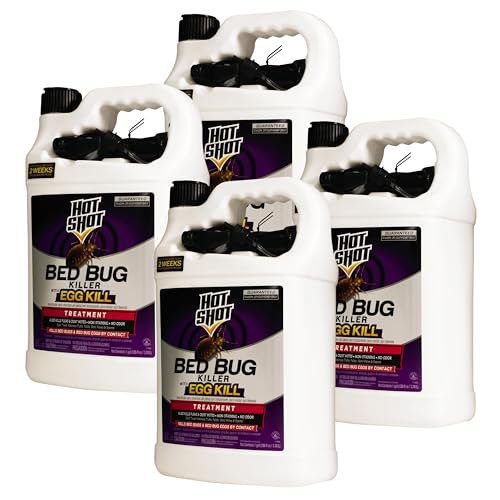
Hot Shot Bed Bug Killer With Egg Kill Ready-to-Use, 1 gallon, 4 Pack
While primarily for bed bugs and fleas, this spray can also help manage various ant populations, including leafcutter ants, in outdoor areas.
A leafcutter colony can look like a single organism because it behaves like one. Workers specialize by size and task, and that division of labor is one reason leafcutters can build enormous, long-lived colonies.
According to an overview from McGill University’s Office for Science and Society, mature colonies can contain millions of individuals. Large nests can occupy an impressive volume underground, with many chambers dedicated to fungus gardens, brood, and waste.
The main castes you will notice
You do not need a microscope to see caste differences. Watch a trail for two minutes and you will spot size classes doing different things.
| Caste (common term) | Typical size | What they do | What you will see |
|---|---|---|---|
| Minims | ~2-3 mm | Garden and brood care, grooming | Tiny ants moving over fungus and larvae |
| Minors | ~3-6 mm | Trail tasks, defense, “support” work | Small ants darting around carriers |
| Mediae | ~6-12 mm | Cutting and carrying | The main “leaf flag” carriers |
| Majors | ~12-20 mm | Defense, heavy lifting | Big heads, powerful jaws near nest or disturbance |
Microbes: the colony’s “crop protection”
Leafcutter farming includes pest management. Ants host beneficial bacteria on their bodies that produce antibiotics to suppress fungal pathogens. This is one reason their gardens can persist for years without collapsing under disease pressure. The American Society for Microbiology provides a clear explanation of this microbe-assisted defense.
Visual element: quick “what to watch for” checklist
- Large workers appear when the trail is disturbed (defense response)
- Small workers cluster around carried leaves (maintenance and sap-feeding)
- Traffic intensifies in cooler hours (often dawn/dusk)
- Waste is moved away from the main nest area (sanitation zones)
Actionable takeaway
If you are trying to photograph or observe safely, avoid stomping near the trail. Vibrations can shift behavior fast, bringing larger defensive workers to the surface.
Ecological impact: why leafcutter ants shape tropical forests

Ortho Home Defense Insect Killer for Indoor and Perimeter Refill2 – Ready-To-Use Bug Spray Refill, Kills Ants, Roaches, and Spiders, 1 gal.
This insect killer is suitable for creating a barrier around your home to prevent leafcutter ants and other pests from entering.
Leafcutters are not just another ant. In many tropical habitats, they are among the most important herbivores by volume. That matters because “who eats the leaves” influences what plants thrive, how nutrients cycle, and how forest gaps regenerate.
How much vegetation can they remove?
Field research and synthesis highlighted by the Smithsonian’s biogenomics research program and science communication from McGill University’s Office for Science and Society describe leafcutters as dominant herbivores in the New World tropics. In some forests, their harvesting can represent a notable share of local leaf production, which is why their trails can look like a permanent feature of the landscape.
Why plants do not “lose” automatically
It is tempting to assume leafcutters simply harm plants, but ecosystems are trade-offs.
- They prune selectively: Colonies often prefer certain plant species or leaf ages.
- They move nutrients: Excavated soil and waste zones change nutrient availability.
- They create disturbance patterns: Trails and clearing can influence seedling survival.
Visual element: “ecosystem pros and cons” table
| Effect | What happens | Who benefits |
|---|---|---|
| Heavy pruning | Reduced leaf area on targeted plants | Light-demanding plants nearby |
| Soil turnover | Subsoil brought up, surface mixed | Some plants, soil microbes |
| Nutrient hotspots | Waste piles concentrate nutrients | Decomposers, opportunistic plants |
| Food web support | Ants feed predators and parasites | Birds, reptiles, other insects |
Actionable takeaway
If you are traveling in the Neotropics, treat leafcutter trails like wildlife viewing opportunities. They are a reliable place to watch social behavior, predator interactions, and plant defense in real time.
Macro photography tips: getting sharp, ethical shots of leafcutter ants
Leafcutter ants are a dream subject because they offer repeatable action on predictable trails. The challenge is not finding them. It is getting sharp images without disrupting their workflow.
A field-friendly overview from Phys.org science reporting and observational notes compiled in the SIT Digital Collections field study archive both highlight trail behavior, disturbance sensitivity, and the value of working at the edges of activity rather than at nest entrances.
Where and when to shoot
For the most dramatic “leaf flag” processions:
- Time of day: Dawn and dusk are often busiest, especially in warm, humid conditions.
- Location: Follow a trail to a point with clean background separation – a log, root, or open patch.
- Angle: Get low and parallel to the trail for a strong leading-line composition.
Suggested gear and settings (starting points)
- Lens: 90-105 mm macro (1:1) for flexibility and working distance
- Shutter speed: 1/200 to 1/500 for moving carriers
- Aperture: f/8 to f/16 for depth of field on the ant and leaf fragment
- Light: Diffused flash or a small LED with diffusion to avoid harsh glare
Ethical and safety guidelines (worth following)
Leafcutters can bite, and large workers defend trails when disturbed.
- Do not block the trail for long periods.
- Avoid digging into nests or peeling back soil near entrances.
- Step lightly. Vibrations can trigger defensive responses.
- If you need a stationary shot, set up beside the trail and let ants pass naturally.
Visual element: quick shot list (try these 5)
- Side profile of a carrier with leaf fragment silhouetted against sky
- Mandible close-up during cutting (watch the leaf edge)
- Two-way traffic shot showing returning and outgoing workers
- “Hitchhiker” behavior: small workers riding on leaf pieces
- Trail-wide scene showing scale and density of movement
Actionable takeaway
The best images come from patience, not proximity. Pick a clean section of trail, pre-focus, and let the colony deliver the action.

When leafcutter ants become a garden problem (and what to do)
In much of their range, leafcutters can strip ornamentals, fruit trees, and young landscape plants quickly, especially when a mature colony is nearby. The goal is to respond in a way that fits your setting: home garden, farm edge, or natural area.
First, confirm the real issue
Before treating, identify what is being cut and how often.
- Light damage: A few cutouts on leaves, no sustained trail
- Moderate damage: Nightly cutting on the same plants, clear trail present
- Severe damage: Defoliation of small trees or repeated stripping of new growth
Practical, lower-impact options
If your goal is to reduce damage without heavy chemical use:
-
Protect high-value plants
- Use physical barriers on trunks (slick bands or wraps) where practical.
- Prune touching branches that create “bridges” to trails.
-
Reduce attractiveness
- Leafcutters often show preferences. If one plant is repeatedly targeted, consider relocating it or substituting with less-preferred species locally.
-
Target the colony with baits (most effective DIY approach)
- Leafcutters are often best managed with properly formulated baits that workers carry back to the nest.
- For product selection and how-to tips, see Best Ant Killers & Baits: Complete Buyer's Guide.
-
Use repellents cautiously (limited role)
- Repellents may disrupt trails temporarily but often do not solve a large colony problem.
- If you want to try lower-toxicity deterrents, start with our roundup of Best Natural Ant Repellents and Sprays.
When to call a professional
Professional help is reasonable when:
- The colony is large and near structures or high-value plantings.
- Repeated DIY attempts fail and damage continues.
- You need a plan that minimizes risk to non-target insects and pets.
Visual element: decision guide
- Occasional trail, minor damage -> monitor + protect key plants
- Consistent trail, repeated cutting -> bait-based control plan
- Large colony, major defoliation -> professional assessment
Actionable takeaway
For serious damage, focus on colony-level control, not just trail disruption. Trails can reroute in hours. The nest is the engine.
Conclusion
Leafcutter ants are easy to recognize once you know the signature: organized trails, leaf fragments held overhead, and relentless trips back to an underground fungus farm. They do not eat the leaves. They farm a fungus that feeds their larvae, supported by a finely tuned caste system and microbial “crop protection.”
If you are observing them, follow a trail at dawn or dusk and watch the division of labor up close. If they are damaging plants, prioritize colony-level solutions and consider bait-based approaches. For next steps, compare options in our Best Ant Killers & Baits: Complete Buyer's Guide and review safer deterrents in Best Natural Ant Repellents and Sprays.
As an Amazon Associate, I earn from qualifying purchases. Product recommendations are based on real reviews and independent research.