If you have rats, traps alone will not finish the job, and that is the mistake that keeps people fighting them for months. Rats need more than traps: seal the gaps they exploit, because a quarter-sized hole is enough for a rat to push through, and pack those gaps with hardware cloth and steel wool. Cut off the food and the outdoor harborage they live in, like woodpiles and burrows against the foundation. Then trap heavily, but here is the part nobody tells you, pre-bait the traps unset for several days first, because a rat is too wary to walk into a fresh trap. Exclusion plus sanitation plus patient trapping is what clears them, and loose poison is not.
Traps alone rarely clear rats. Seal every gap a quarter-inch and up with hardware cloth and steel wool, remove food and outdoor harborage, then trap heavily after pre-baiting the traps unset for several days, because rats are too cautious to enter a fresh trap.
- Do first (free): Seal entry gaps with steel wool and hardware cloth, clear woodpiles and clutter off the foundation, and lock up food and pet kibble.
- Best for the common case: Snap or electronic traps, pre-baited unset for several days, then set heavily along the walls they travel.
- Skip: Loose poison bait and ultrasonic plug-ins; loose bait poisons pets and wildlife, and ultrasonic devices do not clear an infestation.
Why traps alone fail
People set a few traps, catch one rat, and assume the rest will follow. They almost never do, and there are two reasons. The first is that a rat is a deeply suspicious animal. According to UC IPM’s guidance on rats and their wariness of new objects, rats are neophobic, meaning they actively avoid anything new in their environment for days, including a trap that appeared overnight. Drop a baited, set trap in their runway and they will route around it. That single behavior is why a fresh trap usually sits empty while the rats keep feeding ten feet away.
The second reason is that trapping treats the symptom, not the supply. As long as a rat can get in, find food, and bed down in cover, the colony keeps replacing what you remove. Norway rats burrow at ground level and roof rats climb into attics and wall voids, but both want the same three things: a way in, something to eat, and somewhere hidden to nest. Take away the entry, the food, and the cover and you shrink the population the traps then have to finish. Skip that and you are bailing a boat with the hole still open.
Find the gaps and signs first
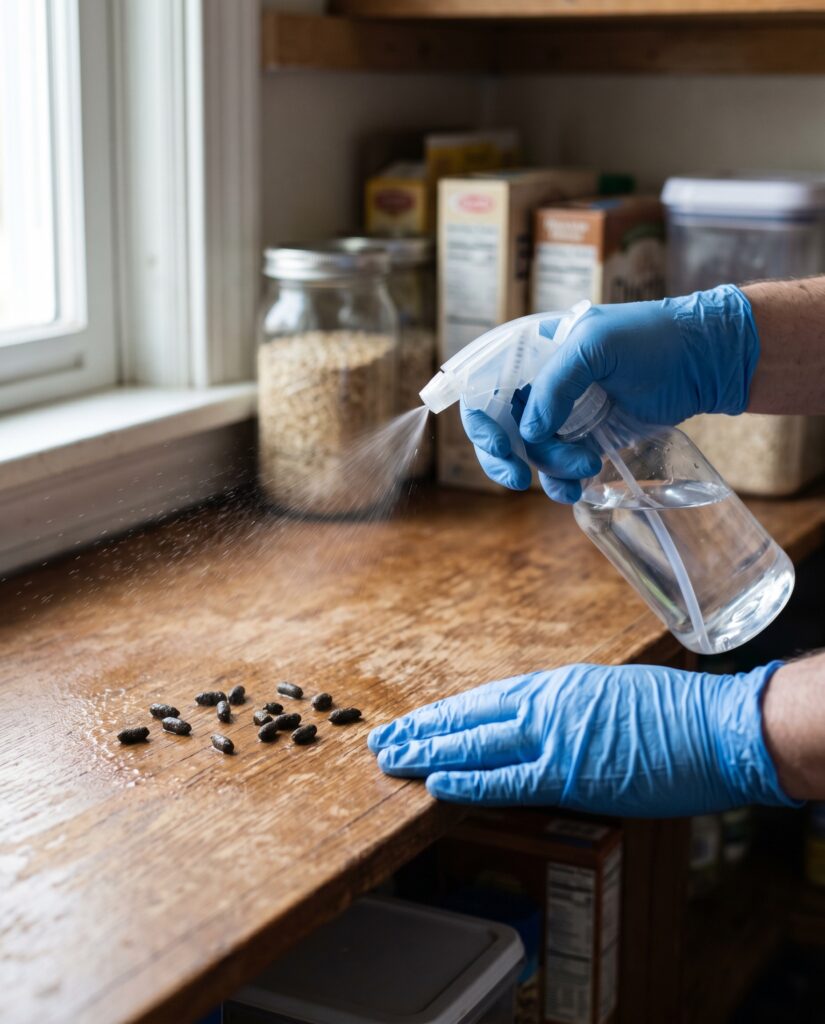
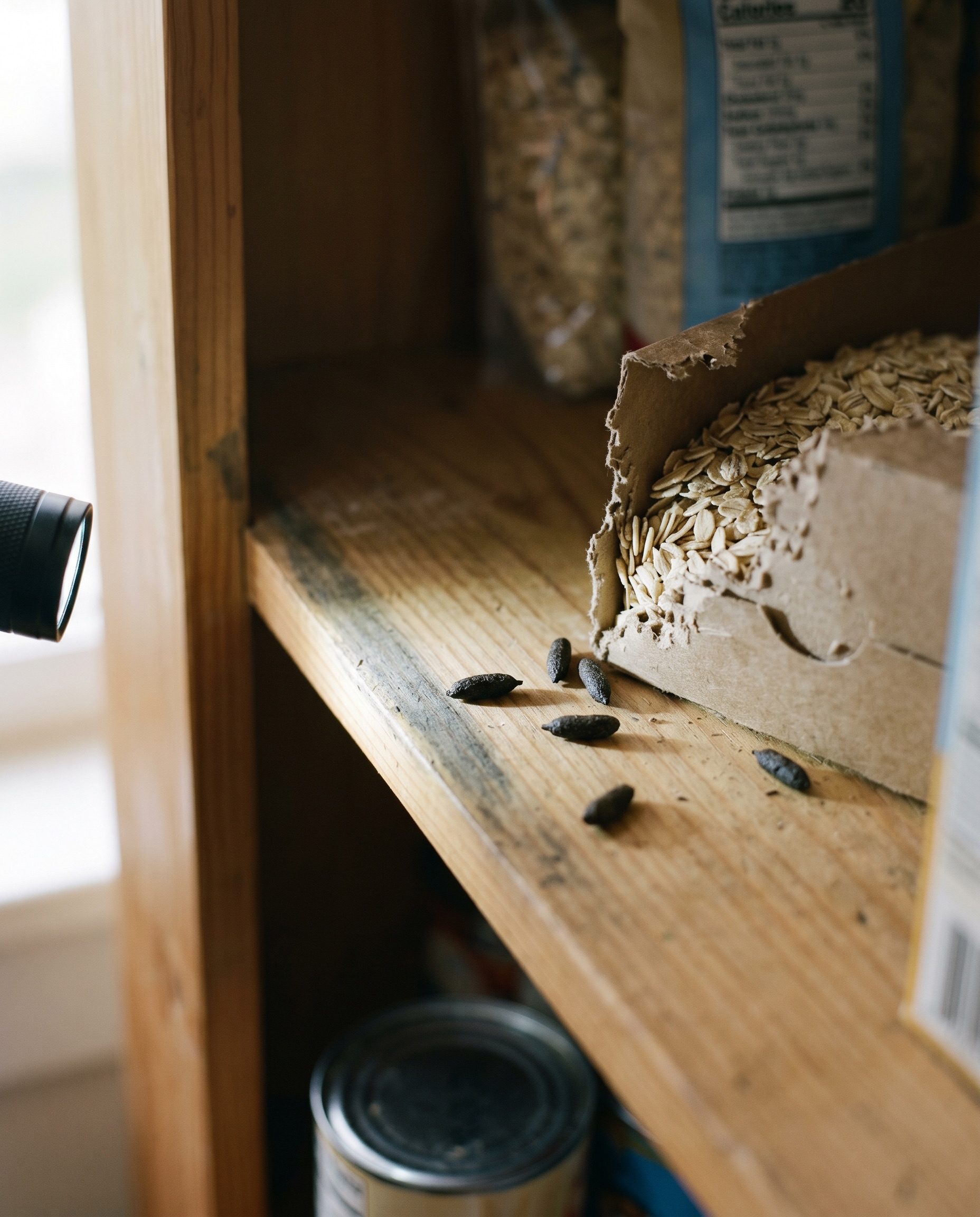
Before you buy a thing, walk the perimeter and the rooms with a flashlight and confirm what you are dealing with. Rat droppings are dark and spindle-shaped, roughly the size of a raisin, and they cluster along walls and behind appliances. You will also see greasy rub marks where their oily fur drags along a regular runway, gnaw damage on wood and plastic, and sometimes a burrow opening near the foundation, a shed, or a woodpile.
While you map the signs, map the openings, because a gap the width of a quarter is an open door. Check where pipes and wires enter the wall, around the dryer vent, under the garage door, at the foundation sill, and where the roofline meets the eaves for climbing roof rats. If you are not certain it is rats rather than mice or something else, our mouse, rat, and rodent identification guide shows the droppings and damage side by side so you treat the right animal. The same exclusion logic that keeps rats out works on mice too, and our mouse-proofing walkthrough covers the smaller gaps a mouse exploits.
Seal them out and starve them
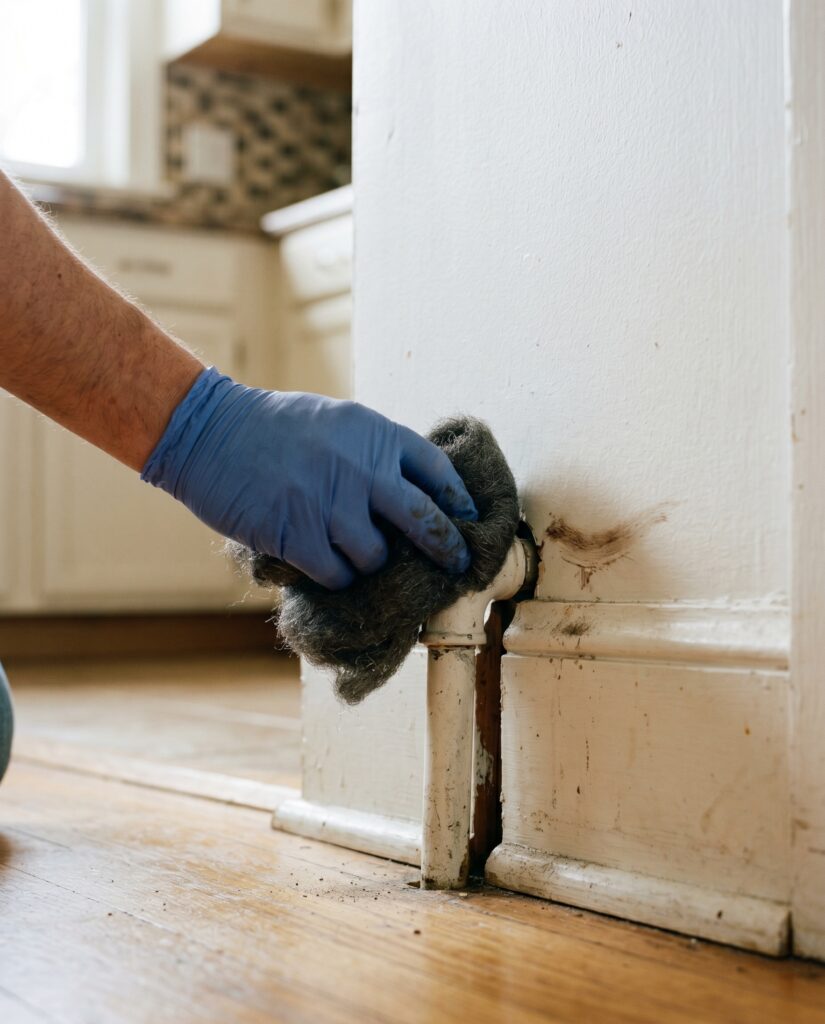
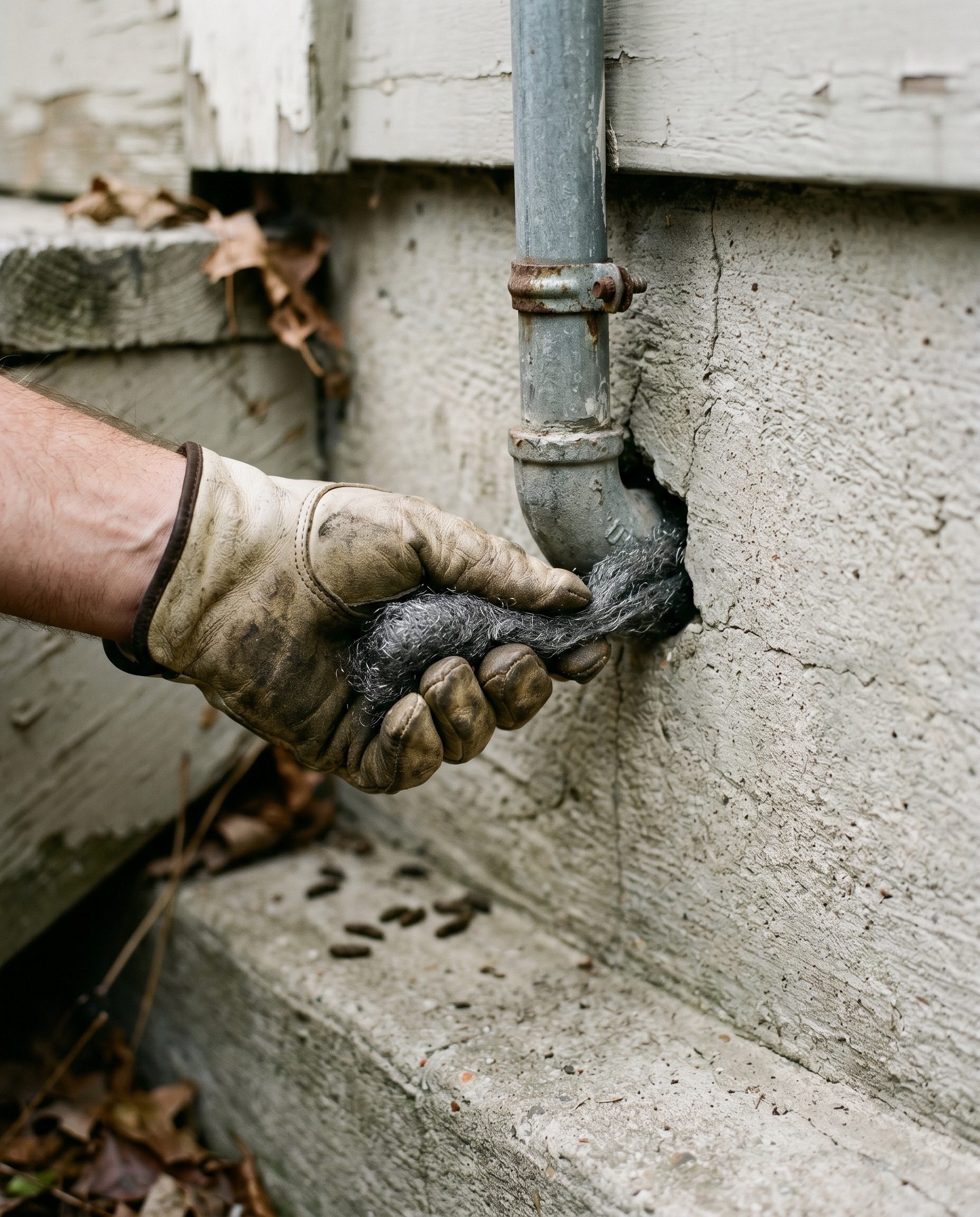
This is the layer that costs the least and does the most, so it comes before any trap or chemical. Start with exclusion. Pack steel wool tightly into small gaps because rats hate chewing through the wiry strands, then seal over it with caulk or foam to hold it in place. For anything bigger, cover the opening with quarter-inch galvanized hardware cloth, screwed or stapled down so a rat cannot peel it back. Fit a door sweep on the garage and exterior doors, screen the dryer and attic vents, and treat every quarter-inch gap as a live entrance, not a maybe.
Then cut the food off. Store pantry staples and pet food in sealed metal or hard plastic, not the bag they came in. Pick up fallen fruit, secure trash cans with locking lids, take pet bowls in at night, and clean up the crumbs under the stove and behind the fridge where they feed unseen. The EPA’s integrated, prevention-first approach to pest control puts sanitation and exclusion ahead of pesticides for exactly this reason: remove what draws them and the chemical step often becomes unnecessary.
Last, kill the harborage outside. Move woodpiles off the ground and away from the house, cut back ivy and dense shrubs against the foundation, clear junk piles, and collapse any active burrows you find. Cover plus food is what holds a rat colony in place; take both away and you have already done half the work. This same exclusion-and-sanitation core is what UC IPM recommends as the exclusion-first, trapping-before-bait approach for house mice, and it carries straight over to rats.
Pre-bait, then trap heavily
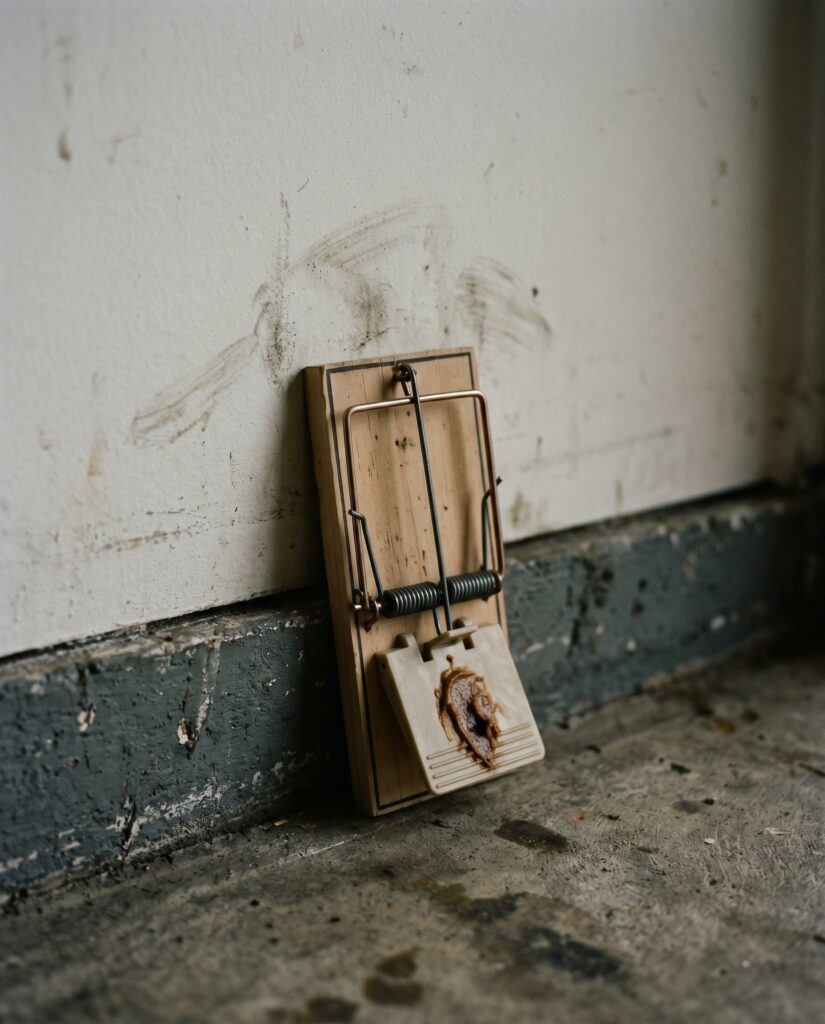
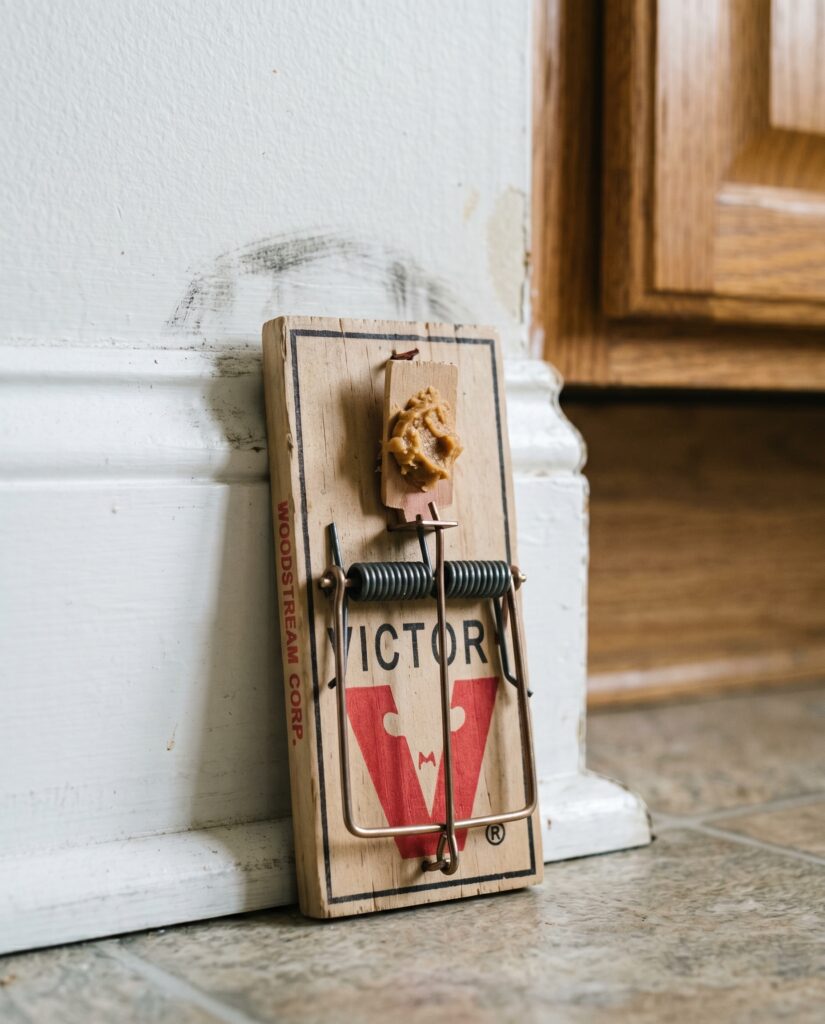
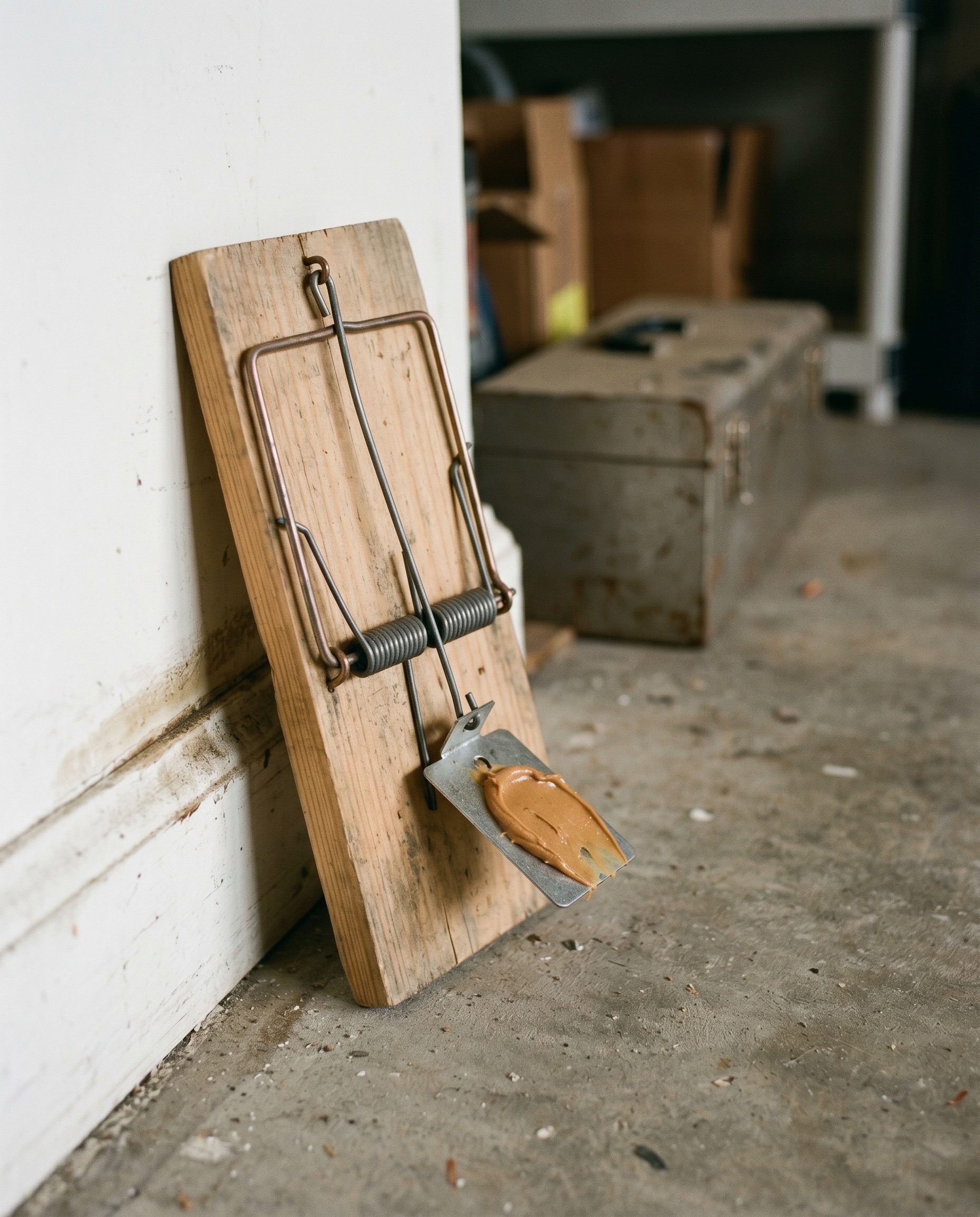
Now you trap, and the single thing that separates success from a month of empty traps is patience up front. Set the traps out unset and baited for three to five days so the wary rats learn the new object is just another food source. Use peanut butter, a bit of bacon, or a nut pressed onto the trigger. Once they are feeding freely off the unset traps, arm them all at once on the same night. You catch far more in that first armed night than you would have in two weeks of jumping the gun.
Use snap traps or electronic traps, and use a lot of them, far more than you think you need, a dozen for an active infestation is not unreasonable. Place each one flush against the wall with the trigger end touching the baseboard, because rats run with their whiskers on a surface and rarely cross open floor. Set them in pairs a few feet apart along the runways you found, and in the attic or along ceiling joists for roof rats. Skip glue boards. They are inhumane, a strong rat often drags or tears free, and they do not deliver the clean, reliable catch a snap trap does.
| Situation | Best approach | Watch out for |
|---|---|---|
| Kitchen or pantry | Snap traps along walls, food locked up | No loose poison near food or pet bowls |
| Garage or basement | Heavy trapping after pre-baiting, seal gaps | Check and reset traps daily |
| Attic (roof rats) | Traps on joists and runways, screen vents | Wear gloves and a mask handling droppings |
| Pets or kids present | Covered or tamper-resistant trap stations | Keep traps and any bait fully out of reach |
For the specific traps and stations I would reach for first, our tested rat traps roundup sorts the reliable snap and electronic options from the gimmicks.
When bait makes sense, and its real cost
Most homes clear rats with exclusion, sanitation, and trapping, and poison should be the last tool you reach for, not the first. If you do use it, the risk is not abstract. The EPA warns about secondary poisoning of pets and wildlife when a poisoned rat is eaten by a dog, a cat, an owl, or a hawk, and a rat that dies in a wall void leaves you with a stench you cannot remove for weeks.
If bait is truly warranted, the rules are simple and not optional. Never scatter loose bait. Use only locked, tamper-resistant bait stations that pets and children cannot open, place them where rats travel but people and animals do not, and read and follow the product label, because under federal law the label is the law. Be aware that the EPA restricts the most hazardous second-generation rodenticides for consumer use, so the products on the shelf are limited by design. Keep all bait out of reach of children and pets, and for any suspected exposure, contact a doctor, your vet, or your local poison control center. For ultrasonic plug-ins, the honest answer is that they are largely unproven and do not clear an infestation, so do not spend on them.
When to call a pro
Some situations are past a DIY plan, and there is no shame in handing them off. Call a licensed pest-control professional if you have a large or recurring infestation that survives a correct seal-and-trap effort, rats nesting inside a wall void or chewing electrical wiring, a heavy burrow system you cannot trace, or droppings throughout the home that point to an established colony. A pro brings tools and access you do not have, and on wiring damage the fire risk alone justifies the call. Matter-of-fact, not alarmist: if the plan above is not closing it out in a few weeks, get help.
Common questions
What gets rid of rats fast?
Heavy trapping gets the quickest visible result, but only after you pre-bait the traps unset for a few days so the rats lose their fear of them, then arm them all at once. There is no instant fix that lasts, because a fast knockdown does nothing if the rats can still get in and eat. Pair the trapping with sealing gaps and cutting off food or they come right back.
Does poison get rid of rats?
It can reduce numbers, but it is a last resort, not a first move. Poison risks killing pets and wildlife that eat a poisoned rat, leaves dead rats decaying in your walls, and never addresses the entry points that let new rats in. Most homes clear up faster and more safely with exclusion and trapping than with bait.
Do ultrasonic repellers work on rats?
No. Ultrasonic plug-in devices are largely unproven and do not clear an infestation. Rats habituate to the sound quickly and keep feeding and nesting right next to the device. Spend the money on hardware cloth, steel wool, and traps instead.
How long does it take to get rid of rats?
For a contained problem handled correctly, expect a couple of weeks once you have sealed the gaps and pre-baited before trapping. Larger or established colonies take longer. You know it is over when the traps stop catching, you see no fresh droppings, and you find no new gnaw marks across a clean week.
Are rats dangerous to have in the house?
They can be. Rats gnaw wiring, which is a fire risk, and their droppings and urine should be handled carefully, so wear gloves and a mask. For the safe cleanup steps, never sweep or vacuum dry droppings, and see our guide to diseases rats carry and safe cleanup.
Where the daytime noise test is the actual question, squirrel droppings answers it.
Final verdict
Getting rid of rats is a plan, not a product. The free moves come first and do the most: seal every gap a quarter-inch and up with steel wool and hardware cloth, lock up food and pet kibble, and strip the woodpiles, clutter, and burrows that give them cover. Only then do you trap, and the trick that makes trapping actually work is pre-baiting the traps unset for several days so the wary rats stop avoiding them, then setting a dozen at once flush against the walls. Reach for poison last, only in locked tamper-resistant stations, and never as loose bait, because the cost to your pets and local wildlife is real. Skip the ultrasonic gadgets entirely. Do the exclusion, stay patient with the trapping, and rats clear out and stay out.
Next steps:
– Confirm it is rats and not mice with our mouse, rat, and rodent identification guide.
– Pick your traps from the tested rat traps roundup.
– Handle droppings the safe way with our diseases rats carry and safe cleanup guide.