
Mice are good at staying out of sight, so you almost never confirm them by spotting one. You confirm them by the traces they leave: small dark rice-grain droppings, gnaw marks on food packaging and box edges, greasy rub marks along baseboards, scratching or scurrying inside the walls at night, a musky ammonia smell in a closet or cabinet, and shredded paper nests. Any single one of these means act now, not next weekend, because a pair of mice becomes a colony within weeks. Catch it at the first dropping and you clear it with a few traps and some steel wool; wait, and you are chasing a population.
Mice hide, so you confirm them by their traces: rice-grain droppings, gnaw marks, greasy rub marks on baseboards, night scratching in the walls, a musky smell, and shredded nests. One sign is enough to act, because a pair turns into a colony fast.
- Do first (free): Seal food in hard containers, wipe up crumbs, then plug entry gaps with steel wool so new mice cannot get in.
- Best for the common case: Several baited snap or electronic traps set flush against the walls where you found droppings.
- Skip: Ultrasonic plug-in repellers; they are unproven and do not clear an infestation.
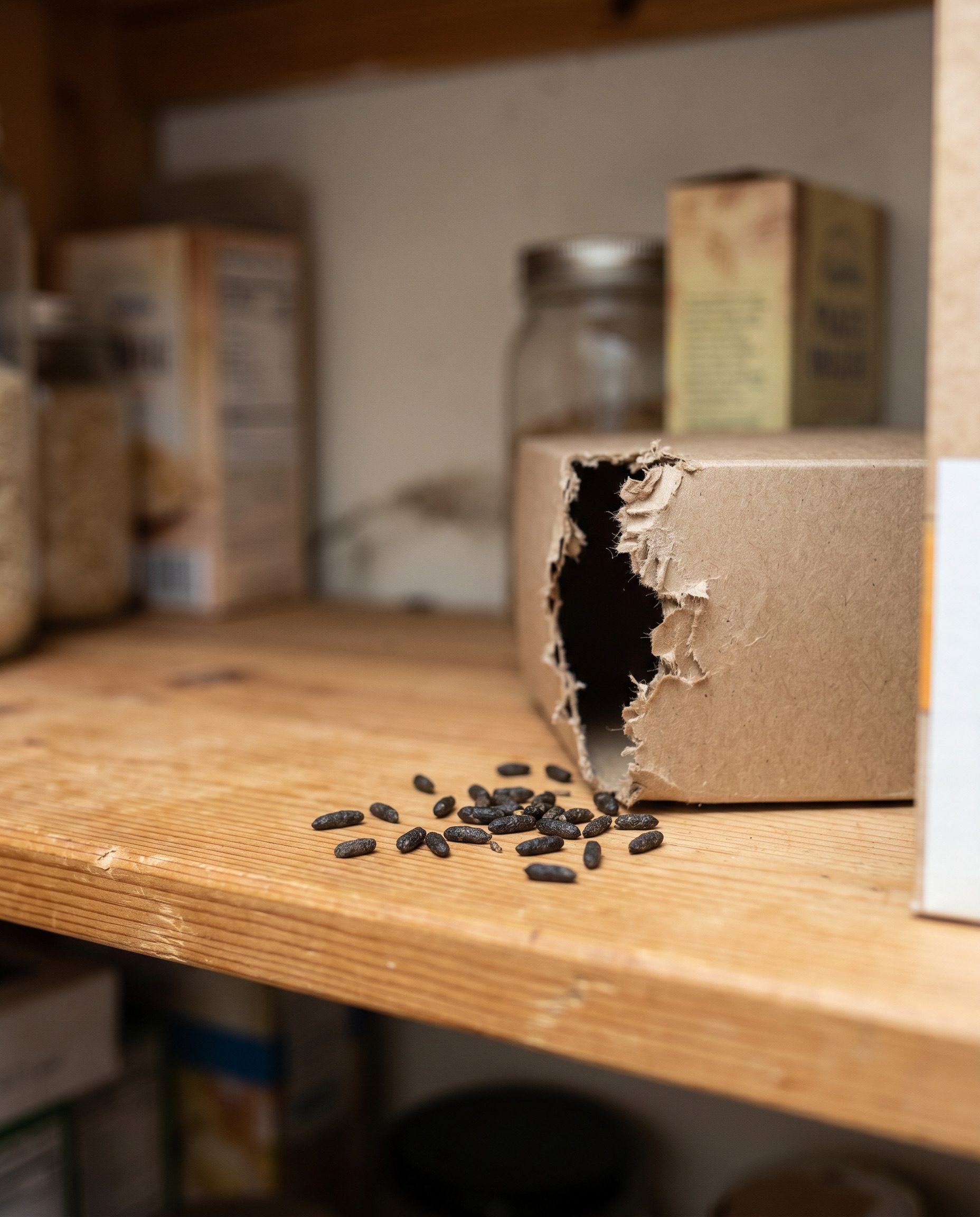
What the signs actually look like
The droppings are the giveaway most people see first. Mouse droppings are dark, roughly the size and shape of a grain of rice with pointed ends, and you find them in lines along the back of a drawer, in the corner of a pantry, or under the kitchen sink. A mouse drops dozens a day, so a fresh, growing pile of them is the single most reliable confirmation. Rat droppings are noticeably bigger and blunter, which matters because the two pests call for slightly different tactics, as the UC IPM Pest Notes on the house mouse lays out.
If that is where this is heading, what left droppings in a cupboard covers the four realistic candidates.
The detail on why the timing of any work is regulated sits in telling bat guano from mouse droppings.
Next look for gnaw marks and grease. Mice chew constantly to keep their teeth filed down, so you will see clean nibbled corners on cereal boxes, bags, and even the edges of cabinets or baseboards. They also follow the same routes night after night, and the oil and dirt in their coats leaves a faint dark rub mark along the baseboard where their bodies brush the wall. The other two signs are sensory: at night you hear scratching or light scurrying inside walls and ceilings, and a heavy infestation gives off a distinct musky, ammonia-like smell from their urine. Shredded paper, insulation, or fabric tucked into a quiet corner is a nest.
Why one mouse is never one mouse
Here is the part that turns a shrug into action. A single house mouse rarely lives alone for long, because they breed fast and year-round indoors. One female can have several litters a year with five or six pups each, and those pups are breeding within about six weeks. That is why the math runs away from you: the few droppings you find today represent a population that is already growing, not a lone wanderer that will leave on its own.
They came in for the same reasons every mouse does, which is food, warmth, and a gap to get through. A mouse can squeeze through a hole the size of a dime, so the open invitations are gaps around pipes, dryer vents, garage door corners, and worn weatherstripping. Cooler weather in fall pushes them indoors hardest, so a kitchen that was quiet all summer can suddenly show droppings in October. Removing the food and the entry gap is half the fix, which is exactly why the first moves below cost almost nothing. If you are not certain it is a mouse and not a rat or another rodent, our mouse vs rat identification guide sorts the droppings and gnaw sizes side by side.
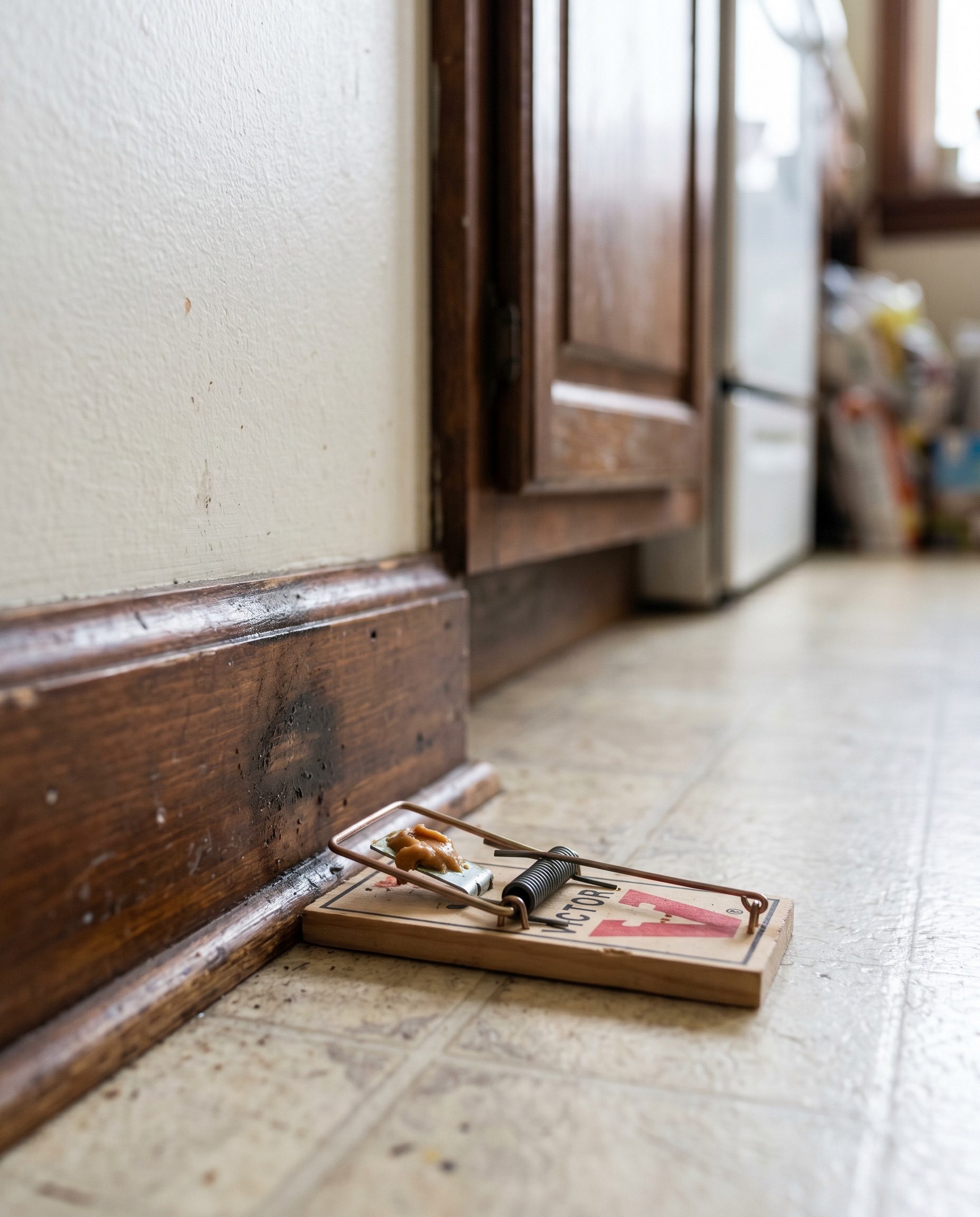
What to do first, before any poison
Start with the steps that cost nothing and do real damage to the problem, because most early mouse cases clear here without a drop of poison. The order is sanitation, then exclusion, then trapping.
Sanitation first: move dry food, pet food, and birdseed into hard metal or thick plastic containers a mouse cannot chew, wipe up crumbs nightly, and empty the trash before bed. A mouse needs very little food, so you are not aiming for spotless, you are aiming for nothing easy. Take away the food and traps work far better, because a hungry mouse goes for the bait instead of the cracker box.
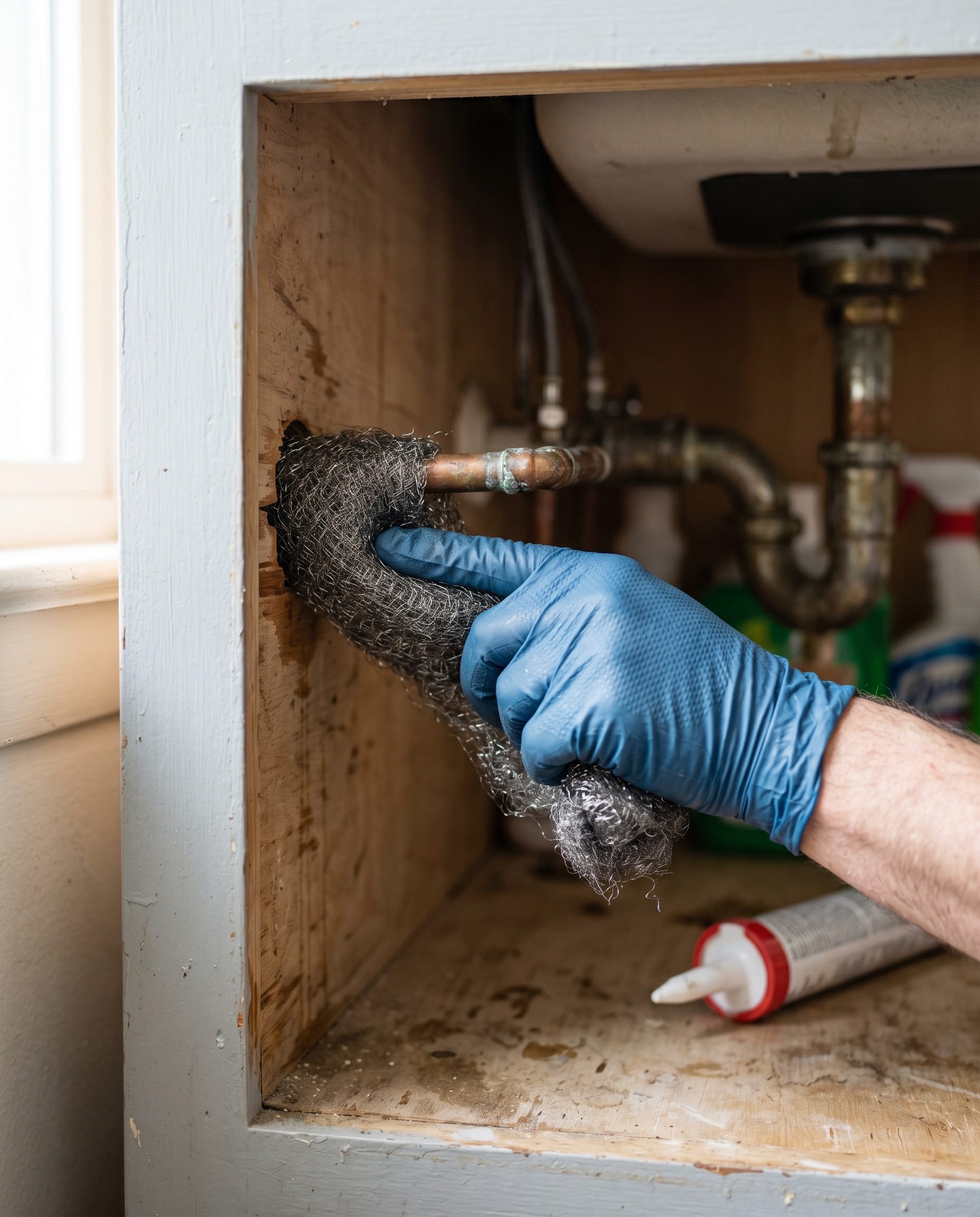
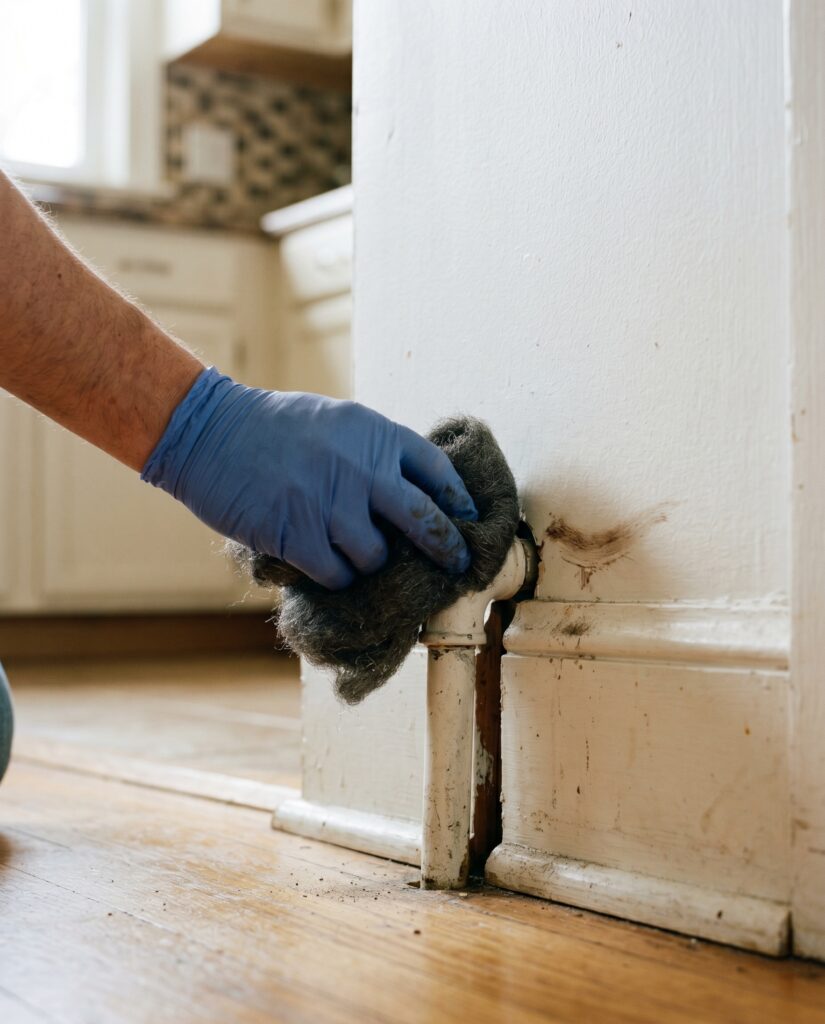
Then exclusion, which is the durable win. Walk the perimeter with a flashlight and plug every gap with steel wool packed tight, then cap it with caulk so the mouse cannot pull it out; foam alone gets chewed straight through. Check where pipes and wires enter walls, under sinks, behind the stove, the garage door corners, and any vent without a screen. Sealing the entry points is what keeps the next wave out after you have cleared this one. For the full removal sequence once the gaps are shut, our step-by-step guide to getting rid of mice walks the whole plan in order.
Traps versus bait, honestly
Now the part where people overspend or pick the wrong tool. For nearly every home, traps beat poison, and within traps there is a clear ranking.
| Your situation | Best approach | Watch out for |
|---|---|---|
| Kitchen or pantry, droppings found | Several baited snap or electronic traps | Set flush to the wall, not in the open |
| Pets or kids in the home | Snap traps inside a bait box, or electronic traps | Keep traps out of reach, never loose poison |
| Heavy or recurring infestation | Many traps at once, or a licensed pro | Glue boards and ultrasonic gadgets waste time |
Choose snap traps or battery-powered electronic traps over glue boards. Glue boards are inhumane and less effective because mice can pull free, drag the board, and learn to avoid it, and they catch dust and pets instead of mice. Set traps in pairs against the wall with the trigger end facing the baseboard, since mice run along edges and rarely cross open floor; UC IPM recommends snap traps placed against the wall right where the droppings are heaviest. Bait with a smear of peanut butter, not a heaping pile, and use four to six traps even for a “small” problem because mice are unpredictable. Mice are curious and will investigate a new trap quickly, whereas rats are warier of new objects than mice, so if your traps sit untouched for a week, double-check that you actually have mice.
Poison bait is a genuine last resort, not a first move, and it carries real risk. A poisoned mouse can die in a wall and stink for weeks, and worse, rodenticides can poison pets and wildlife through secondary exposure when a dog, cat, or owl eats the poisoned mouse. If you ever use bait, use only locked, tamper-resistant stations so loose pellets are never accessible to children or pets, follow the product label exactly, and prefer trapping and exclusion for the indoor job. The EPA also restricts the most hazardous second-generation rodenticides for consumer use for this reason, and the agency’s safe pest control principles put non-chemical control first. For an exposure, contact a doctor, your vet, or your local poison control center.
Cleaning up droppings safely
This step matters more than people realize, and the instinct most reach for is the wrong one. Do not sweep or vacuum dry droppings, because that puts virus particles into the air you breathe. Mouse droppings and urine can carry germs, so the safe method is to ventilate the room first, then wet the droppings down with a disinfectant or a bleach solution, let it sit, and wipe everything up with a paper towel while wearing disposable gloves. Bag the waste, seal it, and wash your hands after.
If anyone in the home develops fever, body aches, or trouble breathing after a rodent cleanup, contact a doctor and mention the exposure. The point is to handle it calmly and correctly, not to panic. Our guide to diseases mice and rats carry and how to clean up safely covers the full wet-and-wipe method and what symptoms to watch for.
Common questions
How do I know if it is mice or rats?
Size is the fastest tell. Mouse droppings are rice-grain small with pointed ends; rat droppings are two to three times larger and blunter. Mice also leave smaller gnaw marks and squeeze through dime-sized gaps, while rats need a quarter-sized hole. The droppings on your shelf will usually answer it before you ever see the animal.
Does one sign mean a full infestation?
Not necessarily, but treat it like one. A single fresh dropping or one chewed box means at least one mouse is active, and because they breed so quickly, the safe assumption is that more are coming. Acting at the first sign is far cheaper and faster than waiting until you hear them in the walls.
Do ultrasonic repellers get rid of mice?
No. Ultrasonic plug-in devices are largely unproven and do not clear an infestation; mice get used to the sound and carry on nesting and feeding. Put that money toward traps and steel wool instead, which actually remove and exclude the animals.
How long does it take to get rid of mice?
A small, early case handled with sanitation, sealing, and four to six well-placed traps often clears in one to two weeks. Larger or recurring problems take longer and may need a professional. You know it is over when the traps stop catching and no new droppings appear for a week.
Are mouse droppings dangerous to clean?
They can be, which is why method matters. Never sweep or vacuum them dry. Ventilate, wet them with a disinfectant solution, wear gloves, wipe with paper towels, and bag the waste. If you feel sick after a cleanup, contact a doctor.
Final verdict
Mice announce themselves through their traces long before you see one, so trust the evidence: rice-grain droppings, gnawed packaging, greasy rub marks on the baseboards, night scratching in the walls, a musky smell, and shredded nests. One sign is your cue to act, because a pair becomes a colony in weeks. Do the free work first, sealing food in hard containers and packing entry gaps with steel wool, then set four to six baited snap or electronic traps flush against the walls where the droppings are. Skip the ultrasonic gadgets and skip loose poison; if you must use bait at all, keep it in locked tamper-resistant stations only. Clean droppings the wet-and-wipe way, never dry, and you will clear most homes without ever calling anyone.
Next steps:
– Confirm it is mice and not rats with our mouse vs rat identification guide.
– Run the full removal plan in our step-by-step guide to getting rid of mice.
– Clean up safely with our guide to diseases mice and rats carry and safe cleanup.

Pingback: Types of Fleas: Which One Is in Your House