n
n
n
You found a scorpion on the wall and the only question that matters is whether it is the dangerous one. The short version: in the United States, only the Arizona bark scorpion (Centruroides sculpturatus) delivers a sting serious enough to worry about, and you tell it apart less by color than by build and behavior. It is small, only about two to three inches, pale tan, with thin slender pincers, and it climbs walls and clings upside down. The big, heavy scorpions with thick crab-like claws that sit on the ground mostly just pinch and sting about like a bee. Get the build right and you have your answer.
If that is where this is heading, our guide to the insects that only appear at night covers the first second after the light goes on.
nn
n
If a scorpion is small and slim with thin pincers and it climbs and clings upside down, treat it as an Arizona bark scorpion. The big ones with thick claws that stay on the ground are far less dangerous.
n
- n
- The confirming feature: Thin, slender pincers and a thin tail on a small two to three inch body, paired with climbing and clinging upside down.
- Most-confused look-alike: Stripe-tailed and desert hairy scorpions, separated by their thicker claws, heavier bodies, and ground-bound habit.
- What it means: The bark scorpion sting can be a medical emergency for young children; most other US stings are mild. See our guide to scorpion sting treatment.
n
n
n
n
nn
nn
Quick answer: the slim climber
nn
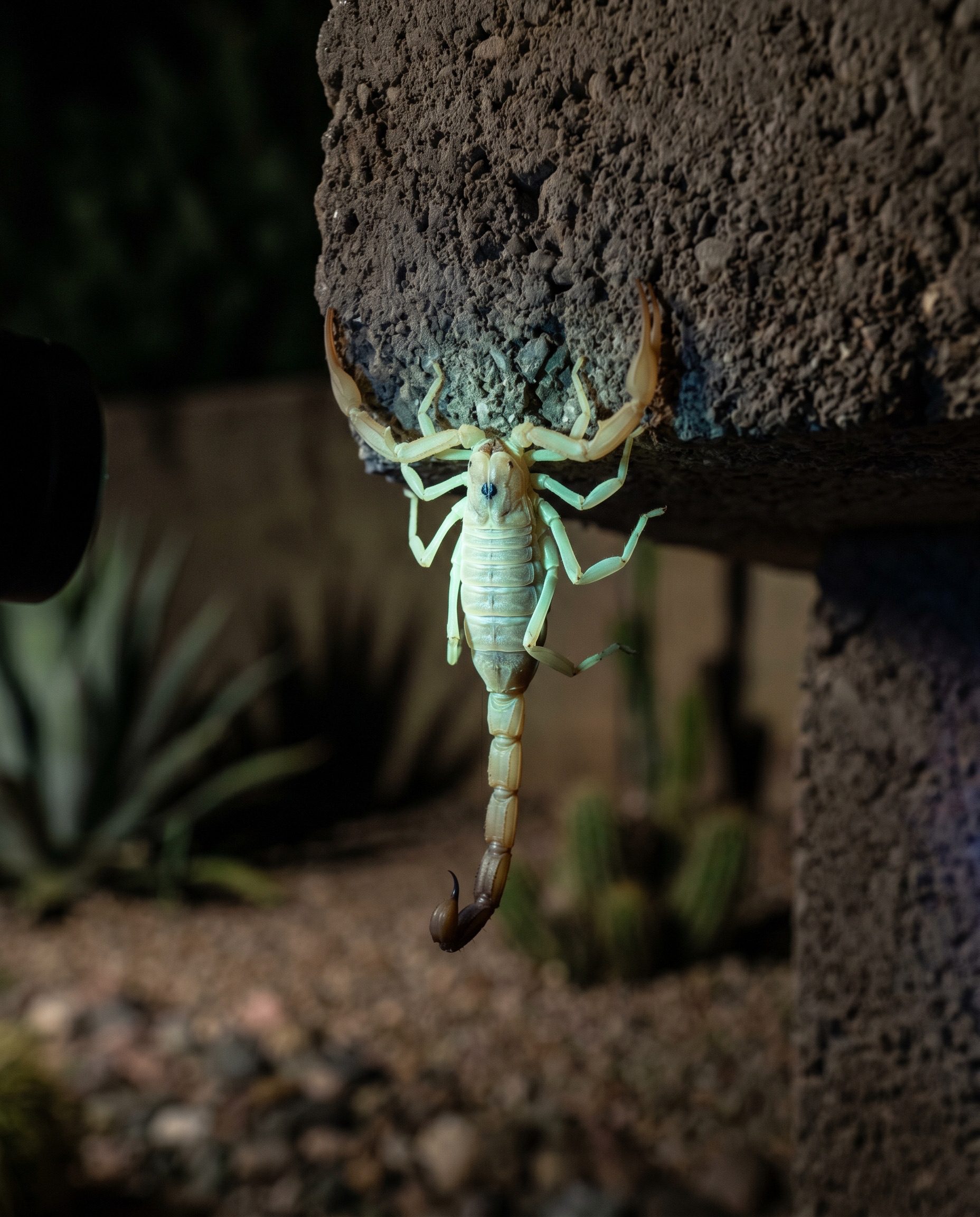
The Arizona bark scorpion is the one to know by name, because it is the only US scorpion whose sting rises to a true medical concern. Texas A&M AgriLife notes that of the many species across the Southwest, the Arizona bark scorpion is the one species of real medical concern in the US. It is small, pale, and lightly built, two to three inches counting the tail, sandy yellow to tan with no bold pattern. Everything about it reads delicate next to a desert giant.
nn
Its closest source of confusion is the stripe-tailed scorpion, which shares the same pale color and overlaps the same yards. Color alone will fool you, so do not rely on it. The tell is the combination of a slim body, hair-thin pincers, and the climbing habit that the heavier species simply do not have. If it is on the ceiling or hanging under a shelf, you are almost certainly looking at a bark scorpion.
nn
The one feature that confirms it
nn
When entomologists separate a bark scorpion from a look-alike, they look at the pincers first. On the bark scorpion the pincers are long, thin, and almost finger-like, more like delicate tweezers than crab claws, and the tail is correspondingly slender. Thick, robust, crab-style claws point you away from the dangerous species and toward a heavier, milder one. This single contrast in pincer build settles most yard sightings before you ever consider color or size.
nn
Behavior is the second half of the same tell, and it is the part people underrate. The bark scorpion is a strong climber that walks up stucco, brick, and tree bark and will rest upside down, clinging to the underside of a surface, which is why you find one on a ceiling or under a board rather than scuttling across open dirt. That upside-down resting posture, called negative geotaxis, is close to diagnostic in the home. The heavier desert species stay low and run along the ground.
nn
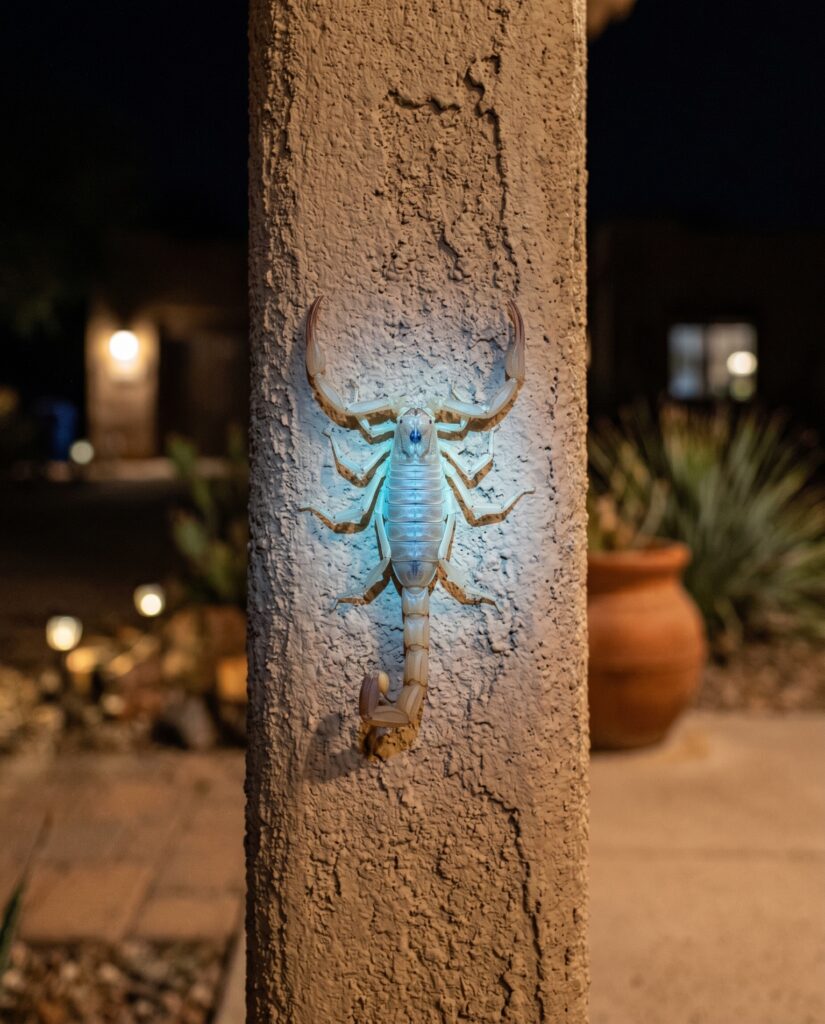
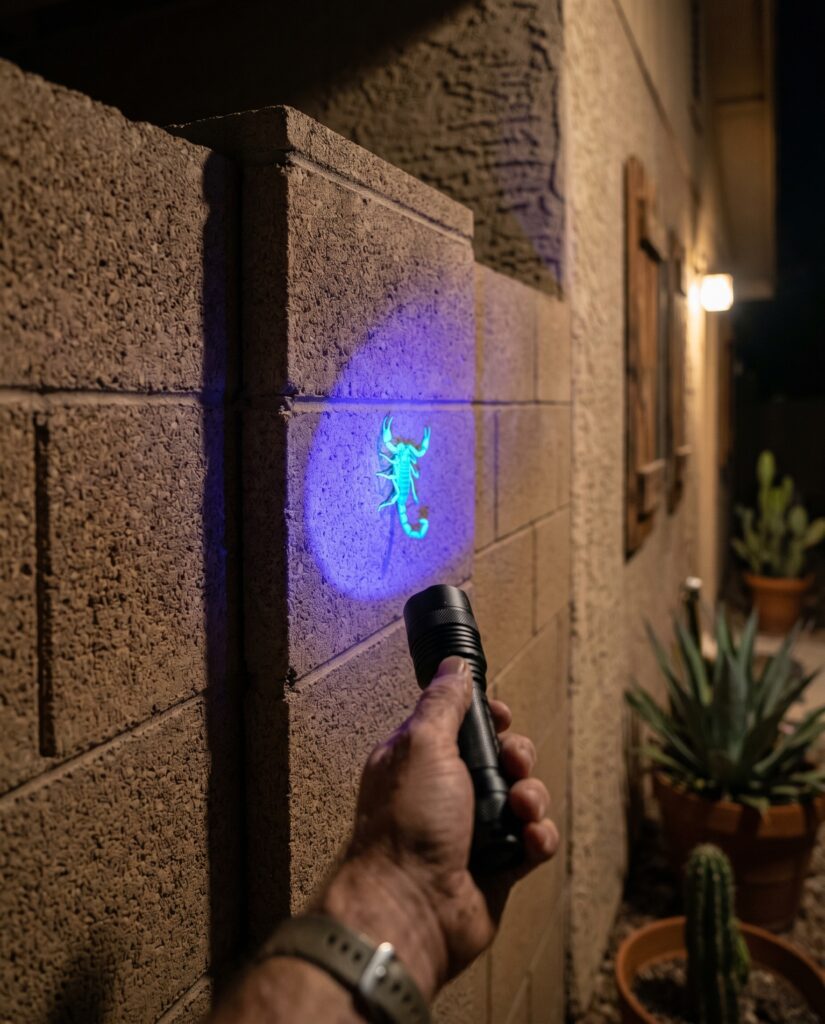
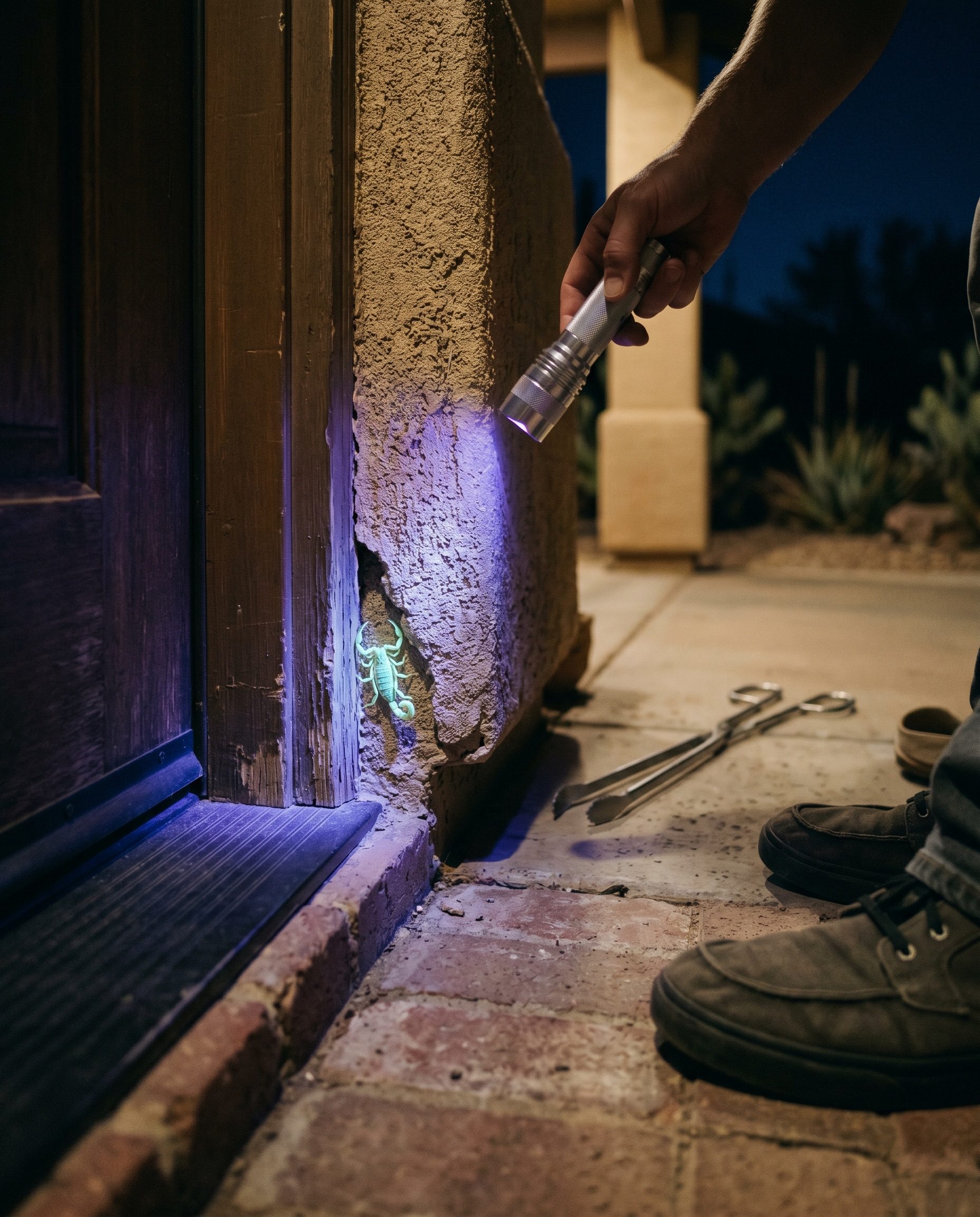
A quick night trick confirms the find without touching anything. All scorpions glow under ultraviolet light, and UC IPM explains that scorpions fluoresce a blue-green under ultraviolet light, which is how to find them at night. A UV flashlight will light up a bark scorpion on a wall from several feet away, and once it is glowing you can read the slim build and climbing pose in safety. Never reach for one by hand, glowing or not.
Why insects gather at a light goes further into why colour temperature beats brightness.
nn
nn
Full description: size, color, build
nn
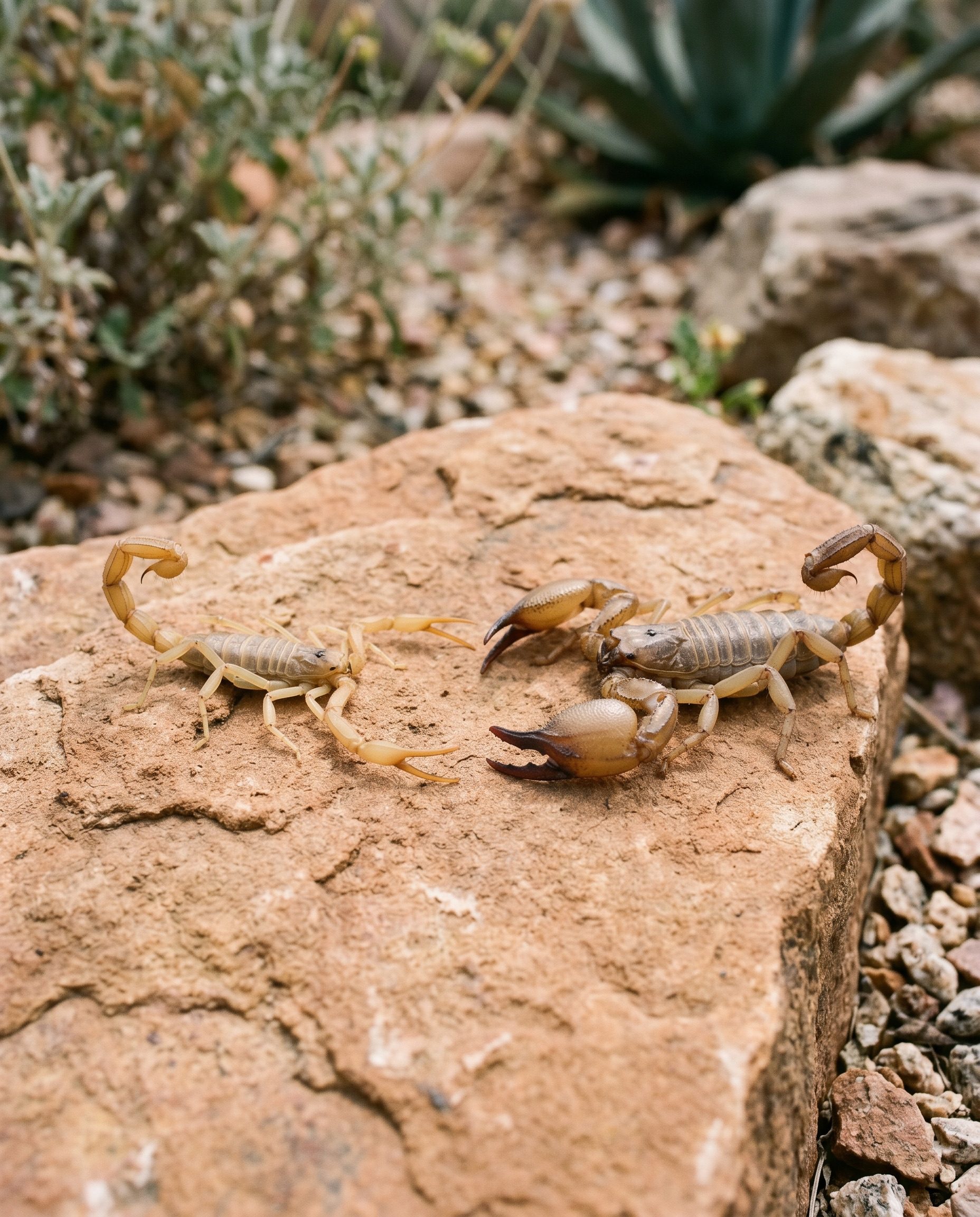
Run down the bark scorpion like a checklist and the picture holds together. Size is modest, adults reach roughly two to three inches from the front of the body to the tip of the tail, which makes it noticeably smaller than the desert hairy scorpion that can stretch past five inches. If a scorpion feels chunky and substantial in the way it sits, it is probably not this one.
nn
Color is pale and plain. Bark scorpions run light yellowish-brown to tan, sometimes with a faintly darker back, and they lack the bold dark bands or contrasting tail of some look-alikes. They are not the species people describe as obviously striped or black. The body is slender overall, the legs are thin, and the whole animal looks built for squeezing into cracks rather than digging.
nn
Count the body parts to confirm it is even a scorpion and not something else. Like all scorpions it has eight legs plus two pincer-bearing pedipalps, a segmented tail ending in a single curved stinger, and a pair of comb-like sensory organs underneath. Eight legs means arachnid, which separates a scorpion from any six-legged insect at a glance. The slim tail and thread-fine pincers are what then separate the bark scorpion from its bulkier cousins.
nn
Look-alikes you will actually confuse it with
nn
People mix up the bark scorpion with two yard regulars, and both are far less dangerous. The stripe-tailed scorpion is the same pale color and shows up in the same garages, which is why color fails as a test. The desert hairy scorpion is so much larger and heavier that beginners assume the big one must be the deadly one, when the opposite is true. The table below is the fast separator.
nn
| Species | Key feature | Where found |
|---|---|---|
| Arizona bark scorpion | Small, slim, thin pincers, climbs and clings upside down | AZ, parts of CA, NV, NM, UT; walls, ceilings, trees |
| Stripe-tailed scorpion | Pale like bark but stouter pincers, keeled tail, ground-bound | Southwest deserts; under rocks and debris |
| Desert hairy scorpion | Very large, thick crab-like claws, hairy legs, burrows | SW deserts; sandy soil, ground burrows |
nn
If you want a wider gallery of what turns up across the country, our scorpion identification guide to common US species lays them out side by side. The short rule worth memorizing: thick claws and big body mean a milder sting, thin claws and a climbing habit mean the one to respect.
nn
nn
Where and when you meet it
nn
Range is itself an ID clue. The Arizona bark scorpion is concentrated in Arizona and the surrounding desert Southwest, including parts of California, Nevada, New Mexico, and Utah, so a slim climbing scorpion in the Sonoran Desert region is a much stronger candidate than the same shape far outside that range. If you are well east of the desert, your odds of a true bark scorpion drop sharply.
nn
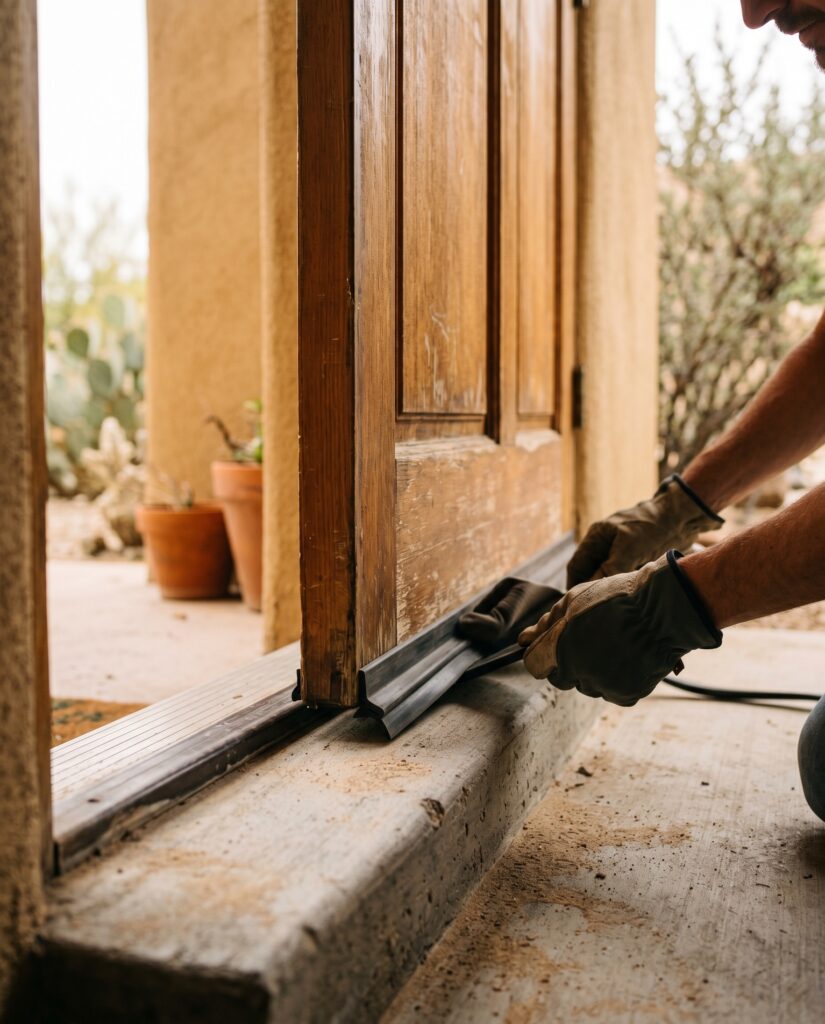
Inside that range, where you find it narrows things further. Bark scorpions favor cool, shaded, humid harborage, gathering under loose bark, in woodpiles, block walls, and the gaps around door thresholds, and they often move indoors in summer heat. They are most active on warm nights from roughly spring through early fall, which is exactly when a UV walk-around the foundation pays off. Sealing those gaps matters, and UC IPM notes that sealing entry points and removing harborage is the durable way to keep them out. That exclusion-first thinking lines up with the EPA’s integrated pest management approach, which puts exclusion and sanitation before sprays.
nn
Is it dangerous?
nn
Yes, the bark scorpion is the one US scorpion that can cause a serious reaction, and young children are the most vulnerable, so the safety guidance comes first. Get emergency medical help right away for a sting that brings trouble breathing, throat or tongue swelling, drooling, jerking or roving eye movements, severe agitation, or trouble swallowing, especially in a child or anyone with a known severe allergy, and use an epinephrine auto-injector if one has been prescribed. These red-flag signs mean the emergency room, not a wait-and-see. MedlinePlus describes the symptoms of a scorpion sting and the first aid steps to take for milder cases, and your regional poison control center can give guidance on a scorpion sting when you are unsure how serious one is.
nn
For perspective, most US scorpion stings are mild, closer to a bee sting, with local pain, tingling, and swelling that fade on their own. The stripe-tailed and desert hairy scorpions fall in that mild group. I identify scorpions; I do not diagnose or treat stings, so for what a reaction looks like and when it crosses into worrying, see our guide to whether scorpions are dangerous and how their venom works and hand the medical detail to a clinician. Never grab any scorpion by hand to identify it, use long-handled tongs, and wear closed shoes when walking in scorpion country at night.
nn
Common questions
nnAre all scorpions in my house dangerous?n
No. In the US, only the Arizona bark scorpion delivers a sting of real medical concern, and it is small, slim, and a climber. The larger, thick-clawed scorpions you find on the ground sting about like a bee. Identify the build before you worry, and keep children away from any scorpion until you know which one it is.
nnDoes color tell me if it is a bark scorpion?n
Not reliably. Bark scorpions are pale tan, but so is the harmless stripe-tailed scorpion that shares the same yards. Body shape and behavior are far better tells: thin pincers, a slim tail, a small body, and a habit of climbing and clinging upside down point to the bark scorpion.
nnWhy is it called a bark scorpion?n
Because it climbs and is often found on tree bark, walls, and other vertical surfaces, rather than burrowing in the ground like the desert hairy scorpion. That climbing habit is one of the most useful ID cues, since the heavier, more dangerous-looking species stay low.
nnHow do I find them at night?n
Scorpions glow blue-green under ultraviolet light, so a UV flashlight reveals them on walls and around the foundation after dark. This lets you spot and read the build from a safe distance. If you need to move one, use long tongs and wear closed shoes, never bare hands or feet.
nnWhat should I do if a child is stung?n
Watch closely and get emergency medical help right away if you see trouble breathing, swelling around the mouth or throat, jerking movements, roving eyes, or severe distress. If you are unsure how serious it is, contact a doctor or your local poison control center. Young children can react more severely to a bark scorpion sting than adults do.
nn
Final verdict
nn
Telling the dangerous scorpion apart comes down to build, not color. The Arizona bark scorpion is the small, slim, pale climber with thin tweezer-like pincers that clings upside down on walls and ceilings, and it is the only US species whose sting is a genuine medical concern. The big, heavy scorpions with thick crab-like claws that stay on the ground are the milder ones, despite looking more intimidating. Lead with the pincers and the climbing habit, confirm with a UV flashlight at night, and never handle any scorpion by hand.
nn
Next steps:
nn
– Compare it against the full lineup in our scorpion identification guide to common US species.
n
– Understand the venom and overall risk in are scorpions dangerous, with their venom explained.
n
– Know what to do after a sting with our scorpion sting treatment guide on when to worry.
nnn