
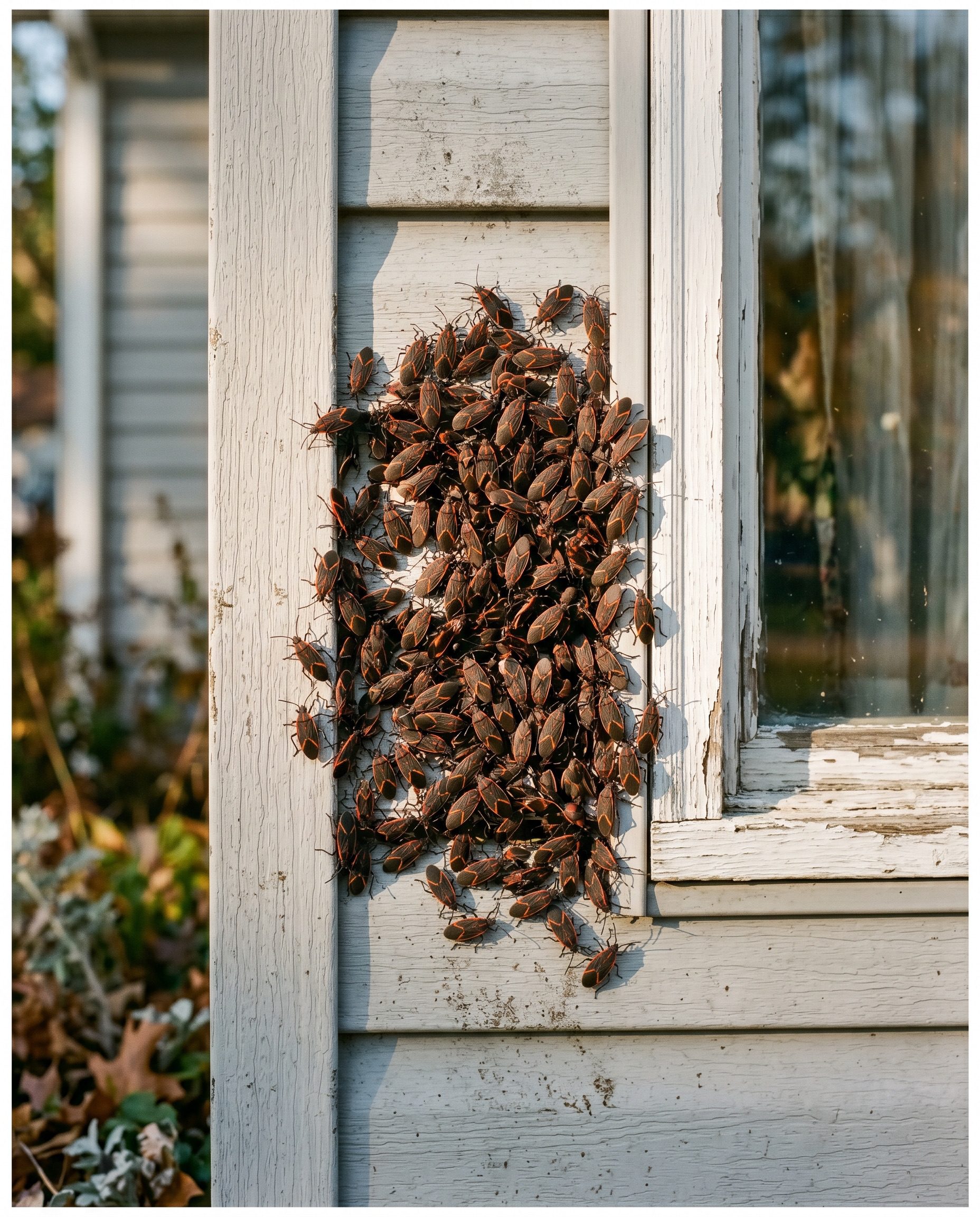
If you are seeing boxelder bugs, the fight is on the outside of your house, not the inside. These black-and-red insects swarm sunny south- and west-facing walls in early fall, then slip through gaps to spend winter inside your wall voids and trim. So the real fixes are exterior: treat those warm walls in early fall before they pile up, seal the cracks around windows and siding so they cannot get in, and vacuum up any that already did. They stain surfaces if you crush them and they do no real harm, so this is exclusion and a shop-vac, not an indoor chemical war. What we would reach for in our own home is a caulk gun first, then the vacuum, and a spray on the wall only if the cluster is huge.
Boxelder bugs are an exterior problem. Seal the gaps around windows and siding, vacuum the ones that get in, and if a wall is swarming, treat that sunny south- or west-facing wall in early fall before they move in. Do not crush them and do not spray inside.
- Do first (free): Caulk and weatherstrip the gaps around windows, siding, vents, and the foundation line so they cannot get in.
- Best for the common case: A vacuum for the few that get inside, plus an early-fall exterior spot treatment on a swarming sunny wall.
- Skip: Crushing them and spraying inside your walls; both backfire with stains, odor, or carpet beetles feeding on dead bugs.
Why the fix is outside, not in
Boxelder bugs are not a hygiene problem and they are not breeding in your house. They live and feed all summer on boxelder, maple, and ash trees, and then in fall they hunt for a warm dry place to wait out winter. Your house is the biggest warm rock around. They gather on the sunny side because that wall holds heat the longest in the afternoon, and from there they work into any crack they can find. That is the whole reason an indoor approach fails: by the time you see them inside, the source is the wall and the weather, not your kitchen.
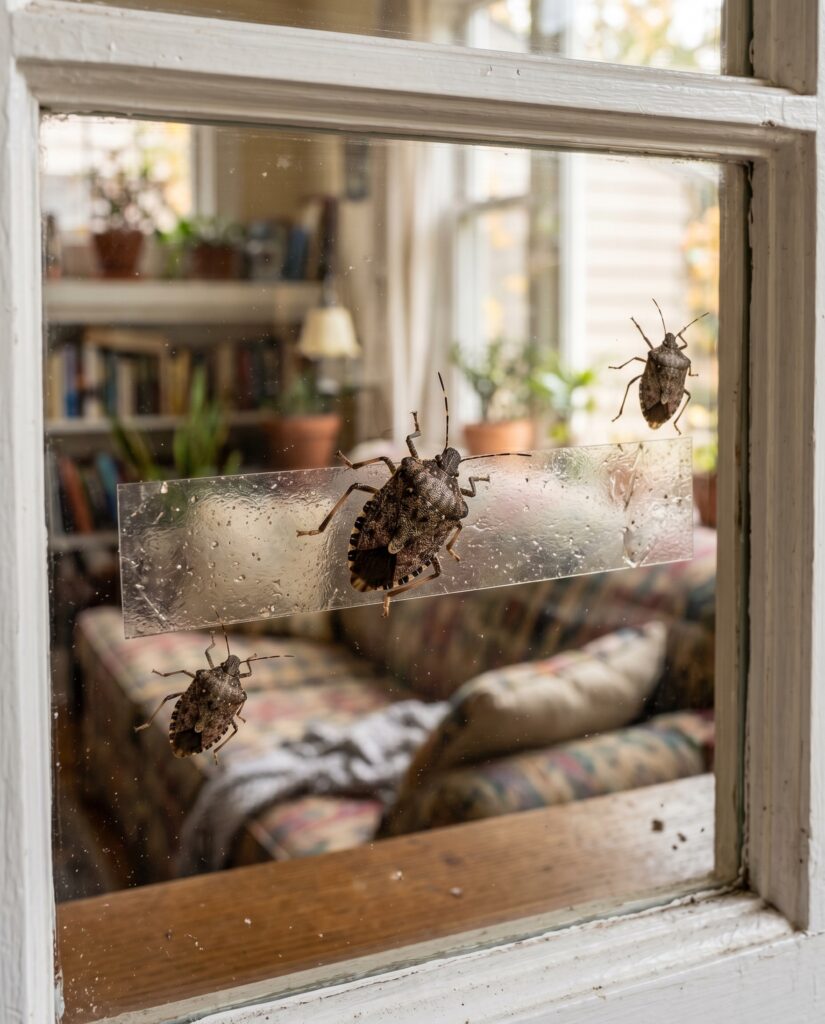
This makes them what entomologists call an overwintering invader, and they share a playbook with stink bugs and Asian lady beetles. The University of Minnesota Extension on boxelder bug overwintering and exclusion describes the same pattern: they cluster on warm walls in fall, push inside to overwinter, then reappear on warm winter and spring days when the furnace or sun wakes them up. You are not fighting an infestation that grows. You are fighting a seasonal migration, and you beat a migration by closing the door, not by spraying the hallway.
Make sure they are boxelder bugs
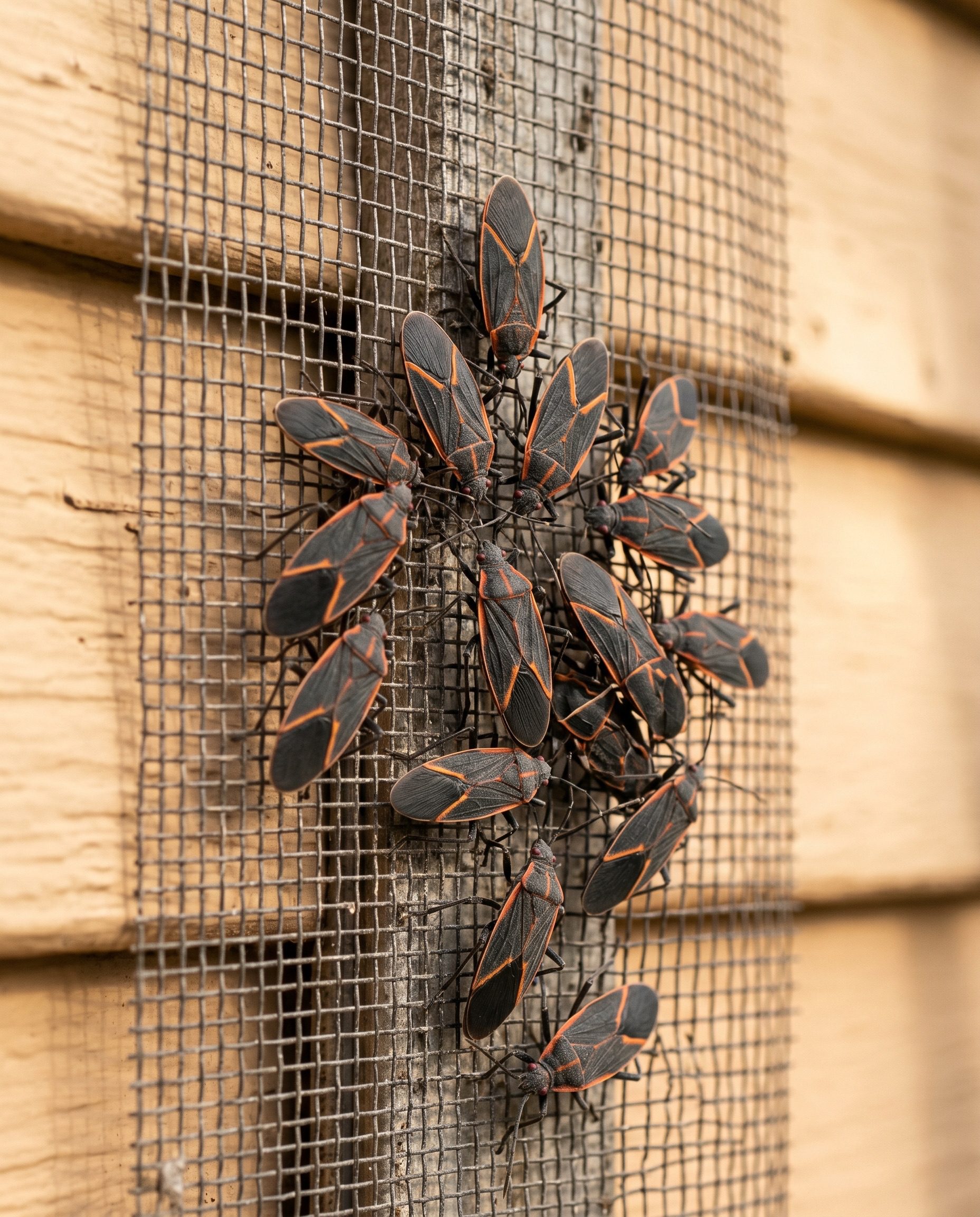
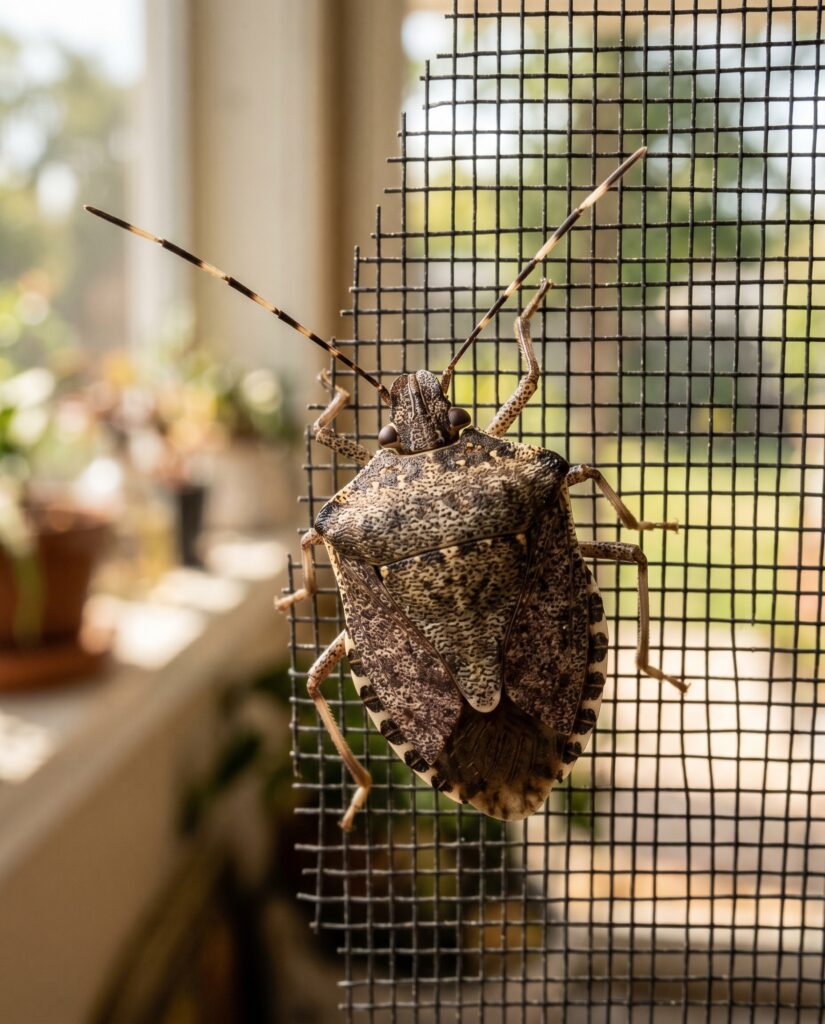
Get the ID right before you do anything, because the right move for a true pest is different from the right move for a harmless invader. Adult boxelder bugs are about half an inch long, flat, and dark gray to black with three thin red or orange lines on the back and red edges along the body. The young nymphs are smaller and bright red. They cluster in numbers on sunny walls, fences, and rocks, which is the tell most people notice first.
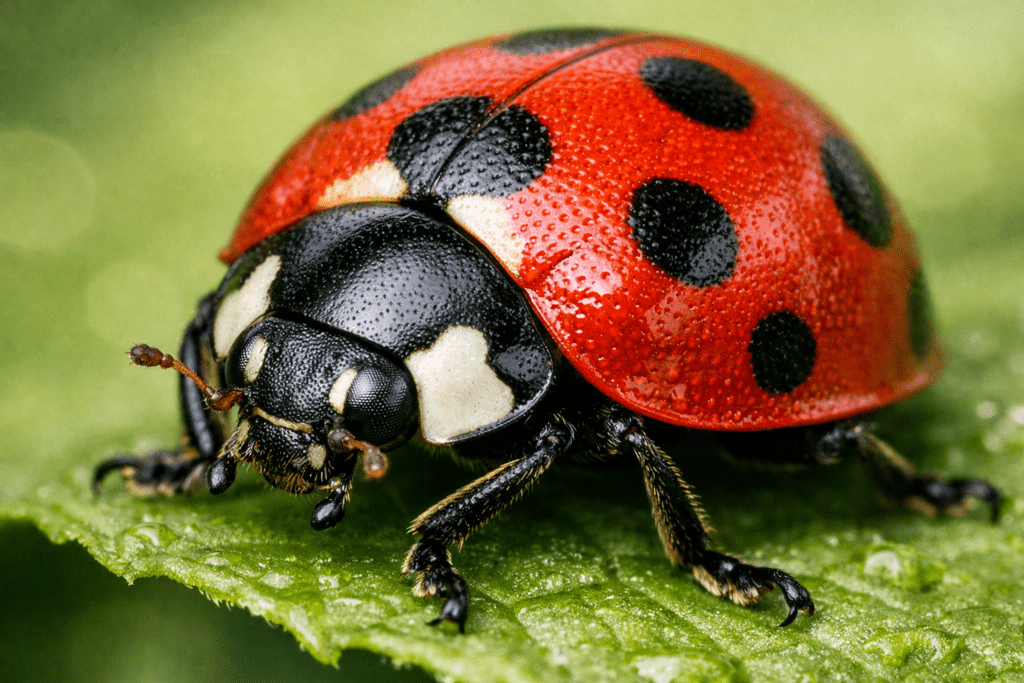
What they do not do matters just as much. They do not bite, they do not sting, they do not spread disease, and they do not damage your house structure or chew your stuff. The worst they manage is a reddish-orange stain if they get crushed against light fabric or a painted wall. If your bugs look more like a shield, are brownish and shield-shaped, or are domed and orange like a ladybug, you are looking at a different fall invader. Our fall invader ID guide for stink bugs, boxelder bugs, lady beetles, and cluster flies lines them up side by side so you can match yours before you treat.
Seal them out first
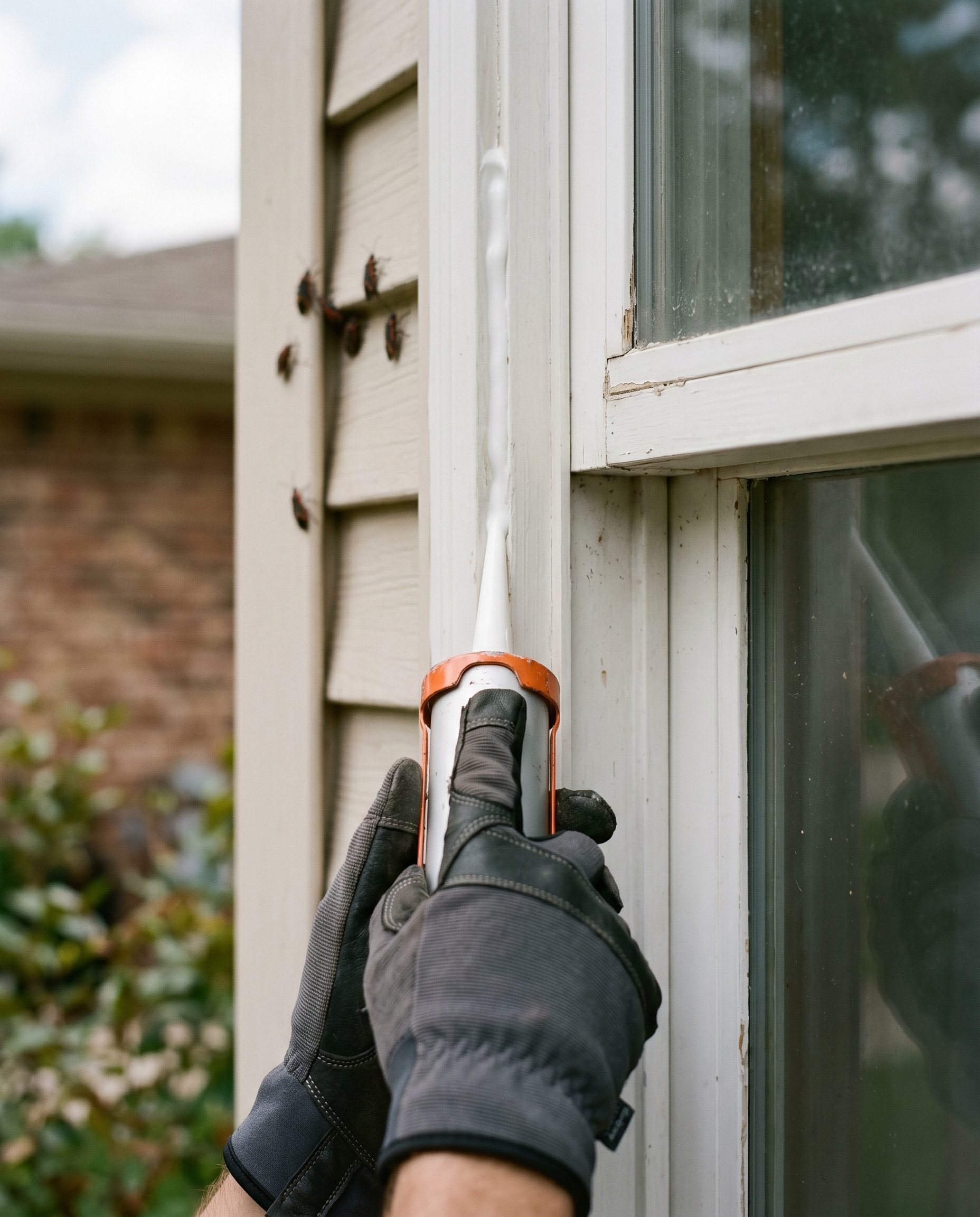
This is the layer that actually ends the problem, and it costs the price of a tube of caulk. Boxelder bugs are flat and they push through gaps you would not think twice about, so walk the sunny side of the house with caulk and weatherstripping and close the routes in. Hit the gaps where window and door frames meet the siding, cracks in the siding itself, the seams around utility and dryer vents, the spots where pipes and cables enter, and the gap under the bottom row of siding near the foundation.
Add a few targeted fixes while you are out there. Put fresh weatherstripping and a door sweep on any door on the warm side, repair torn window screens, and screen or cover attic and soffit vents with fine mesh. Inside, seal around outlets, baseboards, and the gaps where pipes pass through walls, because that is the route they take from the wall void into your living space. The same exclusion logic is exactly what UC IPM gives for the same overwintering pattern documented for the brown marmorated stink bug, and it is the part of the job that pays off every fall after, not just this one. Our guide to pest-proofing a home against fall invaders walks the whole exterior in order if you want a checklist.
What to do by situation
Once the gaps are closed, match the tool to where the bugs actually are. Sealing handles entry; the table below handles the rest.
| Where they are | Best approach | Watch out for |
|---|---|---|
| Few bugs inside | Vacuum them up, then empty the canister outside | Do not crush; they stain and smell |
| Swarming a sunny wall | Soapy-water spray now, exterior treatment in early fall | Read the label; treat the wall, not the indoors |
| Around windows and siding | Caulk and weatherstrip the gaps | Sunny south and west walls first |
For the handful that get inside, a vacuum is the whole answer. Suck them off the windowsill or wall, then empty the bag or canister into an outdoor trash bin so they cannot crawl back out. This is the same advice Extension gives for the other big fall invader, vacuuming rather than crushing, the same advice given for Asian lady beetles, and the reason is the same for both: a crushed bug stains and stinks, and a pile of dead insects in a wall void becomes food for carpet beetles, which is a worse problem than the bug you started with. For a wall that is genuinely covered, a spray bottle of soapy water knocks them down on contact with no residue and no risk indoors.
Treat the wall in early fall
If you get a heavy swarm on the same wall every year, an exterior perimeter treatment is the one place a chemical earns its keep, and timing is everything. Apply it in late summer to early fall, before the bugs start moving from the trees to the wall, because once they are already clustered and pushing inside, a spray on the wall is mostly too late. Treat the sunny south- and west-facing walls, the foundation line, around window and door frames, and the soffits where they gather.
Use only a product labeled for exterior structural use against nuisance invaders, and treat the label as the rule, because under federal law the label is the law. Keep it outside; do not spray inside your walls or living areas, since research on overwintering invaders backs exclusion over indoor spraying and indoor residual just leaves dead bugs feeding carpet beetles. Follow the EPA’s integrated, label-driven approach to perimeter treatment: seal first, treat the exterior second, and keep children and pets off treated surfaces until everything is dry. For category logic on what is actually labeled for this, our comparison of boxelder bug and Asian lady beetle products sorts the contact sprays from the perimeter residuals.
Common questions
What kills boxelder bugs instantly?
A direct hit of soapy water kills the ones you spray on contact, with no stain and no indoor residue, which makes it the best tool for a wall that is covered right now. The catch is that it only reaches the bugs in front of you and does nothing for the next wave off the trees. That is why sealing the gaps and an early-fall exterior treatment matter more than any quick knockdown.
Should I spray inside my walls to kill them?
No. Spraying inside wall voids leaves a pile of dead bugs that carpet beetles feed on, which trades a harmless nuisance for an actual fabric pest. Boxelder bugs do no damage and do not breed indoors, so the responsible answer is to seal them out and vacuum the strays.
Why should I not just crush them?
Crushed boxelder bugs leave a reddish-orange stain on light walls, curtains, and carpet, and they give off a faintly unpleasant odor. Vacuuming gets the same result without the mess, so empty the canister outside afterward and skip the squish.
Will they come back next year?
They will return every fall as long as host trees are nearby, because this is a seasonal migration, not a colony in your house. The exclusion work you do once keeps paying off, so the gaps you seal this year are gaps they cannot use next year.
Are boxelder bugs dangerous to people or pets?
No. They do not bite, sting, or spread disease, and they are not toxic to pets, though a curious dog that eats a mouthful may drool from the taste. If you ever have a concern about something a pet ate, contact your veterinarian.
Final verdict
Boxelder bugs are a fall nuisance, not a threat, so do not treat them like one. The durable fix is exclusion: walk the sunny side of the house with a caulk gun and close the gaps around windows, siding, and vents before the bugs arrive. Vacuum the few that get inside and empty the canister outdoors, and never crush them, because the stain and the dead-bug pile are worse than the bug. If one wall swarms every year, treat that warm south- or west-facing wall in early fall, before they move in, with a labeled exterior product and nothing indoors. Seal first, vacuum second, spray the wall only if you must.
Next steps:
– Confirm you have the right bug with our fall invader ID guide.
– Close the routes in with our pest-proofing guide for fall invaders.
– If a wall swarms every year, weigh the labeled options in our boxelder bug and Asian lady beetle product comparison.
Pingback: Bugs Clustering on Outside Walls: What They Want