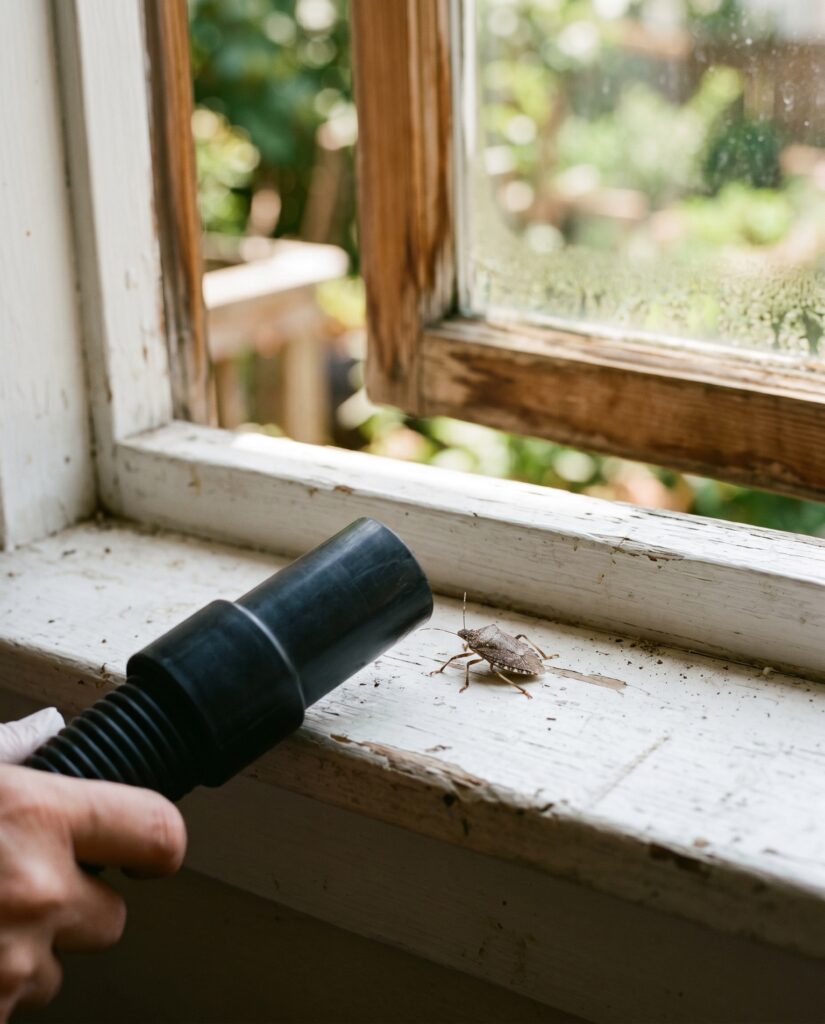
If you watched stink bugs pile onto a sunny wall last October and then found them indoors all winter, the fix is not a spray you reach for in November. The one thing that actually stops stink bugs, boxelder bugs, lady beetles, and cluster flies is exclusion done by late summer, because once they are inside the walls you cannot treat them. Seal the cracks around windows, doors, utility lines, and the roofline, fit tight screens and door sweeps, and treat sunny exterior walls in early fall before the insects move. Seal first, and you skip the whole indoor problem.
Pest-proofing for fall is exclusion on a calendar, not a spray. Seal entry gaps and fit screens and door sweeps by late summer, then treat sunny exterior walls in early fall before stink bugs, boxelder bugs, lady beetles, and cluster flies start moving in.
- Do first (free): Find and caulk the gaps around windows, doors, utility lines, and the roofline before September.
- Best for the common case: Tight screens, door sweeps, and an early-fall perimeter spray on warm, sun-facing walls.
- Skip: Spraying inside the walls; dead-bug piles attract carpet beetles and the insects keep coming back.
Why fall invaders pick your house
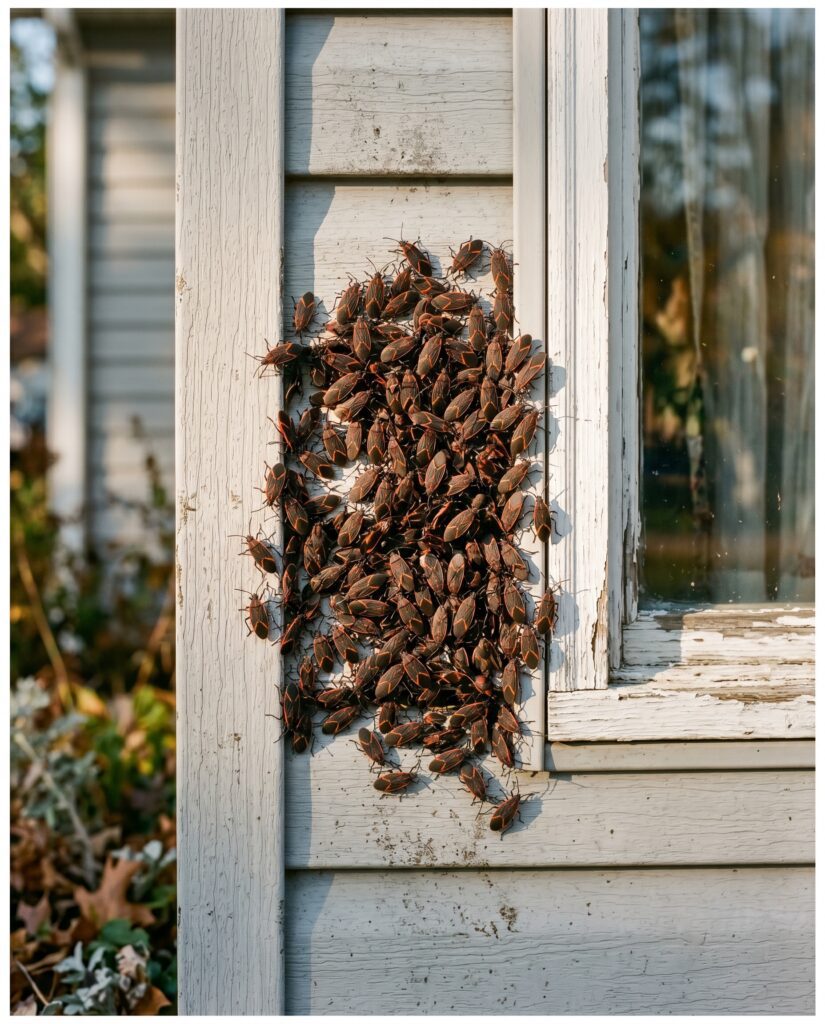
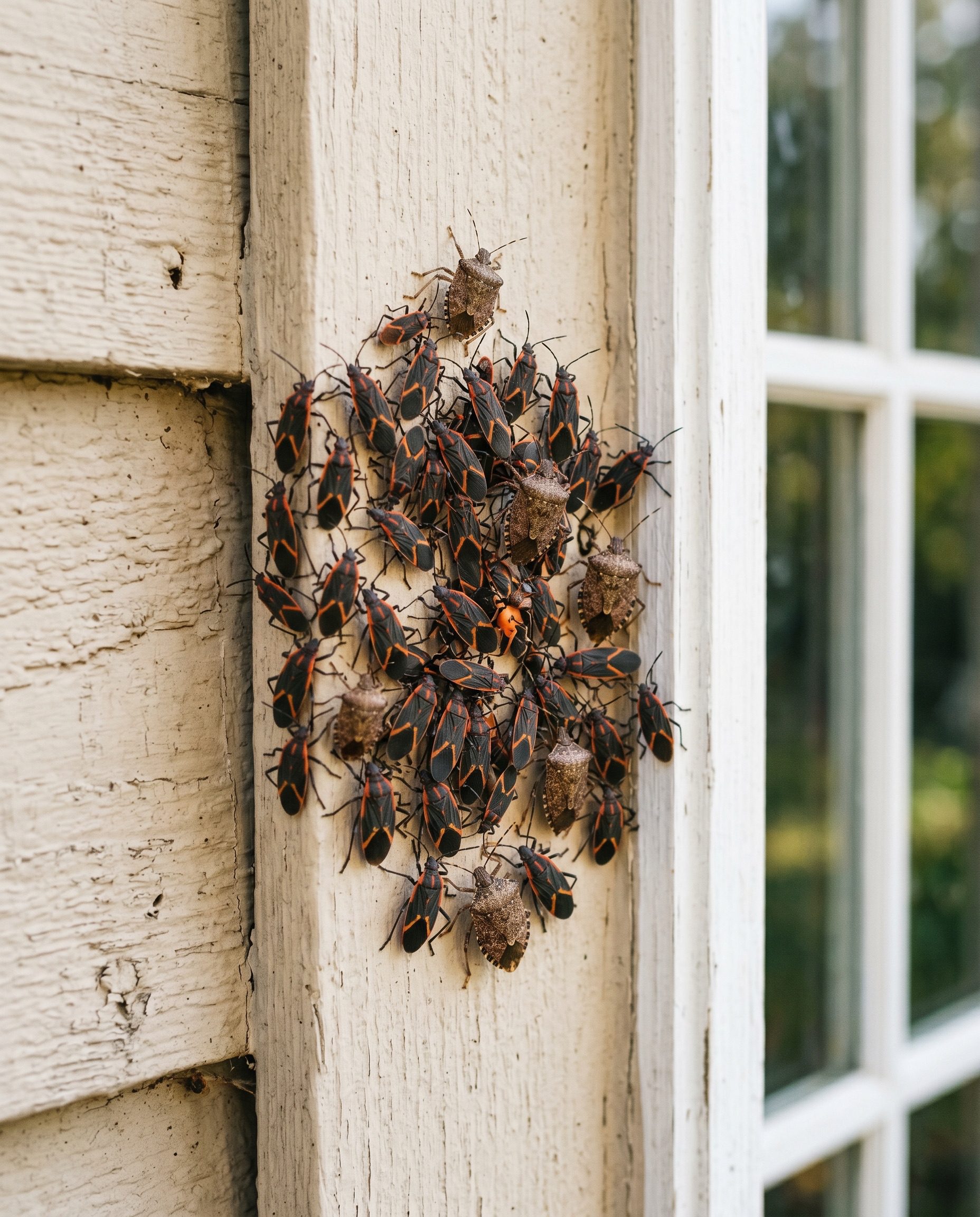
These four insects are not coming inside to breed or eat. They are looking for a warm, dry place to wait out winter, and a south- or west-facing wall that bakes in the afternoon sun is exactly what they cue on. They land on that warm surface, then walk until they find a gap that leads somewhere darker and cooler, which is usually a crack you have never noticed.
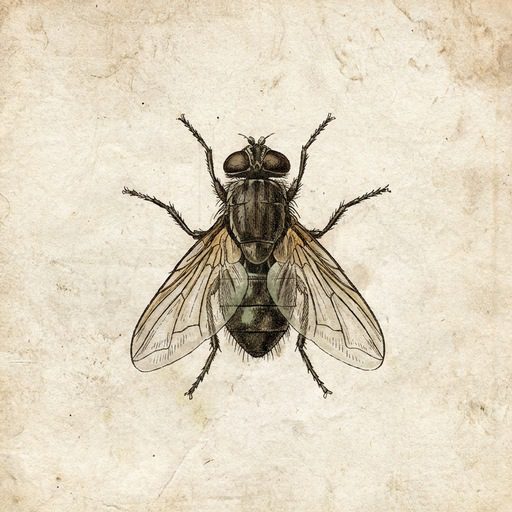
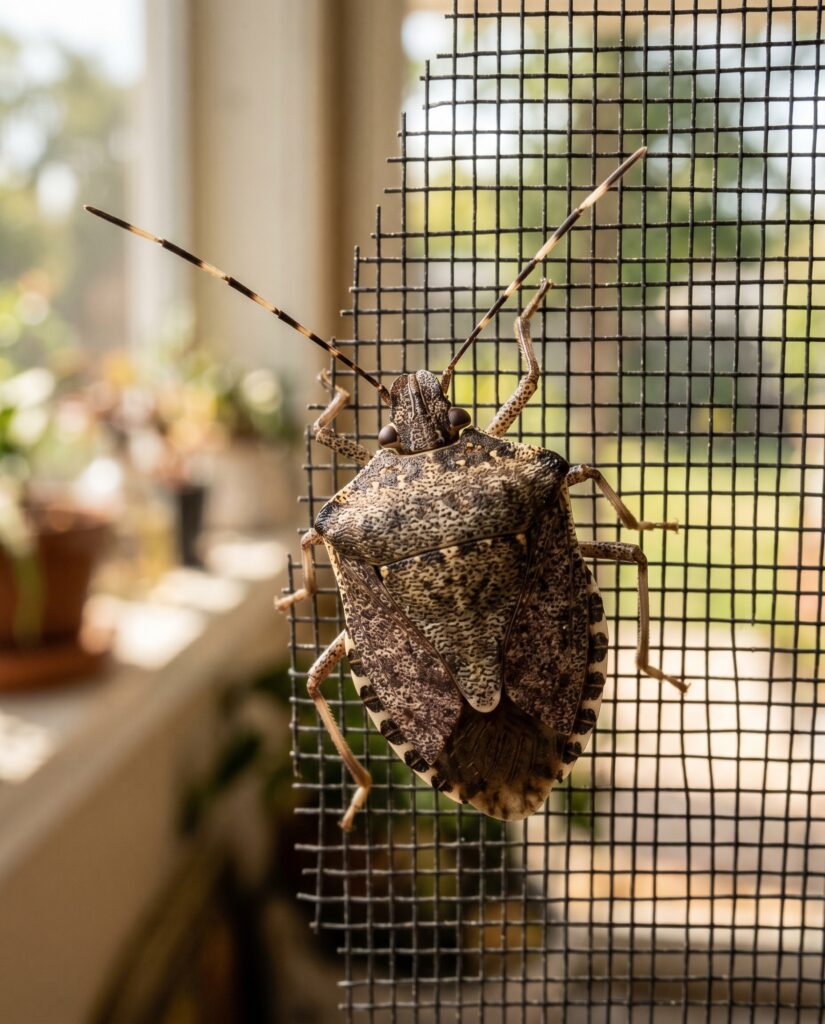
The brown marmorated stink bug is the headline pest, but boxelder bugs, multicolored Asian lady beetles, and cluster flies all follow the same playbook. UC IPM describes them as overwintering invaders that gather on sun-warmed walls and slip inside through gaps around the structure. The reassuring part is that none of them bite, sting, spread disease, or damage the house. They are a nuisance, not a hazard, which is why the right response is sealing them out rather than waging a chemical war indoors. If you want the species-specific removal steps, our guide to getting rid of stink bugs in the house walks through what to do once a few are already inside.
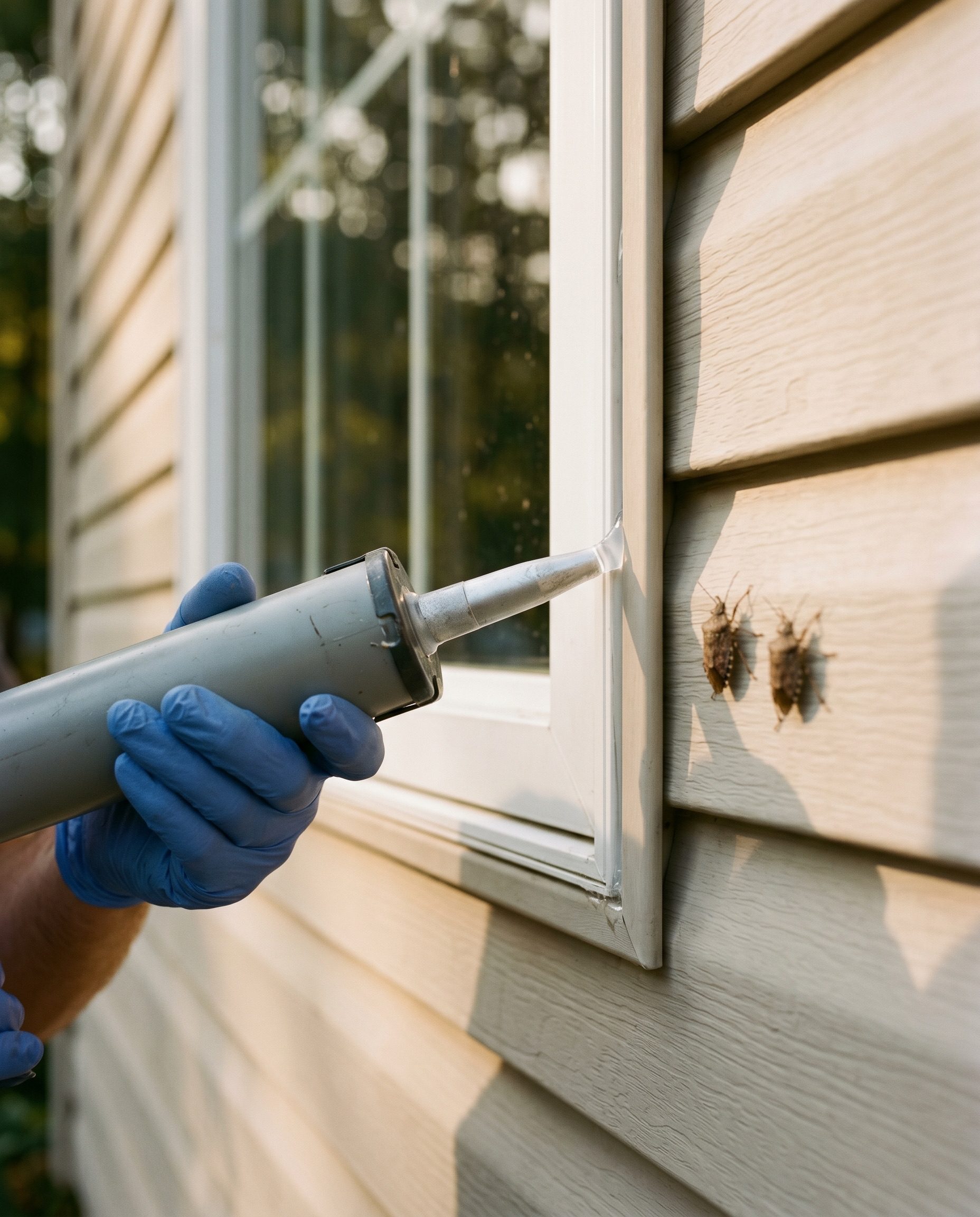
Seal the gaps before September
Exclusion is the whole game, and timing is what makes or breaks it. You want the major sealing done by late summer, before the first cool nights send the insects toward your walls. A gap sealed in August keeps them out for the entire season; the same gap sealed in November traps them inside.
Walk the outside of the house on a bright day and look for daylight from the inside where you can. The usual offenders are the same for every one of these pests. The USDA-funded research consortium behind StopBMSB is blunt that exclusion is the most effective long-term defense against the brown marmorated stink bug, and the same sealing covers the others. Hit these spots in order:
– Window and door frames where the trim meets the siding, plus any gap under the threshold.
– Utility penetrations where pipes, cables, gas lines, and the dryer vent pass through the wall.
– The roofline at the soffit, fascia, and where the chimney meets the roof, plus attic vents and gable vents.
– The foundation along the sill plate and any crack in the masonry.
Use a good exterior caulk or silicone for thin cracks and expanding foam or copper mesh for the bigger holes around pipes. Minnesota Extension notes that boxelder bugs squeeze in through cracks around windows, doors, and the foundation, so do not stop at the windows and call it done. Our boxelder bug guide covers the box elder and maple trees that feed the population in the first place.
Screens, sweeps, and the gaps you forget
Caulk handles the cracks, but the openings you actually use every day need a different fix. Cluster flies and lady beetles are small enough to ride in through a torn screen or the slot under a door, so this layer matters as much as the sealing.
Fit tight screens on every window and vent, and patch or replace any screen with a hole or a gap at the corner. A loose attic or gable vent screen is the single most common way cluster flies get into an upper floor, so check those even though they are out of sight. Add a door sweep to every exterior door, including the garage service door and the basement walkout, and weatherstrip any door that shows daylight at the edges. The garage is a favorite staging area, so do not skip it.
One more spot people miss: the weep holes in brick veneer and the gaps behind window-mounted air conditioners. You can fit stainless mesh weep-hole covers that still let the wall drain, and you should pull and store window units before fall rather than leave a bug highway open all winter.
Treat sunny walls in early fall
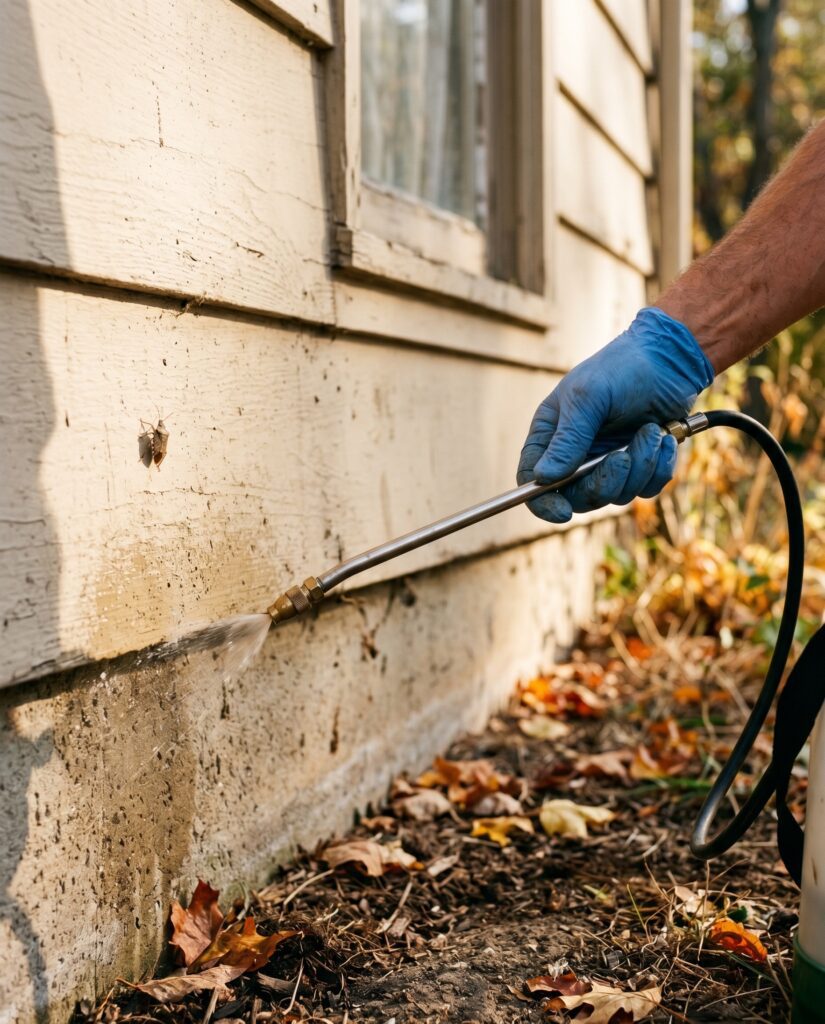
If sealing alone has not held in past years, an exterior perimeter treatment is the right backup, and the timing is specific: early fall, on the warm walls where the insects gather, before they start trying to get in. Spraying inside the house is the mistake to avoid, because a residual indoors leaves dead insects in the wall void, and those piles draw carpet beetles that will chew your fabrics later.
Apply a labeled residual insecticide as a band on the sun-facing exterior walls, around window and door frames, and along the foundation, following the EPA-registered product label for the surface and the site. Always read and follow the product label, because under federal law the label is the law, and never apply an outdoor product indoors or at a rate the label does not allow. Keep children and pets off treated areas until everything is dry, and do not let spray drift onto a vegetable garden or a pond. Here is the honest limit: a perimeter spray helps reduce how many get in, but it does not replace the sealing, and timing it wrong wastes the application.
A note on restraint. Some native stink bugs and the lady beetles people love are partly beneficial, eating aphids and other garden pests through the season. You are targeting a narrow band of wall in fall, not carpet-bombing the yard, so keep the treatment tight and let the good bugs keep working elsewhere.
What to do once they are already inside
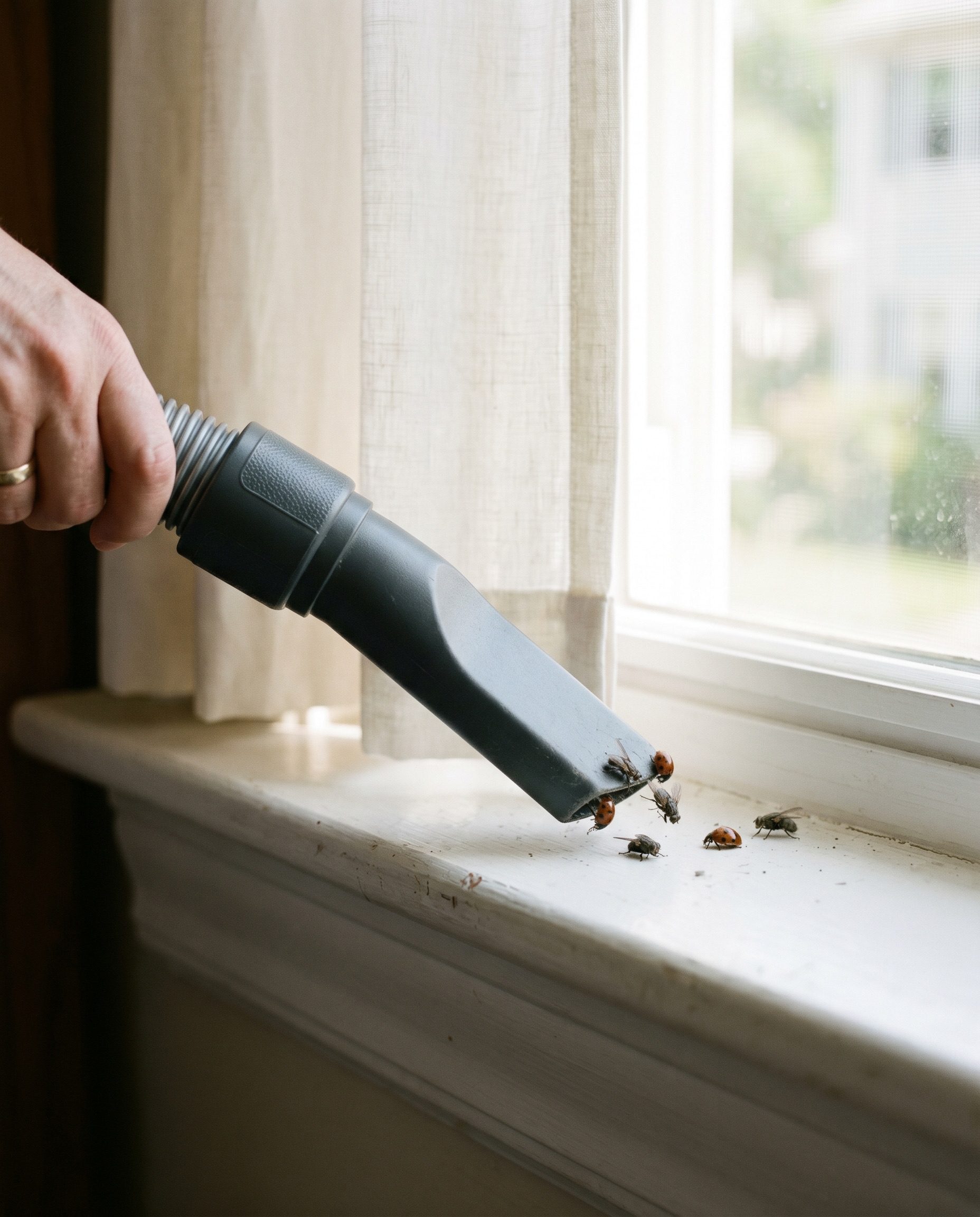
Some will still get in, and the rule indoors is the same for all four species: do not spray and do not crush them. Crushing a stink bug or a boxelder bug releases the odor and can stain a wall or curtain, and crushing lady beetles leaves a yellow mark. Vacuuming is the answer.
The cleanest method is a vacuum, and Minnesota Extension agrees that vacuuming is the cleanest way to deal with lady beetles already indoors and the rest. Use the table to match the tool to where you find them.
| Where you find them | Best move | Watch out for |
|---|---|---|
| On sunny exterior walls | Early-fall perimeter spray, then seal | Outdoor label only, mind drift |
| On a windowsill or in the room | Vacuum them up, empty outside | Do not crush, odor and stains |
| At a glowing window at night | A window-mounted light trap or sticky strip | Treats symptom, not the entry gap |
Empty the vacuum or bag the catch and take it outside right away, because a cluster fly or stink bug left in the canister can stink it up. For the flies specifically, our cluster fly guide covers the attic-vent sealing that actually stops the yearly return.
Common questions
Do stink bugs and these other fall invaders bite or damage the house?
No. Stink bugs, boxelder bugs, lady beetles, and cluster flies do not bite, sting, spread disease, or chew the structure. They are a nuisance that wants a warm place to overwinter. That is exactly why the smart move is sealing them out rather than treating them as a dangerous infestation.
Should I spray inside the walls where they are hiding?
No, and it backfires. An indoor residual leaves dead insects inside the wall void, and those piles attract carpet beetles that then damage fabrics and stored goods. Keep insecticide on the exterior, seal the gaps, and vacuum up anything that makes it inside.
When is it too late to pest-proof for fall?
Late summer is the target, and early fall still works for sealing and an exterior perimeter treatment. Once cold weather has driven them into the walls, sealing only traps them, so at that point you switch to vacuuming the ones that wander in and plan the real sealing for next summer.
Why shouldn’t I just crush them?
Crushing stink bugs and boxelder bugs releases their defensive odor and can stain walls and fabric, and crushed lady beetles leave a yellow stain too. A vacuum removes them with no smell and no mess, then you empty it outside.
Will they come back next year?
They will if the entry gaps are still open, since the same warm walls draw them every fall. A house sealed and screened properly sees a fraction of the invaders, which is the whole point of doing the exclusion once and keeping it maintained.
Final verdict
Pest-proofing your home against fall invaders is a calendar job, not a panic purchase. The free first move is finding and sealing the gaps around windows, doors, utility lines, and the roofline by late summer, then fitting tight screens and door sweeps on everything you open. If sealing alone has not held before, add an early-fall residual on the sunny exterior walls, on the label and outdoors only. Skip spraying inside the walls, because dead-bug piles attract carpet beetles, and skip crushing, because of the odor and stains. Anything that still gets in, you vacuum up and empty outside. Seal first, and you skip the whole indoor problem.
Next steps:
– For a few already inside, work through our guide to getting rid of stink bugs in the house.
– If boxelders are the problem, the trees feeding them matter, covered in our boxelder bug guide.
– For the flies at upper windows, seal the attic vents using our cluster fly guide.