If your kitchen suddenly has a cloud of tiny flies, the thing to understand is that they did not wander in by accident. Fruit flies multiply on anything fermenting, so the overripe bananas, the splash of juice behind the toaster, the recycling bin, and the gunk down the drain are all nurseries. The only durable fix is to hunt down and remove every breeding spot: clear the produce, clean the drains and bins, wipe up the sugary spills, and only then set a vinegar trap to catch the adults that are left. Kill the source and a cheap trap finishes the job in days. Skip the source hunt and you can trap flies forever while new ones keep hatching.
Fruit flies breed on fermenting gunk, so a trap alone never wins. Find and remove every source first — produce, drains, bins, spills — then a vinegar trap mops up the adults in a few days.
- Do first (free): Toss overripe and bruised produce, take out the trash and recycling, and wipe up every sugary spill and sticky surface.
- Best for the common case: A jar of apple cider vinegar with a drop of dish soap, set right where the flies gather, refreshed every two days.
- Skip: Bug spray and electric zappers; they kill a few adults while the eggs in your drain keep hatching.
Find the source before the trap
Here is the part most guides bury: a vinegar trap catches adults, but every adult you catch was already replaced by a batch of eggs laid somewhere damp and fermenting. So the trap is the last step, not the first. According to UC IPM, rotting fruit and the film inside a drain are the usual breeding sources, and until you find and kill those, the cloud just refills. The whole job is source removal first, trapping second.
Walk the kitchen like an inspector. Pull the fruit bowl apart and check what is soft underneath, look behind and under the trash and recycling bins, peek under the fridge and stove where a forgotten potato can liquefy, and run your finger inside each drain. If you only do one thing today, it is this hunt. The trap matters, but it is mopping up after the real work.
Where they actually breed
People assume fruit flies come from the fruit they can see, and that is half right. The classic source is overripe or split produce sitting in the bowl, but the bigger surprise is everything you cannot see: the juice ring at the bottom of the recycling bin, a splash of beer or soda under the cabinet, a damp mop head, and the slimy organic film lining a kitchen or bathroom drain. That drain film is the one almost everyone misses, and it is also where its close cousin the drain fly breeds.
To be sure you have fruit flies and not a look-alike, our guide on where do fruit flies come from walks the common sources room by room. Fruit flies (Drosophila) are tan, hover over the fruit bowl, and breed in fermenting food. Tiny black flies bouncing around your houseplants are usually fungus gnats, which is a different problem with a different fix, covered below. Knowing which one you have decides where you clean.
Clean the drains and bins
This is the step that separates a real fix from a week of frustration, and it costs almost nothing. Start with the trash and recycling: empty them, then actually wash the inside with hot soapy water, because the residue at the bottom is a breeding bed on its own. Wipe down the counter, the backsplash, and anywhere a sugary drink could have splashed and dried. Store ripe produce in the fridge for a week while you clear the population.
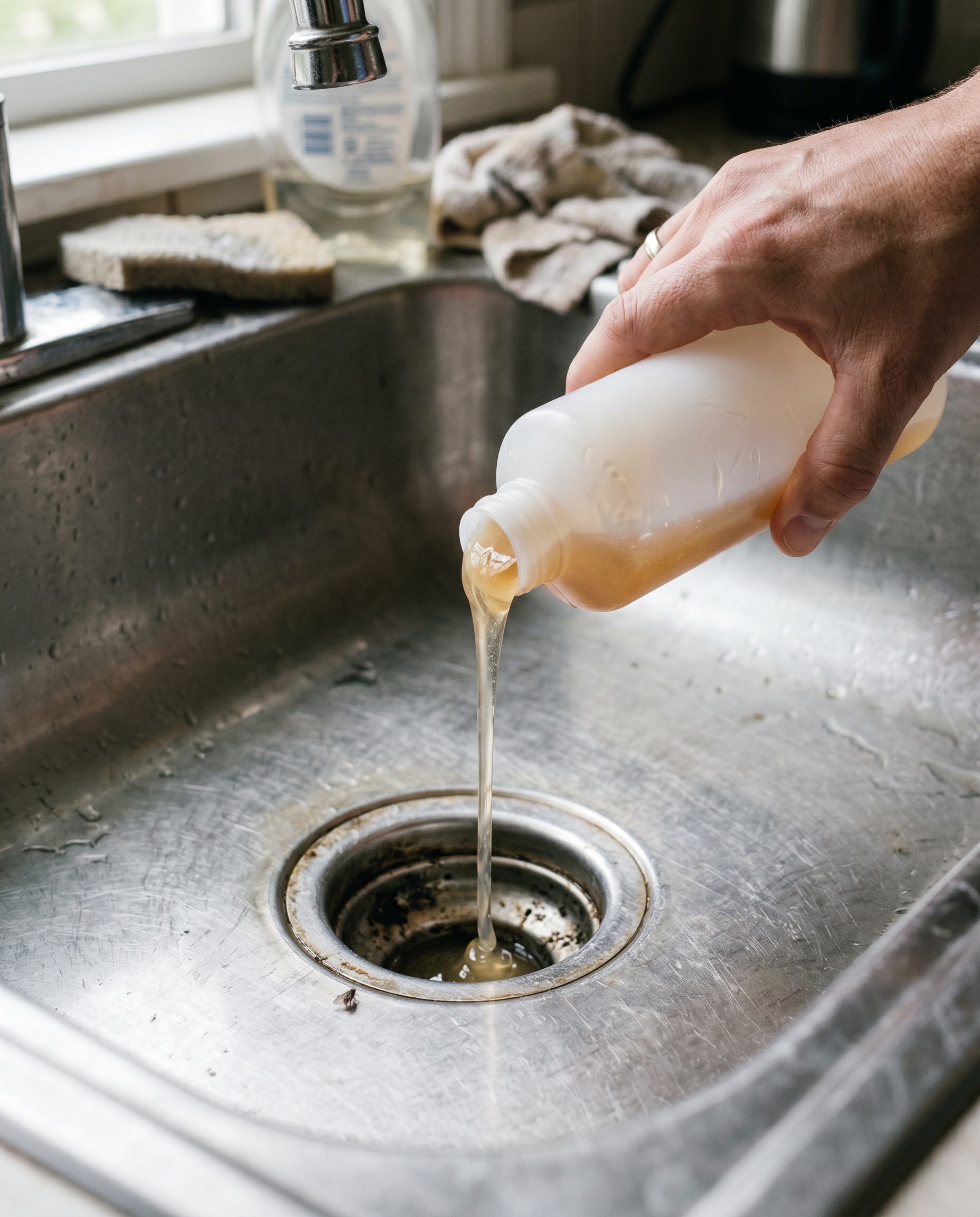
Then deal with the drains, and do it right. Bleach does not remove the biofilm that small flies breed in; it runs straight through and leaves the slimy layer clinging to the pipe wall, so the flies come right back. What works is mechanical scrubbing with a long drain brush plus an enzyme or bio drain cleaner that digests the organic film over a few hours. Extension specialists are blunt that sanitation and source removal clear small flies far better than spraying, and the drain is the most common source people never check. To confirm a suspect drain, tape a clear cup loosely over it overnight; if flies are trapped under it in the morning, that drain is the nursery.
Set a vinegar trap that works
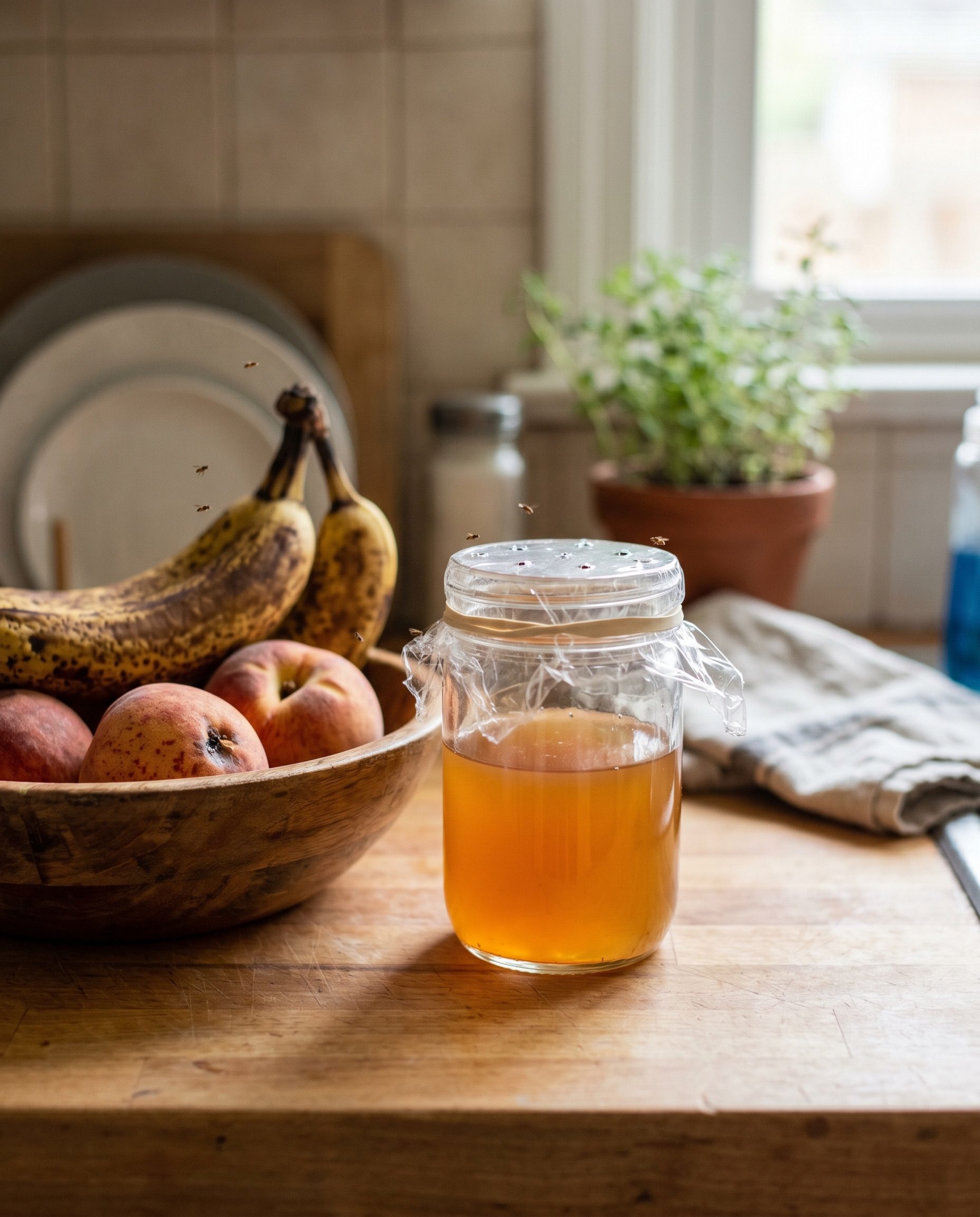
Once the sources are handled, a trap finishes the stragglers fast. The cheapest effective one beats anything on a shelf: pour an inch of apple cider vinegar into a jar, add a single drop of dish soap, and either leave it open or stretch plastic wrap over the top with a few pinholes. The vinegar smells like fermenting fruit and pulls the flies in; the drop of soap breaks the surface tension so they sink instead of landing and flying off. Set the jar right where the flies are thickest, usually by the fruit bowl or the sink.
Place it on the counter at the source, refresh it every two days, and run two jars if the kitchen is busy. Skip the bug spray and the little electric zappers; they knock down a handful of adults you can already see while the eggs in the drain keep hatching, so they never get ahead of the problem. The trap is doing exactly one job here, which is catching the adults that the cleanup left behind. If the cleanup was thorough, that jar should stop filling within a few days.
Houseplant gnats need a different fix
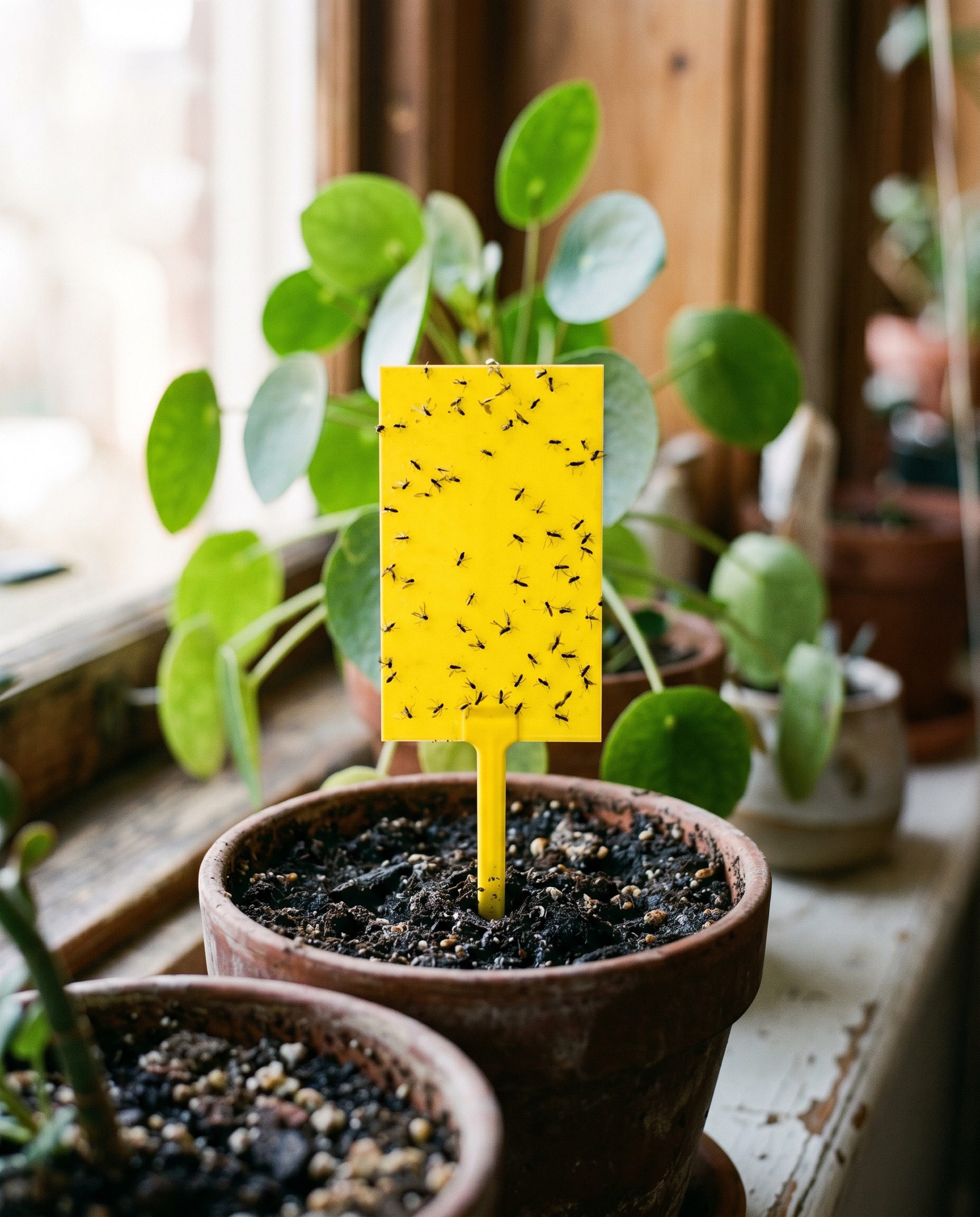
If the tiny flies are around your plants rather than the fruit bowl, you have fungus gnats, and a vinegar trap barely touches them because they are not breeding in the kitchen at all. They lay eggs in constantly wet potting soil, and the larvae live in the top inch. UC IPM notes that fungus gnats breed in soggy potting soil, so letting it dry out is the fix — water less often and let the top inch or two dry between waterings, and the larvae have nowhere to develop.
To catch the adults while the soil dries, push a yellow sticky stake into each pot; the bright color draws them and they get stuck. For a stubborn case you can drench the soil with a Bti product (the same harmless bacterium used against mosquito larvae) to kill larvae without chemicals on your plants. Our guide to gnats in the house covers the soil routine in detail. The principle is the same as for fruit flies: find the wet, fermenting source and dry it out, then trap the leftovers.
The right move by location
Small flies are a source problem, so the fix changes with where they are breeding. This is the quick map for the common spots in a home.
| Where they gather | Real source | What actually works |
|---|---|---|
| Around the fruit bowl | Overripe or split produce | Toss the fruit, fridge the rest, set a vinegar trap |
| By the sink or floor drain | Biofilm inside the drain | Brush the pipe plus an enzyme cleaner; bleach won’t do it |
| Near trash or recycling | Sugary residue in the bin | Empty and wash the bin inside with hot soapy water |
| Around houseplants | Soggy potting soil | Water less, let soil dry, add yellow sticky stakes |
The pattern across every row is the same. UC IPM’s broader fly guidance is consistent that small-fly management starts with finding and eliminating the breeding site, and the EPA’s sanitation-first approach to household pests puts removing food and moisture ahead of reaching for any product. Match your effort to where they are actually hatching, not to where you happen to see them flying.
Common questions
How do I get rid of fruit flies fast?
The fastest real result is a one-two: spend ten minutes clearing every source — toss soft produce, empty and wash the bins, clean the drains — then set a vinegar trap by the sink. The cleanup stops new flies from hatching and the trap pulls in the adults already flying. With the source gone, most kitchens are clear within two to four days.
Does a vinegar trap actually work?
Yes, but only as the finishing step. A jar of apple cider vinegar with a drop of dish soap reliably catches adult fruit flies. What it cannot do is reach the eggs and larvae down in your drain or under the fridge, so a trap by itself just keeps catching new flies forever while the source keeps producing them.
Why do I still have fruit flies after cleaning?
Almost always a missed source. The usual culprits are the film inside a drain, a sugary residue at the bottom of the recycling bin, or a piece of produce that rolled under an appliance. Tape a clear cup over each drain overnight to find which one is breeding them, and check under and behind the fridge and stove.
Will bleach clean a fly-breeding drain?
No. Bleach runs straight through and leaves the slimy organic film that small flies breed in clinging to the pipe wall. You need to physically scrub the pipe with a long brush and use an enzyme or bio drain cleaner that digests the film over a few hours. That is what actually removes the breeding surface.
Are the flies around my plants the same thing?
Usually not. Tiny dark flies bouncing around houseplants are typically fungus gnats, which breed in wet potting soil rather than in fruit. The fix is to water less and let the top inch of soil dry out, then trap the adults with yellow sticky stakes. A kitchen vinegar trap does little for them.
Final verdict
Getting rid of fruit flies is a source hunt, not a spray. The free first move clears most of it: toss the overripe produce, empty and wash the trash and recycling, wipe every sugary spill, and clean the drains with a brush and an enzyme cleaner since bleach leaves the breeding film behind. Only then set an apple cider vinegar trap with a drop of soap, right where the flies gather, and refresh it every two days. Skip the bug spray and the zapper; they kill a few adults while new ones keep hatching from a source you never found. If the flies are around plants instead of fruit, dry out the soil and use sticky stakes. Do the cleanup properly and the trap should stop filling within a few days.
Next steps:
– Track down the source first with our guide on where do fruit flies come from.
– Pick the right enzyme cleaner and trap in our fruit fly traps and kitchen solutions roundup.
– If the flies are really around your plants, switch to the soil routine in our guide to gnats in the house.
Reviewed by Daniel Brooks, licensed pest control professional, focused on safe and effective control.