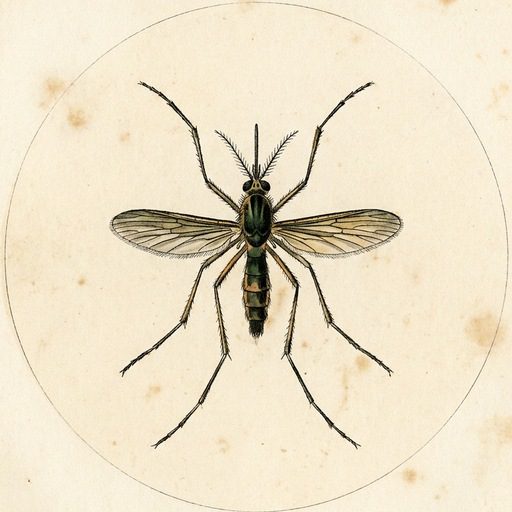
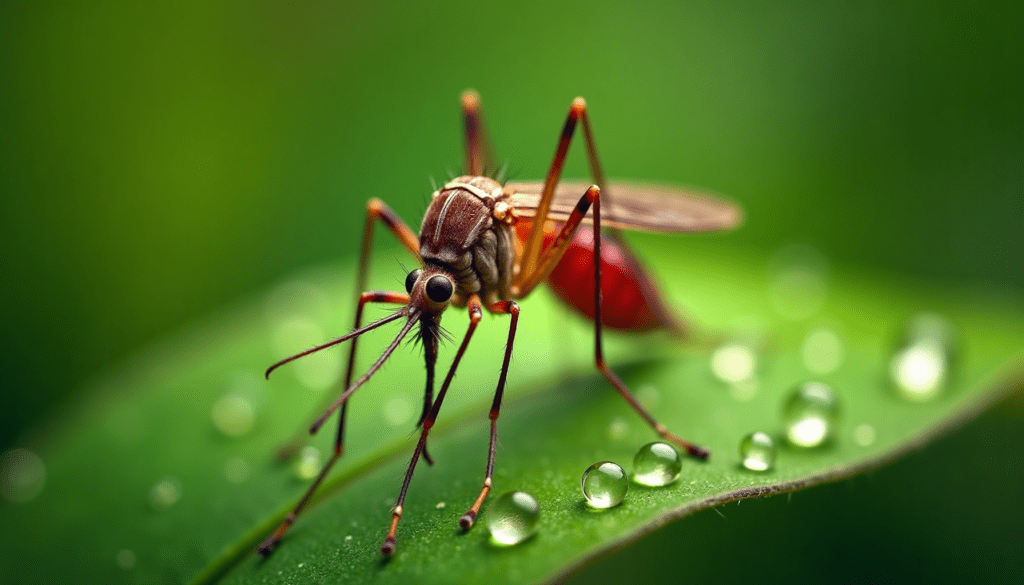
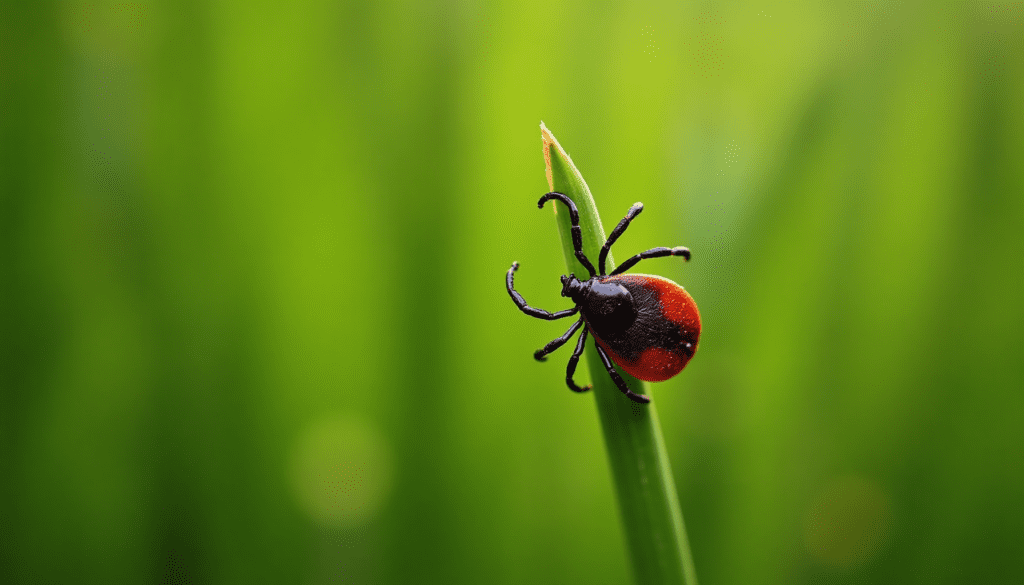
Most bug bites itch harder at night because your body’s natural itch brakes are weakest then: the anti-inflammatory hormone cortisol is at its daily low, skin warms under the covers, and there is nothing left to distract you. Only a few pests actually feed while you sleep, chiefly bed bugs and indoor mosquitoes, so the useful question is whether you are getting new bites overnight or old bites are simply flaring after dark.
- What is normal: Daytime bites from mosquitoes, fleas, or chiggers that quiet down by day and roar back at bedtime, then fade within a week or two.
- The red flag: Fresh welts every morning, dark spotting on the mattress seams, or relentless whole-body night itch that other household members share.
- Best next step: A cool compress plus a label-directed OTC antihistamine or hydrocortisone for the itch, and a proper mattress inspection before you blame or buy anything.

Bites that were a background annoyance all day can become unbearable when the lights go off. Sometimes that is a clue about what bit you; more often it is a clue about how skin and itch behave after dark. One caution up front: I describe patterns and likelihoods, not diagnoses, and no one, physician included, can reliably name the culprit from a welt alone.
Why the same bite feels worse after dark
The nighttime flare is mostly physiology, and it happens on a schedule. Cortisol, the body’s own anti-inflammatory hormone, drops to its daily low at night, which means the natural brake on inflammation is weakest exactly when you are trying to sleep. At the same time, skin temperature rises under bedding, and warm skin itches more than cool skin. Skin also loses more moisture overnight, and drier skin is itchier skin.
Then there is attention. During the day, work, movement, and conversation compete with the itch signal for your brain’s bandwidth. In a dark, quiet room there is nothing to compete with it, so the same nerve traffic you shrugged off at noon feels overwhelming at midnight. Dermatologists see the same pattern with many itchy conditions, not just bites. The practical takeaway is that timing of the itch is weak evidence about the pest. Timing of new bites is much stronger evidence.
The short list of pests that actually feed while you sleep
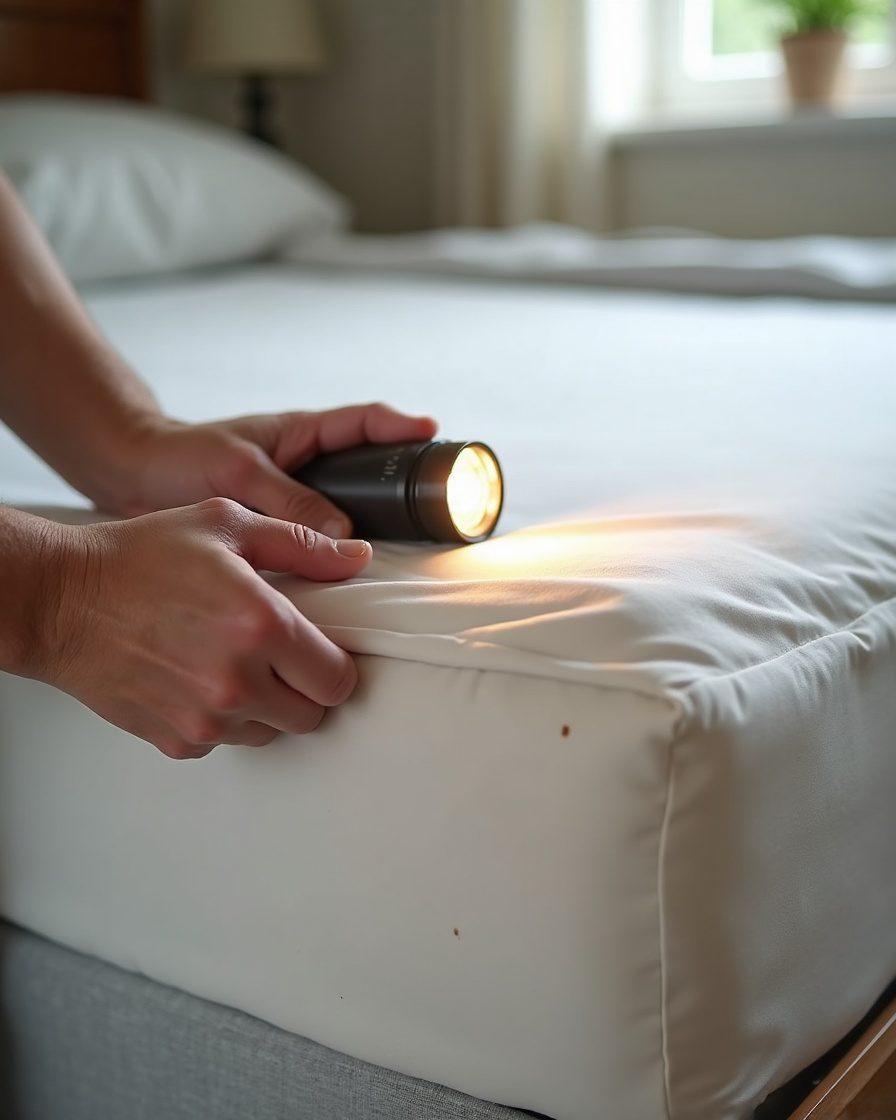
If you go to bed clear and wake up with fresh welts, the realistic candidate list is short. At the top sit bed bugs. The University of Kentucky’s ENTfact is direct that bed bugs usually bite people at night while they are sleeping. Their bites tend to appear on the face, neck, shoulders, and arms, whatever the blanket did not cover, often as itchy red welts within a day or so. Two details trip people up: roughly a third of people do not react to bed bug bites at all, and reactions can be delayed, so a quiet bed partner proves nothing. The confirmation is never the bite; it is the physical evidence in the mattress seams, box spring, bed frame, and headboard: dark spotting, shed tan skins, and the bugs themselves. Our guide to bed bug bites walks through that inspection step by step.
The second honest candidate is a mosquito that got inside. One trapped insect can produce several scattered welts a night, usually as single random bumps on exposed skin rather than clusters. MedlinePlus notes that mosquito and flea bites usually itch rather than hurt, and a mosquito problem ends once you find the open window or the one insect responsible.
Fleas belong on the list with an asterisk. Fleas bite around the clock, not preferentially at night, but people notice flea bites at night for the physiology reasons above. The signature is location: ankles and lower legs, in small groups, almost always in a home with a dog, a cat, or a recent animal visitor. The University of Kentucky’s flea ENTfact notes that pets pick up fleas from kennels, groomers, strays, and wildlife, and that modern control runs through treating the pet rather than fogging the house. If your bites sit at sock height, start with our guide to flea bites on humans and have the pet checked.
Chiggers deserve a mention because their itch famously peaks at night, yet chiggers are an outdoor, daytime exposure. The welts cluster where clothing pressed against skin, and the fierce itching builds a day later, conveniently timed to ruin your sleep. New welts every morning without outdoor exposure are not chiggers.
Reading the morning pattern
Since the itch itself will not identify the pest, the distribution of the bites is your best amateur tool, and it is only a probability tool; even a clinician looking at the same welts is guessing without physical evidence of the pest. With that caveat, these are the patterns worth knowing, and our insect bite identification chart covers the full lineup.
| Suspect | Typical pattern | The distinguishing detail |
|---|---|---|
| Bed bugs | Welts on face, neck, shoulders, arms; sometimes loose rows; new ones appear after nights at home | Dark spotting, shed skins, or live bugs in mattress seams and headboard |
| Fleas | Small grouped bumps on ankles and lower legs, often with a halo | A pet or animal access; bites happen day and night |
| Mosquitoes | Scattered single welts on skin left uncovered during sleep | An open window or one audible insect; stops when it is gone |
| Chiggers | Clusters at sock line, waistband, behind knees | Recent time in grass or brush; no new welts without it |
Two comparisons cause the most confusion. Bed bug versus flea is a question of geography on your body: upper body points one way, ankles the other. Bed bug versus mosquito is a question of persistence: mosquito problems are erratic and end, bed bug problems recur nightly and escalate. We put the three side by side in bed bug bites vs flea bites vs mosquito bites.
What night itching is not proof of
Here is the part most bite articles skip. The University of Kentucky’s mystery bites publication is blunt that bug bites are difficult to diagnose, even by physicians, and that many cases of bite-like itching, especially nighttime itching with nothing visible biting, are not caused by an arthropod at all.
The non-pest causes are mundane and common. Tiny fragments of paper, fabric, or insulation fibers can produce anything from a prickling, crawling sensation to intense itching, and static electricity makes such particles cling to skin. New detergents, soaps, and cosmetics can do the same. Several medical situations, including pregnancy, diabetes, and thyroid conditions, are associated with itchy skin, and ordinary winter-dry skin itches most at night for the same reasons a bite does. Stress reliably amplifies all of it.
The publication draws a practical line worth underlining: no pesticide should be applied unless a biting pest, or clear evidence of one, has actually been found. Spraying a bedroom on suspicion does not resolve mystery itching, and it muddies the water if a real inspection happens later. Evidence first, treatment second.
The scabies question
Intense itching that is worst at night is also the textbook description of scabies, so let me handle that question honestly. Scabies is caused by a microscopic mite that lives in the skin, and it produces a relentless, spreading itch, fine burrow lines often described between the fingers and around wrists and waistbands, and, tellingly, similar itching in close household contacts.
What I cannot do, and what no article can do, is tell you whether you have it. Scabies is a clinician’s diagnosis, confirmed by examining the skin directly, and its treatment is prescription-only, so there is no useful over-the-counter path to attempt first. If your night itch is severe, spreading, lasting beyond a couple of weeks, involves burrow-like lines, or is showing up in family members, book a medical appointment and say the word scabies out loud so it gets ruled in or out properly. That single visit resolves more mystery night itching than any amount of guesswork.

Calming the itch without tearing your skin
Whatever the source, the nighttime job is the same: get the itch below the threshold where you can sleep, without scratching. The clinical literature on insect bites notes that intense scratching can break the skin and open the door to bacterial infection, and an infected scratch will outlast and out-hurt the original bite by a wide margin.
Start with the basics MedlinePlus lays out for bites and stings: wash the area with soap and water, then apply something cold, such as ice wrapped in a cloth for about ten minutes at a time. A cool compress kept by the bed beats fingernails every time. From there, an over-the-counter hydrocortisone cream or calamine on the bites, or an oral antihistamine, can take the edge off; use them exactly as the label directs and no further, and ask a pharmacist if you take other medicines.
Then stack the small mechanical tactics that make night itching survivable. Keep the bedroom cool and the bedding light, since heat feeds itch. Moisturize with a plain fragrance-free lotion after your evening shower, because dry skin lowers the itch threshold. Trim fingernails short, and if you wake up scratching in your sleep, thin cotton gloves over the hands for a few nights sound ridiculous and work. Press on a bite firmly or hold the cold compress to it instead of raking it. If a bite is already scratched open, keep it clean and covered and watch it; our guide to the signs of an infected insect bite covers exactly what to look for.
Prevention closes the loop. If mosquitoes are the recurring intruder, fix the screen and use an EPA-registered insect repellent applied per its label for evenings outdoors. If the evidence points to fleas, treat the pet. If it points to bed bugs, confirmation with physical evidence comes before any treatment decision.
See a clinician if
Most bites are a home-care problem. These situations are not, and this is information rather than medical advice, so when in doubt, get looked at:
- Redness that is spreading outward from a bite, or a warm, swollen, increasingly painful area
- Pus, weeping, honey-colored crusting, or red streaks moving away from the bite
- Fever or feeling generally unwell alongside the skin problem
- Whole-body night itch, burrow-like lines, or itching shared by household members
- Itching that persists beyond a couple of weeks or keeps you from sleeping despite label-directed OTC care
- Any trouble breathing, swelling of the face, lips, or throat, dizziness, or tightness in the chest: treat that as an emergency, use prescribed epinephrine if you carry it, and get emergency medical help immediately
Common questions
Why do my bug bites only itch at night?
They almost certainly itch during the day too, just below your notice. At night cortisol is low, skin is warm and drier, and there are no distractions, so the same bites cross the threshold into misery. The nighttime flare says more about your body clock than about the insect.
Can I have bed bugs if my partner has no bites?
Yes. A large share of people show no reaction to bed bug bites, and others react days later, so one bitten person and one clear person in the same bed is common and proves nothing. Only inspection settles it.
What can I put on bites so I can sleep?
A cold compress first, then over-the-counter hydrocortisone cream or calamine, or an oral antihistamine, always used exactly as the label directs. A cool bedroom, plain moisturizer, and short fingernails do more than people expect. If that fails for more than a few nights, see a clinician rather than escalating.
Could my nighttime itching be something other than bites?
Genuinely yes. Extension entomologists find that many mystery bite cases trace to fibers, static, dry skin, products, health conditions, or stress rather than any pest. If no one can find an insect and no new welts appear, a medical appointment is more useful than an exterminator.
Final verdict
Bug bites itch worse at night because nighttime is when your body is worst at ignoring them: low cortisol, warm dry skin, and a quiet mind turn the volume up on a signal that was there all day. The pest question is answered by the morning, not the midnight: fresh welts on the upper body plus spotting in the mattress seams point to bed bugs, grouped ankle bites in a pet household point to fleas, scattered single welts point to a mosquito that got in, and clusters at the sock line point to yesterday’s walk through tall grass. No new bites at all points away from insects entirely, toward dry skin, irritants, or a condition worth a clinician’s eyes, including the scabies question only an exam can settle. Meanwhile, treat the itch like the mechanical problem it is: cold, hydrocortisone or an antihistamine per the label, a cool room, short nails, and hands off. And if a bite turns red, warm, and angry, or breathing is ever involved, stop reading articles and get medical care.
This article is for information only and is not medical advice.