Finding a tick on your sock or behind your knee can turn a great hike into a worry spiral. The right tick repellent makes that moment far less likely by stopping ticks before they bite. In this guide, you will learn which active ingredients actually work, how long they last, and how to use them safely on skin, clothing, and gear. You will also get a simple “layered defense” routine that entomologists and clinicians recommend for high tick pressure areas.
Quick answer: what is the best tick repellent for humans?
If your goal is the strongest, most reliable protection, use a layered approach rather than betting on one product.
Best overall strategy (most people):
- Treat clothing and gear with permethrin (0.5%) – kills ticks on contact once dry
- Apply DEET (20-30%) or picaridin (20%) to exposed skin – repels ticks for hours
Fast comparison (snippet-friendly):
| Option | Where it goes | What it does | Typical protection time |
|---|---|---|---|
| DEET (10-30%) | Skin | Repels ticks (does not kill) | ~2 hours (10%) to ~4-8 hours (20-30%) |
| Picaridin (10-20%) | Skin | Repels ticks (does not kill) | ~4-6 hours (10%) to ~8-12 hours (20%) |
| Permethrin (0.5%) | Clothing/gear only | Kills ticks on contact | Up to ~6 washes (DIY) or ~70 washes (factory-treated) |
For families, frequent hikers, and anyone in Lyme-endemic regions, this combo usually beats “natural-only” options for bite prevention.
Why ticks are hard to stop (and what repellents actually do)
Ticks do not fly or jump. They “quest,” climbing onto grass tips and reaching out like tiny hitchhikers for a warm body to brush past. That simple behavior is why your shoes, socks, calves, and waistline are common attachment zones.
What surprises many people is that most repellents do not kill ticks. They interfere with how ticks locate a host. Ticks rely on cues like body heat and odor plumes. When you apply a repellent, you are not creating an invisible force field. You are making yourself harder to “read,” like scrambling a radio signal.
Here is the practical takeaway: you want one product that repels on skin and another that kills on clothing.
Repel vs. kill: the core difference
Use this quick “decision rule” when shopping:
- DEET and picaridin = repellents
- Best for: exposed skin (hands, ankles, neck, hairline edges)
- What to expect: ticks are less likely to crawl on you and attach
- Permethrin = insecticide for fabrics
- Best for: socks, pants, gaiters, shirts, boots, packs
- What to expect: ticks that climb onto treated fabric are knocked down and die
Outdoor retailers summarize this layered approach well, including how long treatments last and where they belong, in guides like REI’s overview of repellent choices and fabric treatments from REI Expert Advice on insect repellents.
A simple “tick pressure” checklist
Before you choose a product, ask:
- Are you in tall grass, brush, leaf litter, or along deer trails?
- Is it peak season where you live (often spring through early fall, with regional variation)?
- Are you doing activities that constantly brush vegetation (yard work, trail running, mushroom hunting)?
If you answered “yes” to any of these, plan for permethrin on clothing plus a skin repellent. If you are also fighting mosquitoes, you may want to compare crossover options in our guide to Best Mosquito Repellents 2025: DEET vs Picaridin vs Natural.
Tick repellent ingredients that work: DEET vs picaridin vs permethrin
Repel 100 Insect Repellent, 4 oz
Insufficient search results to verify Amazon ASIN, ratings, reviews, or pricing for Repel 100 Insect Repellent 4 oz; product details from manufacturer’s site indicate 98.11% DEET for up to 10 hours protection against mosquitoes and ticks, CDC-recommended, but cannot recommend for Amazon affiliate without confirmed product page data.
Most people are really asking two questions: “What works best?” and “What will I actually tolerate wearing?” The best product is the one you will apply correctly, at the right time, and reapply when needed.
Below is a practical comparison of the three most proven options.
Side-by-side comparison (what you will notice in real life)
| Feature | DEET | Picaridin | Permethrin |
|---|---|---|---|
| Goes on | Skin | Skin | Clothing and gear only |
| Feel | Can feel oily | Usually non-greasy | Not noticeable once dry |
| Odor | Noticeable to some | Typically low-odor/odorless | Odorless once dry |
| Gear compatibility | Can damage plastics/synthetics | Generally gear-friendly | Safe on fabrics when used as directed |
| Tick protection | Excellent | Excellent | Excellent (via treated fabric) |
| Best use case | Long outdoor days, proven standard | Sensitive skin, dislike DEET feel | High tick areas, hiking, hunting, fieldwork |
Dermatology and travel medicine clinics often recommend combining a fabric treatment with a topical repellent for exposed skin. Guidance like this is summarized in clinician-facing tick and mosquito defense explanations from Scenic Dermatology’s repellent overview.
How long do DEET and picaridin last?
Concentration is not about “strength” in a dramatic sense. It is mostly about duration.
A useful rule of thumb based on common guidance:
- DEET
- 10%: about 2 hours
- 20-30%: about 4-8 hours
- Picaridin
- 10%: about 4-6 hours
- 20%: about 8-12 hours
If you are out all day, a higher concentration can mean fewer reapplications. If you are outside for a quick dog walk, a lower concentration may be plenty.
Permethrin performance: why clothing treatment is a game-changer
Permethrin is different. It is not a skin product. It is a fabric treatment that turns your socks and pants into a hostile surface for ticks.
Two details matter most:
- Factory-treated clothing can remain effective for up to ~70 washes.
- DIY spray treatments typically last up to ~6 washes or several weeks of outdoor exposure.
Those numbers are widely cited in outdoor safety guidance, including summaries from REI Expert Advice on insect repellents.
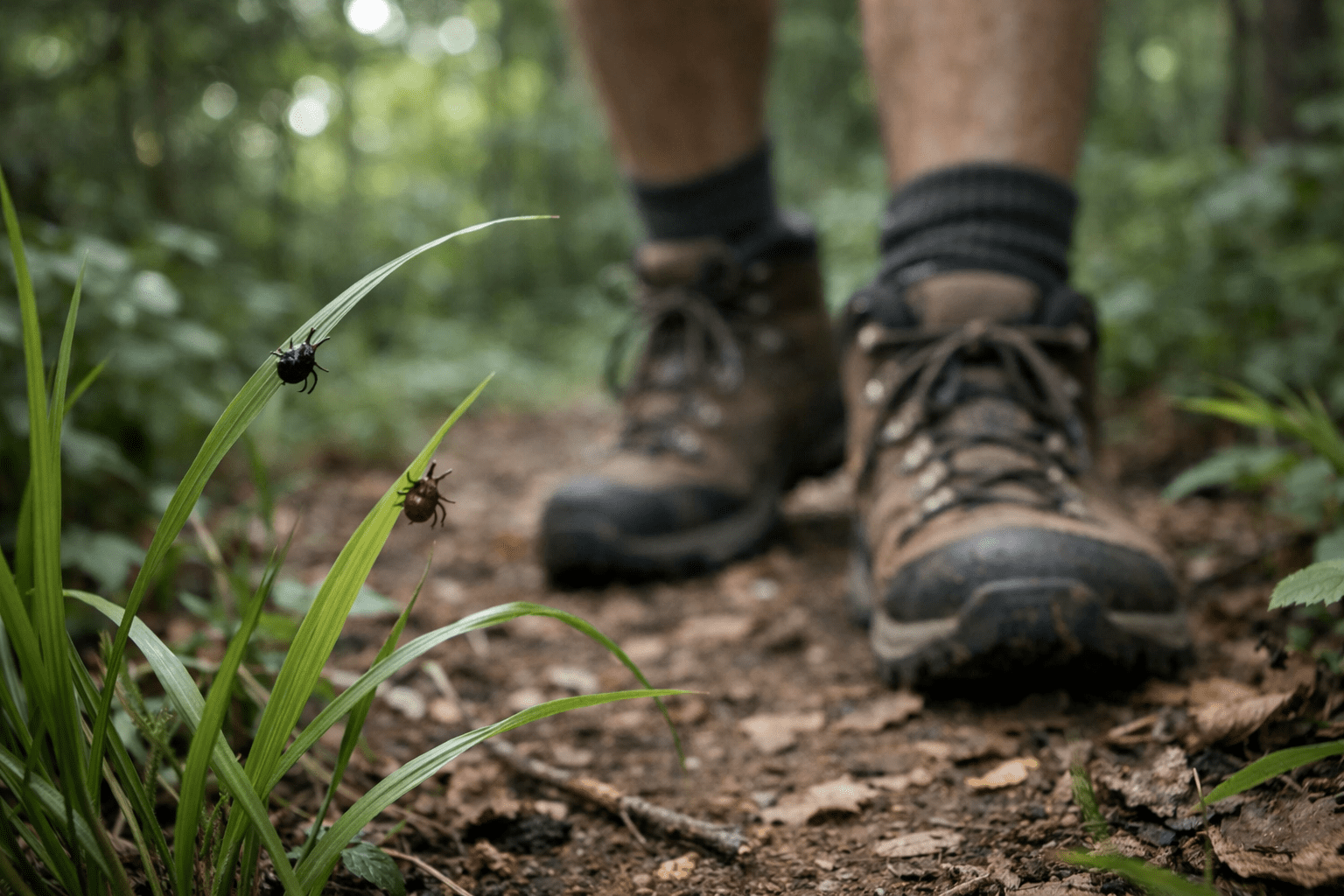
Image alt text: Comparison chart of tick repellent options including DEET, picaridin, and permethrin-treated clothing.
How to apply tick repellent correctly (the “layered defense” routine)
Sawyer Products Premium Permethrin Clothing Insect Repellent, 24 oz
This permethrin spray is designed for treating clothing and gear, which aligns perfectly with the article’s recommendation for a layered defense against ticks.
Natrapel 12-Hour Insect Repellent, 3.4 oz
No Amazon product page or ASIN found for Natrapel 12-Hour Insect Repellent 3.4 oz in search results; manufacturer’s site mentions Picaridin formula providing up to 12 hours protection from ticks and mosquitoes, but lacks Amazon-specific ratings, reviews, pricing, or third-party testing data for affiliate recommendation.[1]
Most repellent “failures” are really application problems. People miss the places ticks actually travel, apply too little, or forget that sweat, water, and time reduce protection.
Think of tick prevention like closing gaps in a screen door. You do not need perfection, but you do need coverage in the right spots.
Step-by-step: the routine that prevents most bites
Use this checklist before you step into tick habitat:
-
Treat clothing and gear with permethrin (ahead of time)
- Apply outdoors in a ventilated area.
- Let items dry fully (often 2-4 hours, follow label directions).
- Focus on: socks, cuffs, pant legs, waistline area, shirt hem, boots, gaiters, pack straps.
-
Apply a skin repellent to exposed areas
- Use DEET (20-30%) or picaridin (20%) for longer outings.
- Cover: ankles, backs of knees, wrists, neck, and any gaps between clothing layers.
- Avoid eyes and mouth. Use hands to apply to face, then wash hands.
-
Dress to make ticks easier to spot
- Light-colored socks and pants help you see crawling ticks.
- Tuck pants into socks in heavy brush, especially during spring nymph season.
-
Do a timed tick check
- As soon as you return indoors, check: behind knees, groin, waistband, belly button, armpits, scalp/hairline, behind ears.
- Showering soon after outdoor time can help wash off unattached ticks.
Where people commonly miss (and ticks take advantage)
Ticks often start low and crawl upward. These are the “miss zones” that deserve extra attention:
- Sock tops and boot collars
- Pant cuffs and the back of calves
- Waistbands and beltlines
- Under bra straps or pack straps
- Hairline, especially at the nape of the neck
If you are trying to figure out whether a mark is a tick bite or something else, our visual comparison guide can help: Mosquito Bites vs Bed Bugs, Fleas, Spiders & Ticks.
Safety notes that matter (especially for permethrin)
Permethrin safety is mostly about using it in the right place:
- Never apply permethrin to skin. It is for clothing and gear only.
- Keep liquid permethrin away from cats during application and drying. Cats are especially sensitive.
- Once dry on fabric, it is generally considered low risk for human contact when used as directed.
For additional travel and outdoor bite prevention guidance, university health services often provide clear, practical summaries, such as Indiana University Health Center insect precaution guidance.
Natural tick repellents: what to expect (and when they make sense)
Cutter Backwoods Insect Repellent, 6 oz
Insufficient search data to confirm Amazon ASIN, ratings, reviews, or pricing for Cutter Backwoods Insect Repellent 6 oz; official site describes it as a pump spray repelling insects up to 10 hours for outdoor use, but cannot recommend for affiliate without verified Amazon product details[1].
Plant-based repellents are popular for good reasons: many smell pleasant, feel lighter on skin, and appeal to people avoiding synthetic ingredients. The tradeoff is usually shorter protection time, especially for ticks.
Outdoor and consumer testing summaries often report that many essential oil-based products provide protection measured in minutes to a couple of hours, not an entire afternoon. That does not mean they are useless. It means you need realistic expectations and a tighter reapplication schedule.
Natural options that may help (with realistic limits)
Common plant-derived actives include oils such as:
- citronella
- cedar
- lemongrass
- soybean oil blends
Use them when:
- you will be outside briefly
- tick pressure is low (mowed lawn, paved paths)
- you can reapply frequently and do thorough tick checks
Avoid relying on them alone when:
- you are in brushy edges, tall grass, or leaf litter
- you are in a Lyme-endemic area during peak season
- you are doing long-duration activities (hunting, camping, trail work)
If you want a deeper breakdown of which plant-based options tend to perform best against biting insects, see Natural Mosquito Repellents That Actually Work. While mosquitoes are not ticks, the same “duration problem” often shows up with many botanical formulas.
A practical compromise many outdoor families use
If you prefer plant-based products on skin, consider this compromise:
- Permethrin-treated clothing for the heavy lifting (ticks contact fabric first)
- A botanical repellent on exposed skin for comfort
- A strict routine of tick checks and prompt showering
This approach still reduces risk, but it is not as protective as pairing permethrin with DEET or picaridin on exposed skin in high tick habitat.
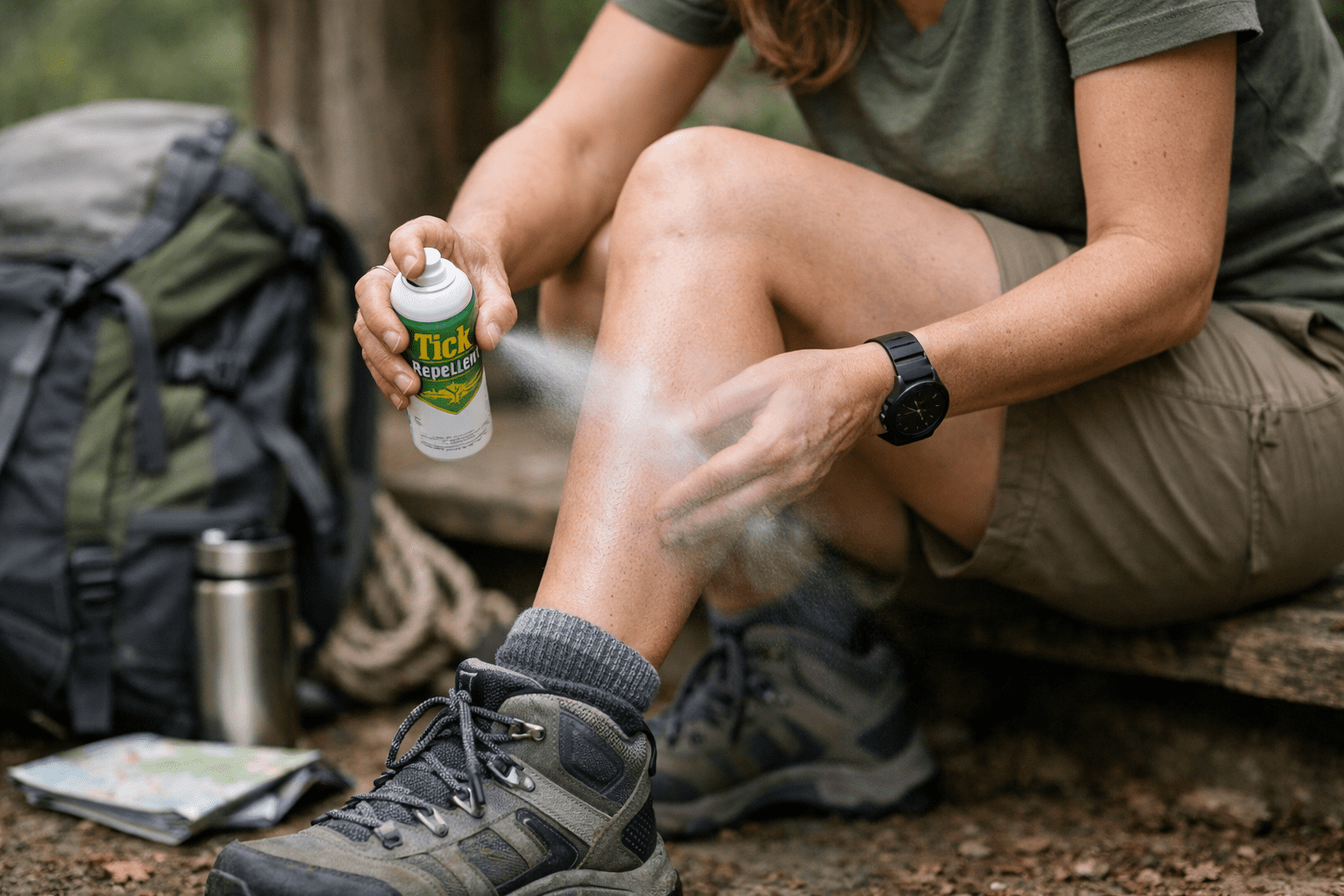
Image alt text: Person applying tick repellent to ankles and socks before hiking in tall grass.
Common tick repellent mistakes (and how to fix them fast)
Even strong products can fail if the strategy is off. These are the most common issues seen in the field, plus quick fixes you can use today.
Mistake 1: Assuming “repellent” means “kills ticks”
DEET and picaridin mainly deter ticks. Permethrin is the option that kills on contact when used on fabric.
Fix: Use repellents on skin and permethrin on clothing, especially socks and pant cuffs.
Mistake 2: Using permethrin like sunscreen
This is both unsafe and ineffective. Permethrin is not a topical skin product.
Fix: Treat clothing and gear only, let dry fully, then wear as normal.
Mistake 3: Applying too little, too late, or only once
Ticks can attach quickly, and protection fades with time.
Fix: Apply before entering habitat and set a phone reminder to reapply based on the product label and your sweat/water exposure.
Mistake 4: Choosing a concentration that does not match your outing
A short backyard task is not the same as a 6-hour hike.
Fix: Match duration to concentration:
- shorter outing: lower concentration may work
- longer outing: 20% picaridin or 20-30% DEET is often more practical
For families with children, pediatric guidance is the gold standard for safe, age-appropriate use. The American Academy of Pediatrics consumer guidance on insect repellents is a reliable reference for what is considered acceptable when used as directed.
Mistake 5: Forgetting that ticks are not your only biter
People often buy one product for everything, then get disappointed.
Fix: If mosquitoes are also a problem, compare how the same ingredients perform across insects in DEET vs Picaridin vs Oil of Lemon Eucalyptus: Best Mosquito Repellent. It can help you pick a single skin product that covers multiple pests, while still using permethrin on clothing for ticks.
Conclusion
The most effective tick repellent plan is simple: permethrin on clothing and gear, plus DEET or picaridin on exposed skin. That combination targets ticks where they travel and where they bite, and it holds up far better than relying on a single spray.
Next step: set up your “grab-and-go” kit today – a permethrin-treated hiking outfit, a skin repellent you tolerate, and a reminder for tick checks. For more bite prevention help, revisit our guides on Best Mosquito Repellents 2025: DEET vs Picaridin vs Natural and Mosquito Bites vs Bed Bugs, Fleas, Spiders & Ticks.
As an Amazon Associate, I earn from qualifying purchases. Product recommendations are based on real reviews and independent research.