Finding ticks after a hike is frustrating, and it is exactly why permethrin spray clothing treatments have become a go-to for hikers, hunters, and anyone working outdoors. Unlike skin repellents that simply discourage biting, permethrin bonds to fabric and can knock down ticks and other biting pests when they crawl onto treated gear. This guide breaks down what permethrin-treated clothing actually does, how long it lasts, how to apply it correctly, and which product formats make the most sense for your routine.
Quick answer: what permethrin spray for clothing does (and how to use it)
If you want the shortest path to safer outdoor time, here it is.
Permethrin spray clothing treatment is a fabric-only insecticide that repels and kills ticks and other pests on contact once it dries and binds to fibers.
At-a-glance checklist (snippet-friendly):
- What it protects against: ticks, mosquitoes, chiggers, mites
- Where it goes: clothing, socks, hats, boots, backpacks, tents (not skin)
- Typical strength: 0.5% permethrin for consumer clothing treatments
- How long it lasts: up to 6 weeks or 6 washes (UV and heavy use can shorten this)
- Dry time: usually 2-4 hours, or overnight outdoors for best results
- Best strategy: treat clothing + use a skin repellent on exposed skin
Want to compare it to DEET or picaridin for skin? See Best Tick Repellents for Humans: DEET, Picaridin & Permethrin.
Why permethrin-treated clothing works so well for ticks
Ticks do not fly or jump. They “quest” – climbing onto grass tips and leaf litter edges, then grabbing onto passing fabric like Velcro. That behavior is exactly why clothing treatments shine: pants cuffs, socks, and boot uppers are the front door.
Permethrin is a synthetic version of pyrethrins (natural insecticidal compounds found in chrysanthemum flowers). On fabric, it acts like a contact insecticide. When a tick crawls across treated fibers, it absorbs a dose through its cuticle and becomes impaired or dies before it ever finds skin.
Research and consumer testing consistently show strong real-world tick protection. In reporting summarized by Consumer Reports’ review of permethrin-treated clothing effectiveness, field studies of outdoor workers found substantially fewer tick bites when wearing treated clothing. One commonly cited result: outdoor workers experienced about 65% fewer tick bites in the first year when using permethrin-treated garments compared with untreated controls.
What permethrin does (and does not) do
Think of permethrin-treated fabric as a “doormat” that knocks pests down as they try to enter.
It does:
- Reduce tick attachment and time spent crawling on clothing
- Kill or disable ticks, chiggers, and mites that contact treated fibers
- Add protection in areas skin repellents often miss (sock tops, waistbands)
It does not:
- Replace tick checks
- Protect exposed skin (you still need a skin repellent if you are in shorts)
- Last forever – washing and sun gradually reduce potency
Visual: tick exposure points on a typical outfit
| Clothing area | Why ticks target it | Treat it? |
|---|---|---|
| Socks and sock cuffs | First contact when brushing grass | Yes |
| Pant legs (ankle to knee) | High contact zone in brush | Yes |
| Waistband and shirt hem | Ticks crawl upward under layers | Yes |
| Boots/shoes | Constant contact with vegetation | Yes |
| Hat | Useful in brushy, head-high vegetation | Often |
If you have ever wondered whether mosquitoes can still bite through certain fabrics, pair this approach with smart clothing choices in Can Mosquitoes Bite Through Clothes? Complete Fabric Guide.
Permethrin spray clothing: how to apply it safely (step-by-step)
Sawyer Products Premium Permethrin Clothing Insect Repellent 24 oz
Sawyer Products Premium Permethrin Clothing Insect Repellent 24 oz is a highly effective fabric treatment that bonds to clothing and gear, providing up to 6 weeks or 6 washes of odorless protection against ticks, mosquitoes, and over 55 insects without staining; ideal for camping, hiking, and outdoor activities where insect-borne diseases like Lyme or Zika are concerns, though it must not be applied to skin directly[1][2][3].
Most DIY clothing treatments sold to consumers are 0.5% permethrin. That concentration is designed to be effective on fabric while staying within labeled safety guidance when used correctly.
The most important rule is simple: permethrin is for clothing and gear, not your skin. For regulatory and safety context, the U.S. Environmental Protection Agency’s permethrin information and pesticide labeling framework explains how products are evaluated and why following the label matters.
Step-by-step application (best results with minimal waste)
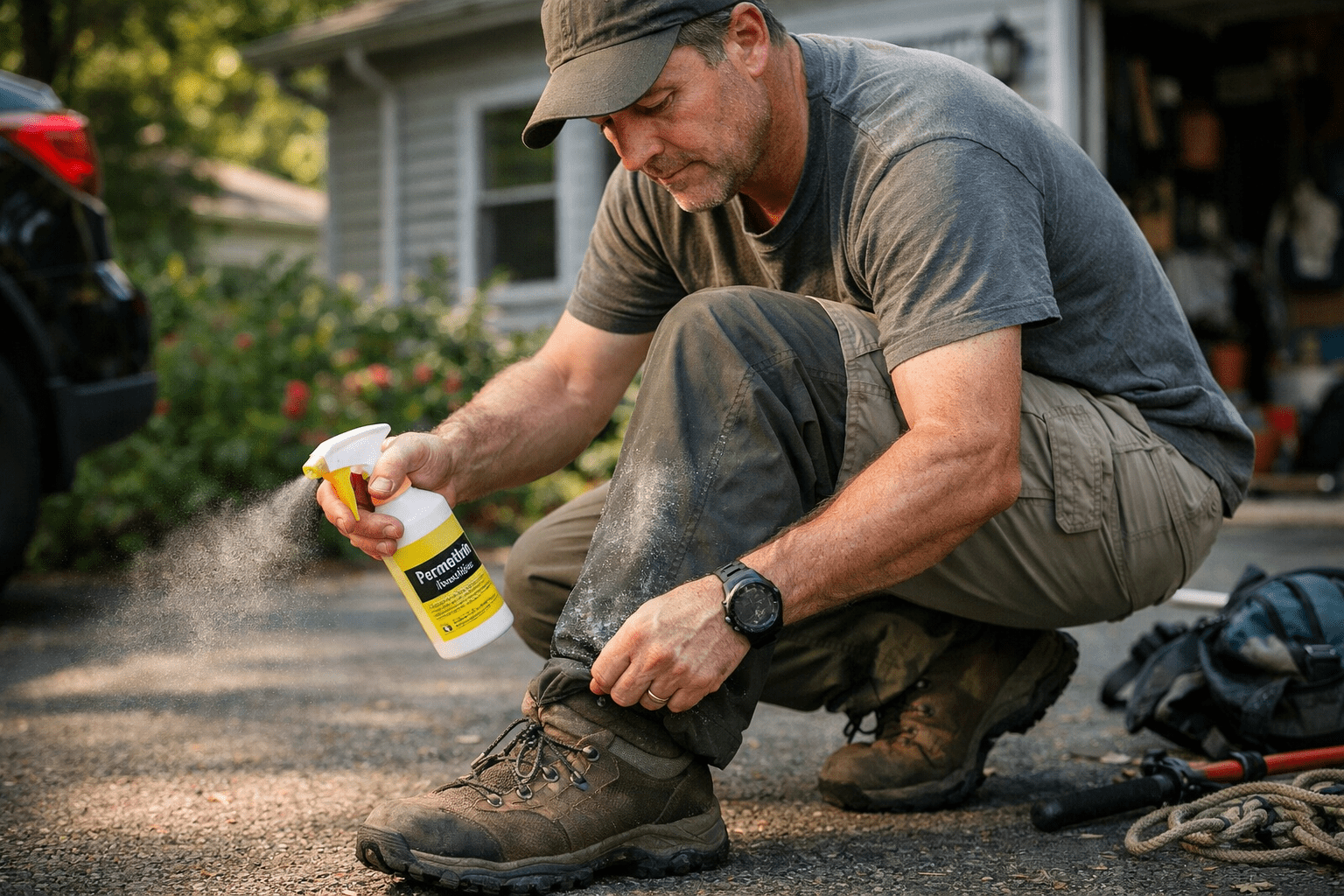
Apply outdoors or in a very well-ventilated area like an open garage.
- Lay items flat or hang them. Pants, socks, and shirts should be spread so you can reach seams and cuffs.
- Spray until the fabric is evenly damp, not dripping. A practical pace is about 20-30 seconds per side for a typical shirt or pant leg section, adjusting for thickness.
- Focus on high-contact zones. Ankles, cuffs, waistbands, and sock tops get the most tick traffic.
- Let it dry completely. Plan for 2-4 hours, or overnight outdoors if humidity is high.
- Store treated items away from kids and pets until fully dry. Drying is when you avoid accidental contact.
Visual: “treat these first” checklist for a tick-heavy trip
- Socks (especially the top band)
- Pants from ankle to knee
- Boot uppers and laces
- Shirt hem and waistband area
- Backpack shoulder straps and hip belt
- Tent door area and ground cloth edges (optional, but helpful)
How much spray do you actually need?
Coverage varies by brand and spray style, but a common rule of thumb is:
- A 12-ounce bottle treats roughly two outfits (shirt, pants, socks) or a similar amount of clothing plus a bit of gear.
- A larger 24-ounce trigger bottle can cover multiple outfits plus items like boots and a backpack.
Outdoor gear reviewers have also noted permethrin is generally synthetic-friendly and less likely than DEET to damage plastics and coatings when used on fabric as directed. See examples in field-use reviews like Trailspace’s hands-on Sawyer permethrin clothing treatment overview and a long-form user test from The Good Ride’s Sawyer permethrin fabric treatment review.
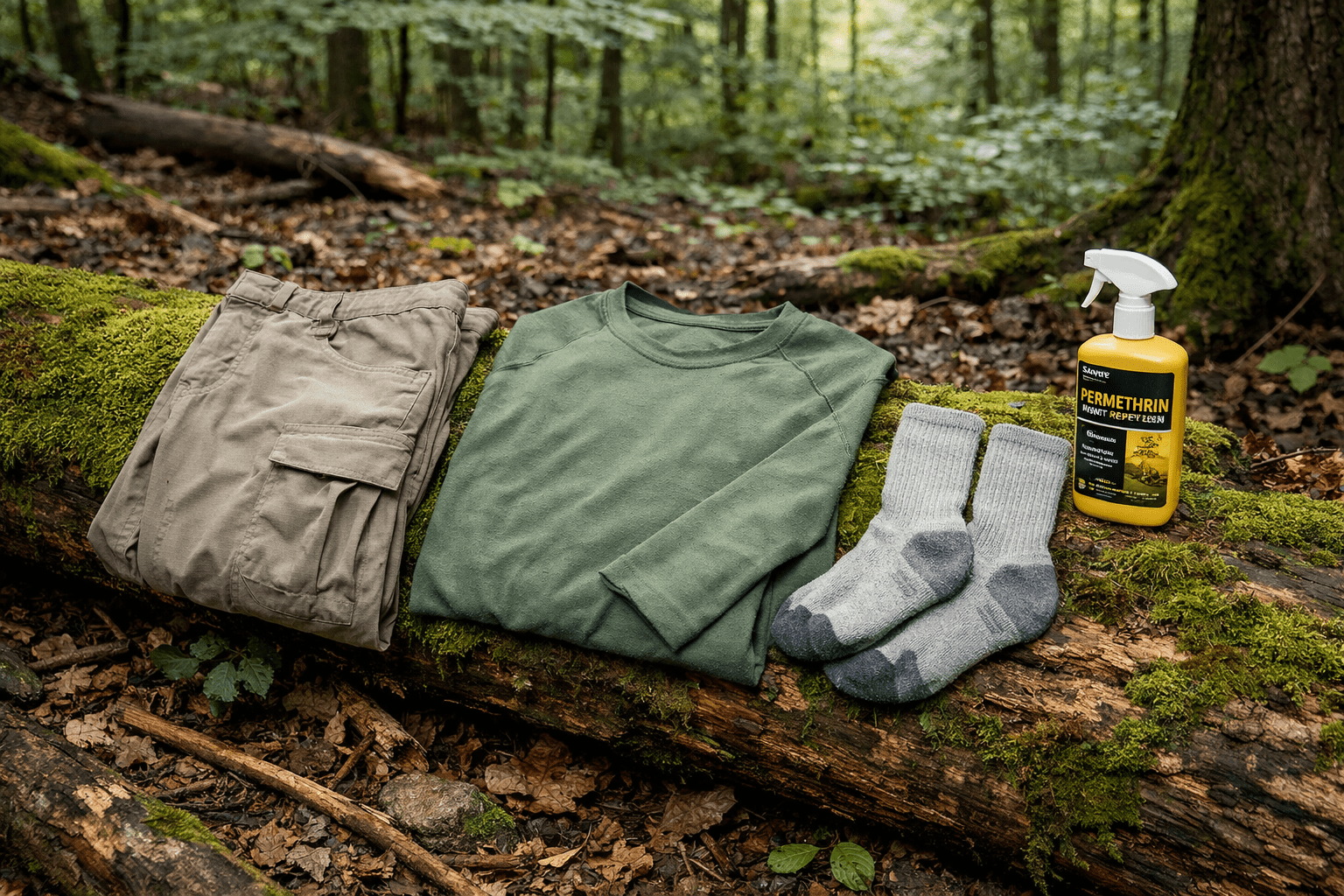
Best permethrin spray formats for clothing and gear (trigger, pump, aerosol)
Repel Permethrin Clothing and Gear Insect Repellent 10 oz
Repel Permethrin Clothing and Gear Insect Repellent is a reliable unscented aerosol (noted as 6.5 oz in sources, close to queried 10 oz) that binds to fabric for up to 2 weeks of protection against ticks, mosquitoes, chiggers, and mites, surviving multiple washes; ideal for outdoor enthusiasts treating gear and clothing, though Amazon-specific data like ASIN, ratings, and price unavailable here—verify directly on Amazon for latest details[1][2][3][4].
Standing in the store aisle, the real decision is often not “permethrin or not,” but which delivery format fits your routine. The active ingredient is similar across many clothing-treatment products (again, typically 0.5%). What changes is how evenly you can apply it, how fast you can treat gear, and how much product you waste to overspray.
Trigger spray (best for most people)
Trigger bottles are easy to aim and good for treating several garments at once.
Best for:
- Treating outfits before a trip
- Coating pant legs, sleeves, and socks evenly
- Covering backpacks and tent panels with controlled spray
Watch-outs:
- Hand fatigue if you treat many items
- More time spent on seams and cuffs (worth it)
A practical example of coverage and use comes from field notes like SomeCampingStoves’ review of Sawyer’s trigger spray treatment.
Pump spray (good coverage, less hand strain)
Pump sprayers can lay down a consistent mist and reduce finger fatigue.
Best for:
- Treating multiple outfits in one session
- Larger gear surfaces (packs, dog beds used outdoors, camp chairs)
Watch-outs:
- Pump pressure can surprise you. Gloves help keep a steady grip.
- Mist can drift in wind. Apply on calm days.
Aerosol (best for quick touch-ups and boots)
Aerosols are convenient when you are short on time, or when you want quick coverage on boots, gaiters, or pack straps.
Best for:
- Boots and lower legs
- Last-minute pre-trip refresh
- Hard-to-reach gear areas
Watch-outs:
- More overspray and product waste
- Less precise coverage on thin fabrics
For an example of consumer feedback on aerosol-style clothing treatments, see the product review page on The Home Depot’s permethrin clothing and gear aerosol listing.
Visual: quick comparison chart
| Format | Speed | Coverage control | Best use case |
|---|---|---|---|
| Trigger | Medium | High | Full outfits + packs |
| Pump | Medium | Medium-High | Multiple outfits at once |
| Aerosol | Fast | Medium | Boots, straps, touch-ups |
If you want a simple rule: treat your core clothing with trigger or pump at home, then keep an aerosol for boots and quick refreshes.
How long permethrin lasts on clothing (and when to re-treat)
Thermacell Mosquito Repellent Refill for Outdoor Lanterns, 48 Hours
Unable to locate the specific Amazon product page or ASIN in search results; Thermacell refills provide 48 hours of scent-free mosquito protection for lanterns per manufacturer sites, but no Amazon ratings, reviews, pricing, or third-party testing data available to support a recommendation[1][7].
People love permethrin when it works, then assume it is “set and forget.” The reality is more like sunscreen for your gear: it holds up well, but not forever.
Most consumer permethrin clothing treatments advertise effectiveness for up to 6 weeks or 6 washes. That matches a lot of user experience in the field, especially when items are line-dried and not scrubbed aggressively. UV exposure can shorten effective life, so a shirt worn in bright summer sun every day may need re-treatment sooner than a pair of hiking pants used on weekends.
What shortens longevity?
Here is what strips or degrades the treatment fastest:
- Frequent washing, especially hot water and long cycles
- High-heat drying, which can be rough on fabrics and finishes
- Constant sun exposure during long summer days
- Abrasion from brush, pack straps, and repeated flex points (knees, cuffs)
Visual: re-treatment schedule you can actually remember
| Use pattern | Re-treat about when? |
|---|---|
| Weekend hikes (spring-summer) | Every 6 weeks |
| Daily outdoor work | Every 3-4 weeks, or when bites increase |
| After laundry-heavy weeks | After ~6 washes |
| After long UV exposure (desert, high altitude) | Consider earlier re-treat |
Pairing permethrin with skin repellent (the high-success combo)
Permethrin handles the fabric. You still need a skin repellent for ankles, hands, neck, and any exposed skin.
A good pairing strategy:
- Treat clothing and gear with permethrin
- Use DEET or picaridin on exposed skin
- Do tick checks after coming indoors
- Shower within 2 hours when possible after high-risk outings
For a deeper comparison of skin repellents and when to choose each, use Best Tick Repellents for Humans: DEET, Picaridin & Permethrin as your decision guide.
Safety, myths, and smart precautions (people, pets, and the environment)
Permethrin is widely used in public health and personal protection, but safe use depends on one thing: use it exactly as labeled. Once dry on fabric, permethrin has low absorption through human skin under normal wear. The biggest mistakes happen during application, or when people use the wrong product concentration.
Common myths (and the real answer)
Myth: “It is like DEET, so I can spray it on my skin.”
Reality: Clothing treatments are intended for fabric. Spraying on skin is not how these products are registered or labeled. Use a skin repellent instead.
Myth: “Higher concentration is better for clothing.”
Reality: 0.5% is the standard for clothing treatments. Higher concentrations are typically meant for other uses and increase the chance of misuse.
Myth: “It only repels, it does not kill.”
Reality: On fabric, permethrin can disable and kill ticks that crawl across treated fibers.
Myth: “It will ruin my synthetic gear.”
Reality: Many outdoor users report no damage to synthetics when used as directed. In contrast, DEET can degrade some plastics and coatings.
Pet safety: especially cats
This is the part many outdoor households miss. Wet permethrin is dangerous to cats. Cats lack certain liver enzymes that help metabolize pyrethroids. Keep cats away from wet-treated items until everything is fully dry, and never use dog tick products on cats unless your veterinarian directs it.
If you are choosing pet-safe repellents, start with Best Mosquito Repellent for Dogs & Pets and follow your vet’s guidance for tick preventives.
Environmental precautions
Permethrin is toxic to aquatic life. Avoid spraying near streams, lakes, storm drains, or anywhere runoff could carry product into water. Apply on a stable surface where overspray can dry, and store leftover product securely.
For additional safety context and product evaluation, the U.S. Environmental Protection Agency’s permethrin overview is a reliable reference for how these products are regulated.
When to consider professional help
If you are dealing with repeated tick exposure around your property, or you are in a Lyme-endemic region with heavy infestations, it may be time to combine personal protection with yard management and professional advice. Clothing treatment helps, but it does not change the tick population in your landscape.
Conclusion: the simplest way to use permethrin and get fewer bites
Permethrin spray clothing treatment is one of the most effective, low-effort upgrades for tick country because it turns your socks, pant legs, and gear into a contact barrier. Stick to 0.5% clothing products, apply outdoors, let everything dry fully, and re-treat around the 6-week or 6-wash mark. Pair it with a skin repellent on exposed areas, and keep doing tick checks.
Next steps:
- Choose a skin repellent that matches your conditions using Best Tick Repellents for Humans: DEET, Picaridin & Permethrin
- Keep a removal tool ready before your next trip with Best Tick Removal Tools [Tested & Ranked]
As an Amazon Associate, I earn from qualifying purchases. Product recommendations are based on real reviews and independent research.