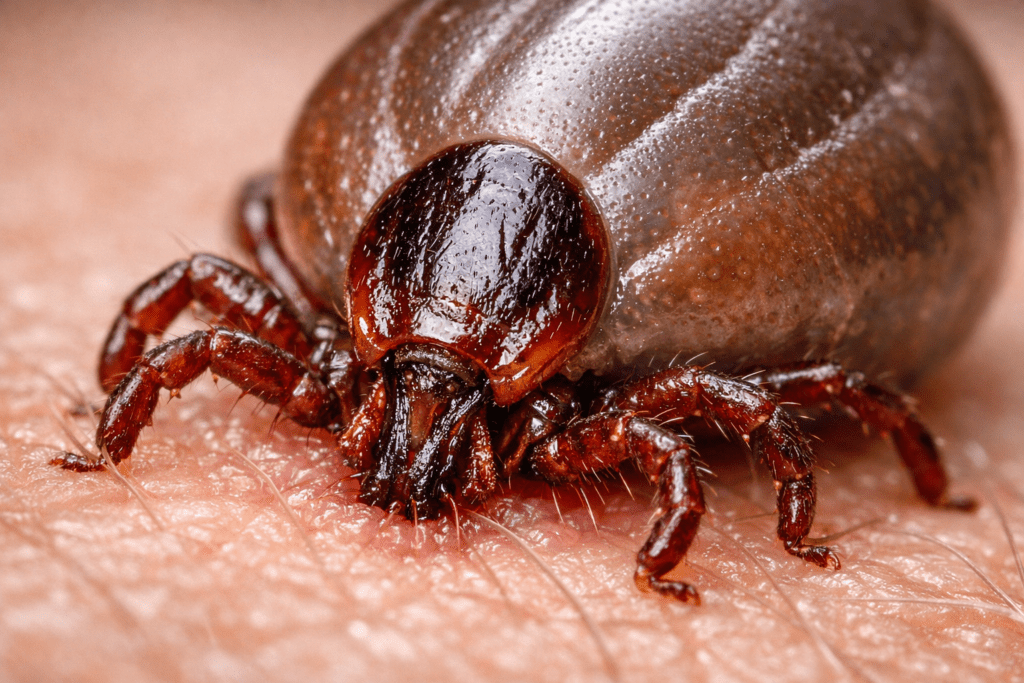
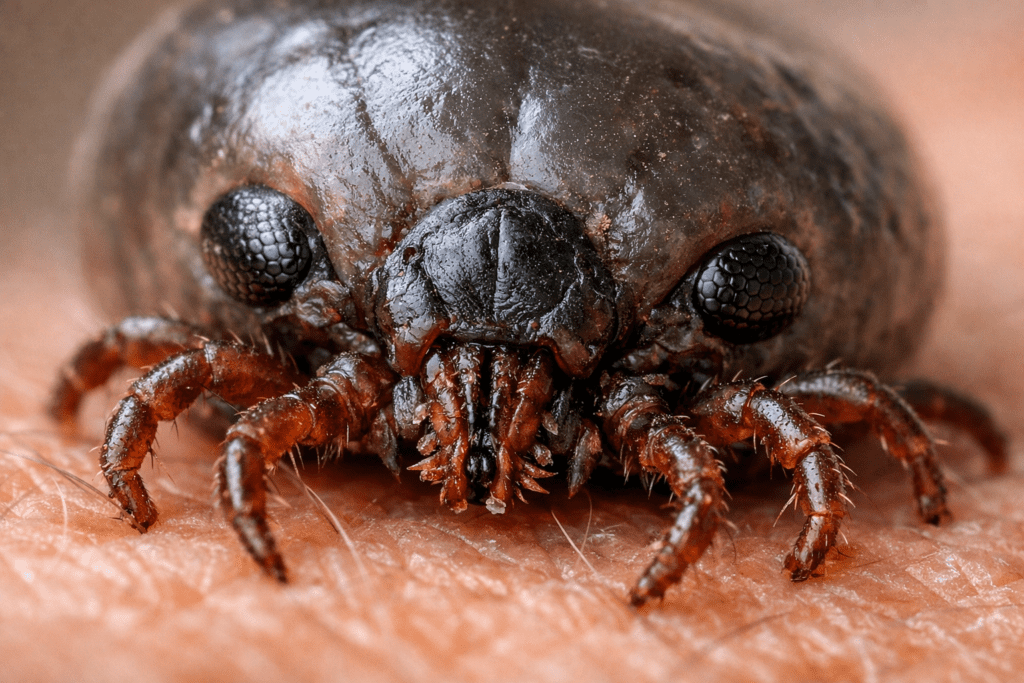
If you want fewer ticks in your yard, the surprising part is where you do not need to worry. Ticks dry out and die in open sun, so they are almost never in the middle of a mowed lawn. They wait at the shady, leaf-littered edge where the lawn meets the woods, the fence line, or the stone wall, riding the mice and deer that live there. The fix is not a sprayer, it is a tidy, dry border: a three-foot wood-chip or gravel strip between the grass and the woods, short turf, and no leaf litter, tall weeds, or woodpiles near where people sit and kids play. Do that, keep the food and cover that draws mice and deer away from the patio, and you cut ticks at the source.
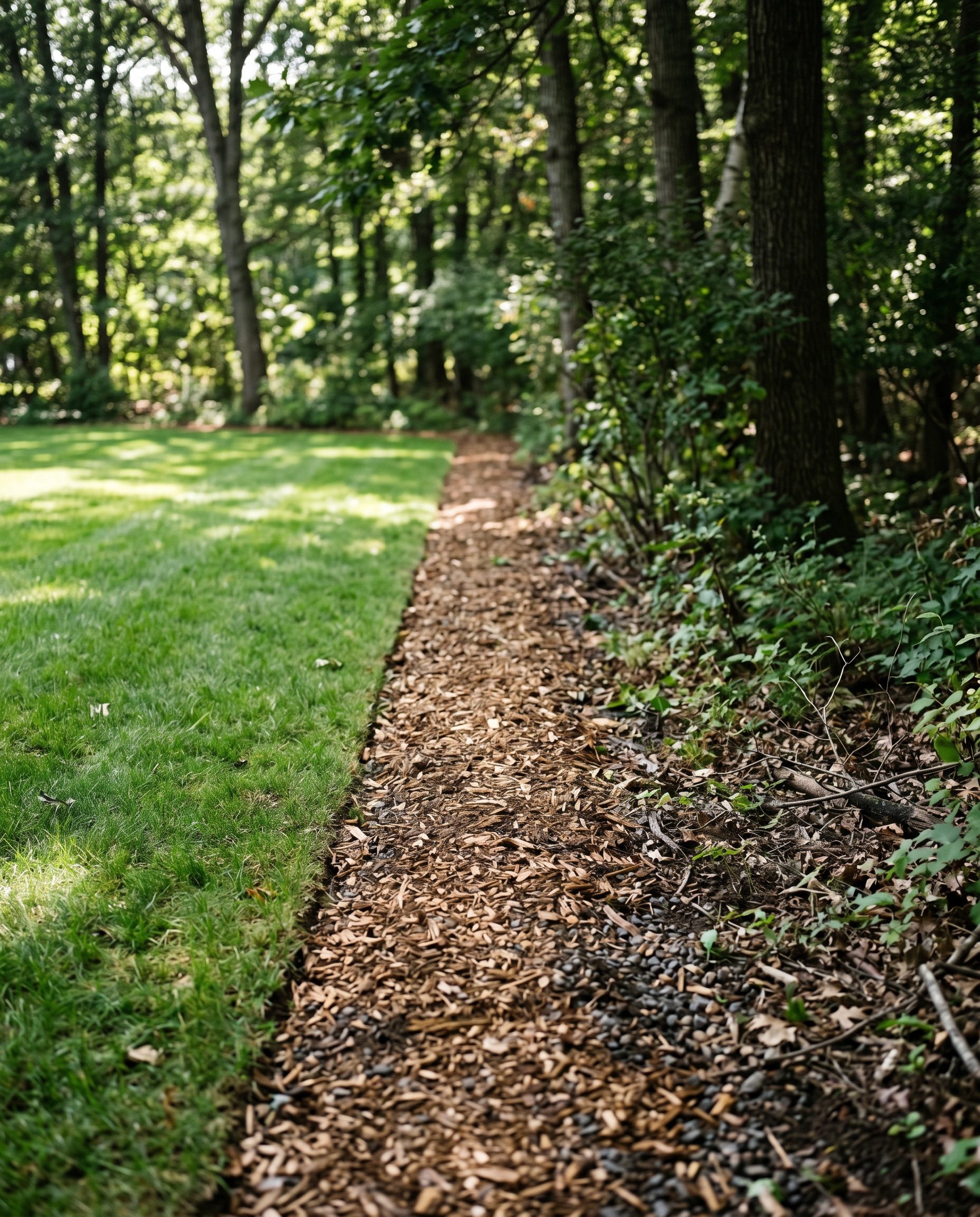
For most yards, a dry, tidy woodland border beats any spray: ticks live at the shady edge, not the sunny lawn, so a three-foot wood-chip strip, short grass, and no leaf litter or woodpiles near play areas do the real work.
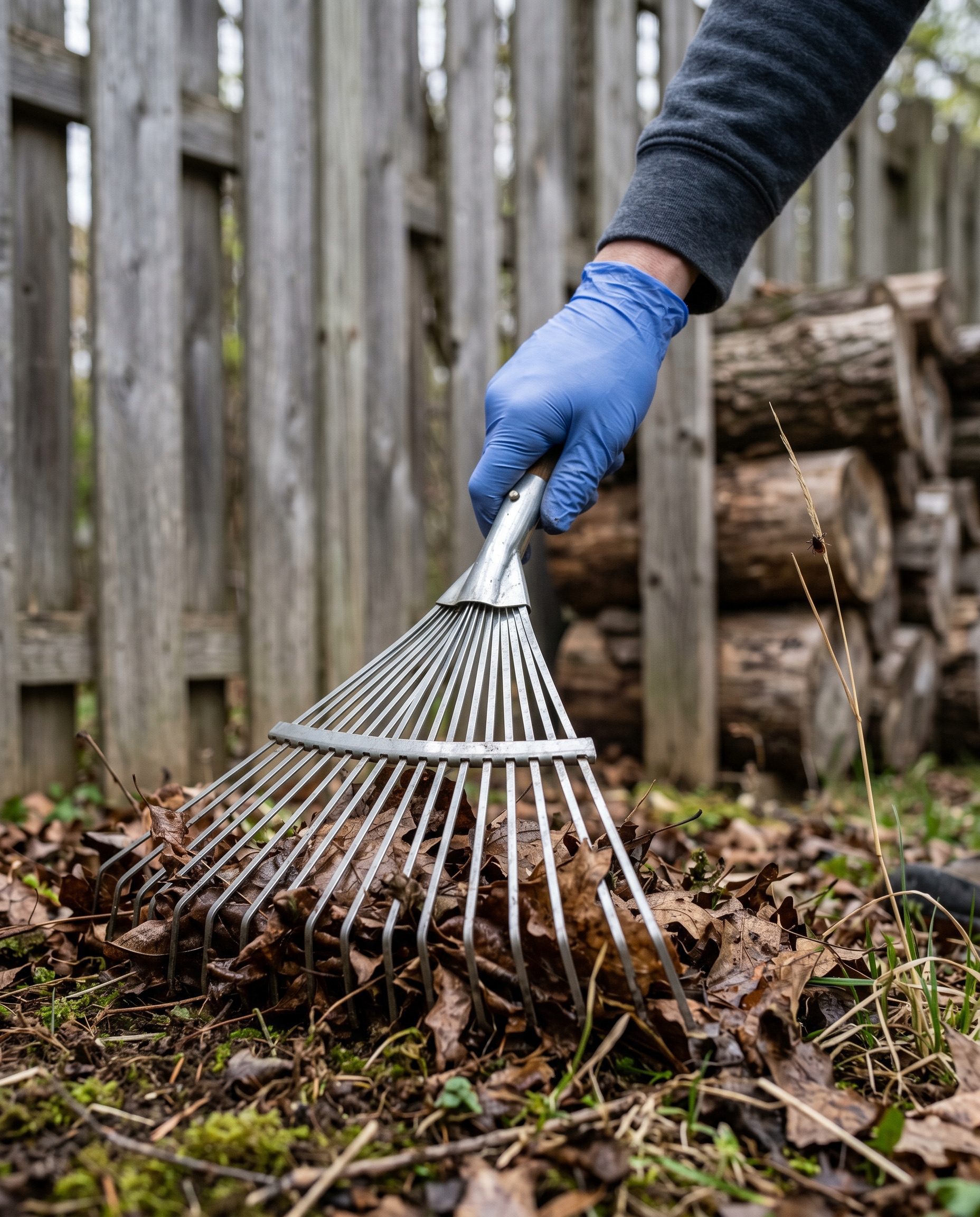
- Do first (free): Rake out leaf litter, mow short, and pull play sets and seating into the open, away from the woods and fence line.
- The durable fix: A three-foot wood-chip or gravel border between lawn and woods, plus moving bird feeders and woodpiles that draw mice and deer.
- Skip: Blanket-spraying the whole lawn; ticks aren’t there, and a broadcast pesticide hits pollinators and predators you want to keep.
Why the lawn isn’t the problem
The thing to picture before you do anything is a tick clinging to a grass blade with its front legs out, waiting for a warm body to brush past. It cannot fly or jump, and it dries out fast in open sun and wind. That single fact is why the middle of a sunny, mowed lawn is the worst place for a tick to be and the woodland edge is the best. The CDC notes that ticks live in the brushy, wooded, leaf-littered edges, in the tall grass and ground cover where humidity stays high all day.
So the yard problem is really an edge problem. The shady strip where your lawn meets the trees, a stone wall, or an overgrown fence line holds the moisture ticks need, and it is also where the mice and deer that carry them travel. Treat the whole acre like one undifferentiated tick zone and you waste effort on the safe sunny part while missing the few feet that matter. Map your yard by light and moisture, not by total size, and the work gets much smaller.
Build a dry border at the edge
This is the single highest-value change, and it costs the price of a few bags of mulch. Lay a three-foot-wide strip of wood chips or gravel along every spot where the lawn meets the woods, a wall, or a brushy fence line. That dry, sunny band is a barrier ticks rarely cross on their own, and it gives you a clean line to keep mowed. The CDC’s yard and prevention guidance recommends exactly this mulch buffer between recreation areas and the trees.
Then keep the turf you have short. Ticks need the humid microclimate down in long grass and thatch, so a lawn mowed on the shorter side dries out faster and holds far fewer of them. Trim back the brush and tall weeds along that border too, because every overhanging branch is a humid bridge back over your dry strip. The University of Rhode Island’s TickEncounter program is a good homeowner reference for this kind of habitat work, with plenty of regional detail on which ticks you are dealing with and when they are active.
Clear the litter and rethink the layout
Leaf litter is tick habitat, full stop. Damp leaves piled against a fence, under a deck, or in the beds along the house hold moisture and shelter the small mammals ticks feed on. Rake leaf litter out of the edges and away from the foundation every spring and fall, and do not let it drift back into the border you just cleared. Woodpiles do the same job for mice, so stack firewood in a dry, sunny spot well away from the patio rather than against the house.
The other half of layout is where people actually spend time. Pull the swing set, sandbox, picnic table, and patio seating into the open, at least several feet from the woods and the border strip. Kids and pets pick up most yard ticks right at that shady transition, so moving the play zone into full sun does more than any product. If you have a deck, keep the underside clear and dry rather than letting it become a cool, leaf-filled harbor.
Cut the mouse and deer habitat
Ticks are passengers. The reason your edge has them is the wildlife living there, and white-footed mice are the big one because young ticks feed on them and pick up disease in the process. Take away the mouse food and cover and the tick supply drops with it. Move bird feeders away from seating areas or pause them in tick season, since spilled seed feeds the exact rodents you are trying to discourage, and clear the brush, rock piles, and ground clutter where mice nest.
Deer carry the adult ticks and drop engorged females that lay thousands of eggs, so the deer that browse your yard at dawn are restocking your edge. You will not fence out every deer, but you can make the yard less inviting: skip the plants deer love most right along the woodland border, and keep that border tidy so it is exposed rather than sheltered. This is also where targeted tools earn their place. Bait-box and tube products aimed at mice, rather than a broadcast lawn spray, treat the animal instead of the whole yard, and our guide to tick tubes for yard tick control covers how the permethrin-treated nesting material works and where to place it along that leaf-litter edge.
Where a targeted spray fits
Habitat work clears most yards, but a few situations call for a treatment, and the rule is spot, not blanket. If you have a heavily used shady edge that stays ticky after you have tidied it, a targeted application along that border strip can knock the numbers down. The honest part most spray-it-all advice skips: a broadcast pesticide across the open lawn mostly treats ground where ticks were never going to survive, while killing the bees, ladybugs, and ground beetles you want.
So treat the edge, not the acre, and protect pollinators. Never spray open blooms, and apply at dusk when bees are not foraging, keeping the product off flowering plants and away from drift. Read and follow the product label, because under federal law the label is the law, and keep children and pets off any treated area until it has fully dried. Permethrin is a useful active ingredient outdoors, but a hard caution for pet owners: it is highly toxic to cats while wet, so keep cats away from treated areas and any treated clothing until dry, and ask your veterinarian before using any permethrin product around a cat. If anyone is exposed and you are worried, contact a doctor, a veterinarian for pets, or your local poison control center.
| Yard zone | Best approach | Watch out for |
|---|---|---|
| Open sunny lawn | Mow short, no treatment needed | Don’t waste spray where ticks can’t survive |
| Woodland or fence edge | Three-foot wood-chip border, kept clear | Overhanging brush rebuilds the humid bridge |
| Play and seating areas | Move into full sun, away from edge | Decks and sandboxes near woods stay ticky |
| Mouse and deer corridors | Targeted bait/tube tools, remove cover | Bird feeders and woodpiles feed rodents |
Protect yourself in the yard
Even a well-managed yard is not tick-free, so the last layer is personal. The most reliable habit is checking yourself, kids, and pets after time outside, especially after working that edge. Removing an attached tick promptly lowers the chance of disease, so a daily tick check during the season is genuinely your best defense. If you are not sure what you pulled off, our tick identification guide helps you tell the species apart, which matters because different ticks carry different illnesses.
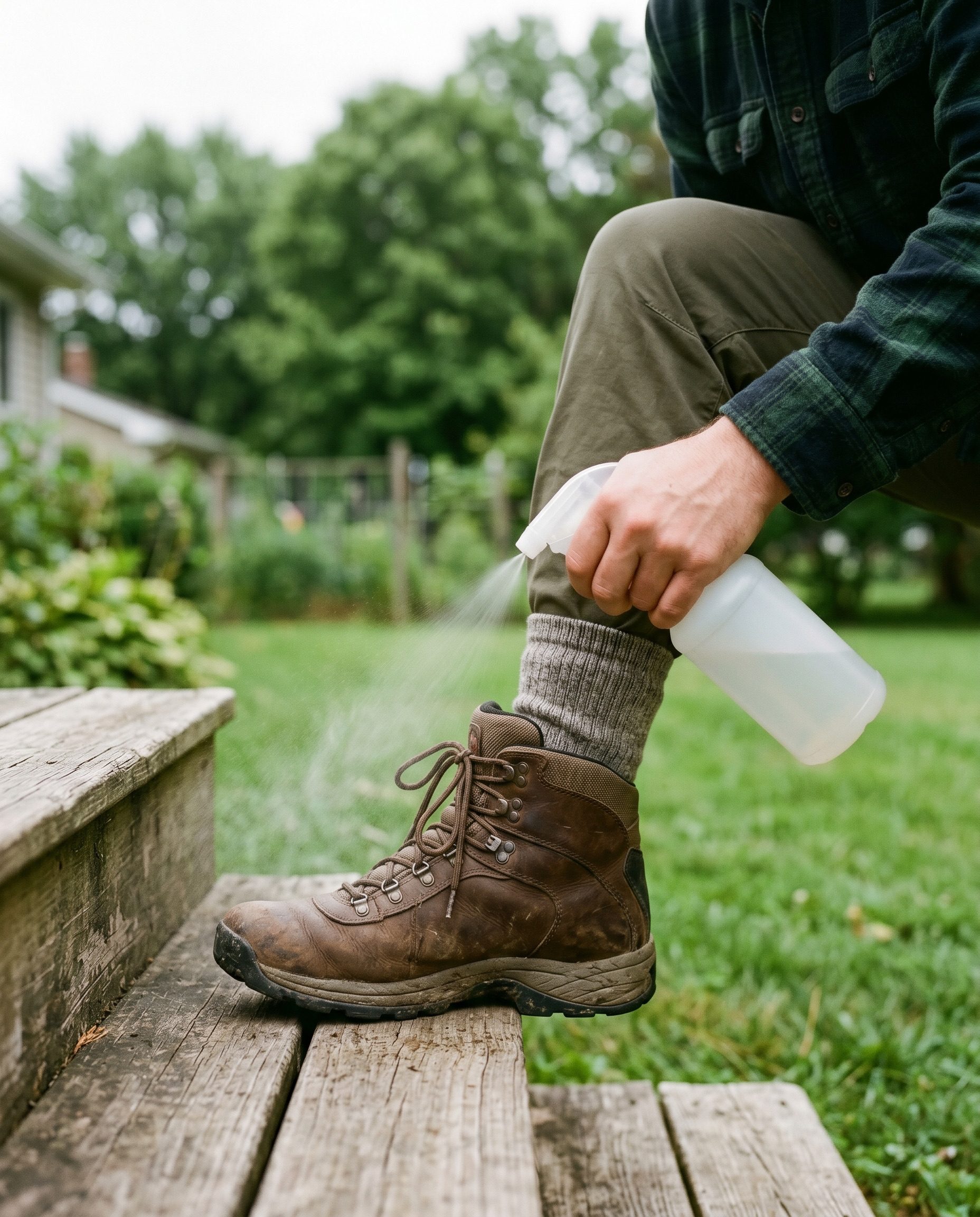
For yard work and trail time, dress for it. Treating boots and pants with permethrin works well because permethrin-treated clothing holds up through several washes, and on skin you can use an EPA-registered skin repellent like DEET, picaridin, or oil of lemon eucalyptus. Our roundup of tick repellents compared walks through which active ingredient fits which job.
Common questions
What is the fastest way to get rid of ticks in my yard?
Tidy the edge, not the whole lawn. Rake out leaf litter, mow short, lay a dry wood-chip border between the grass and the woods, and move seating and play sets into the sun. That habitat work removes the humid shade ticks depend on faster and more durably than a one-time spray, and it is most of the job.
Does spraying the whole lawn for ticks work?
It mostly wastes product. Ticks dry out in open sun, so a broadcast spray treats ground where they were never going to survive while harming pollinators and predators. A targeted application along the shady border, if you need one at all, does far more for far less and spares the good bugs.
Do tick tubes really work in a yard?
They can, because they treat the animal instead of the acre. Mice carry the permethrin-treated cotton back to their nests, which kills the immature ticks feeding on them at the source. They work best placed along the leaf-litter edge and stone walls where mice travel, as part of the broader habitat cleanup rather than on their own.
Are ticks in my yard dangerous?
They can be, which is why prevention is worth the effort. Tickborne illnesses have been climbing for years, and early Lyme often shows up as an expanding rash and flu-like symptoms. If you develop a rash or fever after a bite, see when to call a doctor about a tick bite and get checked.
When are ticks worst in the yard?
It varies by region and species, but the immature ticks that bite people are often most active from late spring through summer, with a second adult-tick push in fall in many areas. Do your border cleanup before the season ramps up, and keep checking yourself through the warm months when the yard sees the most use.
Final verdict
Tick-proofing a yard is a habitat job, not a spraying job. Ticks live at the shady, leaf-littered woodland edge and die in the open sun, so your effort belongs in a tidy, dry border: a three-foot wood-chip strip between lawn and woods, grass kept short, leaf litter raked out, and play areas pulled into the sun. Cut the mouse and deer habitat that restocks that edge, and use targeted tools or a spot treatment only where the cleanup is not enough, always sparing the pollinators and predators a blanket spray would wipe out. Then protect yourself with treated clothing and a daily tick check, because no yard is ever fully tick-free.
Next steps:
– Treat the mice that carry young ticks with the right tool, explained in our tick tubes for yard control guide.
– Match your personal protection to the job in our tick repellents compared.
– Identify what you find on you or a pet with our tick identification guide.