If you keep finding roaches in the kitchen at night, do not start with a can of spray. What actually clears a colony is the boring order: clean off their food and water, seal the cracks they hide in, then set bait and let it carry back to the nest. Spraying a German cockroach problem usually makes it worse, because the spray scatters them deeper into the wall and leaves poison where they never walk. At my own house the whole kit is a couple of glue boards and one syringe of gel bait. This guide covers the free first steps, when to bait, and the gadgets to skip.
The sequence that clears a colony is sanitation, then harborage removal, then bait. A spray or fogger scatters German roaches deeper into the wall and lands residue where they never walk, so it makes the problem worse.
- Do first (free): Wipe down food and grease, fix the leak under the sink, take out the trash nightly, and clear clutter where they hide.
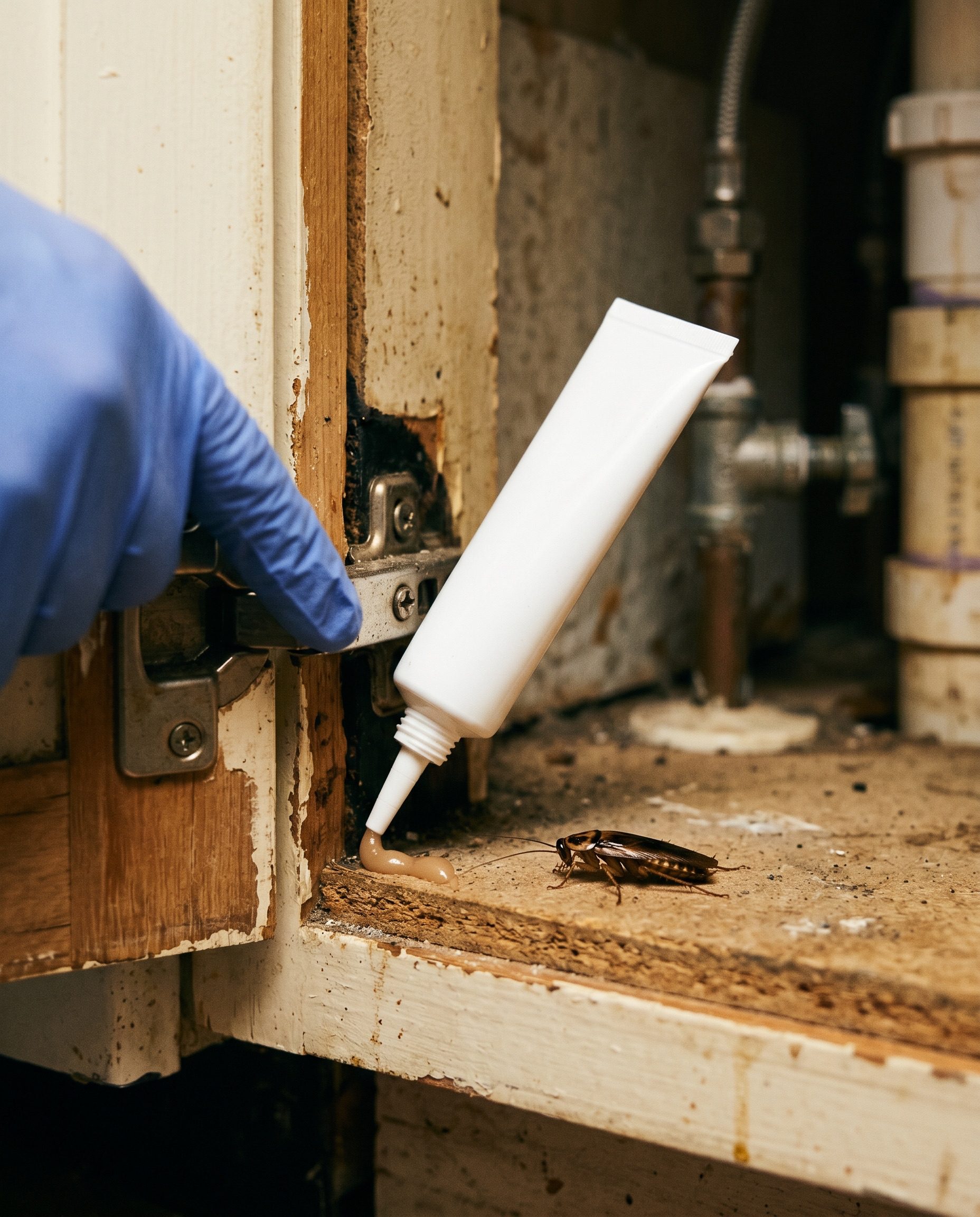
- Best for the common case: Gel or station bait placed in cracks and crevices, which foragers carry back to the colony.
- Skip: Foggers and bug bombs; they leave heavy residue on open surfaces and do not reach where roaches actually live.
Quick answer
For the common kitchen or bathroom infestation, the order matters more than the product. Take away food, water, and clutter first, because a starved colony shrinks on its own and bait works far better when there is nothing else to eat. Next, seal the gaps and crevices where they hide and breed. Only then place bait directly into those cracks, where foragers will find it, eat it, and carry it back. A reasonable timeline is a noticeable drop within a week or two and a clear-out over four to six weeks if you stay on the sanitation. Resist the urge to spray; on a German cockroach problem a spray scatters survivors and undoes the bait.
Why they keep coming back
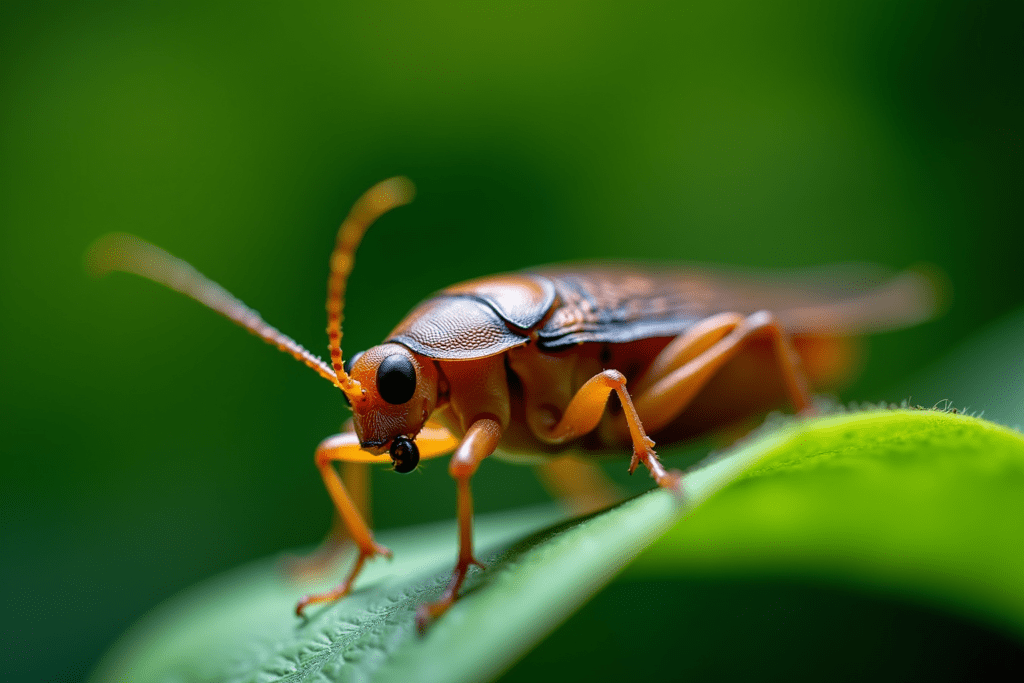
Roaches show up for three things: food, water, and a tight, dark place to hide. The German cockroach is the one that turns into a real indoor infestation. The UF/IFAS Featured Creatures profile of the German cockroach notes it lives “in association with humans” and is “the species that typically plagues multifamily dwellings.” It is small, light brown, with two dark stripes behind the head, and it breeds fast enough to outrun a slow response. Each egg case holds 30 to 40 eggs, and according to the UC IPM Pest Notes on cockroaches a single female and her offspring can produce over 30,000 individuals in a year.
That reproduction math is why sanitation is not optional. Roaches prefer warm, dark, moist spots, especially narrow gaps where a surface touches their back on both sides, so they cluster under the sink, behind the fridge motor, around the dishwasher, and inside the cabinet hinges. They are most active in warm months and stay active year-round indoors in heated homes, and they are worst in the warm, humid South. If you are not sure which roach you have, the full ID and the look-alikes are covered in our German cockroach guide, and the conditions that draw them in are broken down in what attracts cockroaches. Removing the cause is half the whole fix.
Clean and dry them out
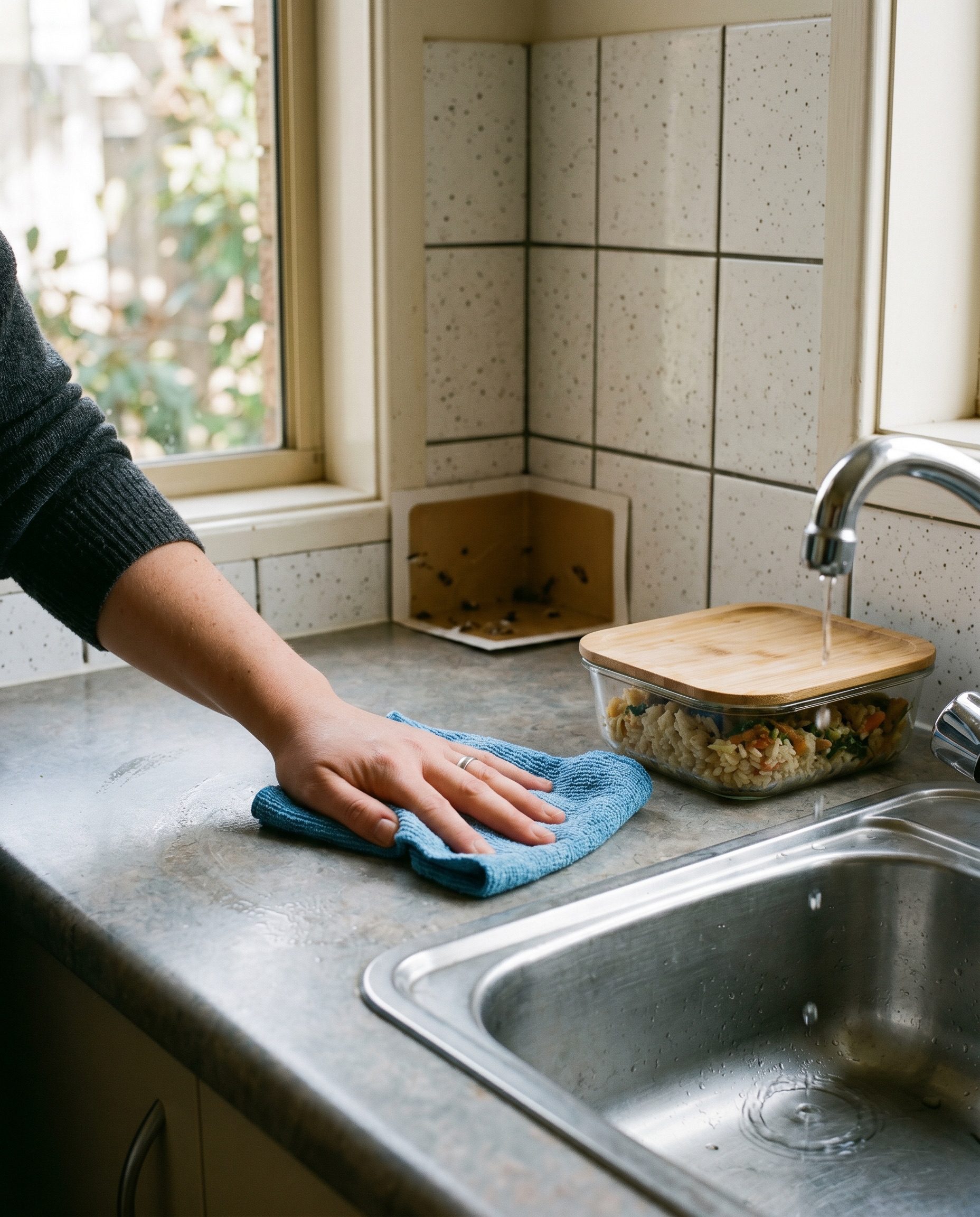
This is the layer that costs nothing and does the most work, so it comes before any product. The EPA’s guidance for housing managers on cockroaches puts it plainly: integrated pest management “emphasizes eliminating nesting places as well as sources of food and water,” and “studies have proven that IPM is the most effective way to control pests in the home.” Start with food and grease. Wipe counters and the stovetop nightly, sweep crumbs, store dry goods and pet food in sealed containers, and never leave dishes or pet bowls out overnight. A clean kitchen is the single biggest lever you have.
Water matters as much as food, and people forget it. Fix the drip under the sink, dry the dish rack, wipe the shower, and empty standing water from drip trays, because a roach can last weeks on water alone with very little food. Then take out the trash every night in a lidded can. Clutter is the third leg: cardboard, paper bags, and stacked boxes are prime harborage, so clear them out. The same UC IPM Pest Notes are blunt that “good sanitation and exclusion are important for effective control; pesticides alone will not solve cockroach problems.” If you are seeing roaches in daylight, the population is already large, so this stage may take a couple of weeks of consistency before the numbers visibly fall.
Seal where they hide
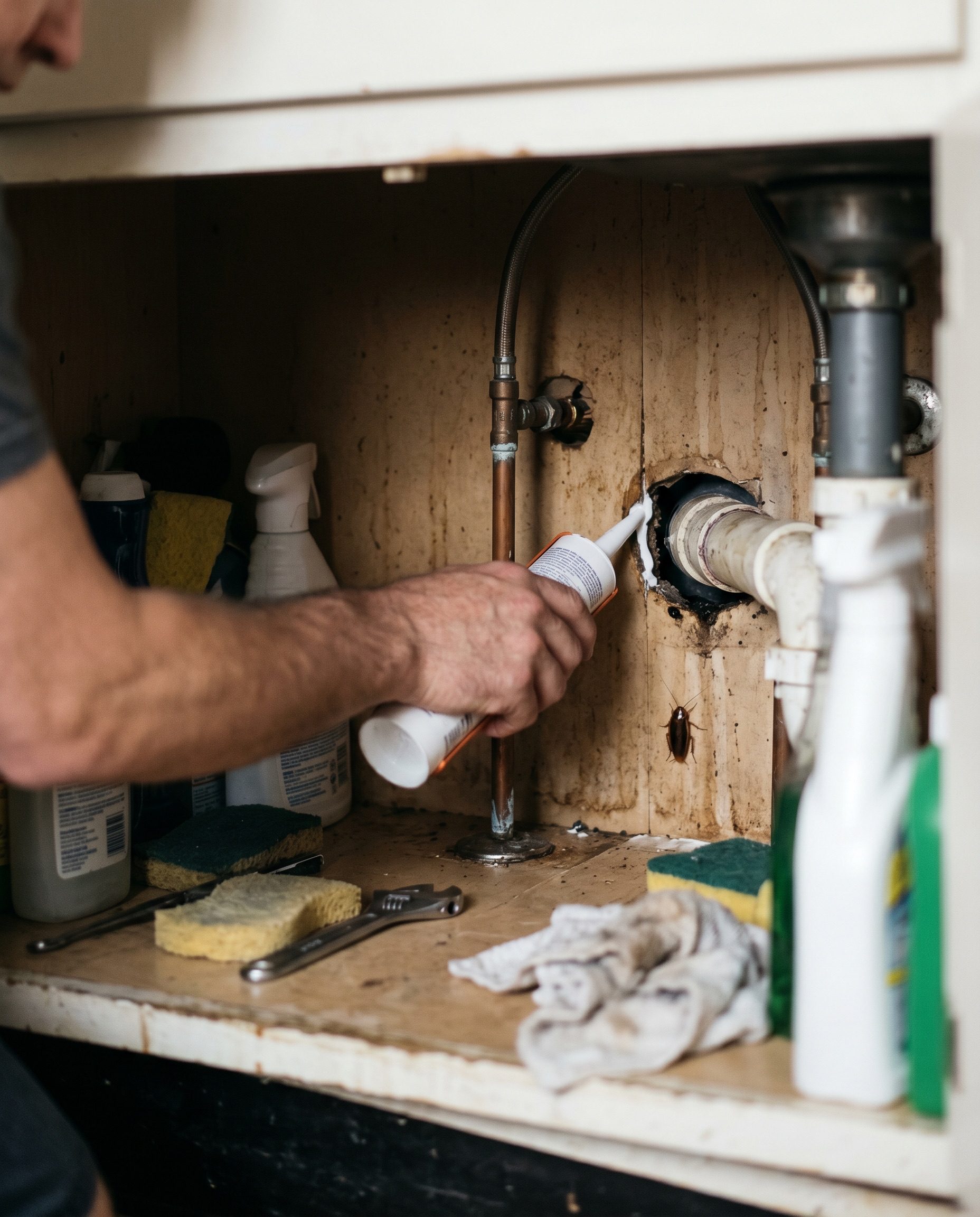
Once the food and water are cut off, deny them the harborage. The NPIC cockroach control and pesticide-safety page recommends sealing “cracks and crevices around cabinets, backsplashes, windows, doors, crawl spaces, pipes, wires, and cables.” Run a bead of caulk along those gaps, fit door sweeps, and patch the openings where pipes pass through the wall under the sink, which is the highway between apartment units. Sealing harborage is what makes the fix durable, because even a perfect baiting job fails if a fresh wave can move back in from next door.
Set out flat sticky monitors at the same time, not as your cure but as your eyes. NPIC’s advice is to “monitor and assess cockroach activity using sticky traps or glue boards,” and they tell you exactly where the population is concentrated so you bait the right spots. Tuck them flush into corners where the backsplash meets the counter, behind the trash can, and inside the under-sink cabinet, then check them after a few nights. The corner with the most catches is where the harborage is, and that is where the bait goes next. If you are dealing with a vacuum-able cluster, the EPA recommends a HEPA-filter vacuum to pick up live roaches and egg cases while keeping allergens out of the air.
Bait, do not spray
Now the product. For a real infestation the right tool is bait, not a spray, and the difference is not a preference, it is how the chemistry reaches the colony. A forager eats the bait, returns to the harborage, and the active ingredient spreads to roaches that never left the wall through their droppings and grooming. A spray cannot do that. The UC IPM Pest Notes state that “insecticide sprays do not provide long-term control” and warn that some products “may repel and disperse cockroaches to other areas without actually killing them.” That dispersal is the trap: a contact spray scatters the survivors into rooms and voids you were not treating.
Place bait as small beads or stations directly into the cracks and crevices the monitors flagged: cabinet corners and hinges, the gap behind the fridge, around the dishwasher, and along the under-sink pipe runs. Keep it out of the open, away from food-prep surfaces, pet bowls, and anywhere children can reach. Do not clean the treated cracks with strong cleaners for a couple of weeks, and refresh the bait when it dries out or gets eaten down. Match the product to where they nest, not to the biggest box on the shelf. For category logic and specific picks, see our roundups of the best roach killers and the best cockroach gel baits.
One honest caveat: in some areas German cockroaches have become harder to control, and a colony that eats bait but does not crash may be showing tolerance to one active ingredient. Extension guidance is to rotate to a bait with a different active ingredient rather than reach for a spray. Whatever you use, the EPA Citizen’s Guide to pest control and pesticide safety and NPIC both say the same thing: read and follow the product label, because under federal law the label is the law. Do not invent stronger doses or treat sites the label does not list.
Skip the bug bomb
The single biggest waste of money in cockroach control is the fogger, also sold as a bug bomb or total release aerosol. It feels decisive and it does almost nothing to a roach problem. A peer-reviewed BMC Public Health study on total release foggers tested four fogger products in infested homes and found that “TRFs failed to reduce cockroach populations,” while gel bait in the same study produced significant declines. Worse, pesticide residue after the foggers fired was measured at “603-times higher than baseline” on kitchen surfaces, exactly where you cook and where kids and pets touch.
The reason is physical. Foggers spray a mist that settles on open horizontal surfaces, but roaches hide under and inside things, so the poison lands where they never walk. Texas A&M AgriLife Extension summed up the same research bluntly: “the bombs bombed, and gel baits worked pretty well,” with cockroach numbers dropping 70 to 95 percent in the bait-treated apartments. A fogger coats your counters and misses the nest. They are also a real fire risk near pilot lights and gas appliances. The money you would spend on a bug bomb buys a much more effective syringe of bait, so skip the fogger entirely.
When to call a pro
Most kitchen infestations clear with the sequence above, but a few situations call for a licensed pest-control professional rather than another trip to the store. Bring one in if the infestation survives a few weeks of correct sanitation and baiting, if you live in a multi-unit building where roaches keep coming back from shared walls, or if you are seeing heavy populations across several rooms. Apartment-wide German cockroach problems usually need a coordinated, building-level effort, which a single tenant cannot pull off alone. A pro can also identify whether bait aversion or resistance is the reason your bait is not working, and rotate the active ingredient accordingly. This is a practical call, not a failure on your part.
Common questions
What kills cockroaches instantly?
A direct hit with almost any aerosol kills the one roach you spray, but that is not control. The instant-kill approach leaves the colony in the wall and, on German cockroaches, scatters the rest. For an actual clear-out you want bait that the survivors carry home, plus the sanitation that starves them. Speed feels good; the slow method is what works.
Does boric acid work on roaches?
Boric acid is a commonly recommended low-cost option that roaches pick up on their bodies and ingest while grooming. It can help when applied as a very light dust in cracks and voids where they travel, never in a thick pile they will walk around and never on food-prep surfaces. Keep it away from children and pets, and treat it as a supporting tool alongside bait, not a standalone fix.
How long does it take to get rid of roaches?
For a typical kitchen infestation, expect a visible drop within one to two weeks and a clear-out over four to six weeks, as long as you keep up the sanitation. Heavy or apartment-wide infestations take longer. Roaches breed fast, so consistency beats intensity; one perfect week followed by a dirty kitchen restarts the clock.
Are cockroaches dangerous to your health?
They do not bite or sting, but their droppings, shed skins, and saliva are documented allergens. The EPA notes that cockroach allergens can trigger asthma attacks, especially in children. That is the real reason to take an infestation seriously. If someone in the home has worsening asthma, talk to a healthcare provider, and prioritize the HEPA cleanup alongside control.
Will roaches come back after I get rid of them?
They will if the conditions that drew them in are still there. The durable win is maintenance: keep the kitchen clean and dry, keep the harborage sealed, and leave a sticky monitor in place so you catch the next one early. In warm and humid regions and in shared housing, expect to stay on the prevention year-round rather than treating once and forgetting it.
Final verdict
Getting rid of cockroaches is a sequence, not a single product. Take away their food and water, seal the cracks where they hide and breed, then bait those cracks and let the foragers do the work. Skip the spray and skip the fogger; both scatter German roaches and leave residue where the colony never walks. Expect a noticeable drop in a week or two and a clear-out in four to six weeks if you hold the line on sanitation. Keep a monitor out afterward so the next one does not become a colony.
Next steps:
– Confirm the species and the targeted plan in our German cockroach guide.
– Match the bait to your situation with the best cockroach gel baits and best roach killers.
– Close off the conditions for good using what attracts cockroaches.