n
n
n
A good fruit fly trap catches the adults buzzing around your kitchen, but it will not end the swarm, because the flies breed in rotting produce and the gunk down your drains. So treat the trap as the finishing touch, not the fix: find and remove the breeding source first, then set a trap to mop up the stragglers. The short answer is to bin the overripe fruit and clean the drain tonight, then pick a trap based on whether you want a cheap pre-baited one or a refillable model you keep on the counter all season. For our own kitchen we keep one refillable trap by the fruit bowl and an enzyme drain cleaner under the sink, and that pairing does the work. Most lists rank a “best trap” and stop there; the real answer is that no trap clears a swarm while the source is still feeding it.
If that is where this is heading, what lives under a kitchen sink covers the leak the insects are reporting.
nn
n
A trap only catches the adults you already see, so kill the breeding source first, then set a pre-baited or refillable trap to clean up the rest; a trap on its own never ends the swarm.
n
- n
- Do first (free): Bin overripe produce and flush the drain, because that is where they breed.
- Best for the common case: A counter trap by the fruit bowl, pre-baited for convenience or refillable to reuse.
- Skip: Buying a trap and nothing else; without source removal the swarm just keeps replacing itself.
n
n
n
n
nn
nn
Clean the source first
nn
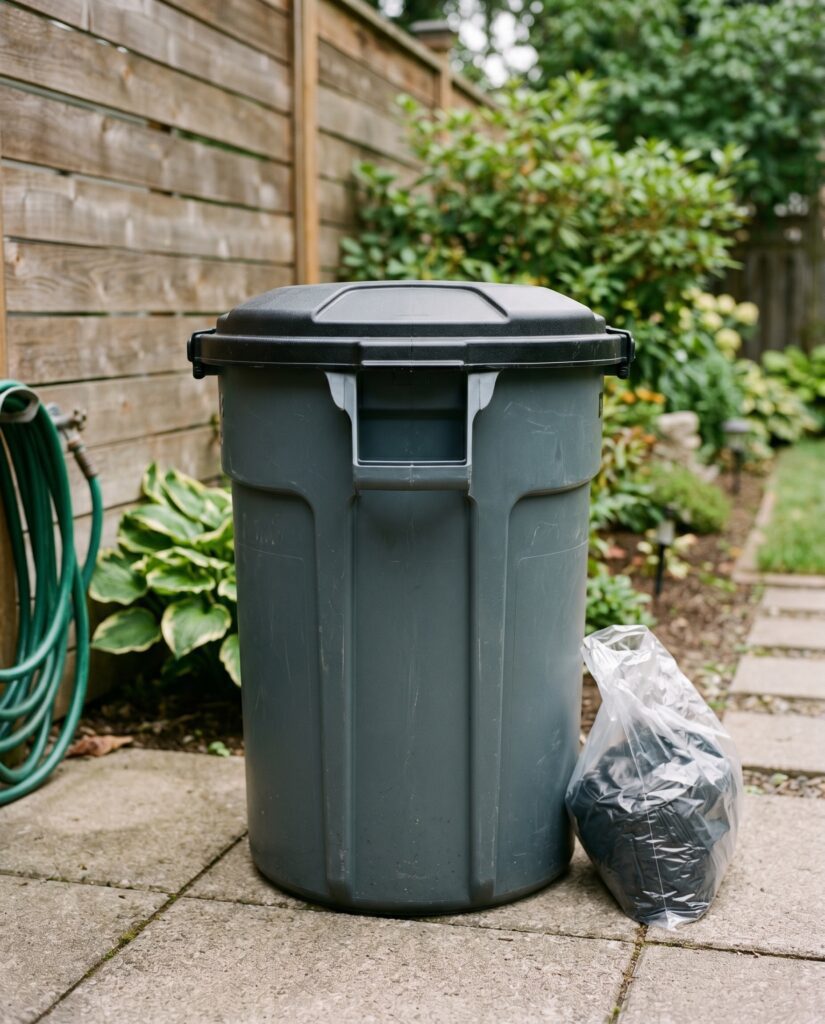
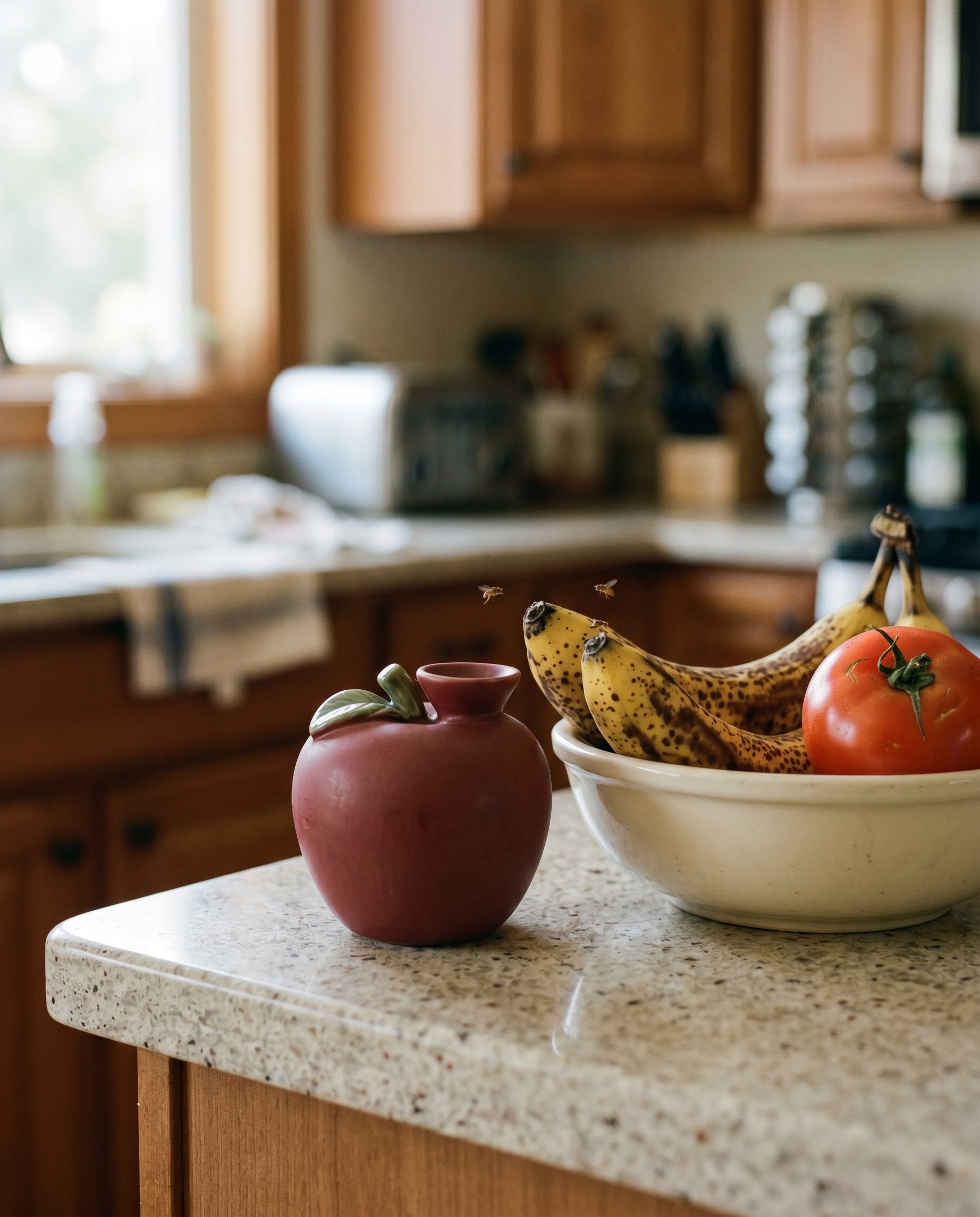
Before you buy any trap, do the free part, because a trap set in a kitchen that is still breeding flies is bailing a boat with a hole in it. Throw out or refrigerate any overripe fruit, take out the trash and recycling, and wipe up the sticky residue under the toaster and behind the bin. The UC IPM Pest Notes on fruit flies is clear that sanitation and removing the breeding material is the heart of control, not the trap itself. Our full walkthrough on how to get rid of fruit flies lays out the order step by step.
nn
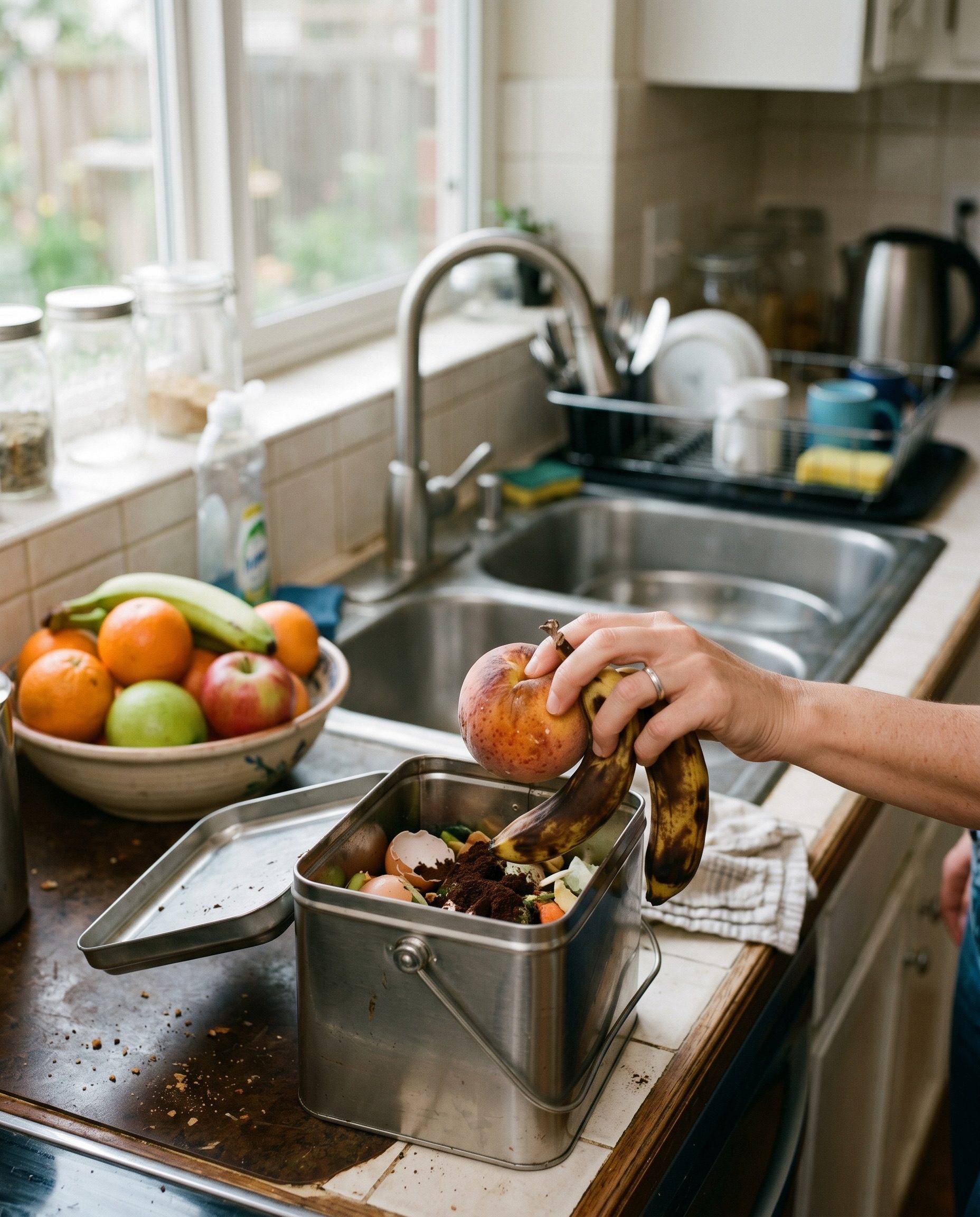
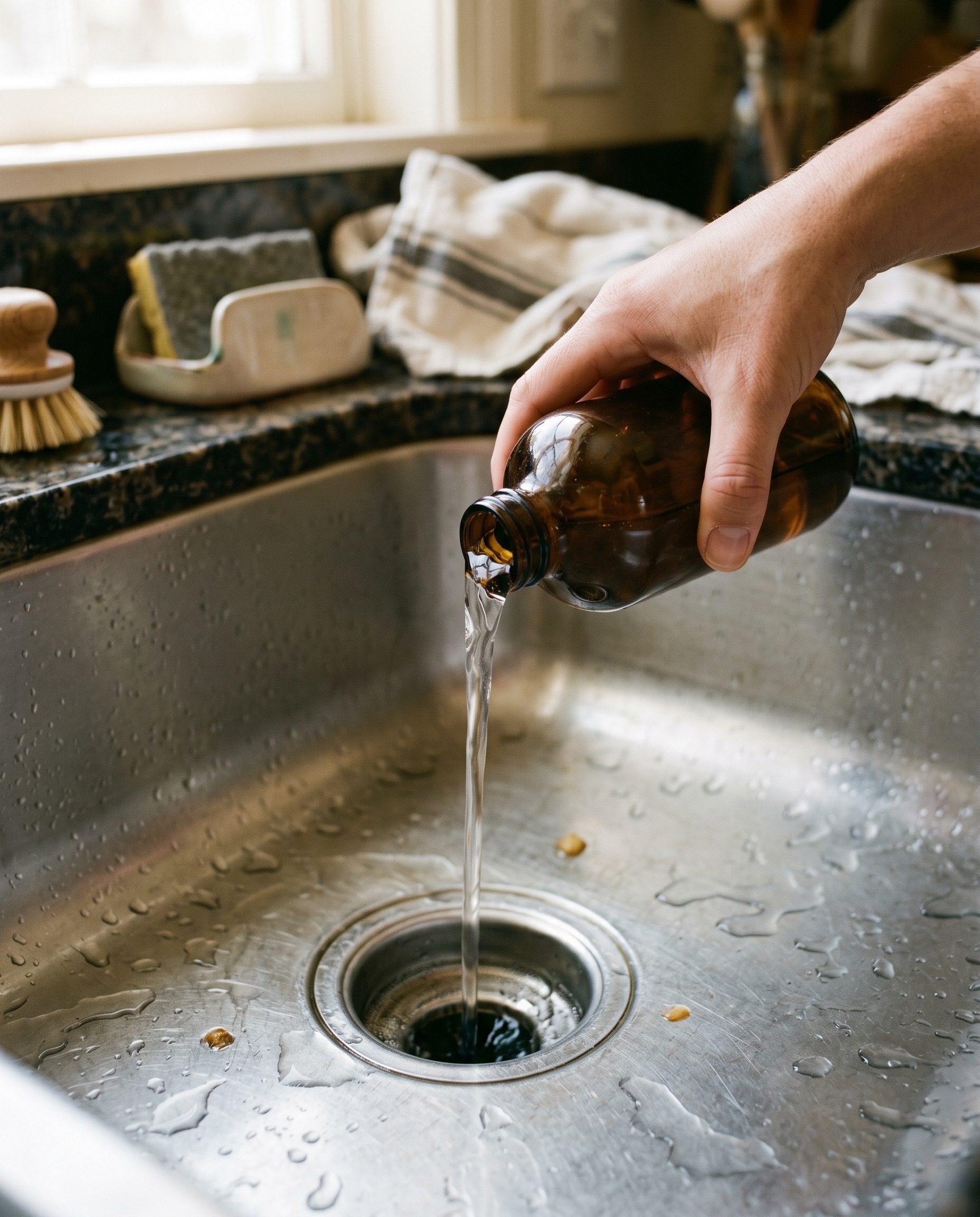
Then deal with the drains, because that is the source people miss. Fruit flies and their look-alikes lay eggs in the film of organic gunk coating the inside of a drain, the disposal, and the overflow hole. Pouring bleach down the pipe does not remove that film, it just rinses past it, which is why the flies come back in days. An enzyme or bacterial drain cleaner is the tool that actually eats the biofilm they breed in. Give the source three or four days of attention before you judge whether the swarm is shrinking.
nn
Why a trap alone never wins
nn
Here is the part most “best trap” lists skip. A single female fruit fly lays hundreds of eggs, and the full cycle from egg to flying adult takes about a week in a warm kitchen. A trap removes the adults you can see, while the next generation is already maturing in the fruit bowl or the drain. That is why a trap can fill up with flies and your swarm looks the same a week later: you were catching the survivors, not stopping the supply.
nn
This is the case for treating the trap as cleanup, not as the cure. The EPA’s safe pest control guidance puts sanitation and source reduction first for exactly this reason, and a trap fits at the end of that sequence to catch the few adults still circling after you have cleaned. The same logic explains the look-alikes people confuse with fruit flies. If the gnats are coming out of your houseplants, not the fruit, you have fungus gnats, which breed in overwatered potting soil; the UC IPM Pest Notes on fungus gnats say to let the top inch of soil dry out and use a yellow sticky trap, because a vinegar trap on the counter will not touch them. If the flies are larger and breeding in the drain biofilm, see our guide to the best drain fly treatment gel cleaners, and if you are not sure which small fly you have, our overview of getting rid of gnats in the house helps you tell them apart.
nn
nn
Pre-baited vs refillable traps
nn
Once the source is handled, the trap choice comes down to one question: do you want to throw it away when it is full, or keep it and refill it. Both work on the same principle, luring adults into a liquid they cannot climb back out of, so pick by how you want to live with it on the counter.
nn
| Trap type | Best for | Watch-out |
|---|---|---|
| Pre-baited disposable | A quick, no-fuss fix during a short flare-up | Catches adults only; toss and replace when full, and still fix the source |
| Refillable counter trap | Recurring summers and households that hate waste | You refill the bait yourself; catches adults only, source removal still required |
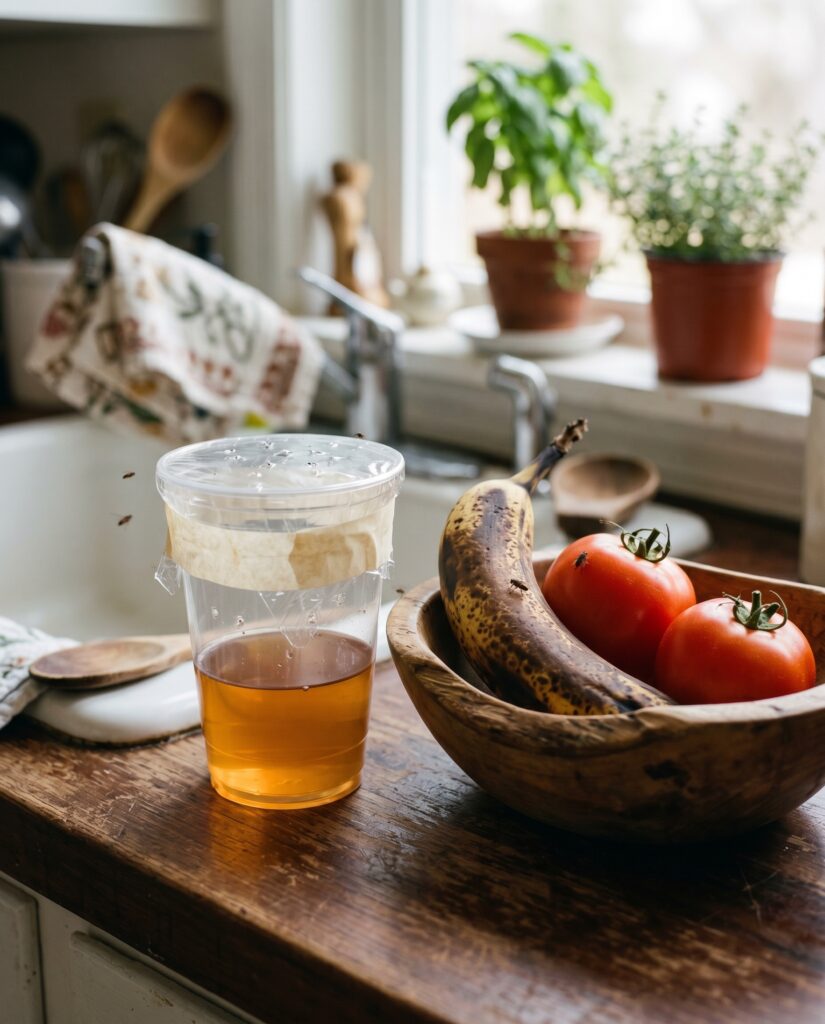
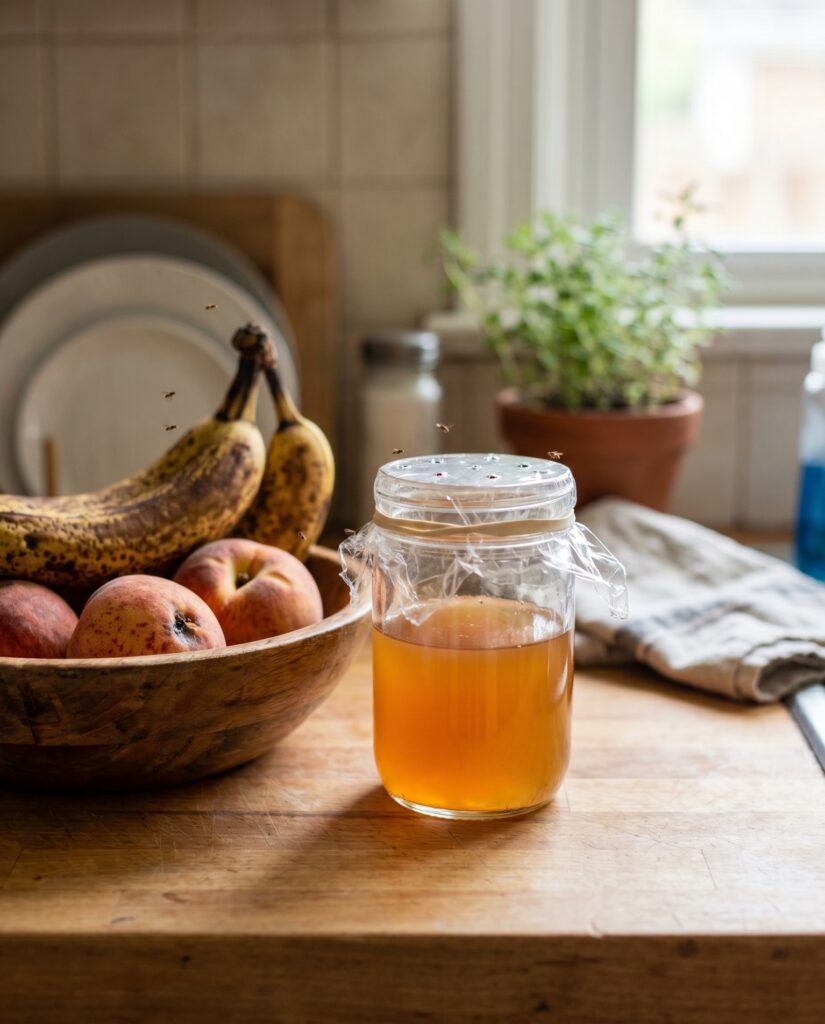
| DIY vinegar cup | Tonight, before any trap arrives | Apple cider vinegar plus a drop of dish soap; replace daily, adults only |
nn
Why not just buy the fanciest trap and be done? Because the trap is the cheap, easy part of this fight, and overspending on it does not make up for a fruit bowl still feeding the swarm. A two-dollar cup of apple cider vinegar with a drop of dish soap catches adults about as well as a store trap, which the UC IPM fly management notes back up as a standard homemade approach. The reason to buy a trap instead is that it looks tidy on the counter, lasts longer between refills, and does not get knocked over. Spend your effort on the source; spend a little money on a trap you will actually leave out.
nn
Where to place the trap
nn
Set the trap where the flies already gather, not where it is out of the way. Put it on the counter right next to the fruit bowl or directly beside the sink, at the level the flies are flying, because placing it at the food source is what makes it catch. A trap tucked in a far corner sees almost no traffic. If you are running a DIY vinegar cup, refresh it daily so the bait stays attractive.
nn
Keep it sensible around food and family. These counter traps use a food-grade liquid lure rather than a sprayed pesticide, so they are mild by design, but still set them out of a toddler’s or pet’s reach and away from surfaces where you prep food. The UC IPM background on fly biology and management reinforces that the trap supports sanitation rather than replacing it, so keep cleaning the drain and binning produce while the trap runs. Give the whole effort a week: as the source dries up and the trap clears the last adults, the kitchen goes quiet.
nn
nn
The picks
nn
Cards come after the cleanup advice on purpose, because the source work decides whether any of these traps can win. All three sit on the counter, use a non-spray liquid lure, and differ mainly in whether you toss them or refill them.
nn
InsectoGuide is reader-supported. As an Amazon Associate we earn from qualifying purchases at no extra cost to you.
nn
n 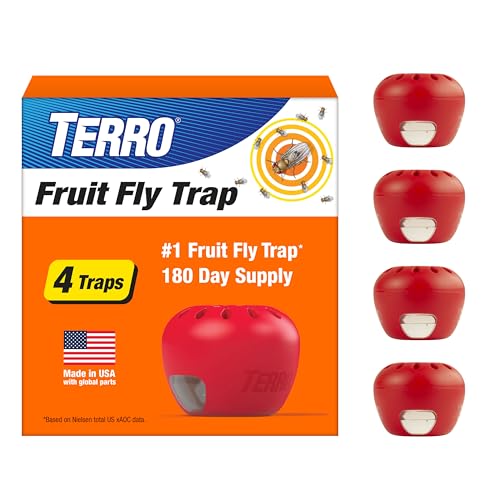 n
n
n
n
A pre-baited counter trap for a quick, no-fuss flare-up.
n
n
nn
n 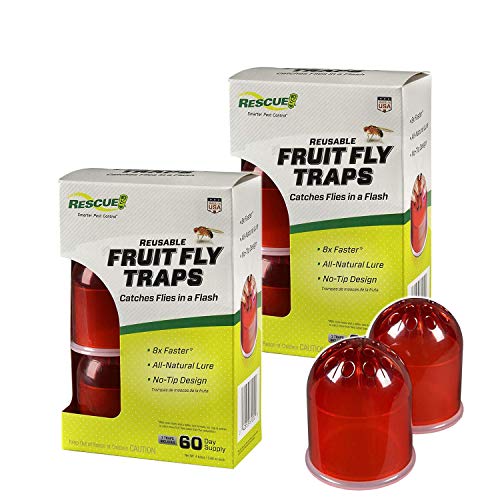 n
n
n
n
A refillable trap for recurring summers and waste-conscious homes.
n
n
nn
n 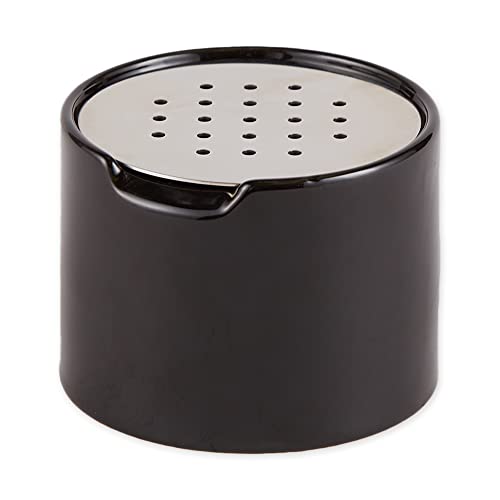 n
n
n
n
A ceramic trap you fill with your own vinegar bait, no plastic.
n
n
nn
Common questions
nnDoes a fruit fly trap actually work?n
On the adults, yes. A trap reliably catches the flies already circling your kitchen, but it cannot reach the eggs and larvae in the fruit or drain. The UC IPM fruit fly guidance treats trapping as a supplement to sanitation, so expect a trap to thin the swarm, not erase it on its own.
nnWhat is the breeding source I keep missing?n
Usually overripe produce, the trash, the recycling bin, or the film inside a drain or garbage disposal. Wipe up spills, bin soft fruit, and clean the drain. If the gnats come from houseplants instead, those are fungus gnats breeding in wet soil, and the fix is letting the soil dry out.
nnWill bleach clean a drain that is breeding flies?n
No. Bleach rinses past the organic film without removing it, so the flies come back. An enzyme or bacterial drain cleaner digests the biofilm the larvae feed on, which is what actually clears a drain source over a few days of use.
nnPre-baited or refillable, which should I buy?n
Buy pre-baited if you want to set it and toss it during a short flare-up. Buy refillable if fruit flies return every summer or you would rather not throw out plastic each time. Both catch adults the same way, so the choice is about convenience, not performance.
nnCan I just use apple cider vinegar?n
Yes, a cup of apple cider vinegar with a drop of dish soap works as well as most store traps. A bought trap mainly buys you a tidier counter and fewer refills. Either way, replace the DIY bait daily and keep working on the source.
nn
Final verdict
nn
There is no trap that ends a fruit fly swarm by itself, and any list that crowns one without saying so is skipping the part that matters. Start free by binning the overripe produce and cleaning the drain with an enzyme cleaner, not bleach, then set a trap to catch the adults still circling. Reach for a pre-baited trap for a quick flare-up, a refillable one if they come back every summer, and a ceramic model if you want something that looks like decor on the counter. Skip the idea that a trap alone is the fix; it is the finishing touch after you remove the source, and place it right beside the fruit bowl or sink so it actually catches. Handle the source and the trap, and the kitchen goes quiet within about a week.
nn