The rhythmic, persistent sound of crickets is one of summer's most iconic soundtracks, instantly recognizable whether it's coming from a grassy field or a quiet corner of your home. But have you ever stopped to wonder why do crickets chirp? This isn't just a random noise; it's a sophisticated form of communication, a language of survival and reproduction. Understanding the science behind cricket sounds reveals a fascinating world of insect behavior, from attracting mates to warning rivals, all orchestrated by the unique mechanics of their tiny bodies.
Bottom line: Male crickets chirp mainly to attract females, warn rivals, and signal territory. The sound comes from rubbing specialized wing edges together, not from their legs.
- Warm nights usually mean faster chirps.
- Different cricket species have different song patterns.
- Indoor chirping usually means one or more males found shelter nearby.
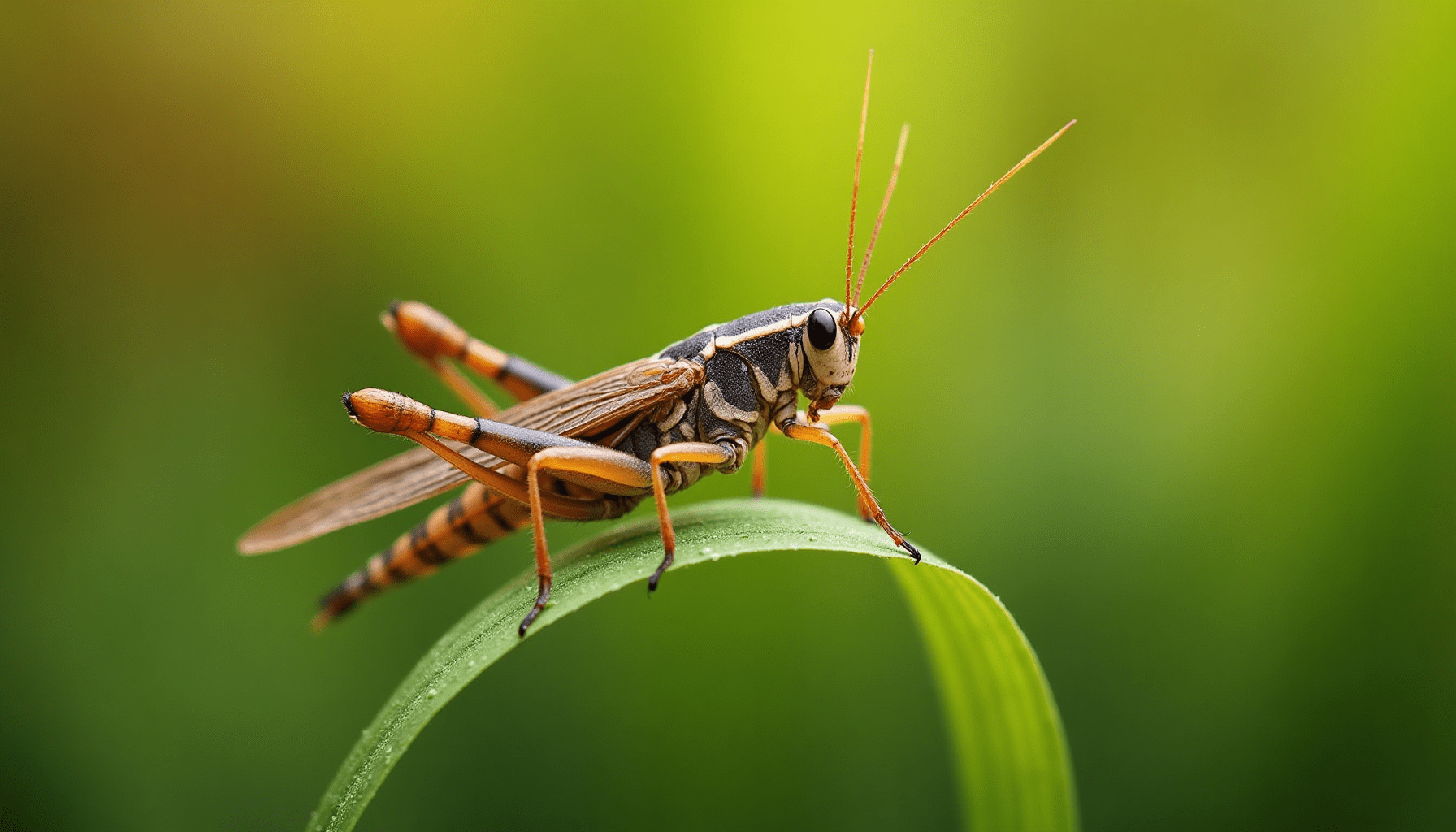
Bottom line:
Crickets chirp primarily to communicate. Here’s what you need to know:
- Who chirps: Only adult male crickets produce the familiar chirping sound.
- How they chirp: They rub specialized parts of their forewings together in a process called stridulation.
- Why they chirp: The main reasons are to attract females (calling song), court a nearby female (courtship song), and warn off other males (rivalry song).
- When they chirp: Many species are nocturnal, chirping mostly at night, but some common field crickets can chirp day and night.
How Crickets Make Sound
The distinctive sound of a cricket isn't made by its throat or mouth, but by its wings. This unique method of sound production is called stridulation, a term entomologists use to describe the rubbing together of specialized body parts. For crickets, this involves their forewings, which are modified into a natural musical instrument.
On one forewing, a male cricket has a raised vein equipped with hundreds of microscopic teeth, much like a tiny comb. This is known as the "file." The other forewing has a hardened, sharp edge called the "scraper." To produce a chirp, the cricket rapidly raises and lowers its wings, causing the scraper to rub across the file. Each pass of the scraper over the teeth creates a series of pulses that combine to form the sound we hear as a chirp. The speed and pattern of these wing movements determine the rhythm and pitch of the sound. This complex mechanism allows male crickets to generate a variety of distinct sounds for different purposes. The Washington State University's Ask Dr. Universe explains this file-scraper system, comparing it to running a comb along a table edge.
The sound produced isn't just a simple scrape; it's amplified by other parts of the wing structure, particularly thin, membranous areas known as the "harp" and "mirror." These areas vibrate, acting like miniature speaker diaphragms to project the sound waves into the environment. This ingenious biological design allows crickets to create surprisingly loud and far-reaching calls, essential for their communication over distances.
The Purpose of Cricket Chirping

Cricket chirping, or cricket communication, is far from random noise; it serves several vital functions in their lives, primarily centered around reproduction and survival. Only adult male crickets possess the specialized wing structures needed for stridulation, meaning females do not chirp. The Smithsonian Institution confirms that females lack these structures and cannot produce chirps, though both sexes can hear.
The main reasons why crickets chirp can be categorized into distinct song types:
Calling Song: Attracting a Mate
The most common and loudest chirp you hear is the male's calling song. This repetitive, often steady series of chirps is produced by a stationary male aiming to attract receptive females from a distance. The calling song is a crucial part of the cricket's reproductive strategy, acting as an advertisement for his presence and fitness. Each cricket species has a distinct calling song, with unique patterns of rhythm, pitch, and pulse rate. This species-specific "melody" helps females locate and identify appropriate mates, preventing them from wasting energy on males of a different species. This primary function of mate attraction is widely recognized by entomologists, as highlighted by Encyclopaedia Britannica and the Deep Look (KQED / PBS) documentary.
Courtship Song: Sealing the Deal
Once a female has been attracted by the calling song and approaches a male, his chirping often shifts to a courtship song. This song is typically much softer, higher-pitched, and more varied in its pattern than the calling song. The courtship song serves to stimulate the female to mate and may reinforce species recognition at close range. It's a more intimate serenade, providing "assurance that he is the right species" as the female gets closer, according to Washington State University. This change in song helps guide the female through the final stages of mate selection and encourages successful reproduction.
Rivalry Song: Defending Territory
Chirping isn't just for attracting females; it's also used for male-on-male communication. When two adult males encounter each other, particularly when vying for territory or a female, they may produce an aggressive or rivalry song. This song often sounds harsher, more irregular, and "angry-sounding" to human ears. The rivalry song helps establish dominance and can deter competitors, often reducing the need for physical confrontation. It's a way for males to assert their presence and defend their space without engaging in potentially dangerous fights. The Deep Look documentary provides a detailed look at these distinct song types.
When and Where Crickets Chirp
The timing and location of cricket chirping are influenced by a combination of ecological factors, evolutionary adaptations, and the specific habits of different cricket species. While many people associate cricket sounds with nighttime, the full picture is a bit more varied.
Nocturnal Habits and Ecological Advantages
Many cricket species are predominantly nocturnal, meaning they are most active and chirp primarily at night. This behavior offers several ecological advantages. Nighttime generally provides a quieter environment with less background noise from other animals, allowing cricket sounds to travel more effectively and be heard by potential mates over greater distances. The cooler, more humid air at night can also carry sound waves more efficiently.
Furthermore, calling at night offers a degree of protection from predators that hunt by sight, such as many bird species, which are less active after dark. This trade-off between attracting mates and avoiding predators is a significant evolutionary driver. Male crickets often call from hidden spots—deep within tall grasses, under debris, or in cracks—to reduce their visibility while still broadcasting their presence, as noted by the Smithsonian Institution.
Day and Night Chirping
While many crickets adhere to a nocturnal schedule, not all species strictly limit their chirping to the dark hours. Common house crickets (Acheta domesticus) and some field crickets (Gryllus species) can be heard chirping both day and night, especially during warm weather. Their habitat plays a role in this:
- Tree- and bush-dwelling crickets: Species like tree crickets (e.g., snowy tree crickets, Oecanthus fultoni) are typically more strictly nocturnal, their ethereal, continuous trills often heard from foliage after dusk.
- Weed- and ground-dwelling crickets: Common field and house crickets, which often reside in grasses, leaf litter, or around human dwellings, may chirp throughout the day, particularly if temperatures are favorable and they feel secure.
How Crickets Hear Each Other
To effectively communicate through chirping, crickets also need a sophisticated way to hear. Crickets possess specialized "ears" called tympana, which are located on their front legs, just below the "knees." These tympana are thin, vibrating membranes, similar in function to eardrums in mammals. Sound waves cause these membranes to vibrate, and these vibrations are then transmitted to the cricket's nervous system as electrical signals. This allows crickets to localize sound sources, distinguish between different song types, and identify the specific frequencies of their own species' calls. This acute hearing is crucial for females to find males, for males to detect rivals, and for both sexes to perceive potential threats.
What the sound tells you

Beyond the fascinating science, understanding cricket chirping offers practical benefits, from identifying these insects to appreciating their role in nature. Their sounds are a natural part of many ecosystems, and even a fun way to estimate temperature.
Is That a Cricket I Hear?
Distinguishing cricket chirps from other insect sounds can sometimes be tricky. Here’s how to tell if the rhythmic sound you’re hearing is indeed a cricket:
- Rhythmic Chirps: Crickets typically produce repetitive, rhythmic chirps, often in distinct patterns (e.g., chirp-chirp-chirp… pause… repeat). The sound is usually a clear, somewhat musical "chirp" or "trill."
- Location: Cricket sounds often originate from ground level, within dense vegetation, from cracks in foundations, or from cluttered areas indoors.
- Contrast with Other Insects:
- Katydids: Often have higher-pitched, raspier, or more continuous trills and rasps. They typically sing from trees and bushes. You can learn more about katydid songs on InsectoGuide.
- Cicadas: Produce loud, buzzing, or whistling drones, primarily from trees during the day. Their sound is generated by vibrating tymbals, not stridulation.
- Grasshoppers: While also orthopterans, many grasshoppers stridulate by rubbing their hind legs against their wings or by snapping wings in flight, producing different sounds. For more on the differences, see our guide on cricket vs grasshopper.
The Persistent Indoor Chirper
If you find yourself wondering why do crickets chirp incessantly inside your home, you're not alone. House crickets (Acheta domesticus) and some field crickets frequently wander indoors, especially in late summer and fall as temperatures drop outside. An isolated male cricket inside your house might chirp persistently for a few key reasons:
- Seeking a Mate: He's still trying to attract a female, even if the indoor environment offers no prospects.
- Stable Environment: Indoor temperatures are often stable and warm, keeping him active and chirping when he might be less active outside.
- Echoes: The acoustics of a room can sometimes make the sound seem louder or more omnipresent.
To locate a chirping cricket indoors, turn off all lights and remain quiet. Crickets often pause their chirping when disturbed, but will resume once they feel safe. Listen intently; they tend to hide near warm electronics, baseboards, or in cluttered corners. Once located, you can humanely capture them with a jar and release them outdoors.
Temperature and Chirp Rate: Dolbear's Law
One of the most fascinating aspects of cricket chirping science is its relationship with temperature. Crickets are cold-blooded, meaning their body temperature, and thus their metabolic rate and muscle activity, are directly influenced by the ambient temperature. Warmer temperatures speed up their wing movements, leading to a faster chirp rate.
This phenomenon is famously captured by Dolbear's Law, a simple formula that allows you to estimate the air temperature based on a cricket's chirps. While it works best for specific species like the snowy tree cricket (Oecanthus fultoni), it's often loosely applied to other common field crickets. Here’s how it works:
- Count the number of chirps a cricket makes in 13–15 seconds.
- Add 40 to that number.
- The result will give you an approximate temperature in Fahrenheit (°F).
Example: If a cricket chirps 30 times in 14 seconds, the estimated temperature is 30 + 40 = 70°F.
While this is a fun backyard experiment, remember it's an approximation. Factors like humidity, the cricket's age, and individual variation can affect the chirp rate. It's a testament to the intricate connection between insects and their environment.
Common myths
Many misconceptions surround cricket chirping, often stemming from anthropomorphizing their behavior or misinterpreting their biological functions. Let's set the record straight on some common myths about why crickets chirp.
Myth: Female Crickets Chirp Too
Reality: In the commonly observed field and house crickets, only adult males chirp. Females lack the specialized file and scraper structures on their wings necessary to produce the chirping sound. While both sexes possess tympana (ears) on their front legs and can hear, the ability to stridulate is exclusive to males. This sexual dimorphism ensures that males are the ones actively advertising for mates.
Myth: Crickets Chirp Because They’re Happy or Annoyed
Reality: Attributing human emotions like happiness or annoyance to cricket chirping is misleading. Cricket chirping is primarily a reproductive and territorial behavior, driven by instinct and shaped by natural selection. As discussed, their songs are functional: to attract mates, to court a female, or to warn off rivals. They may chirp more when conditions are optimal for these behaviors (right temperature, presence of other crickets), but this isn't an emotional response in a human sense. It's a biological imperative.
Myth: All Cricket Songs Sound the Same
Reality: To an untrained human ear, cricket songs can indeed blend into a general background noise. However, each species of cricket has a distinct and unique pattern of chirps. These differences can include the tempo (chirps per second), the grouping of chirps, the pulse rate within each chirp, and the overall pitch (carrier frequency). Entomologists use these specific song characteristics to identify different species, especially since many look very similar visually. With practice, even people can learn to distinguish between the songs of various cricket species, much like birdwatchers identify birds by their calls.
Myth: Crickets Chirp Only at Night
Reality: While many cricket species are most active and vocal at night, it's not universally true. Many common field and house crickets can and do chirp during the day, particularly when temperatures are warm and conditions are favorable. The timing often depends on the specific species and its habitat. Tree-dwelling crickets might be more strictly nocturnal, while ground-dwelling species can be active day and night.
Myth: Chirping Predicts Winter or Weather Changes
Reality: Crickets are indeed sensitive to temperature, which is why their chirp rate changes with the weather, and they are more noticeable in late summer and early fall in temperate regions as they reach maturity and begin breeding. However, chirping itself is not a deliberate signal of impending winter or a prediction of specific weather changes. It's simply a direct physiological response to the ambient temperature and their life cycle stage. The increased chirping in fall often coincides with their peak breeding season before the cold weather arrives.
Myth: Crickets Are Singing Like Birds
Reality: While both produce sounds, the mechanics are entirely different. Birds "sing" using vocal cords and airflow through their syrinx (a vocal organ). Crickets, on the other hand, use mechanical stridulation—rubbing specialized body parts (their wings) together. It's more accurate to say crickets are "playing an instrument" that is built into their bodies rather than "singing" with a voice. This fundamental difference highlights the diverse ways animals communicate in the natural world.
Final verdict
The persistent, rhythmic sounds of crickets are far more than mere background noise; they are a sophisticated form of communication crucial to the insects' survival and reproduction. Understanding why do crickets chirp reveals a fascinating world of biological engineering and evolutionary strategy. From the precise mechanics of stridulation, where a file and scraper on their forewings create distinct sounds, to the varied purposes of their calls—attracting mates, courting females, and deterring rivals—each chirp carries vital information.
We've explored how these nocturnal musicians use temperature to regulate their serenades, how they listen with ears on their legs, and how their species-specific songs are a key to identification. By debunking common myths, we gain a clearer appreciation for these small, yet complex, creatures. So, the next time you hear that familiar sound, you'll know you're listening to a vital conversation happening in the insect world, a testament to the intricate wonders of nature.
For more insights into the world of insects, explore our guides on raising crickets at home or delve into the unique sounds of katydids, the musical insects of summer.