\
Finding an insect bite that starts to look worse instead of better can be concerning. While most bug bites are harmless and resolve on their own, an infected insect bite can lead to more serious health issues if not addressed promptly. This guide will help you understand the crucial signs of an infection, differentiate it from a normal reaction, provide actionable home treatment steps, and explain exactly when it's time to seek professional medical attention. Knowing what to look for can prevent minor irritations from escalating into significant problems.
\
Bottom line: An insect bite is likely infected if it shows increasing redness, warmth, swelling, and pain, especially if accompanied by pus, red streaks, or fever. Prompt cleaning and monitoring are key, but spreading symptoms or systemic signs require medical attention.
\
Infection signs
\
Recognizing the signs of an infected insect bite early is crucial for effective treatment. Unlike a typical itchy bump, an infection often presents with distinct, worsening symptoms.
\
Here are the key indicators to watch for:
\
- \
- Spreading Redness: The red area around the bite expands over time, often with ill-defined or irregular borders, rather than fading.
- Increased Warmth: The skin around the bite feels noticeably hot to the touch.
- Worsening Pain: The bite becomes increasingly painful, tender, or throbbing, often replacing the initial itchiness.
- Persistent Swelling: Swelling continues to increase or doesn't improve after 24-48 hours.
- Pus or Discharge: You might see yellow or green pus, cloudy fluid, or a crusty, oozing sore.
- Red Streaks: Thin red lines spreading away from the bite, indicating lymphangitis (inflammation of lymphatic vessels).
- Hard Lump: A firm, tender lump under the skin could signal an abscess forming.
- Fever or Chills: Systemic symptoms like a fever, body aches, or feeling generally unwell suggest the infection is spreading.
\
\
\
\
\
\
\
\
\
 \
\\
If you observe any of these signs, especially if they worsen, it's time to consider further action beyond standard home care.
\
Why bites get infected
\
Most insect bites are simply an immune response to the insect's saliva or venom, causing localized swelling, redness, and itching. However, this initial irritation can create an opportunity for bacteria to enter the skin, leading to an infection.
\
Initial Bite Reaction
\
When insects like mosquitoes, fleas, or bed bugs bite, they pierce the skin to feed on blood. During this process, they inject saliva containing anticoagulants and proteins that trigger a local inflammatory response. This typically results in a small, red, itchy bump (a wheal or papule) that usually peaks within 24-48 hours and then subsides. This is a normal reaction, not an infection. For common irritations, understanding Mosquito Bite Treatment: Complete Relief Guide can be very helpful.
\
Pathway to Infection
\
Infection most commonly occurs when bacteria, usually from your own skin surface or the environment, enter the bite site. The primary culprits for this bacterial entry are:
\
- \
- Scratching: This is the most significant risk factor. Vigorous scratching breaks the skin barrier, creating tiny open wounds that allow bacteria to penetrate deeper. This is why entomologists always advise against scratching. You can learn more about this in our article, Should You Pop, Scratch, or Cover Mosquito Bites? (Do’s & Don’ts).
- Compromised Skin: If the bite itself creates a larger break in the skin, or if the skin is already irritated or damaged, it becomes more vulnerable.
\
\
\
The most common bacteria responsible for these secondary infections are Staphylococcus aureus (including antibiotic-resistant strains like MRSA in some areas) and Streptococcus pyogenes. Once these bacteria enter, they can cause:
\
- \
- Superficial Infections: Like impetigo (crusted sores) or localized abscesses (pus-filled lumps).
- Deeper Infections: Spreading through the skin layers and subcutaneous tissue, leading to cellulitis.
\
\
\
Understanding this pathway highlights the importance of keeping bites clean and, most importantly, avoiding scratching.
\
Reaction or infection
\
\
Distinguishing a normal or allergic reaction from a true infection is key to appropriate treatment. While some symptoms overlap, the progression and specific characteristics can help you tell them apart.
\
Uncomplicated Local Reaction
\
This is the most common response to an insect bite. It develops rapidly after the bite, typically within minutes to hours. You'll see local redness, a small area of swelling, and intense itching. Sometimes a clear or small blood blister might form. Symptoms usually peak within 24-48 hours and then begin to improve. This reaction is the body's immune system responding to the insect's saliva, not a bacterial invasion.
\
Large Local Allergic Reaction
\
Some individuals experience a more exaggerated immune response. This involves swelling that spreads over a larger area, such as an entire hand or forearm, but usually with well-defined edges. Itching is prominent, but pain is less dominant. These reactions develop within hours and generally improve over a few days, similar to an uncomplicated reaction but on a larger scale. This is different from a severe systemic allergic reaction (anaphylaxis). For more information, see Mosquito Bite Reactions: Swelling, Blisters, Rash, Hives & When to Worry.
\
Infected Insect Bite / Early Skin Infection
\
This is where the symptoms shift. Instead of improving, the bite site starts to worsen after the initial 24-48 hours. Key signs include:
\
- \
- Worsening pain, warmth, and deep tenderness, often replacing the itchiness.
- Redness that progresses or spreads beyond the original bite site.
- The appearance of pus, yellow crust, or a weeping sore.
- A possible hard lump or nodule under the skin, indicating an abscess.
\
\
\
\
\
Cellulitis or Spreading Infection
\
Cellulitis is a more serious bacterial infection of the deeper layers of the skin. It presents as an expanding area of redness with ill-defined margins, feeling warm and painful to the touch. The skin may appear tight, shiny, or swollen. Systemic symptoms like fever, chills, feeling unwell, or swollen lymph nodes are common. Sometimes, you might even see red streaks (lymphangitis) traveling up a limb, which is a significant red flag. According to the Cleveland Clinic, cellulitis accounts for millions of cases annually in the U.S., with insect bites being a frequent trigger.
\
Here's a quick comparison:
\
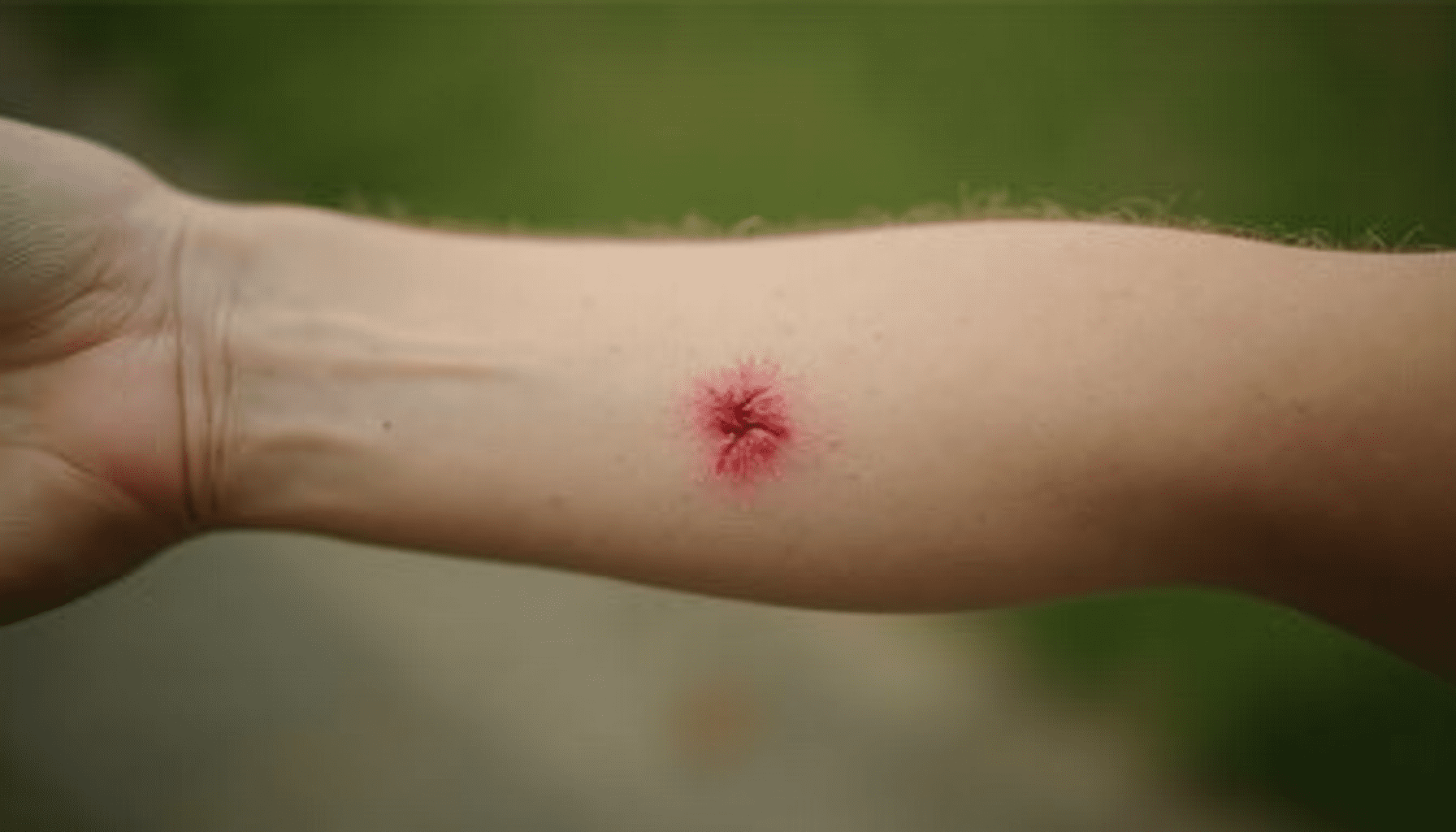
| Feature | Uncomplicated Bite Reaction | Large Local Allergic Reaction | Infected Bite (Early) | Cellulitis (Spreading Infection) |
|---|---|---|---|---|
| Onset | Rapid (minutes-hours) | Rapid (hours) | Worsens after 24-48 hours | Worsens, often with systemic signs |
| Redness | Localized, fades quickly | Spreading, well-defined edges | Spreading, irregular patches | Rapidly expanding, ill-defined edges |
| Pain/Itch | Intense itch, mild pain | Intense itch, less pain | Worsening pain, deep tenderness | Intense pain, hot to touch |
| Swelling | Small, resolves quickly | Large area, resolves in days | Worsening, persistent | Spreading, tight, shiny |
| Discharge | None (maybe small clear blister) | None | Pus, yellow fluid, crusting | None (unless abscess forms) |
| Systemic Signs | None | None | None (initially) | Fever, chills, feeling unwell |
\
 \
\\
\
Mild bite care
\
For mild or early signs of an infected insect bite, and when no urgent red flags are present, several home treatment steps can help manage symptoms and prevent the infection from worsening. Always monitor the bite closely for improvement or deterioration.
\
- \
-
Clean the Area Thoroughly:
\
- \
- Gently wash the bite with mild soap and warm water. Pat it dry with a clean towel. This helps remove surface bacteria and debris. Avoid harsh scrubbing or strong irritants, which can further damage the skin.
\
\
-
Apply Topical Antiseptic or Antibiotic:
\
- \
- If the skin is broken, apply an over-the-counter antiseptic solution or cream (like chlorhexidine) or a topical antibiotic ointment (such as bacitracin or triple-antibiotic products like Neosporin, where available). Apply a thin layer 1-3 times daily, following product instructions. This can help prevent bacterial growth.
\
\
-
Cover and Protect the Bite:
\
- \
- Place a clean, non-stick bandage or sterile gauze over the area. This protects the wound from further contamination and reduces the temptation to scratch. Change the dressing once or twice a day, or if it becomes wet or dirty.
\
\
-
Control Swelling and Pain:
\
- \
- Apply a cold compress or an ice pack (wrapped in a cloth) to the bite for 10-20 minutes, several times a day. This can reduce swelling and numb the area, easing discomfort.
- Elevate the affected limb (if the bite is on an arm or leg) above heart level to help reduce swelling.
- Take oral pain relievers such as paracetamol (acetaminophen) or ibuprofen, according to label directions and your personal medical history, to manage pain.
\
\
\
\
-
Control Itch and Avoid Scratching:
\
- \
- Oral antihistamines (like cetirizine or loratadine) can significantly reduce itching.
- Topical 0.5–1% hydrocortisone cream can be applied for up to a week to reduce inflammation and itch, provided the skin is not widely broken.
- Keeping fingernails short and, for children, using mittens at night can help prevent accidental scratching, which is a major pathway for infection.
\
\
\
\
-
Natural or "Home" Remedies (Use with Caution):
\
- \
- Some sources suggest aloe vera gel for its soothing and anti-inflammatory properties, or honey for its broad antibacterial qualities (medical-grade honey is preferred if used on open wounds). Oatmeal baths can soothe multiple itchy bites. However, the NHS clinical guidance specifically advises against remedies like bicarbonate of soda paste. If you choose to use these, ensure they supplement, not replace, basic cleaning and monitoring, and always patch-test for skin reactions.
\
\
\
\
\
\
\
\
\
When to get care
\
Knowing when to seek professional medical help for an infected insect bite is critical. While home care is suitable for mild cases, certain signs indicate a more serious condition requiring a doctor's intervention.
\
Seek Urgent Medical Attention (Same Day / Urgent Care / ER) if:
\
- \
- Rapidly Spreading Redness: The red area around the bite is quickly expanding or forming red streaks traveling away from the bite.
- Intensifying Pain: The area becomes very painful, hot, and swollen, especially if symptoms worsen after 24-48 hours despite home treatment.
- Pus or Large Open Sore: There is significant pus, yellow discharge, or the bite has developed into a large, open, weeping sore.
- Systemic Symptoms: You develop a fever, chills, body aches, or feel generally unwell.
- Bite Location: The bite is on the face (especially near the eye), inside the mouth, or on the genitals.
- High-Risk Individuals: The affected person has diabetes, poor circulation, a compromised immune system (e.g., due to chemotherapy, steroids, HIV), or other conditions that slow healing.
- Young Children: For infants or very young children (especially under 1 year), if the bite looks infected or the child seems unwell (e.g., increased irritability, poor feeding, lethargy), seek prompt medical advice.
\
\
\
\
\
\
\
\
Immediate Emergency Care (Call Emergency Services) for Signs of Anaphylaxis or Severe Illness:
\
These are rare but life-threatening reactions, usually to stings rather than bites, but it's important to know the signs:
\
- \
- Sudden swelling of the lips, tongue, mouth, or throat.
- Difficulty breathing, wheezing, or feeling like you're choking.
- Tightness in the chest or throat, a hoarse voice, or trouble swallowing.
- Blue, grey, or very pale skin, especially around the lips or nail beds.
- Confusion, extreme drowsiness, fainting, or a child who is floppy and unresponsive.
\
\
\
\
\
\
See Your GP or Primary Care Doctor (Within 24-72 Hours) if:
\
- \
- No Improvement: Symptoms do not improve within 2-3 days of consistent home treatment.
- Persistent Redness: Redness continues to expand after 48-72 hours, or the red area is larger than 2.5 cm (about an inch) and tender, suggesting early cellulitis.
- Other Symptoms: You experience tummy pain, vomiting, dizziness, or lightheadedness after a bite or sting.
- Recurrent Infections: You have a history of recurrent infected bites or underlying health conditions that complicate wound healing.
- Suspected Tick Bite: If you suspect a tick bite and develop flu-like symptoms or a spreading bull's-eye rash, it could indicate Lyme disease. For more on this, read Tick Bite Symptoms: When to See a Doctor and Tick-Borne Diseases: Lyme, Anaplasmosis & Rocky Mountain Fever.
- Venomous Spider Bite: If you believe you were bitten by a venomous spider or other medically important arthropod in your region, seek medical advice for proper identification and treatment.
\
\
\
\
\
\
\
 \
\\
\
Prompt medical attention can prevent a localized infection from becoming a more widespread and serious condition.
\
Common myths
\
Misinformation about insect bites can lead to improper treatment and delayed care. Let's clarify some common myths surrounding infected insect bites.
\
- \
-
"If a bite is red, it's infected."
\
- \
- False. Mild redness, swelling, and warmth are normal inflammatory reactions to insect saliva and are part of the body's immune response. These reactions can be quite dramatic, especially in children or individuals with allergies. An infection is more likely if the redness appears later, continues to enlarge, becomes significantly painful (not just itchy), and is accompanied by other signs like pus or fever.
\
\
-
"All infected bites need antibiotics right away."
\
- \
- Not always. Many mild, early-stage infections can be managed effectively with thorough cleaning, topical antiseptic or antibiotic treatments, and close monitoring. Systemic oral antibiotics are typically reserved for clear bacterial infections that are spreading, causing significant symptoms, or affecting high-risk individuals. Overuse of antibiotics contributes to antibiotic resistance.
\
\
-
"Scratching is harmless; it just relieves the itch."
\
- \
- False. Scratching is a major risk factor for infection. It breaks the skin barrier, allowing bacteria (often Staphylococcus aureus or Streptococcus pyogenes) from your skin or under your fingernails to enter the wound. This introduces new pathogens and can delay healing, sometimes leading to scarring.
\
\
-
"Home remedies like baking soda or toothpaste are safe and effective."
\
- \
- Limited Evidence. While some natural remedies like aloe vera or honey may offer soothing properties, the evidence for many traditional "home remedies" (like baking soda paste, vinegar, or toothpaste) is limited, and some can even irritate the skin further. The NHS specifically advises against using bicarbonate of soda for bites. Stick to evidence-based care: cleaning, cold compresses, and appropriate topical medications.
\
\
-
"If there's no itching, it's not a reaction or infection."
\
- \
- Incorrect. As an infection progresses, the sensation often shifts from intense itching to significant pain and tenderness. The absence of itching does not rule out an infection, especially if other signs like spreading redness, warmth, or pus are present.
\
\
-
"Only dirty environments cause infected bites."
\
- \
- False. While poor hygiene can increase risk, even in clean environments, normal skin bacteria can cause an infection once the skin barrier is broken by a bite or scratching. Good hygiene reduces the risk but doesn't eliminate it entirely.
\
\
\
\
\
\
\
\
\
Final checklist
\
Understanding the difference between a normal insect bite reaction and an infected insect bite is essential for maintaining your health and preventing more serious complications. Most bites are merely a nuisance, causing temporary itching and swelling. However, a bite that worsens with spreading redness, increased pain, warmth, pus, or systemic symptoms like fever demands attention.
\
Always prioritize cleaning the bite area gently, avoiding scratching, and applying appropriate topical treatments for mild symptoms. Be vigilant in monitoring the bite's progression. If you notice any of the red flag signs—especially rapid spreading, intense pain, pus, or fever—do not hesitate to seek medical advice. Early intervention can prevent a minor skin irritation from escalating into a more significant bacterial infection like cellulitis. By staying informed and acting promptly, you can ensure your skin stays healthy and protected.