
n
n
n
You found a many-legged thing on the basement floor and you want a name before you decide whether to worry. The fastest tell is to count the legs per segment and watch how it moves. A centipede has one pair of legs per body segment, moves fast in a flat darting run, and is a predator that can deliver a mild bite; a millipede has two pairs per segment, moves slowly, and curls into a tight coil when you bother it. Centipedes are harmless to your house and actually hunt other pests, while millipedes are harmless detritivores that recycle leaf litter and can secrete an irritating fluid rather than bite. The body and the behavior, not the leg count alone, settle it at a glance.
If that is where this is heading, fast crawling bugs indoors covers what the light test tells you.
nn
n
One pair of legs per segment plus a fast flat run means centipede; two pairs per segment plus a slow walk and a defensive coil means millipede. Both are moisture-driven occasional invaders, not signs of a real infestation.
n
- n
- The confirming feature: One leg pair per segment (centipede) versus two pairs per segment (millipede).
- Most-confused look-alike: Each other, separated by leg pairs and the coil-versus-dart response.
- What it means: Both are harmless to people and the home; if you want them gone, fix moisture first and see our guide to clearing centipedes from the house.
n
n
n
n
nn
nn
Quick answer
nn
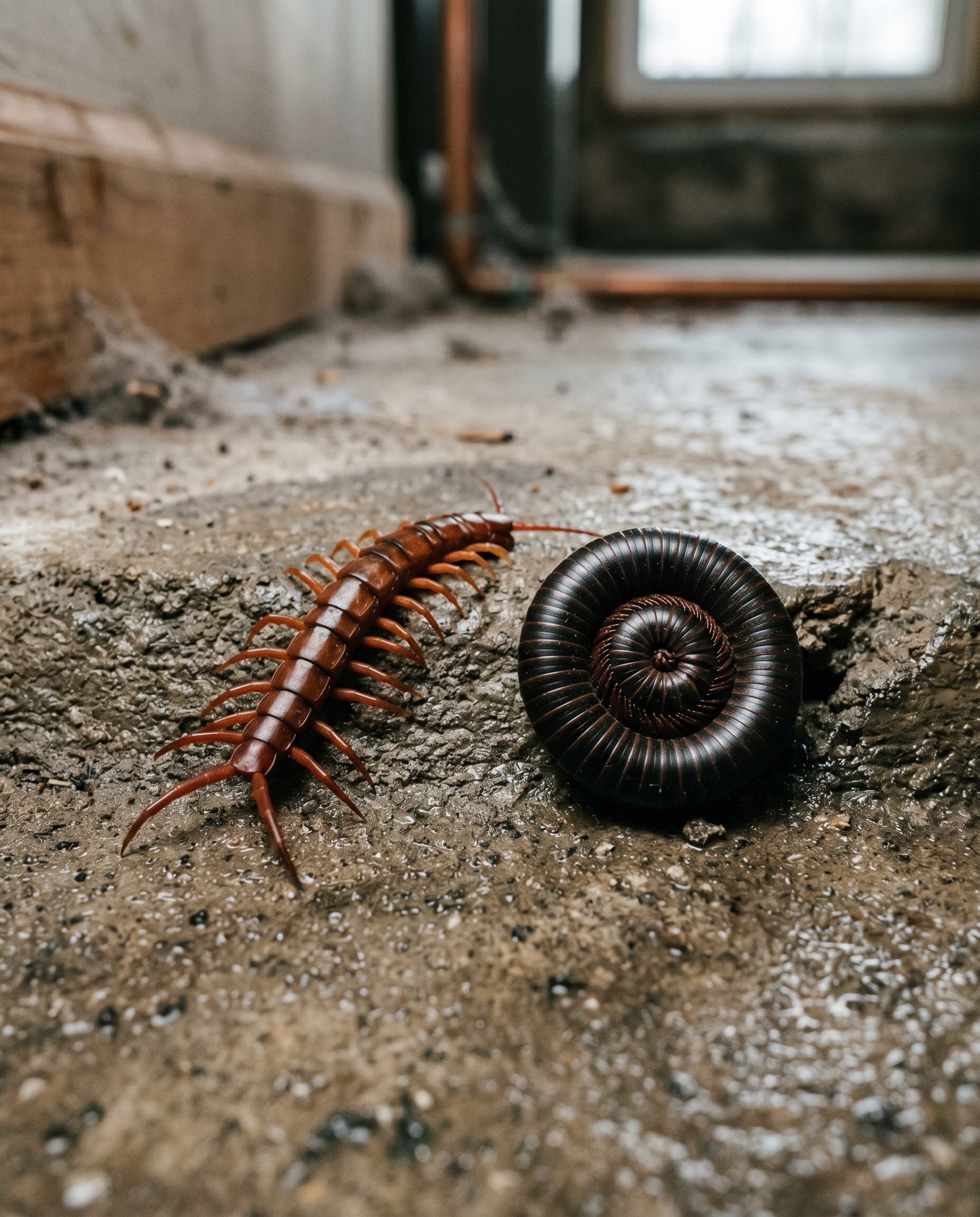
Hold a flashlight on it for three seconds and you have your ID. One pair of legs per segment is a centipede (class Chilopoda); two pairs per segment is a millipede (class Diplopoda). The names are misleading on purpose, since neither has a hundred or a thousand legs, but the per-segment count never lies. A centipede looks flattened from above, with long legs that stick out to the sides and a final pair that trails behind like antennae. A millipede looks rounded and tube-like, its many short legs tucked close under the body so they almost ripple as it walks. Both turn up in the same damp spots, which is exactly why people mix them up.
nn
Count the legs per segment
nn
The single feature that confirms the ID is how many leg pairs sprout from each body segment. On a centipede, each visible segment carries exactly one pair, so the legs look sparse and well spaced. On a millipede, each apparent segment is actually two fused ones, so it carries two pairs, and the legs crowd together in a dense fringe. You do not need a magnifier for a big specimen, though a phone macro shot helps with the small ones. Look at the middle of the body rather than the ends, where segments can be modified and harder to read.
nn
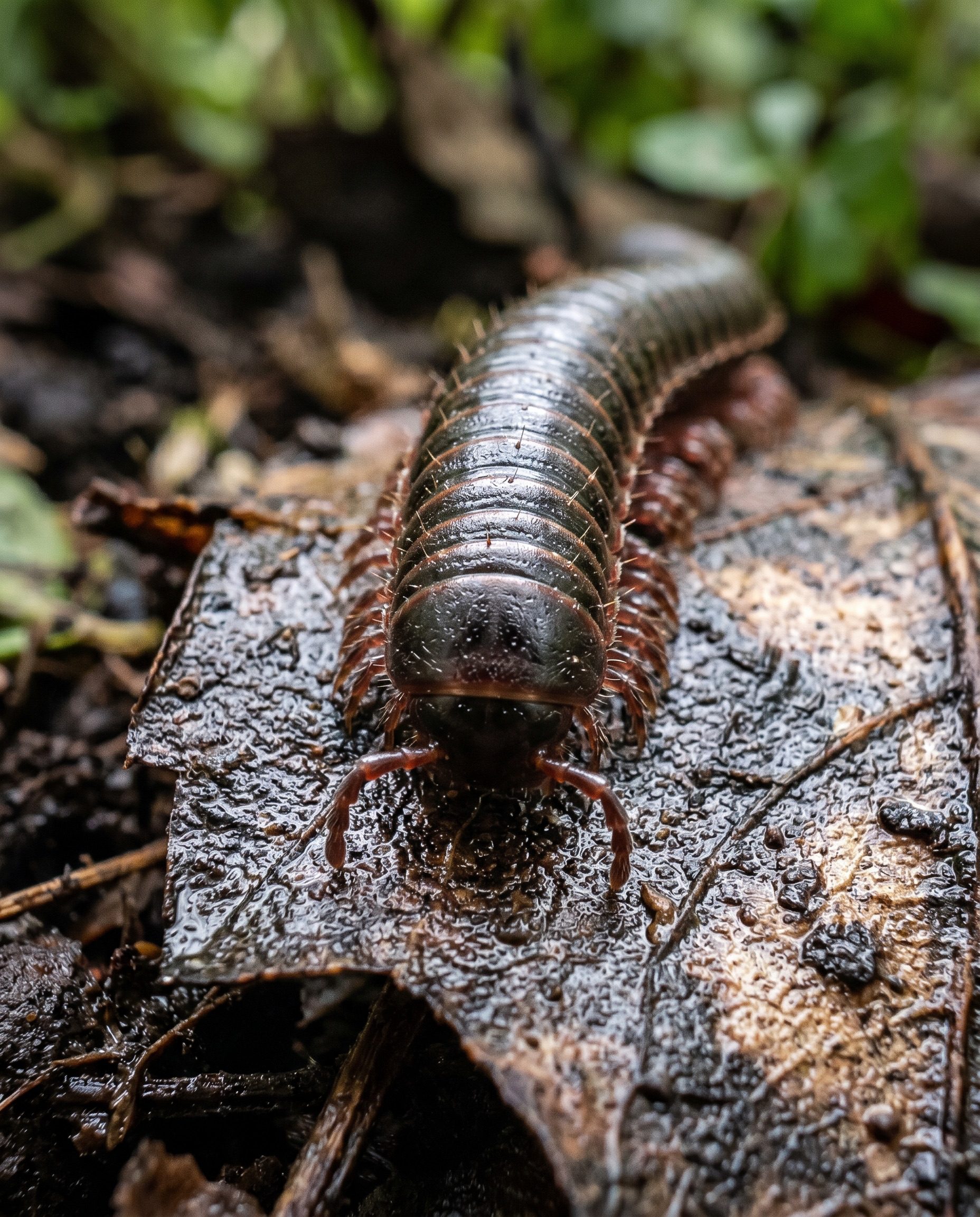
If the legs are still ambiguous, switch to how the animal moves. A centipede bolts, changing direction in sharp angles, because it is a hunter built for speed. A millipede plods in a slow straight line and, the moment you touch it, curls into a flat spiral with its hardened back facing out. That coil is a millipede signature you will almost never see from a centipede. The UC IPM Pest Notes on centipedes and millipedes describes the same two-track tell, and behavior plus leg count together leave no real doubt.
nn
nn
Body shape and color
nn
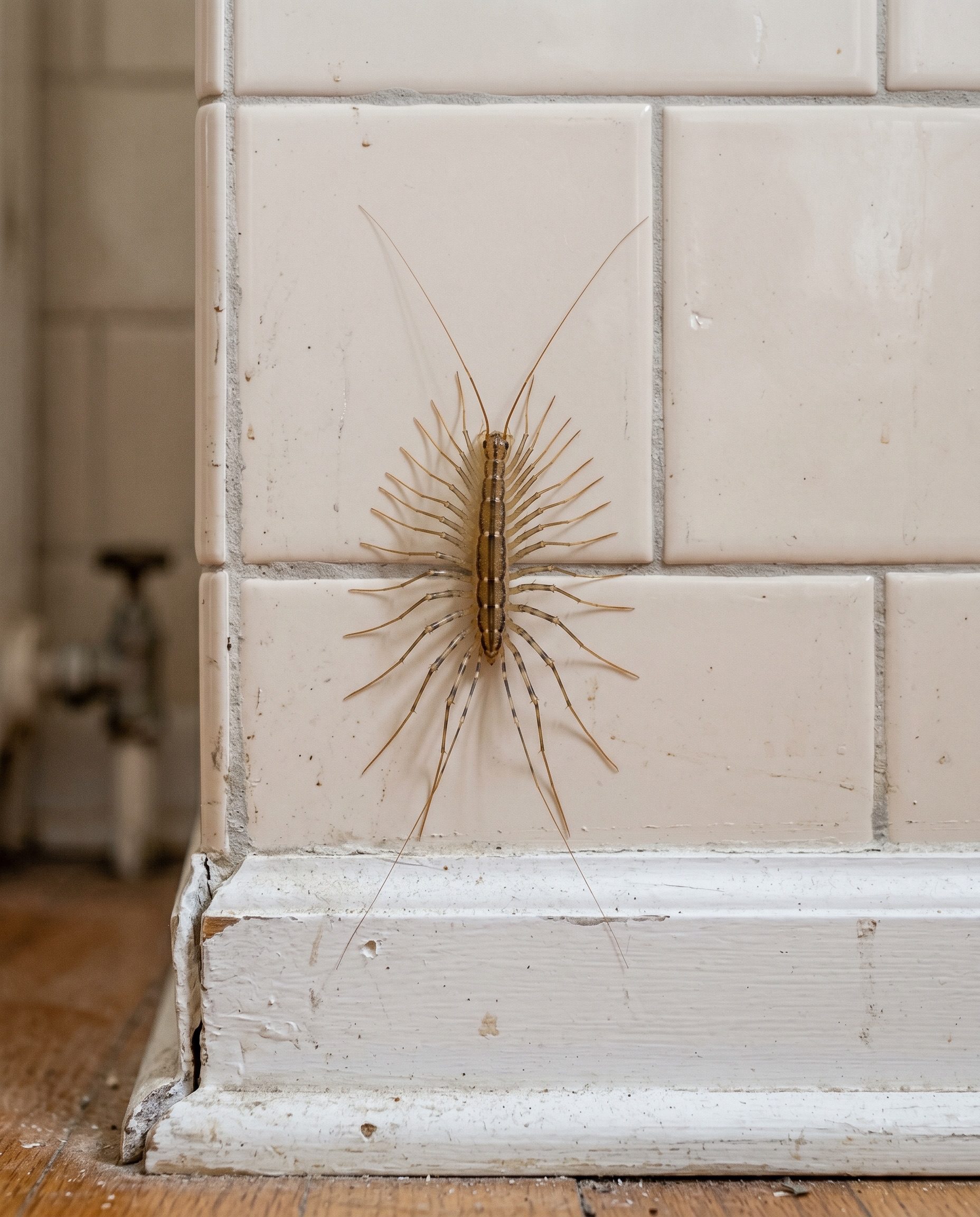
Beyond the legs, the body plan separates them cleanly. A centipede is dorsally flattened, which lets it slip into thin cracks, and runs reddish-brown to yellowish-gray depending on species. The common house centipede (Scutigera coleoptrata) is the dramatic exception people remember: a grayish body with fifteen pairs of long banded legs that make it look far bigger and faster than it is. Its legs get progressively longer toward the rear, and that last pair can be nearly the length of the body.
nn
A millipede reads as rounded and armored, a hard cylinder in black, brown, or sometimes a dull red, segment after segment marching down its length. Size overlaps between the two groups, so do not lean on length alone. Most household specimens of either run roughly one to two inches, about the length of a paperclip, with the giant tropical species you see in pet stores being a separate matter entirely. The reliable contrast is cross-section: flat and leggy versus round and dense.
nn
How each one defends itself
nn
This is where the practical difference lands, because their defenses are opposite. A centipede is a predator with venom, using a modified front pair of legs called forcipules to grab and subdue prey. A large one can pinch hard enough to break skin, and the bite of a typical house species feels like a bee sting that fades within hours. It is not medically dangerous for most people, but it is the only real “ouch” in this comparison.
nn
A millipede has no bite and no venom. Its defense is chemical: many species secrete a pungent fluid from pores along the body that can stain and irritate skin, and a few can produce trace compounds that sting the eyes if you rub them after handling. Wash your hands after picking one up and you are fine. The University of Kentucky’s guidance on occasional invaders like centipedes and millipedes treats both as nuisance wanderers rather than threats, which matches what entomologists tell homeowners: neither is a reason to panic.
nn
The quick comparison
nn
Run down this table the way you would a field key, top feature first.
nn
| Trait | Centipede | Millipede |
|---|---|---|
| Legs per segment | One pair | Two pairs |
| Body shape | Flattened, long sparse legs | Rounded, dense short legs |
| When disturbed | Darts away fast | Coils into a spiral |
| Diet and risk | Predator, mild bite | Detritivore, irritating secretion |
nn
If you can confirm even two of these rows, you have your answer. The leg count is the anchor, and the disturbance response is the fastest backup when the legs are hard to see. For the house centipede specifically, our house centipede identification and danger guide covers that one species in depth, since it is the version most people actually find on a bathroom wall.
nn
nn
Where you find them and why
nn
Both groups need damp, and that is the strongest clue about where you met yours. They live outdoors under mulch, logs, leaf litter, and stones, breathing through structures that dry out fast, so they cannot survive long in a dry house. You see them indoors as moisture-driven occasional invaders that wander in when it is wet, typically into basements, crawl spaces, bathrooms, and the gap under a poorly sealed door after heavy rain or during a fall migration. The UC IPM Pest Notes on centipedes and millipedes frame both as occasional invaders, not breeding infestations, because they almost never reproduce inside.
nn
That distinction matters for what you do next. A centipede indoors is a beneficial predator that eats roaches, silverfish, and other small pests, so an entomologist would tell you it is doing free pest control. Millipedes do their good work outside, breaking down decaying plant matter into soil. Neither is breeding in your walls. The honest fix is exclusion and drying things out rather than blanket spraying, which is the core of the EPA’s safe pest control and IPM principles: seal foundation gaps, run a dehumidifier, clear mulch and debris off the foundation, and the wanderers stop showing up.
nn
Common questions
nnWhich one bites, the centipede or the millipede?n
The centipede. It is a predator with venom delivered through modified front legs, and a large one can pinch hard enough to sting like a bee for a few hours. Millipedes do not bite at all; their only defense is an irritating secretion. For most healthy people a house centipede bite is a minor, short-lived annoyance, not a medical event.
nnAre house centipedes dangerous to have indoors?n
Not really. The house centipede is a beneficial predator that hunts roaches, silverfish, and other small pests, so it is doing useful work. Its bite is mild and uncommon since it would rather flee than fight. If the look of it bothers you, lowering indoor humidity and sealing entry points removes the dampness that drew it in.
nnWhy do millipedes curl up into a ball?n
Coiling is a defense. By spiraling, a millipede tucks its soft legs and underside inside and presents its hard armored back to a predator, while some species release a pungent fluid at the same time. A centipede never does this; it runs. The coil is one of the most reliable instant tells between the two.
nnHow do I keep both of them out of my house?n
Treat them as moisture problems, not infestations. Run a dehumidifier in the basement, fix leaks, move mulch and leaf litter away from the foundation, and seal gaps around doors, vents, and the sill plate. Because they cannot breed or survive long indoors, drying the place out and closing the gaps does most of the work without chemicals.
nnDo I need to spray to get rid of them?n
Usually no. Since these are occasional invaders rather than breeding colonies, exclusion and moisture control clear the problem on their own. If you have a persistent run of them, our comparison of centipede and millipede control sprays covers targeted options, but start with the dehumidifier and the caulk gun.
nn
Final verdict
nn
Get the name right before you decide anything, and it comes down to two looks. Count the legs per segment: one pair means a centipede, two pairs means a millipede. Back it up with behavior, because a centipede darts and a millipede coils, and confirm with the body, since a centipede is flat and long-legged while a millipede is round and densely legged. The stakes are low either way. A centipede can deliver a mild bite but earns its keep eating other pests, and a millipede cannot bite at all, only secrete a fluid you wash off. Both are harmless moisture-driven wanderers, so the right response is a dehumidifier and a tube of caulk, not a panic.
nn
Next steps:
nn
– Pin down the leggy gray one on your bathroom wall with our house centipede identification and danger guide.
n
– If they keep wandering in, work through how to get rid of centipedes in the house.
n
– For a persistent run of either, weigh targeted options in our centipede and millipede control sprays comparison.
nn

Pingback: Bugs That Curl Into a Ball When Touched