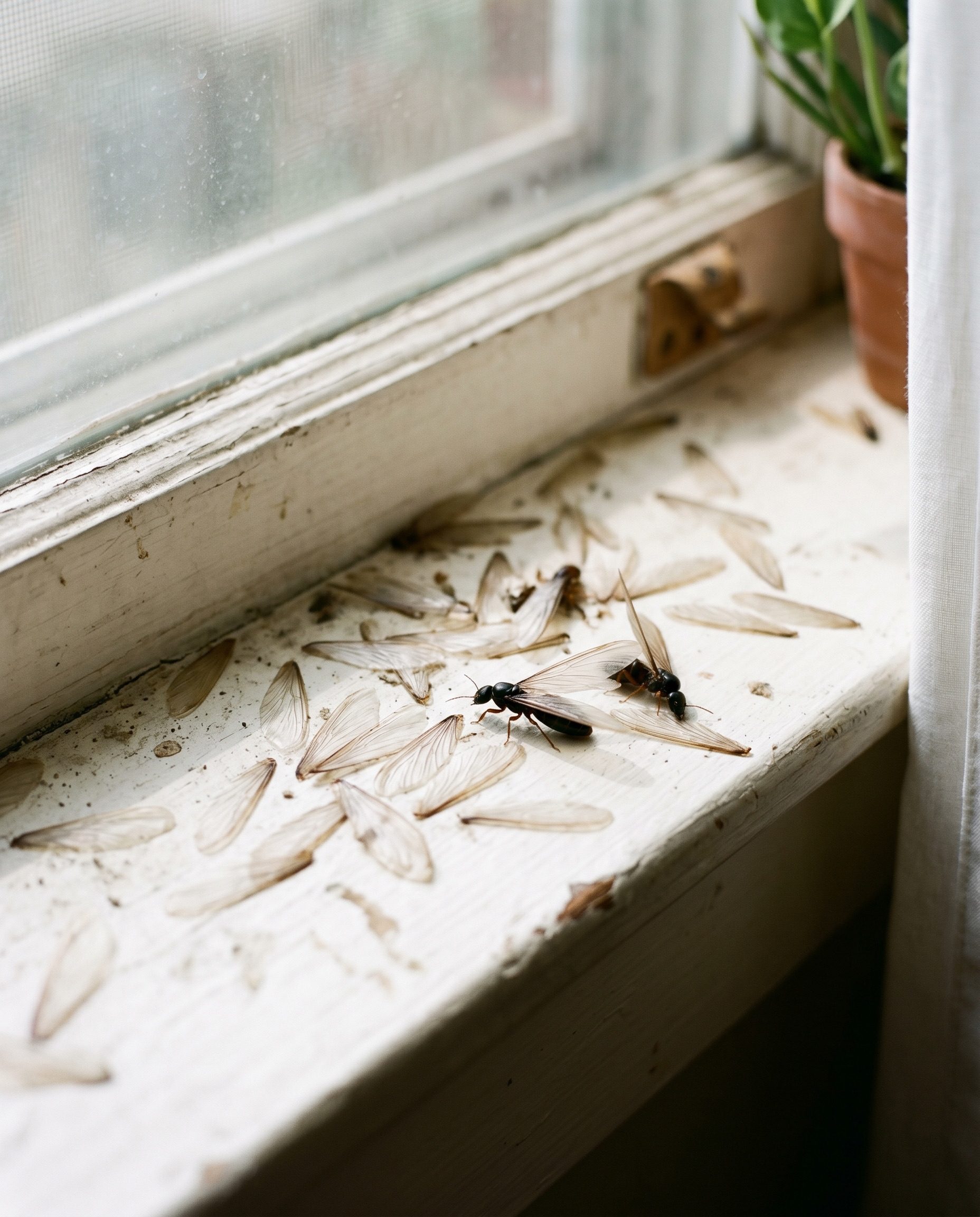
You found a cluster of winged insects at a sunny window, or a pile of shed wings on the sill, and the first question is whether it matters. It does. A swarm of winged termites inside your home means a mature colony is already established in or right against the structure and is releasing reproductives to start new colonies nearby. The fastest way to be sure you are looking at termites and not flying ants is the waistline: a termite swarmer has a straight, thick body with no pinched waist, four equal-length wings, and straight antennae. Seeing them indoors is a signal to book an inspection now, not to wait and watch.
Winged termites inside are not a stray nuisance; they mean an established colony is in or against your home and is sending out reproductives. Termite swarmers have a straight waist, equal-length wings, and straight antennae, which separates them from flying ants. Indoor swarmers warrant a professional inspection.
- The confirming feature: a straight, thick waist plus four equal-length wings and straight antennae.
- Most-confused look-alike: flying ants, which have a pinched waist, unequal wings, and bent (elbowed) antennae.
- What it means: a mature colony nearby; get a professional inspection and read our signs of termites in the house guide.
Quick answer
Termite swarmers, also called alates, are the winged reproductive caste (Isoptera) a colony produces once it is mature, typically several years old. They leave the nest in a brief flight, pair off, drop their wings, and try to start new colonies. Finding them inside almost always means the source colony is in or touching your home, because indoor swarmers usually emerge from structural wood or from soil right against the foundation, not from the yard. The two-second ID is the body shape: termites look like a single straight grain of rice with wings, while a flying ant has the obvious hourglass pinch between thorax and abdomen.
The waist tells you in two seconds
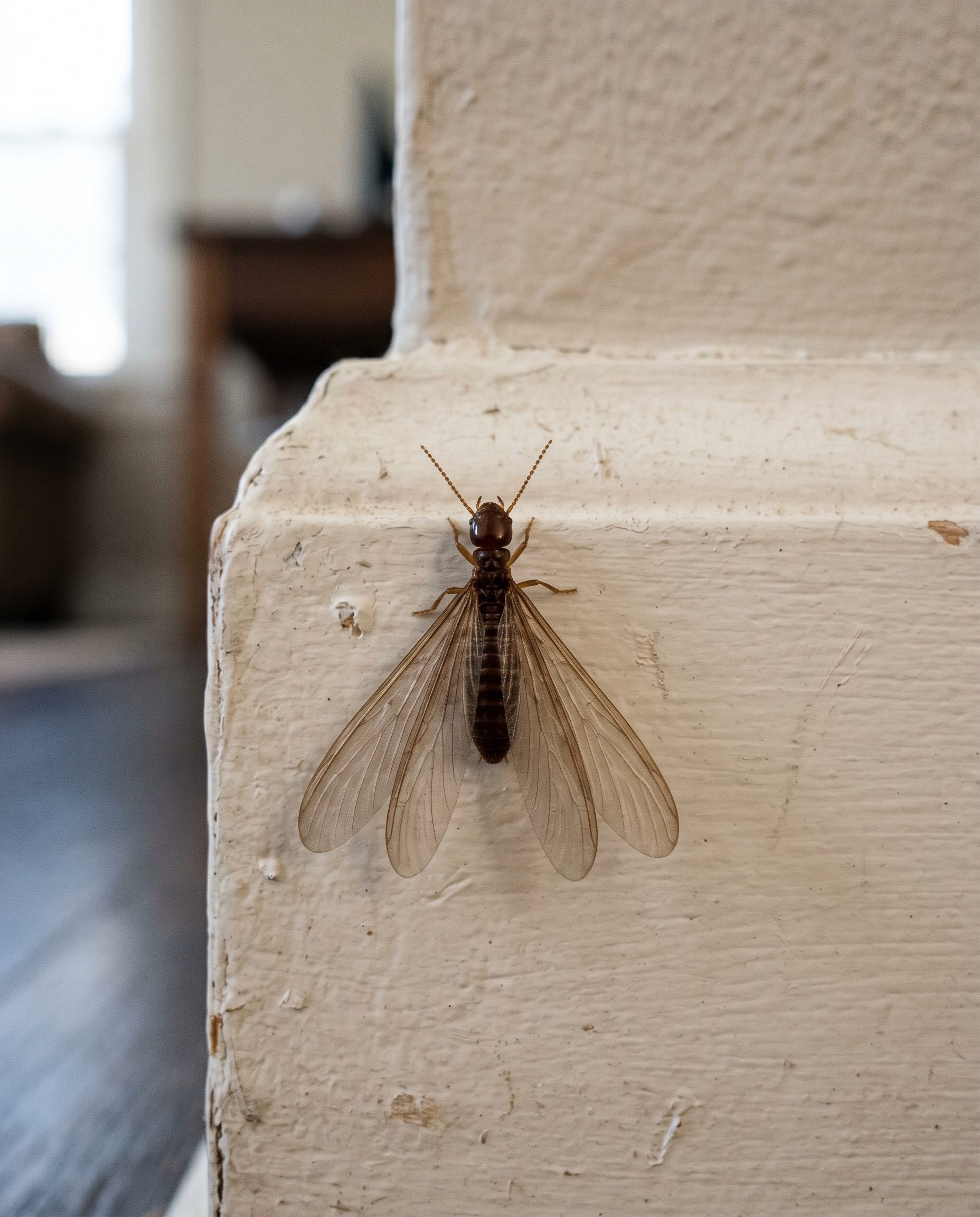
If you only check one thing, check the waist. A termite’s body runs in a near-straight line from head to tail with no narrowing, so it reads as one thick segment. A flying ant has a sharply constricted, wasp-like waist that is impossible to miss once you know to look for it. That single feature settles most of the cases that come into Extension labs, and it holds up even when the insect is dead and dried on a windowsill.
Back it up with two more features and you are certain. A termite carries four wings of equal length that extend well past the tip of the abdomen and look milky or smoky; a flying ant’s front wings are clearly longer than the hind pair. Then the antennae: termite antennae are straight and beaded, like a tiny string of pearls, while ant antennae are bent at a sharp elbow. UC IPM’s Pest Notes on subterranean termites lays out this same waist-wings-antennae trio as the standard homeowner check, and it is the order I use in the field because it goes from easiest to hardest to see.
Full description of a swarmer
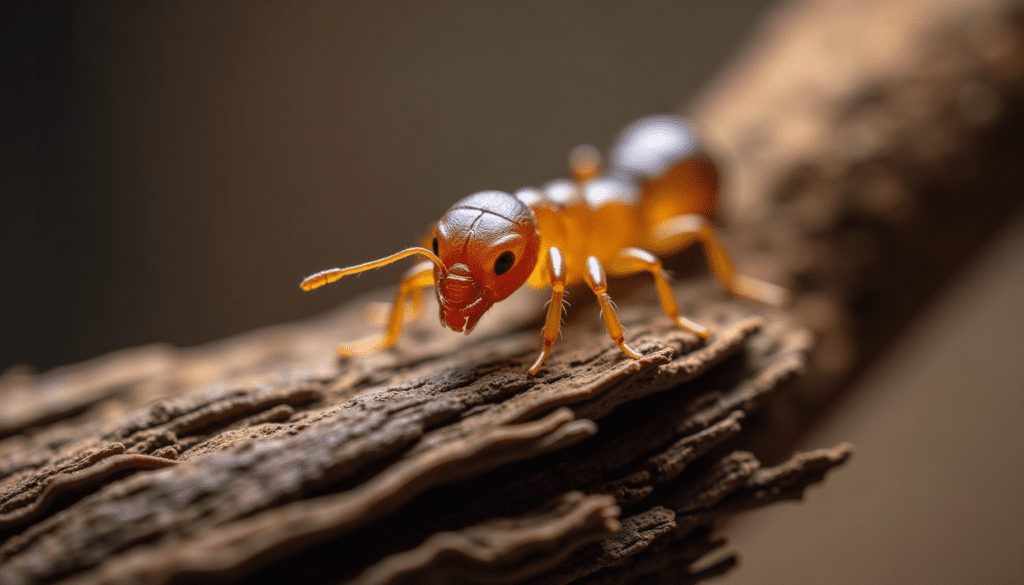
A subterranean termite swarmer is small, roughly a quarter to three-eighths of an inch including the wings, so noticeably smaller than the carpenter ants people often compare them to. The body is dark brown to nearly black in the common subterranean species and pale amber in some drywood species, and it is soft and matte rather than the hard, shiny shell of an ant. Up close the head is rounded and the antennae sit straight out, never elbowed.
The wings are the giveaway at a glance. All four are the same length, are roughly twice the length of the body, and are so loosely attached that they snap off easily. That is why you so often find a litter of detached wings with no insects in sight, on a windowsill, a tub, a counter near a door, or caught in a spider web by the foundation. The shed wings are evidence in their own right and worth saving in a bag or a piece of tape for whoever inspects.
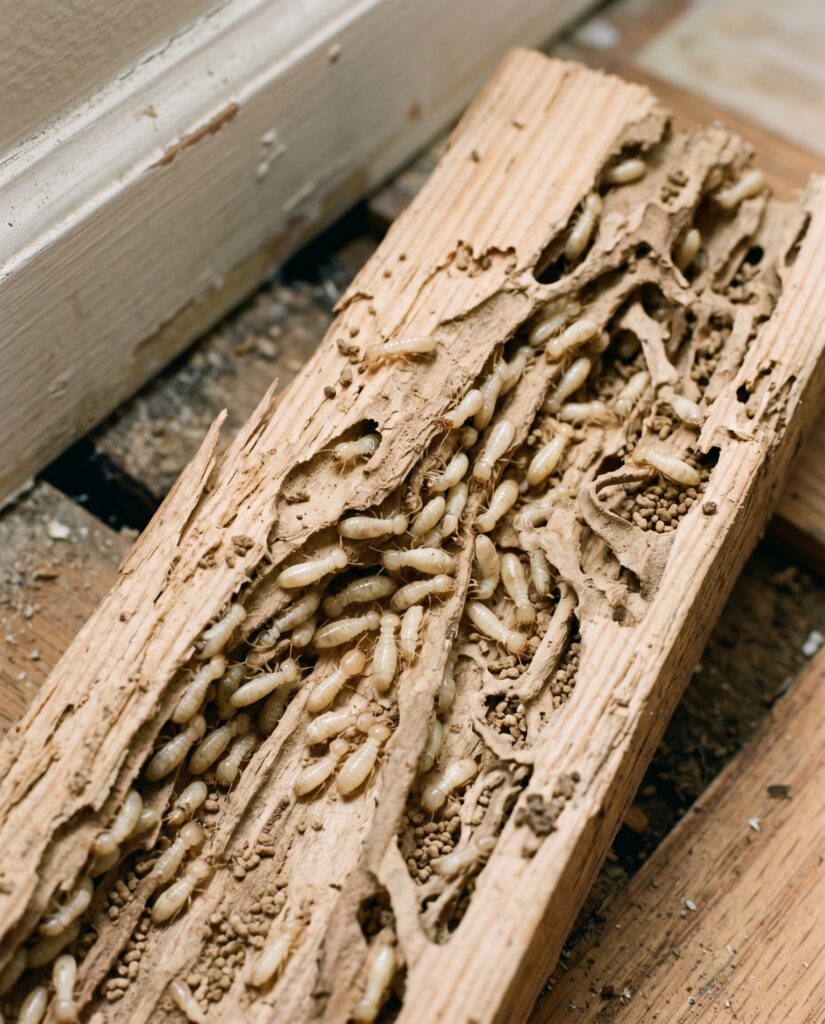
Life stage matters here as much as it does anywhere in entomology. The swarmers you see are not workers and they are not the ones eating your house; the cream-colored, wingless workers stay hidden in the wood and soil. Swarmers exist only to disperse and reproduce, which is exactly why their appearance is a colony milestone rather than a random sighting. For how the castes fit together, our termite life cycle and colony structure guide walks the full sequence.
Termite swarmer vs flying ant
People confuse the two because both swarm in warm weather, both have wings, and both turn up at windows. The differences are consistent once you line them up side by side. Use the table below as your field check, and remember that any single feature is suggestive while two or three together are conclusive.
| Feature | Termite swarmer | Flying ant |
|---|---|---|
| Waist | Straight, no pinch | Sharply pinched, wasp-like |
| Wings | Four equal-length, milky | Front pair longer than hind |
| Antennae | Straight, beaded | Bent at an elbow |
The reason the ID is worth getting right is that it changes everything downstream. Flying ants indoors are a nuisance you can usually vacuum up and forget. Termite swarmers indoors point to feeding activity in or against the structure, which is a different problem entirely. There is also a second fork worth knowing: subterranean termites nest in the soil and reach wood through mud tubes, while drywood termites live entirely inside the wood they eat. The two are treated differently, and our subterranean vs drywood termites breakdown covers which clues point to each.
When and where they swarm
Swarming is tightly tied to weather and season, which is itself an ID clue. Subterranean species in most of the country swarm in spring on a warm, often humid day after rain, frequently in the morning, while drywood species tend to swarm later in summer and into fall. If you see a swarm indoors during a spring warm spell, that timing fits subterranean termites, and the colony is usually within or directly beside the home.
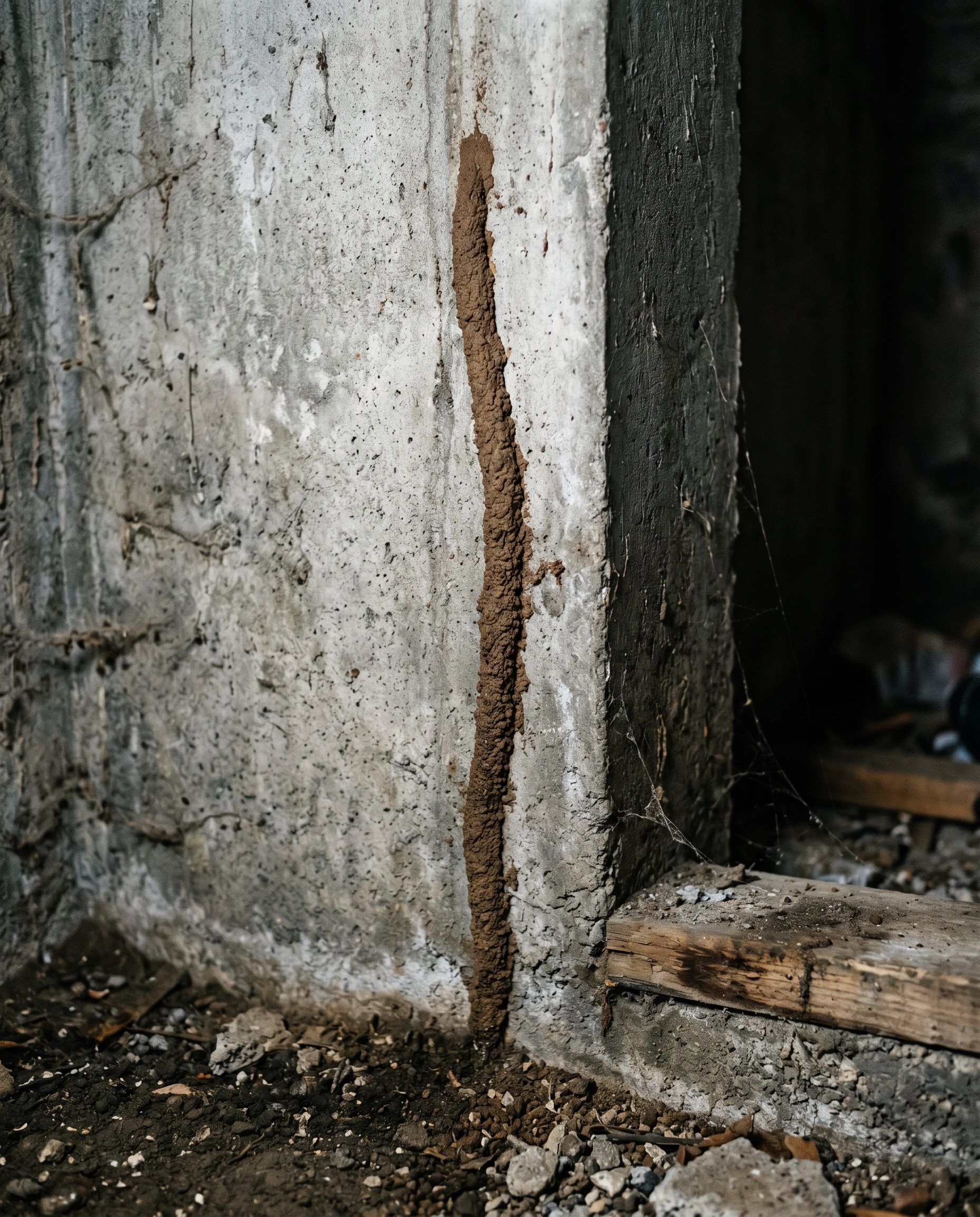
Location inside the house narrows it further. Swarmers gather at light, so they pile up at windows, sliding doors, and light fixtures as they try to get out. Indoors, the swarm is escaping from structural wood or from soil contact at the foundation, not drifting in from the lawn. Outdoors a swarm near a stump, a fence post, or a woodpile is normal yard activity and far less alarming. The presence of pencil-width mud tubes on the foundation, with swarmers, is the strongest sign the colony is reaching your structure. University of Kentucky’s guidance on termite control methods explains how those soil-to-wood mud tubes work and why they are the hallmark of a subterranean infestation.
The detail on breaking a section to date it sits in mud tubes on a foundation.
What an indoor swarm means for the home
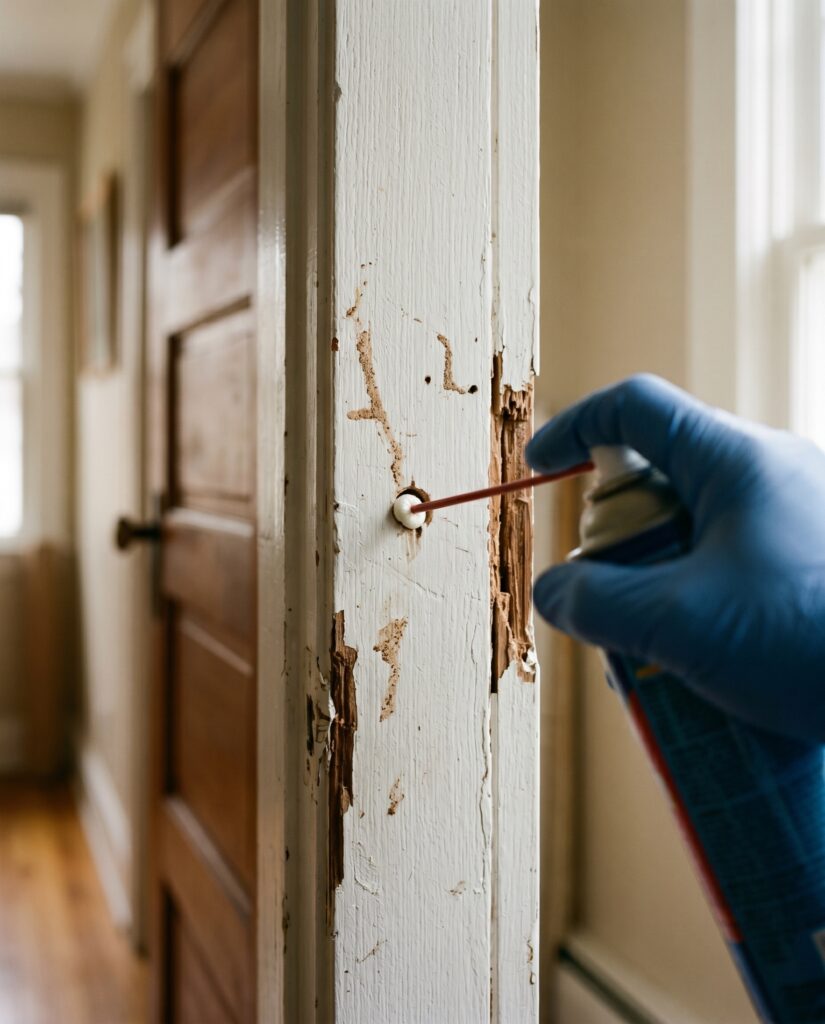
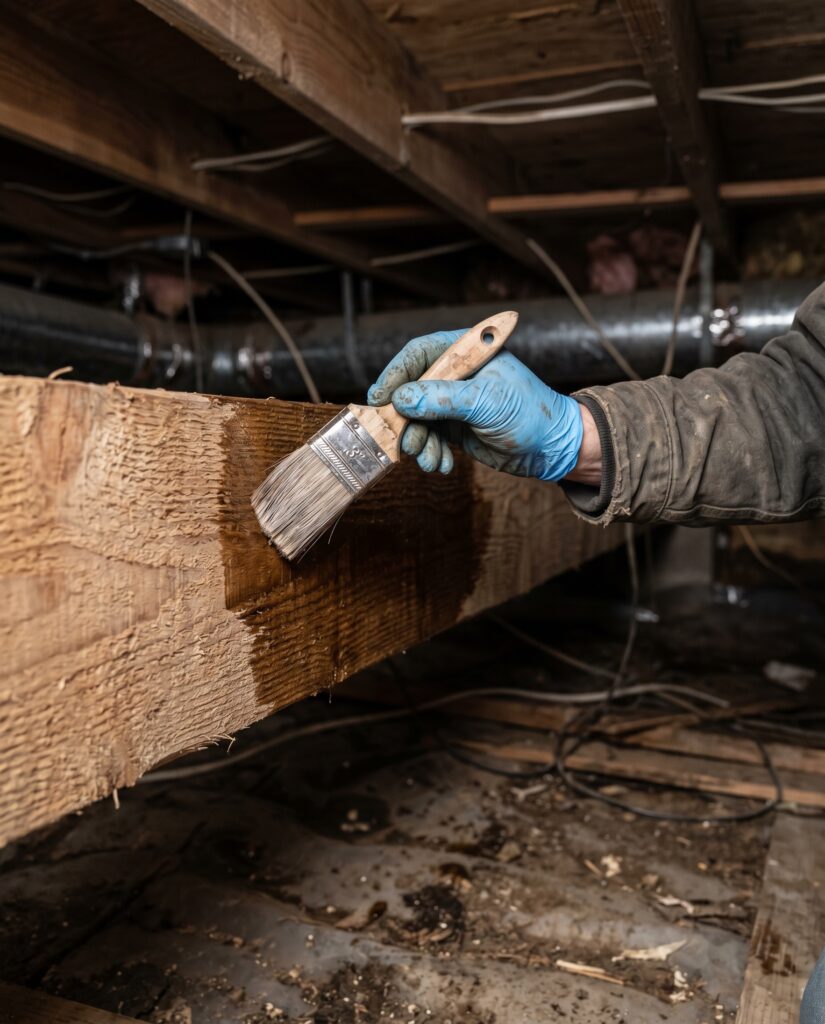
This is the honest part. A confirmed indoor termite swarm is not something a homeowner clears with a can from the hardware store, and I will not pretend otherwise. The visible swarmers are short-lived and mostly die on their own, so killing the ones at the window does nothing about the colony that produced them. A structural subterranean infestation is treated by a licensed professional with a continuous treated-soil barrier or a monitored bait system installed around the structure, both of which require equipment and licensing a homeowner does not have.
Baiting is worth understanding because it targets the colony itself rather than the individual insects. Foraging workers carry the active ingredient back underground, and over weeks to months it works through the colony. How baiting systems eliminate a colony describes that mechanism and why it is a professionally installed system, not a retail product. If anyone recommends a pesticide, the EPA’s principles of safe pest control and IPM are a good baseline, and under federal law the product label is the law, so application stays with someone licensed to follow it. For pesticide-safety questions and a plain-language overview of NPIC’s overview of termite treatment and when to hire a professional, that page is a reliable reference; if you have an exposure concern, contact a doctor or your local poison control center.
The practical move is simple: save a few swarmers or their wings as evidence, note where indoors they appeared, and schedule a professional inspection. Identification is my job; clearing a structural colony is theirs.
Common questions
Do termite swarmers eat wood?
No. Swarmers are the reproductive caste and do not feed on wood; their only role is to leave the nest, mate, and start new colonies. The damage is done by the pale, wingless workers that stay hidden inside the wood and soil. That is why the swarmers you see are a signal of an established colony rather than the cause of the damage.
Are termite swarmers dangerous to people?
They do not bite, sting, or carry disease, so they pose no direct risk to you or pets. The danger is to the structure, not your health. The concern when you see them indoors is what their presence reveals: an active colony feeding in or against the home.
Will the swarmers go away on their own?
The visible swarmers will, because most die within a day or two indoors where they cannot reach soil to start a colony. But them disappearing does not mean the problem is gone; the colony that released them is still there. Treat the swarm as a one-time alarm, not an all-clear.
How can I be sure they are not flying ants?
Check the waist first, then the wings and antennae. A straight body with no pinch, four equal-length wings, and straight beaded antennae means termite; a pinched waist, unequal wings, and elbowed antennae mean ant. Two or three of those features together make the call certain.
Does seeing swarmers mean I have major damage?
Not necessarily, but it does mean the colony is mature, which takes years. A swarm tells you termites have been present long enough to reproduce, so it warrants a prompt inspection to gauge the extent rather than assuming the worst or the best.
Final verdict
Winged termites inside your home are a message, and the message is that a mature colony is established in or right against the structure. Get the ID right first: the straight waist, the four equal-length wings, and the straight antennae separate a termite swarmer from a flying ant in seconds, and that distinction decides whether you can shrug it off or need to act. Save a few specimens or their shed wings, note where indoors they showed up and when, and book a professional inspection. A confirmed structural colony is cleared with a treated-soil barrier or a monitored bait system installed by a licensed pro, not with a retail spray, so identification is where your part ends and theirs begins.
Next steps:
– Confirm the broader picture with our signs of termites in the house guide.
– Work out which type you are dealing with in subterranean vs drywood termites.
– Understand the castes and timeline in termite life cycle and colony structure.