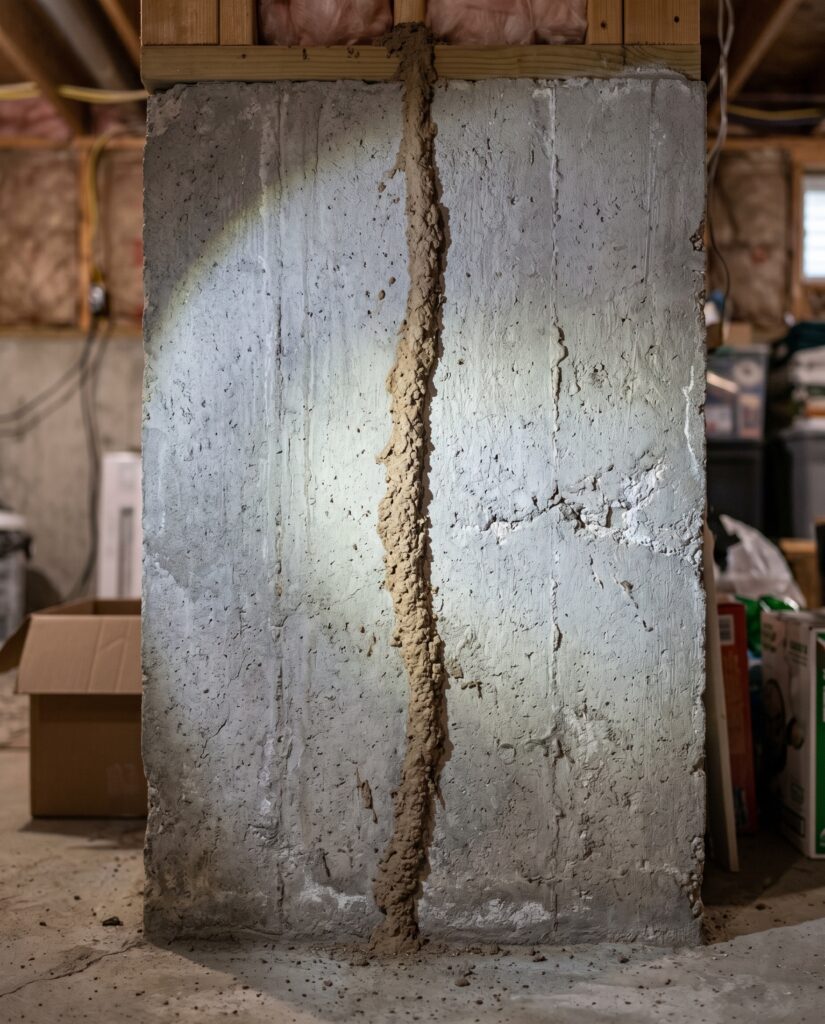
You found termites in a beam, killed the few you could see, and assumed you had bought yourself some time. You did not, and the reason is the colony itself. A termite colony is a caste society, and that is exactly why it is so hard to kill: the workers chewing your wood make up the bulk of the colony and feed everyone, soldiers defend the tunnels, and the reproductives, the queen and the winged swarmers, keep the whole thing growing for years. Squashing the workers you happen to see does nothing lasting. Only reaching the colony and its queen, through baiting or a soil barrier, actually ends a termite problem.
A termite colony runs on castes, so killing the workers you see is useless; the eggs and the queen keep producing more, and only a treatment that reaches the colony itself stops the damage.
- The caste that eats your wood: Workers, the pale soft-bodied majority that also feed the soldiers, the queen, and the young.
- The caste that grows the colony: Reproductives, meaning the long-lived queen and the winged swarmers that fly off to start new colonies.
- Why control is hard: The colony lives hidden in soil or deep in wood, so you have to reach it, not the foragers, which is why baits and barriers work and spot-spraying does not.
How a colony begins
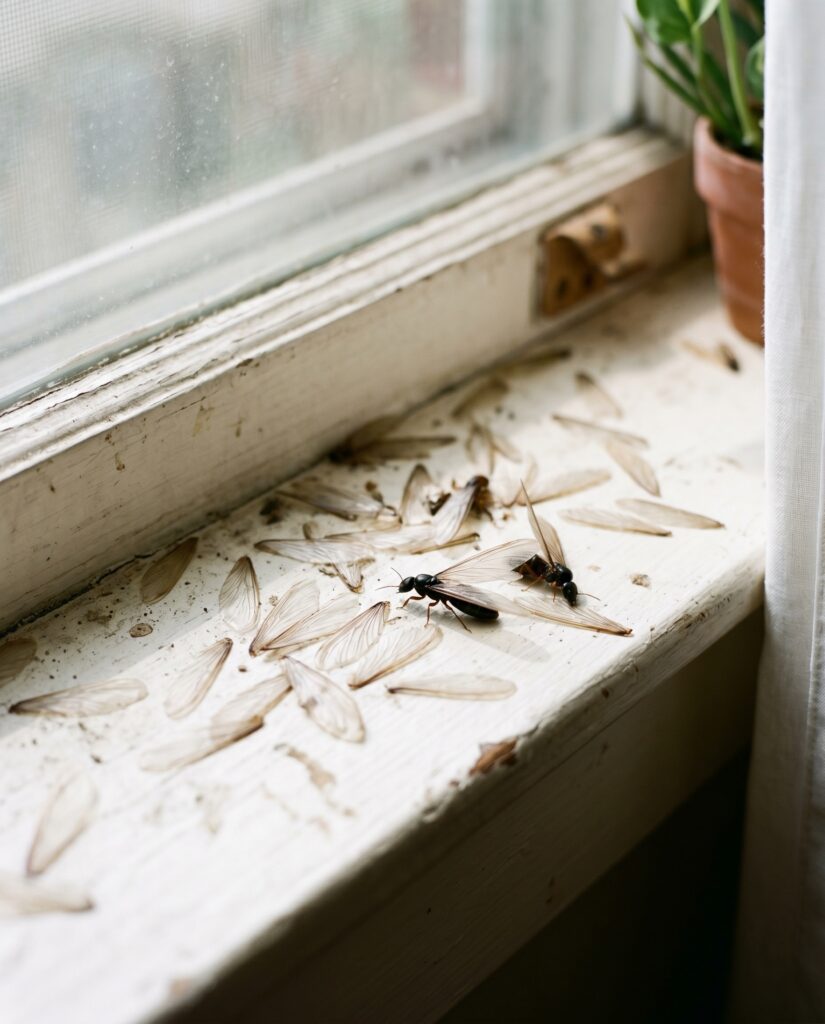
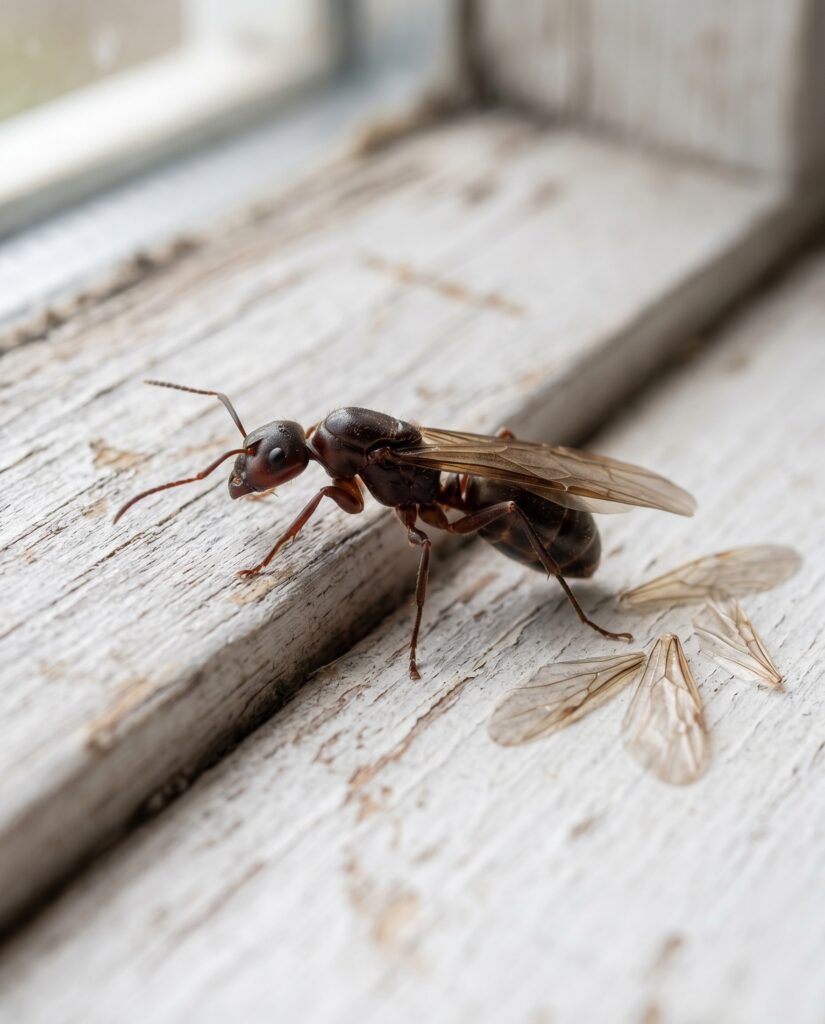
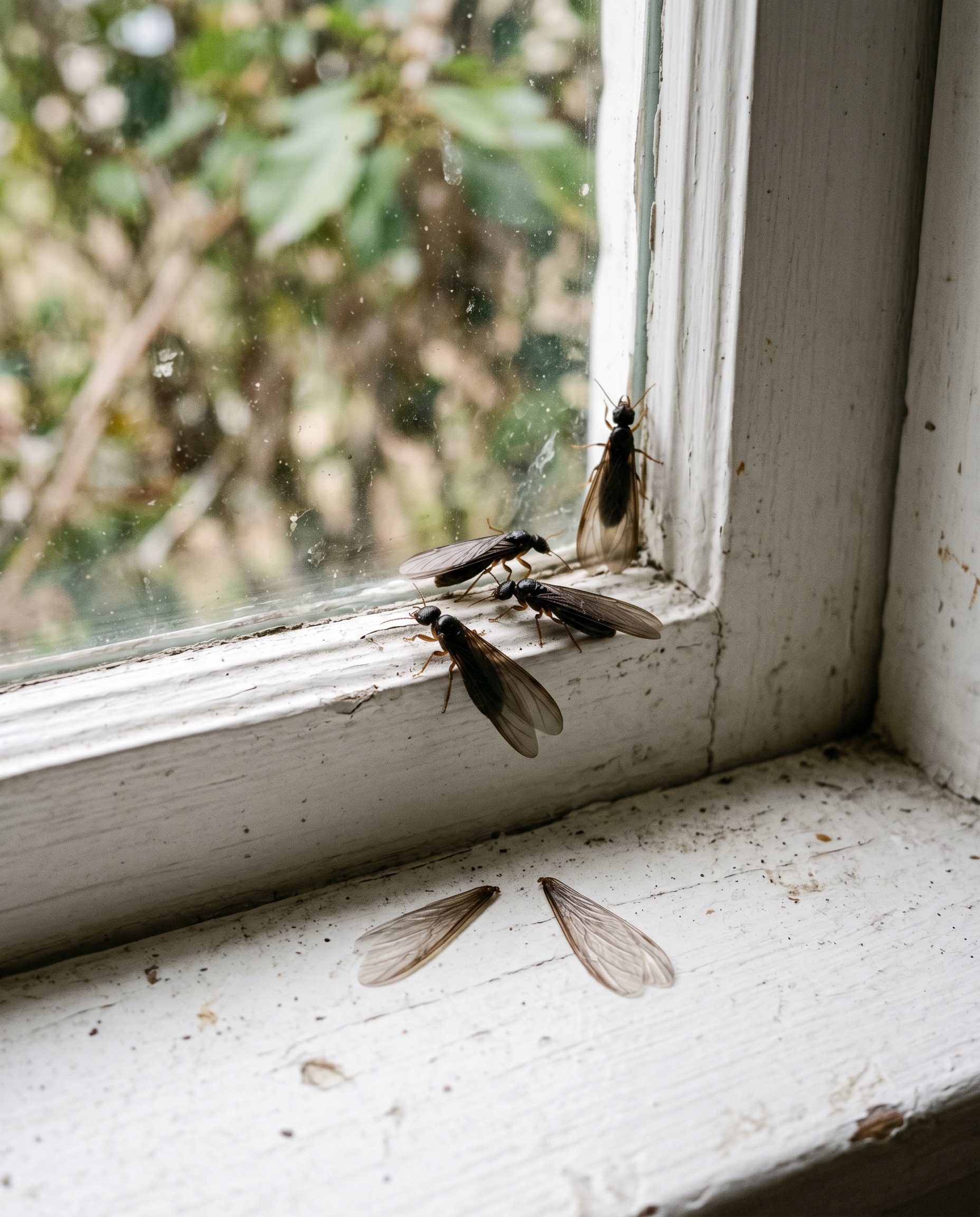
Every termite colony starts with a flight. On a warm, often humid day, mature colonies release winged reproductives called swarmers, or alates, which leave the nest in a brief mating flight. Most die or get eaten within hours, which is the point of releasing so many at once. The few survivors pair off, shed their wings, and a male and female dig in together to start a new colony as its first king and queen. That founding pair is the entire colony at the beginning, and the queen lays the first small batch of eggs herself.
From those first eggs come the workers, and only then does the colony start to grow in earnest. Early growth is slow because a brand-new colony is tiny and the queen’s output is still low. As the worker force builds, it can tend more eggs and feed more young, and the colony compounds from there. The UC IPM Pest Notes on subterranean and other termites describes this founding-pair pattern, and it is why a colony you find today may be several years old, large enough to do real structural damage long before anyone notices a single insect.
Egg to adult: the stages
Termites are hemimetabolous, which is a precise way of saying they have no larval or pupal stage the way a beetle or a moth does. There is no caterpillar phase and no cocoon. Instead the egg hatches into a larva that already looks like a small, pale termite, and it grows through a series of molts, getting larger at each one until it reaches its adult role. Count the legs first if you are unsure what you are holding: six legs means an insect like a termite, and that rules out the eight-legged arthropods people sometimes confuse with the soft white workers.
What makes termite development unusual is that the young are not locked into one outcome. A developing termite can become a worker, a soldier, or a reproductive depending on what the colony needs, signaled largely through chemical cues and food. The same starting larva can follow different paths, which is how a colony rebalances its castes when, say, a flood wipes out part of the worker force. The University of Kentucky Entomology on termite biology and behavior lays out this flexible, caste-determined development, and it matters for control because the colony can replace losses you inflict on any one caste.
The castes and what each one does
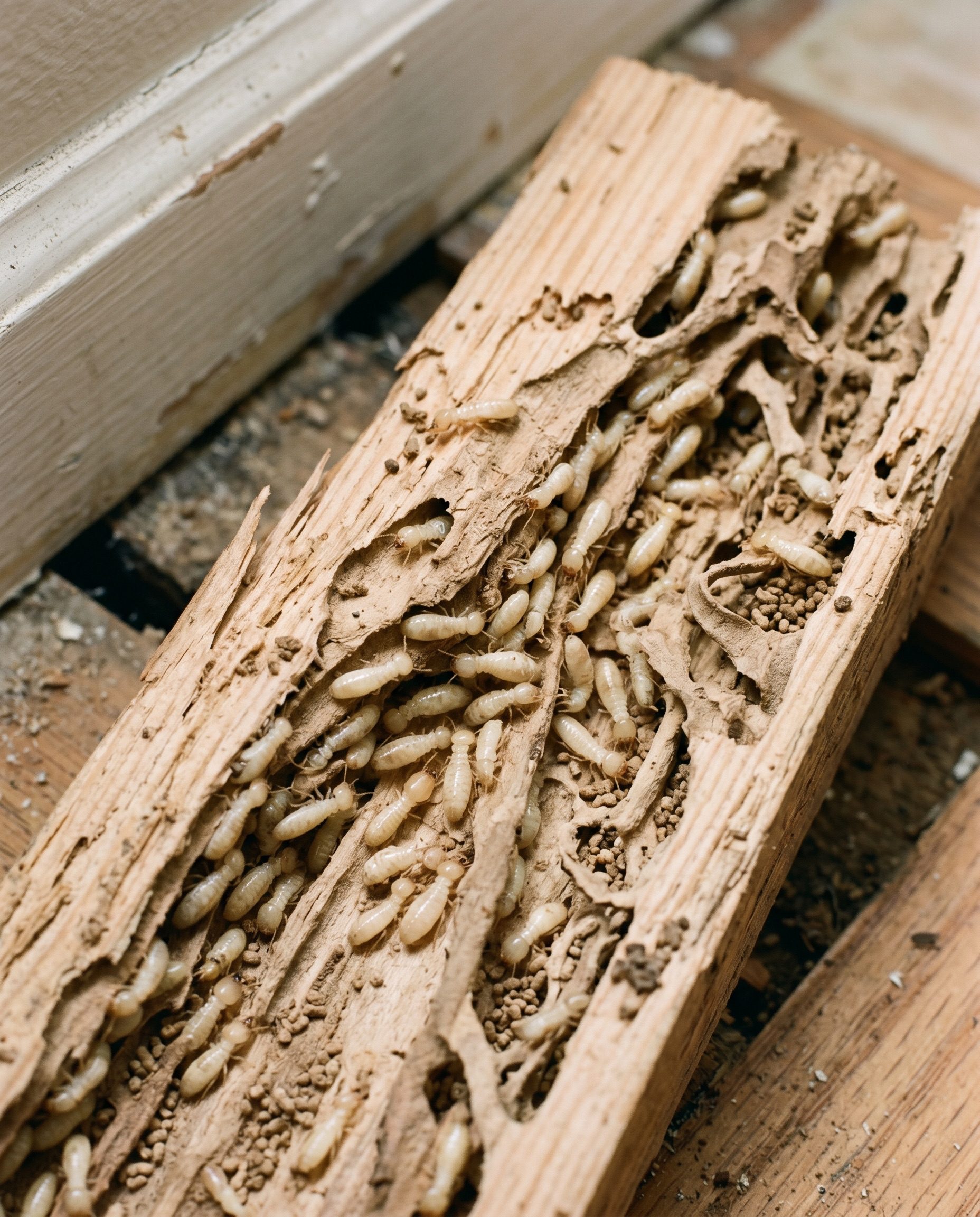
Here is where the social structure becomes the whole story. A termite colony is not a swarm of identical bugs; it is a division of labor, and each caste is built for one job. Workers are the caste you will actually find in your wood. They are pale, soft-bodied, wingless, and blind, and they make up the overwhelming majority of the colony. Workers do all the eating, all the tunneling, all the foraging, and all the feeding. They digest the cellulose in wood and pass nourishment to every other caste through mouth-to-mouth feeding, which means the queen, the soldiers, and the young cannot feed themselves.
Soldiers exist only to defend the colony. They are easy to spot in a sample because they carry oversized, often darker heads with large jaws, or in some species a nozzle-like head that secretes a defensive fluid. Soldiers cannot feed themselves either; their jaws are built for fighting ants and other intruders, not for chewing wood, so workers feed them too. They are usually a small fraction of the colony.
The reproductives are the engine of growth. The primary reproductives are the king and the long-lived queen, whose single job is to lay eggs, sometimes for many years. Alongside them, the colony produces the winged swarmers each season, the future kings and queens of new colonies. Some species also keep secondary reproductives in reserve that can take over egg-laying if the queen dies, which is one more reason a colony is so resilient. If winged termites near a window are what brought you here, our guide to termite swarmers and what they mean for your home covers how to tell them from flying ants and what their presence signals.
| Caste | Role | Why it matters for control |
|---|---|---|
| Workers | Eat wood, tunnel, forage, and feed every other caste | They carry bait back to the colony, so they are how a bait reaches the queen |
| Soldiers | Defend the colony against ants and intruders | Cannot feed themselves, so they fall with the workers |
| Reproductives | Queen and king lay eggs; swarmers found new colonies | The queen must die for the colony to die; swarmers spread the problem |
Why the colony persists
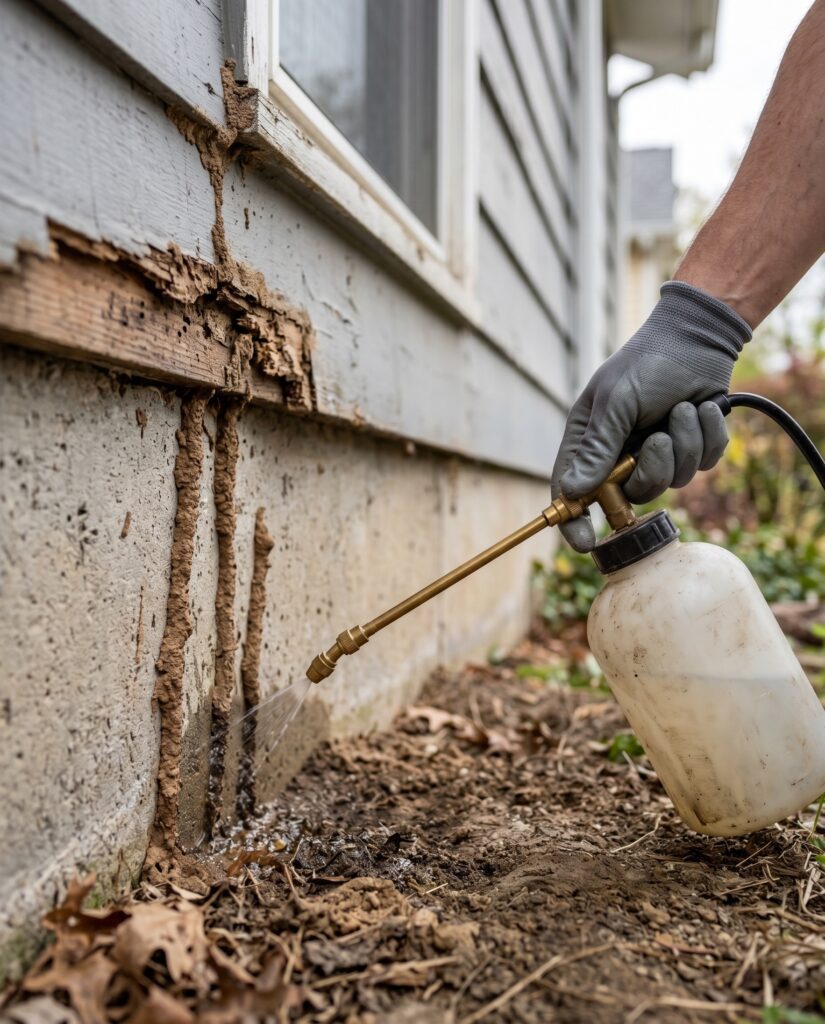
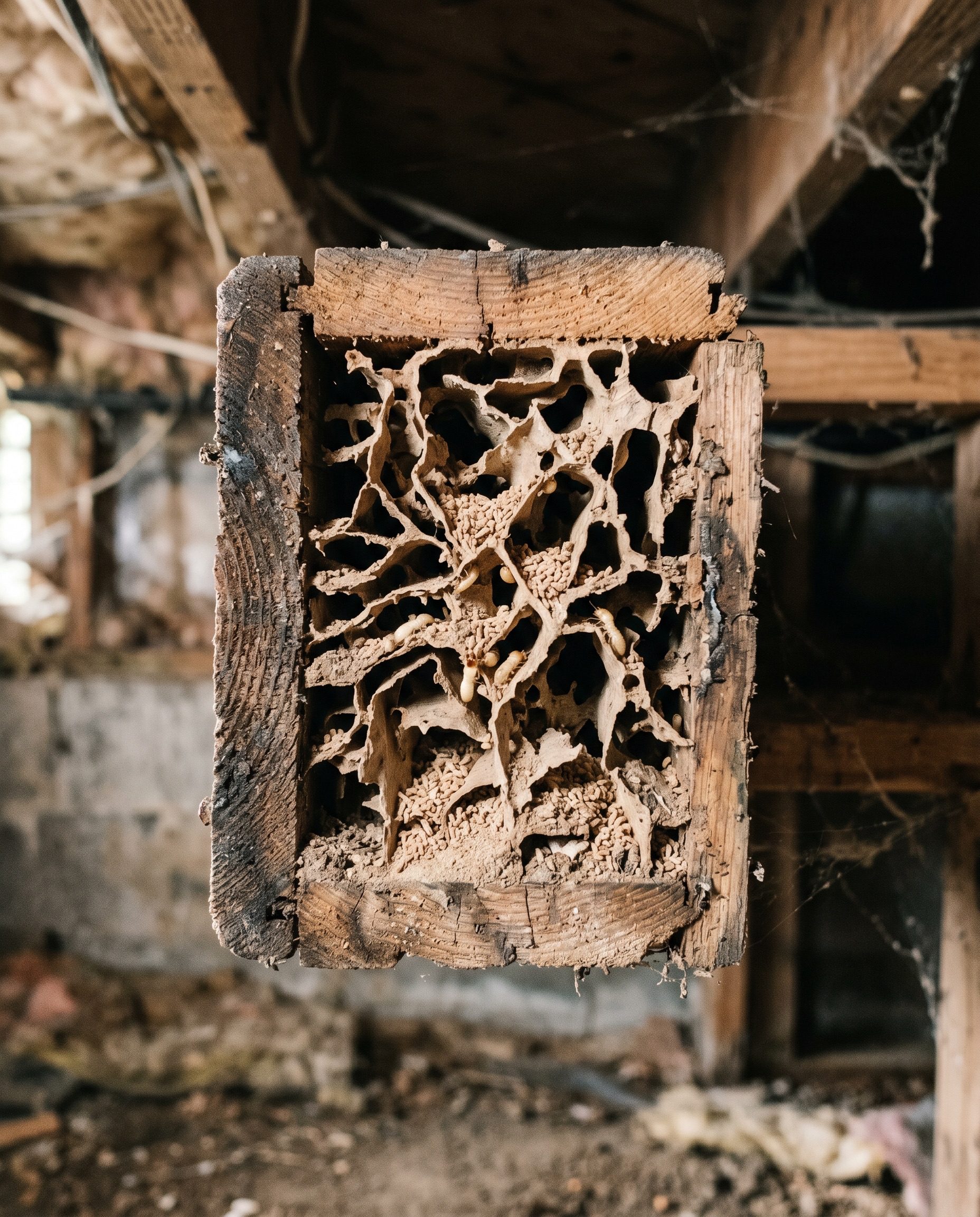
Now the practical payoff. Because the workers are the only caste that eats and the only caste that carries food home, anything you kill on the surface is replaceable as long as the queen keeps laying. Spot-spraying a beam, poking the foragers, or tearing out one damaged board kills a handful of workers and leaves the colony, hidden in the soil for subterranean species or deep in the timber for drywood species, completely intact. The eggs keep hatching, the young keep maturing into fresh workers, and the wood keeps disappearing.
This is exactly why effective treatment is built around the colony, not the bugs you see. Baiting turns the workers’ own behavior against the colony: workers eat a slow-acting bait and share it through that same mouth-to-mouth feeding, carrying it to the soldiers, the young, and the queen before they die. A continuous soil barrier works differently, by treating the soil so foragers cannot pass between the colony and your home without picking up the active ingredient. Both approaches reach past the workers to the colony itself, which is the only target that ends it. The University of Kentucky on termite control methods and the colony explains why colony-directed treatment beats spot treatment, and the NPIC’s termite overview covers the safety side of the products involved. Whatever product is used, the label is the law under federal pesticide rules; see the EPA’s guidance on safe pest control and, for severe structural infestations, defer to a licensed pest-control professional rather than improvising.
Common questions
How long does a termite queen live?
A termite queen is one of the longest-lived insects known, with primary queens in some species laying eggs for well over a decade under good conditions. That longevity is the core of the problem: as long as she survives, she keeps replacing every worker you kill. It is also why control has to reach her rather than the foragers.
Do all termites eat wood?
No. Only the workers actually eat and digest wood. The soldiers and the reproductives, including the queen, cannot feed themselves at all and are fed by the workers through mouth-to-mouth feeding. So the caste doing the damage is also the caste that delivers bait to the rest of the colony.
What is the difference between a worker and a swarmer?
Workers are pale, wingless, blind, and stay hidden inside wood or soil doing the colony’s labor. Swarmers are darker winged reproductives that leave the nest in a brief flight to start new colonies, and they are usually the only termites a homeowner sees out in the open. Finding swarmers or their shed wings indoors points to a mature colony nearby.
Are flying termites the same as the workers in my wood?
No, they are a different caste of the same colony. The flying termites are reproductive swarmers, while the wood damage is done by workers you rarely see. If you are trying to tell winged termites from flying ants, the build of the body and wings differs; our guide on subterranean versus drywood termites walks through the identifying features.
Can I get rid of termites by killing the ones I find?
You cannot. The visible insects are a small, replaceable fraction of the colony, and the queen will produce more as fast as you remove them. Lasting control means reaching the colony with a bait or a barrier, which is a job for colony-directed treatment, not surface killing.
Final verdict
A termite colony is a caste society, and understanding that is what separates a real fix from a waste of an afternoon. Workers are the pale majority that eat your wood and feed everyone else; soldiers defend; the queen and the swarmers keep the colony growing for years. The young develop without a larval or pupal stage and can shift into whichever caste the colony needs, so losses get replaced. Because the colony lives hidden and the queen outlives anything you can squash, the only treatments that work, baiting and soil barriers, reach the colony itself. If you have confirmed termites, skip the spot-spraying and start with our guide on how to get rid of termites, which covers the colony-directed methods in detail.