
Scorpions look far more dangerous than they usually are. The vast majority of scorpions in the United States are not a serious threat: their sting feels like a bad bee sting, with pain and swelling that stay right at the spot, and most people recover at home within a day. The honest answer is mostly reassuring, with one real exception. The Arizona bark scorpion is the single species in the country whose venom can be medically dangerous, especially to young children and people who are already medically vulnerable. This guide explains what scorpion venom actually does, which sting is mild and which one is not, and the red flags that mean it is time to get medical help.
Most US scorpion stings are painful but mild and bee-like, and serious harm is rare; the one exception is the Arizona bark scorpion, whose venom can be dangerous to young children and the medically vulnerable.
- Normal: Sharp pain, tingling, and swelling at the sting site that eases within hours to a day, much like a bee sting.
- See a doctor: Numbness or tingling spreading beyond the site, muscle twitching, or a sting in a young child, an older adult, or someone with health problems.
- Get emergency help: Trouble breathing, throat or tongue swelling, jerking muscle movements, difficulty swallowing, or fainting, which can signal a severe reaction.
Should you worry
For most people in most places, the answer is no. Of the roughly ninety scorpion species in the United States, only one is considered medically significant. Texas A&M AgriLife Extension explains that most US scorpions are harmless and only the Arizona bark scorpion is dangerous, and even that species rarely causes a life-threatening reaction in a healthy adult. The fear they trigger is out of step with the actual risk.
That said, “mostly harmless” is not the same as “pleasant.” A sting hurts, sometimes a lot, and a small number of people will have a reaction that needs medical attention. The rest of this guide walks the line from the ordinary sting that you can ride out at home to the rare one that needs a doctor, so you know which is which before it happens to you.
What scorpion venom does
A scorpion’s venom evolved to stop small prey like insects and spiders, not to harm something the size of a person. UC IPM notes that scorpion venom is built to subdue prey, not people, which is why a sting from a typical US species produces a sharp, local reaction rather than a body-wide one. The venom irritates the nerves right at the sting site, so the main event is pain.
For the common, non-dangerous species, that means a sting behaves a lot like a bee sting. MedlinePlus, the NIH consumer health service, describes how a scorpion sting usually causes pain and swelling right at the site, often with redness, warmth, and a tingling or numb feeling around the spot. It tends to peak quickly and then fade over a few hours to a day.
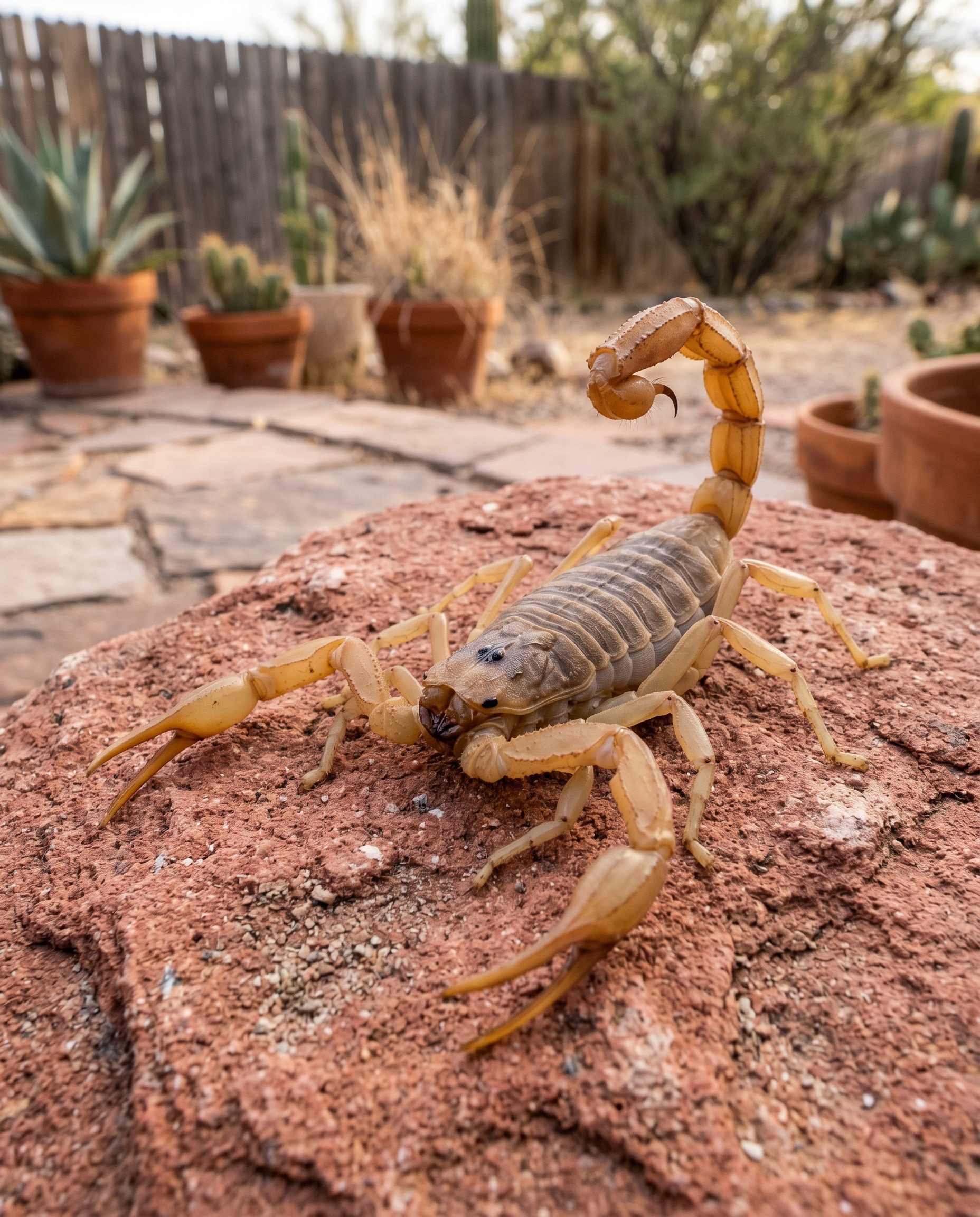
The Arizona bark scorpion (Centruroides sculpturatus) is the outlier. Its venom is more potent and can affect the nervous system more broadly, which is why its sting can cause symptoms beyond the local area, such as numbness spreading outward, muscle twitching, or restlessness. Even so, serious cases concentrate in the people who are most vulnerable, which brings us to who is actually at risk.
Who is most at risk
The danger from a scorpion sting depends as much on the person as on the species. A healthy adult stung by a bark scorpion usually has a rough but survivable time, while the same sting in a small child can be far more serious because of body size. Young children, infants, older adults, and people with existing heart or breathing conditions are the groups where a bark scorpion sting deserves real caution.
If a young child is stung and you are in bark scorpion country, the safe move is not to wait and watch at home. Contact a doctor or your local poison control center promptly for guidance, even if the child seems okay at first, because symptoms in children can develop and change. For help telling the dangerous species from the harmless ones, our guide on bark scorpion versus other scorpions covers the visual differences, and our broader scorpion identification guide walks through the common US species.
When to see a doctor
Most stings never reach this point, but a few concrete signs should move you from home care to a call with a healthcare provider. The change to watch for is symptoms that spread or escalate instead of staying put at the sting site and easing off.
| Sign | What it can mean | What to do |
|---|---|---|
| Numbness or tingling spreading beyond the site | A stronger venom reaction | Contact a healthcare provider |
| Muscle twitching, jerking, or restlessness | Nervous-system effects, more likely with bark scorpions | Seek medical care promptly |
| A sting in a young child, older adult, or medically vulnerable person | Higher risk of a serious reaction | Contact a doctor or poison control center |
| Swelling, pain, or redness that worsens over a day or two | Possible infection at the site | Contact a healthcare provider |
If you see any of these, stop home care and reach out for medical guidance, because these can point to a reaction that needs more than a cold compress. You can also get guidance on what to do after a sting from America’s Poison Centers, the network of US poison control centers. A provider can confirm what is happening and decide whether you need treatment. Our overview of scorpion sting treatment and when to worry goes deeper on home care steps.
Emergency signs
A severe reaction to a scorpion sting is uncommon, but it is the situation that needs immediate care, so it gets its own section. Get emergency medical help right away for signs of a severe reaction or anaphylaxis: trouble breathing, swelling of the throat, tongue, or lips, tightness in the chest or throat, difficulty swallowing, jerking or uncontrolled muscle movements, a fast heartbeat, dizziness, or fainting. These signs mean call emergency services, not wait and see. If the person stung has a known severe allergy and an epinephrine auto-injector such as an EpiPen has been prescribed, use it as directed and still get emergency care, because symptoms can return.
To keep this in proportion, the overwhelming majority of US scorpion stings never come close to this. The reason to know the signs is simply so you can act fast in the rare case they appear, particularly with a small child.
Lower your risk
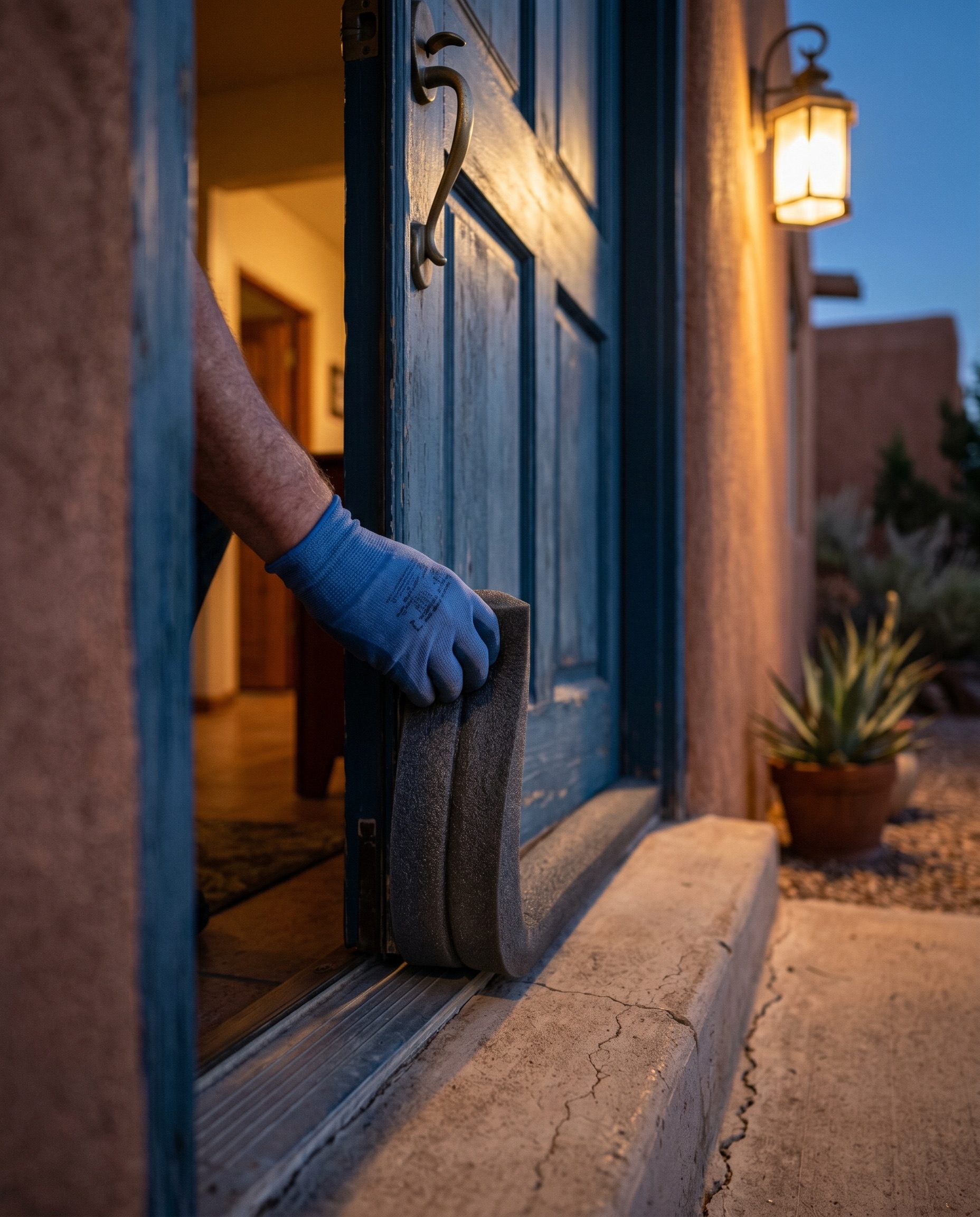
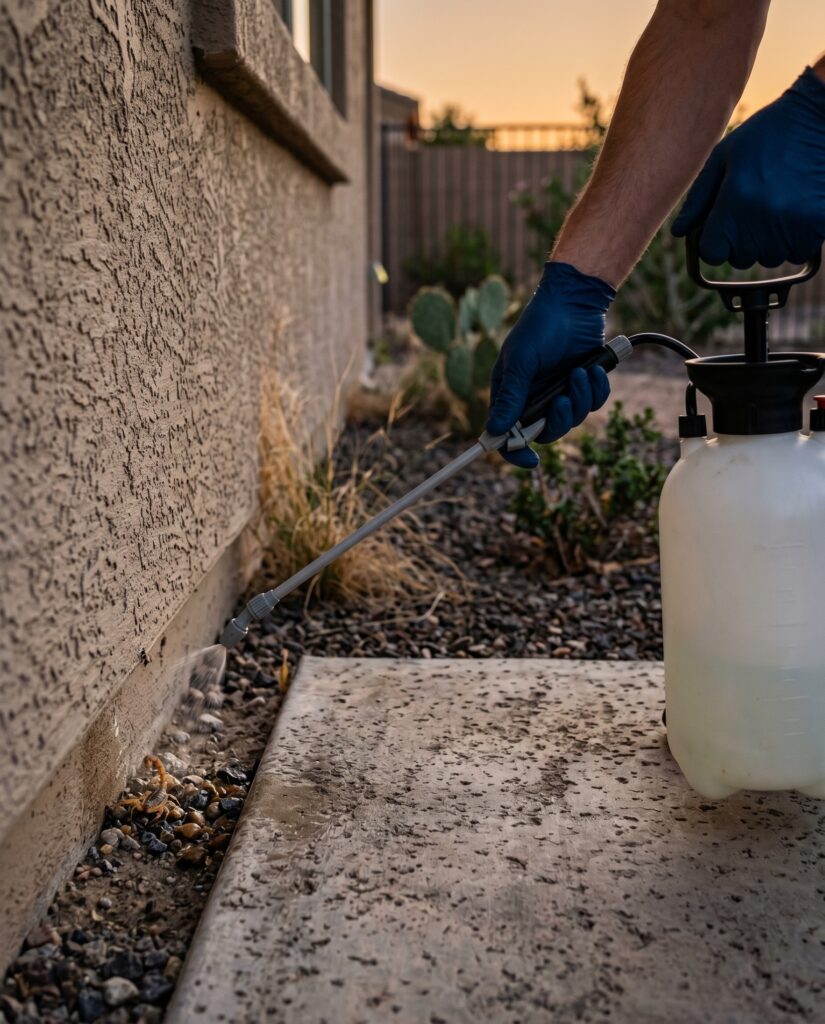
Prevention does more here than any after-the-fact remedy, and it starts with keeping scorpions out and not surprising them. Scorpions hunt at night and squeeze through tiny gaps, so sealing entry points is your best single move. Add a door sweep to exterior doors, caulk cracks around windows and the foundation, and repair torn screens. Clearing woodpiles, loose stones, and debris away from the house removes the daytime hiding spots that draw them close.
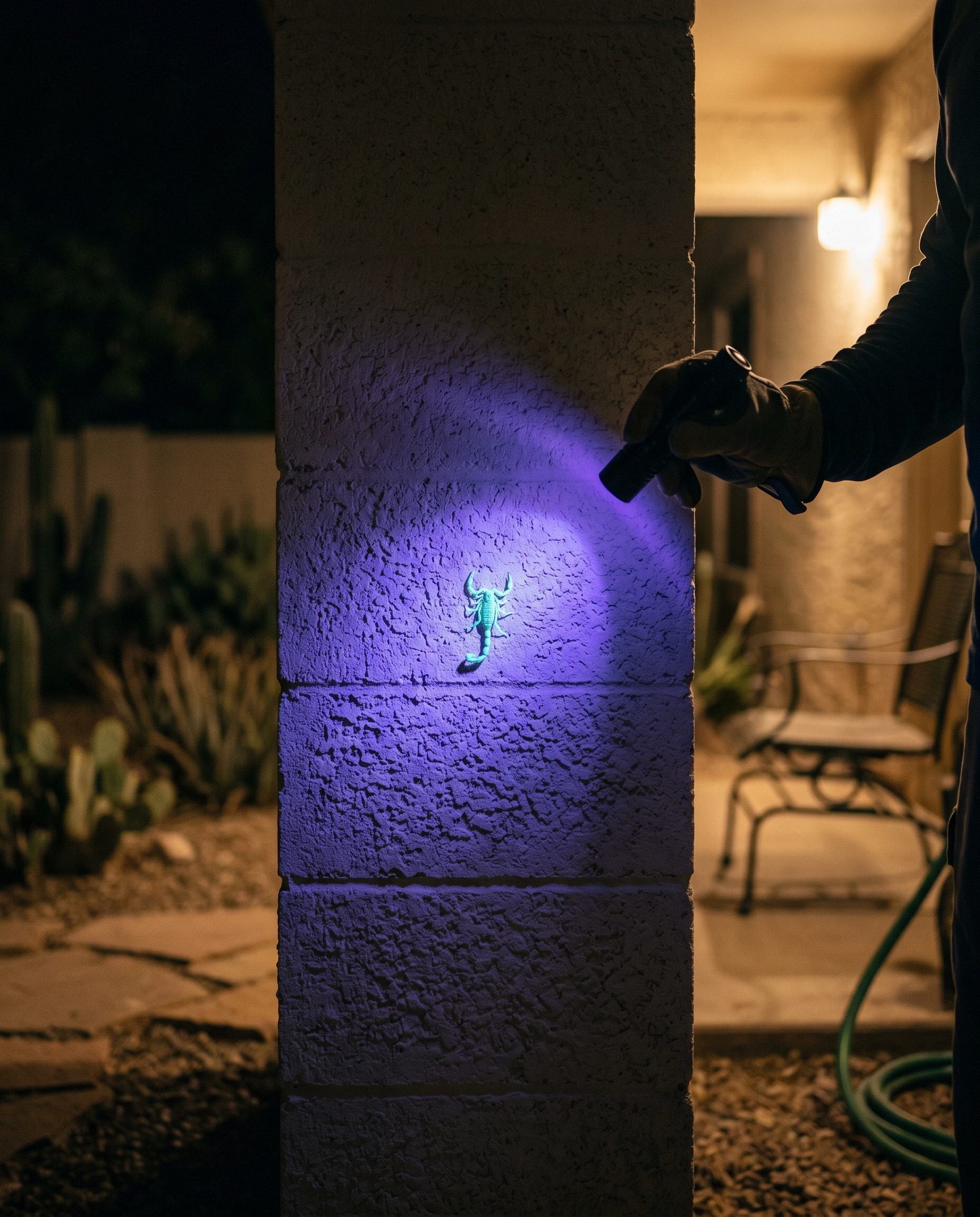
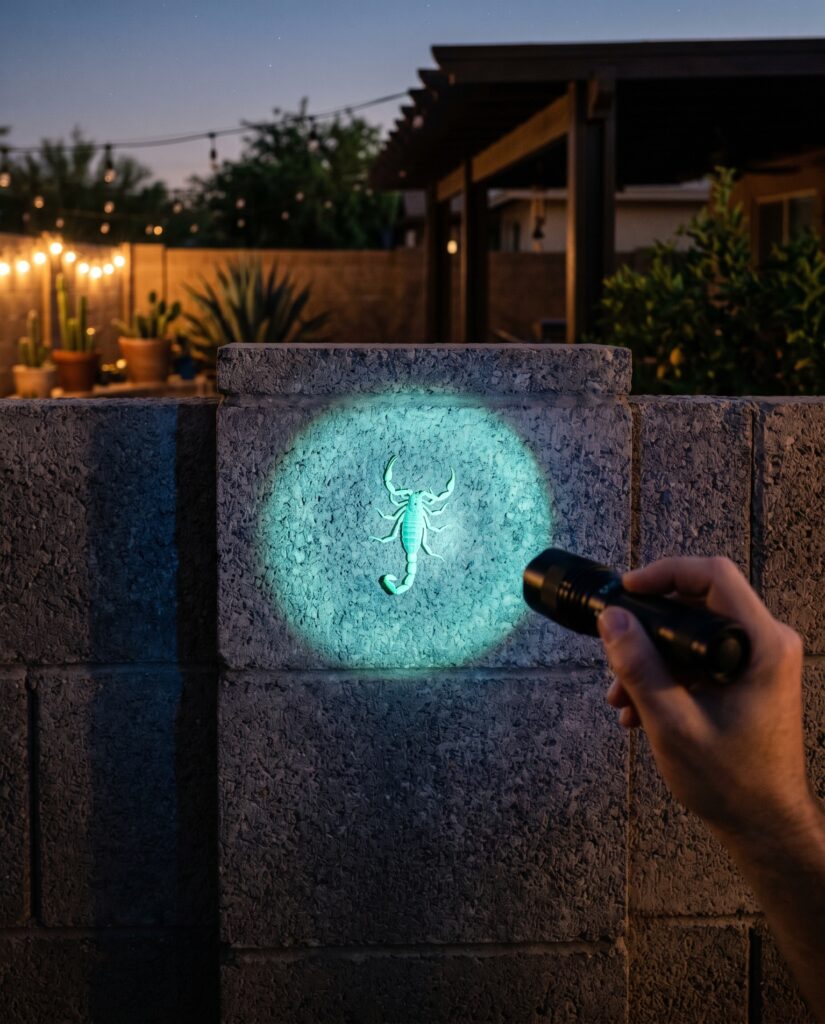
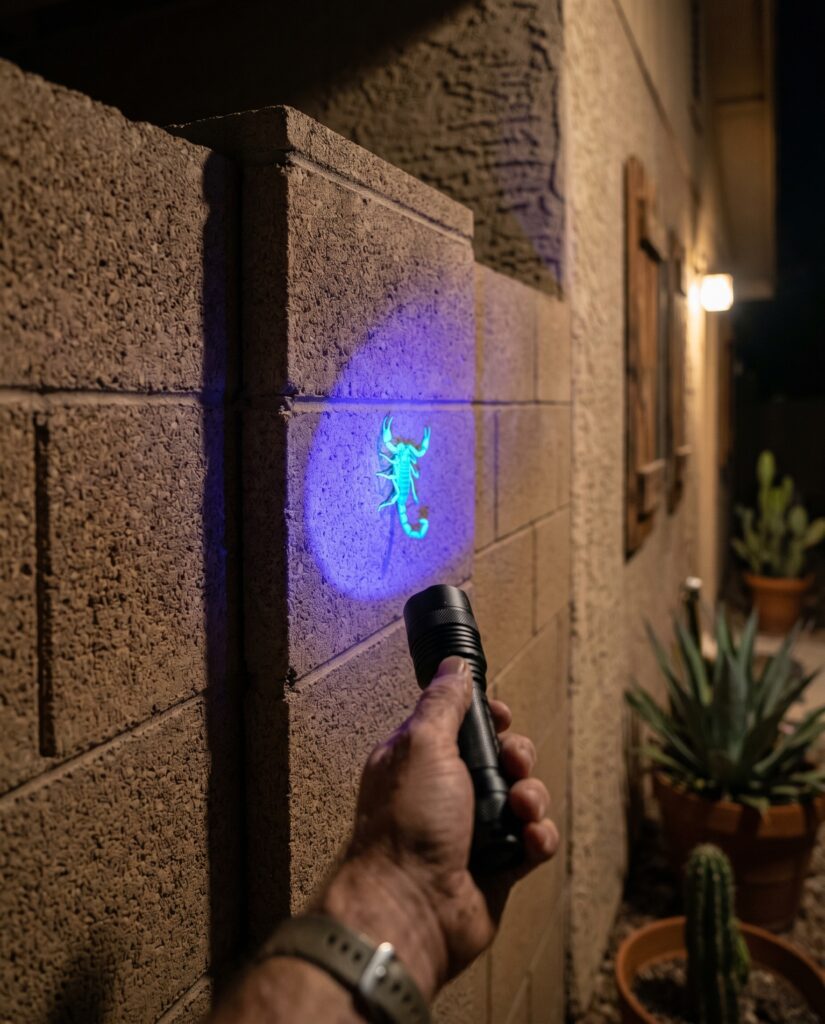
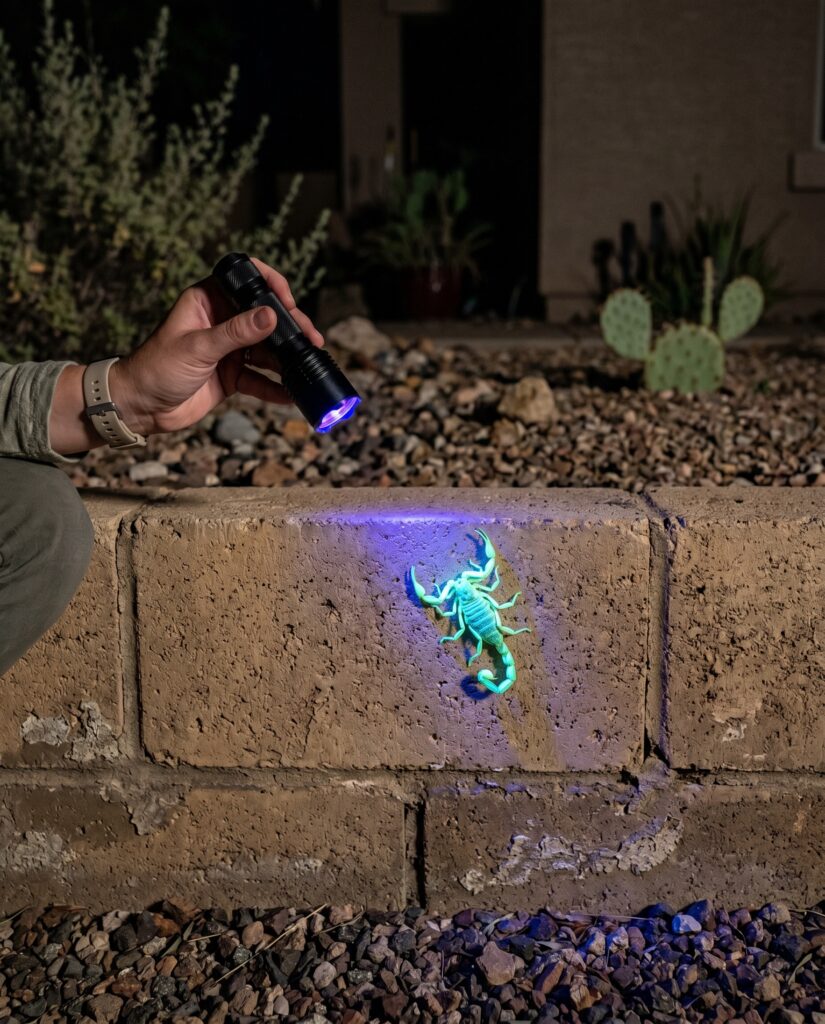
Behavior matters just as much in scorpion country. Wear closed shoes outdoors at night, shake out shoes and clothing left on the floor before putting them on, and avoid reaching blindly under rocks, logs, or stored items. A UV flashlight is a genuinely useful tool because scorpions glow under ultraviolet light, which lets you spot them at a safe distance after dark.
One safety rule sits above the rest: never pick up a scorpion by hand, even a small one. If you need to move or remove one, use long tongs and keep your hands clear. The point of finding them with a UV light is to see and avoid them, not to grab them.
When it’s not a scorpion sting
Not every sudden sharp pain outdoors is a scorpion. Many “scorpion stings” turn out to be something else, since wasps, hornets, bees, fire ants, and even spiders can all produce a quick, painful bite or sting with local swelling. The reaction often looks similar in the first hour, which is why people guess wrong.
A few clues help. Scorpion stings usually happen at night or when reaching into a hidden space, and you often feel rather than see the culprit. If you actually saw the scorpion, the identification is easy. If you did not, the treatment for a normal, localized sting is much the same regardless of which insect or arachnid caused it. Either way, this is not a diagnosis: if the cause is unclear or the reaction is unusual, a healthcare provider can sort it out.
Common questions
Can a scorpion sting kill you?
Deaths from scorpion stings are very rare in the United States, and a healthy adult stung by a common species is highly unlikely to face a life-threatening reaction. The real risk concentrates in young children and medically vulnerable people stung by the Arizona bark scorpion, which is exactly why a sting in those groups should prompt a call to a doctor or poison control center.
How long does a normal scorpion sting hurt?
For the common, non-dangerous species, the sharp pain usually peaks quickly and eases over a few hours, with any tingling or swelling settling within a day. If pain or numbness is spreading well beyond the site instead of fading, treat that as a reason to seek medical guidance.
Which scorpion in the US is actually dangerous?
The Arizona bark scorpion is the one species in the United States considered medically significant. It lives mainly in the Southwest, especially Arizona, and our bark scorpion identification guide shows how to tell it from harmless look-alikes.
Do I need antivenom for a scorpion sting?
Most stings need only basic home care and no antivenom at all. Antivenom is reserved for serious bark scorpion cases, usually in young children with significant symptoms, and that decision belongs to a doctor or emergency department, not to home care.
Are baby scorpions more dangerous than adults?
This is a common myth. A young scorpion is not more venomous than an adult, and the species matters far more than the size. The thing that raises real risk is being stung by a bark scorpion, not whether the scorpion was small.
Final verdict
So, are scorpions dangerous? For most people in most of the country, not really. The common US species deliver a sting that hurts like a bee sting and settles on its own within a day, and serious harm is rare. The one exception worth taking seriously is the Arizona bark scorpion, whose venom can be dangerous to young children, older adults, and the medically vulnerable. Keep your attention on the things that matter: treat an ordinary sting at home, watch for symptoms that spread or escalate, get emergency help for the rare severe reaction, and call a doctor or poison control center fast when a small child is stung in bark scorpion country. Then lower the odds of the next one by sealing entry points, wearing shoes at night, and never handling a scorpion by hand.
This guide is information, not medical advice. Use it to know when home care is fine and when it is not, and defer to your clinician for anything that worries you.
This article is for information only and is not medical advice.
Pingback: Scorpion Sting Treatment: Symptoms and When to Worry