If a little cloud lifts off your houseplants every time you walk past, the best fungus gnat killer is not a spray, it is drier soil plus a treatment that reaches the larvae living in it. The short answer: stop overwatering and let the top inch or two dry out, drench the pot with a BTI soil treatment to kill the larvae you cannot see, and stake yellow sticky traps to catch the adults and track your progress. The adults flying around are the symptom; the wet soil is the source, and trapping adults alone never empties the pot. In our own kitchen we keep a tub of BTI and a pack of yellow stakes on hand and treat at the first sign rather than waiting for a swarm. Most lists hand you a trap and call it solved; the section below shows why the soil is the part that actually matters.
Fungus gnats breed in wet potting soil, so the cure is to let the soil dry out and drench it with a BTI soil treatment that kills the larvae; yellow sticky traps catch the adults and tell you the problem is shrinking, never replace treating the source.
- Do first (free): Stop overwatering and let the top inch or two of soil dry out, which alone starves most of the larvae.
- Best for the common case: A BTI soil drench to kill the larvae in the pot, plus yellow sticky traps to catch and monitor the adults.
- Skip: Spraying the air, foggers, and trusting sticky traps alone; they never reach the breeding source in the soil.
What to do first
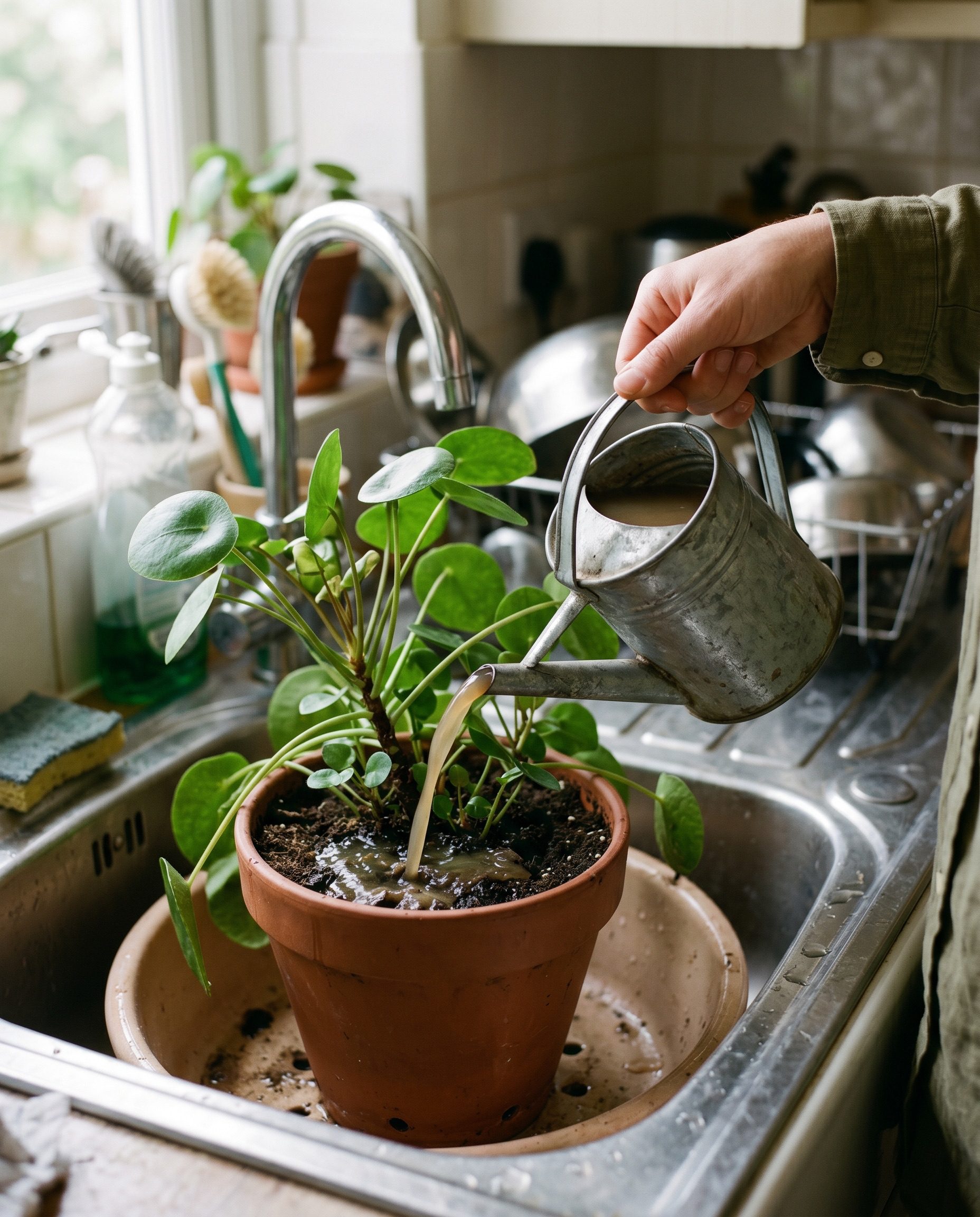
Before you buy anything, fix the thing that feeds them, because fungus gnats are a moisture problem long before they are a bug problem. They breed in the top layer of constantly damp potting soil, so the cheapest fix in this whole fight is to stop overwatering and let the surface dry out between waterings. The UC IPM Pest Notes on fungus gnats is direct about it: the larvae need wet organic matter, and letting the soil dry out makes the pot a poor place to breed. Let the top inch or two go dry to the touch, water from the bottom when you can, and toss any saucer water sitting under the pot.
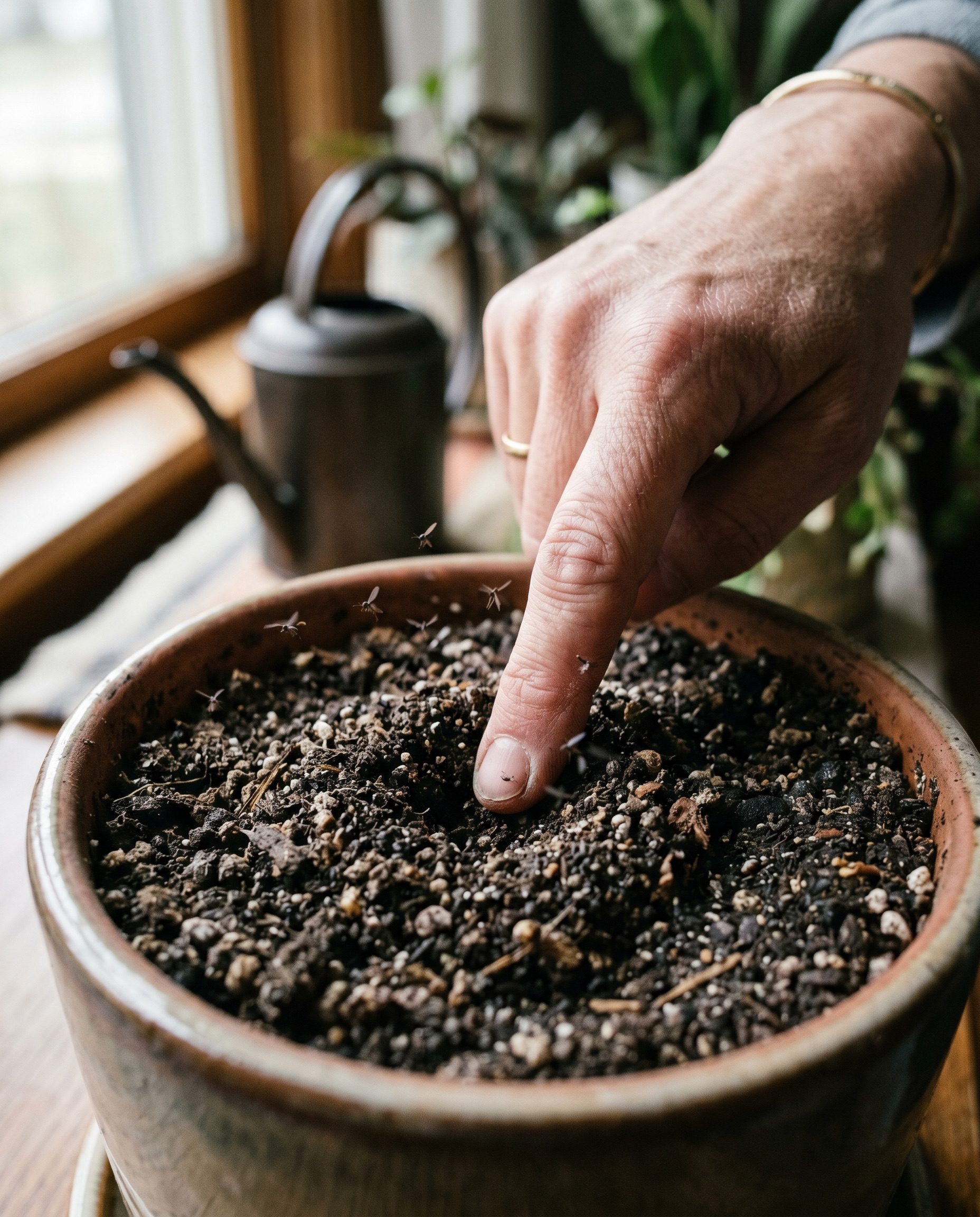
Do a quick check before you treat. Push a finger into the soil; if it comes out damp and crumbly with little flies lifting off, that pot is a nursery. Our full guide to getting rid of fungus gnats in houseplants walks the moisture fix step by step. A product is worth buying once the soil is drying and you know which pots are infested, not as a way to keep watering the way you always have. If drying the soil clears the cloud within two weeks, you may not need to buy anything at all.
Why sticky traps alone fail
Here is the part most “best gnat killer” lists skip. A yellow sticky trap is genuinely useful, but it only ever catches the adults already in the air, and those adults are a fraction of the problem. For every gnat stuck to a card, larvae are still working through the wet soil and will hatch into the next generation. Trap the adults and you slow the swarm; treat the soil and you end it. This is the same source-first logic that governs every small fly: with fruit flies the source is rotting produce or a drain, and the UC IPM guidance on vinegar and fruit flies makes clear that trapping is a monitor, while finding and removing the breeding source is the actual cure.
So the sticky trap earns its place as your progress meter, not your treatment. When the count on the card drops week over week, the soil treatment is working; when it stays high, you still have a live source. That is why the real answer pairs a soil drench with the traps. If you are not sure whether you are even dealing with fungus gnats versus fruit or drain flies, our guide to telling fungus, fruit, and drain flies apart sorts them by where they breed, and the breeding spot decides the fix. The broader principle of source reduction over chasing adults runs through the UC IPM material on managing small flies too.
Trap, treat, or both
Once you know it is fungus gnats, the category choice is short. Decide by what each tool actually reaches: the adults in the air, or the larvae in the soil. The point is to cover both, not to pick one and hope.
| Approach | Best for | Watch-out |
|---|---|---|
| Yellow sticky traps | Catching adults and monitoring whether the problem is shrinking | Catches adults only; never reaches the larvae breeding in the soil |
| BTI soil drench | Killing the larvae in the pot, the breeding source itself | Steep and reapply per the label; treats soil, not flying adults |
| Systemic granules | Longer-term protection worked into potted plants | Read the label for indoor and edible-plant limits; keep from kids and pets |
Why not just hang traps and be done? Because the traps cannot touch the source, and the source is where the next swarm comes from. A BTI drench is the piece that actually empties the pot, because the bacteria kill the larvae as they feed in the soil. The systemic option suits a grower who wants a longer guard on potted plants, but it is the heaviest tool, so save it for repeat trouble and read the label first. For a wider gnat problem moving room to room, our walkthrough on getting rid of gnats in the house covers the other rooms and sources beyond the plants.
How to apply it
Treat the soil, monitor the air. For a BTI drench, follow the label: most BTI granules are steeped in water to release the bacteria, then you pour the solution into the pot at each watering until the cycle is broken. Drench the whole soil surface so it soaks down to where the larvae feed, and repeat per the label, because one pass rarely catches every hatch. Under federal law the label is the law, so follow the product directions for steeping time and how often to reapply rather than guessing; the EPA’s safe pest control guidance backs putting moisture and sanitation first and using any product as directed.
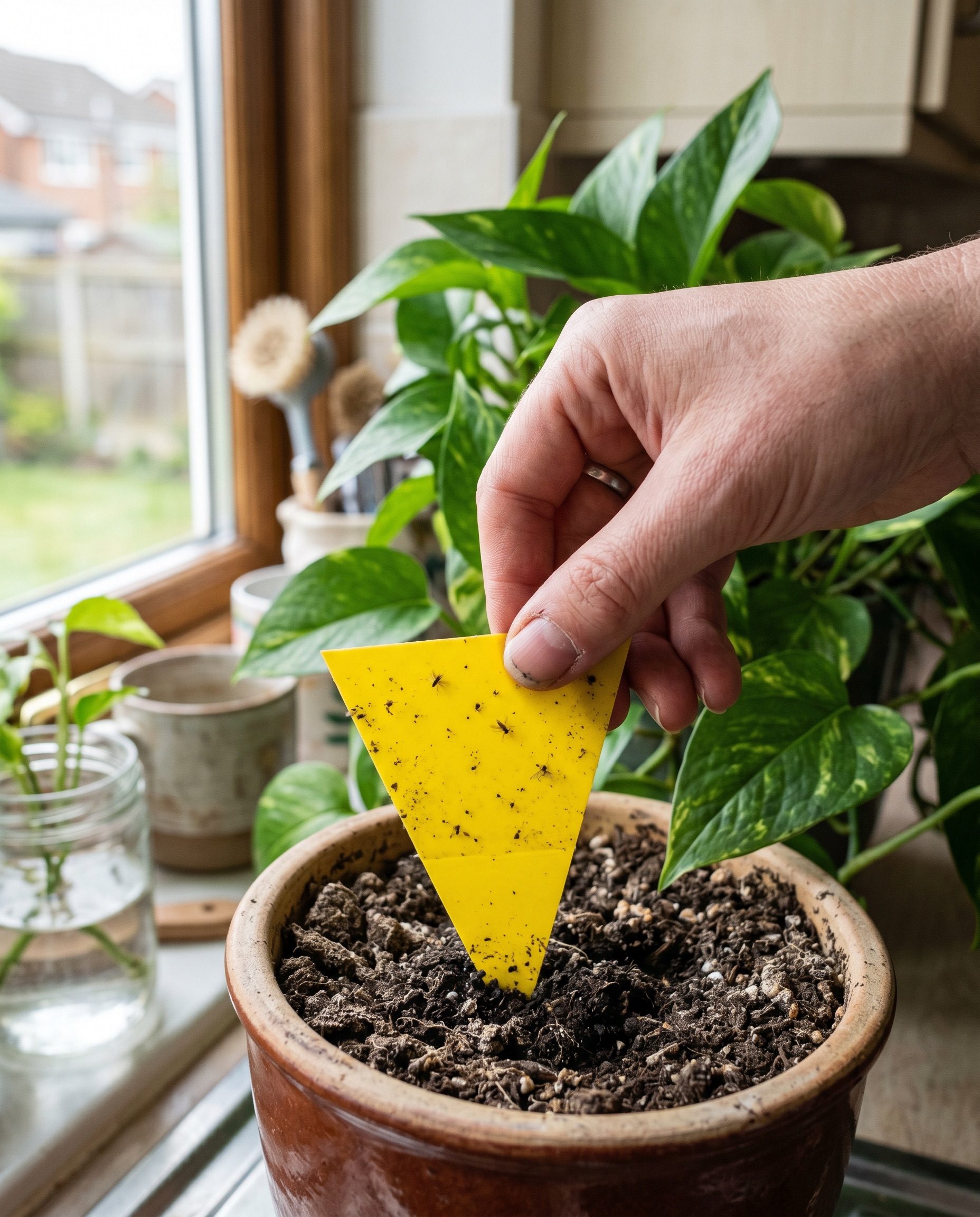
Stake the sticky traps right at the soil line in each infested pot, low and close to where the adults emerge, not up in the leaves. Replace a card once it fills, and watch the trend: a falling count is your sign the drench is winning. Keep any product away from children, pets, and food-prep surfaces, and do not use an indoor-only product outdoors or the reverse; if anyone is exposed, contact a doctor or your local poison control center. The same source-first habit applies to drains, where small flies breed in the film inside the pipe. Bleach does not remove that film; an enzyme or bio drain cleaner does, because it digests the organic gunk the larvae live in rather than just running past it. The UC IPM notes on fly biology and management reinforce that you have to remove the breeding material itself.
The picks
Cards come after the analysis on purpose, because the soil decides which one you reach for first. These three cover catching the adults, treating the breeding source, and longer-term plant protection, and all are common, widely available products.
InsectoGuide is reader-supported. As an Amazon Associate we earn from qualifying purchases at no extra cost to you.
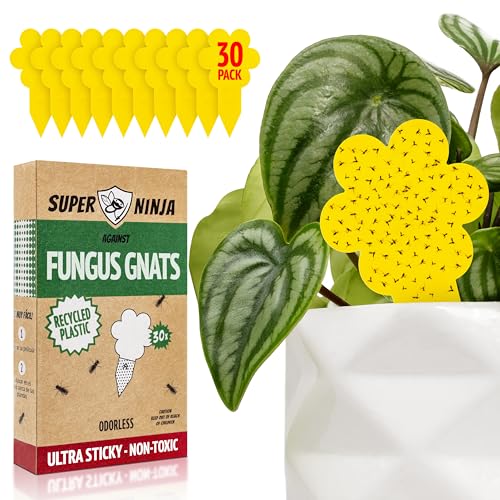
Yellow stakes for catching adults and tracking whether the swarm is shrinking.
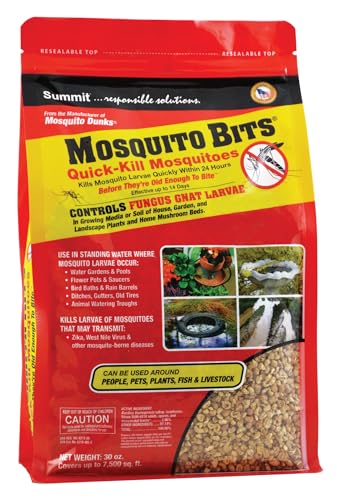
BTI granules you steep and drench into the pot to kill the larvae at the source.
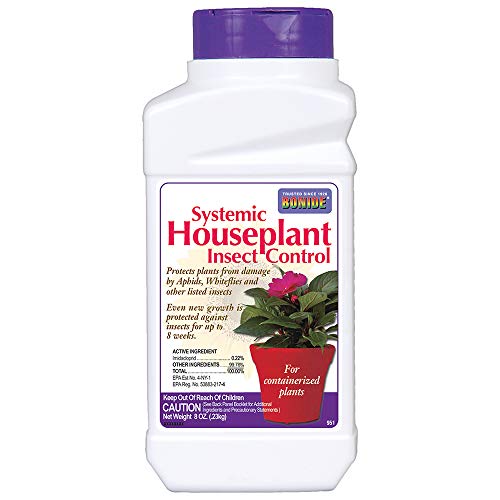
Granules worked into the soil for longer-term protection on potted plants.
Common questions
Do sticky traps get rid of fungus gnats?
Not on their own. Sticky traps catch the adults in the air and make a great progress monitor, but the larvae keep developing in the wet soil and hatch into more adults. Pair the traps with a BTI soil drench and drier soil to actually break the cycle.
What actually kills the larvae in the soil?
A BTI soil drench is the standard answer; the bacteria kill the larvae as they feed. Letting the soil dry between waterings starves most of them on its own. The UC IPM fungus gnat guidance recommends both drying the soil and using BTI as the workhorse treatment.
How long until the gnats are gone?
Usually a couple of weeks of drier soil plus repeated BTI drenches per the label. Watch the sticky trap count: a steady drop means the soil treatment is working, while a count that stays high means you still have a live source to treat.
Will the same fix work on fruit flies or drain flies?
The habit transfers, but the source does not. Fruit flies breed in rotting produce or a drain, drain flies in the film inside the pipe. For drains, note that bleach does not remove that film; an enzyme or bio cleaner digests it. Find the source, because trapping adults alone fails for every small fly.
Are these products safe around pets and kids?
Follow each product label, which sets the legal terms of use. Keep treated soil and any granules away from children and pets, do not use them on food-prep surfaces, and contact a doctor, your vet, or your local poison control center if there is any exposure.
Final verdict
There is no single best fungus gnat killer in a can, because the swarm you see is only the symptom. Start free by cutting back on water and letting the soil dry out, then drench the pot with a BTI soil treatment to kill the larvae where they live. Stake yellow sticky traps at the soil line to catch the adults and to read your progress week over week. Skip the air sprays and the trap-only approach; neither reaches the breeding source, and the source is the whole game. Treat the soil, trap the adults, and stop overwatering, and the cloud over your houseplants clears for good.
Reviewed by Daniel Brooks, licensed pest control professional, focused on safe and effective control.