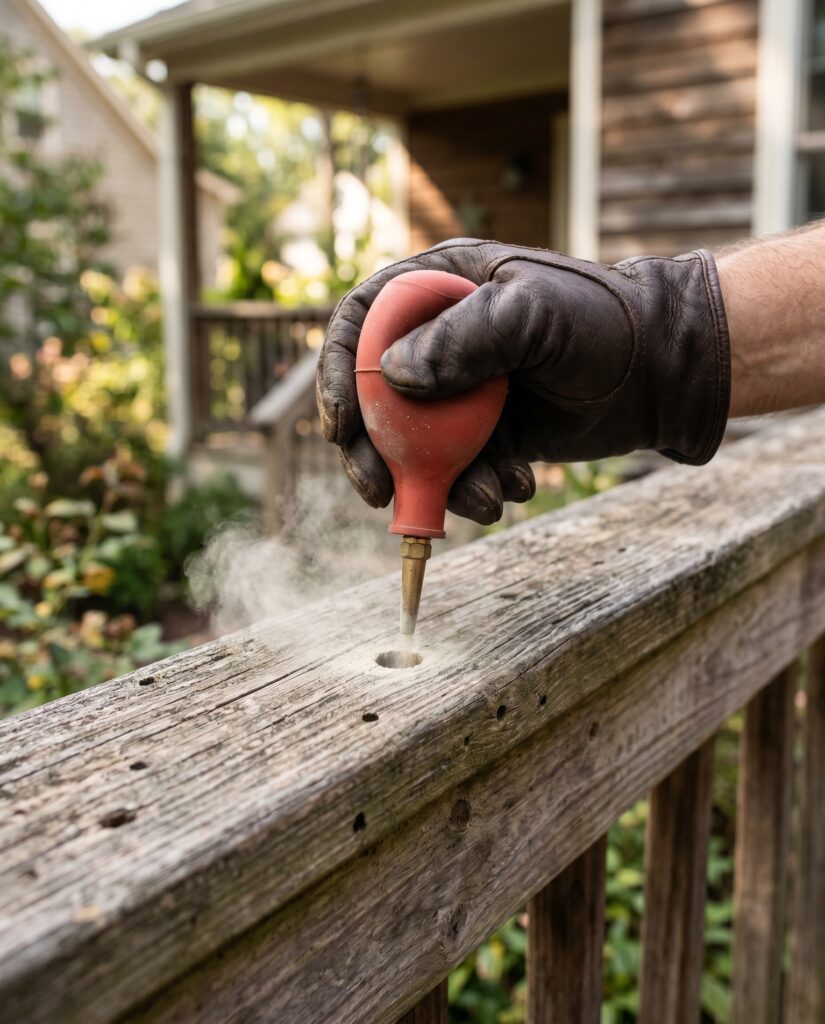
If carpenter bees are drilling into your eaves, a trap is a prevention tool, not a cure for tunnels that are already bored. A carpenter bee trap works by mimicking the round entrance a female is hunting for, luring her in and dropping her into a jar she cannot climb back out of, which is why it shines as early-season interception hung near the wood she favors before she bores. The short answer: hang traps under the eaves and overhangs in early spring to catch new females, but for a hole that is already active you have to dust the tunnel and seal it later, because a trap will not reach the brood inside. For our own porch we keep a couple of traps up each spring and a duster on hand for the holes that slip through. Most lists tell you to just buy a trap; the catch is that these bees are valuable pollinators, so where you can, a catch-and-release style is the kinder pick.
A carpenter bee trap mimics a tunnel entrance to catch boring females early; it is prevention hung near the eaves before bees bore, not a fix for an active gallery full of brood, so pair traps with dusting existing holes and consider a catch-and-release style for these pollinators.
- Do first (free): Hang traps in early spring near the eaves and overhangs the bees already favor, before they bore.
- For active holes: A trap won’t treat them; dust the tunnel opening, wait a few days, then plug and seal.
- Skip: Spraying the air or the wall surface; it does nothing to the bees inside their galleries.
What to do first
Before you spend a dollar, get your timing and placement right, because a trap that goes up too late or in the wrong spot just hangs there empty. Carpenter bee females scout for nesting wood in early spring, so the cheapest effective move is to hang traps the moment you see the first big bees patrolling, not after the holes appear. According to the Penn State Extension guidance on carpenter bee life cycle, adults emerge in spring to mate and start new galleries, which is exactly the window a trap is built to intercept. Our full walkthrough on how to get rid of carpenter bees lays out the season-by-season order.
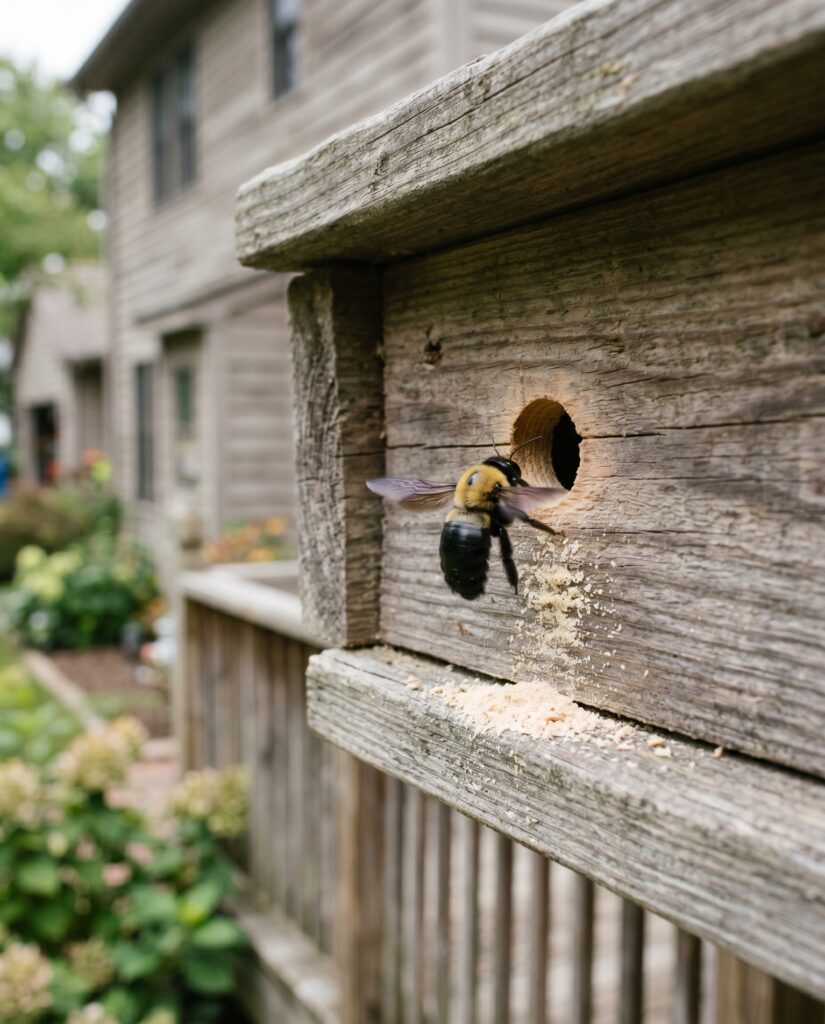
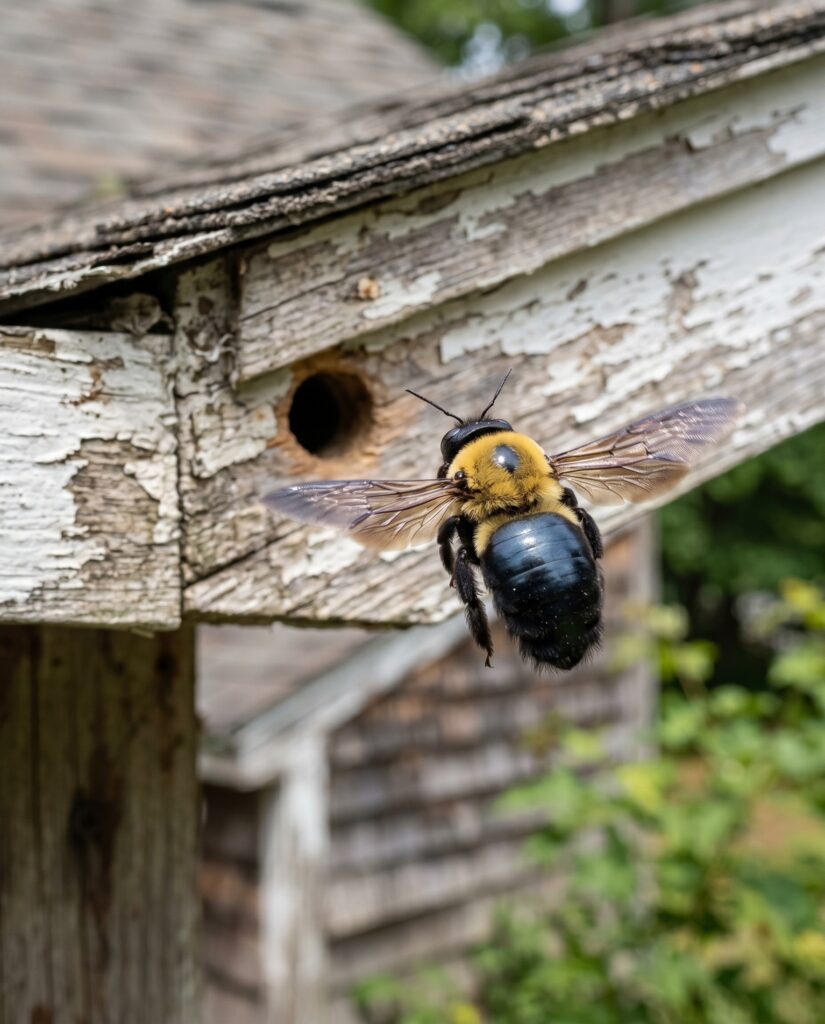
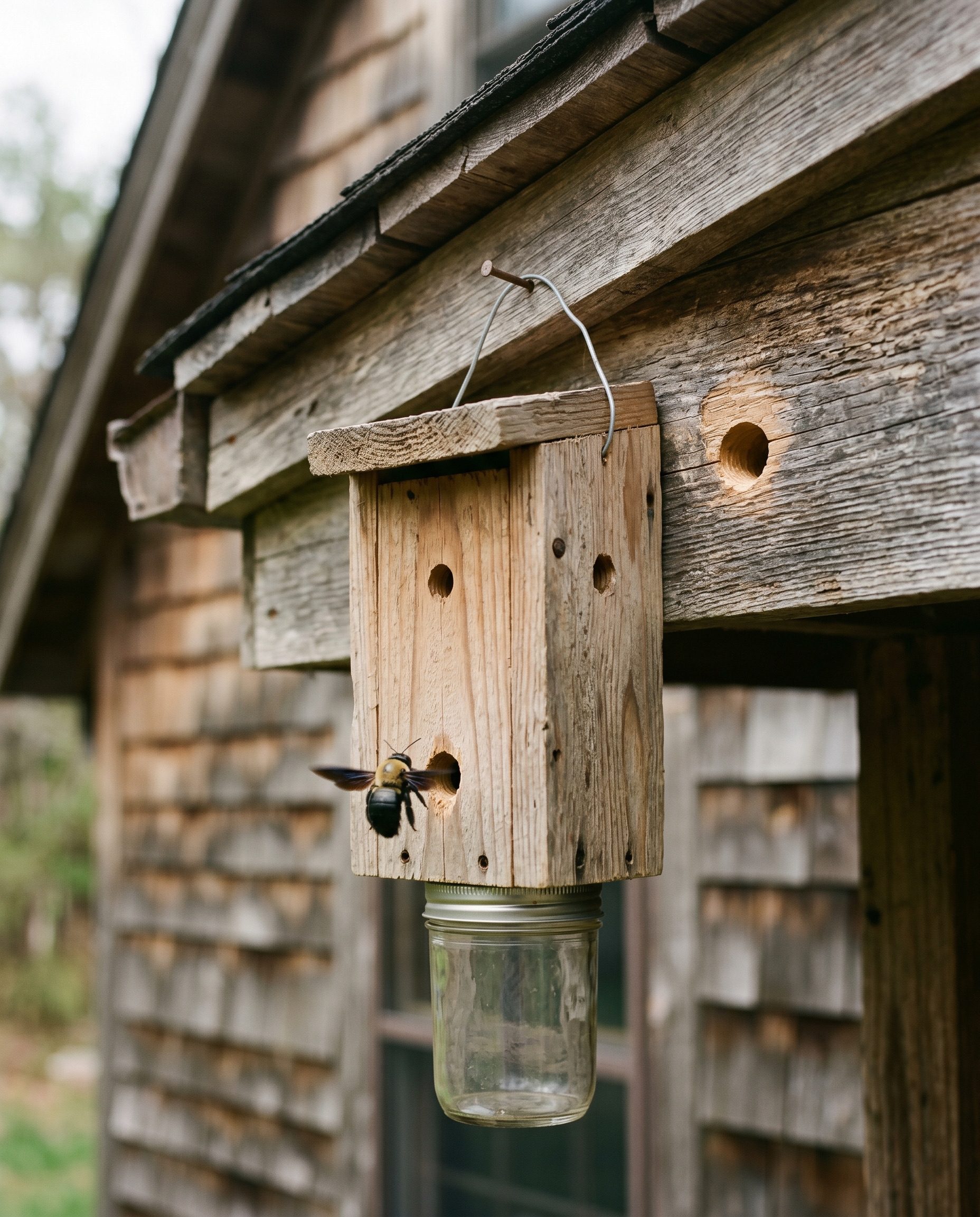
Placement matters as much as timing. Hang the trap high, right where two boards meet under a sunny eave or overhang, because that is the bare, weathered softwood females target first. The UC IPM Pest Notes on carpenter bees describes how they bore into exposed, unfinished wood like fascia, rafter tails, and deck rails, so put the trap where you have seen activity in past years. Position it within a foot or two of an existing round hole if you have one, since a returning female will check her old neighborhood. A trap earns its place as a scout-catcher, not as something you bolt on after the damage is done.
Why a trap won’t fix an active hole
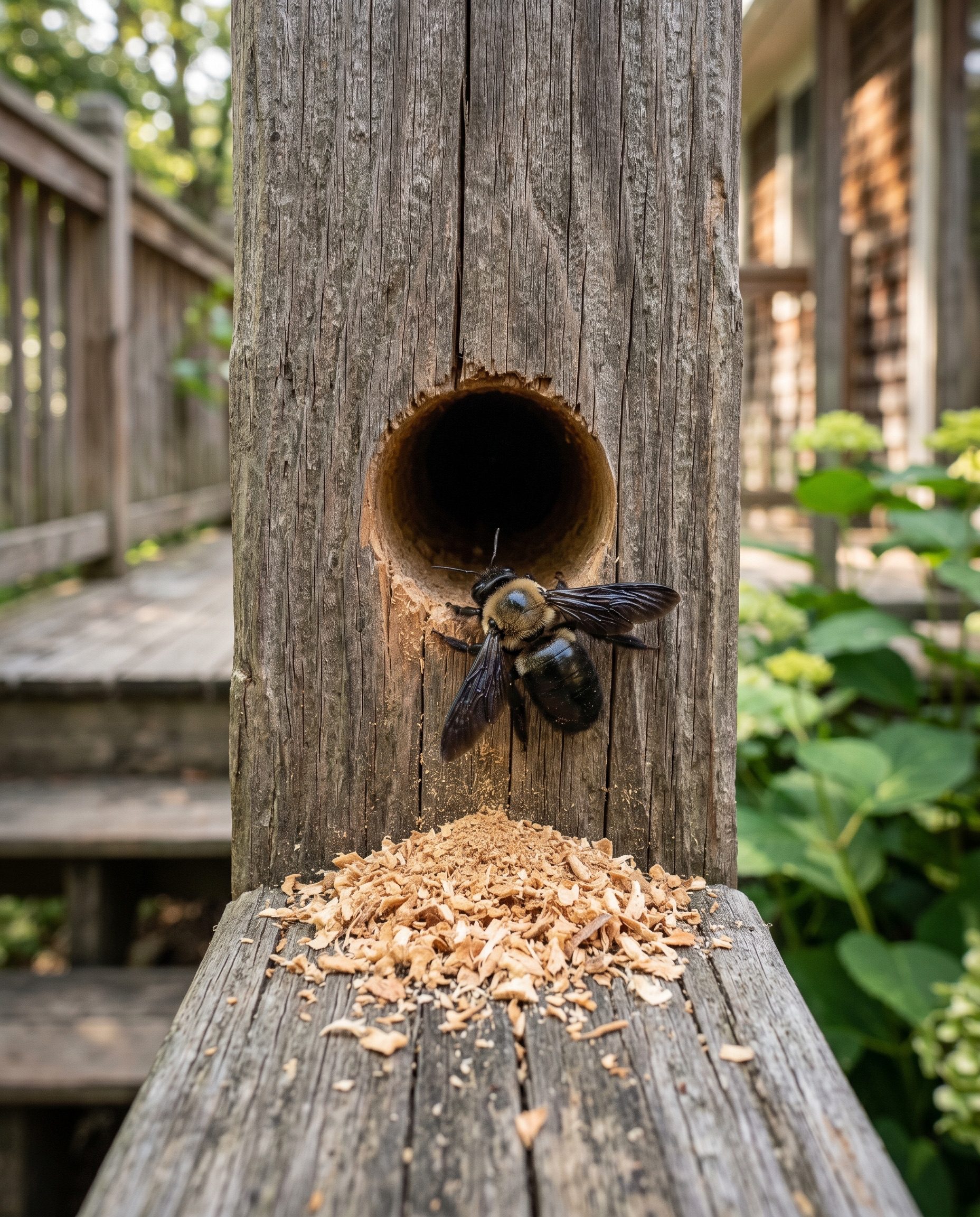
Here is the part the “just buy a trap” lists skip. A trap catches the adults flying around looking for a place to nest. It does nothing for a gallery that is already bored and packed with developing brood, because those larvae are sealed in cells deep inside the wood, well past anything a hanging jar can reach. A trap intercepts the next female, not the bees already inside the board. That is why a yard full of traps can still have fresh sawdust trickling out of last year’s holes.
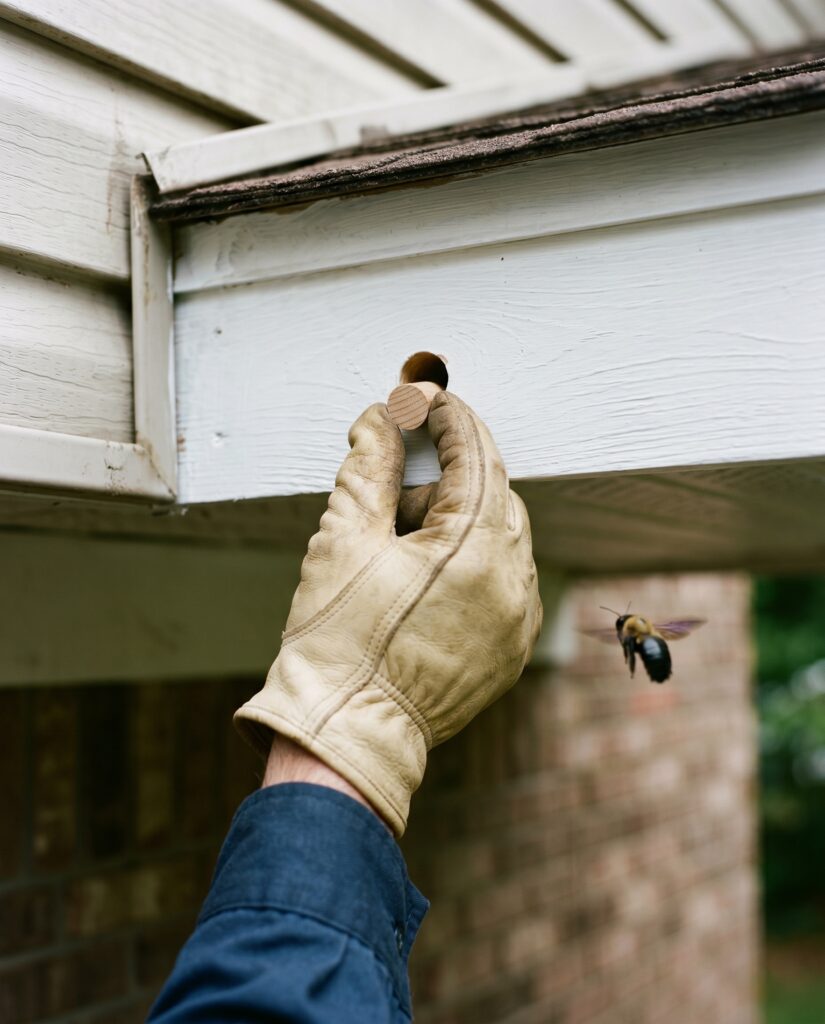
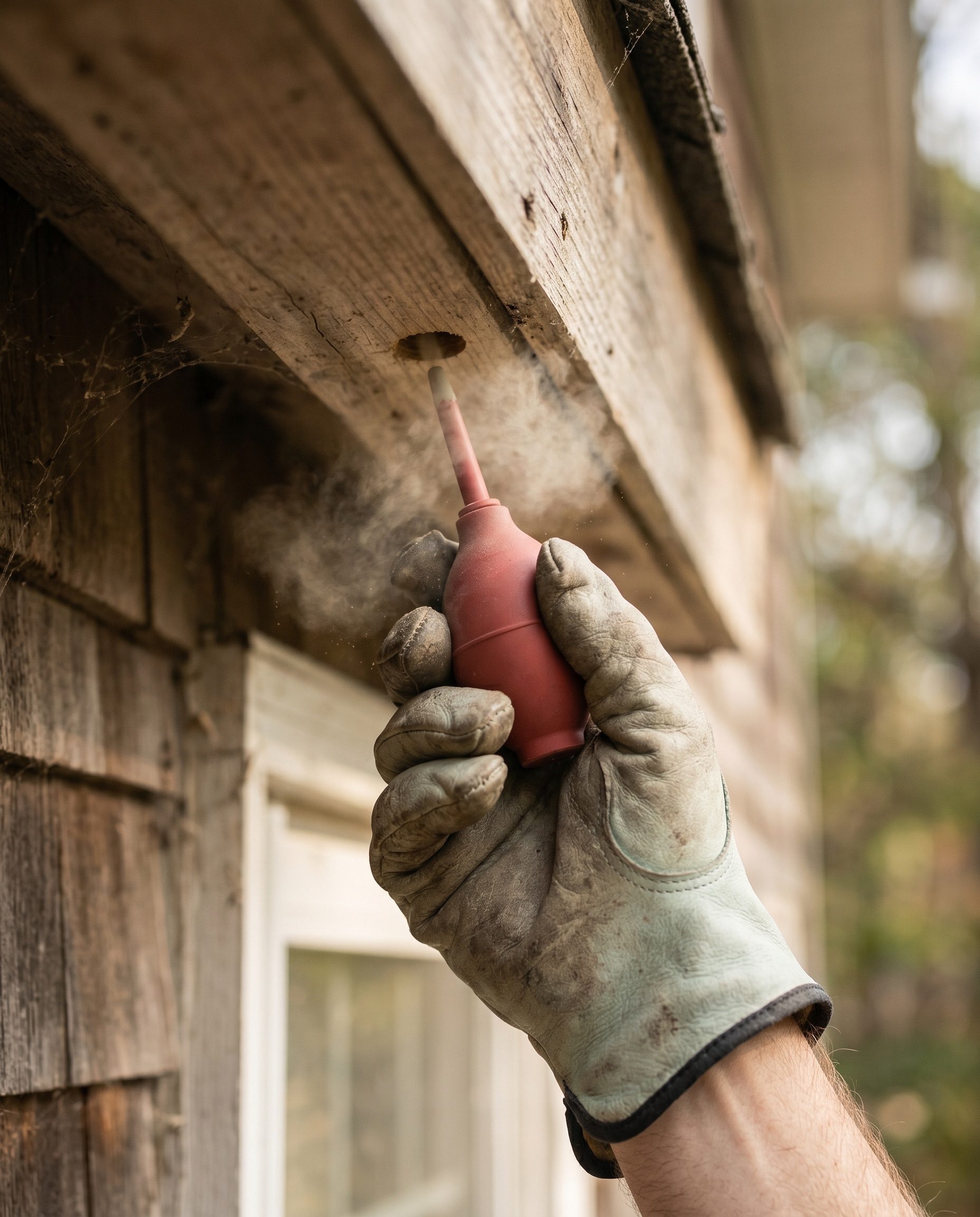
For an active tunnel, the fix is a different tool entirely. The University of Kentucky entomology guide to carpenter bees lays out the right sequence: puff insecticide dust into the open hole so the returning female tracks it back to the brood, wait a few days for the bees to move through it, and only then plug the hole. Plug it too early and you trap live bees that simply chew a fresh exit nearby. Surface spraying the wall or spraying into the air accomplishes nothing here, because the bees are inside the wood, not on it. Our roundup of the best carpenter bee sprays and dust covers the dust products that do the work a trap cannot. And keep some perspective on the insect itself: male carpenter bees have no stinger and cannot sting, and the females are docile and rarely do, so this is a wood-damage problem far more than a safety one.
Trap vs dust vs sealing
Once you know whether you are preventing or treating, the category choice is short. Decide by where you are in the season and whether the holes are already bored. The point is to match the tool to the stage, not to expect any one thing to do all of it.
| Approach | Best for | Watch-out |
|---|---|---|
| Hanging trap | Early-season interception of new females | Won’t treat an active gallery full of brood; it catches adults only |
| Insecticide dust | Active holes with current boring | You still have to plug the hole after; follow the label |
| Paint, seal, or fill | Long-term prevention on bare wood | Prevention, not a cure; plug active holes only after dusting |
Why not lean on one method and be done? Because each one covers a different stage, and skipping a step is where people waste a season. A trap stops the next generation from settling in; dust deals with the gallery you already have; and finishing the wood is what keeps the cycle from repeating, since the Iowa State carpenter bee management notes point out that these bees strongly prefer bare, unfinished softwood and tend to skip painted or sealed surfaces. Galleries get reused and extended year after year, so prevention pays off more than any single catch. If the damage is structural or you are dealing with deep, branching tunnels in load-bearing wood, that is the point to bring in a licensed pest professional rather than keep treating it yourself.
How to hang and place a trap
Get the placement right and a trap does its job with almost no fuss. Mount it high under the eave, overhang, or peak, ideally six feet or more off the ground in full sun, where carpenter bees naturally cruise for nesting wood. Hang it close to the boards they have used before, and leave the receptacle visible so you can check it and empty it as bees collect. Refresh nothing chemical here; the trap relies on the tunnel-shaped entry hole, not bait, so the work is mostly putting it in the right spot and leaving it up through the spring boring season.
If you also have active holes, treat them on a separate track and mind safety while you do. Puff a labeled insecticide dust into the open hole, wait a few days, then plug it with a dowel or wood filler and paint over the patch, because under federal law the product label is the law and you should not improvise on rate or site. Follow the EPA’s guidance on safe, IPM-first pest control, keep children and pets clear of treated wood until it has settled, and do not spray near open blooms where other bees are foraging. Catch-and-release traps and dusting only the structural galleries are the responsible way to handle an insect that, as the resources on whether carpenter bees are good or bad explain, does real pollination work in the garden. Tolerate the ones nesting in a fence post or dead snag well away from the house; save treatment for wood you actually need to protect.
The picks
Cards come after the analysis on purpose, because the season and the situation decide which trap you want. These three cover an overall workhorse, a pollinator-friendly catch-and-release design, and a budget wooden box, and all are common, widely available carpenter bee traps.
InsectoGuide is reader-supported. As an Amazon Associate we earn from qualifying purchases at no extra cost to you.
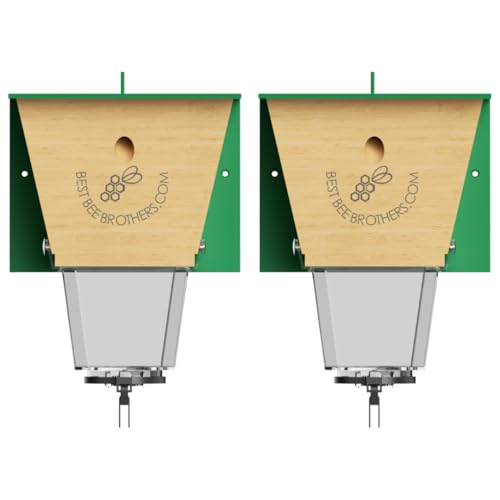
A two-pack from the established trap brand for hanging near active eaves.
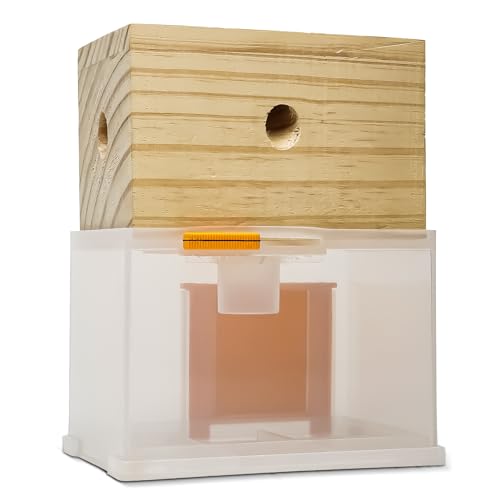
A catch-and-release design for spring interception that spares these native pollinators.
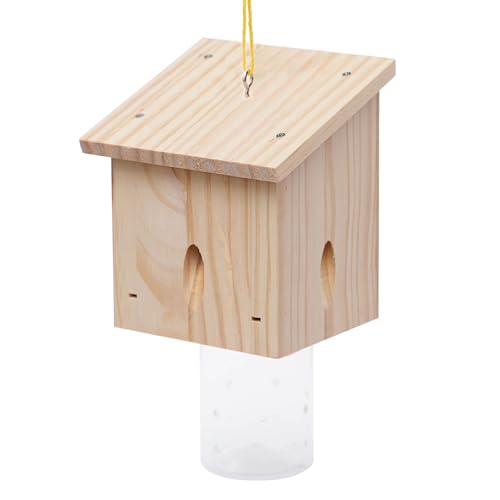
A classic wooden box trap for an affordable way to intercept early-season bees.
Common questions
Do carpenter bee traps actually work?
They work well for what they are built to do, which is catch adult females scouting for a place to nest. Hung early near the eaves the bees favor, a trap intercepts new arrivals before they bore. It will not clear a gallery that is already drilled and full of brood, so think of it as prevention, not rescue.
Will a trap treat a hole that is already bored?
No. The developing bees are sealed in cells deep inside the wood, well past anything a hanging jar can reach. For an active hole you dust the opening, wait a few days, then plug and seal it, as the UC IPM carpenter bee guidance describes. The trap handles the next female, not the one already inside.
Are carpenter bees dangerous to have around?
Not really. Male carpenter bees have no stinger and cannot sting, and the females are docile and rarely sting unless handled. The issue is cumulative wood damage from reused galleries, not aggression, so the urgency is about protecting your fascia and deck, not your safety.
How do I keep them from coming back?
Finish the wood. Carpenter bees strongly prefer bare, weathered softwood and tend to skip painted or sealed surfaces, so paint, stain, or seal exposed fascia, rails, and rafter tails. Hang traps in early spring and plug any treated holes once the dust has done its job to break the yearly cycle.
Should I just spray the wall instead?
No. Surface spraying does nothing to bees inside their tunnels, and broad outdoor spraying harms other foraging bees. Dust the specific active hole, treat only structural galleries, and leave bees nesting in posts or dead snags away from the house alone.
Final verdict
A carpenter bee trap is a prevention tool, and any list that sells it as a one-step cure is skipping how these bees actually nest. Hang traps in early spring near the eaves and overhangs the bees favor, before they bore, and let the tunnel-shaped entry do the interception for you. For a hole that is already active, switch tools: dust the opening, wait a few days, then plug and paint over it, because a trap cannot reach the brood inside the wood. Skip surface spraying and broad outdoor treatment; they do nothing to bees in their galleries and harm other pollinators. Finish the bare wood to break the yearly cycle, lean toward a catch-and-release trap where you can, and save heavy treatment for the wood you truly need to protect.