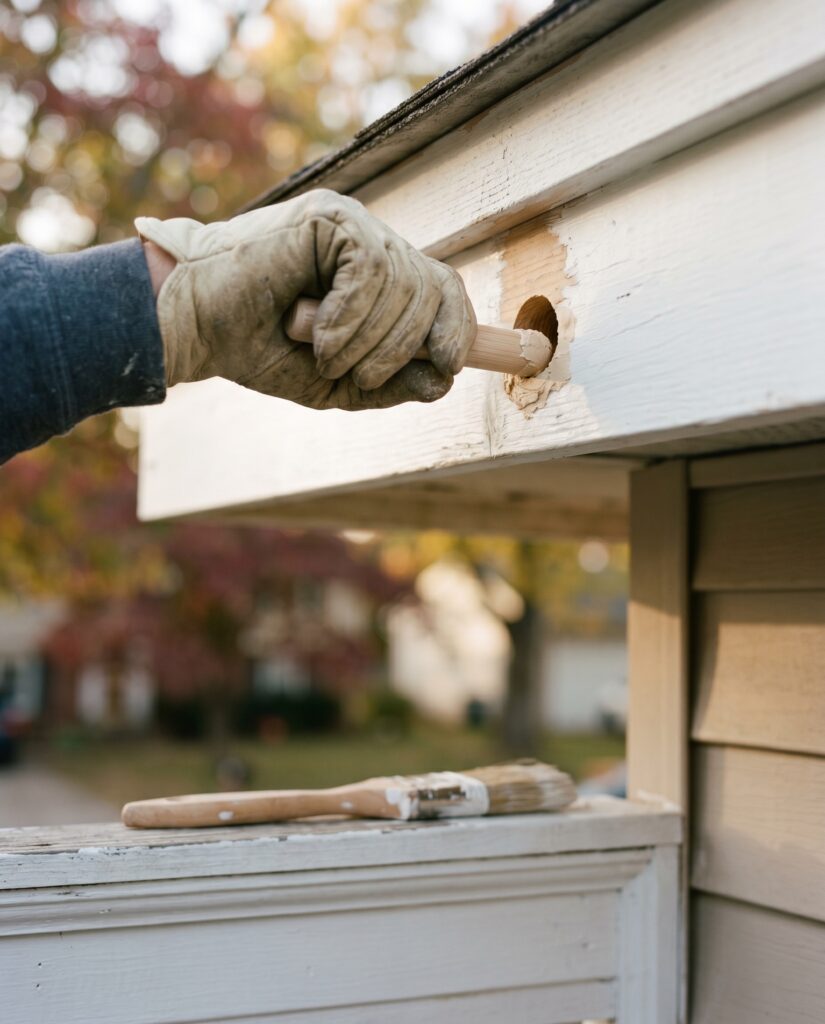
You watch a big bee drill a clean round hole into your deck railing and the question splits in two: is this thing helping my garden or wrecking my house? The honest answer is both. Carpenter bees are genuinely valuable native pollinators, and they really do bore tunnels into the wood on your home. The tell that settles which problem you have is location, not the bee itself: the same insect is an asset in a fence post and a liability in your fascia board. So the smart move is to manage them by where they nest, not to wipe out every carpenter bee you see.
Carpenter bees are both: important native buzz pollinators and a real source of wood damage when they nest in your house. Protect and seal the wood on your home, but tolerate bees nesting in a snag, post, or bee block away from structures.
- Good: Strong native pollinators, and the best buzz pollinators for tomatoes, eggplant, and blueberries.
- Bad: They excavate round galleries in bare softwood and reuse them yearly, so damage adds up.
- What to do: Manage by location. Seal the wood on the house; leave bees nesting away from structures alone.
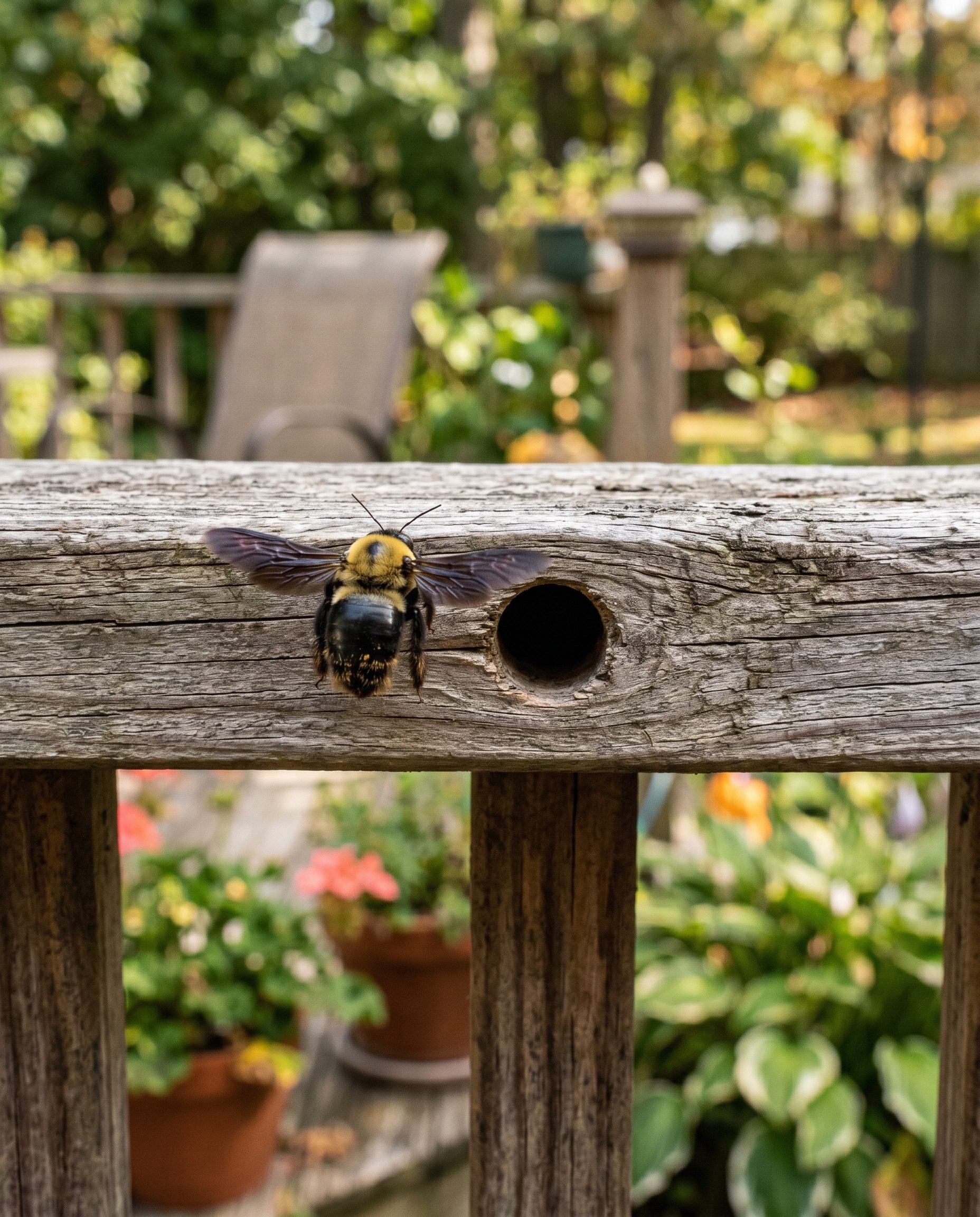
Pollinator and pest at once
People want a single verdict, and carpenter bees refuse to give one. As Penn State and other Extension programs note, they are valuable native pollinators that get treated as pests because the same behavior that helps your garden also bores into your house. The bee is not confused. You are scoring it on two different jobs at once.
The pollination side is real and underrated. The eastern carpenter bee (Xylocopa virginica) is a powerful generalist that works a wide range of native plants and crops. Its standout skill is buzz pollination: it grabs a flower and vibrates its flight muscles to shake loose pollen that honey bees cannot get at. Tomatoes, eggplant, peppers, and blueberries all yield better when a buzz pollinator visits, which is exactly why killing every carpenter bee on the property is a poor trade.
Buzz pollination is the upside
Most flowers hand out pollen freely, but a few lock it inside tube-shaped anthers that only open when shaken at the right frequency. That is sonication, or buzz pollination, and carpenter bees are built for it. A honey bee simply cannot perform this trick, so on those crops a native bee is not a nice-to-have, it is the actual pollinator doing the work.
If you grow a vegetable garden, the carpenter bee patrolling your tomatoes is earning its keep. The friction is purely about the wood, and that is a problem you can fix without touching the pollination. The EPA frames this exactly right under the EPA’s least-toxic, pollinator-protecting approach to pest control: solve the structural issue with the lightest tool that works, and leave the beneficial side of the insect intact.
Why the wood damage adds up
Here is the part that earns the bee its bad reputation. A female does not eat wood, she excavates a near-perfect round tunnel about half an inch across, usually into bare or weathered softwood like cedar, redwood, pine, fir, or cypress. She tosses out the shavings, turns the tunnel, and lays a row of eggs in sealed brood cells. One bee in one season is minor.
The trouble is repetition. Penn State documents that females reuse and extend the same galleries year after year, so a single entrance hole can branch into feet of tunneling over several seasons. Woodpeckers make it dramatically worse, tearing open the wood to eat the larvae, which turns a tidy hole into ragged structural damage. That cumulative, reused-gallery pattern is why a few bees on your eaves are worth addressing even though one bee is harmless.
How to tell it from a bumblebee
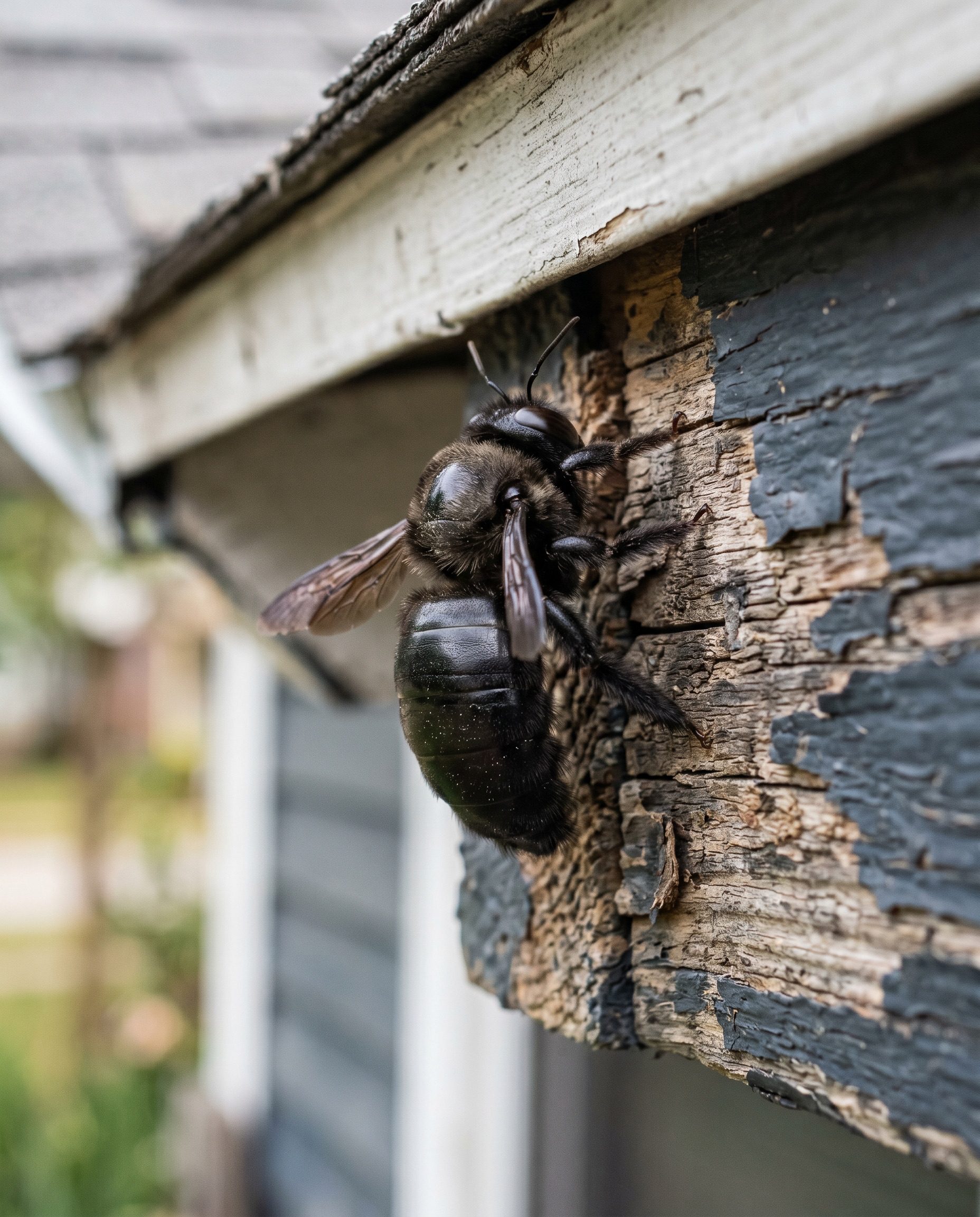
Before you do anything, confirm what you have, because a bumblebee gets no wood treatment at all. The single feature that settles it is the top of the abdomen: a carpenter bee’s is shiny, black, and nearly hairless, while a bumblebee’s is fuzzy and usually banded with yellow. If the back end looks like polished black plastic, it is a carpenter bee. Iowa State lays out the rest in Iowa State Extension’s side-by-side of carpenter bees and bumblebees, and our carpenter bee vs bumblebee identification guide walks the same comparison up close.
The behavior is a second giveaway. The bee that hovers in your face at the porch and dive-bombs other insects is a male, and the male has no stinger at all. University of Kentucky confirms the male carpenter bee has no stinger at all and cannot sting; the female can sting but is docile and rarely does unless handled. So the aggressive-looking territorial display is mostly bluff. For the full breakdown, see our guide on whether carpenter bees sting and how dangerous they are.
| Trait | Carpenter bee | Bumblebee |
|---|---|---|
| Abdomen top | Shiny, black, hairless | Fuzzy, yellow-banded |
| Nesting | Round tunnels in bare wood | Cavities, ground, old burrows |
| Behavior | Males hover and bluff, cannot sting | Docile, sting only if threatened |
Manage by location, not extermination
This is the whole argument in one move. Protect the wood you care about, and let the bees have the wood you don’t. On the house, the durable fix is finish: paint or a hard polyurethane on exposed fascia, railings, trim, and deck rails closes off the bare-wood surface they need. Kentucky Extension is blunt that you should paint or seal the wood, because they avoid finished surfaces. Our carpenter bee prevention guide covers which surfaces to hit first.
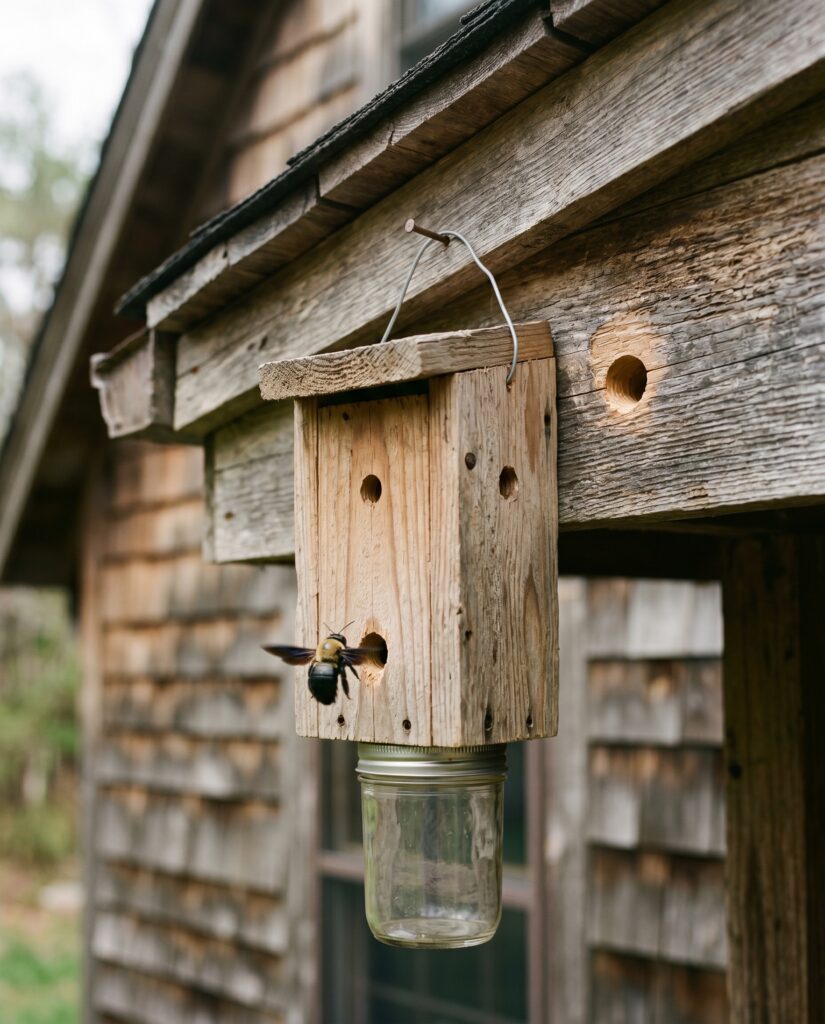
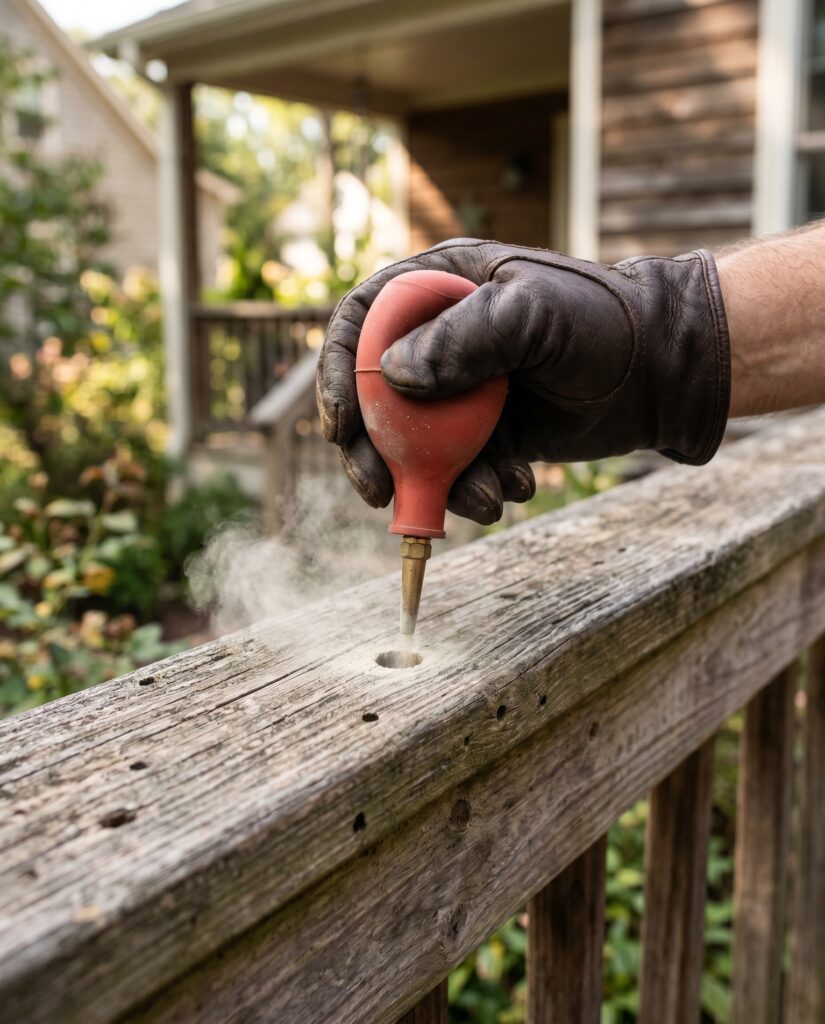
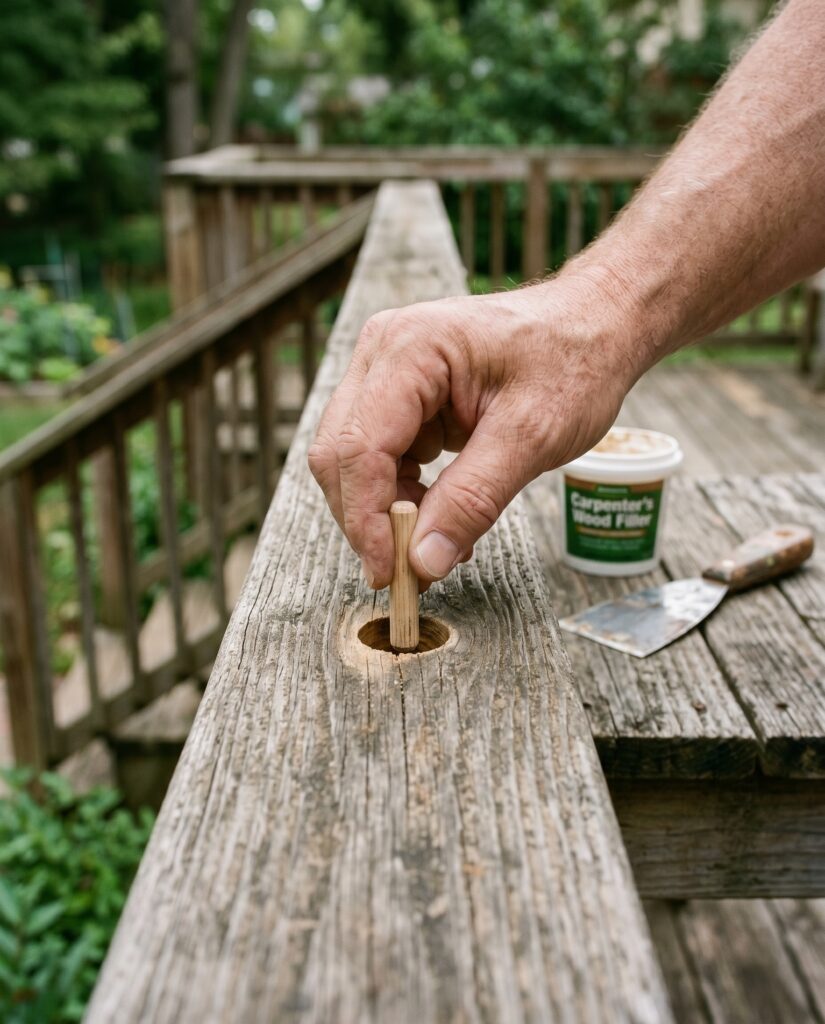
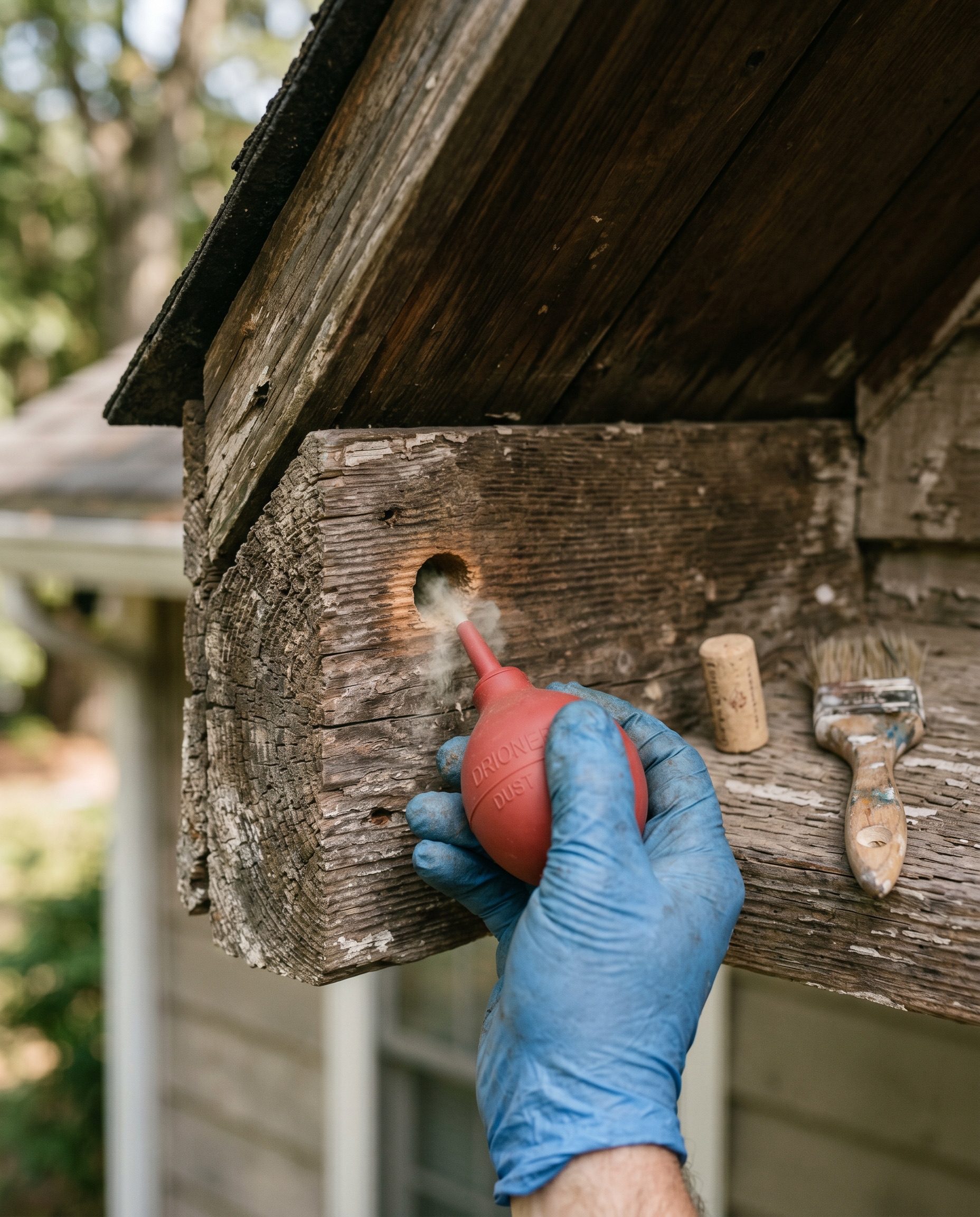
For an active tunnel that is genuinely damaging structure, the sequence matters. UC IPM’s order is to puff an insecticidal dust into the tunnel, wait, then plug it: the returning female tracks the dust to the brood, and plugging too early just traps live bees that chew a fresh exit. Surface or air spraying does almost nothing because the bees are deep inside the wood. Read and follow the product label, since under federal law the label is the law. Then give the bees somewhere else to go. A dead snag, an old fence post, or a drilled bee block away from the house keeps the pollinator on your property without the structural cost.
Common questions
Are carpenter bees good or bad for the garden?
For the garden, mostly good. They are strong native pollinators and the best buzz pollinators for crops like tomatoes, eggplant, and blueberries, which need a bee that vibrates pollen loose. The downside is structural, not horticultural, so the garden bee and the house damage are two separate issues.
Do carpenter bees actually pollinate?
Yes. They visit a wide range of flowers and perform buzz pollination that honey bees cannot, which improves yield on several common crops. Some species occasionally rob nectar from the side of a flower, but overall they are net-positive pollinators worth keeping around.
Will carpenter bees destroy my house?
Not from one bee or one season. The damage is cumulative because females reuse and extend the same galleries for years, and woodpeckers chasing the larvae worsen it. Catch active tunnels in damaging spots early and seal bare wood, and the risk stays manageable.
Should I kill carpenter bees?
Only treat galleries causing real structural damage, and skip broad outdoor spraying that harms other bees. Killing every carpenter bee costs you a valuable pollinator for no benefit. Manage by location instead: seal the house, tolerate bees nesting away from it.
Why is one carpenter bee always flying at my head?
That is a territorial male, and he cannot sting because he has no stinger. He is guarding his patch and bluffing at anything that moves, including you. It looks alarming and is essentially harmless.
Final verdict
Carpenter bees are not a riddle, they are a trade-off you get to manage. They are genuinely valuable native pollinators, unusually good at the buzz pollination that tomatoes, eggplant, and blueberries depend on, and they genuinely bore round galleries into bare softwood that get worse as the bees reuse them and woodpeckers dig in. The answer is not extermination, it is location. Protect and finish the wood on your home, treat only the tunnels doing real damage, and let the bees nest in a snag, post, or bee block away from the house. You keep the pollinator and you lose the damage.
Next steps:
– Make sure it is a carpenter bee with our carpenter bee vs bumblebee identification guide.
– Check the real sting risk in our guide on whether carpenter bees sting and how dangerous they are.
– Close off bare wood before next spring with our carpenter bee prevention guide.