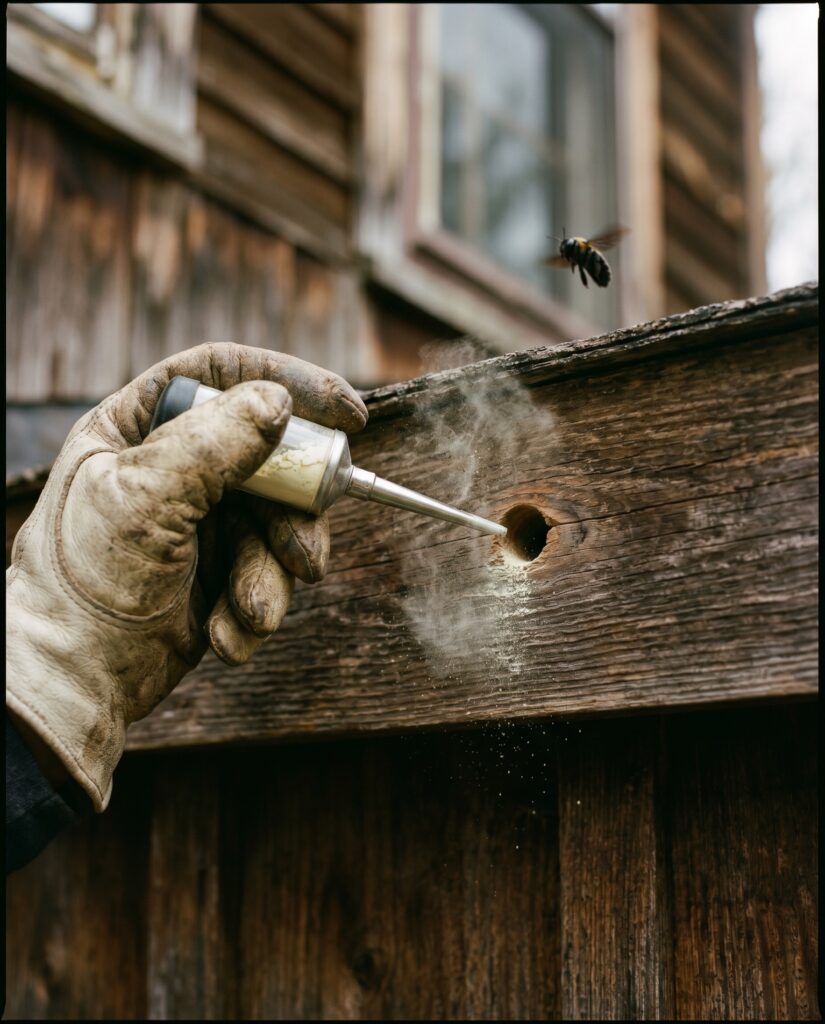
If a carpenter bee is drilling perfect round holes in your deck rail or eaves, the fix is not chemical, it is the wood itself. Carpenter bees bore into bare, weathered, unfinished softwood, so prevention is almost entirely about denying them that raw surface. Paint or polyurethane the eaves, fascia, deck rails, and railings they target, because a hard finished coat is far less attractive than soft gray wood. Plug last year’s holes so returning bees cannot reuse them, hang a trap near a favored spot before the spring emergence, and where you can, switch to a less-borable hardwood or vinyl trim. You are not trying to kill a native pollinator, you are taking away the soft wood it needs to nest.
Carpenter bees only nest in bare, weathered softwood, so prevention is a wood job, not a spray job: finish the wood they target, plug last year’s holes, and trap before spring so a hard sealed surface gives them nothing to bore into.
- Do first (free or cheap): Paint, varnish, or polyurethane the bare eaves, fascia, and deck rails, since a finished surface is far less attractive than raw wood.
- Best for the common case: Plug old galleries in fall and hang a carpenter bee trap near the favored spot before bees emerge in spring.
- Skip: Broadcasting outdoor insecticide; it harms other bees and does nothing to a returning carpenter bee a finished board would have turned away.
Why they pick your wood
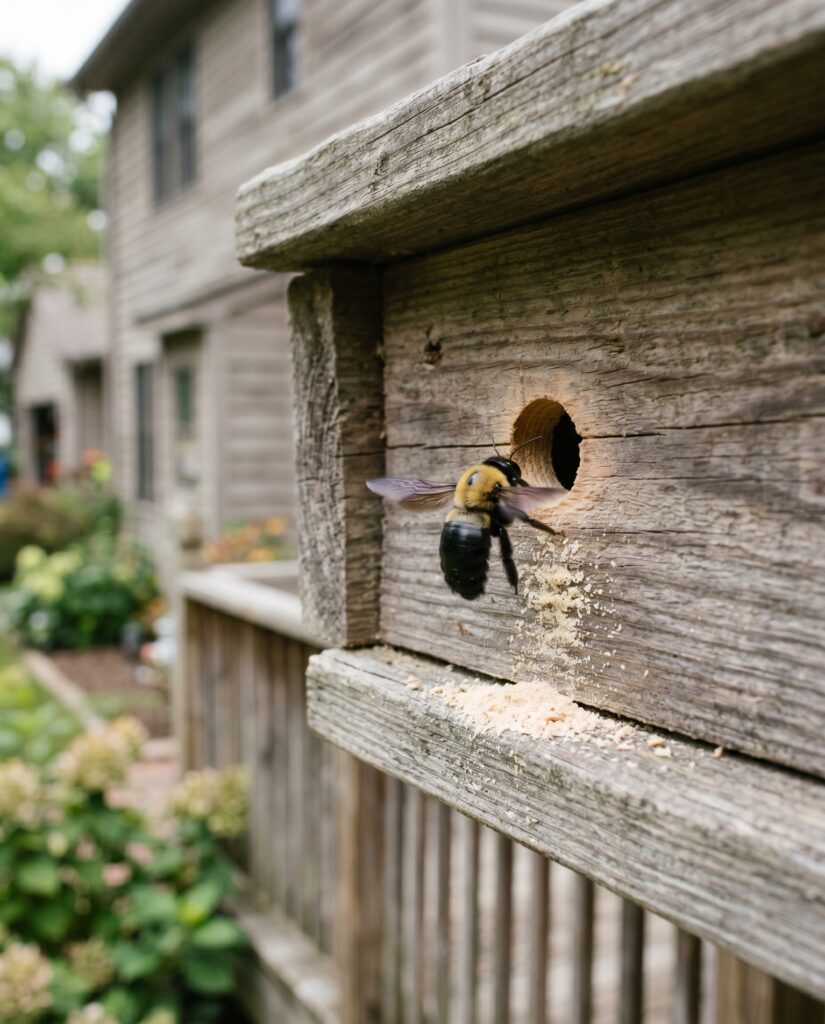
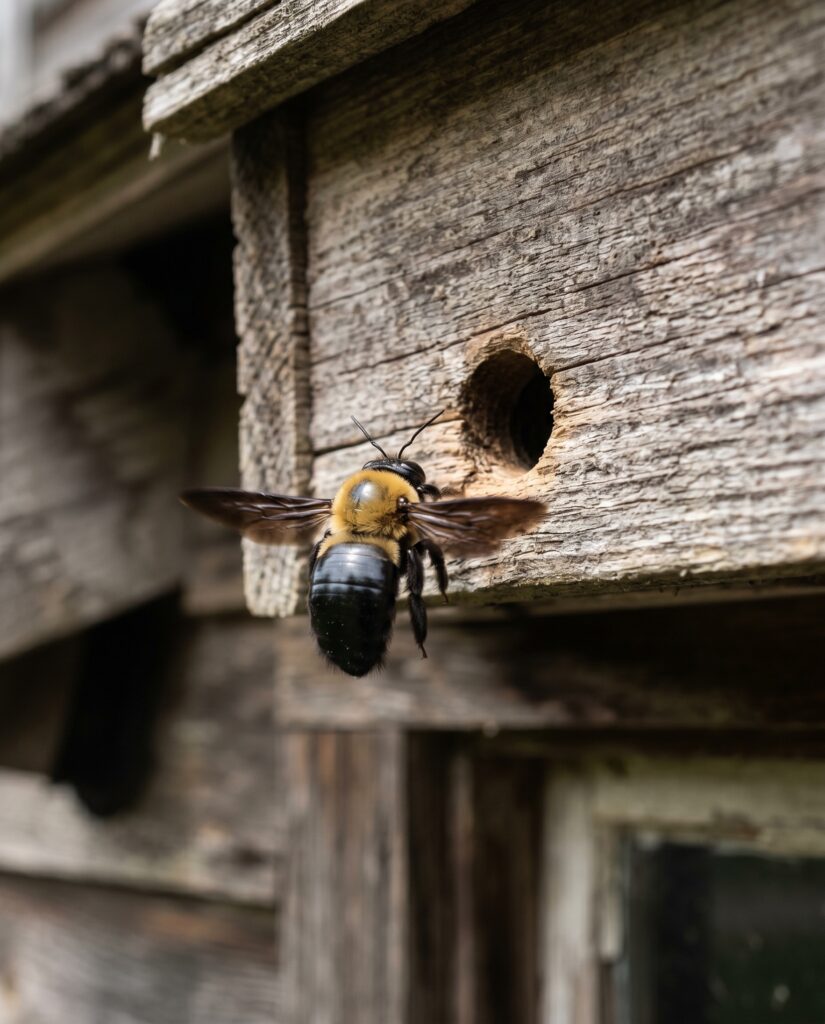
Carpenter bees are not after your house out of malice, and they are not termites. They are large, mostly black-and-yellow native bees that look like bumblebees but have a shiny, hairless black abdomen, and they are doing exactly one thing: looking for soft, dry, unfinished wood to tunnel a nursery into. According to UC IPM, carpenter bees bore their galleries into bare, weathered softwood like redwood, cedar, pine, cypress, and fir, which is why eaves, fascia boards, deck rails, fence posts, and unpainted trim take the hits. They favor wood that has gone gray and lost its finish, because soft fibers are easy to excavate.
One thing worth getting straight before you reach for anything: these bees are docile. The male carpenter bee has no stinger at all, so the one hovering and dive-bombing your head in spring cannot hurt you, even though it acts territorial. Females can sting but almost never do unless you grab one. If you want a quick refresher on how to tell a carpenter bee from a bumblebee and where they nest, Iowa State’s profile lines them up side by side. The takeaway for prevention is simple: the bee is choosing your wood because of what the wood is, so change the wood and you change the outcome.
Finish the wood before they find it
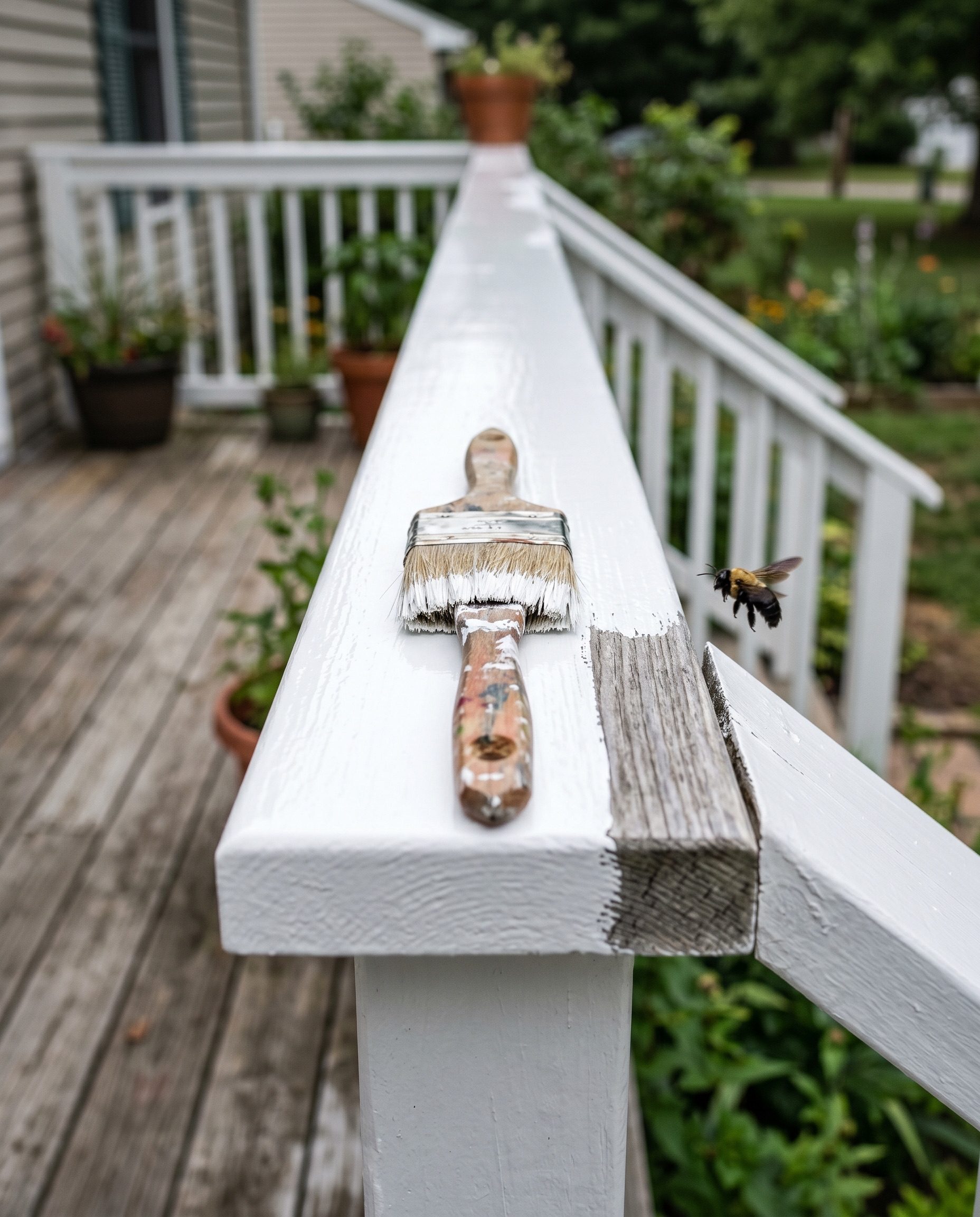
What to do first costs little and solves most of the problem: take away the bare wood. A painted, varnished, or polyurethaned surface is far less attractive to a searching female than raw, weathered softwood. Penn State Extension is direct about this, noting that painting or sealing bare wood is the most effective long-term prevention you have. Stain alone helps less than a film-forming finish, so a coat of oil-based primer plus paint, or a couple of coats of polyurethane, beats a thin penetrating stain.
Work the spots they actually target. Get up under the eaves and fascia where they like the underside, hit deck rails and the top edges of railings, and do not forget fence posts, the underside of porch ceilings, and any exposed framing on a shed or pergola. Bare end-grain on a cut board is especially inviting, so seal those cut ends. If you are building or replacing trim, the durable move is to swap a soft softwood for a less-borable hardwood or for vinyl or aluminum-clad trim, which gives them nothing to dig. For the practical product side of this, our guide to the best carpenter bee deterrents and sealants sorts the finishes and fillers that hold up outdoors.
Plug old holes the right way
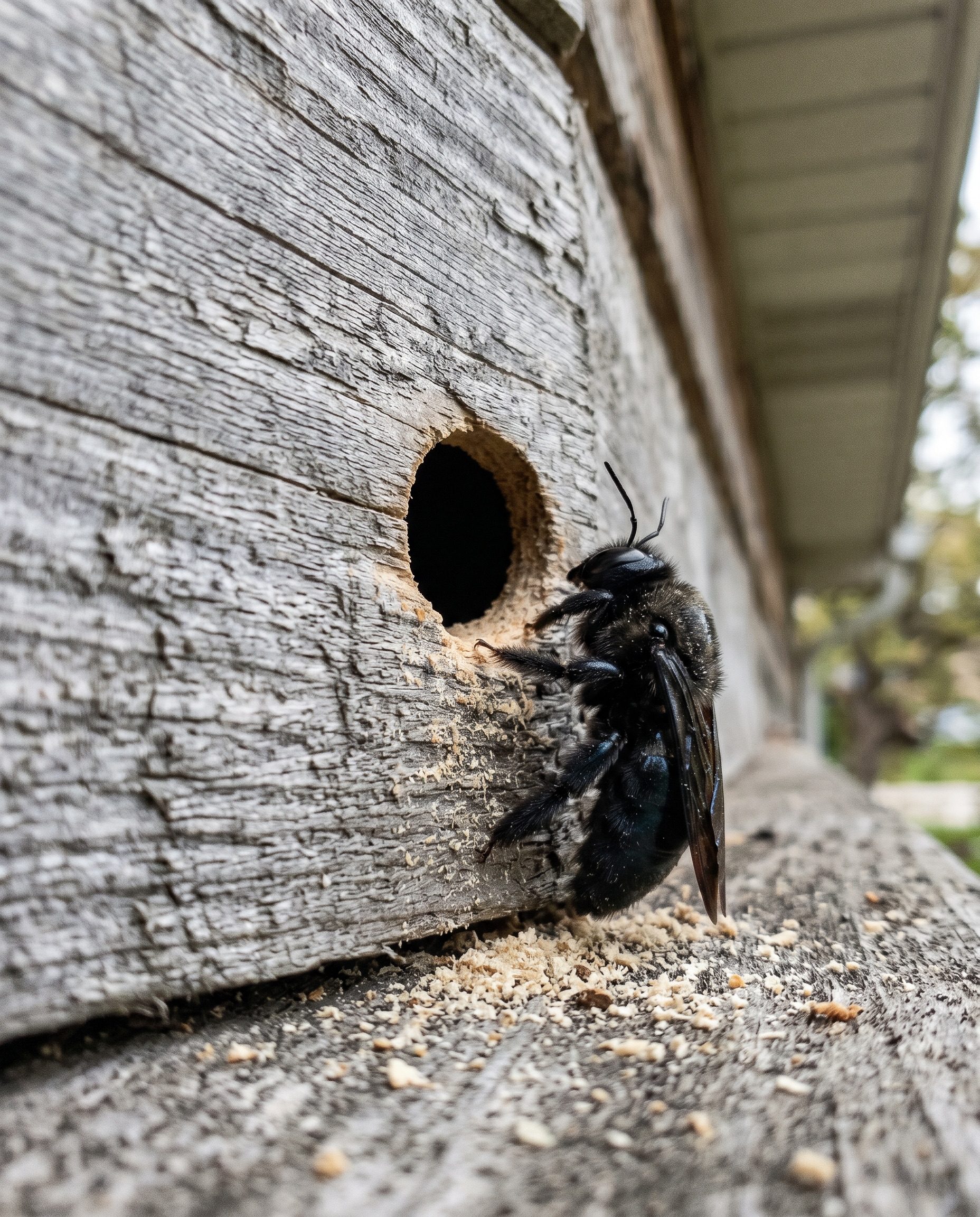
Here is the trap most people fall into: an old hole is not an empty hole. Carpenter bees reuse and enlarge old galleries year after year, so a tunnel left open is a standing invitation, and the damage is cumulative because each generation extends the branching tunnels. That is also why woodpeckers tear up siding chasing the larvae inside. Plugging the holes is half of real prevention, but timing is everything.
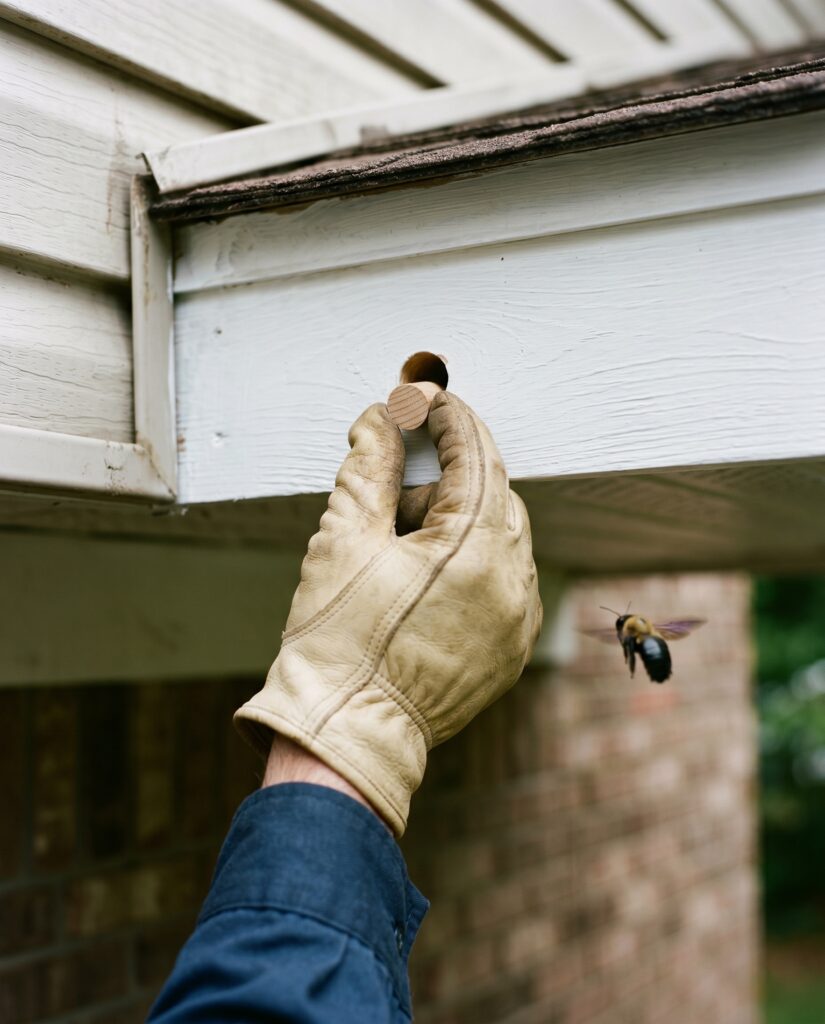
Do not plug an active hole in spring or summer. If a female is in there provisioning brood, sealing her in just makes her chew a fresh exit and leaves you a new hole next to the old one. The right window is late summer into fall, after the new adults have left, or early spring before nesting starts. Push wood filler, a wooden dowel and glue, a cork, or steel wool deep into the tunnel, then caulk and paint over it so the patch matches a finished surface. If a gallery is still active and you want it gone before you seal, that is a control job, not a prevention one, and the order matters: you treat the tunnel, wait, then plug. Our step-by-step on how to repair and seal carpenter bee holes walks the filling and finishing so a patch actually lasts.
Trap and time the spring emergence
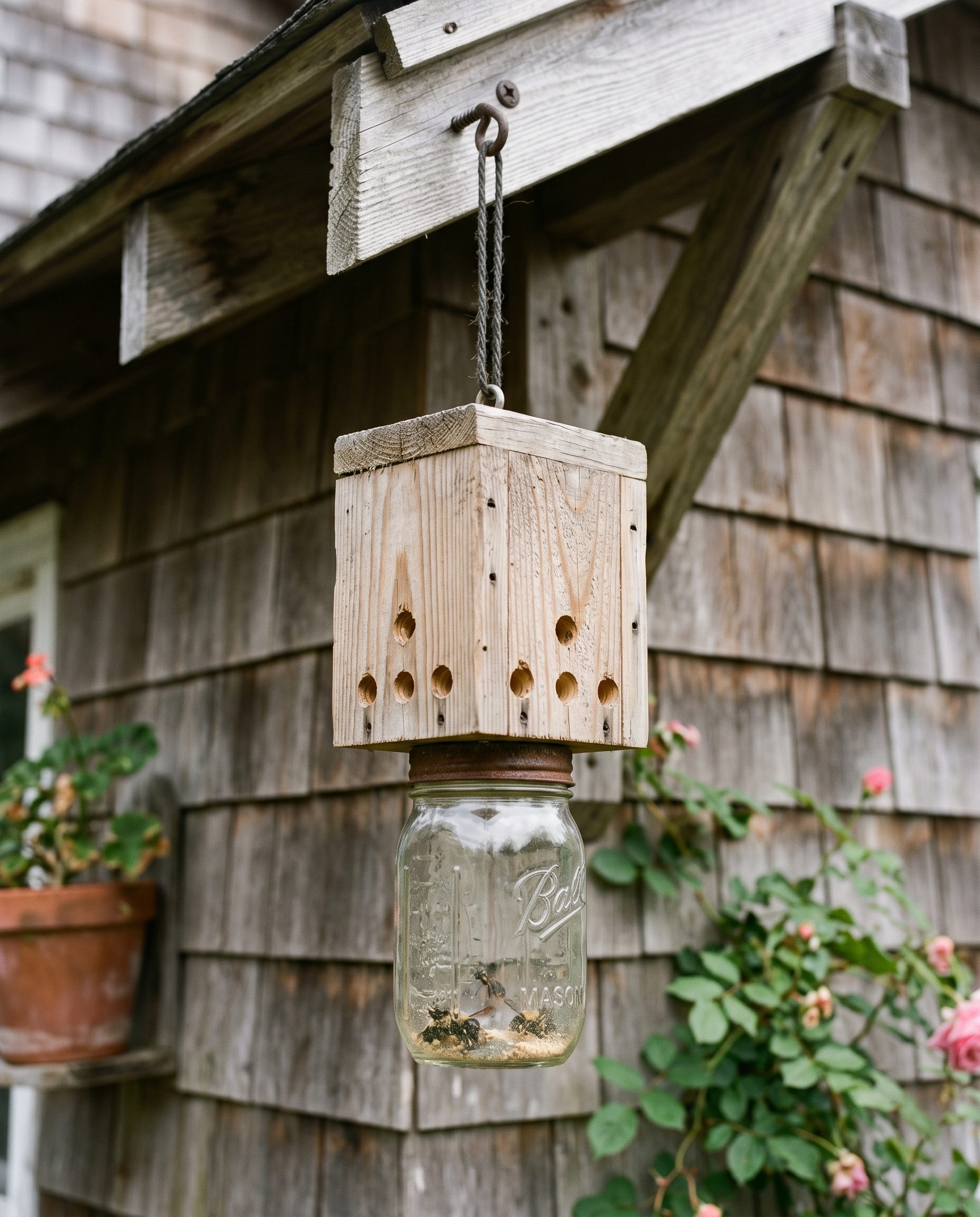
Wood prevention is the foundation; a trap is the seasonal insurance for the spots you cannot finish, like a rough cedar pergola or an old barn beam. A carpenter bee trap is a small wooden box with angled entry holes that mimic a real gallery, leading down into a clear jar the bee cannot climb out of. They work because they exploit the same instinct that drives the bee to your eaves.
The whole game with traps is timing and placement. Hang them before the spring emergence, typically as the weather warms and you first see bees scouting, because an empty trap up early catches the foundress before she starts a new tunnel. Mount the trap high, right at the favored spot, the sunny eave corner or the rail end where you have seen holes, since a trap twenty feet away from the action does little. One trap per problem zone is the rule, refreshed each season. For an outdoor pollinator like this, that exclusion-and-trapping approach is exactly the least-toxic, IPM-first path the EPA points to when it says treat only the galleries causing real damage and follow the product label. Broad outdoor spraying is the wrong tool: it harms honey bees, bumblebees, and other beneficials, and it does nothing to stop a returning carpenter bee that a finished board would have turned away on its own.
Where each move fits
Not every part of the house calls for the same fix, so match the move to the spot.
| Where they target | Best prevention | Watch out for |
|---|---|---|
| Eaves, fascia, trim | Prime and paint the bare wood | Seal the underside and cut ends too |
| Deck rails and railings | Polyurethane or paint, or switch to hardwood | Stain alone is weaker than a film finish |
| Old holes from last year | Plug in fall, then caulk and paint over | Never seal an active hole in season |
| Rough beams you cannot finish | Hang a trap before spring, mounted high | Skip broadcast spray near other bees |
That bottom row is the honest limit of do-it-yourself prevention. If bees are already deep in structural beams, the gallery network is extensive, or woodpeckers have opened up the siding chasing larvae, that is a treatment and repair job. At that point a licensed pest control professional has the right tools and can treat the active tunnels safely before you seal them, and our overview of how to get rid of carpenter bees covers when control comes before prevention.
Common questions
What smells or sprays keep carpenter bees away?
Honestly, citrus and almond-oil sprays only repel briefly and need constant reapplication, so they are not a real prevention plan. The thing that reliably keeps them away is a finished wood surface. A painted or polyurethaned board gives a scouting female no soft fibers to excavate, which does far more than any scent that washes off in the next rain.
Do carpenter bees eat the wood?
No. They do not eat wood the way termites do; they excavate it to make tunnels and push the sawdust back out, which is why you see coarse shavings below a hole. The damage is mechanical and cumulative as galleries get reused and extended, so the goal is to stop new tunneling, not to poison a wood-eater.
Will carpenter bees sting me?
Rarely. The males that hover aggressively cannot sting because they have no stinger, and females will sting only if handled or trapped against skin. You can stand under a hovering male and watch it without risk, which is worth remembering before anyone panics and reaches for a spray they do not need.
When should I paint or seal to prevent them?
Finish bare wood before bees become active in spring, or in fall after they have left, so the coating is dry and the surface is hard when scouting starts. Plug old holes in that same fall window. Hang any traps right as the weather warms and you first see bees, not in the middle of summer when nests are already underway.
Are carpenter bees worth protecting?
Yes. They are native pollinators that visit many garden and crop flowers, so the smart approach is to protect your structures while tolerating bees that nest away from the house in snags, posts, or a dedicated bee block. Prevention through wood protection lets you keep the pollinator and lose the property damage.
Final verdict
Preventing carpenter bees is a wood project, not a spray project. The free or cheap first move is to finish the bare softwood they want, since a painted or polyurethaned surface on your eaves, fascia, and deck rails is far less attractive than raw weathered wood. Plug last year’s galleries in the fall so returning bees cannot reuse them, and caulk and paint the patch so it reads as a sealed surface. For the rough spots you cannot finish, hang a trap before the spring emergence, mounted high at the favored corner. Skip the broadcast outdoor spray, because it harms other bees and does nothing a finished board would not do better. Remember these are gentle native pollinators worth keeping around, so the win is protecting your structures while letting the bees nest somewhere that is not your house.
Next steps:
– Seal the bare wood properly with the best carpenter bee deterrents and sealants.
– Patch last year’s tunnels so they cannot be reused with our how to repair and seal carpenter bee holes guide.
– If bees are already established in structural wood, start with how to get rid of carpenter bees before you seal.