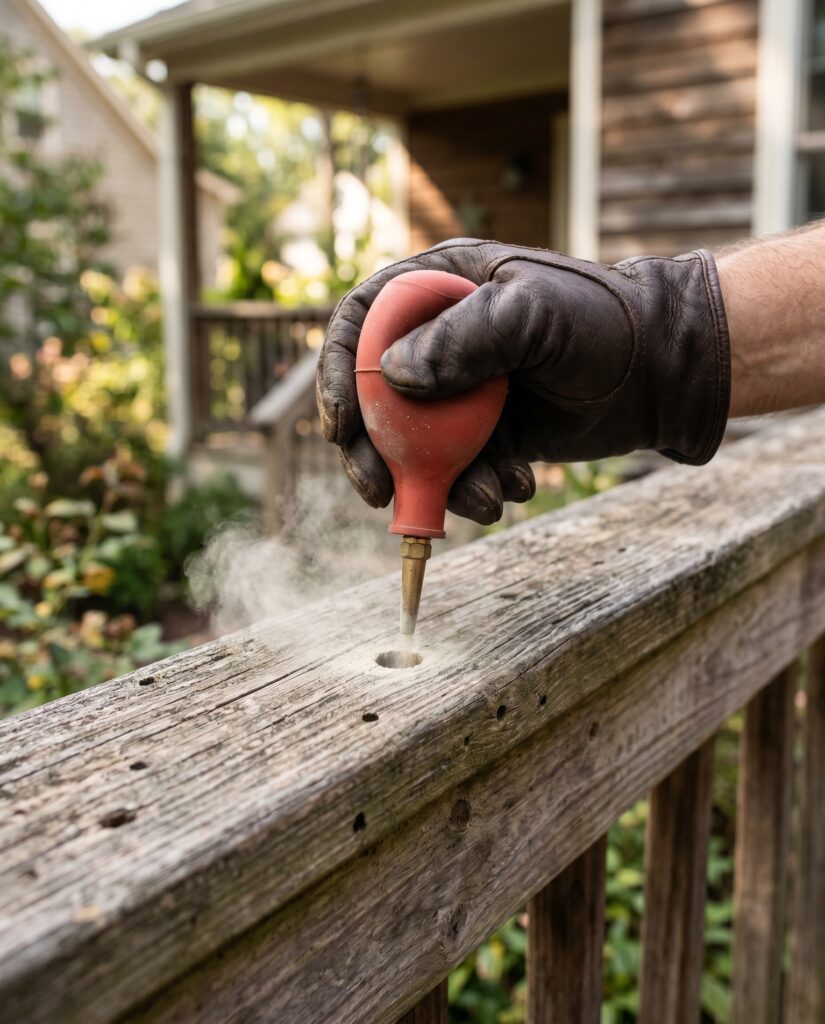
You are standing on the porch and a big black bee keeps charging at your head, hovering an inch from your face and refusing to leave. The reflex is to swat and run, but here is the part that changes everything: that bee almost certainly cannot sting you. The dive-bombing carpenter bee guarding a nest is the male, and the male has no stinger at all because only female bees are built with one. The female does have a stinger, yet she is remarkably docile and almost never uses it unless you grab her or trap her against your skin. So the aggressive show is bluff. The real damage from carpenter bees is to your wood, and after that to the woodpeckers that tear open siding to eat the larvae inside.
The hovering, face-charging carpenter bee is a stingerless male putting on a bluff; the female can sting but rarely does, so the genuine risk is wood damage, not you.
- The confirming feature: A shiny, hairless black abdomen means it is a carpenter bee, not a fuzzy bumblebee.
- Who can actually sting: Only the female, and she is docile; the territorial male physically cannot.
- What it means: Watch your wood and the woodpeckers, not your skin. See our carpenter bee damage guide.
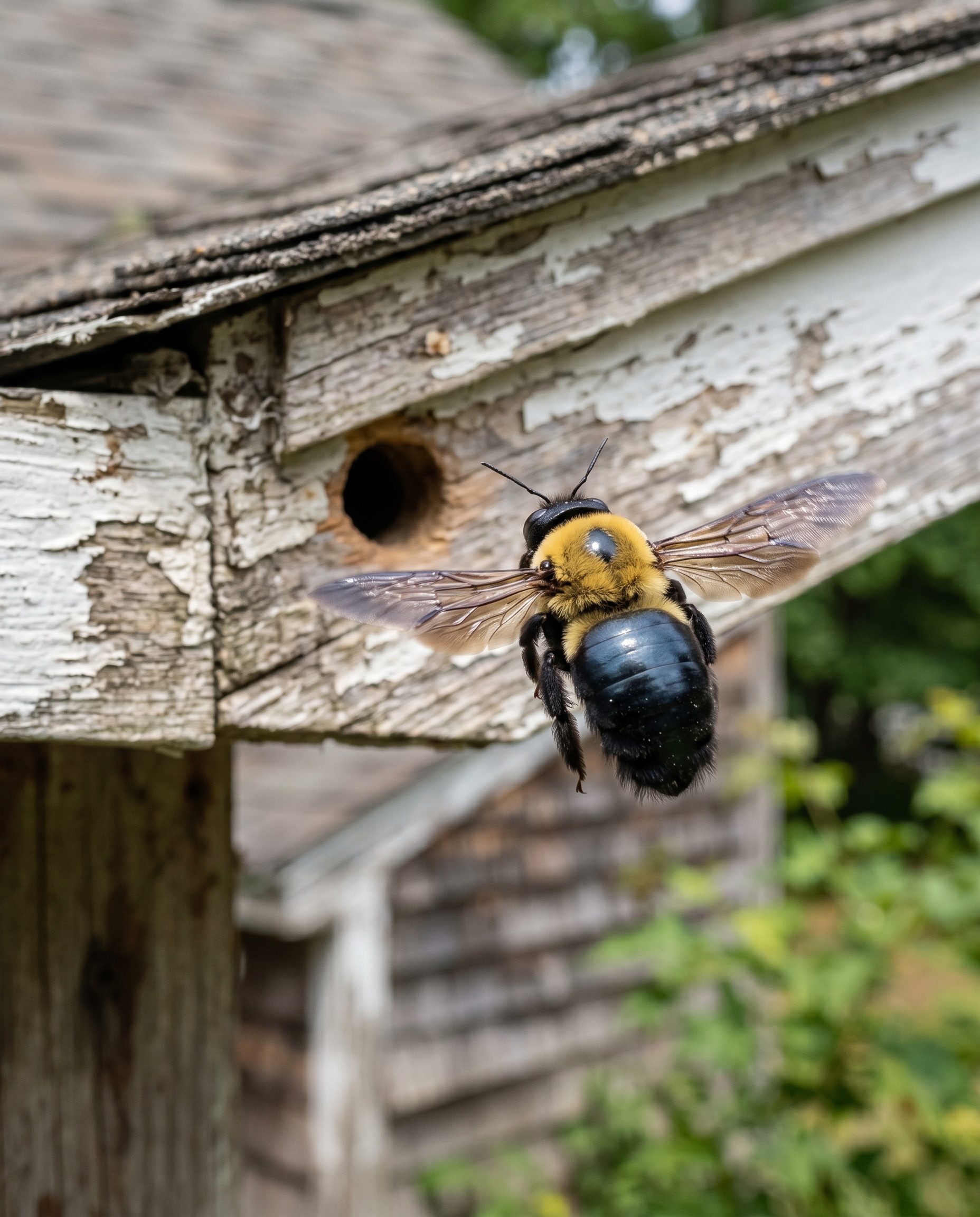
The hovering bee is a male
The bee that flies straight at you is doing a territorial patrol, and it is a male carpenter bee (genus Xylocopa). Males stake out the area near a nest entrance and rush anything that moves through it, including you, your dog, and the occasional thrown ball. It looks like aggression, but a male has no defensive weapon to back it up. A bee’s stinger is a modified egg-laying organ, the ovipositor, which means it exists only in females. The male was never built with one, so all he can do is hover, bob, and intimidate.
According to the University of Kentucky, the male carpenter bee has no stinger and cannot sting, while the female is docile and stays focused on provisioning her nest rather than confronting people. Once you know the in-your-face bee is the harmless male, the whole encounter reads differently. He is guarding, not attacking, and he will give up and drift off as soon as you stop being interesting.
Can the female sting?
Yes, the female carpenter bee has a working stinger, but the odds of being stung by one are low. She spends her energy excavating wood and stocking each chamber with a pollen ball for her young, and she is not territorial the way the male is. A female will only sting if you handle her directly, step on her with a bare foot, or pin her against your skin inside a shirt. Left alone at a nest hole, she ignores you.
There is one more detail worth knowing: unlike a honey bee, a carpenter bee can sting more than once because her stinger is not barbed and does not tear free. That sounds alarming, but it rarely matters in practice, since the trigger is almost always you grabbing the bee, not the bee seeking you out. The practical takeaway is simple. Do not pick one up, do not swat one out of the air with your hand, and you will almost certainly never feel a carpenter bee sting.
So are they dangerous to people?
For most people, no. A carpenter bee sting is a rare event, and when it happens it produces the ordinary local reaction you would expect from any bee: a sharp pinch, some swelling, and a sore spot that fades over a day or two. There is no venom potency story here that sets carpenter bees apart from other bees, and the territorial males that cause the most alarm are the ones that cannot hurt you at all.
The one genuine exception is allergy. If you are allergic to bee or wasp stings, any sting can become a medical emergency regardless of how docile the species is. Watch for signs of a severe allergic reaction such as trouble breathing, swelling of the throat or tongue, dizziness or fainting, or hives spreading quickly. If those appear, use a prescribed epinephrine auto-injector right away and get emergency medical help; do not wait to see if it passes. For a normal sting in someone who is not allergic, ice and an over-the-counter antihistamine are usually enough, but a clinician can confirm what is appropriate for you. I identify the bee; I do not diagnose the reaction, so anything beyond a routine local sting belongs with a doctor.
The real danger is your wood
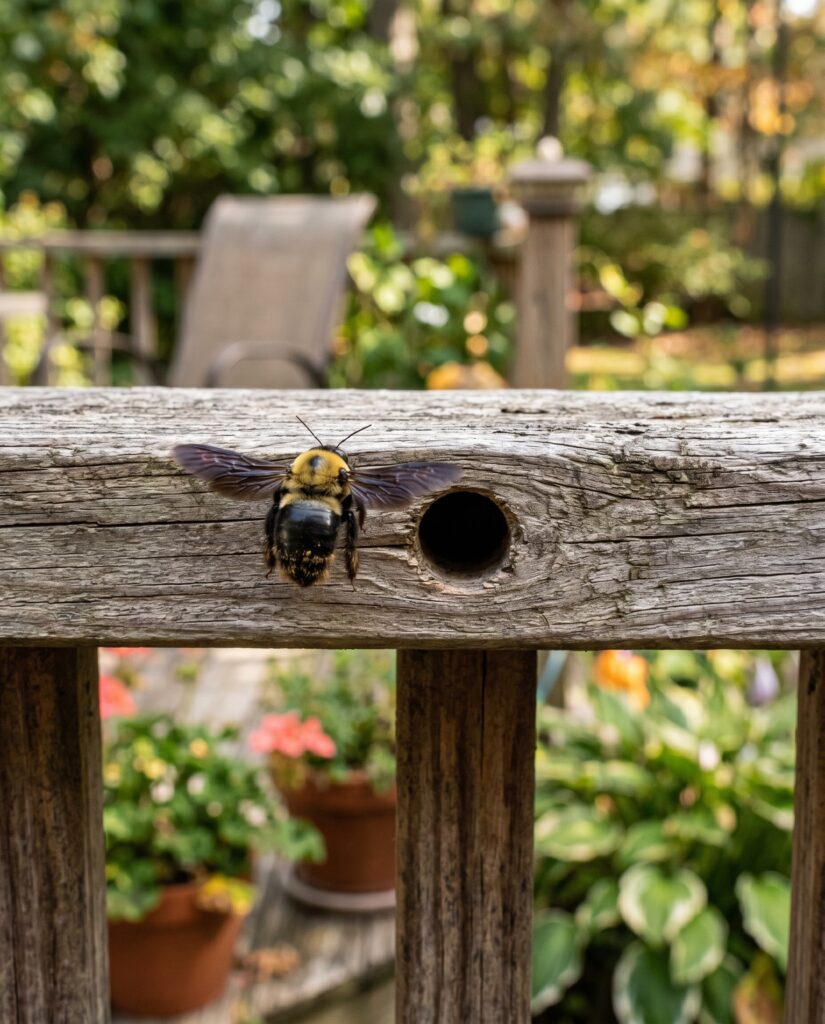
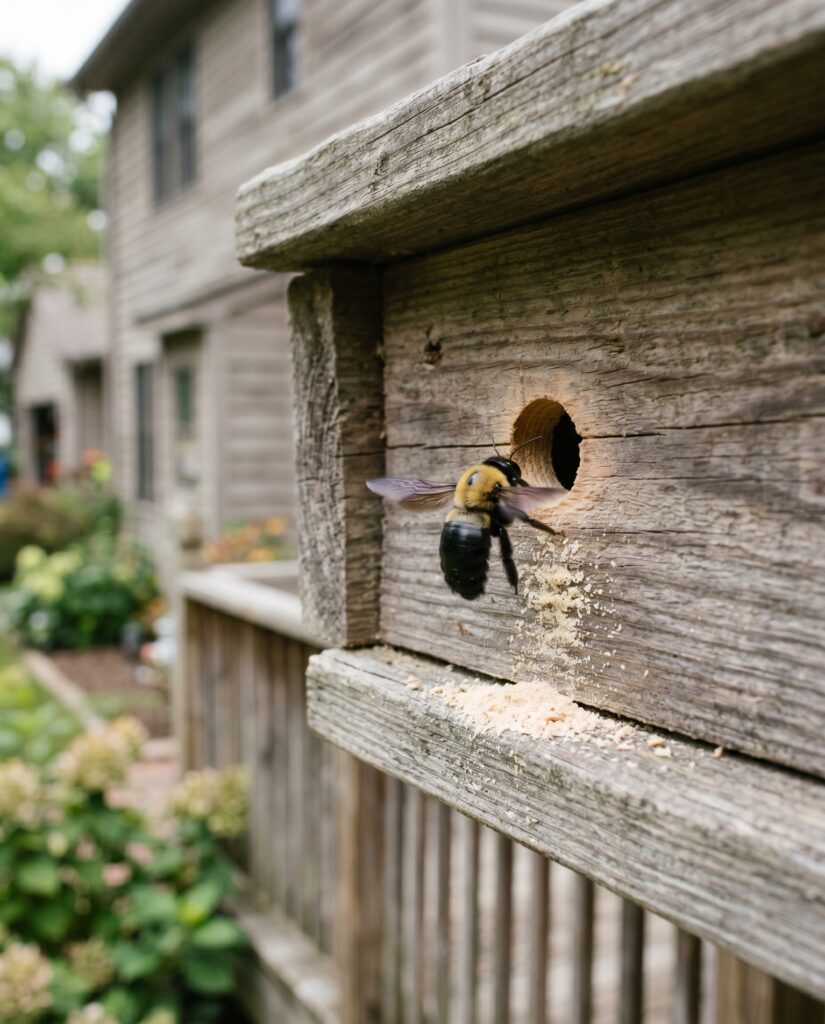
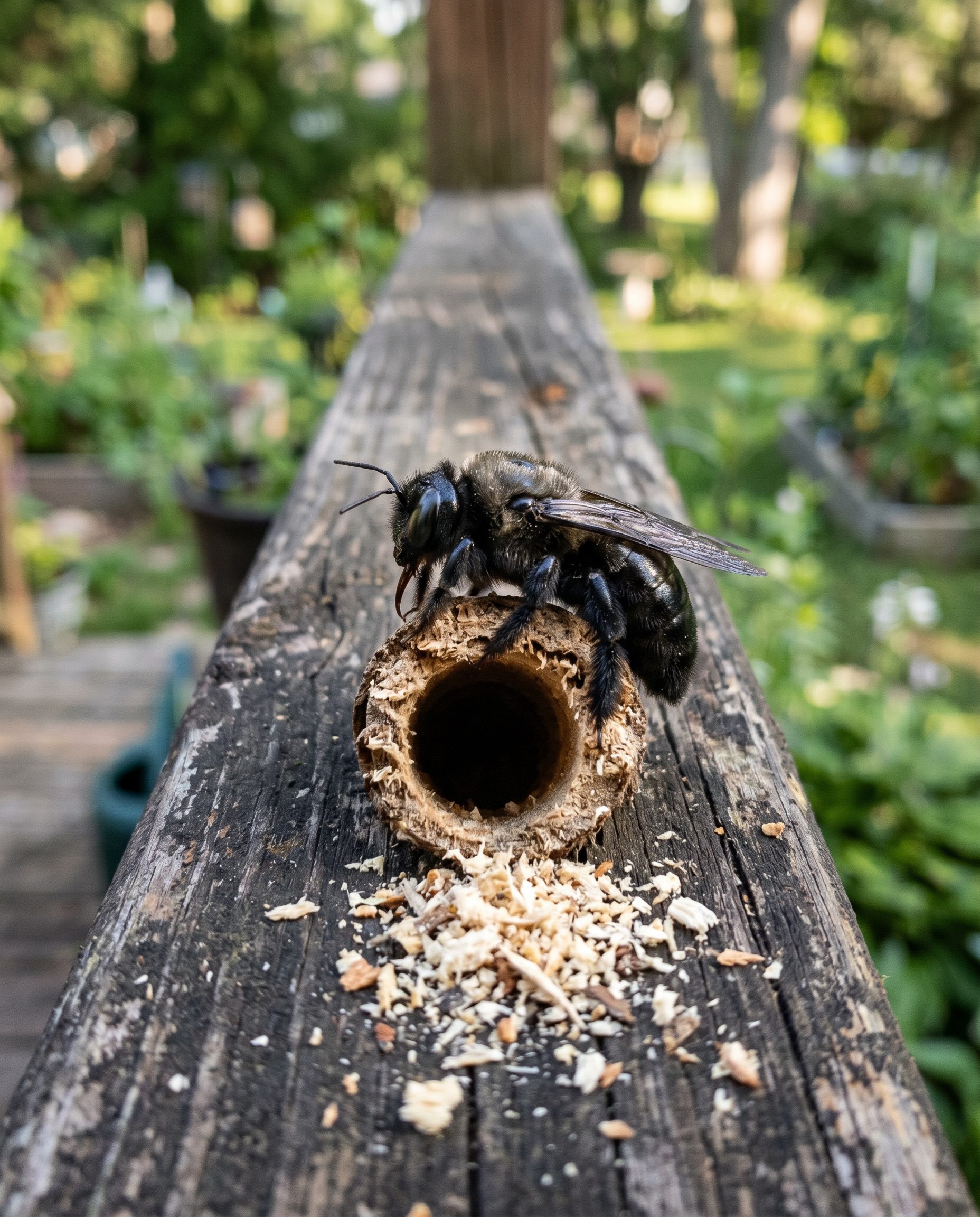
Here is where carpenter bees actually earn their pest reputation. A female bores a near-perfect round hole, about the diameter of your little finger, into bare wood, then turns and tunnels with the grain to carve a gallery of nesting chambers. One bee’s tunnel is not a structural threat. The problem is repetition. Iowa State notes that bees reuse and extend old galleries year after year, so a single fascia board or deck rail can accumulate branching tunnels over several seasons until the wood is genuinely weakened.
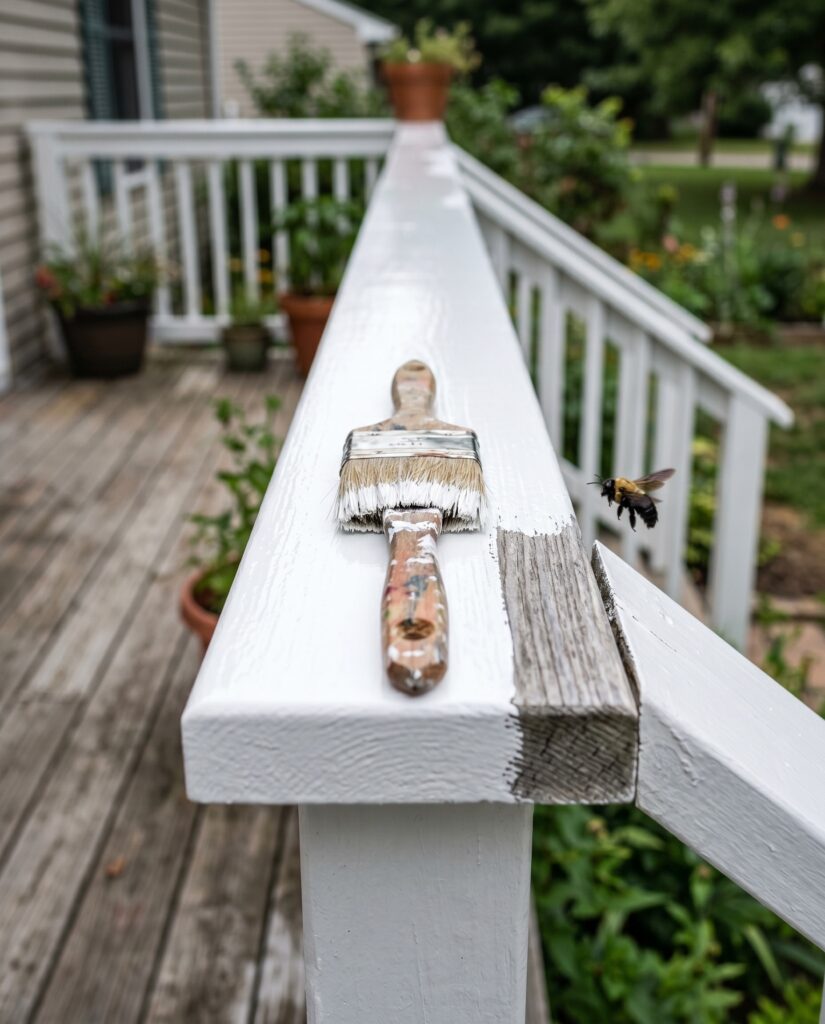
They are also predictable about where they strike. Carpenter bees prefer bare, weathered, soft wood, which is why the Penn State Extension’s profile of the carpenter bee points to unpainted eaves, fascia, deck railings, fence posts, and porch ceilings as the usual targets. UC IPM confirms that carpenter bees bore into bare, weathered, and unpainted softwoods far more readily than into painted or hardwood surfaces, which is the single most useful fact for prevention: a maintained coat of paint or polyurethane is a real deterrent. For the full tunneling timeline and how damage compounds, see our carpenter bee life cycle and damage guide.
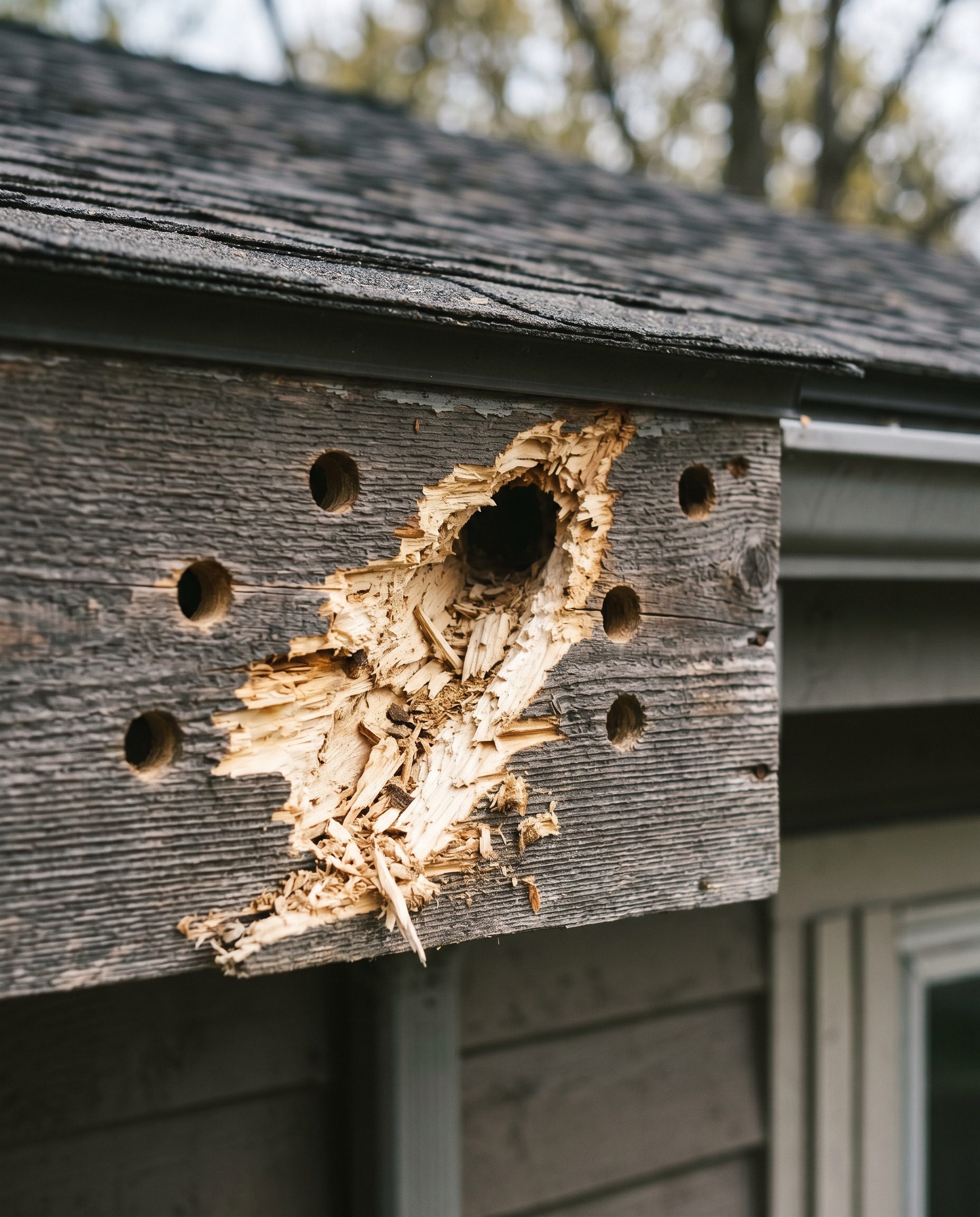
The woodpecker problem
The second wave of damage is the one homeowners do not see coming, and it is often worse than the bees. The larvae inside the galleries are fat, protein-rich, and audible, and woodpeckers know it. A bird that locates an active gallery will chisel along the tunnel to reach the grubs, turning a tidy half-inch entry hole into a long, ragged trench torn open along the grain. The woodpecker, not the bee, frequently causes the costliest repair, because it opens the wood wide and exposes it to water and rot.
That cascade is why ignoring carpenter bees has a real cost even though they will not sting you. The bees weaken the wood, the woodpeckers wreck it chasing the larvae, and moisture finishes the job. None of it is a threat to your body, but all of it is a threat to your house.
How to tell it apart fast
Before you decide a bee is even a carpenter bee, rule out the bumblebee it is most often confused with. The two are similar in size and both fly heavily, but one diagnostic feature settles it almost every time.
| Trait | Carpenter bee | Bumblebee |
|---|---|---|
| Abdomen | Shiny, bare, hairless black | Fuzzy, hair-covered, yellow-banded |
| Behavior near you | Male hovers and dive-bombs (no stinger) | Rarely hovers at people |
| Where you find it | At round holes in bare wood | Ground or cavity nests, flowers |
The fastest tell is the abdomen. If the back end is shiny and bald like polished black plastic, it is a carpenter bee; a bumblebee’s abdomen is covered in dense hair. For the complete side-by-side, our carpenter bee vs bumblebee identification guide walks every difference. And before you treat one as a pest, remember they pollinate too, which is the honest trade-off covered in are carpenter bees pollinators, good or bad.
Common questions
Do carpenter bees sting humans?
Rarely. The male that hovers in your face cannot sting at all because he has no stinger. The female can, but she is docile and only stings if you grab or trap her against your skin, so most people who live alongside carpenter bees for years are never stung.
Why do carpenter bees fly at me?
That is a male on territorial patrol near a nest. He rushes anything that enters his patch as a bluff, but he has no stinger to follow through. Stand your ground or step aside and he will lose interest and drift off.
Are carpenter bees aggressive?
Not really. The behavior looks aggressive, but it is display, not attack, and the displaying bee is the harmless male. The female ignores you unless handled. There is no swarm-and-chase response like you might fear from wasps.
What is the actual danger of carpenter bees?
Wood, not skin. They bore galleries into bare softwood and reuse them yearly, and woodpeckers then tear the wood open to eat the larvae. The combined damage to eaves, fascia, and railings is the real reason to address them.
Can a carpenter bee sting more than once?
The female can, because her stinger is not barbed and stays intact. In practice this almost never comes up, since she only stings when handled, but it is why you should never try to catch one by hand.
Final verdict
Do carpenter bees sting? The one charging your face does not and cannot, because it is a stingerless male running a bluff, and the female that can sting is docile enough that most people never get stung. If you are allergic to bee stings, treat any sting as a possible emergency and rely on prescribed epinephrine and a clinician, but for everyone else the carpenter bee is not a threat to your body. The threat is to your wood: round holes bored into bare eaves and railings, galleries reused and extended year after year, and woodpeckers tearing the boards open to reach the grubs. If you do decide to control them, choose the least-toxic option and follow the label, because the label is the law.
Next steps:
– Confirm it is not a bumblebee with our carpenter bee vs bumblebee identification guide.
– Understand how the tunneling adds up over seasons in the carpenter bee life cycle and damage guide.
– Weigh the pollination upside before you treat in are carpenter bees pollinators, good or bad.