If you have carpenter bees drilling into your eaves or deck rail, the fix that actually stops the damage is not a spray you mist around the house, it is an insecticidal dust puffed straight into the tunnel opening. The returning female walks through the dust and carries it deep into the brood chambers where a surface spray never reaches. The short answer: treat each active hole with dust (or a foaming aerosol labeled for carpenter bees if you only have a few you can reach), wait a few days, then plug and paint the hole so a new bee does not move into the open tunnel next season. For our own deck we keep one hand duster and a bag of dowel plugs, nothing more. Most lists push you toward broad spraying or a “killer” can; that is the part to skip, and the steps below show why.
Puff an insecticidal dust into each active tunnel so the returning bee carries it to the brood, use a foaming aerosol for a few accessible holes, then wait a few days and plug the hole; spraying the air or the whole house does nothing.
- Do first (free): Find the active holes, mark them, and plan to treat at dusk when bees are inside.
- Best for the common case: An insecticidal dust puffed into the opening, with a foaming carpenter bee aerosol for a handful of reachable holes.
- Skip: Broad surface or air spraying; it misses the brood and harms other bees, and it leaves the tunnel open for next year.
What to do first
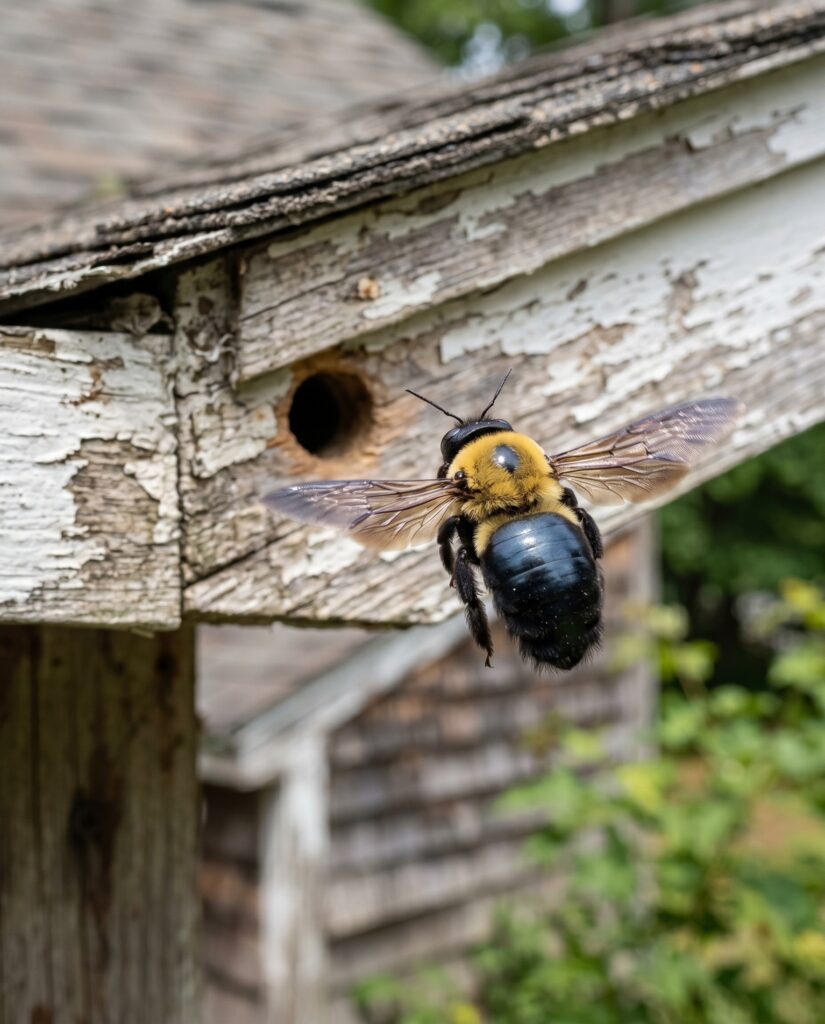
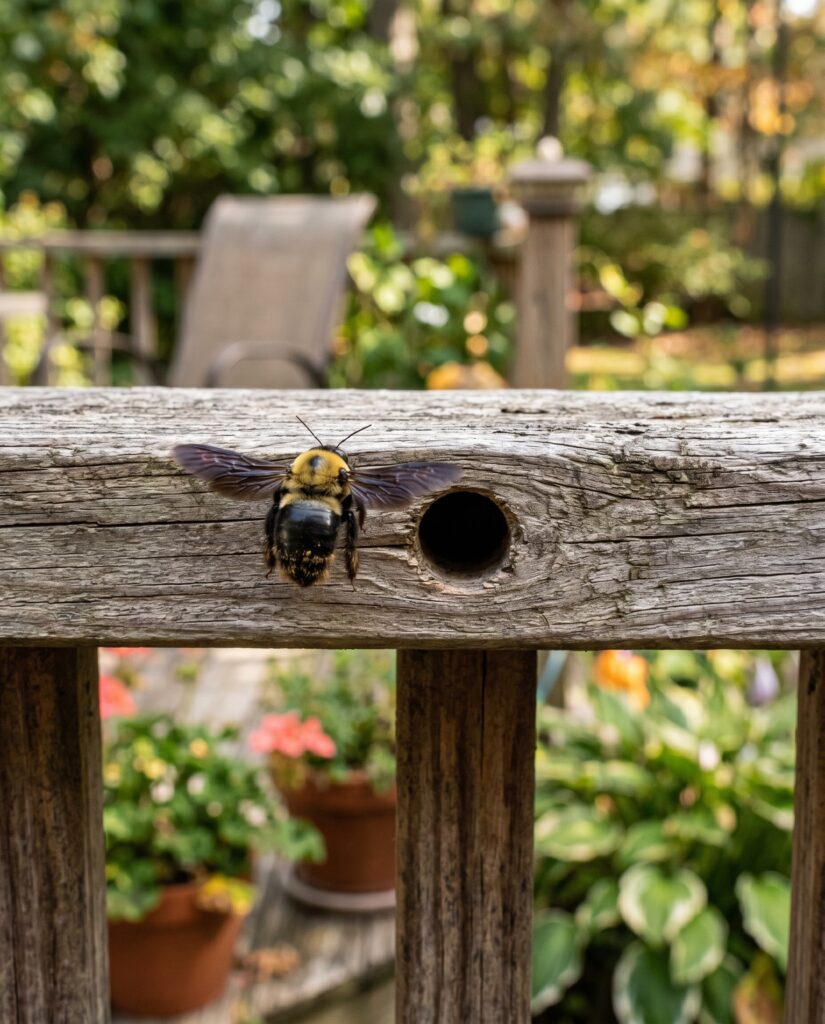
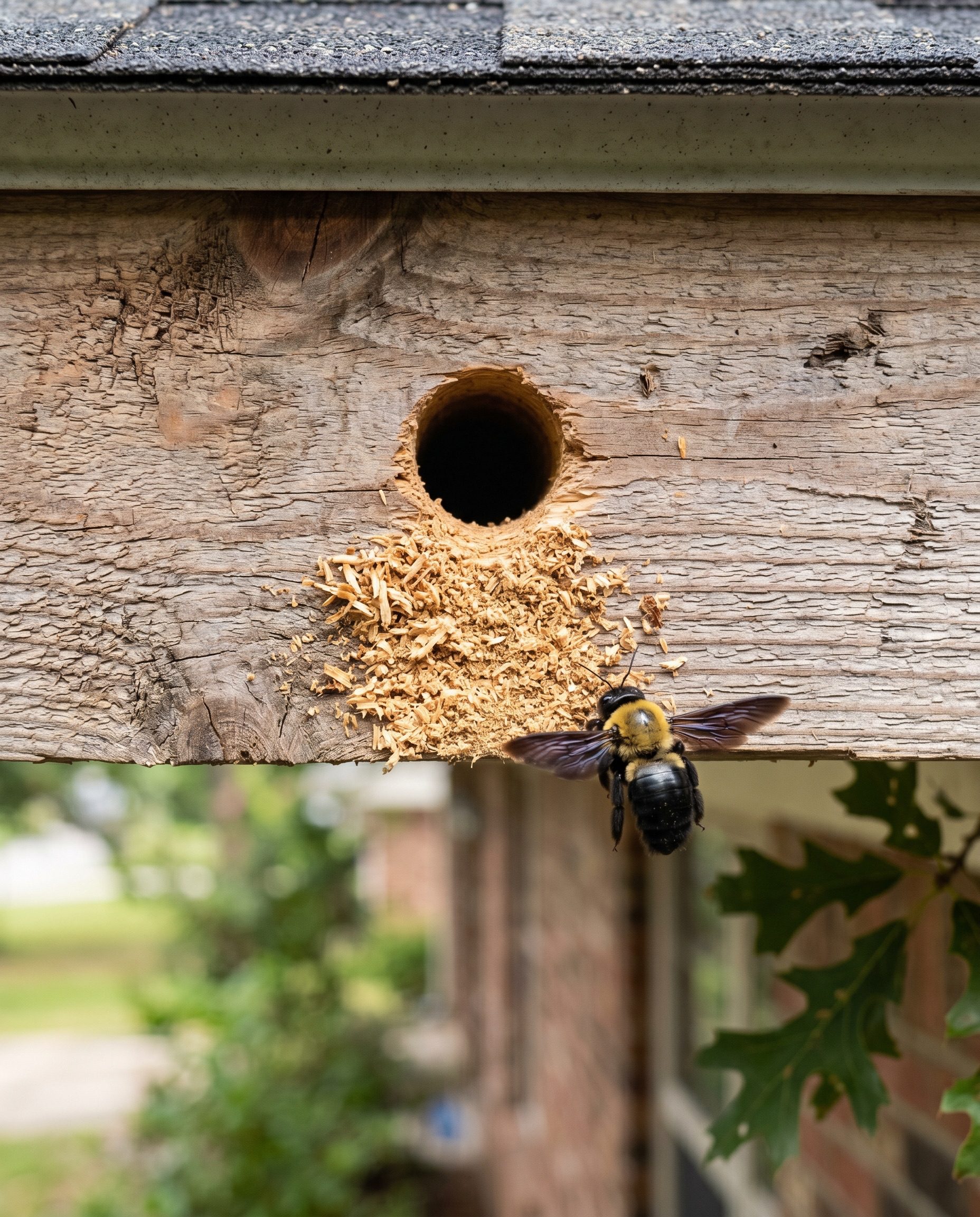
Before anything comes off the shelf, find the active holes, because treating the wrong hole wastes the product. Walk the eaves, fascia, deck rails, and any bare softwood and look for the giveaway: a clean, perfectly round entry about half an inch across, often with a fan of coarse sawdust on the surface below it. Carpenter bees do not eat wood, they excavate it, so the Iowa State Extension profile of carpenter bees is a good first stop to tell them apart from a fuzzy-bottomed bumblebee. Mark each active hole with a pencil so you know exactly where to treat.
Then pick your moment. Treat at dusk or after dark, when the female is back inside the tunnel and other foragers are not flying, which keeps the dust on target and off the bees you want to protect. The cheapest, safest move is timing the treatment, not buying a stronger chemical. Our full walkthrough on how to get rid of carpenter bees lays out the inspection and timing step by step. A product is worth buying once you know which holes are live, not as a substitute for finding them.
Why air-spraying does nothing
Here is the part most “best carpenter bee spray” lists skip. A surface spray misted on the wood, or worse, sprayed into the air, never reaches the eggs and larvae sitting inches deep in the gallery. The kill happens inside the tunnel, not on the surface. A bee that lands on a treated board for a second simply flies off; the brood she is raising in the dark is untouched. That is why people spray the whole deck, feel productive, and watch the bees come right back.
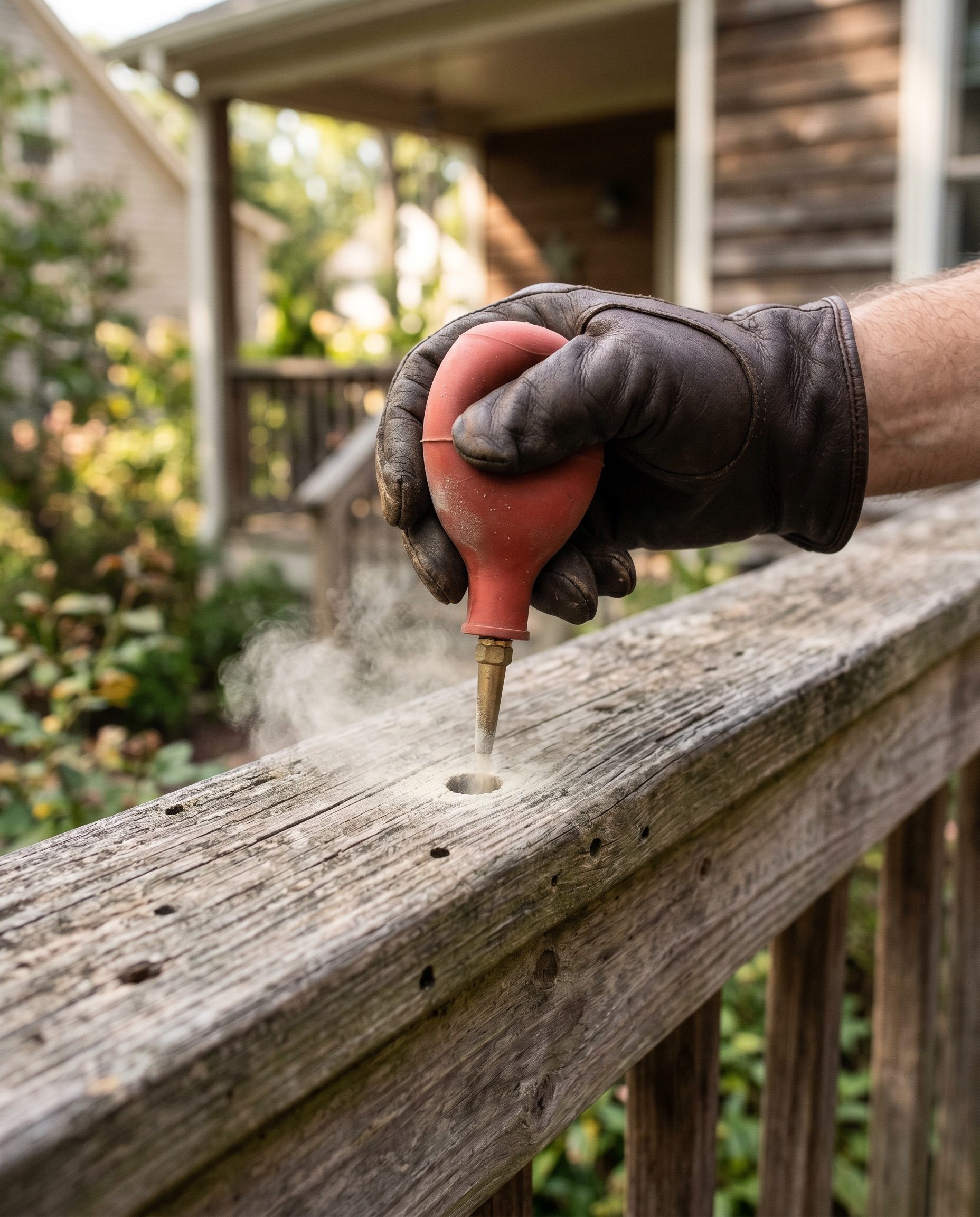
The treatment that works puts the active ingredient where the bee travels. Dust is the gold standard because it clings, lasts, and the returning female tracks it through the gallery to the brood chambers. The UC IPM Pest Notes on carpenter bees describes exactly this: apply an insecticidal dust into the gallery opening, then plug the hole after a few days. A foaming aerosol labeled for carpenter bees does the same job for the holes you can actually reach, expanding into the tunnel to coat its walls. Reach for dust on high or numerous galleries, and a foaming can on a few accessible ones. What does not work is any approach that treats the air or the outside of the wood instead of the tunnel itself.
Dust vs foaming aerosol
Once you know you are treating the tunnel and not the wall, the category choice comes down to how high the holes are and how many you have. The point is to match the form to the hole, not to buy the biggest can on the shelf.
| Treatment | Best for | Watch-out |
|---|---|---|
| Insecticidal dust | Many holes, high eaves, long-lasting coverage inside the gallery | Needs a hand duster; still plug the hole a few days later |
| Foaming aerosol (carpenter bee labeled) | A few accessible holes you can reach by hand | Treat only the gallery, not broad surfaces; then plug the hole |
| Ready-to-use precision spray | Spot-treating reachable tunnels with a deep-reach nozzle | Lighter residual than dust; reapply and still seal the hole |
Why not just buy the strongest can and blast everything? Because broad spraying is the wrong tool here, and it has a real cost. Carpenter bees are native pollinators, and the males that hover aggressively in your face cannot even sting, as the University of Kentucky’s carpenter bee fact sheet points out. Treat only the galleries causing real structural damage, and leave bees nesting in a fence post or snag away from the house alone. Broad outdoor spraying drifts onto flowering plants and harms other bees, which is the opposite of what the EPA’s safe pest control guidance asks of you. Targeted dust or foam in the tunnel gets the job done without poisoning the yard.
Treat, wait, then plug
The step everyone skips is the one that decides whether they are back next spring. Puff the dust or foam into the marked opening at dusk, getting the applicator tip right into the hole so the product coats the tunnel where the bee crawls. Coverage inside the gallery beats anything you spray on the surface. Leave the hole open for a few days first, because the returning bee has to walk through the treatment and carry it to the brood; the Penn State Extension page on carpenter bees explains that galleries are reused and extended year after year, which is why cumulative damage and woodpeckers chasing the larvae get worse if you ignore them.
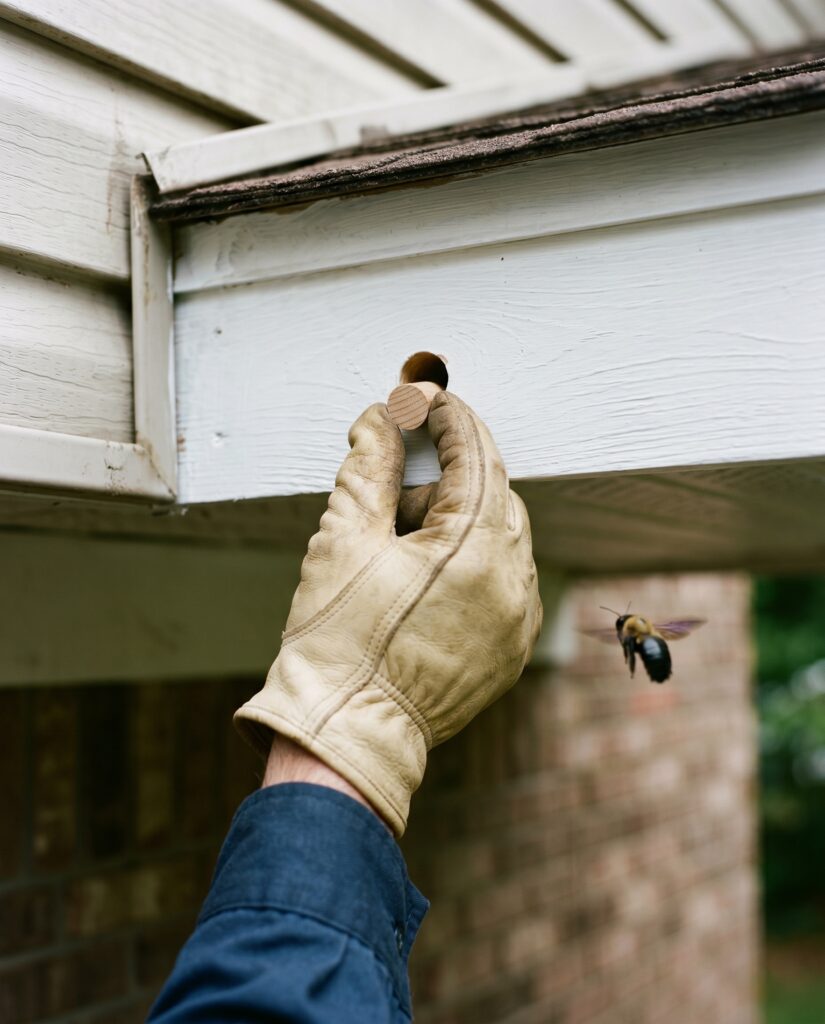
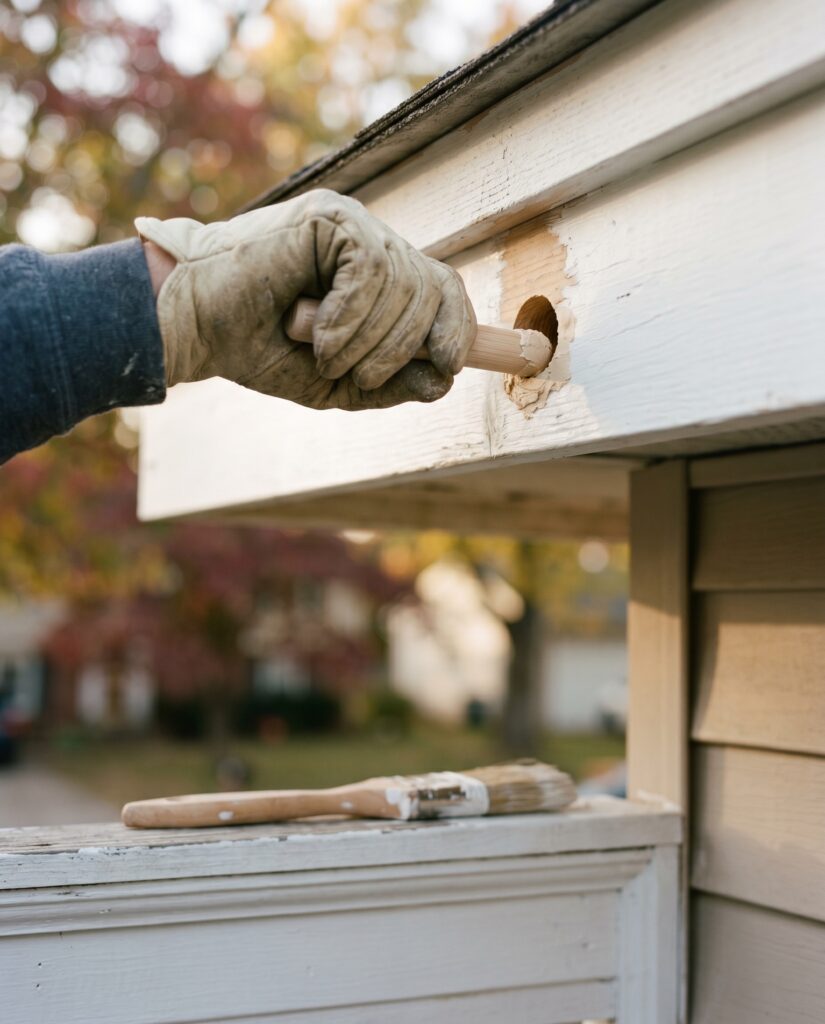
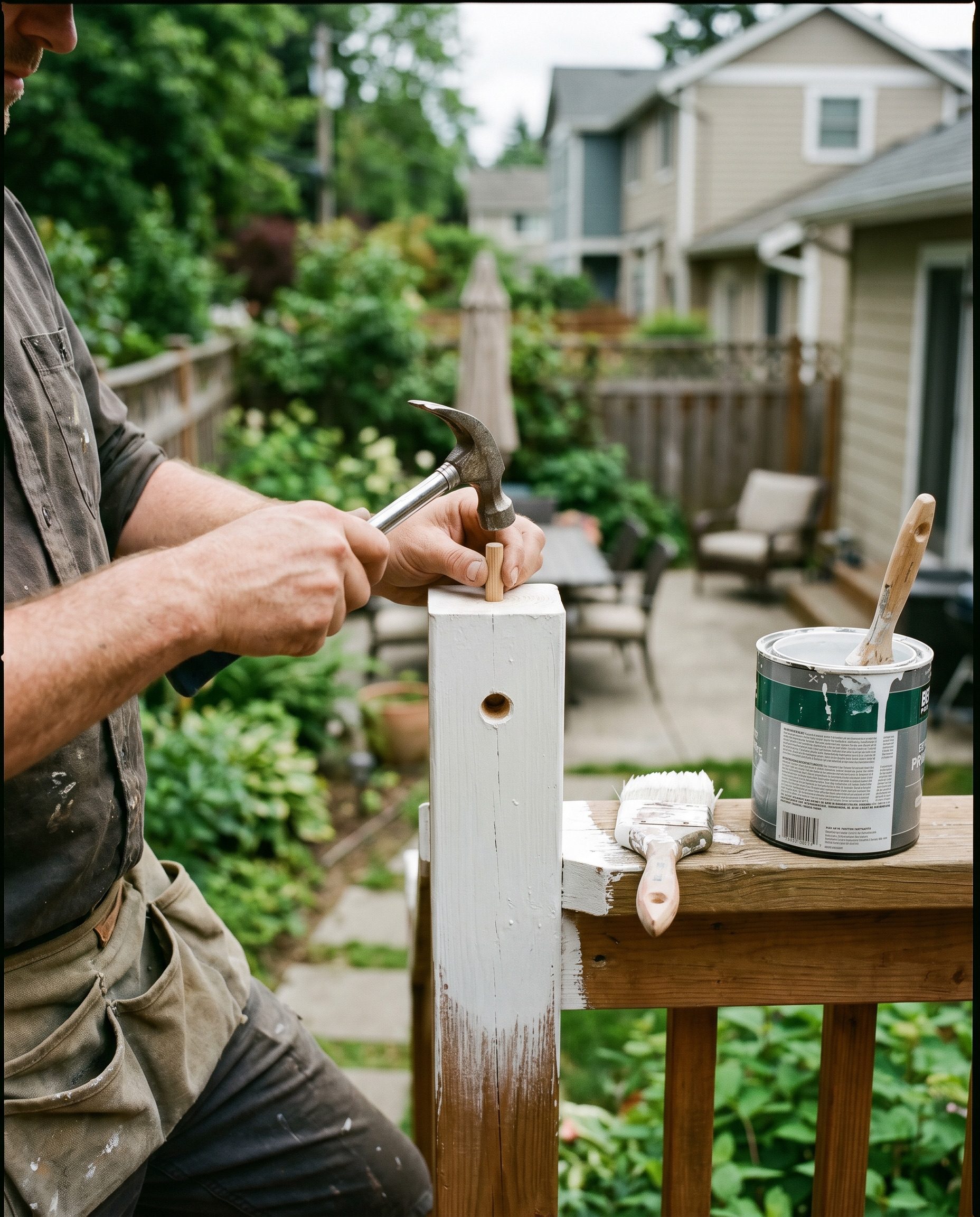
After a few days, plug the hole. Tap a wooden dowel or cork into the opening, then caulk and paint over it so the gallery is sealed for good. Plug too early and you trap live bees that simply chew a fresh exit nearby. Our guide on how to repair and seal carpenter bee holes covers the sealing and patching in detail. Treat the products as the pesticides they are: read and follow the label, because under federal law the label is the law, keep children and pets off the area until the dust settles and dry, and do not let dust drift onto blooms or food. If you only want to intercept the adults before they bore in, a wooden carpenter bee trap hung near the eaves is a prevention tool, not a cure for a gallery already full of brood.
The picks
Cards come after the analysis on purpose, because the situation decides which one you buy. These three cover the long-lasting dust, the foaming aerosol for reachable holes, and a ready-to-use spray for spot work, and all are common, widely available products.
InsectoGuide is reader-supported. As an Amazon Associate we earn from qualifying purchases at no extra cost to you.
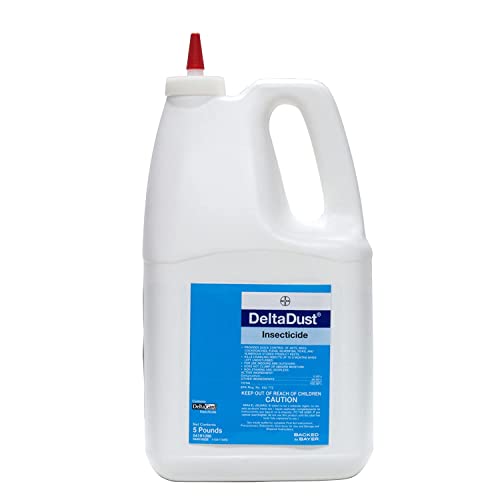
A waterproof dust to puff into tunnels so the female tracks it to the brood.
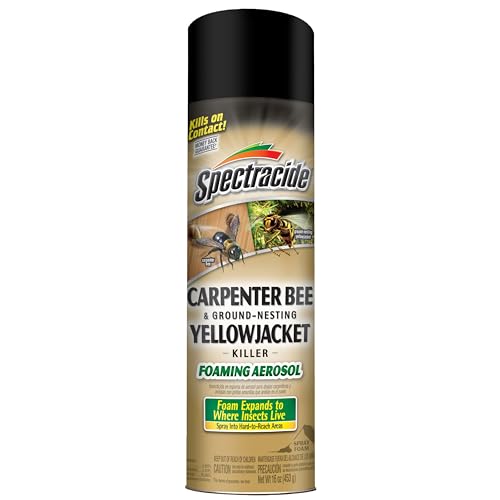
A foaming can for a few accessible holes you can reach by hand.
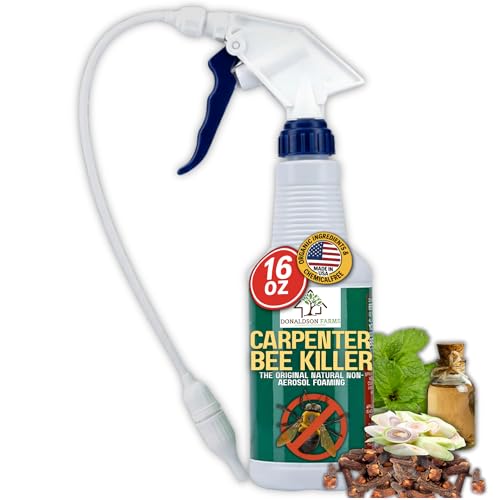
A ready-to-use option for spot-treating reachable tunnels in deck and shed wood.
Common questions
Do carpenter bees sting?
Rarely. The males that buzz around your head and look threatening have no stinger at all, and the females can sting but are docile and almost never do unless handled. The University of Kentucky’s carpenter bee guidance confirms males cannot sting, so the hovering display is mostly bluff.
Why won’t spraying the wood get rid of them?
Because the eggs and larvae sit inches deep in the tunnel, and a surface or air spray never reaches them. You have to put dust or foam inside the gallery so the returning female carries it to the brood. Treating the outside of the board feels productive but leaves the next generation alive.
When do I plug the hole?
Wait a few days after treating, then plug it. If you seal it right away you trap live bees inside, and they will chew a new exit nearby. Treat first so the dust does its work, then tap in a dowel, caulk, and paint over the spot.
Should I just kill every carpenter bee I see?
No. Carpenter bees are native pollinators, and the responsible approach is to treat only the galleries doing real structural damage and tolerate bees nesting in a fence post or snag away from the house. Broad spraying harms other bees, which the EPA’s safe pest control guidance asks you to avoid.
How do I stop them coming back next year?
Finish the wood. Carpenter bees avoid painted, stained, or sealed surfaces and target bare softwood, so painting or sealing your eaves and rails is the real long-term fix. The Penn State Extension page notes galleries are reused yearly, so sealing treated holes and finishing exposed wood breaks the cycle.
Final verdict
There is no magic carpenter bee spray, and any list that hands you a “killer” can to mist around the house is skipping the only thing that works: getting the treatment inside the tunnel. Puff a dust into each active gallery, or use a foaming carpenter bee aerosol on the few holes you can reach, and time it for dusk when the bees are home and other pollinators are not flying. Wait a few days so the returning female carries the product to the brood, then plug and paint the hole so a new bee does not move in next season. Skip broad surface and air spraying entirely; it misses the brood, harms other bees, and leaves the tunnel open for next year. The long-term answer is to finish bare wood, because a sealed board is one a carpenter bee will not drill.