If carpenter bees are drilling your eaves or deck rail, the fix that actually lasts is not a poison, it is taking away the bare softwood they need to bore into. Paint or seal the exposed wood, plug the old tunnels so next year’s bees cannot move back in, and use a citrus or almond-oil repellent only on the spots you cannot finish. The short answer: a repellent or a sealant is prevention, not a cure for an active gallery already full of brood, so treat a live tunnel first and finish the wood after. For our own deck we keep an almond-oil spray for the railing tops and a bag of corks for the holes, nothing fancier. Most lists rank a spray or a trap as the hero; the real winner is the boring, permanent work of finishing the wood and plugging every hole.
Deny carpenter bees the bare softwood they bore into: paint or seal exposed wood, plug old tunnels so new bees cannot reuse them, and use a citrus or almond-oil repellent where you cannot finish; these prevent nesting but do not cure an active gallery, which needs dusting first.
- Do first (free or cheap): Dust an active hole, wait a few days, then plug it. Paint or seal the bare wood so they avoid it.
- Best for the common case: A wood sealant or finish, backed by corks in the old holes and a citrus or almond-oil repellent on spots you cannot paint.
- Skip: Spraying repellent on a tunnel full of brood and expecting it to clear; prevention does not treat an active nest.
What to do first
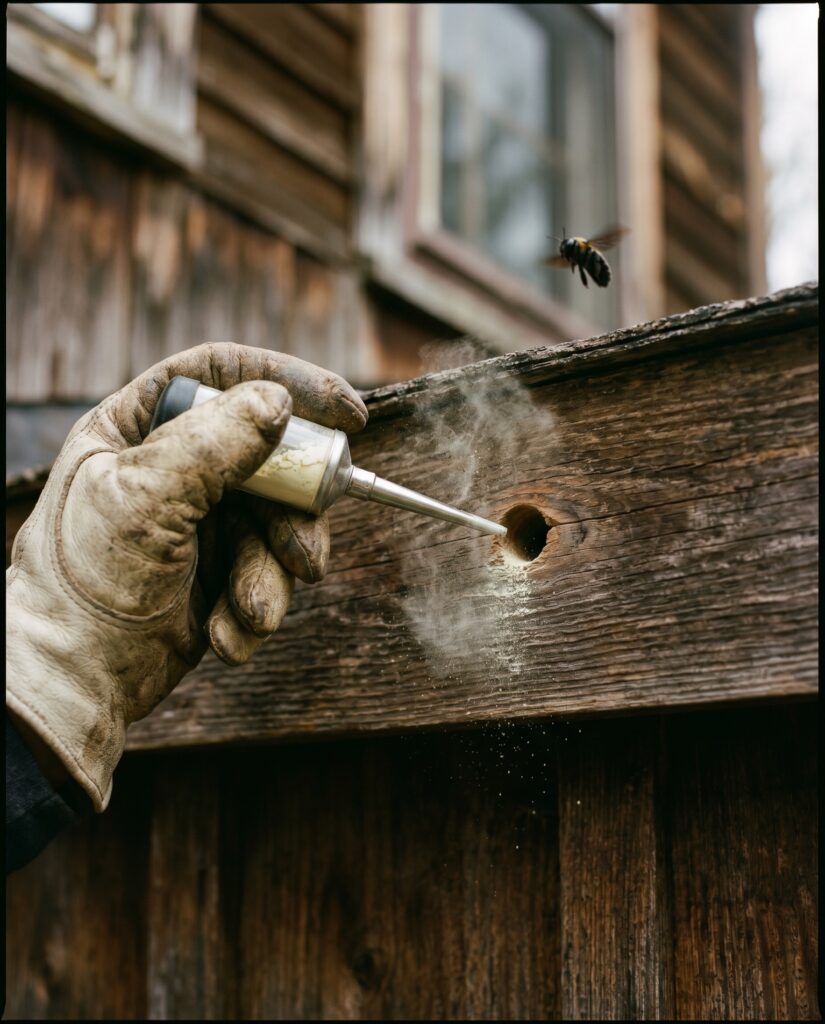
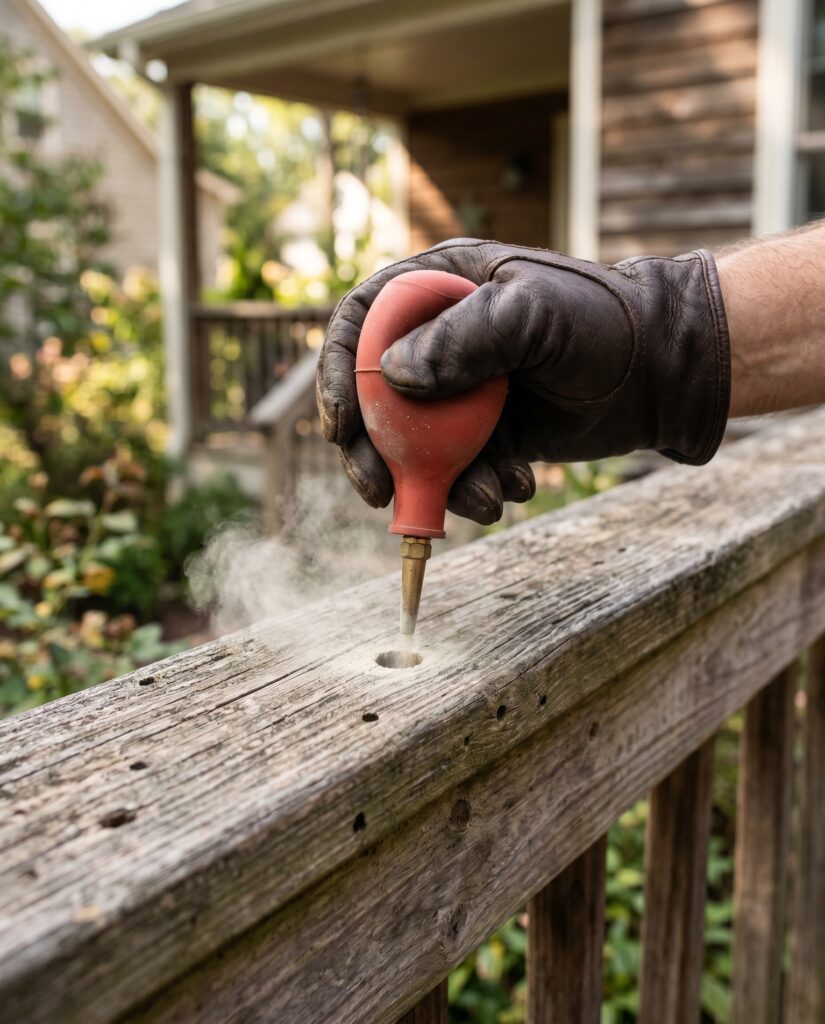
Before you buy a spray, figure out whether the tunnel is live, because that changes everything. A fresh hole has clean edges, a little sawdust below it, and a returning female who flies in and out. If the gallery is active, the cheapest right move is to puff an insecticidal dust into the opening, wait a few days while the returning female carries it back to the brood, and only then plug the hole. The UC IPM Pest Notes on carpenter bees lay out this dust-then-plug order for a reason. Plug a live tunnel too early and you trap bees that simply chew a fresh exit an inch over, and you are back where you started. Our walkthrough on how to get rid of carpenter bees covers the dusting step in detail.
Once the hole is treated or already empty, the prevention work begins, and it is mostly free or cheap. Carpenter bees are native pollinators, not aggressive pests, and the males that hover in your face cannot sting at all, as the University of Kentucky’s carpenter bee fact sheet points out. That matters because the goal here is to move them off your structure, not to wage war on a beneficial insect. A spray or sealant earns its place only after the active galleries are handled.
Why repellents alone never finish the job
Here is the part most roundups gloss over. A citrus or almond-oil repellent smells off to a scouting bee and can push her to nest elsewhere, which is genuinely useful on a railing you cannot paint. What it cannot do is reach the larvae sealed inside an existing tunnel. A repellent on the surface does nothing to a gallery already packed with developing brood, and surface or air spraying in general is wasted effort against bees that live deep inside the wood. Treat the spray as a deterrent for clean wood, not a treatment for an occupied nest.
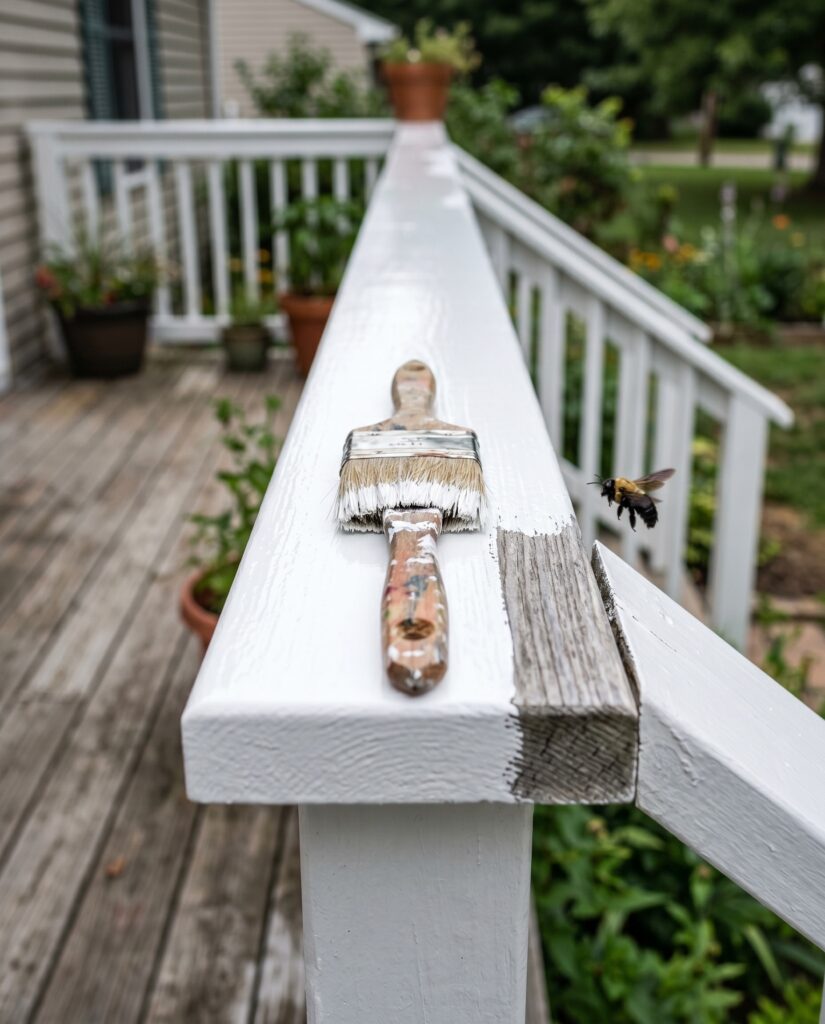
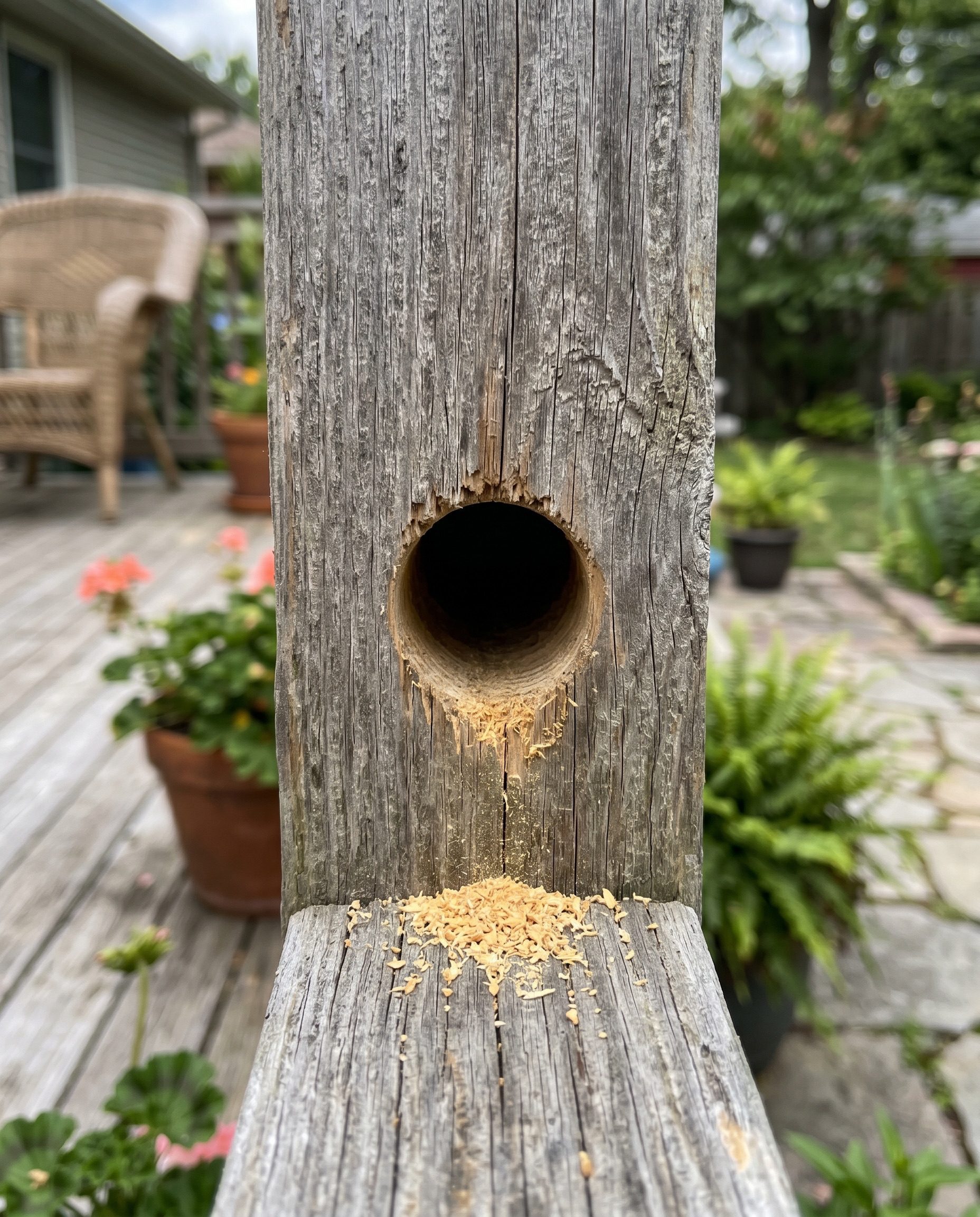
The durable answer is taking the habitat away. Carpenter bees bore into bare, weathered, unfinished softwood, and they overwhelmingly avoid painted or sealed surfaces, a point Penn State Extension’s carpenter bee guidance makes when it explains how galleries get reused and extended year after year. That reuse is why a hole left open is an open invitation: next spring’s bees move into last year’s tunnel and dig it longer, and woodpeckers tear at the wood chasing the larvae, which turns a neat hole into real damage. Finish the wood and plug every hole, and the nesting site is gone for good. This is the case for spending your money on a quart of sealant and a bag of corks before a fancy spray.
Sealant vs repellent vs trap
The three categories solve different parts of the same problem, so match the tool to where you are in the fight rather than buying the loudest label.
| Category | Best for | Watch-out |
|---|---|---|
| Wood sealant or finish | Permanently making bare wood unattractive to bees | Prevention only; will not clear a tunnel already full of brood |
| Citrus or almond-oil repellent | Spots you cannot paint, like a stained railing top | Deters scouts; does nothing to an active occupied gallery |
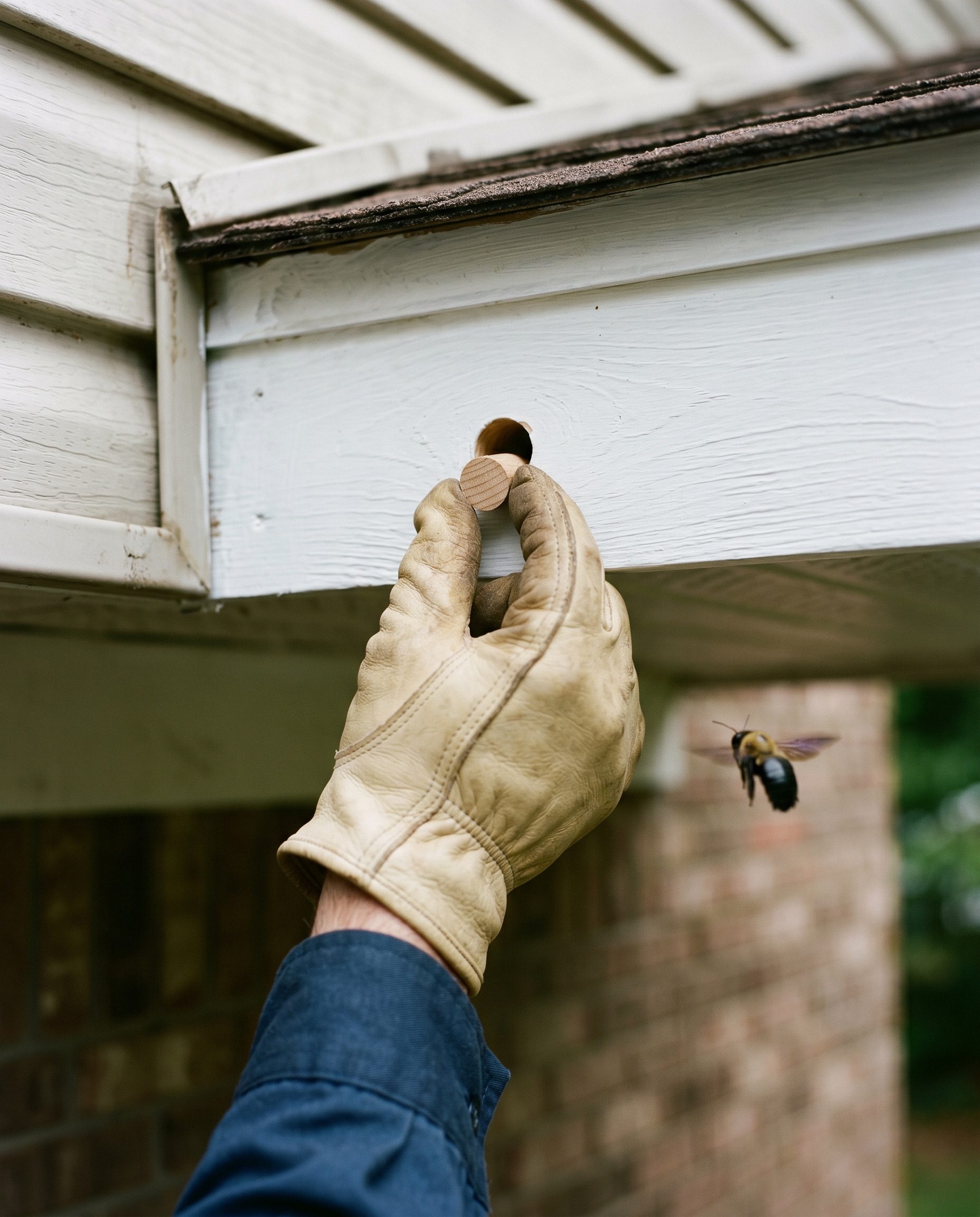
| Hole plugs or wooden corks | Sealing treated or empty tunnels so bees cannot reuse them | Plug only after dusting; sealing live bees in fails |
Why not just hang a trap and call it done? A wooden box trap intercepts adult bees and works best as prevention near a known problem area, but like the repellent it does not reach the brood inside an established tunnel. Iowa State’s carpenter bee page frames management the same way: identify the nesting habit first, then prevent. The honest ranking is sealant and finish as the permanent fix, corks to lock out reuse, and a repellent for the unpaintable spots, with a trap as an extra layer rather than the centerpiece. Our guide to repairing and sealing carpenter bee holes walks through the plug-and-finish sequence.
How to seal and finish the wood
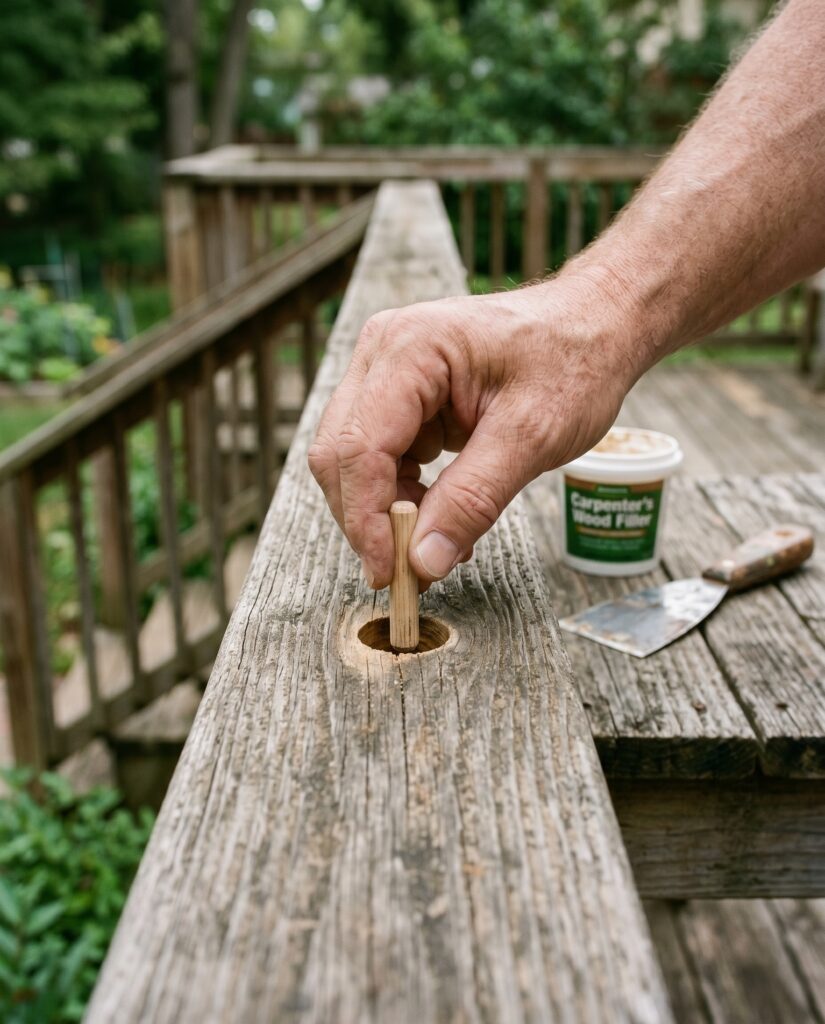
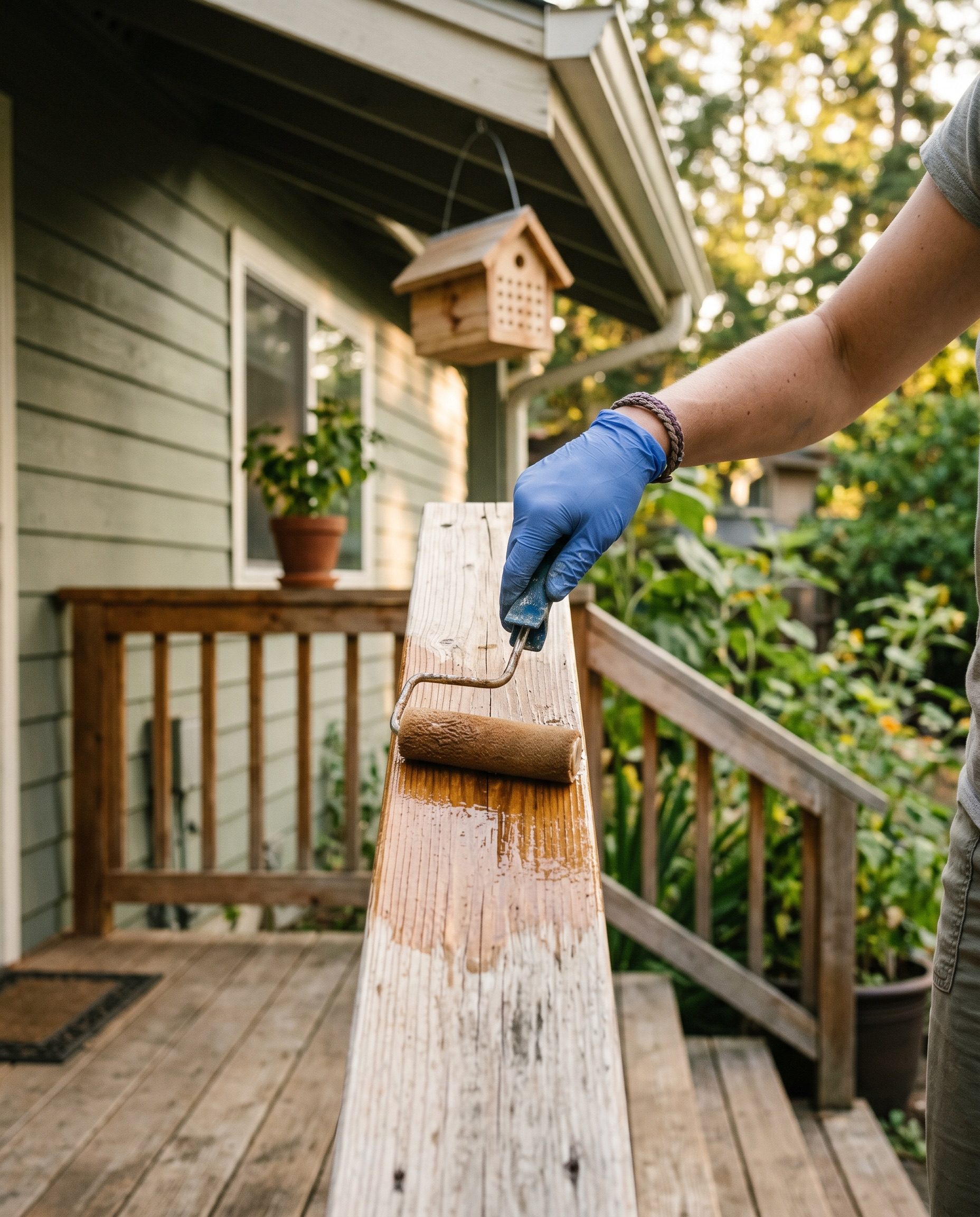
Timing and order are what make this stick. For a live hole, dust first, wait a few days, then push a snug cork or a glued wooden dowel into the opening, sand it flush, and paint or seal over it. For bare wood that is not yet bored, prime and paint or apply a penetrating sealer to eaves, fascia, deck rails, and the underside of railings, since the undersides are where bees love to start. A finished, non-porous surface is the single best deterrent you can apply, and it doubles as weatherproofing. Reapply a finish on the schedule the product calls for so the wood never goes bare again.
Read and follow the product label on anything you spray or seal, because under federal law the label is the law, a principle the EPA’s safe pest control guidance builds its whole least-toxic, IPM-first approach around. Keep children and pets off treated surfaces until they are fully dry, and if anyone is exposed to a product, contact a doctor or your local poison control center. Because carpenter bees are pollinators, lean on exclusion and finishing rather than broad outdoor spraying that harms other bees, and feel free to leave bees nesting in a fence post, a snag, or a dedicated bee block well away from the house. Treat only the galleries causing real structural damage, and prevent the rest. For more on keeping them off in the first place, see our notes on how to prevent carpenter bees.
The picks
These come after the analysis on purpose, because the job decides which one you reach for. They cover the unpaintable spot, the open holes, and the bare wood, and all are common, widely available products.
InsectoGuide is reader-supported. As an Amazon Associate we earn from qualifying purchases at no extra cost to you.
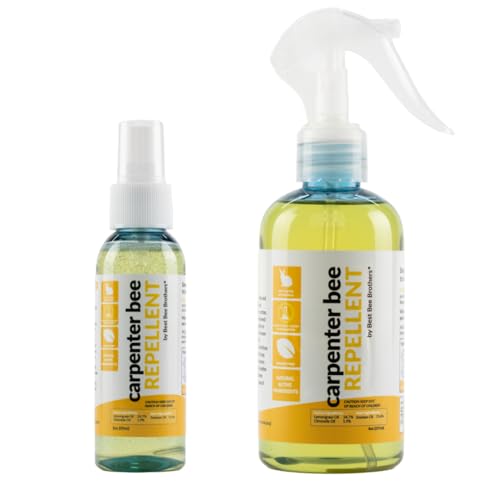
A citrus oil spray for wood you cannot paint or seal.
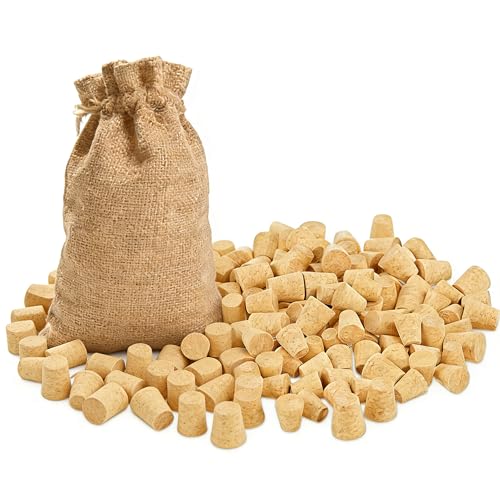
Tapered corks for sealing treated or empty tunnels.
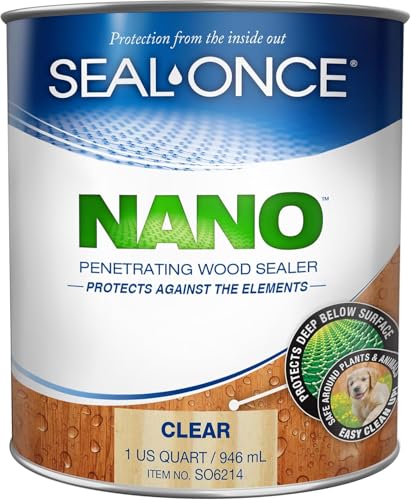
A penetrating sealer that finishes bare wood so bees avoid it.
Common questions
Does a repellent spray actually keep carpenter bees away?
A citrus or almond-oil repellent can make bare wood smell wrong to a scouting bee and push her to nest somewhere else, which helps on surfaces you cannot paint. It will not clear a tunnel that already holds brood, so use it as prevention alongside finishing the wood, not as a standalone cure.
Will carpenter bees come back to the same hole?
Yes, if you leave it open. Galleries get reused and extended year after year, so plugging treated or empty holes is what breaks the cycle, as the Penn State carpenter bee guidance explains. Plug after dusting, then finish over the plug.
Are carpenter bees dangerous to people?
Not really. They are docile native pollinators, the males cannot sting at all, and the females rarely do unless handled, which the University of Kentucky fact sheet confirms. The real concern is cumulative wood damage and the woodpeckers that follow, not the bees themselves.
Can I just paint over the holes?
Paint or seal the bare wood to prevent new boring, but do not paint over a live hole and assume it is solved. Dust an active tunnel, wait a few days, plug it with a cork or dowel, then paint over the plug so the surface is finished and uninviting.
When should I call a professional?
If galleries riddle a structural beam, woodpeckers have opened up the wood, or the nesting is too high or too extensive to reach safely, bring in a licensed pest professional. For a few holes in a deck rail, the dust-plug-seal routine is well within DIY range.
Final verdict
There is no spray that makes carpenter bees vanish, and any list that crowns one is skipping the only thing that lasts: taking away the bare softwood they bore into. Dust an active hole first, wait a few days, then plug it, because a repellent or sealant cannot reach brood already inside the wood. From there the permanent fix is finishing the wood with paint or a penetrating sealer, corking every old hole so next year’s bees cannot reuse it, and using a citrus or almond-oil repellent only on the spots you cannot paint. Skip the idea that spraying a live tunnel will clear it, and skip broad outdoor spraying that harms other pollinators. Finish the wood and plug the holes, and the nesting site is gone for good.