n
n
n
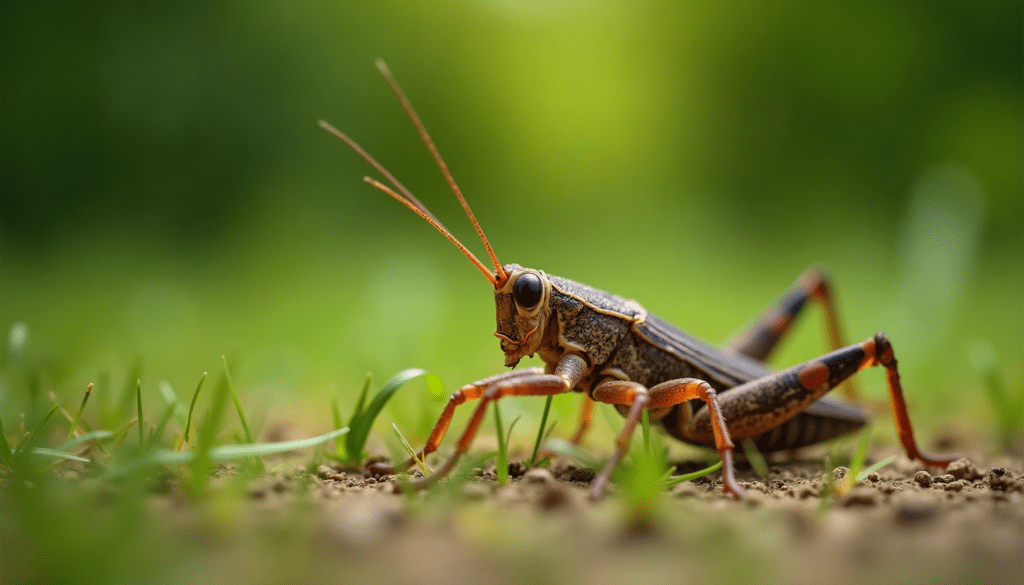
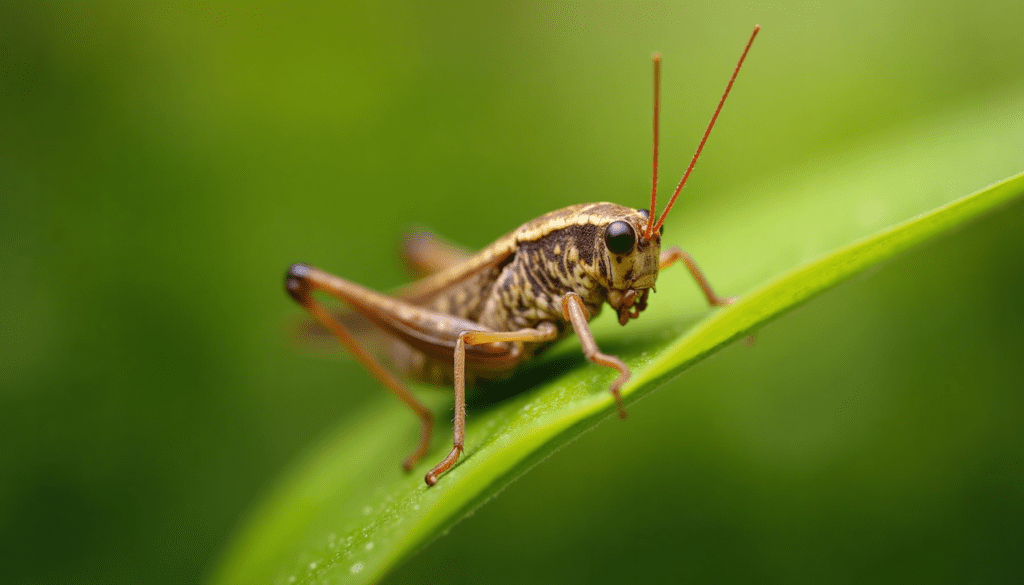
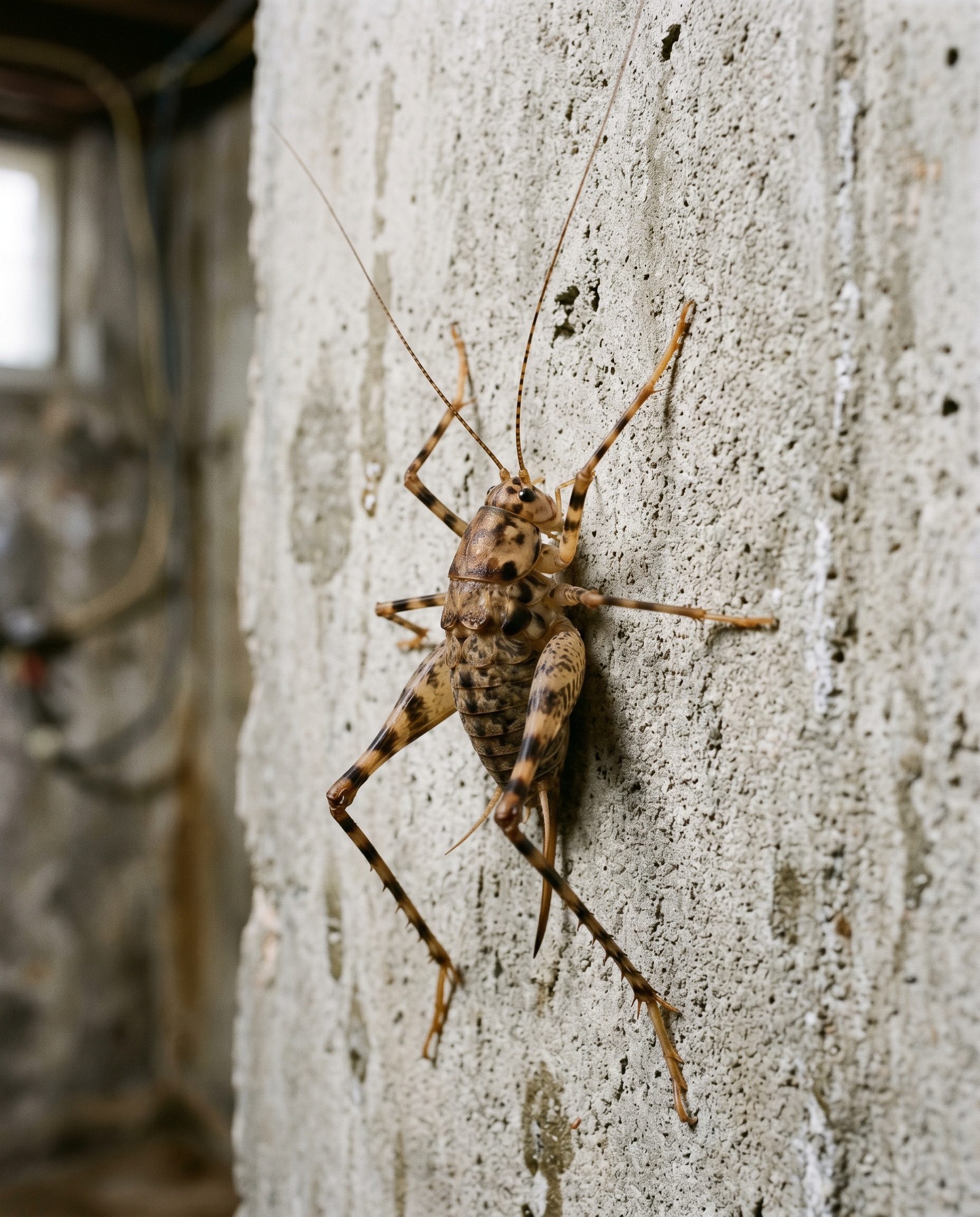
You found a cricket indoors and the first question is which one, because the answer changes how worried you should be and what you do next. The short version: a chirp and a pair of wings mean a house cricket; a humped back with no wings and no sound means a camel cricket. The house cricket (Acheta domesticus) is light tan, has long wings folded flat over its back, and the males sing. The camel cricket, also called a spider cricket (family Rhaphidophoridae), is brown and mottled, arched like a hunchback, completely wingless, and silent, and it jumps in a wild, leg-flailing burst when startled, which is exactly why people swat at it thinking it is a spider.
nn
n
If it chirps and has wings, it is a house cricket that wandered in from the yard; if it is humpbacked, wingless, and silent, it is a camel cricket telling you a basement or crawlspace is damp.
n
- n
- The confirming feature: Wings and a chirp = house cricket; no wings, humped back, no sound = camel (spider) cricket.
- Most-confused look-alike: A camel cricket gets mistaken for a spider because of its long legs and erratic jump, not for a house cricket.
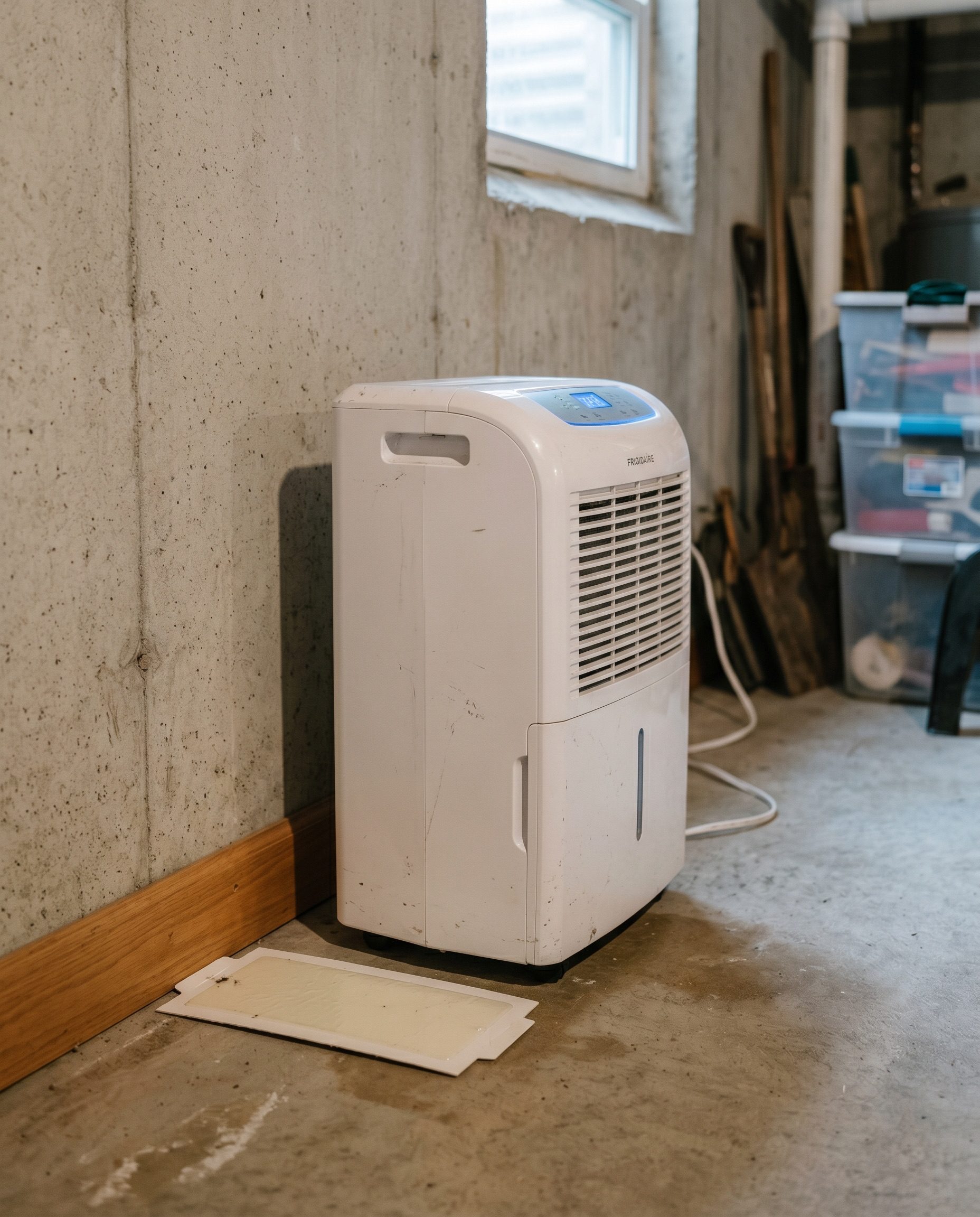
- What it means: Both are harmless nuisances. House crickets point to outdoor lights and gaps; camel crickets point to dampness, so run a dehumidifier.
n
n
n
n
nn
nn
Quick answer
nn
Look for two things and you have the ID in seconds. A house cricket carries flat wings down its back and the males chirp, especially at night near a warm wall or doorway. A camel cricket has no wings at all, a pronounced humped back, very long back legs and long antennae, and it never makes a sound. House crickets are uniform light tan to brownish; camel crickets are brown with darker mottled bands. If the insect leaped sideways across the floor in a jerky scramble when you got close, that erratic jump is the camel cricket’s signature and the reason it earns the name spider cricket. For the wider family, our guide to the types of crickets and how to identify them covers field crickets and the rest alongside these two.
nn
The one feature that confirms it
nn
The single tell is the wings, and you can check it without a magnifier. Bend down and look at the back: a house cricket has two long, flat forewings lying over the abdomen, and the males rub them together to produce the chirp you hear. A camel cricket has nothing there. Its body just arches up into that high, rounded hump and tapers off, with no wing covers and no wing tips poking past the abdomen. Because it has no wings, a camel cricket physically cannot chirp, so silence is a reliable backup confirmation. The sound is not random, either: only male crickets chirp, and the song is a mating call that slows in cold air and stops the instant you disturb the insect. So if you hear singing in your house, you have a house cricket, full stop. If you have a silent, leggy hopper in the basement, you have a camel cricket and no amount of listening will change that.
What lives in carpet goes further into the three things that live in carpet.
nn
nn
Full description
nn
Run down the body and the two are easy to separate. A house cricket is about three-quarters of an inch long, light yellowish-brown to tan, with three faint dark bands across the head, long thread-like antennae, and the flat wings that define it. It looks like the classic cricket most people picture, the one sold as reptile food. Count the legs first out of habit, six means insect either way, but the house cricket’s hind legs are stout jumping legs of normal cricket proportion.
Bugs that look like spiders is the fuller treatment of eight legs is not enough on its own.
nn
The camel cricket looks almost prehistoric by comparison. It runs from half an inch to over an inch, has a strongly humped, wingless body in brown with darker mottling, extremely long banded hind legs, and antennae that can be longer than the body. Those long legs and the hunched posture are what make a startled camel cricket read as a spider when it springs at you in the dark. Iowa State’s writeup on the wingless, humpbacked camel cricket and its damp basements is a good photo match if you want to confirm yours against a reference. Neither species bites people, neither is venomous, and neither feeds on blood; the worst a camel cricket does indoors is occasionally chew on stored paper, cardboard, or fabric.
nn
Look-alikes and where each turns up
nn
People rarely confuse a house cricket with a camel cricket once they see them side by side; the real confusion is the camel cricket versus a spider. The long legs, the jump, and the basement habitat all push the brain toward spider, but a cricket has six legs and a spider has eight, so a quick leg count ends that debate. The other pairing worth knowing is the house cricket versus the field cricket: field crickets are darker, often black, and also chirp, and like house crickets they wander indoors from the yard and are drawn to lights. The table below sorts the three you are most likely to meet.
nn
| Cricket | Key feature | Where you find it |
|---|---|---|
| House cricket | Tan, winged, males chirp | Warm walls, doorways, near indoor lights |
| Camel (spider) cricket | Humpbacked, wingless, silent, long legs | Damp basements, crawlspaces, garages |
| Field cricket | Dark to black, winged, loud chirp | Yards and gardens, strays indoors in fall |
nn
Range, habitat, and why it matters
nn
Where you found the cricket is half the ID, because the two live in different places for different reasons. House and field crickets are outdoor insects that drift inside, especially in late summer and fall when nights cool down. They follow warmth and porch lights to your foundation and slip in through door gaps and cracks, which is why you hear one singing behind the baseboard rather than finding a colony. The University of Minnesota Extension overview of house, field, and camel crickets describes all three as nuisance invaders rather than a health threat, and notes the same outdoor-to-indoor path.
nnA camel cricket is a different signal entirely: it means dampness. These crickets favor cool, humid, dark spaces, so finding several in the basement, crawlspace, or garage is your house telling you the humidity down there is high. They are common nationwide and active year-round indoors wherever the moisture holds. That is the practical payoff of the ID. A house cricket sends you to seal gaps and change the porch light; a camel cricket sends you to a dehumidifier and a drier basement.nn
nn
Is it dangerous, and what to do
nn
Neither cricket is a danger to you, your kids, or your pets. They do not bite in any way that matters, they are not aggressive, they do not carry disease that threatens people, and they will not damage your house structurally. They are a nuisance, not an emergency, so you have time to fix the cause rather than panic-spray. Our short explainer on whether crickets bite or are harmful to people covers that in more detail.
nn
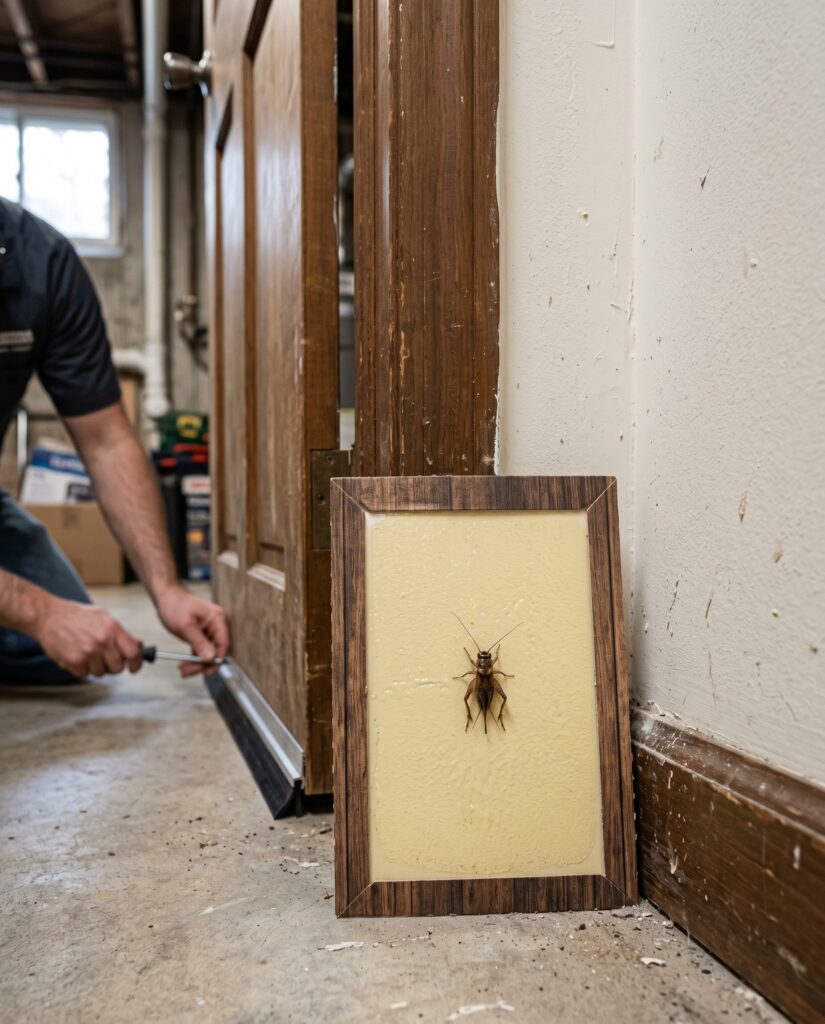
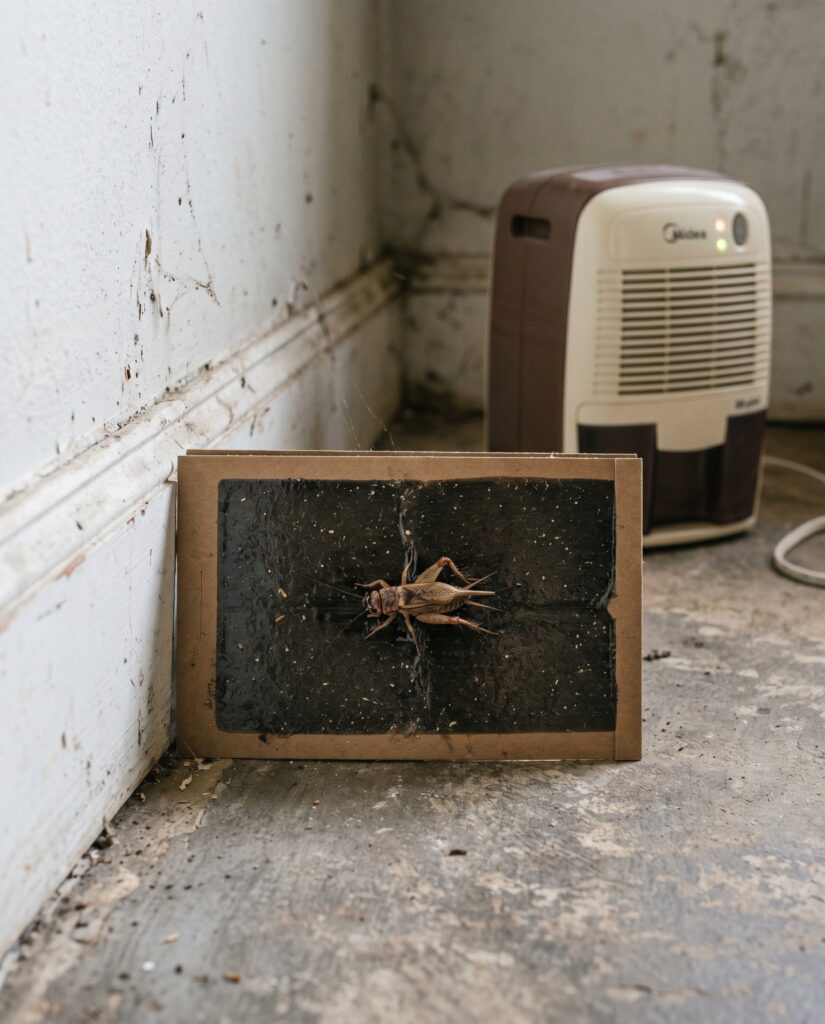
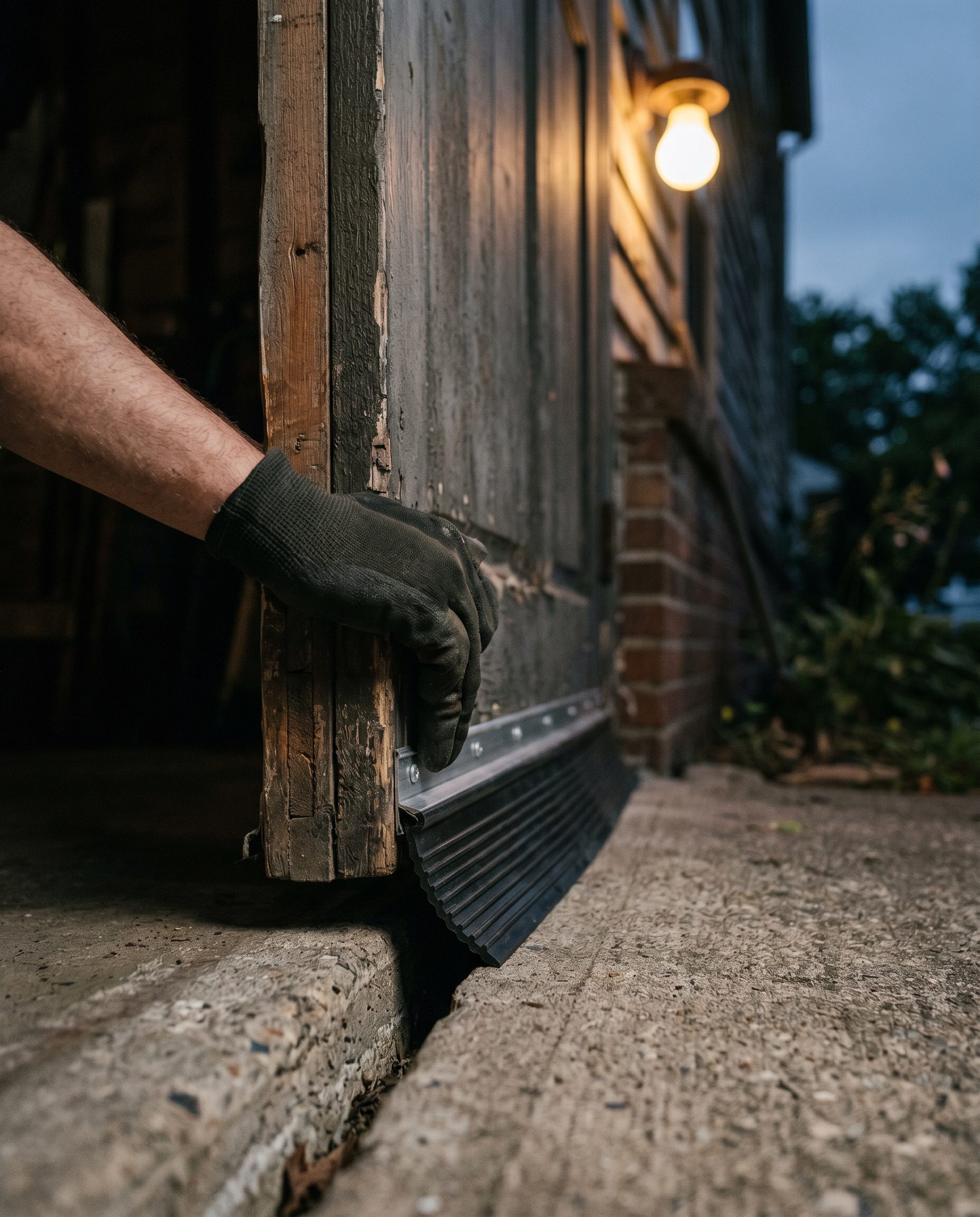
Because both come in from outside and breed outside, killing the ones indoors never keeps up, so the fix is to change the conditions. For house crickets: seal foundation cracks and pipe gaps, add door sweeps, cut tall grass near the house, and switch outdoor bulbs to yellow to pull fewer in. For camel crickets, the dehumidifier is the single most important move, paired with sealing entry points; drying the space out removes the reason they are there. Glue boards along basement walls catch and monitor either one, and any perimeter treatment belongs outside. The EPA’s guidance that exclusion and sanitation come before any spray is the right order here, and indoor fogging is not a fix for either cricket. For the damp-basement case specifically, our walkthrough on how to get rid of camel crickets in a basement lays out the moisture-first plan.
nn
Common questions
nnDo camel crickets chirp?n
No. Camel crickets are wingless, and crickets make sound by rubbing their wings together, so a camel cricket is silent. If you hear chirping in the house, you are listening to a winged species, most likely a house or field cricket, and only the males of those sing.
nnWhy does my camel cricket jump at me?n
That erratic, leg-flailing leap is a startle defense, not aggression. With no wings to fly off and long powerful hind legs, a camel cricket bolts in a sudden jump when it senses a threat, and in a dim basement that motion is exactly why people mistake it for a spider.
nnAre house crickets or camel crickets a sign of a dirty home?n
No. House crickets follow warmth and outdoor lights in from the yard, and camel crickets follow moisture into cool, humid spaces. A clean house with a damp basement will still draw camel crickets, so the trigger is conditions, not cleanliness.
nnDo either of these crickets bite?n
Not in any meaningful way. Neither is built to bite people, neither is venomous, and neither feeds on blood. The most either does indoors is occasionally chew on paper, cardboard, or natural fabrics, which is a nuisance, not a health risk.
nnWhich one means I have a moisture problem?n
The camel cricket. Several of them in a basement, crawlspace, or garage is a reliable sign the humidity there is high, which is why a dehumidifier is the core fix. A singing house cricket points instead to gaps and outdoor lighting, not dampness.
nn
Final verdict
nn
The ID comes down to wings and sound. A winged, chirping, tan cricket is a house cricket that wandered in from the yard chasing warmth and light, and the fix is to seal it out and dim the porch. A humpbacked, wingless, silent cricket with very long legs is a camel cricket, and its presence is really a humidity reading: dry the basement out with a dehumidifier and seal the gaps, and the population fades on its own. Count the legs if the jump made you think spider, because six legs settles that instantly. Get the name right first, because one cricket points you at lights and gaps and the other points you at moisture, and treating the wrong cause is how people stay frustrated.
nn
Next steps:
nn
– Tell the whole family apart with our types of crickets identification guide.
n
– If it is the damp-basement kind, follow the moisture-first plan in how to get rid of camel crickets in a basement.
n
– Still worried about a bite, check do crickets bite and are they harmful.
nn