That sound keeping you up is a courtship call, not random noise. Crickets chirp because the males are singing, partly to attract females and partly to warn off rival males, and they make the sound by rubbing a hardened scraper on one wing across a row of tiny teeth on the other, not by rubbing their legs the way most people assume. The tempo tracks the temperature so closely that you can roughly read the degrees off the chirp rate, and the same few facts that explain the song are exactly what help you find the one cricket loose in your house and quiet it down.
Only male crickets chirp, and they do it by scraping one wing against the other to attract mates and warn off rivals; the rate rises and falls with temperature, and the song stops the moment the cricket feels threatened.
- Why they sing: Males call to attract females and defend territory from other males.
- How they do it: A wing-against-wing scraper and file, called stridulation, not the legs.
- What it tells you: Faster chirps mean warmer air; sudden silence means you got close.
Only the males are singing
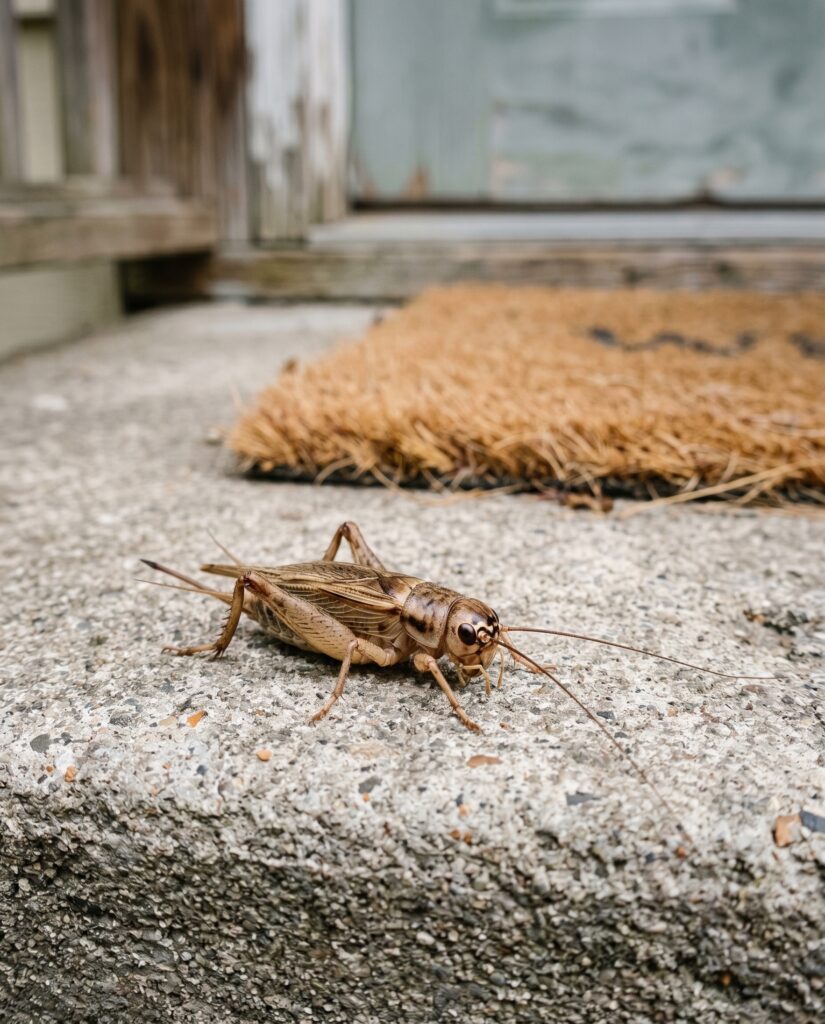
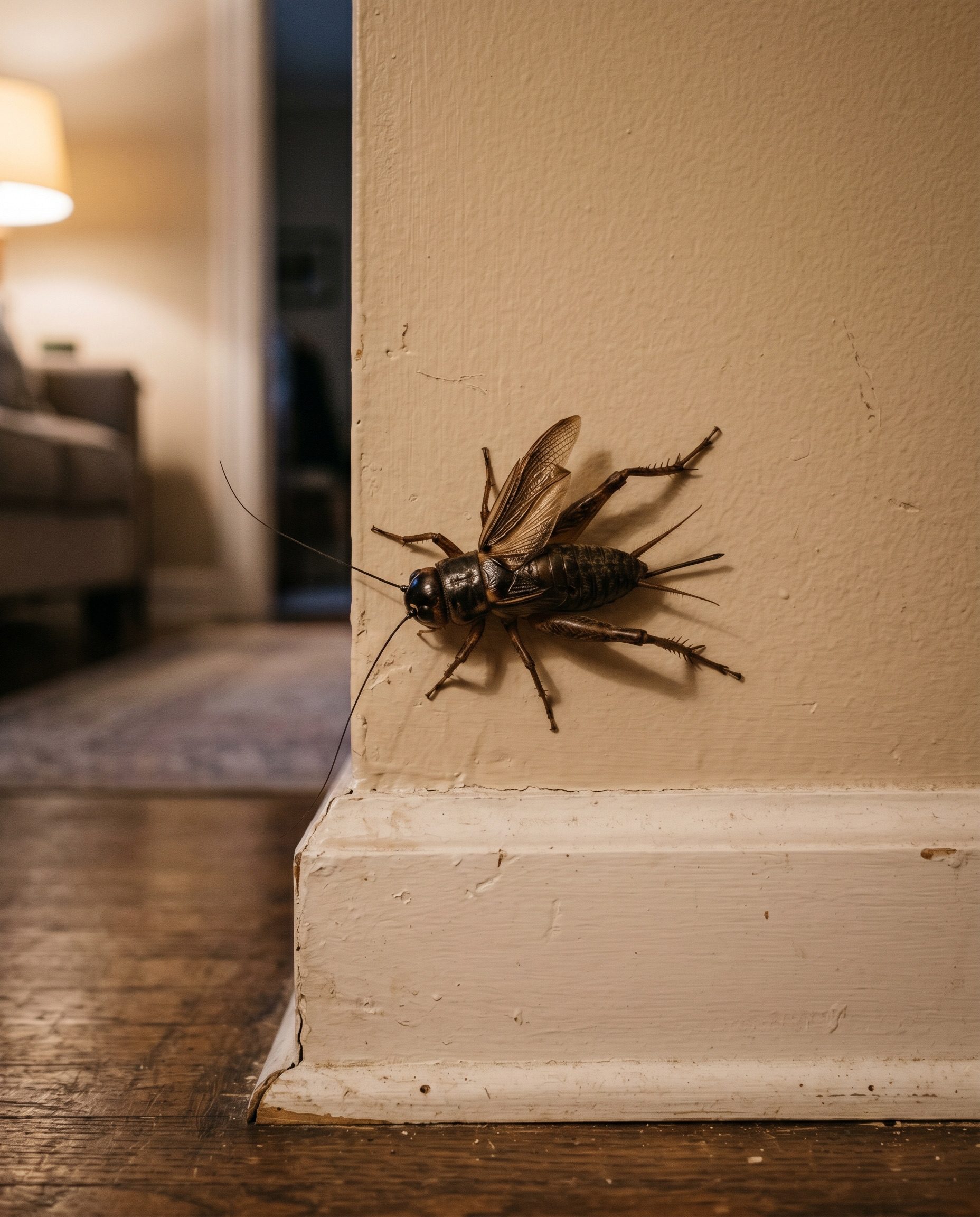
The first thing to get straight is that the cricket making noise in your wall is male. Females do not chirp at all. As the chirping comes from males describes for the common house cricket, the song is part of mating, and a female cricket lacks the equipment to produce it. That single fact is the most useful one in this whole guide, because it tells you that you are dealing with one calling male, not a chorus hiding in the drywall.
It also tells you something about timing. A male sings hardest when he is healthy, established in a spot he likes, and looking for a mate. Knock him off his rhythm and the song falters. If you have ever clapped or stomped and heard the chirping cut out, that is the male reacting to a threat, which is a behavior you can use later when you go looking for him.
How a cricket actually makes the sound
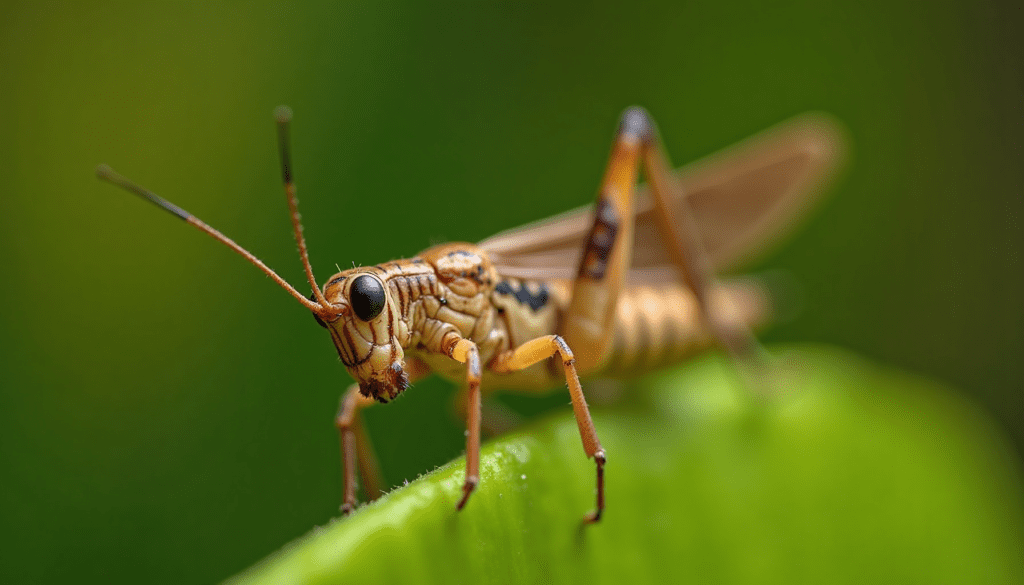
People picture a cricket rubbing its back legs together like a grasshopper, and that picture is wrong. Crickets sing with their wings. Each forewing carries a hardened ridge, and along the underside of one wing runs a comb-like row of teeth called a file. The cricket lifts its wings slightly and draws the sharp scraper of one wing across the file of the other, and the whole wing surface vibrates to amplify it, the way a guitar body amplifies a plucked string. Entomologists call this stridulation.
To get the song, a male will rub a row of teeth on one wing against a scraper on the other in fast, repeated strokes, and the speed of those strokes sets the pitch and the rhythm you hear. This is the single mechanical fact that confirms what you are listening to: if the sound is a clean, ringing, repeated chirp rather than a buzz or a rasp, you are hearing wings, not legs, and almost certainly a true cricket rather than a katydid or a grasshopper.
The song is a mating call
A cricket’s song is not one note with one meaning. The males produce a few distinct songs, and according to Extension descriptions, the males sing to draw in females and stake out territory. The loud, steady calling song carries the farthest and is the one that reaches you through a wall; it is broadcast advertising aimed at any female within earshot. A quieter, faster courtship song follows once a female is close. A third, harsher song is aggression, used when two males meet and one tries to push the other off his patch.
So the cricket in your basement is not chirping to annoy you. He is doing the one thing his short adult life is built around, which is finding a mate before the season ends. That is also why a single male can sing for hours without tiring of it. Understanding the drive behind the song is the difference between swatting at random and knowing you only have to silence one determined suitor.
Reading temperature from the chirps
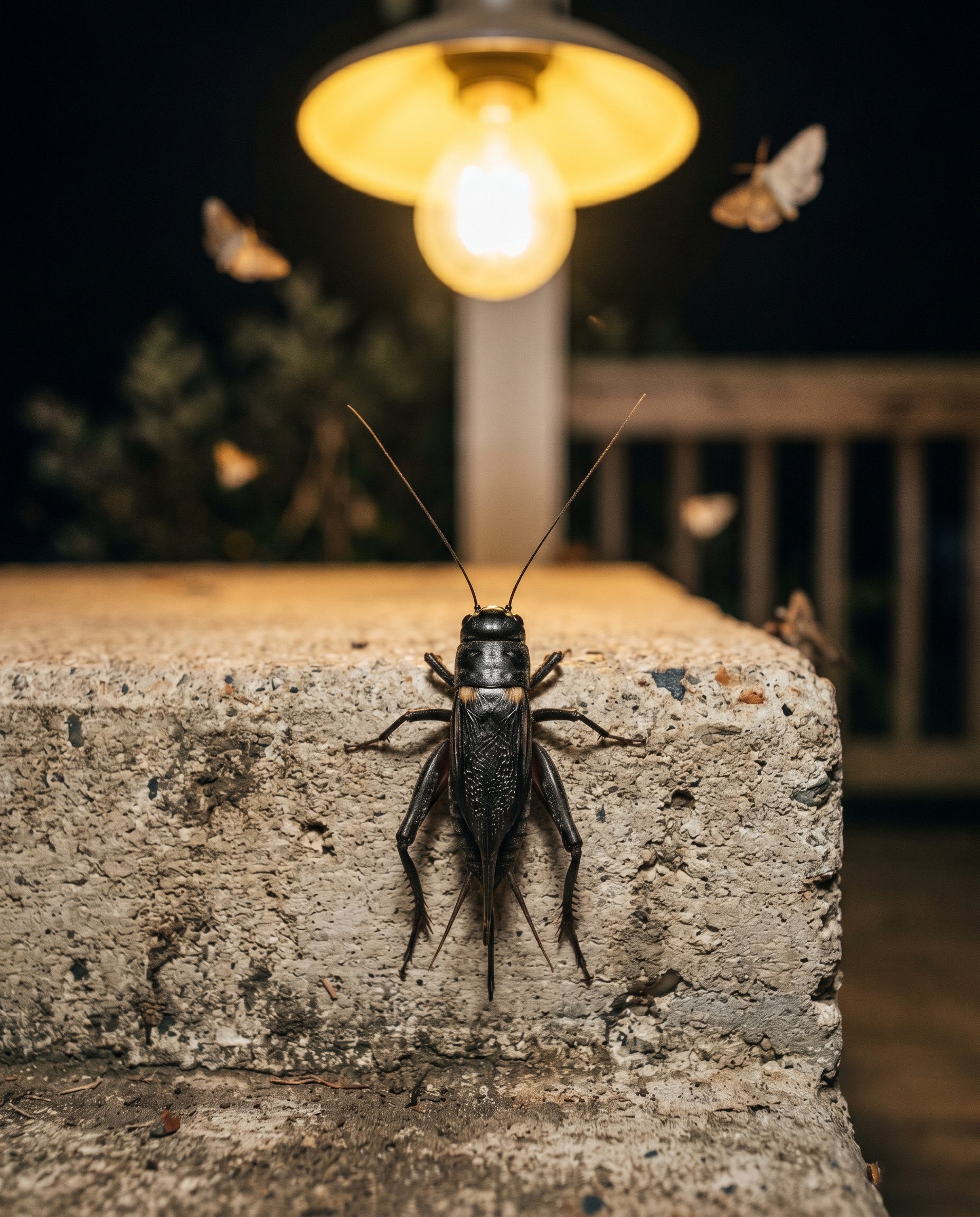
Here is the part that surprises people. A cricket is cold-blooded, so the rate of those wing strokes rises and falls with the air temperature around it. Warm the cricket and the muscle fires faster, so the chirps speed up; chill it and everything slows down. The relationship is steady enough that you can roughly estimate the temperature by counting.
A common field-guide method for snowy tree crickets is to count the chirps in 14 seconds and add 40 to get a rough temperature in Fahrenheit. It is an approximation, not a thermometer, and the exact formula varies by species, but the principle holds across crickets: a faster song means warmer air. This is why the chirping you hear on a hot August night is more frantic than the slow, spaced-out calls of a cool fall evening, and it is the clue that tells you a cricket will go quiet on its own once the nights turn cold.
| What you hear | What it usually means | What to do |
|—|—|—|
| Fast, urgent chirping | Warm air, an active calling male | Search now while he is singing |
| Slow, spaced-out chirps | Cooler air, a sluggish cricket | He is easier to catch when chilled |
| Sudden silence | The cricket sensed you nearby | Freeze, wait, then triangulate |
Why the chirping stops when you get close
You have probably lived this: you creep toward the sound, and the instant you are close, it stops. That is not coincidence. A singing male is broadcasting his location to every predator in the area too, so crickets are wired to cut the song the moment they sense vibration, a shadow, or footsteps. The silence is a defense, and it is the most reliable tool you have for pinpointing him.
Work with it instead of against it. Move a few steps, stop, and wait in the dark; a patient cricket will start up again once he decides the threat has passed, and each restart narrows the search. Cold helps you here as well, because a chilled cricket is slow to flee and slow to resume. If you want the full room-by-room method, our guide on how to stop cricket chirping and find the cricket walks the triangulation step by step.
Not every cricket chirps
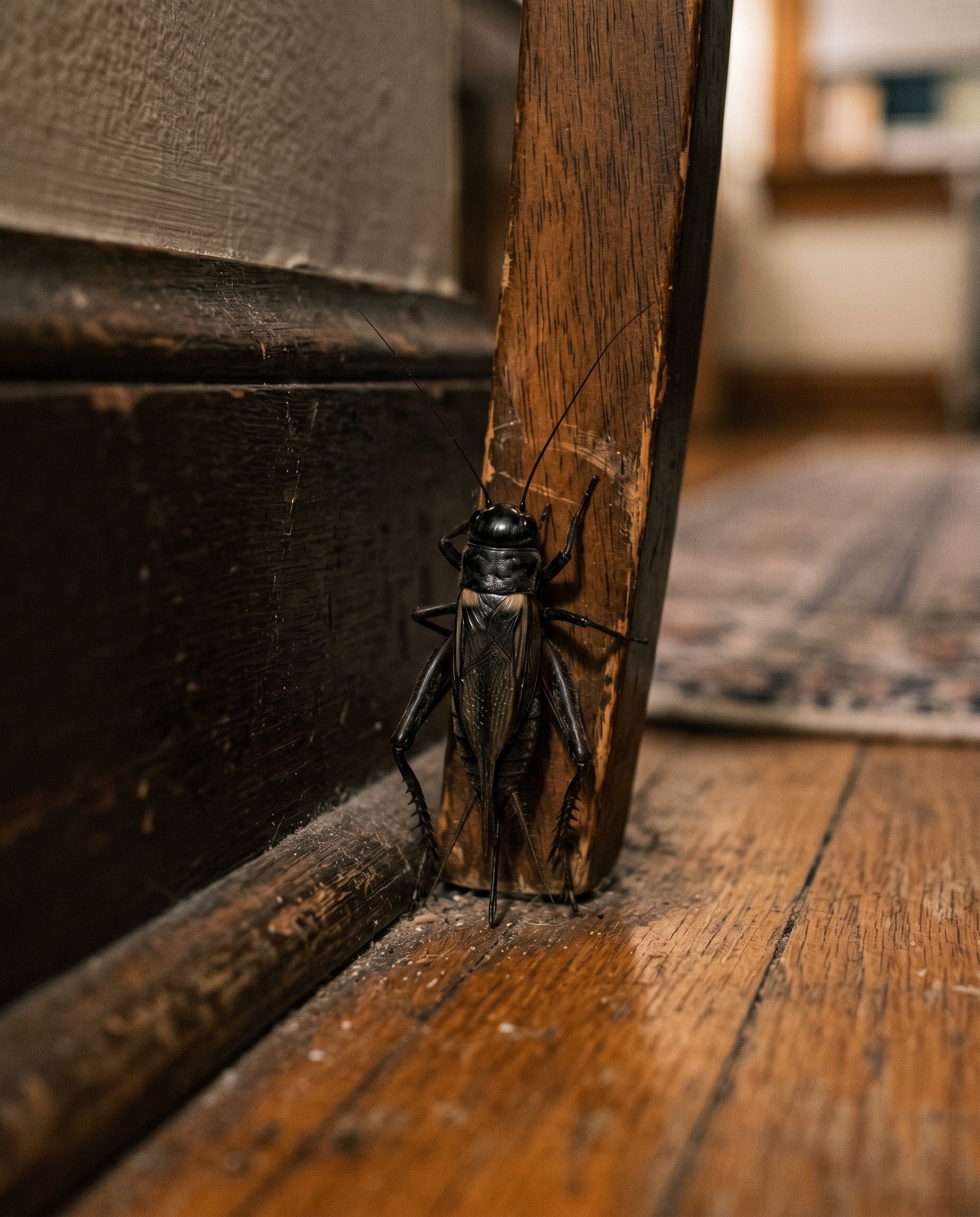
If you have something cricket-shaped that never makes a sound, it may not be a chirping species at all. The humpbacked camel cricket, also called the spider cricket or cave cricket, is the usual culprit in basements and crawl spaces. As Extension descriptions note, camel crickets have no sound-producing wings, so they are completely silent. A truly silent cricket in your basement is almost always a camel cricket, not a field or house cricket that simply happens to be quiet.
That distinction matters for what you do next. The species that sing, like field crickets and house crickets, are nuisances that wandered indoors and will leave or die back as the season ends; they are not a health threat and they do not damage a home structurally. If you want to tell the singers from the silent ones at a glance, our types of crickets identification guide lays out the body shape, wings, and habitat that separate them. The right long-term answer for any of them is exclusion first, sealing the gaps they use to get in, which is the non-chemical exclusion before any spray approach the EPA recommends for nuisance insects.
Common questions
Do female crickets chirp?
No. Only males chirp, because the song is a mating call and females do not have the wing structure that produces it. If you are hearing a cricket, you are hearing a single male advertising for a mate, which is good news when you are trying to track down just one sound.
Why do crickets chirp at night?
Most chirping crickets are nocturnal, so night is when the males are active and calling. Darkness also offers some cover from predators while a male broadcasts his location. The chirping can feel louder at night simply because the house and the neighborhood are quieter, so the song stands out more.
Do crickets chirp with their legs?
No, and this is the most common myth about them. Crickets sing by rubbing their wings together, drawing a scraper on one wing across a file of teeth on the other. Grasshoppers are the ones that often rub a leg against a wing; true crickets use wing-on-wing stridulation.
Why does the chirping speed up and slow down?
Crickets are cold-blooded, so their chirp rate tracks the temperature. Warmer air speeds up the wing muscles and the song; cooler air slows both. That is why summer chirping sounds urgent and fall chirping sounds lazy, and why the noise fades for good once nights turn cold.
Are chirping crickets harmful?
The chirping species are a nuisance, not a danger. They do not spread disease and they are not aggressive, though a large cricket can deliver a weak nip if handled. For the full rundown, see our guide on whether crickets bite and are harmful.
Final verdict
The chirping that wakes you is a male cricket singing to attract a mate and warn off rivals, produced by wings rubbing together rather than by legs, and paced by the temperature around him. That handful of facts is more practical than it sounds: because only males sing, you are chasing one cricket, not a swarm; because the song stops when he feels threatened, his silence is your direction finder; and because cold slows him down, a chilled, sluggish cricket in fall is far easier to find and remove than a frantic one in midsummer heat. Get the species right first, since a silent basement cricket is almost certainly a wingless camel cricket that will never chirp at all, then seal the gaps it used to get in.
Next steps:
– Track down the exact source with our guide on how to stop cricket chirping and find the cricket.
– Confirm whether yours is a singer or a silent camel cricket in the types of crickets identification guide.
– Settle the worry about bites with our breakdown of whether crickets bite and are harmful.