Diatomaceous earth earns its place because it kills crawling insects mechanically: the fine powder abrades the waxy coat that holds their moisture in, so they dry out and die, and that is why roaches, ants, fleas, bed bugs, and carpet beetles never build resistance to it the way they do to sprays. The short answer: seal and clean first, then dust a thin, nearly invisible layer of food-grade DE into the cracks, voids, and runways where bugs travel, not a thick visible pile, and reapply whenever it gets damp because wet DE stops working. For our own place we keep one bag of food-grade powder and a duster on hand, nothing fancier. Most lists hand you a giant bag and call it done; the part they skip is that a duster and a light touch matter more than the brand on the bag.
Diatomaceous earth kills crawling insects mechanically by drying out their waxy coat, so there is no resistance; use food grade, not pool grade, dust a thin layer into cracks and runways rather than a pile, and reapply whenever it gets damp.
- Do first (free): Seal entry gaps and clean up crumbs and moisture so fewer bugs come looking in the first place.
- Best for the common case: Food-grade DE puffed in a light layer with a duster, into cracks, voids, and along the runways bugs walk.
- Skip: Pool-grade DE, thick visible piles bugs walk around, and counting on it to work where it gets wet.
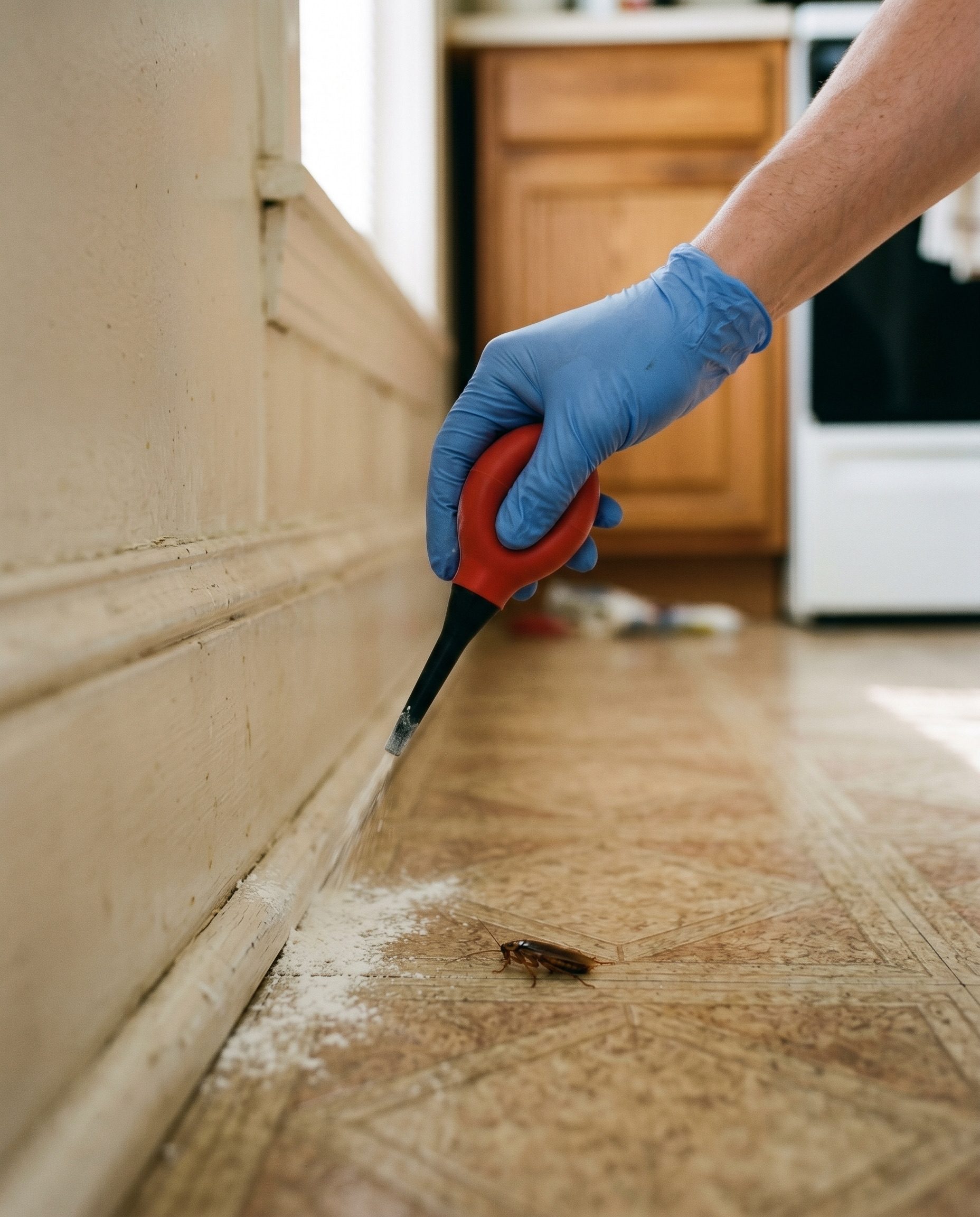
What to do first
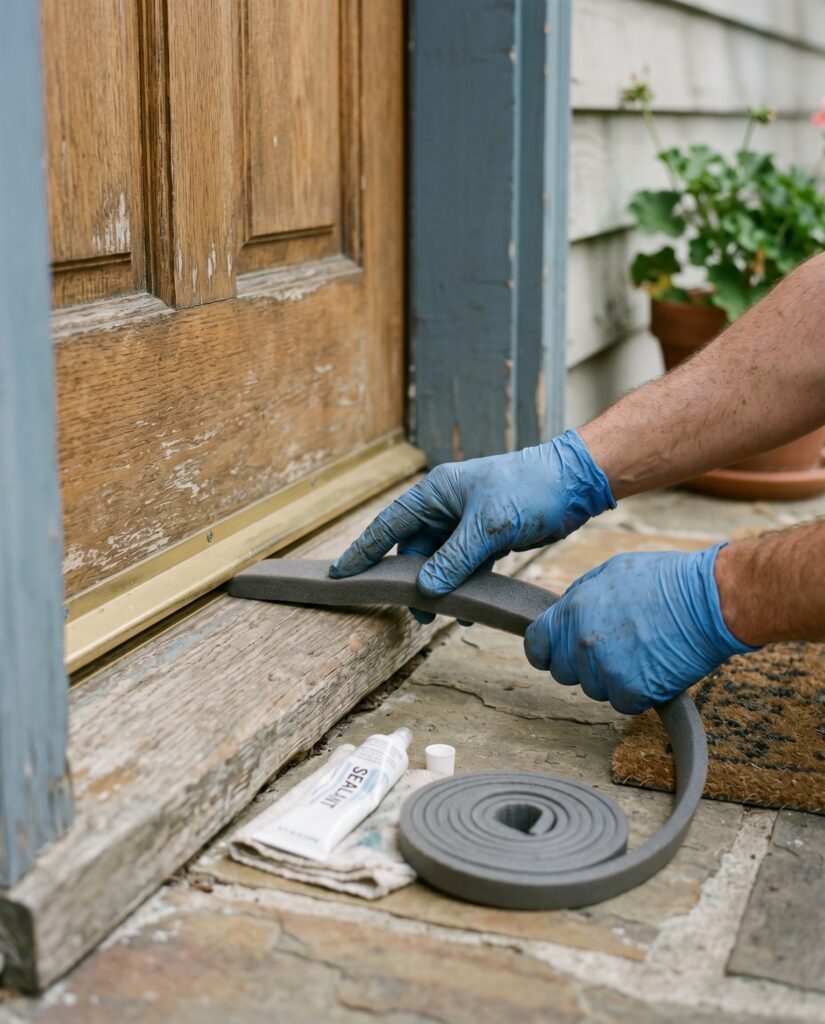
Before any powder comes out, do the free part, because DE only works on bugs that already have a reason to walk through it. Wipe up crumbs and grease, fix the drip under the sink, and caulk the gaps along baseboards and pipe penetrations so fewer insects get inside and the ones that do funnel past the spots you treat. The EPA’s safe pest control guidance puts sanitation and exclusion ahead of any product for exactly this reason, and a clean, sealed room makes a light dusting do far more work. If you are weighing powders against sprays in general, our breakdown of natural versus chemical pest control lays out where each one fits.
Then buy the right grade, because this is the one mistake that wastes the whole effort. Use food-grade DE, never pool-grade. Pool-grade DE is heat-treated into a glassy crystalline form for filters and does not kill insects the way the food-grade powder does, and breathing its dust is a known hazard. The NPIC diatomaceous earth fact sheet explains the difference and confirms that the food-grade powder is the form used for crawling-insect control. Buy a bag labeled food grade, keep a duster with it, and you have everything the method needs.
Why a thin layer beats a pile
Here is the part most “best DE” lists skip. The instinct is to dump a thick white line so you can see it working, and that is exactly backwards. A visible pile is something bugs walk around, not through. Diatomaceous earth kills by contact as the insect drags its body across the fine particles, which scratch and absorb the waxy layer that seals in its water, so it slowly dries out. That only happens if the bug actually crosses a film thin enough that it cannot detour past it. The NPIC fact sheet describes this mechanical drying action, which is why the kill is slow, takes a few days, and depends entirely on coverage rather than dose.
The second half of that mechanism is the catch that decides everything about how you apply it. DE works only while it stays dry. Wet powder clumps and loses its abrasive edge, so a damp basement, a humid bathroom, or a single mopping resets the treatment to zero. That also makes the resistance angle real: because the kill is physical abrasion, not a nerve toxin, insects cannot evolve around it the way they do around the active ingredients in a house bug spray. The UC IPM guidance on understanding pesticides frames the smarter move as choosing the targeted, least-toxic option for the job and reading the label, which is what a thin, placed dusting is. If the problem is large, hidden in walls, or structural, that is the point to bring in a licensed pest professional rather than burying the house in powder.
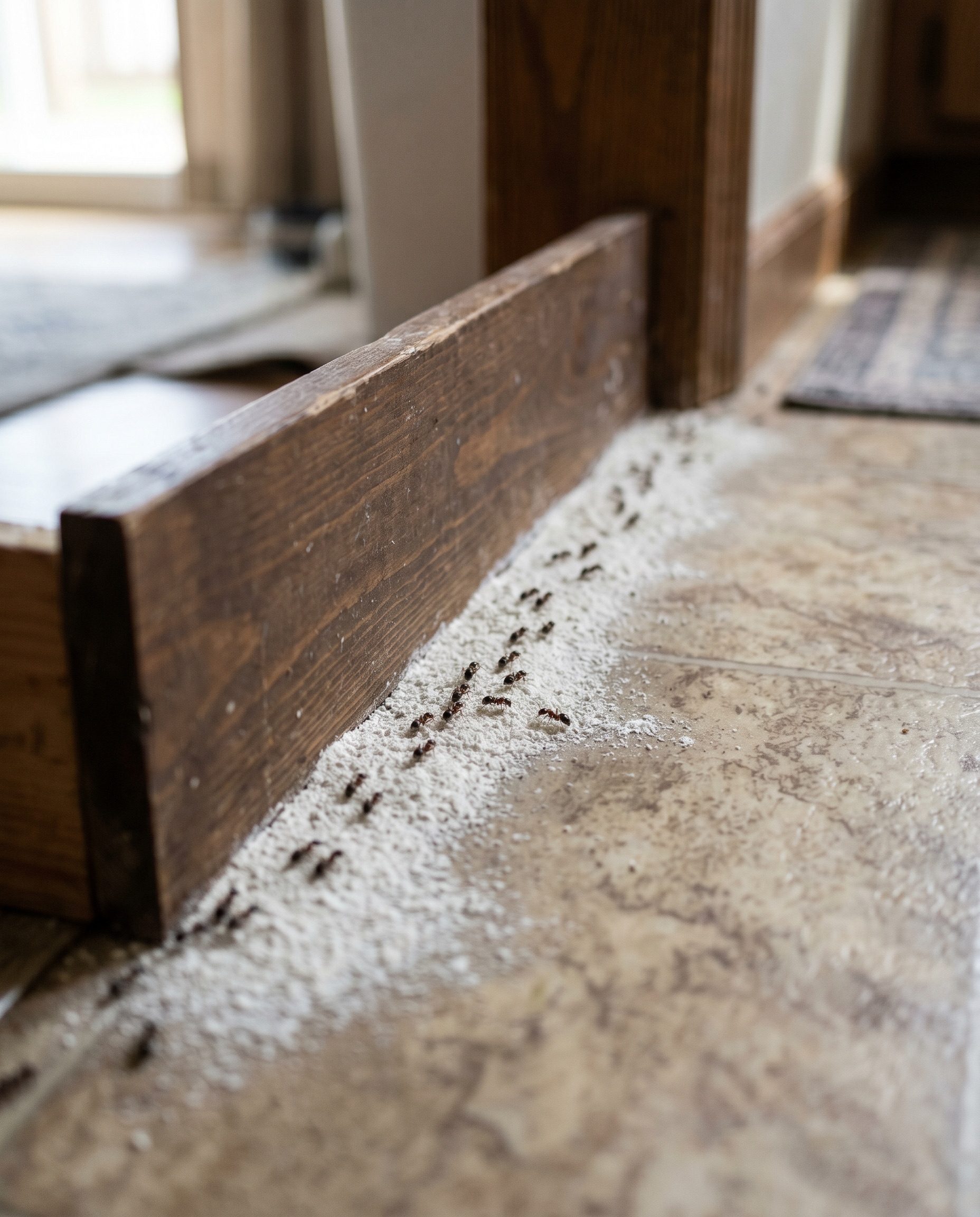
Where to dust it
DE is not a broadcast product, so match it to where the pest actually travels. The decision is short: which bug, and where does it walk. Dust the runways and harborage, leave the open floor alone, and you will use a fraction of the bag for a better result.
| Pest | Where to dust | Watch-out |
|---|---|---|
| Roaches and ants | Cracks, behind appliances, under sinks, along baseboard runways | Keep it thin and out of food-prep zones; reapply if it gets wet |
| Fleas | Pet bedding edges, carpet cracks, baseboard gaps | Vacuum first; never dust the pet directly |
| Bed bugs and carpet beetles | Bed-frame joints, mattress seams (per label), closet edges | One tool among several; pair with laundering and encasements |
Why not just dust the whole floor and call it covered? Because an even film across open space is wasted; bugs do not graze a carpet, they run the edges and the dark gaps. Treat the lines they follow, not the room. A duster matters here more than the powder, because squeezing a fine puff lays the thin layer DE needs and pushes it into voids you cannot reach by hand. Where you want a faster knockdown on what is already out, DE pairs well with indoor traps and glue boards, which catch movers while the dust works the runways over the following days.
How to apply it safely
Load a duster, not a spoon, and lay the lightest line you can still barely see. Puff it into the crack where the baseboard meets the floor, into the void behind and beneath appliances, along the back edge of cabinets, and into the gaps around pipes, getting the nozzle right into the seam rather than dusting the surface in front of it. Coverage of the runway beats a heavy dose every time. Although DE is among the lower-toxicity options, it is still a pesticide product, so read and follow the label, because under federal law the label is the law; the EPA’s integrated pest management principles put this targeted, label-driven application ahead of broadcasting anything.
Treat it with the same care you would any dust around a home. Keep the fine powder out of food-prep surfaces and away from pet bowls, avoid creating a cloud you breathe in, wear a dust mask while you apply it, and keep children and pets off freshly dusted areas until it settles into the cracks. If anyone has a reaction to inhaling the dust, contact a doctor or your local poison control center, and you can check the NPIC fact sheet for handling questions. One firm rule on grade bears repeating: the food-grade powder is for pests, and the pool-grade product is not a substitute.
Then plan to reapply, because that is the step people forget. Refresh the dust after any moisture and roughly every couple of weeks while you are working a problem, since vacuuming, mopping, or humidity will pull it out of service. Pair it with the prevention you did up front, keep the gaps sealed and the kitchen clean, and the powder becomes a quiet maintenance layer rather than a one-time fix.
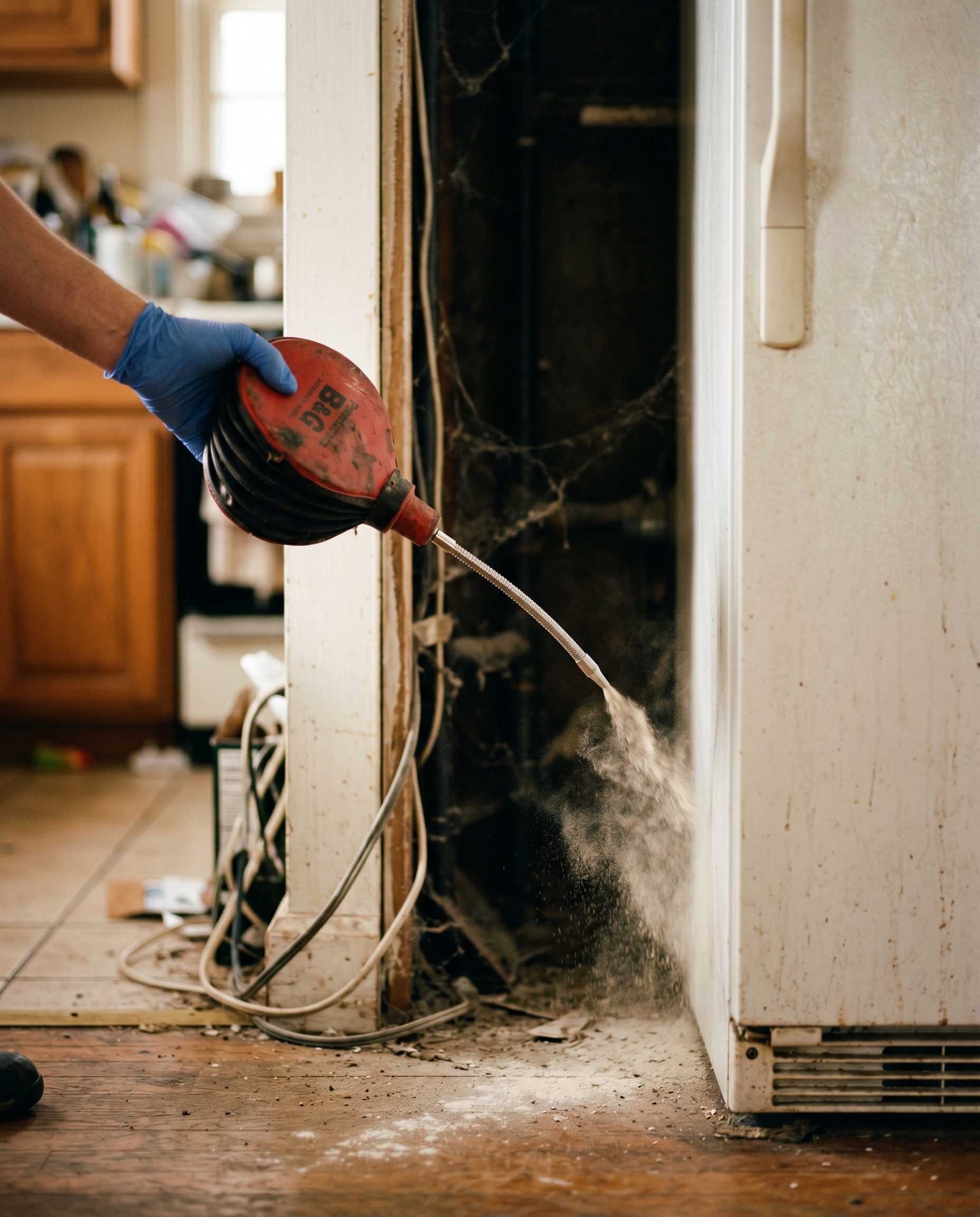
The picks
Cards come after the analysis on purpose, because the method, food-grade powder laid thin with a duster, decides what is worth buying more than the label does. These three cover the common-case bag with an included duster, a bulk option for repeat use, and a dedicated applicator, and all are widely available diatomaceous earth products.
InsectoGuide is reader-supported. As an Amazon Associate we earn from qualifying purchases at no extra cost to you.
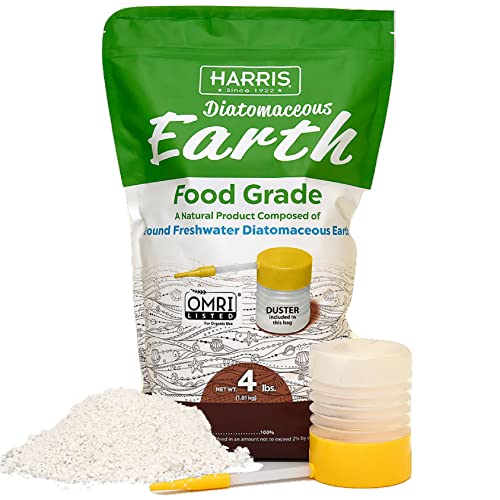
Food-grade powder with a duster, the starter setup for most homes.
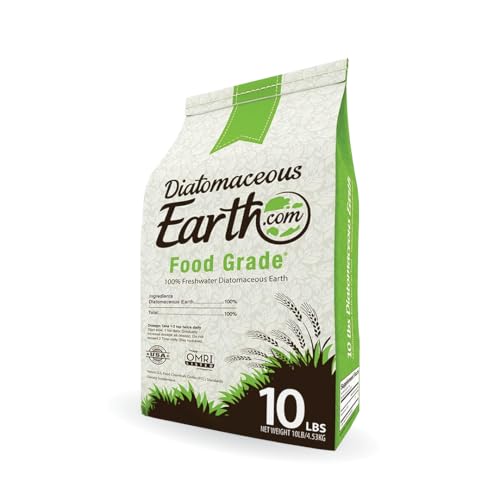
A big bag for whole-home or repeat use over a season.
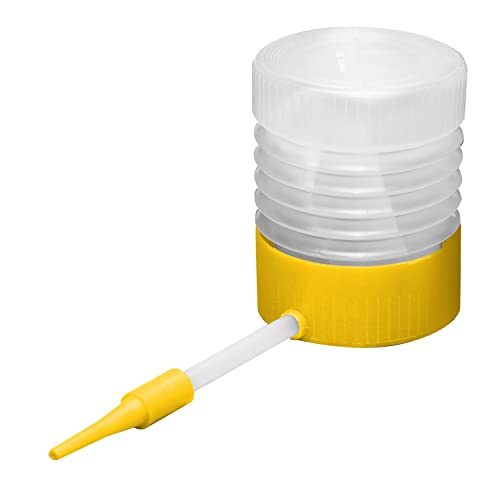
The tool that lays the thin layer DE actually needs to work.
Common questions
What pests does diatomaceous earth actually kill?
Crawling insects that walk through it: roaches, ants, fleas, bed bugs, silverfish, and carpet beetles are the common ones. It does little against flying insects, which rarely contact the powder. The kill is mechanical drying, so it works on the bugs that cross a thin, dry layer of it.
Is food-grade or pool-grade DE the right one?
Food grade, always. The NPIC fact sheet explains that pool-grade DE is heat-treated into a crystalline form for filtration, does not control insects the same way, and is more hazardous to breathe. Check the bag says food grade before you buy.
How long does it take to work?
Days, not minutes. Because the powder dries the insect out rather than poisoning its nervous system, it is slow by design, which is also why there is no resistance. Leave the dust in place, keep it dry, and judge results over a week or two.
Is it safe around pets and kids?
Used as directed it is one of the lower-toxicity options, but it is still a fine dust. Avoid breathing it in, wear a mask while applying, keep children and pets off treated areas until it settles, and keep it off food surfaces and pet bowls. Never dust a pet directly.
Why do I have to keep reapplying it?
Because moisture kills its effect. A mop, a humid room, or a vacuum pass removes or clumps the powder, and clumped DE no longer abrades the bug. Refresh it after any wetness and every couple of weeks while you are working a problem.
Final verdict
There is no magic bag of diatomaceous earth; there is the right grade applied the right way. Start free by sealing gaps and cleaning up crumbs and moisture, then dust a thin, nearly invisible layer of food-grade powder into the cracks, voids, and runways where pests actually travel, using a duster so it reaches the seams and stays light. A bag with a built-in duster covers most homes, a bulk bag earns its keep for repeat use, and a dedicated applicator is the upgrade that makes any food-grade powder work better. Skip pool-grade DE, skip the thick visible pile bugs walk around, and never count on it where it gets wet; reapply after moisture, and treat the powder as one quiet layer inside good sanitation and exclusion, never the whole fix.