Split cupboard insects with one question: was it in the food, or near it? In the food means a stored product pest, and almost always a single contaminated packet that arrived from the shop. Near the food means ants, cockroaches or booklice, which came for the crumbs or the damp. The two problems have completely different solutions.
- In the packet: weevils, grain beetles, drugstore beetles, or meal moth larvae. Find the source packet and the problem ends.
- Marching in a line: ants, following a trail to a spill. Kill the trail, not the ants you can see.
- Pale and slow on the shelf: booklice, feeding on mould from damp. A ventilation problem.
InsectoGuide is reader-supported. As an Amazon Associate we earn from qualifying purchases at no extra cost to you.
Cupboard insects feel worse than they are, because they involve food. The good news is that this is one of the most solvable problems in the whole subject, and it almost never requires an insecticide. It requires an hour, an empty worktop and a bin.
The one question that splits the list
In the food means the insect completed its life cycle inside a package. Its eggs were almost certainly present when the item was bought, because stored product pests get into grain, flour, rice, dried fruit, nuts, spices, pet food and birdseed at the mill or the warehouse. Kentucky’s guidance is that stored product pest infestations usually trace back to a single infested item.
Near the food means the insect came in from the room or the building for crumbs, grease or damp. Ants, cockroaches and booklice are all in this group, and none of them originated in a packet.
Getting this wrong wastes the most effort. People throw out an entire cupboard because of ants, or spray a shelf because of weevils, and neither approach touches the actual cause.
| What you see | Group | First move |
|---|---|---|
| Small beetles with a long snout in rice or flour | Weevils, in the food | Find and bin the source packet |
| Flat brown beetles in cereal or pasta | Grain beetles, in the food | Empty and check every dry good |
| Small pale caterpillars and webbing | Meal moth larvae, in the food | Check corners and lids, they crawl far |
| A line of ants along a shelf edge | Ants, came to it | Follow the trail to the entry point |
| Fast, glossy, gone when the light comes on | Cockroach nymphs, came to it | Act early, populations build fast |
| Tiny pale slow crawlers on packaging | Booklice, came for damp | Dry and ventilate the cupboard |
The stored product pests, and the search that ends them
Weevils are the easiest to name because of the snout, a long downward curve on the head that no other cupboard beetle has. Rice and granary weevils develop inside individual grains, which is why a bag can look fine until the adults emerge.
Sawtoothed grain beetles, drugstore beetles and cigarette beetles are all small, brown and rounded, and they are flat enough to get into packaging that appears sealed. Indian meal moths announce themselves differently: the larvae leave silk webbing, often in the top corners of a packet or along a cupboard edge, and the small adult moths fly weakly around the kitchen at dusk. Our meal moth guide covers the life cycle, which explains why they turn up far from the food.
The search itself is the treatment, and it has to be thorough to work:
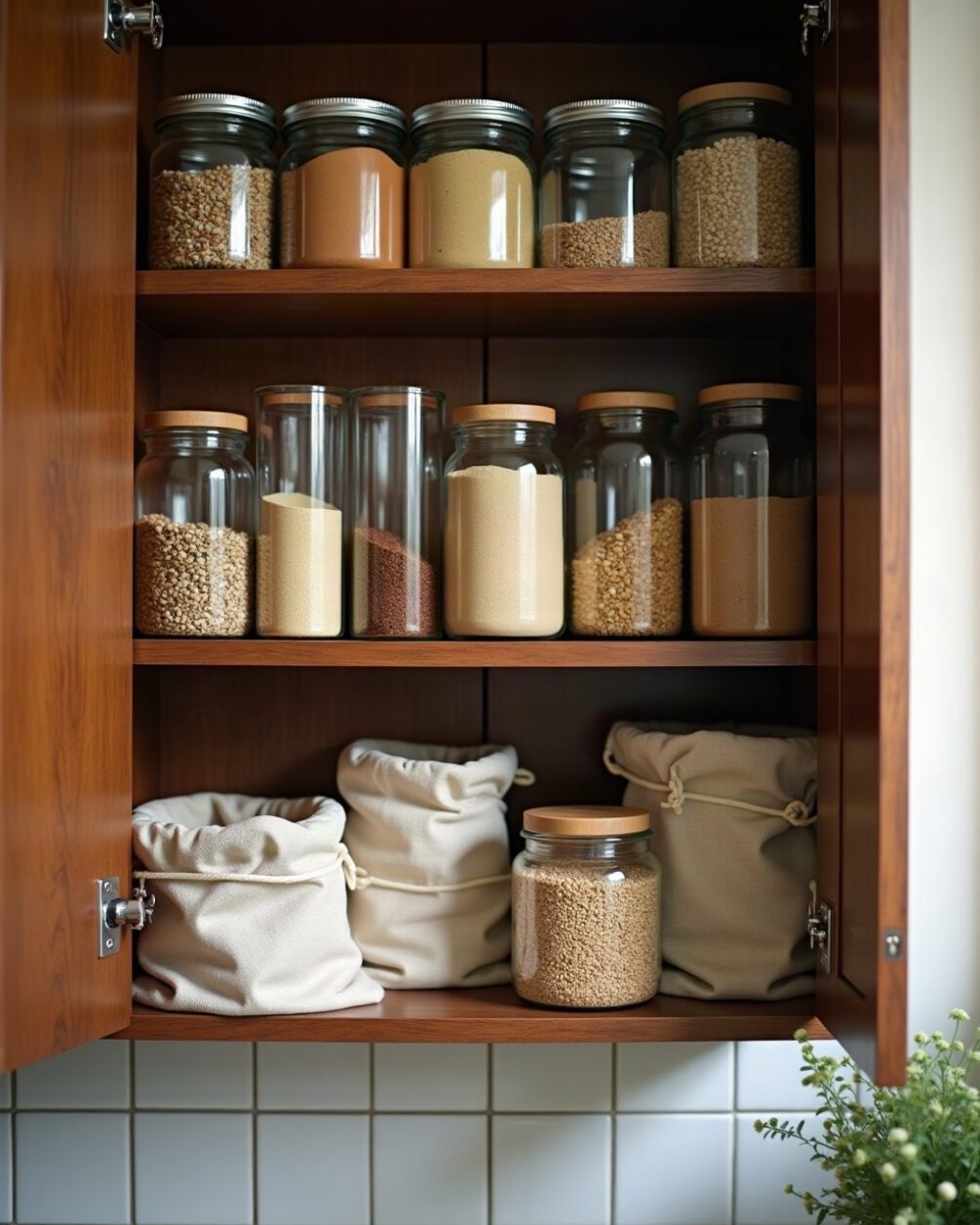
Take everything out. Every packet, including the ones at the back and the ones you are sure about. Check inside each one over a white surface, where insects and larvae are visible against the food. Bin anything infested, in an outside bin rather than the kitchen one. Vacuum the empty shelves, paying attention to the corners, the shelf edges and any gaps at the back, then wipe them. Return the survivors to glass or hard plastic with a sealing lid, because most of these insects chew through paper and thin card.

Sealed glass is what actually ends a pantry problem, because most of these beetles chew straight through paper and thin card.
Our pantry pest guide covers this properly, including how far larvae travel before pupating, which is the reason people find them in cupboards containing no food at all.

Ants, which are a trail problem
If there is a line, you have an ant trail, and the ants you can see are the least important part of it. They are following a chemical trail from a nest to a food source, and killing the visible ones simply frees space on the trail.
The useful moves are finding the entry point, cleaning the trail surface to erase the chemical marker, and removing whatever they found. Which species you have changes the approach more than people expect, particularly for pharaoh ants, where the wrong treatment splits the colony and makes things worse. Our ant identification guide is the place to start, and it matters before you buy anything.
Cockroach nymphs, the one worth acting on early
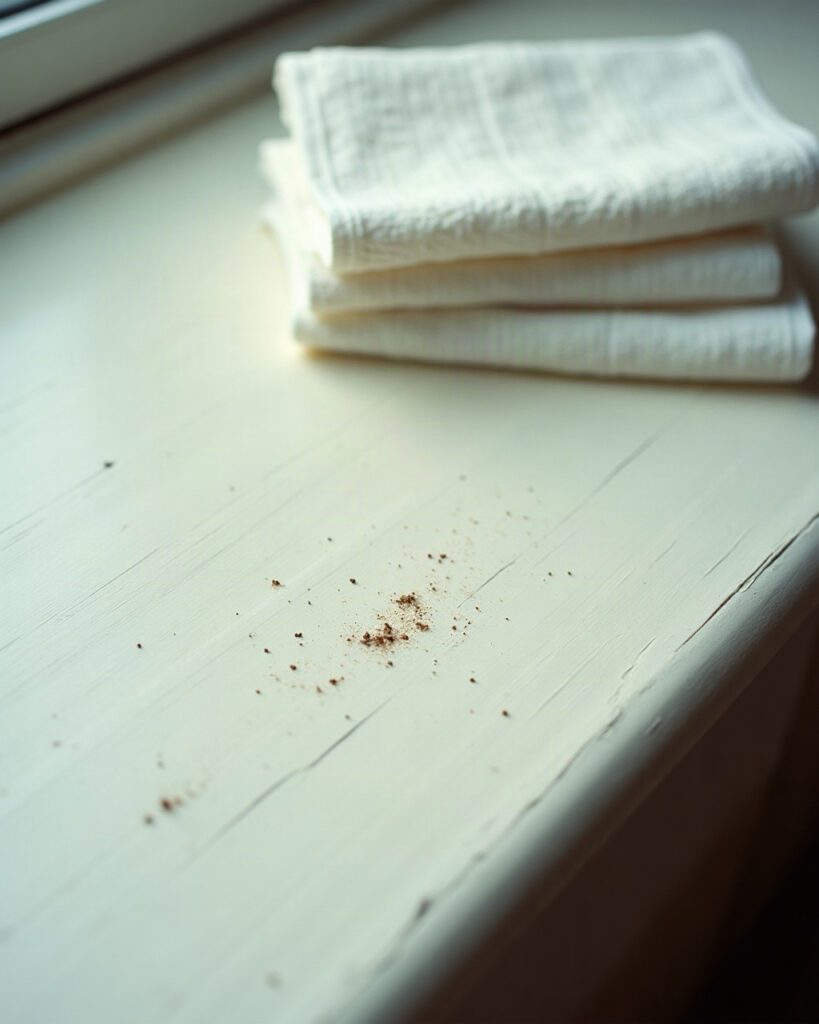
A small, fast, brown insect that vanishes into a gap the moment a light goes on is very likely a young cockroach, and it looks nothing like the adult in the pictures. Kentucky notes that German cockroaches are the species most likely to infest homes and apartments and that they reproduce quickly.
This is the one item in this guide where early action genuinely pays. Our baby cockroach guide shows the stages, and the cockroach species guide matters because the German species and the larger outdoor species need different approaches.
The flies that come with the cupboard
Small flies hovering near a fruit bowl or a bin are usually fruit flies rather than anything from a packet. Kentucky describes them breeding in fermenting fruit and residues in drains, bins and recycling. They are a residue problem, not a stored food problem, and our gnat and small fly identification guide separates fruit flies from drain flies and fungus gnats, which need different fixes.
Common questions
Can I still eat food with weevils in it?
It is not dangerous in the way people fear, but it is unpleasant and the food quality is degraded. Bin it. The real reason to be decisive is that leaving it maintains the population.
How did they get in if everything was sealed?
Usually they did not get in. They were already inside as eggs when the item was bought, and paper and thin card are not a barrier for adults either. This is why the answer is glass containers rather than better cupboard hygiene.
Do I need to spray the cupboard?
No. Insecticide in a food cupboard is both undesirable and ineffective against insects living inside packaging. The vacuum and the bin do the work.
They keep coming back after I cleaned everything.
Then a source was missed. Common misses are birdseed, dry pet food, decorative dried items, spices, and a bag that fell behind a drawer. Meal moth larvae also crawl well away from the food to pupate, so check the ceiling corners of the cupboard and the underside of shelves.
Final verdict
Ask whether it was in the food or near it, and the problem sorts itself. In the food means one contaminated packet, and a proper empty-and-check ends it permanently once the survivors are in glass. Near the food means a trail to erase, a gap to seal, or a cupboard to dry out. Almost nothing here calls for a spray, and the hour you spend emptying the cupboard is worth more than anything you could buy.