A good bee smoker is the difference between a calm, efficient hive inspection and a tense one. The best bee smokers are built to stay lit, push cool smoke on demand, and protect your hands from heat while you work frames. This guide breaks down what actually matters – smoker size, materials, bellows quality, and safety features – plus how to light and fuel a smoker so it produces dense, gentle smoke instead of hot, acrid blasts. You will also see which smoker styles fit beginners, backyard keepers, and high-hive-count apiaries.
Quick Answer: What are the best bee smokers?
The best bee smokers for most beekeepers are stainless-steel smokers with a heat shield, internal grate, and sturdy bellows. Choose the size based on how many colonies you typically inspect in one session.
Fast buyer checklist (snippet-friendly):
- Best all-around (most hobbyists): Standard/medium stainless smoker (about 3.5 in / 9 cm diameter) with heat shield and hanging hook
- Best for many hives or windy sites: Large smoker (about 4 in+ / 10 cm+ diameter) for longer burn time and fewer relights
- Best for one hive or nucs: Small/mini smoker (about 3 in / 7.5 cm or less) for quick checks
- Must-have features: Heat shield or wire cage, replaceable bellows, tight-fitting lid, and an internal grate for airflow
- Fuel rule: Use untreated, natural materials that make cool, non-acrid smoke (cotton waste and untreated burlap are common favorites)
Why bee smokers work (and what smoke actually does to bees)
If you have ever opened a hive and felt the mood shift in seconds, you have seen honey bee communication in action. Guard bees coordinate defense using alarm pheromones, and one of the best-known is isoamyl (isopentyl) acetate released from the sting apparatus. Think of it like a rapidly spreading “security alert” that recruits more defenders as it builds.
Smoke changes that conversation in two main ways, and neither is “knocking bees out.” Classic beekeeping biology texts describe smoke as a behavioral disruptor, not an anesthetic. In The Biology of the Honey Bee, researcher Mark L. Winston explains that smoke interferes with defensive communication and triggers feeding behavior rather than sedation, which matches what experienced beekeepers see in the field (bees remain fully capable of moving and flying). Research on defensive behavior also supports this effect. Studies on alarm responses and smoke, such as work summarized from Collins and colleagues, show that smoke can reduce alarm-driven stinging behavior under controlled conditions.
Here is what is happening at the hive:
1) Smoke masks alarm pheromones
A few cool puffs dilute and interfere with the bees’ ability to detect alarm scent quickly. That delay often prevents a full defensive cascade.
Actionable takeaway: Use smoke early (entrance, then under the lid) so the alarm signal never ramps up.
2) Smoke triggers feeding behavior
Bees often respond to smoke by gorging on honey, likely as a “prepare to flee a fire” response. A bee with a full crop is typically less agile and less likely to sting.
Actionable takeaway: Wait 30 to 60 seconds after a couple of entrance puffs before pulling frames.
3) Too much smoke backfires
Over-smoking can drive bees away from brood, increase stress, and in honey supers it can contribute to off-odors. The goal is cool, light, targeted smoke, not a fog machine.
Quick “use it right” mini-checklist:
- 2-3 puffs at the entrance
- Pause briefly
- Crack the lid, then 1-2 gentle puffs under the cover
- Add small puffs only when behavior calls for it (roaring, boiling at the top bars)
Best bee smokers by size and style (choose the right tool for your apiary)
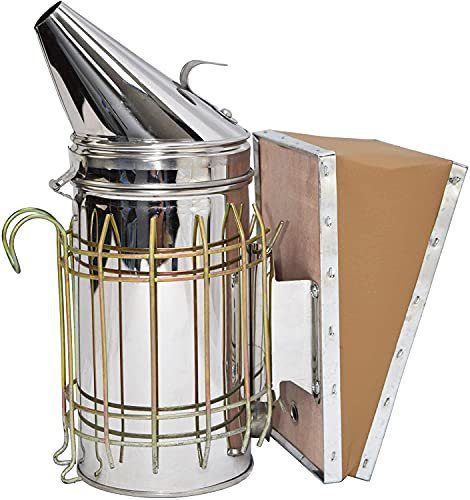
VIVO Large Stainless Steel Bee Hive Smoker with Heat Shield, Beekeeping Equipment Tool Kit, BEE-V001L
This stainless steel bee smoker features a heat shield and is ideal for hobbyists, making it a great choice for effective hive inspections.
Most “bee smoker reviews” end up arguing brands, but performance usually comes down to a few design choices. The simplest way to pick well is to match smoker size to your workload and conditions.
Smoker size guide (what it changes in real life)
A larger firebox generally means longer burn time and fewer relights, especially on long inspection days or in wind. A smaller smoker is easier to carry and quicker for short checks, but it can go out at the worst time.
Comparison chart: smoker sizes at a glance
| Smoker size | Typical diameter | Best for | Burn-time expectation* | Tradeoffs |
|---|---|---|---|---|
| Mini/Small | 2.5-3 in (6-7.5 cm) | Nucs, 1-2 hives, travel | ~10-25 min | More relighting, smaller fuel capacity |
| Standard/Medium | ~3.5 in (9 cm) | Most backyard beekeepers | ~20-40 min | May need refuel on long sessions |
| Large | 4 in+ (10 cm+) | Many hives, wind, hot/dry sites | ~30-60+ min | Heavier, bulkier, uses more fuel |
*Burn time varies with fuel, packing, and how often you pump the bellows.
The “best” style for most people: stainless steel + heat shield
Stainless steel resists corrosion from heat and moisture, and it is easier to scrape clean. A heat shield (often a wire cage) reduces burn risk and makes it safer to set the smoker down briefly.
Look for these build features:
- Heat shield/wire cage: protects hands, legs, and surfaces
- Internal grate: keeps fuel off the bottom so air can flow
- Bellows that move air: more air per squeeze means easier relights
- Strong hinge and lid fit: reduces leaks and keeps smoke directed
- Hook: lets you hang the smoker on a stand or hive body
When “heavy-duty” smokers are worth it
If you inspect frequently, the bellows and hinge are usually the first failure points. Heavy-duty models often use thicker metal and reinforced bellows attachment points. They cost more up front, but can be cheaper over time if you are not replacing parts every season.
Practical rule: If you manage more than 5-10 colonies or do long harvest days, prioritize a large or heavy-duty smoker.
Related gear that pairs well with a good smoker: A quality hive tool and protective wear reduce the temptation to over-smoke. If you are building your kit, see our guides to Best Beekeeping Tools and Best Bee Suits and Protective Gear for Beekeepers.
Features that matter most (and how to spot a smoker you will regret buying)
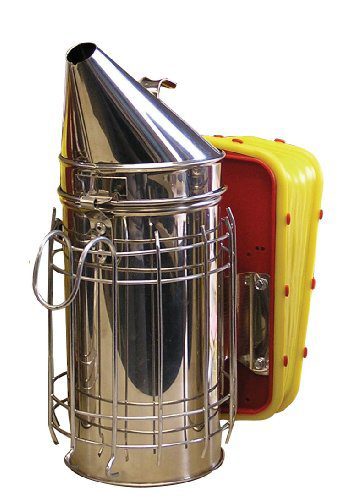
Mann Lake Stainless Steel Bee Smoker Pro Bellow, 4×7 Inch Beekeeper Tool with Heat Guard & Easy Open Lid Tab, High Flow Pump for Calm Bees, Safe Hive Inspections & Honey Harvest, Burn Free Grip Design
This medium-sized smoker is designed for beekeepers and includes a heat shield, making it suitable for various hive inspections.
A smoker can look fine on a product page and still frustrate you in the yard. The difference shows up when your fuel starts to die mid-inspection and your bellows barely moves air. Before you buy, evaluate the parts that control airflow, heat, and handling.
The “non-negotiables” checklist
Use this as a quick scoring system when comparing models in-store or online.
1) Bellows quality (air volume per squeeze)
Bellows should feel springy and push a strong stream of air. Weak bellows create weak combustion, which leads to hot, inconsistent smoke and frequent relighting.
What to look for:
- Tight seams, no gaps where air leaks
- Replaceable bellows or at least replaceable attachment hardware
- Comfortable grip and smooth movement
2) Internal grate and ash space
A grate creates a pocket of air under the fuel. That airflow keeps the smolder stable and reduces clogging.
What to look for:
- Removable grate for cleaning
- Enough space below the grate for ash buildup
3) Heat shield coverage
Some shields are decorative and leave hot spots exposed. A good cage protects most of the firebox, especially where your hand might brush it while lifting supers.
What to look for:
- Shield covers the sides and lower body
- Shield is firmly attached and does not rattle loose
4) Lid design and spout control
A tight lid keeps smoke directed through the spout rather than leaking around the rim. A stable hinge matters because smokers get opened and closed repeatedly while refueling.
Quick “shop test” if you can handle it:
- Open and close the lid several times
- Wiggle the hinge gently – it should not feel sloppy
- Check the spout alignment and feel for sharp edges
A simple rating table you can use at home
Score each category 1-5 when comparing options.
| Feature | Score 1 (poor) | Score 5 (excellent) |
|---|---|---|
| Bellows airflow | weak puff | strong, consistent stream |
| Heat shielding | minimal coverage | full cage, safe handling |
| Lid/hinge | loose, leaky | tight, stable |
| Grate/airflow | no grate | removable grate + ash space |
| Serviceability | no parts | easy replacement parts |
Sources that reflect real-world product specs
Supplier listings are useful for comparing sizes and replacement parts. For examples of common stainless smoker configurations and sizes, see product pages from established suppliers like Dadant & Sons beekeeping equipment and Betterbee smokers and fuel. For heavy-duty construction examples, Pigeon Mountain Trading Company shows reinforced designs aimed at high-use beekeepers.
Smoker fuel: what burns cool, what burns dirty, and what to avoid
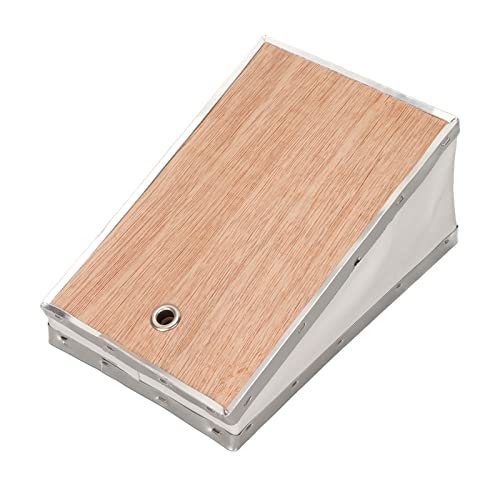
Hyuduo Beekeeper Bee Smoker Bellow PVC Leather Plywood Box Beekeeping Equipment Replacement with Clip for Beehive Home Gardening
This smoker comes with a replaceable bellows and is perfect for beginners and backyard beekeepers looking for a reliable tool.
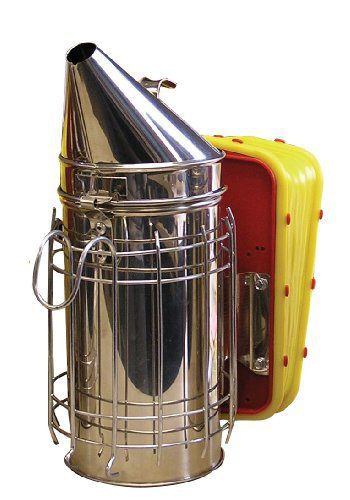
Mann Lake Stainless Steel Bee Smoker Pro Bellow, 4×7 Inch Beekeeper Tool with Heat Guard & Easy Open Lid Tab, High Flow Pump for Calm Bees, Safe Hive Inspections & Honey Harvest, Burn Free Grip Design
This large smoker is ideal for beekeepers with multiple hives, offering longer burn times and fewer relights, perfect for windy conditions.
Fuel is where many beekeepers accidentally create problems. The goal is cool, dense, non-acrid smoke that lasts. If your smoke stings your eyes or smells like chemicals, do not put it into a hive.
What “good fuel” looks like (field-tested criteria)
Most instructors agree on the same basics:
- Lights easily with minimal fuss
- Smolders instead of flaming
- Produces cool smoke (test it on the back of your hand)
- Does not spark much
- Is untreated and free of chemicals
Common fuels, ranked by practicality
Different regions have different “best” options. Use what is available, as long as it is safe.
Top dependable choices
- Cotton waste / cotton smoker fuel: Long-burning and gentle, often praised for cool smoke. A good discussion of why many beekeepers prefer cotton appears in guides like Mountain Sweet Honey’s smoker fuel overview.
- Untreated burlap: Easy to light and widely available. It can burn faster than cotton, so many beekeepers layer it with longer-burning material.
Good local options (often free)
- Pine needles, dry leaves, straw, dried grass
- Untreated wood shavings (not from pressure-treated or painted wood)
- Plain cardboard (non-glossy, no heavy inks), used sparingly as starter material
Convenience fuels
- Commercial pellets/bricks sold by beekeeping suppliers. These can be consistent and clean, especially for beginners who do not want to experiment.
Fuels to avoid (bee safety and human safety)
Do not burn anything that can release toxic fumes or residues.
Avoid:
- Pressure-treated wood, painted or stained scraps
- Plywood, particle board, chipboard (glues and resins)
- Synthetic fabrics (polyester, nylon, polypropylene)
- Glossy paper, heavily inked cardboard, or unknown “shop rags”
- Anything damp or moldy (hard to keep lit, tends to smolder hot and dirty)
A practical “fuel blend” that works in many climates
If your smoker goes out often, the fix is usually airflow plus fuel layering.
Try this simple stack:
- Starter: a small pinch of dry grass or plain paper
- Mid-layer: burlap strip (easy ignition)
- Long-burn layer: cotton waste packed loosely
- Top: a few pine needles to help maintain smolder
For a balanced take on why there is rarely one universal best fuel, the beekeeper commentary at The Apiarist matches what many apiaries experience: reliability matters more than brand loyalty.
How to light, use, and extinguish a smoker safely (step-by-step)
Most smoker problems are not “bad smokers.” They are lighting and packing problems. The trick is to build a stable coal bed, then feed it fuel with enough air to smolder without producing flame.
Step-by-step: lighting a smoker that stays lit
Use this method when you need consistent smoke for inspections or honey harvest.
1) Start small and hot
- Add a small amount of easy starter fuel (dry grass, pine needles, or plain paper).
- Light it and pump the bellows until you see active flame.
2) Build a coal base
- Add a small handful of your main fuel.
- Pump bellows steadily for 10-20 seconds.
- Repeat once more until the bottom is clearly burning.
3) Pack for airflow, not density
- Fill the smoker about 1/2 to 2/3 full.
- Pack fuel loosely so air can move through it.
- Close the lid and pump until smoke turns thick and steady.
4) Confirm smoke temperature
- Puff smoke onto the back of your hand from a few inches away.
- It should feel cool or only mildly warm, never hot.
Quick troubleshooting table
| Problem | Likely cause | Fix |
|---|---|---|
| Smoke is hot | too much flame, fuel too loose at the bottom | add more fuel, reduce flame, let it smolder |
| Smoker keeps going out | packed too tight or not enough coal bed | repack looser, rebuild coal base |
| Smoke smells sharp | wrong fuel or not fully lit | switch fuel, burn cleaner before using |
| Sparks/embers | dry, flaky fuel or too much airflow | use cotton/burlap base, reduce pumping |
Using smoke on the hive without stressing bees
Aim for “just enough.” Good handling and smooth movements reduce defensive behavior as much as smoke does.
A gentle inspection rhythm:
- 2-3 puffs at entrance
- Wait 30-60 seconds
- Crack lid, 1-2 puffs under cover
- Work frames steadily, using small puffs only when needed
Extinguishing and fire safety
A smoker is a live fire source. Treat it like one, especially during dry summer conditions.
Safe shutdown options:
- Empty the firebox into a fireproof container and douse thoroughly
- Plug the spout and pack the can with green grass or soil to smother, then still confirm it is out
Where to set a lit smoker:
- Bare soil, concrete, or a metal stand
- Never dry grass, wooden decks, or plastic surfaces
If you are assembling your full kit, pairing a reliable smoker with the right basics makes learning much easier. Our Best Beekeeping Starter Kits for Beginners guide walks through what is essential and what can wait.
Conclusion: picking the right smoker comes down to reliability and control
The best choice is the smoker that stays lit, produces cool smoke on demand, and feels safe in your hands. For most beekeepers, that means a stainless-steel smoker with a heat shield, internal grate, and solid bellows, sized to match your number of colonies. Large smokers shine when you work many hives or deal with wind. Small smokers are handy for quick checks, but they demand more attention.
Next step: choose a smoker size, then standardize a clean fuel blend (cotton and untreated burlap are common starting points). Pair that with good handling and protective gear to avoid the temptation to over-smoke.
For a stronger, safer setup overall, continue with Best Beekeeping Tools and Best Bee Suits and Protective Gear for Beekeepers.
As an Amazon Associate, I earn from qualifying purchases. Product recommendations are based on real reviews and independent research.