Finding the right honey extractors for a home apiary comes down to three things: how many hives you run, what frame size you use, and how much time you want to spend cranking (or cleaning). The good news is that you do not need commercial-scale equipment to harvest clean, beautiful honey. This guide breaks down extractor types, realistic capacities for backyard beekeepers, and the features that actually matter, so you can buy once and avoid the most common regret: outgrowing your setup after one season.
Quick Answer: Which honey extractor should you buy?
If you want the best match fast, choose honey extractors based on hive count and whether you want manual or electric.
At-a-glance recommendations (most home beekeepers):
| Your setup | Best extractor type | Why it fits |
|---|---|---|
| 1-2 hives, once-a-year harvest | 2-4 frame manual tangential | Lowest cost, compact, gets the job done |
| 3-5 hives, multiple supers | 4-6 frame radial (manual or electric) | Faster per batch, less frame flipping |
| 6+ hives or limited time/strength | 6-9+ frame electric radial | Big time savings, consistent speed control |
Non-negotiables to look for
- Food-grade stainless steel drum and basket
- A sturdy, leak-resistant honey gate
- A basket that fits your deep/medium/shallow frames (verify before buying)
Why honey extractors matter for bees and your honey yield
Every beekeeper hits the same moment: you pull a super, crack a frame, and realize the “harvesting” part is now a sticky logistics project. An extractor turns that project into a repeatable process. It uses centrifugal force to sling honey out of capped cells while leaving most wax comb intact.
That last part is the real win. Preserved comb is like leaving the shelves up in a pantry instead of making someone rebuild them every time. Bees can refill drawn comb far faster than they can build new wax. Research summarized by beekeeping educators notes that producing wax is energetically expensive – bees may consume roughly 7-8 kg of honey to produce 1 kg of wax, a figure commonly cited from honey bee biology work by Thomas Seeley. When you extract instead of crush comb, more of the nectar your bees collect can become surplus honey.
A realistic backyard math check
- Many hobby beekeepers keep 1-10 colonies, and a “typical” harvest often lands around 60 lb (about 27 kg) per hive in decent conditions, as summarized in guidance from the USDA Natural Resources Conservation Service.
- Even 3 hives can mean around 180 lb of honey to process in a narrow window between weather changes, robbing pressure, and your own schedule.
Extracting vs. crush-and-strain (quick comparison)
Think of crush-and-strain as the “campfire coffee” method: simple, minimal equipment, but slower and it destroys comb.
Comparison chart
- Extractor
- Preserves comb for reuse
- Faster once you have more than a few frames
- Higher upfront cost, lower labor long-term
- Crush-and-strain
- Cheapest to start
- Works well for small batches or comb honey goals
- Costs bees time and honey to rebuild wax
Actionable takeaway: If you plan to keep bees for more than a season or two, an extractor often pays back in saved comb and saved time, even on a small apiary.
Types of honey extractors (and what “radial” really means)
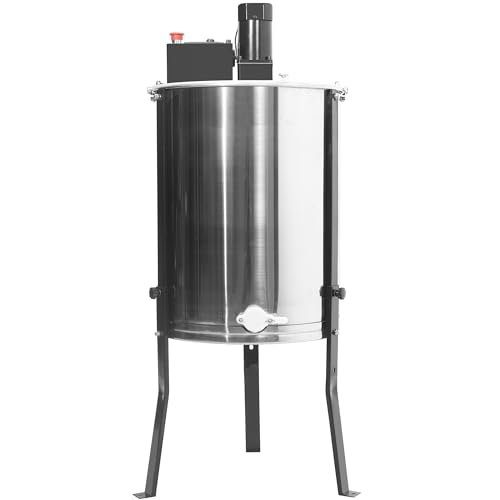
VIVO Electric Honey Extractor 8 Frame Rack (4 Deep Frames), Food Grade Stainless Steel Honey Processing Equipment, Powered Honeycomb Drum Spinner with Transparent Lid, BEE-V004E
This electric honey extractor is ideal for home beekeepers with multiple hives, offering efficiency and ease of use for honey harvesting.
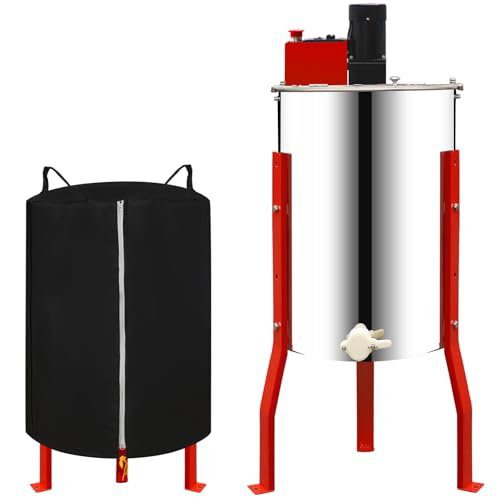
Newest 2/4 Frames Honey Extractor Electric with Protective Cover, 2nd Gen Intelligent Control Device Designed for Beekeepers
This manual honey extractor is perfect for hobbyists with 1-2 hives, providing a cost-effective solution for honey harvesting.
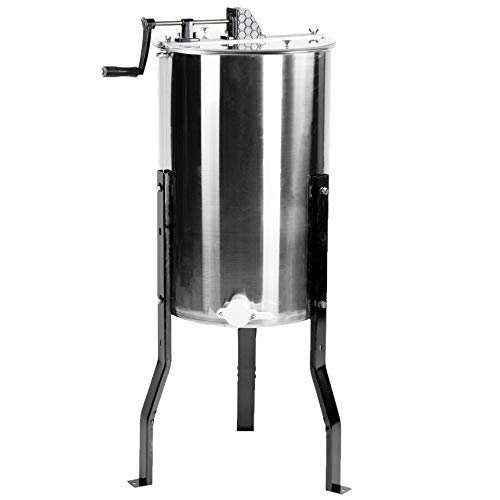
VIVO Honey Extractor 2 Frame Rack, Food Grade Stainless Steel Honey Processing Equipment, Manual Crank Honeycomb Drum Spinner with Transparent Lid, BEE-V002
This compact manual extractor is suitable for beekeepers with a small number of hives, making it easy to operate and clean.
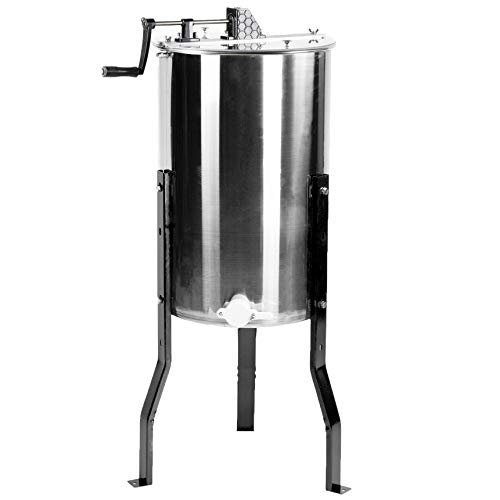
VIVO Honey Extractor 2 Frame Rack, Food Grade Stainless Steel Honey Processing Equipment, Manual Crank Honeycomb Drum Spinner with Transparent Lid, BEE-V002
This stainless steel manual honey extractor is durable and efficient for small-scale honey harvesting.
Walk into any beekeeping supplier catalog and you will see three concepts repeated: tangential, radial, and manual vs. electric. The trick is matching them to your frames and your patience.
Tangential extractors
Tangential baskets hold frames with one face outward. You spin one side, stop, flip frames, and spin again.
Best for
- 1-3 hives
- Beekeepers who extract once per season
- Deep frames on smaller machines (often the only way they fit)
Pros
- Usually cheaper for a given drum size
- Simple mechanics
- Good control for delicate, fresh comb if you start slow
Cons
- You must flip frames
- Takes longer per super
- More opportunities to blow out comb if you crank too fast early
Radial extractors
Radial baskets hold frames like spokes in a wheel, so both sides extract at once.
Beekeeping equipment educators generally recommend radial designs once you are beyond a couple of hives because throughput increases quickly. Guidance from Carolina Honeybees and supplier education pages like Betterbee’s extracting overview consistently highlights the “load once, spin once” advantage.
Best for
- 3-8 hives (the sweet spot for serious hobbyists)
- Anyone who wants less frame handling
- Faster extracting days with fewer sticky pauses
Pros
- No flipping frames
- Typically gentler on comb at controlled speeds
- Better time savings when you have multiple supers
Cons
- Some “radial” units still require tangential placement for deep frames
- Larger drums take more storage space
Manual vs. electric drives
Manual is simple and budget-friendly. Electric is about consistency and volume.
Decision table
- Choose manual if:
- You run 1-3 hives
- You have limited power access
- You do not mind physical effort
- Choose electric if:
- You run 4+ hives or extract multiple times
- You want steady, adjustable speed control
- You have shoulder, wrist, or mobility limits
For many beekeepers, the “electric vs. manual” decision becomes obvious after the first long extracting day. Reviews and practical guidance like Beekeeping Made Simple’s extractor discussion emphasize the time and fatigue savings once your hive count grows.
Actionable takeaway: If you expect to expand, buy the best-built extractor you can reasonably grow into. Buying too small is the most common way to pay twice.
How to choose the best honey extractor for your home apiary
Picture your extracting day before you buy anything. Where will the machine sit? How will honey drain into a bucket? How many frames will you process before you get tired of flipping and waiting?
This section is designed to prevent the three classic mistakes: wrong frame fit, too little capacity, and hard-to-clean hardware.
1) Match capacity to hive count and harvest style
Capacity is not just “frames per load.” It is also how many loads you can tolerate.
Practical sizing guide
- 1-2 hives: 2-4 frame manual tangential is usually enough.
- 3-5 hives: 4-6 frame radial (manual or electric). Consider electric if you harvest more than one super per hive.
- 6+ hives: 6-9+ frame electric radial for reasonable extracting days.
Quick reality check
A medium super holds 10 frames. If your extractor holds 2 frames, that is 5 loads per super, per hive. That adds up quickly once you factor uncapping time and draining.
2) Confirm frame compatibility (deep vs. medium vs. shallow)
Frame fit is where many “good deals” turn into frustration.
Before you buy, verify
- Will it fit deep frames (9 1/8 in) without angling or tangential-only placement?
- Does the basket support foundationless or delicate comb?
- Are you running Langstroth equipment, or something different?
If you are unsure, choose a model that explicitly lists deep and medium compatibility in the basket specifications.
3) Prioritize stainless steel and cleanable construction
Food-grade stainless steel is the standard for a reason: it resists corrosion, cleans easily, and holds up to years of sticky use. Suppliers and educators routinely point new beekeepers toward stainless drums and baskets, including Carolina Honeybees’ extractor guide and major equipment retailers such as Mann Lake’s extracting equipment section.
Build details that matter
- Smooth interior walls and tidy welds (less gunk trapped)
- A honey gate you can disassemble or fully rinse
- A stable stand or legs that do not wobble under load
- A clear lid (helps prevent splatter and lets you monitor flow)
4) Plan your space and workflow
Extractors work best when you can move in a loop: uncap, extract, drain, filter.
Simple layout checklist
- Stable surface and level floor
- Clearance under the gate for a bottling bucket
- Nearby warm water access for cleanup
- Good lighting (you will be inspecting wax and cappings)
If you are still building your setup, it helps to start with the rest of your harvesting toolkit too. Pair this guide with:
- Best Beekeeping Starter Kits for Beginners (for the full equipment baseline)
- Best Bee Smokers for Effective Beekeeping Practices (to keep harvest day calmer and safer)
Actionable takeaway: The “best” extractor is the one that fits your frames, your space, and your realistic harvest volume – not the biggest drum on the page.
Best honey extractor options by home-beekeeper use case (no hype, just fit)
Most readers are not looking for a single “top” model. They are looking for the right category so they can compare brands and prices confidently. Below are the most common home-beekeeper scenarios and what tends to work best.
Use case 1: 1-2 hives, budget-first, occasional harvest
What to look for: 2-4 frame manual tangential extractor.
Why it works
- Compact footprint for garages and sheds
- Lower cost entry point
- Enough capacity for a couple of supers without turning the day into a marathon
Feature checklist
- Stainless drum and basket
- A honey gate that does not drip when closed
- A hand crank that feels solid, not loose or gritty
Who should skip it
- Anyone planning to jump to 4+ hives next season
- Beekeepers with wrist or shoulder issues
Use case 2: 2-4 hives, want flexibility on frame sizes
What to look for: 4-frame manual extractor that can run “radial for mediums” and “tangential for deeps.”
Why it works
- You can process honey supers quickly if you run medium frames
- You still have a workable path for deep frames without buying a second machine
Watch-outs
- Some combo baskets feel like a compromise. Make sure the basket actually supports your frame size without bending wires.
- Light stands can vibrate. A heavier base or the ability to bolt down helps.
Use case 3: 3-8 hives, time matters, want less effort
What to look for: 4-6 frame electric radial extractor with speed control.
Why it works
- Speed control reduces comb blowouts by letting you ramp up gradually
- Higher throughput without constant cranking
- A better match for heavier harvests and tighter weather windows
Smart buying priorities
- Replacement parts availability (gates, lids, bearings, controllers)
- Motor placement that stays away from rinse water
- Stable legs and balanced basket
If you are shopping across brands, it helps to browse reputable suppliers for specs and parts support, such as HillCo’s honey extracting equipment catalog and Betterbee’s harvesting and extracting resources.
Use case 4: 6+ hives, future-proofing, sideline pace
What to look for: 9-10 frame electric radial extractor.
Why it works
- Fewer loads per super, which is where the day really shortens
- Better long-term fit if you expand slowly over several seasons
Trade-offs
- Heavier and harder to store
- More expensive upfront
- Needs more room to operate safely
Actionable takeaway: For most home beekeepers, the “best value” point is a mid-size radial extractor. It is often the first machine that makes extracting feel easy instead of endless.
How to use, clean, and maintain honey extractors (so they last for years)
A well-built extractor can last decades, but only if it is treated like food equipment, not yard equipment. The two biggest factors are balancing the load and cleaning before honey crystalizes.
A simple extraction workflow (step-by-step)
Use this as your repeatable routine.
-
Harvest ripe frames
- Aim for frames that are mostly capped (many beekeepers use the 80-90% capped rule of thumb).
- If you sell honey, consider checking moisture with a refractometer.
-
Uncap over a tank or food-safe tub
- Use a knife or uncapping fork.
- Let cappings drain while you extract the next batch.
-
Load frames evenly
- Place frames opposite each other to balance weight.
- Avoid “one full frame, one empty frame” pairings.
-
Start slow, then ramp up
- Slow at first protects comb.
- Increase speed gradually as honey starts to move.
-
Tangential only: flip frames
- Spin one side partially, flip, then finish the opposite side.
- This reduces blowouts on the first spin.
-
Drain through the honey gate
- Use a food-grade bucket and a sieve or double strainer.
Balancing checklist (reduces wobble and comb damage)
- Level the extractor on a stable surface
- Keep frame weights symmetrical
- Tighten fasteners before spinning
- If vibration starts, stop and rebalance – do not “power through”
Cleaning and sanitation (fast, not fussy)
Honey dissolves easily in warm water, so cleaning is mostly about timing.
After extracting
- Rinse the drum and basket with warm water
- Use mild dish soap if needed
- Avoid harsh chemicals and abrasives
- Air-dry fully before storage to prevent corrosion in hidden seams
Electric safety
- Never hose down motors or controllers
- Wipe electrical parts with a damp cloth only
- Keep cords off wet floors
Practical maintenance notes like these are commonly emphasized in user-focused guides such as Beekeeping Made Simple’s extractor maintenance discussion.
When to call in help
Consider professional repair or replacement parts if you notice:
- Persistent wobble from a bent shaft
- A gate that leaks even after gasket replacement
- Electrical speed control that surges unpredictably
Actionable takeaway: Most “extractor problems” are really cleaning delays, unbalanced loads, or spinning too fast too soon.

Conclusion
The best honey extractors for home use are the ones that match your hive count, fit your frame sizes, and stay easy to clean after a long harvest day. For 1-2 hives, a small manual tangential extractor is often enough. For 3-5 hives, a mid-size radial model is where extracting starts to feel truly efficient. If you are running 6+ hives or want less physical effort, an electric radial extractor with speed control is usually the most practical upgrade.
Next step: build a complete, safe harvest-day setup by pairing your extractor choice with the right protective equipment and tools. Start with Best Bee Suits and Protective Gear for Beekeepers and revisit Best Bee Smokers for Effective Beekeeping Practices before your next honey pull.
As an Amazon Associate, I earn from qualifying purchases. Product recommendations are based on real reviews and independent research.