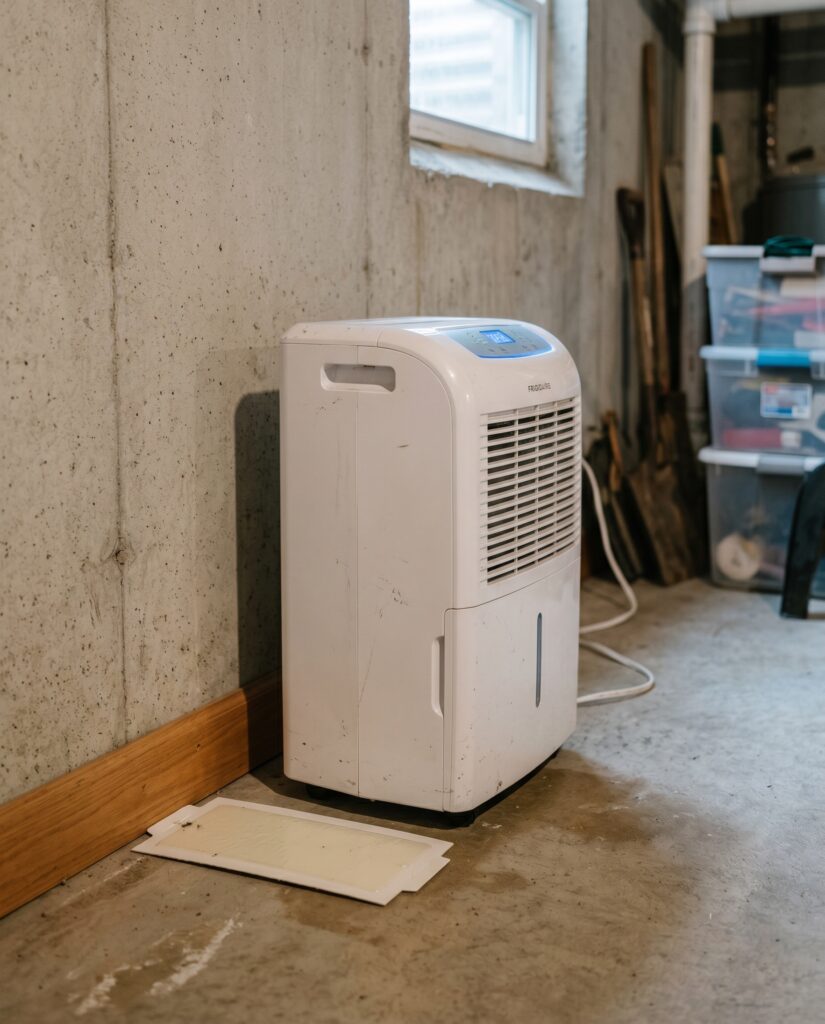
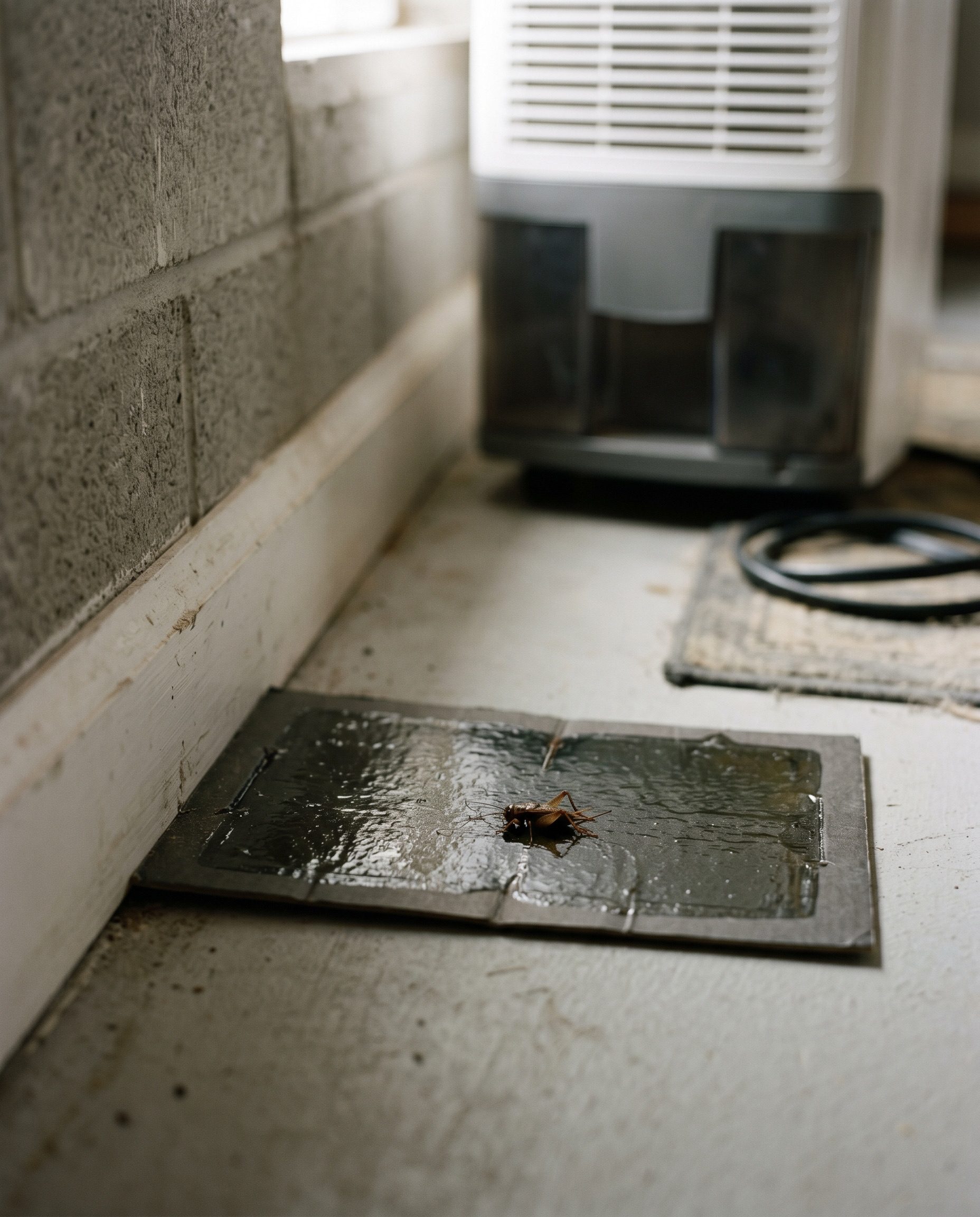
If you want to catch the crickets already inside, the most reliable tool is a flat sticky glue board laid along the walls and into the corners where crickets run, because they hug edges and cannot steer around a well-placed board. A trap is also how you finally track down and silence that one chirper keeping you awake. The catch is that a trap only takes the ones indoors right now, and crickets keep wandering in from outside unless you also dry things out and seal the gaps they enter through. For our own basement we keep a few glue boards in the corners and a small dehumidifier running, nothing more. Most lists rank a baited box as the hero; the real winner is placement, and the comparison below shows why.
A flat sticky glue board run along the walls and into corners catches the crickets inside now and helps you silence a chirper, but a trap alone never keeps up unless you also cut the moisture and seal the gaps they come in through.
- Do first (free): Find and dry the damp spots, then seal foundation cracks, gaps, and add a door sweep so fewer crickets get in.
- Best for the common case: Flat sticky glue boards placed flush along baseboards and in corners where crickets travel.
- Skip: Treating a trap as the whole plan, and indoor fogging, which never reaches the crickets and ignores the outdoor source.
What to do first
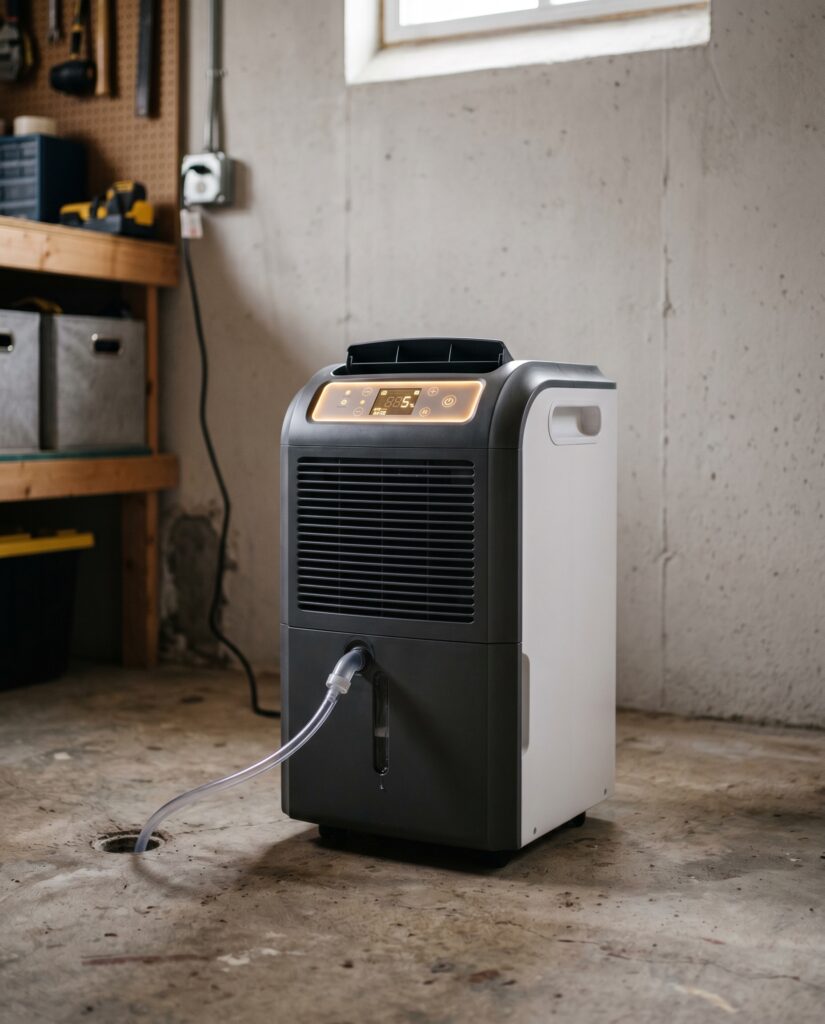
Before you buy a single trap, do the free part, because a trap catches what is inside while moisture and open gaps keep the supply coming. Crickets are pulled indoors by dampness, harborage, and outdoor lights, and they wander in from the yard, so the University of Minnesota Extension’s cricket guidance leads with reducing moisture and sealing entry points rather than chasing the bugs with chemicals. Run a dehumidifier in a damp basement or crawlspace, fix the leaks that keep a corner wet, and that alone makes your home far less inviting. Our full walkthrough on getting rid of crickets in the house lays the order out step by step.
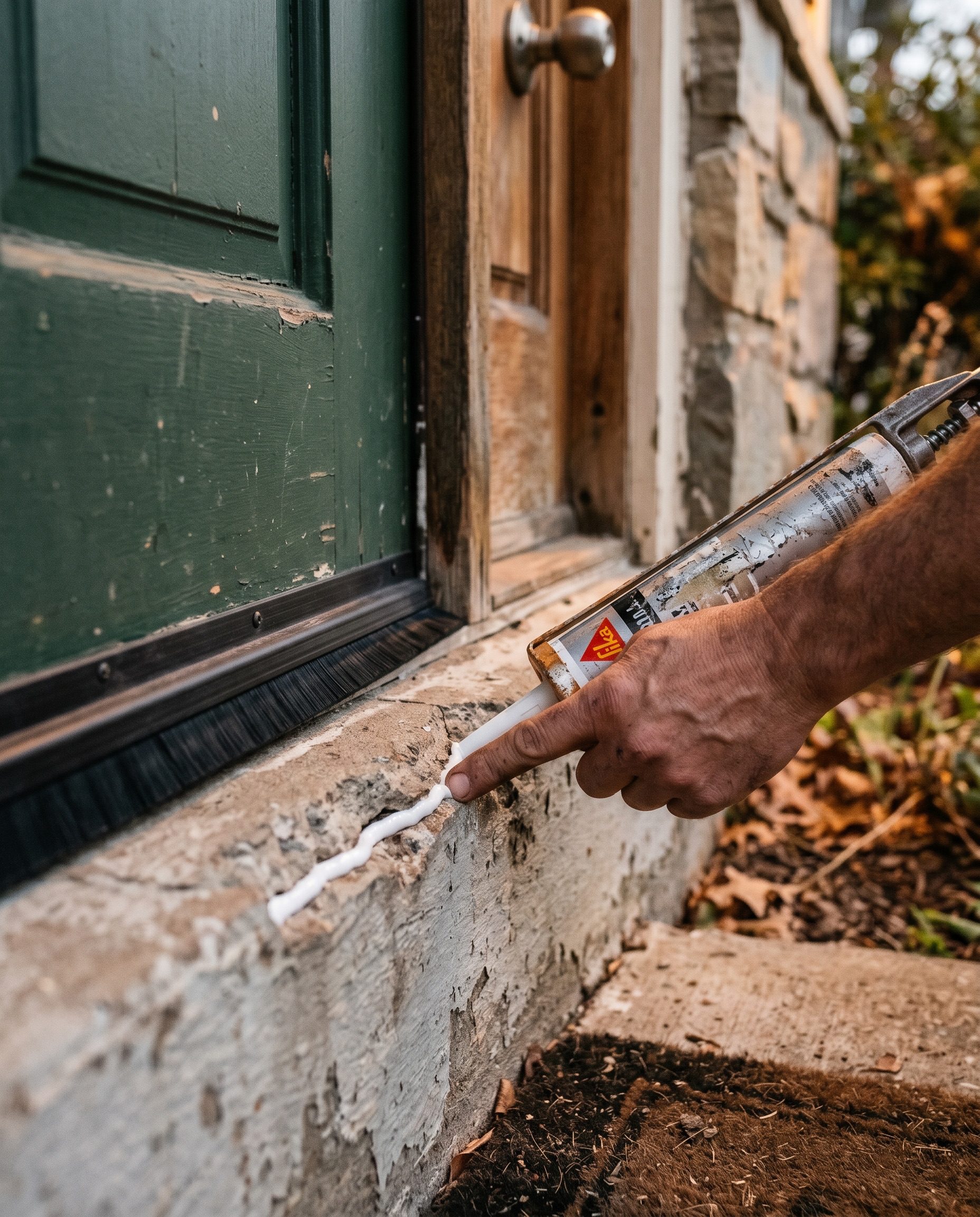
Then close the doors they walk through. Seal foundation cracks, gaps around pipes, and fit a door sweep on every exterior door, because that is what cuts off the steady trickle from outside. Trim tall grass back from the foundation and switch a bright white porch bulb to a yellow one, since Iowa State’s field cricket page notes they are drawn to lights and stray in from the yard. Once the room is dry and the gaps are shut, a trap stops fighting a losing battle and starts finishing the job. A trap is worth buying after the prep, not instead of it.
Why a trap alone never keeps up
Here is the part most “best trap” lists skip. A glue board is excellent at what it does, which is catching the crickets that are inside right now and pinning down a single chirper, but it does nothing about the source. Kill the ten crickets in the basement and the wet corner and the open gap will hand you ten more. That is why people who only buy traps feel like they are emptying the ocean with a cup.
This is the case for treating a trap as the catch-and-monitor step inside a bigger plan. The Missouri Department of Conservation’s house cricket profile is a good reality check on the stakes, too: crickets are a nuisance, not a health threat, and only the males chirp. They rarely bite, are not aggressive, do not feed on blood, and carry no disease that threatens people, so the real problem is the noise and the occasional nibble on paper or fabric, not danger. Only male crickets chirp, they go quiet the moment you disturb them, and they slow down when it is cold, which is exactly why a board left along the wall overnight catches the one you could never spot. For tracking down a lone chirper, our guide on how to stop cricket chirping and find the cricket pairs naturally with a few well-placed boards.
House vs camel crickets
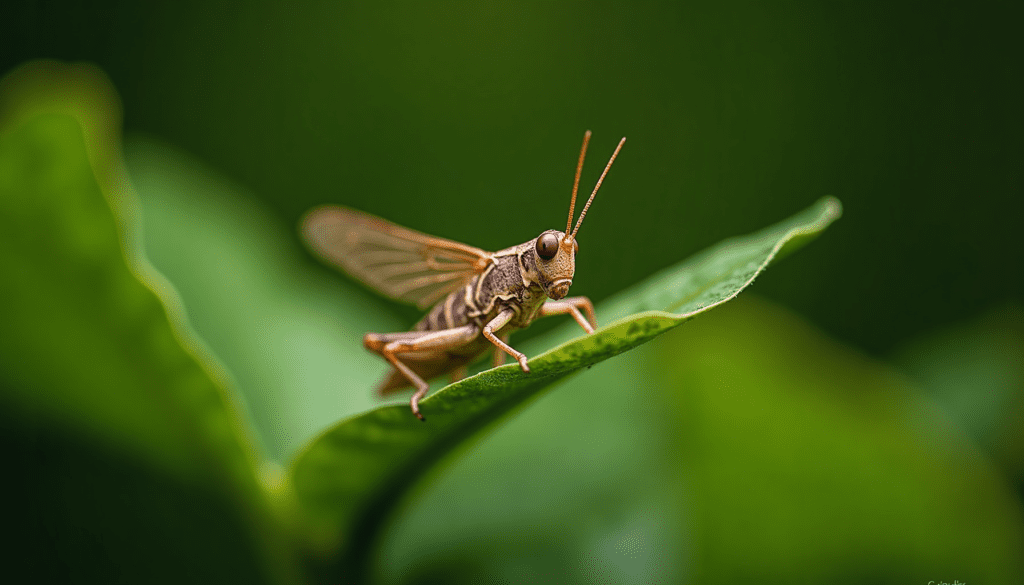
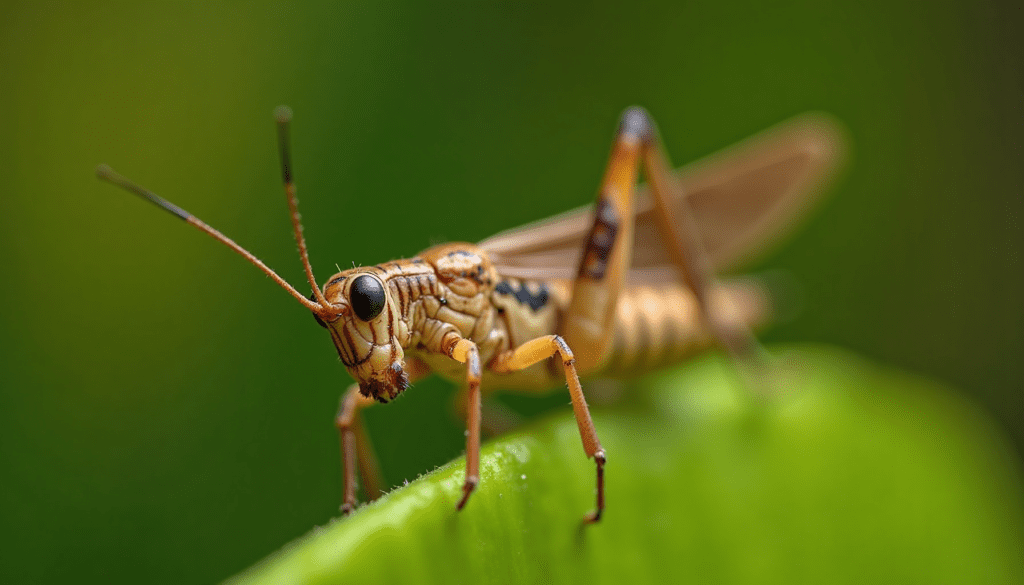
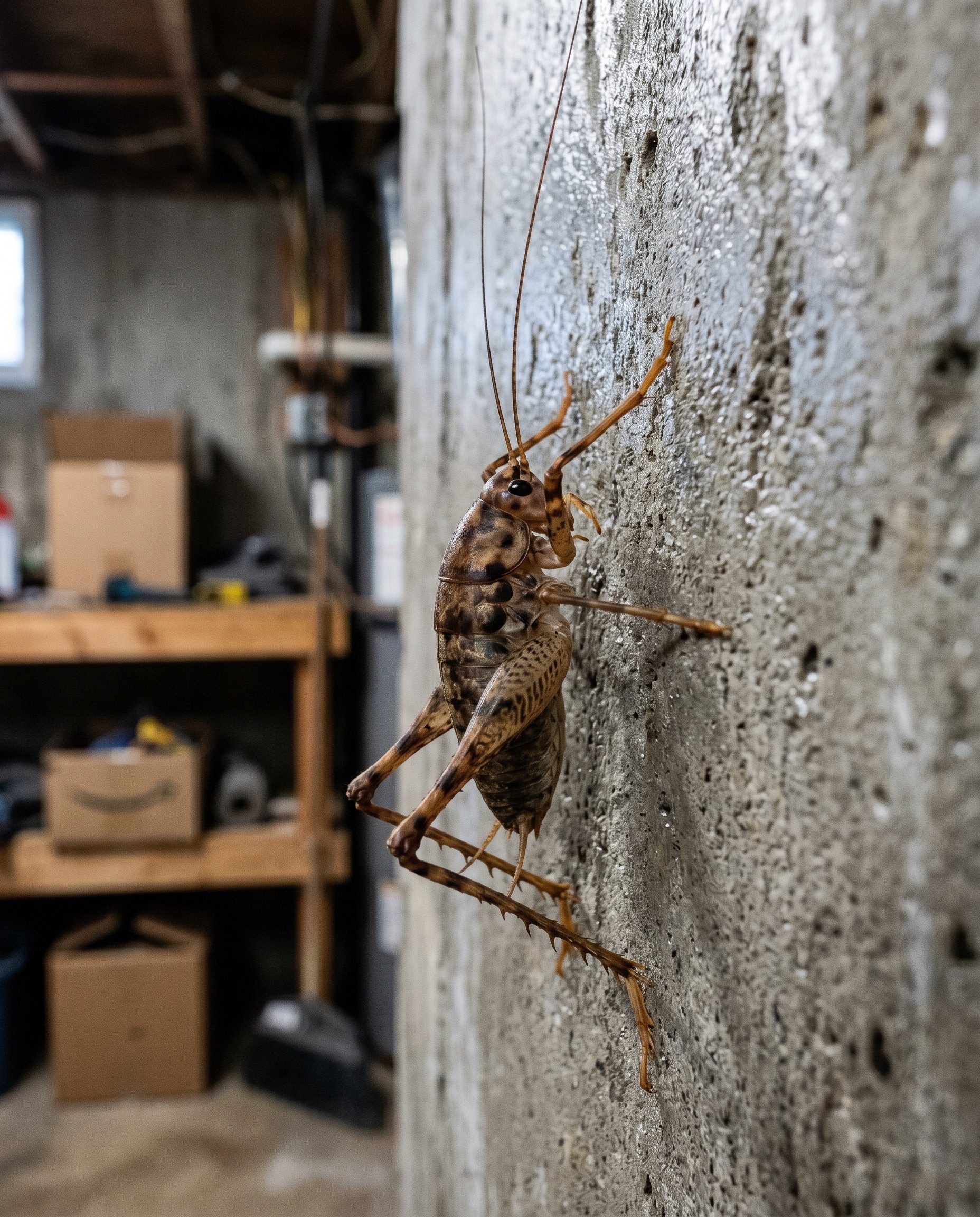
Match the trap to the cricket, because the two common indoor offenders behave differently. A chirping cricket along a warm wall is a house or field cricket; a silent humpbacked jumper in a damp basement is a camel or spider cricket, and the fix leans hard on drying out.
| Cricket type | Best approach | Watch-out |
|---|---|---|
| House or field cricket | Glue boards along walls plus a yellow porch bulb and sealed gaps | Only males chirp; they hush when disturbed, so trap overnight |
| Camel or spider cricket | Glue boards in damp corners plus a dehumidifier to dry the space | Wingless and silent; a sighting means the basement is too damp |
| Mole cricket | This is a burrowing lawn pest, not an indoor one | Do not treat it as a house cricket; it stays in the yard |
Why does the difference matter for which trap you place where? Because Iowa State’s camel cricket page is blunt that these wingless, humpbacked crickets are an indicator of dampness, and that a dehumidifier in the basement or crawlspace is the key control, not the trap. A camel cricket on the wall is telling you the room is too wet, so the glue boards catch the current crowd while the dehumidifier removes the reason they are there. House and field crickets, by contrast, follow warmth and light, so boards along the baseboard plus a yellow bulb and sealed gaps do more. Mole crickets are a separate burrowing lawn pest and never belong in this indoor conversation at all.
Where to place a trap
Placement is the whole game with sticky boards, so set them where crickets actually travel, not in the middle of the floor. Lay each board flat and flush against the baseboard, with the long edge touching the wall, and tuck one into every corner, because crickets hug edges and run the wall line. Cover the spots they favor: behind the furnace and water heater, under utility sinks, along the back of a damp closet, and across doorway thresholds. Refresh a board when it fills with dust or catches or about every two to four weeks, since a dried-out or dusty board stops sticking.
These boards are pesticide-free, which is the honest advantage indoors around kids and pets, so there is no chemical caution beyond keeping the adhesive off skin and fur. If you do reach for any registered product outside as a perimeter step, read and follow the label, because under federal law the label is the law; the EPA’s safe pest control guidance lays out the exclusion-and-sanitation-first approach that should always come before spraying. One firm rule: skip indoor fogging for crickets. A fog drifts over open surfaces without reaching the cracks crickets hide in, and it does nothing about the wet corner or the open gap that keeps drawing them inside.
The picks
Cards come after the analysis on purpose, because the cricket and the room decide which board you buy. These three cover the common indoor case, the value buy, and a damp basement full of camel crickets, and all are widely available sticky traps.
InsectoGuide is reader-supported. As an Amazon Associate we earn from qualifying purchases at no extra cost to you.
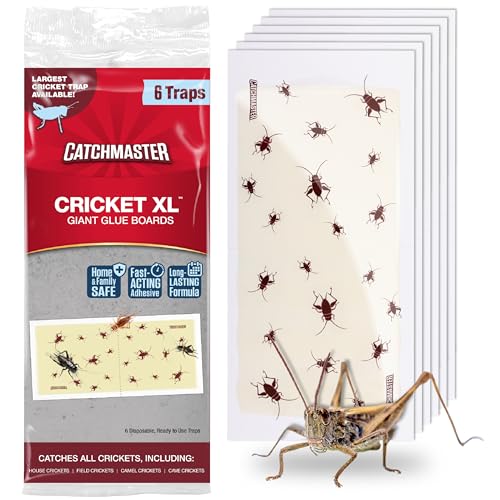
Big flat boards you lay flush along walls and tuck into corners.
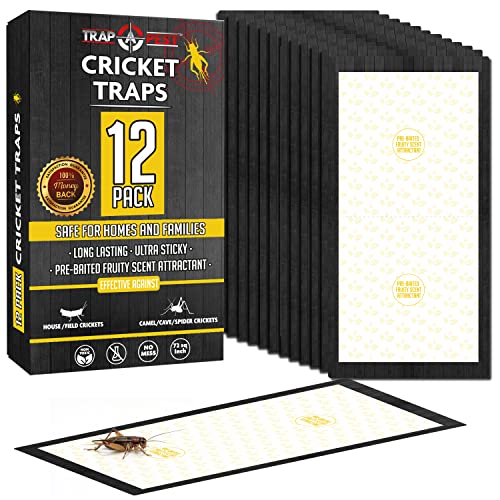
A twelve-pack to blanket a whole home and monitor where crickets travel.
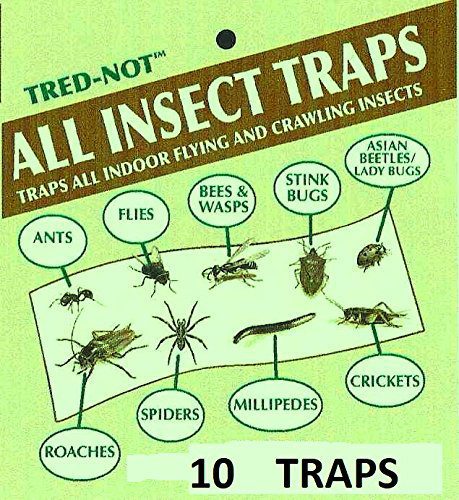
Aimed at camel crickets in damp basements, crawlspaces, and dark corners.
Common questions
Do cricket glue traps actually work?
Yes, for the crickets already inside. A flat board run along the wall catches the ones traveling the edge and is the best way to corner a single chirper. It will not stop new crickets from wandering in, though, so pair it with drying the space and sealing the gaps.
Are crickets dangerous or do they bite?
No. The University of Minnesota Extension treats crickets as a nuisance, not a health threat. They rarely bite, are not aggressive, do not feed on blood, and carry no disease that threatens people; the real complaints are the chirping and the occasional chewing on paper or fabric.
How do I stop the chirping fast?
Only male crickets chirp, and they fall silent the moment you move or make noise, which makes them maddening to find. Set a few glue boards along the walls of the room and wait, since the cricket goes quiet when disturbed but still travels the edge overnight. Cold slows them down, too.
Why do I keep getting crickets in the basement?
Usually dampness. Silent, humpbacked camel crickets in particular are an indicator that the space is too wet, so Iowa State points to a dehumidifier as the key fix. Dry the basement, seal the gaps, and the boards will have far less to catch.
Will a trap fix the problem on its own?
No, and that is the honest answer most lists dodge. A trap is the catch-and-monitor step. Without cutting moisture, sealing foundation cracks and door gaps, and reducing or changing outdoor lighting, crickets keep coming in from outside no matter how many boards you set.
Final verdict
The best cricket trap is a flat sticky glue board placed along the walls and into the corners where crickets run, because that placement catches the ones inside now and is your best shot at silencing a lone chirper. Start free by drying out the damp spots, sealing the foundation cracks and door gaps, and switching a white porch bulb to yellow, then set the boards flush against the baseboards and refresh them every two to four weeks. Reach for big flat boards for the common case, a value twelve-pack to blanket a whole home, and a camel-cricket pack plus a dehumidifier for a damp basement. Treat the trap as the catch-and-monitor step, not the whole plan, and skip indoor fogging, because crickets keep wandering in from outside until you cut the moisture and shut the gaps. For an outdoor perimeter step alongside the boards, see our guide to the best cricket killer sprays.