Permethrin is not a skin repellent, so do not shop for it like one. It is a clothing and gear treatment that you spray on socks, pants, shoes, and tents, let dry, and then wear, and it keeps killing ticks, chiggers, and mosquitoes on contact through several washes. That distinction is the whole point: it is the single most effective layer against the ground-dwelling biters like chiggers and ticks that a skin lotion never reaches, because they climb up from below onto your cuffs and socks. The short answer: treat your clothing ahead of time and let it fully dry, never put permethrin on skin, and pair it with a separate skin repellent on the areas you leave bare. For our own hikes we keep one bottle of permethrin for the field clothes and a picaridin spray for the exposed skin. Most lists treat permethrin like just another bug spray; the comparison below shows why it belongs on your gear instead.
Permethrin is a clothing and gear treatment, not a skin repellent: spray it on socks, pants, shoes, and tents, let it dry, and it kills ticks and chiggers on contact through several washes, covering the ground biters a skin lotion misses.
- Do first (free): Tuck pants into socks and treat clothing ahead of time, since chiggers and ticks climb up from the ground onto cuffs.
- Best for the common case: A ready-to-use permethrin trigger spray on socks, pant cuffs, the waistband, and shoes, dried before wearing.
- Skip: Putting permethrin on skin; it is a fabric treatment, and bare skin still needs a separate EPA-registered repellent.
Why treat clothing, not skin
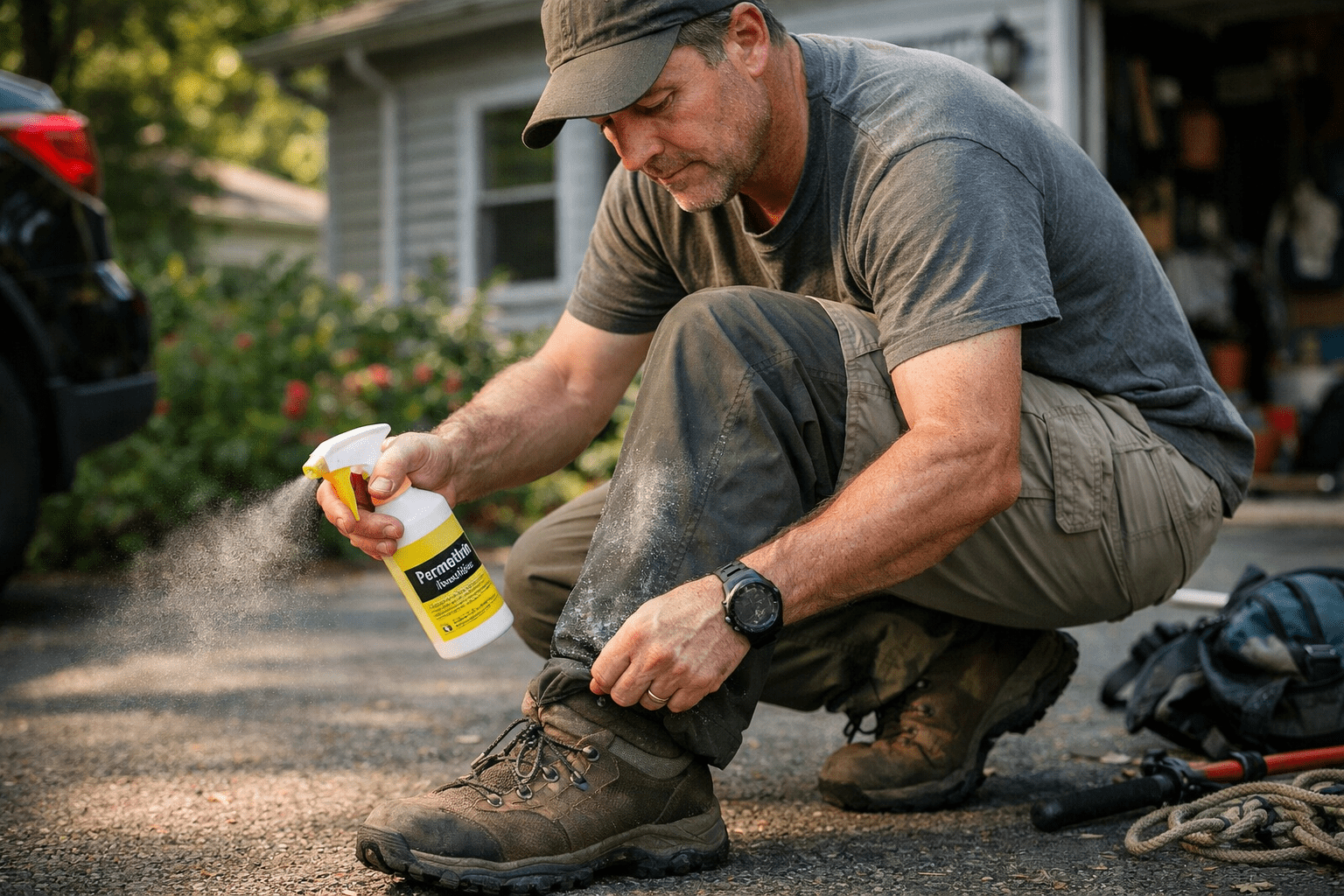
The free part comes before any bottle: tuck your pant legs into your socks, wear closed shoes, and choose light long sleeves in brushy areas, because that physical barrier alone keeps a lot of ground biters off you. Chiggers and ticks do not drop from trees; they wait in tall grass and leaf litter and climb up onto whatever fabric brushes past, which is exactly why the cuffs, socks, and waistband are the zones that matter. The CDC’s tick prevention guidance is direct that permethrin goes on clothing and gear, not skin, and that treated clothing is one of the strongest layers you can add. A skin lotion protects bare skin, but it does nothing for the bug crawling up the outside of your sock toward an opening.
That is the gap permethrin fills. Treat the clothing ahead of time, let it dry completely, then wear it, and the fabric itself kills or knocks down the bugs that contact it for the life of the treatment. One application typically lasts through several washes, so a few minutes of prep on a porch railing protects you across many outings. Our roundup of the best chigger repellents for skin and clothing covers how the two layers work together, because neither one alone is the full answer.
The mistake that wastes the bottle
Here is where most people go wrong: they spray permethrin on like sunscreen, or they buy it expecting it to replace a skin repellent. Permethrin is for fabric only, and putting it on skin is both off-label and pointless, since your skin breaks it down fast and it gives you little protection there. The EPA’s guidance on choosing an insect repellent draws the same line: skin gets an EPA-registered repellent with picaridin, DEET, or oil of lemon eucalyptus, while permethrin stays on the clothing. Treating socks but leaving your forearms, neck, and ankles bare and unprotected is the other half of the same mistake.
The other thing worth clearing up is what chiggers actually do, because it changes how you protect yourself. Chiggers are larval harvest mites, and they do not burrow into your skin or lay eggs in you. They attach, feed through a tube for a few hours, and drop off; the itch that lasts for days is an allergic reaction to that feeding tube, not a live bug still in there. That means nail polish and other suffocation tricks do nothing, so wash with soap and water soon after you come in from the field rather than chasing a bug that has already left. Permethrin earns its place precisely because it stops the climb before the attach happens, which a post-bite remedy cannot do.

Permethrin vs skin repellent
Once you see them as two different jobs, the choice gets simple. Permethrin handles the fabric your legs and feet push through the grass; a skin repellent handles the bare skin the bug lands on. The CDC’s mosquito-bite prevention page recommends both together for full coverage, not one instead of the other.
| Layer | Best for | Watch-out |
|---|---|---|
| Permethrin clothing spray | Socks, pant cuffs, shoes, tents, and packs against ground biters | Clothing and gear only, never skin; must dry fully; toxic to cats while wet |
| Skin repellent (picaridin / DEET / OLE) | Bare forearms, neck, ankles, and any exposed skin | Follow the label and reapply; does not protect the fabric below |
| Tuck and cover (free) | Every outing, before you spray anything | Reduces but does not replace treatment in heavy brush |
So which permethrin do you buy? For most people a ready-to-use trigger spray is the right call, because there is nothing to mix and you can treat an outfit in minutes. If you treat a lot of clothing and gear across a season, a larger 24-ounce bottle covers far more for the money. The scent-free options are worth it if you stalk wildlife or just dislike a chemical smell. Whatever you choose, the EPA’s safe pest control principles hold: the label is the law, so read it and apply only as directed.
How to treat your clothing
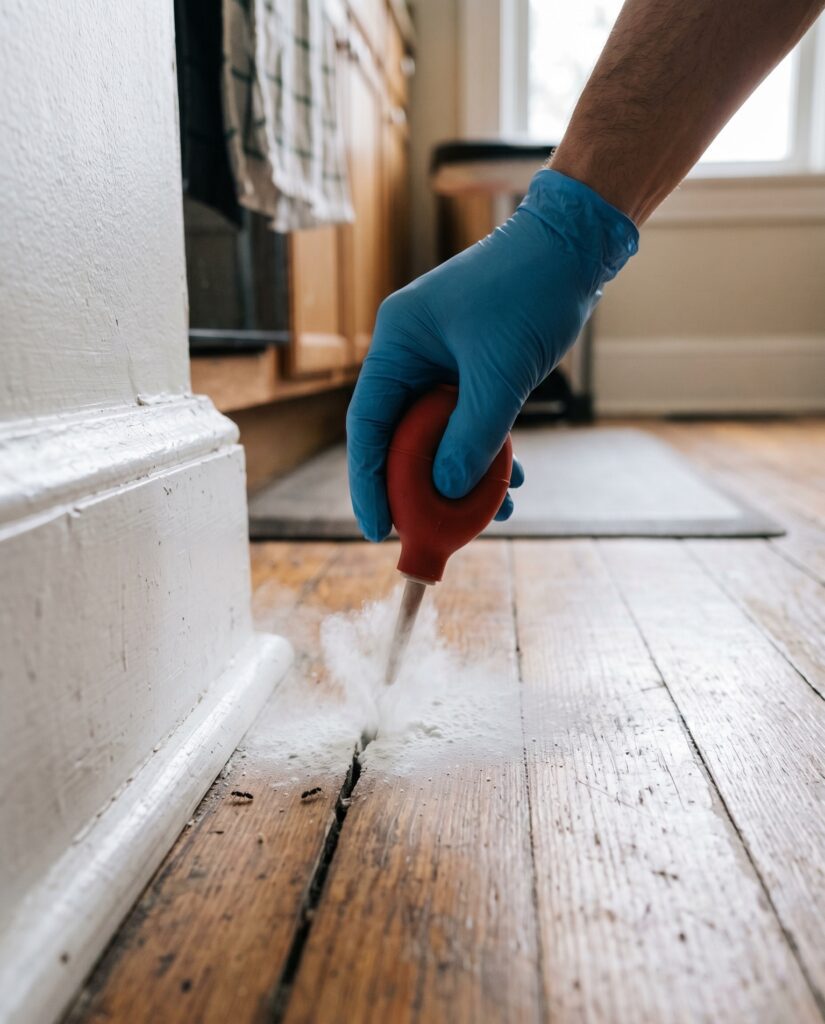
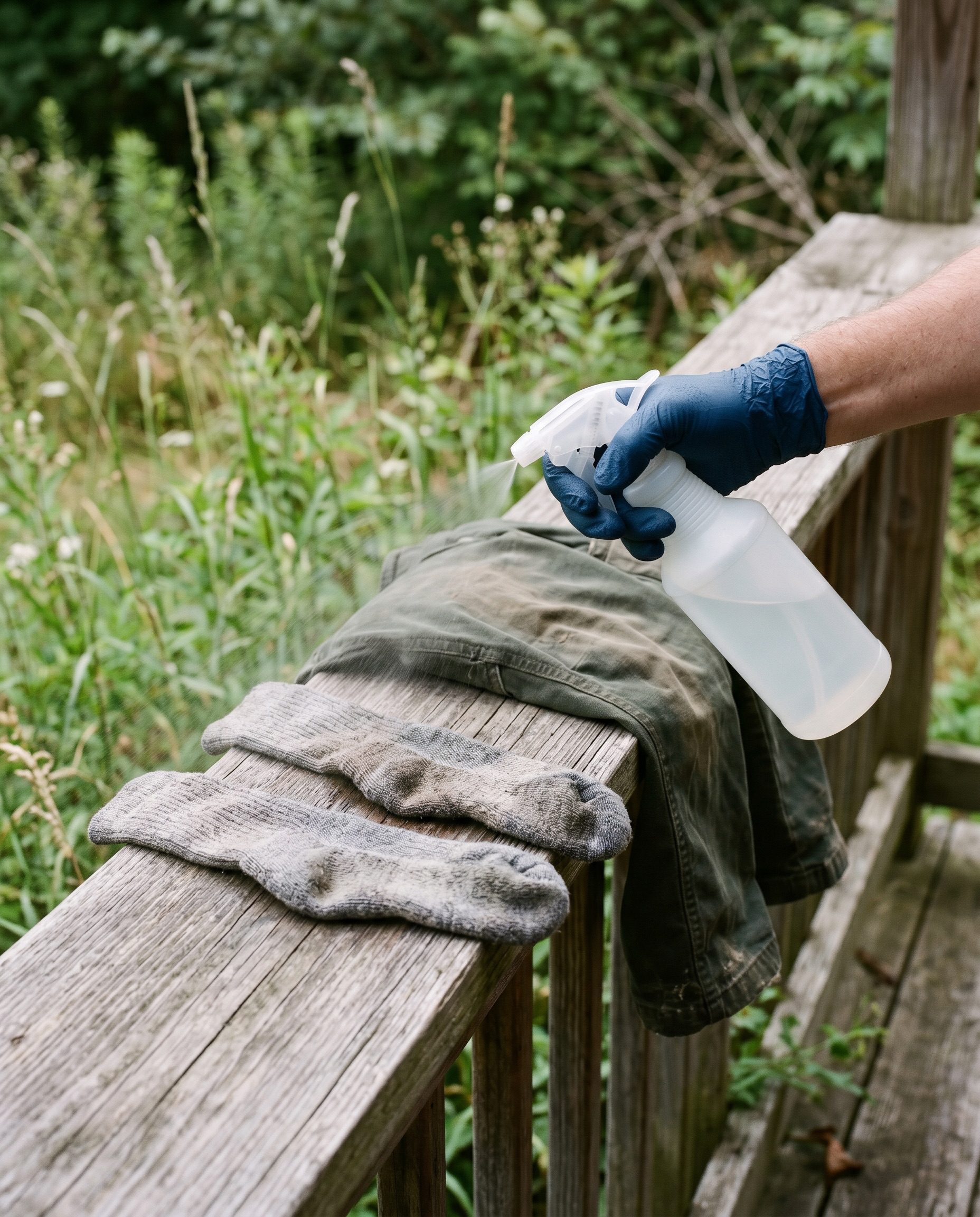
Lay the garment flat outdoors, on a railing, a clothesline, or a deck, away from people and pets. Spray each side with a slow, even pass until the fabric is damp but not soaked, paying extra attention to the socks, the lower legs and cuffs of pants, the waistband, and the outside of your shoes, since those are the entry zones for chiggers and ticks. Let everything dry completely, usually a few hours, before you put it on, because permethrin should only be worn once it is dry. Treat ahead of the trip, not in the field.
A few firm safety rules. Apply it outdoors or in a well-ventilated space, keep it off your skin, and wash your hands when you are done. The one that catches people off guard: permethrin is toxic to cats while it is still wet, so dry treated items somewhere your cat cannot reach them and keep the cat out of the room until everything is fully dry. Keep it away from children and off any food surfaces, and never apply it near fish ponds or aquariums. If anyone has an exposure concern, contact a doctor or your local poison control center. Treated clothing holds up through several washes; re-treat when the protection fades or per the product label, and do not over-apply thinking more is better.
For ground biters, the yard matters as much as the clothing. Mowing, clearing weeds, and raking out leaf litter shrink the damp, shady edges where chiggers and ticks wait, and our guide to getting rid of chiggers in your yard walks through the habitat work. If you are not even sure chiggers are the culprit, the breakdown of no-see-um versus mosquito versus gnat bites helps you match the bite to the bug before you treat for the wrong one.
How long permethrin lasts on clothing (and when to re-treat)
People love permethrin when it works, then assume it is “set and forget.” The reality is more like sunscreen for your gear: it holds up well, but not forever.
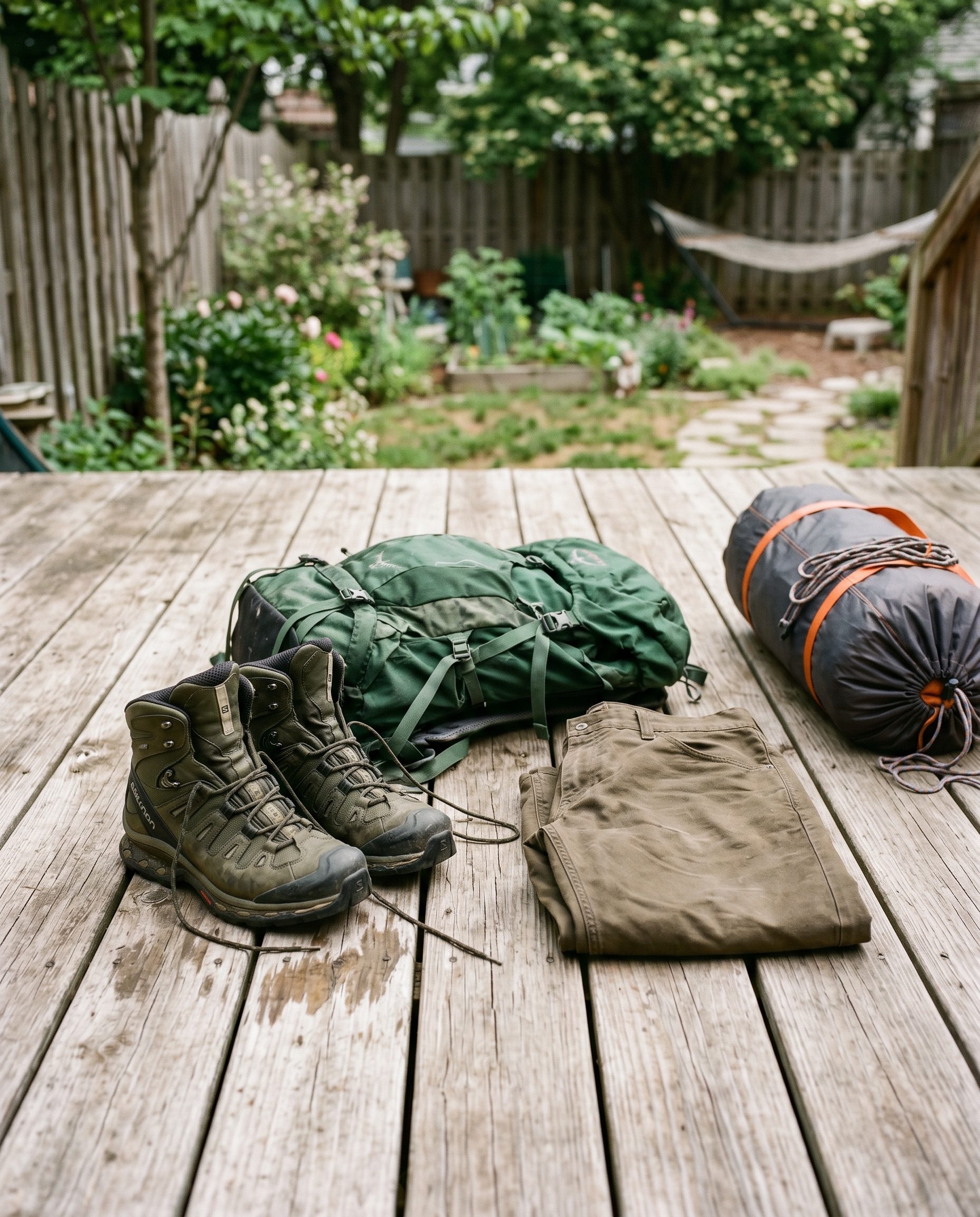
Most consumer permethrin clothing treatments advertise effectiveness for up to 6 weeks or 6 washes. That matches a lot of user experience in the field, especially when items are line-dried and not scrubbed aggressively. UV exposure can shorten effective life, so a shirt worn in bright summer sun every day may need re-treatment sooner than a pair of hiking pants used on weekends.
What shortens longevity?
Here is what strips or degrades the treatment fastest:
- Frequent washing, especially hot water and long cycles
- High-heat drying, which can be rough on fabrics and finishes
- Constant sun exposure during long summer days
- Abrasion from brush, pack straps, and repeated flex points (knees, cuffs)
Visual: re-treatment schedule you can actually remember
| Use pattern | Re-treat about when? |
|---|---|
| Weekend hikes (spring-summer) | Every 6 weeks |
| Daily outdoor work | Every 3-4 weeks, or when bites increase |
| After laundry-heavy weeks | After ~6 washes |
| After long UV exposure (desert, high altitude) | Consider earlier re-treat |
Pairing permethrin with skin repellent (the high-success combo)
Permethrin handles the fabric. You still need a skin repellent for ankles, hands, neck, and any exposed skin.
A good pairing strategy:
- Treat clothing and gear with permethrin
- Use DEET or picaridin on exposed skin
- Do tick checks after coming indoors
- Shower within 2 hours when possible after high-risk outings
For a deeper comparison of skin repellents and when to choose each, use Best Tick Repellents for Humans: DEET, Picaridin & Permethrin as your decision guide.
The picks
Cards come after the analysis on purpose, because the job decides which bottle you buy. These three cover the everyday outfit, the season-long supply, and scent-free gear treatment, and all are common, widely available permethrin clothing sprays.
InsectoGuide is reader-supported. As an Amazon Associate we earn from qualifying purchases at no extra cost to you.
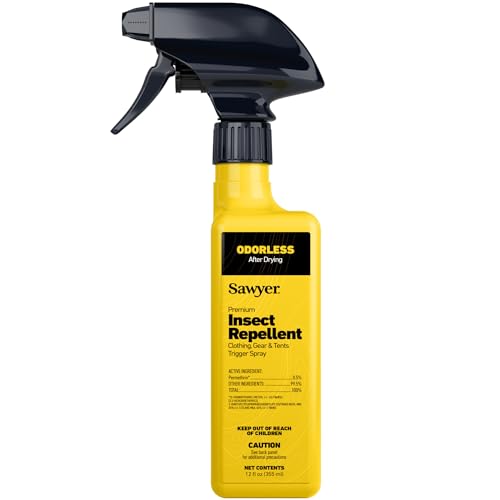
A ready-to-use trigger spray for treating an everyday outfit and gear.
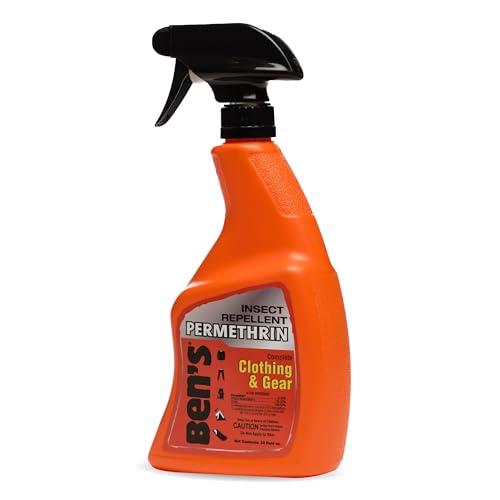
A 24-ounce bottle for treating a full outfit plus boots and packs.
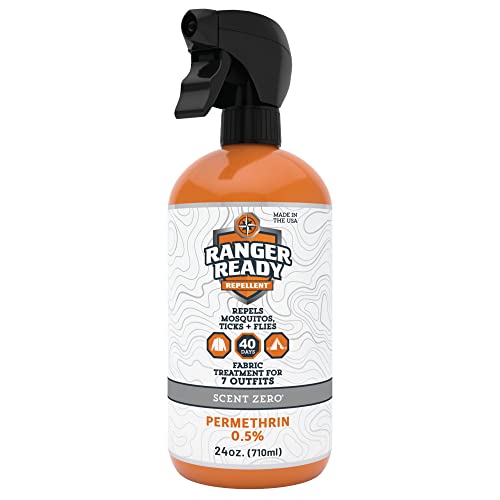
A scent-free 24-ounce spray for tents, packs, and field clothes.
Common questions
Can I spray permethrin on my skin?
No. Permethrin is for clothing and gear only, and your skin breaks it down quickly, so it gives little protection there. The CDC is clear that permethrin goes on clothing, not skin, while bare skin needs a separate EPA-registered repellent.
How long does treated clothing keep working?
A single treatment typically lasts through several washes, and some products advertise protection for weeks of normal use. Re-treat when the protection fades or as the label directs, and treat the clothing ahead of your trip so it has time to dry fully before you wear it.
Does permethrin stop chiggers, or only ticks?
It helps with both, because chiggers and ticks climb up from the ground onto your socks and cuffs, which is exactly where treated fabric kills them on contact. Pair it with a skin repellent and yard habitat work for the strongest result against ground biters.
Is permethrin safe around pets?
Treated clothing is fine once dry, but permethrin is toxic to cats while it is still wet, so dry treated items where your cat cannot reach them and keep the cat away until everything is dry. For any exposure concern, contact a doctor or your vet, and follow the product label.
Do I still need a skin repellent if my clothes are treated?
Yes. Treated clothing protects the fabric, but your bare forearms, neck, and ankles still need an EPA-registered repellent with picaridin, DEET, or oil of lemon eucalyptus. The two layers cover different parts of you, which is why the CDC recommends using them together.
Final verdict
There is no permethrin you spray on yourself, and any guide that treats it like a skin lotion is missing the point. Treat your clothing and gear ahead of time, let it dry completely, and never put permethrin on skin; that treated fabric is the layer that kills the ticks and chiggers climbing up from the ground, the ones a skin repellent never reaches. Reach for a ready-to-use trigger spray for an everyday outfit, a 24-ounce bottle if you treat a lot across a season, and a scent-free option for tents and packs. Pair it with an EPA-registered skin repellent on the bare areas, keep wet treated items away from cats, and mow and clear the brushy edges where these biters wait, because the spray on your socks is one layer inside the full defense, not the whole of it.