Finding yourself swatting at bites on the patio or waking up itchy is frustrating, especially when every product claims to be “the best.” The truth is that mosquito control methods work in different ways, so the right choice depends on whether you need personal protection, a bite-free seating area, or long-term yard reduction. This guide compares foggers, sprays, and traps with clear pros and cons, realistic expectations, and an integrated plan you can actually follow this week.
Quick answer: which mosquito control method works best?
If your goal is fewer bites today, topical repellents win. If you want comfort in a fixed outdoor spot, spatial repellents (fogger-style devices) can help. If you want gradual yard suppression, traps can contribute, but they rarely prevent bites by themselves.
At-a-glance comparison of mosquito control methods
| Method | Best for | Typical performance | Coverage | Biggest drawback |
|---|---|---|---|---|
| Topical repellent spray (DEET or picaridin) | Hiking, travel, active outdoor time | Often 98-100% bite reduction in tests when applied correctly | Only where applied | Needs reapplication after sweating/swimming |
| Spatial repellent “fogger” device (allethrin/metofluthrin) | Patios, campsites, sitting still | Noticeable bite drop in a 15-20 ft zone after warm-up | Small outdoor zone | Wind breaks the protective “bubble” |
| Mosquito trap | Long-term nuisance reduction in yards | Variable population suppression | Yard-wide, gradual | Not reliable for immediate bite prevention |
| Yard insecticide sprays/misting | Short-term knockdown in targeted areas | Variable due to resistance and conditions | Targeted areas | Needs repeat treatments; non-target concerns |
Actionable takeaway: For most households, the best results come from layering: remove breeding sites + use a topical repellent for people + add a spatial device for seating areas.
Mosquito control methods that work: start with the mosquito’s weak point
Mosquitoes feel unstoppable because the adults fly in from anywhere. But their life cycle has a bottleneck: larvae must develop in standing water. That’s why entomologists keep coming back to integrated pest management – reduce breeding, then protect people.
Think of your yard like a leaky boat. Repellent is bailing water out. Habitat control is plugging the leak.
The fastest IPM checklist (10 minutes, once a week)
Use this as your “baseline” before buying anything new:
- Dump standing water: plant saucers, buckets, toys, tarps, clogged gutters, wheelbarrows.
- Refresh pet bowls and birdbaths every 2-3 days (or scrub weekly).
- Clean gutters so water drains within 24-48 hours after rain.
- Treat water you can’t dump (rain barrels, ornamental ponds, catch basins) with larval control products labeled for mosquitoes.
- Trim dense vegetation near seating areas – adult mosquitoes rest in shady, humid cover.
Visual: common breeding sites you might miss
| Overlooked site | Why it matters | Fix |
|---|---|---|
| Folding patio umbrellas | Water pools in fabric folds | Dry after rain, store covered |
| Tarps and grill covers | Sagging creates “cups” | Tighten or replace |
| Kiddie pools | Larvae develop fast in warm water | Drain and store between uses |
| Clogged downspouts | Hidden standing water | Flush and screen |
For a step-by-step yard plan, see How to Mosquito-Proof Your Backyard. If you’re curious why they target you specifically, How Mosquitoes Find and Bite You explains the carbon dioxide, body odor, and heat cues that guide them in.
External guidance is consistent here: the EPA overview of emerging mosquito control technologies and many local mosquito programs emphasize combining habitat reduction with targeted tools, not relying on one “silver bullet.”
Mosquito spray for personal protection: the most reliable bite prevention
Thermacell Patio Shield Mosquito Repeller, 12-Hour Protection
This product is a spatial repellent that creates a mosquito-free zone, making it highly relevant for outdoor seating areas as discussed in the article.
OFF! Deep Woods Insect Repellent VIII, 6 oz
This topical repellent spray is effective for personal protection against mosquito bites, aligning with the article’s recommendation for immediate bite prevention.
Catchmaster 72MAX Pest Trap, 72 Count
This mosquito trap is designed for long-term nuisance reduction in yards, which is discussed in the article as a method for gradual population suppression.
Mosquito Dunks – 6 Dunks (for standing water)
These larval control products are essential for treating standing water, which is a crucial part of the integrated pest management strategy mentioned in the article.
If you want the most predictable results, topical repellent is the workhorse. Research and product testing repeatedly show that DEET and picaridin provide very high bite reduction when applied to exposed skin as directed. In comparisons summarized by Thermacell’s repellent effectiveness review, properly used topicals often reach near-complete protection for several hours.
The key detail many people miss: mosquitoes only need a thumbnail-sized patch of unprotected skin. Good coverage matters more than brand.
What to choose (and when)
DEET (20-30%)
- Best when you need long duration, like fishing at dusk or traveling in mosquito-heavy areas.
- Typical effective window: roughly 5-12 hours, depending on concentration, sweat, and species.
Picaridin (about 20%)
- Similar real-world performance for many users.
- Often preferred for feel and odor, and it’s less likely to damage plastics than DEET.
Botanical sprays (oil of lemon eucalyptus, etc.)
- Can help, but outdoors they often fade faster, especially in heat and wind.
- Good for short, low-pressure situations, not “peak bite hour” insurance.
For product picks and how to apply them safely, use our field-focused guide: Best Mosquito Repellents.
Visual: correct application checklist (most bite failures happen here)
- Apply to all exposed skin, including ankles, behind knees, and along sock lines.
- Use enough to create a thin, even film. Do not spot-apply.
- Reapply after swimming, heavy sweating, or toweling off.
- For faces: spray on hands first, then rub on, avoiding eyes and mouth.
- Treat clothing when appropriate (follow label guidance). Fabric coverage reduces the “landing zones.”
Actionable takeaway: If you’re moving around (gardening, walking the dog, hiking), a topical repellent is usually the best single tool. It travels with you, unlike area devices.
Mosquito fogger devices (spatial repellents): best for patios, camps, and “stay-put” evenings
If you’ve ever hosted dinner outdoors and watched mosquitoes circle the table, you’ve met the perfect use case for a spatial repellent device. These products release active ingredients like allethrin or metofluthrin to create a protective zone. According to performance summaries from Thermacell’s effectiveness comparison, many devices reduce bites noticeably in a 15-20 foot area after a 10-15 minute warm-up period.
Here’s the catch: the “bubble” is fragile. Wind, open corners, and people constantly getting up and down can poke holes in it.
When a fogger-style device shines
- Patios and decks where people sit in one area
- Campsites during cooking or relaxing
- Backyard gatherings where you can set up a perimeter
When it disappoints
- Breezy evenings or open fields
- Following kids around the yard
- Long walks, trail use, or moving between locations
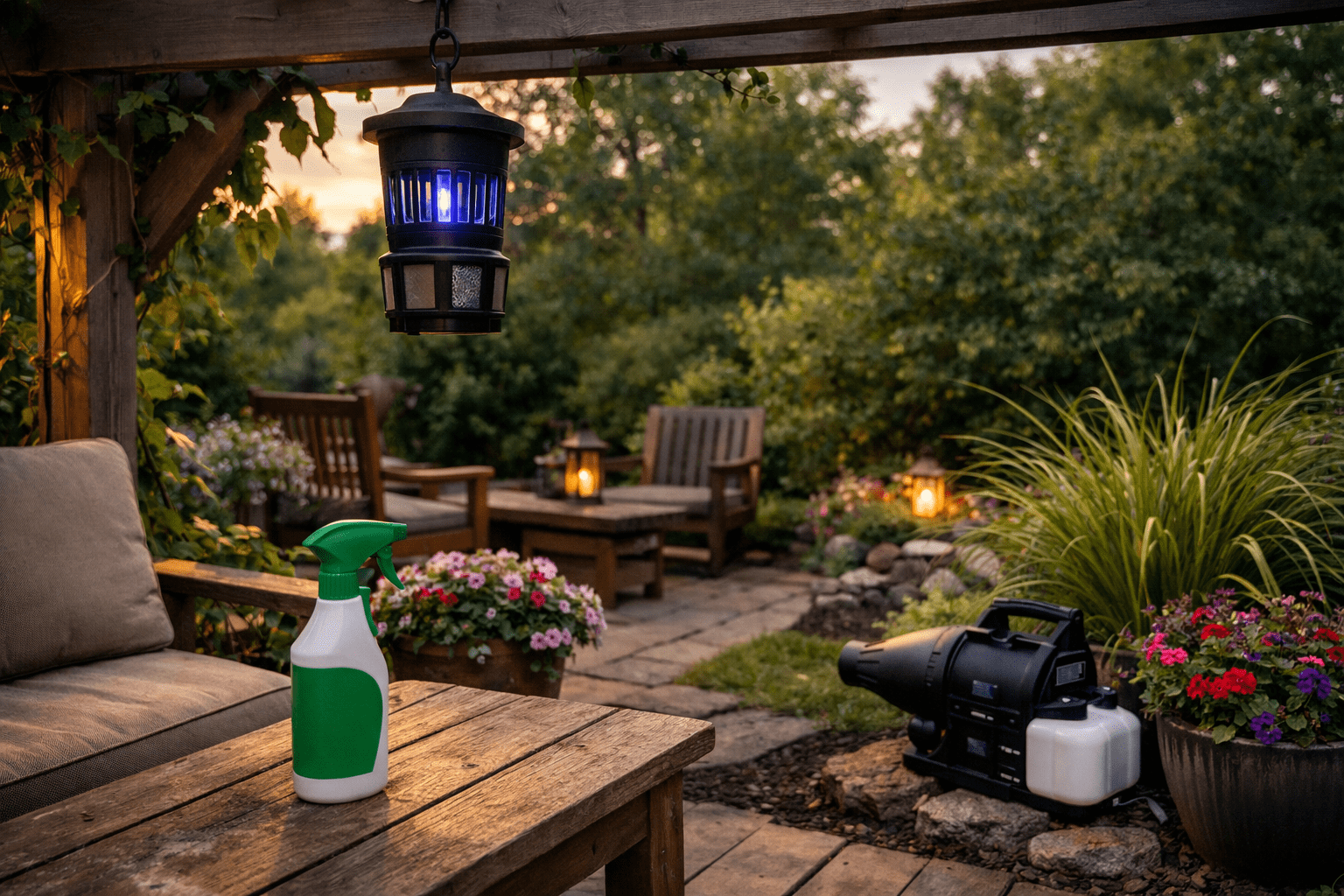
Visual: setup steps for better results
- Place the device upwind of the seating area when possible.
- Start it 10-15 minutes before you sit down.
- Keep it near the “edge” of your group, not under the table.
- Use one device per zone as directed by the label. Oversized areas need multiple units.
- Pair it with a topical repellent on ankles and calves if mosquitoes are intense.
Actionable takeaway: Spatial repellents are comfort tools. They are most effective when you treat them like a small “outdoor room” solution, not a yard-wide shield.
Mosquito traps and zappers: what they can (and can’t) do for bite relief
A mosquito trap feels like it should solve the problem. It’s running all day, catching insects, and giving you a satisfying bag of evidence. But bite prevention is a different metric than insect catch.
The American Mosquito Control Association’s guidance on traps notes that trap performance varies widely by species, placement, competing attractants, and local breeding pressure. Some models can reduce nuisance populations over time, yet they often do not guarantee fewer bites where you sit, especially if mosquitoes are breeding nearby or flying in from neighboring yards.
Zappers deserve special mention: many kill lots of insects, but relatively few are mosquitoes. They can also impact beneficial insects that you actually want around.
How to use a trap the smart way
If you choose a trap, treat it as a long-term yard tool, not a “tonight” fix.
Placement rules (most important)
- Put the trap away from your patio (often 20-40 feet), so you’re not luring mosquitoes toward people.
- Place it near shady, humid edges where mosquitoes travel, not in the windiest open spot.
- Keep it running consistently during peak season.
Maintenance rules
- Clean intake screens and replace attractants on schedule.
- Empty catch bags often enough to prevent clogging and odor issues.
Visual: trap expectations vs reality
| Goal | Trap performance | Better pairing |
|---|---|---|
| Fewer bites during dinner | Often inconsistent | Add topical repellent + spatial device |
| Lower nuisance level over weeks | Sometimes helpful | Combine with water removal and larval control |
| Control mosquitoes from neighbors | Limited | Community-level action works best |
For model comparisons and what to look for, see Best Mosquito Traps for Yard and Patio.
Actionable takeaway: Traps can be part of an integrated plan, especially for large yards. But if you’re getting bitten now, a trap alone is rarely the answer.
Yard spraying and misting systems: short-term results, long-term tradeoffs
Yard sprays and misting systems are popular because they feel decisive. You apply a product, and mosquito activity often drops for a short period. The problem is consistency and sustainability.
Mosquitoes can develop resistance to commonly used insecticides, and outdoor conditions (rain, irrigation, sunlight) break products down quickly. Broad spraying can also affect non-target insects, including pollinators, if done carelessly. Public health impact is also complex: large-scale disease reduction usually relies on coordinated programs, not just individual yard treatments.
When targeted spraying makes sense
- You have a specific high-use area (a shaded corner, under a deck) where adults rest.
- You can apply spot treatments according to the label, timed to mosquito activity.
- You’re combining it with habitat reduction and personal protection.
When to consider a misting system
Misting systems can be useful in some settings, but they require careful planning, correct product choices, and attention to drift and timing. If you’re considering one, start here: Best Mosquito Misting Systems for Your Backyard.

Visual: safer, more effective “spray decision” checklist
Before spraying, answer these:
- Did you remove standing water this week?
- Are bites happening in one predictable spot (resting habitat)?
- Can you avoid spraying flowering plants and pollinator activity times?
- Are you following the label exactly (rate, timing, PPE, reentry)?
For broader context on next-generation approaches, the World Mosquito Program’s explanation of Wolbachia-based control outlines why self-sustaining biological strategies can reduce disease risk in some regions, compared with repeated adulticide applications.
Actionable takeaway: If you spray, keep it targeted and timed. If you want fewer bites reliably, don’t skip repellents and breeding-site control.
Common mosquito-control myths that waste money (and what to do instead)
A lot of frustration comes from expecting one tool to do every job. Here are the myths seen most often in the field, and the practical fix for each.
Myth 1: “A trap or zapper will eliminate mosquitoes”
Reality: Traps may reduce some mosquitoes over time, but bite prevention depends on where mosquitoes are coming from and what species you have. Zappers often kill many non-mosquito insects.
Do this instead
- Use a trap as a supporting tool.
- Prioritize topical repellent for people and larval source reduction for the yard.
Myth 2: “Natural sprays last as long as DEET or picaridin”
Reality: Many botanicals evaporate faster outdoors, especially in heat and wind.
Do this instead
- Use botanicals for short, low-pressure outings.
- Use DEET or picaridin when you need dependable coverage.
Myth 3: “Candles and incense are primary protection”
Reality: They can help a little at very close range, but wind quickly disperses the active ingredients.
Do this instead
- Use a spatial repellent device for a defined seating area, then back it up with topical repellent on exposed skin.
Visual: the “layering” formula that usually works
- Yard: remove water + treat unavoidable water sources
- Area: spatial repellent for patios
- Person: topical repellent + clothing coverage
Actionable takeaway: If a product promises yard-wide, all-night, all-weather protection by itself, set expectations lower and layer your approach.
Conclusion: choose the right tool, then layer for best results
The most effective mosquito control methods match the job. Use topical repellents when you need reliable bite prevention on the move. Use spatial repellent devices when you’re sitting in one outdoor zone. Use traps for gradual yard suppression, not immediate relief. And if you spray, keep it targeted and timed, with realistic expectations.
Next step: do one quick water-dump walk today, then build your plan using How to Mosquito-Proof Your Backyard and refine your personal protection with Best Mosquito Repellents.
As an Amazon Associate, I earn from qualifying purchases. Product recommendations are based on real reviews and independent research.