Finding ticks in your yard can make every walk to the mailbox feel like a risk. Tick tubes are one of the simplest, lowest-spray tools for reducing ticks where many infections begin – in mouse nests along stone walls, brush piles, and woodland edges. This guide explains what tick tubes do, how well they work in real studies, and exactly how to place them for the best chance of success. You’ll also learn when to expect results and how to combine them with other smart, low-toxicity yard steps.
Quick Answer: Do tick tubes work for yard tick control?
Yes – tick tubes can reduce ticks on mice and may lower infected tick numbers in some yards, but results vary and they work best as part of an integrated plan, not as a standalone fix.
Here’s the snippet-friendly summary most homeowners need:
- What they are: Cardboard tubes stuffed with permethrin-treated cotton that mice carry to nests.
- What they target: Mostly blacklegged tick (Ixodes scapularis) larvae and nymphs feeding on mice.
- What to expect: Studies report mixed outcomes. Some show about 20-60% reductions in infected nymphs in treated areas over time, while others show limited change in questing ticks.
- Best placement: Every ~10 yards in brushy edges, stone walls, woodpiles, and leaf litter zones.
- Best timing: Start in April (or early spring) and maintain through fall.
- Big limitation: If chipmunks, shrews, or other hosts drive tick survival, tubes alone may not move the needle much.
What tick tubes are and how they actually stop ticks
Tick control is confusing because you’re not just battling one “bug” in one place. You’re dealing with a life cycle that moves between hosts and habitats. Tick tubes work by targeting one of the most important links in that chain: mice.
A typical tube is a short cardboard roll (often 4-5 inches long) filled with nesting material treated with permethrin, a synthetic pyrethroid used widely in tick management. Mice (often white-footed mice in the East and deer mice in parts of the Midwest and West) collect the cotton and bring it into their nests. As they build and sleep in that nesting material, the permethrin kills ticks feeding on them – especially larvae and nymphs, the stages most likely to be overlooked and later become biting adults.
Think of it like treating the “nursery” where ticks get their first real meal, instead of fogging the whole yard.
Why mice matter so much for Lyme risk
Blacklegged ticks often pick up the Lyme disease bacterium (Borrelia burgdorferi) when they feed as larvae on infected small mammals. Those larvae then molt into nymphs – the stage most associated with human Lyme transmission because nymphs are tiny (about poppy-seed sized) and active in late spring and summer.
Research teams studying host-targeted controls emphasize that lowering tick burdens on Peromyscus mice can reduce the number of infected ticks later. A multi-year field trial in Wisconsin reported roughly 20-60% reductions in infected nymph density in treated plots compared with controls in the year following placement, though results varied by site and local wildlife communities. Guidance and summaries from the University of Wisconsin tick research program explain why alternative hosts can change outcomes.
The “no broad spraying” advantage
Many homeowners like tick tubes because they avoid broadcast applications across lawns and gardens. The permethrin is primarily delivered to the nest environment by rodents, not sprayed over plants.
That said, permethrin is still an insecticide. Use only products labeled for tick control, follow label directions, and keep tubes out of reach of children and pets.
Quick visual: tick tube mechanism at a glance
| Step | What happens | Why it matters |
|---|---|---|
| 1 | Mouse finds tube and removes cotton | Uptake is the make-or-break step |
| 2 | Cotton goes into nest | Permethrin is concentrated where ticks feed |
| 3 | Larvae/nymphs feeding on mouse die | Fewer ticks survive to later stages |
| 4 | Potential downstream effect | Fewer infected nymphs in future seasons |
Actionable takeaway: Tick tubes are most logical for properties with woodland edges and rodent habitat. If your yard is mostly open lawn with little brush, the benefit is often smaller.
Tick tubes effectiveness: what the science says (and why results vary)
Hot Shot Bed Bug and Flea Killer with Egg Kill, 1 Gallon
Hot Shot Bed Bug and Flea Killer 1 Gallon earns a solid 4.5-star rating from over 2,500 Amazon reviews for its effective formula that targets bugs and eggs, offering excellent value at around $25 for large coverage; users praise its fast action and ease of use, though the initial fumes and need for reapplication are common drawbacks—recommended as a reliable DIY option for minor infestations before calling pros.
Homeowners usually want a simple number: “How much will this reduce ticks?” The honest answer is that tick tubes can help, but outcomes are inconsistent across studies and sites.
A recent systematic review of host-targeted tick control studies found that tick tubes had mixed evidence overall, with some studies showing meaningful reductions and others showing little effect on questing nymph density. In that review, conventional acaricides (area sprays) more consistently reduced ticks than host-targeted methods. You can read the peer-reviewed synthesis in a systematic review available through the National Library of Medicine.
More recent field research has also focused on optimization: when mice remove cotton, how that changes through the seasons, and whether mouse tick burdens reliably drop. A study indexed by the National Library of Medicine reported significant reductions in tick burden on wild Peromyscus mice between treated and control transects, with cotton removal peaking in September and October.
So why doesn’t “fewer ticks on mice” always translate into “fewer ticks in the yard”?
The main reasons tick tube results can be mixed
Tick ecology is messy. A few factors commonly explain why one neighborhood sees good results and another sees little change:
- Alternative hosts: Chipmunks, shrews, squirrels, and some birds can feed immature ticks too. If those hosts dominate, treating mice helps less.
- Deer pressure: Adult blacklegged ticks feed on deer. If deer activity is high, tick populations can stay robust even if mouse tick burdens drop.
- Placement and timing: If tubes go out late, or only once, mice may not use them when nesting demand is highest.
- Weather and mast years: Acorn-heavy years can boost mouse numbers, shifting tick-host dynamics.
What “success” looks like in real life
From a practical standpoint, success is usually one of these:
- You find fewer ticks on pets or clothing along edges over time.
- Tick checks turn up fewer nymphs in late spring and early summer.
- Local tick sampling (dragging a white cloth in edge habitat) shows a decline after sustained use.
Here’s the timeline many entomologists suggest homeowners keep in mind:
| Outcome | When you might see it |
|---|---|
| Cotton removal by mice | Days to weeks |
| Reduced ticks on mice | Same season |
| Reduced nymphs in yard | Often 1+ years, sometimes longer |
| Meaningful risk reduction | Best with multi-season use + other measures |
Actionable takeaway: If you try tick tubes, commit to a full season and plan on multi-year use if you want the best chance of lowering nymph numbers.
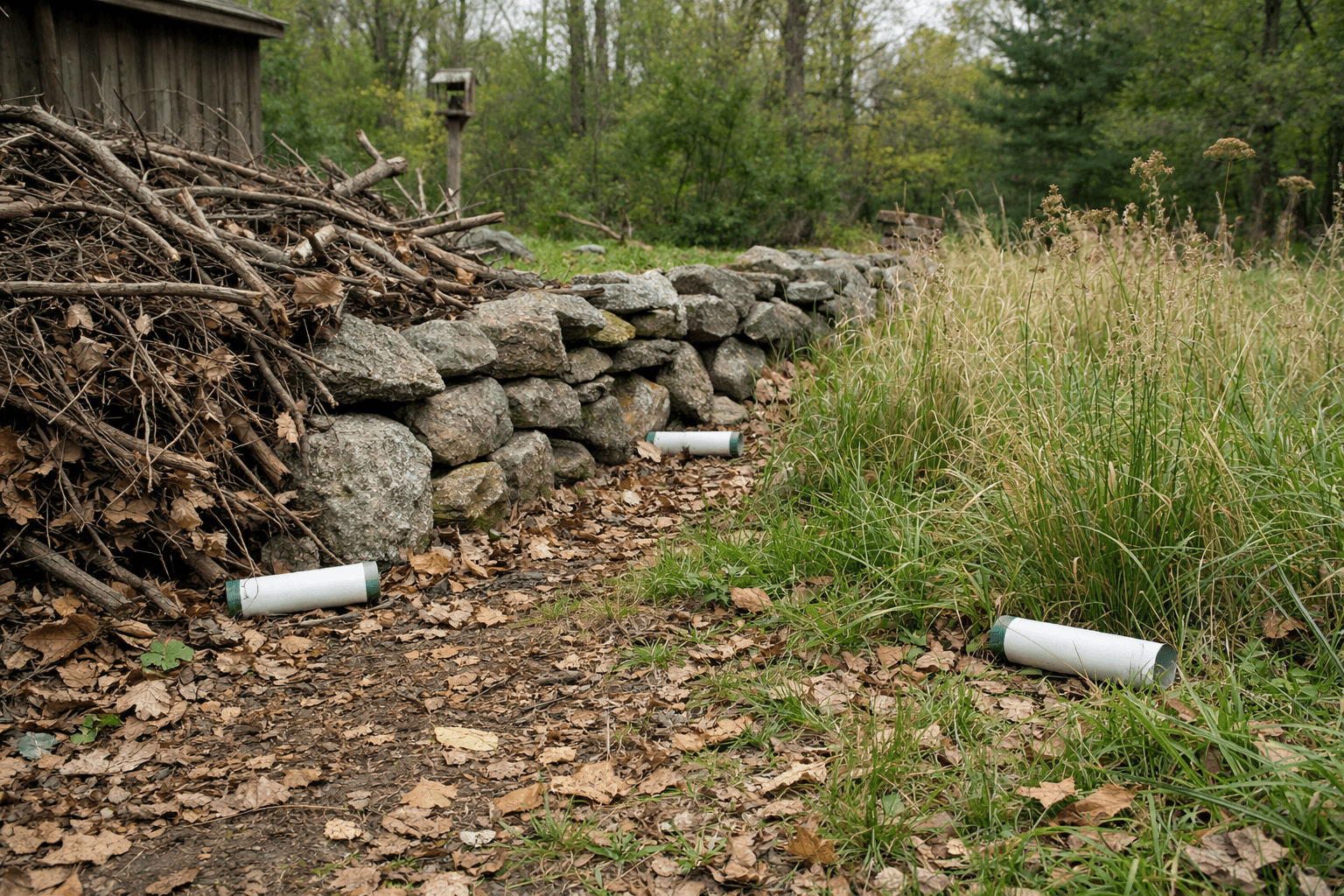
How to place tick tubes for the best chance of success (step-by-step)
EcoSMART Organic Insect Killer for Lawns and Gardens, 24 oz
No Amazon product page or ASIN could be identified from available search results, which only include the manufacturer’s site and a Zoro listing; unable to recommend for affiliate purposes due to lack of Amazon ratings, reviews, pricing, or verification data. Product appears to be an organic garden insect killer with essential oils like peppermint and rosemary, safe for same-day harvest per manufacturer claims[1][2].
Tick tubes are simple, but small details matter. Where you place them determines whether mice even find them, and timing affects whether the cotton gets used during peak nesting periods.
Step 1: Target the right micro-habitats
Ticks dry out quickly in open sun. They thrive in humid, shaded spots with leaf litter. Mice also travel along cover. Place tubes where these overlap:
- Woodland edges and brush lines
- Stone walls and rock borders
- Woodpiles and stacked lumber edges
- Under dense shrubs (not in open lawn)
- Along fence lines bordering woods
- Leaf litter pockets that stay damp
Avoid placing tubes where sprinklers soak them daily or where flooding is likely.
Step 2: Use practical spacing
A common homeowner-friendly spacing rule is about every 10 yards along edge habitat. Research suggests distance variations may not dramatically change outcomes in some settings, but consistent coverage helps.
A simple planning guide:
- Small suburban lots (0.25 acre): Often 6-12 tubes focusing on edges
- Half acre: Often 12-20 tubes
- One acre: Often 20-30 tubes initially, then fewer for maintenance in later years (depending on product guidance and pressure)
Step 3: Time it right (and keep it going)
Many programs recommend starting in April or early spring when mice begin nesting activity and ticks become active. Maintain through the season, because uptake can peak again in fall.
A workable seasonal schedule:
- Early spring (April): Put tubes out along edges.
- Late spring to summer: Check periodically to see if cotton is removed. Replace missing/destroyed tubes as needed.
- Fall (September-October): Expect another strong cotton removal period in many regions.
- Late fall: Remove remaining tubes if the product label recommends seasonal removal.
Step 4: Pair with personal protection (non-negotiable)
Even great yard practices can’t guarantee zero ticks. Combine yard tools with habits that stop bites now:
- Wear treated clothing or apply repellents before yard work
- Do a full-body tick check after outdoor time
- Keep tick removal tools ready
For practical product guidance, see:
- Best Tick Repellents for Humans: DEET, Picaridin & Permethrin
- Permethrin Sprays for Clothing & Gear
- Best Tick Removal Tools
Quick visual: placement checklist
| Question | If “yes” | If “no” |
|---|---|---|
| Do you have woods/brush edge? | Focus tubes there | Tubes may have limited payoff |
| Do you see mice activity? | Good candidate | Consider other yard measures first |
| Can you start in early spring? | Better uptake | Late start reduces usefulness |
| Will you maintain multi-season? | Better chance of yard impact | Expect smaller, inconsistent results |
Actionable takeaway: Place tubes where mice travel under cover, not where people walk. If you only have time for one improvement, improve placement along edges before buying more tubes.
Safety, pets, and common misconceptions (what to do and what to avoid)
Tick Tubes for Yard Tick Control, 12 Pack
Insufficient search data prevents a reliable affiliate recommendation; no Amazon product page, ratings, reviews, or pricing found for this exact product. A related Thermacell 12-piece product appears on QVC per YouTube video[1], but lacks Amazon details or verification.
Because tick tubes involve permethrin, safety questions are smart. The goal is to reduce exposure while still getting the benefit.
Are tick tubes safe around kids and pets?
When used according to the label, tick tubes are designed to be a low-contact delivery method. The treated cotton is intended to be removed by rodents and taken into nests, not handled by people.
Still, good practice matters:
- Place tubes where children and pets do not play or dig.
- Wear gloves if you need to move or replace tubes.
- Store unused tubes sealed and out of reach.
- Never repurpose the cotton for any other use.
Important note for cat owners: permethrin can be toxic to cats when applied directly (like some dog spot-ons). Tubes are not meant to be applied to animals. If you want pet-specific protection, use veterinary-approved options. In the meantime, see our guide to Best Tick Repellent for Dogs.
For broader pesticide safety and integrated pest management concepts, the U.S. Environmental Protection Agency guidance on integrated pest management is a solid reference.
Misconceptions that lead to disappointment
A lot of frustration comes from expecting tick tubes to do something they were never designed to do.
Misconception 1: “They eliminate ticks.”
Reality: They can reduce tick survival in rodent nests, but they don’t erase ticks from a landscape.
Misconception 2: “They work as fast as a yard spray.”
Reality: Some studies show reductions in infected nymph density, but often with a lag. A systematic review found conventional acaricides more consistently effective than host-targeted approaches.
Misconception 3: “If I use tubes, I can skip tick checks.”
Reality: Personal protection stays essential. Use tubes to lower risk, not replace caution.
When to consider professional help
If your property has heavy deer activity, dense edge habitat, and frequent tick encounters despite good practices, a pro may be worth it. Look for companies that offer integrated tick management, not just routine spraying. Ask what they target (edges vs lawns), what products they use, and how they measure results.
Quick visual: safe-use do’s and don’ts
| Do | Don’t |
|---|---|
| Place along shaded edges and rodent cover | Put tubes in open lawn |
| Keep away from play areas | Let kids “inspect” tubes |
| Follow label directions exactly | DIY-soak cotton with concentrate |
| Combine with tick checks and repellents | Assume the yard is tick-free |
Actionable takeaway: Treat tick tubes like any pesticide product: low drama, careful placement, label-first use, and realistic expectations.

Integrated tick management: how to combine tick tubes with other yard steps
Tick tubes make the most sense as one tool in a layered plan. Integrated tick management means you use multiple smaller interventions that each shave risk down, rather than betting everything on one product.
Layer 1: Habitat tweaks that reduce tick survival
Ticks need humidity. They also “wait” for hosts in vegetation along edges. Small yard changes can make those zones less tick-friendly:
- Mow regularly and keep grass shorter in high-use areas.
- Remove leaf litter from play spaces and patios, especially along the yard-woods boundary.
- Trim dense groundcover where it meets walkways.
- Create a drier border (often wood chips or gravel) between lawn and woods to reduce tick movement into play areas.
Layer 2: Target the right places, not the whole yard
Whether you use tubes, sprays, or other methods, most tick activity is concentrated in:
- Wooded edges
- Tall vegetation borders
- Leaf litter and brush piles
- Wildlife travel corridors
This is why many tick programs focus treatments on edges rather than open lawn.
Layer 3: Personal protection and fast removal
Even with perfect yard work, you can still pick up ticks hiking, at parks, or in a neighbor’s brush line. Make these habits routine:
- Use repellents correctly (skin vs clothing products differ).
- Shower and change clothes after yard work.
- Check behind knees, waistband, hairline, and underarms.
- Remove ticks promptly with fine-tipped tools.
If you want a simple kit that lives by the door, start with our Best Tick Removal Tools guide.
Layer 4: Know what’s realistic for Lyme disease prevention
Tick tubes aim at the mouse-tick connection that helps infection persist locally. That’s a good target, but it’s not the only one. A systematic review in the medical and ecological literature notes that host-targeted methods show variable effects on questing nymphs, while some other interventions (including certain deer-targeted approaches and acaricides) can show stronger reductions in some study settings.
In plain language: tubes can lower risk, but they rarely “solve” ticks alone.
Quick visual: simple integrated plan (low-toxicity first)
- Edge cleanup (leaf litter, brush, mowing patterns)
- Tick tubes in spring + fall uptake period
- Repellents + treated clothing for yard work
- Tick checks + prompt removal
- Consider targeted professional treatment if pressure stays high
Actionable takeaway: If you want the best return, spend as much effort on edge habitat changes and personal protection as you do on any product.
Conclusion
Tick tubes are a practical, low-spray option that targets ticks where they often thrive – in rodent nesting sites along yard edges. Research shows they can reduce ticks on mice and sometimes lower infected nymph numbers, but results are inconsistent and usually improve with correct placement, early-season timing, and multi-season use.
Next step: map your yard’s edge habitat, place tubes where mice travel under cover, and pair that with consistent personal protection. For bite prevention and after-care basics, revisit Best Tick Repellents for Humans: DEET, Picaridin & Permethrin and keep Best Tick Removal Tools within reach all season.
As an Amazon Associate, I earn from qualifying purchases. Product recommendations are based on real reviews and independent research.