If you keep finding fleas on a pet that lives mostly indoors, the yard is probably where they are loading up, but not the part of the yard you would guess. Fleas do not live out on the open, sunny lawn. They concentrate in the shady, moist, pet-trafficked spots: under the deck and porch, along the fence line, in leaf litter and tall grass against the foundation, and wherever your dog naps in the shade. Treat those microhabitats with a yard-labeled insecticide that includes an insect growth regulator, or with beneficial nematodes that hunt flea larvae in the soil, and clear out the damp debris that shelters them. Blanket-spraying the whole lawn is the common mistake. It wastes product, misses where fleas actually are, and harms the bees and predators you want to keep.
Yard fleas live in shady, moist, pet-trafficked spots, not the open lawn, so treat only those microhabitats and clear the debris that shelters them instead of spraying the whole yard.
- Free first: Rake and bag leaf litter, mow the shaded edges, and cut back what keeps the under-deck and fence line damp and dark.
- If that fails: Spot-treat just the shaded harborage with beneficial nematodes or a yard product containing an insect growth regulator.
- Skip: A broadcast spray over the entire sunny lawn; fleas are not there, and it kills pollinators and the predators eating other pests.
Where yard fleas actually live
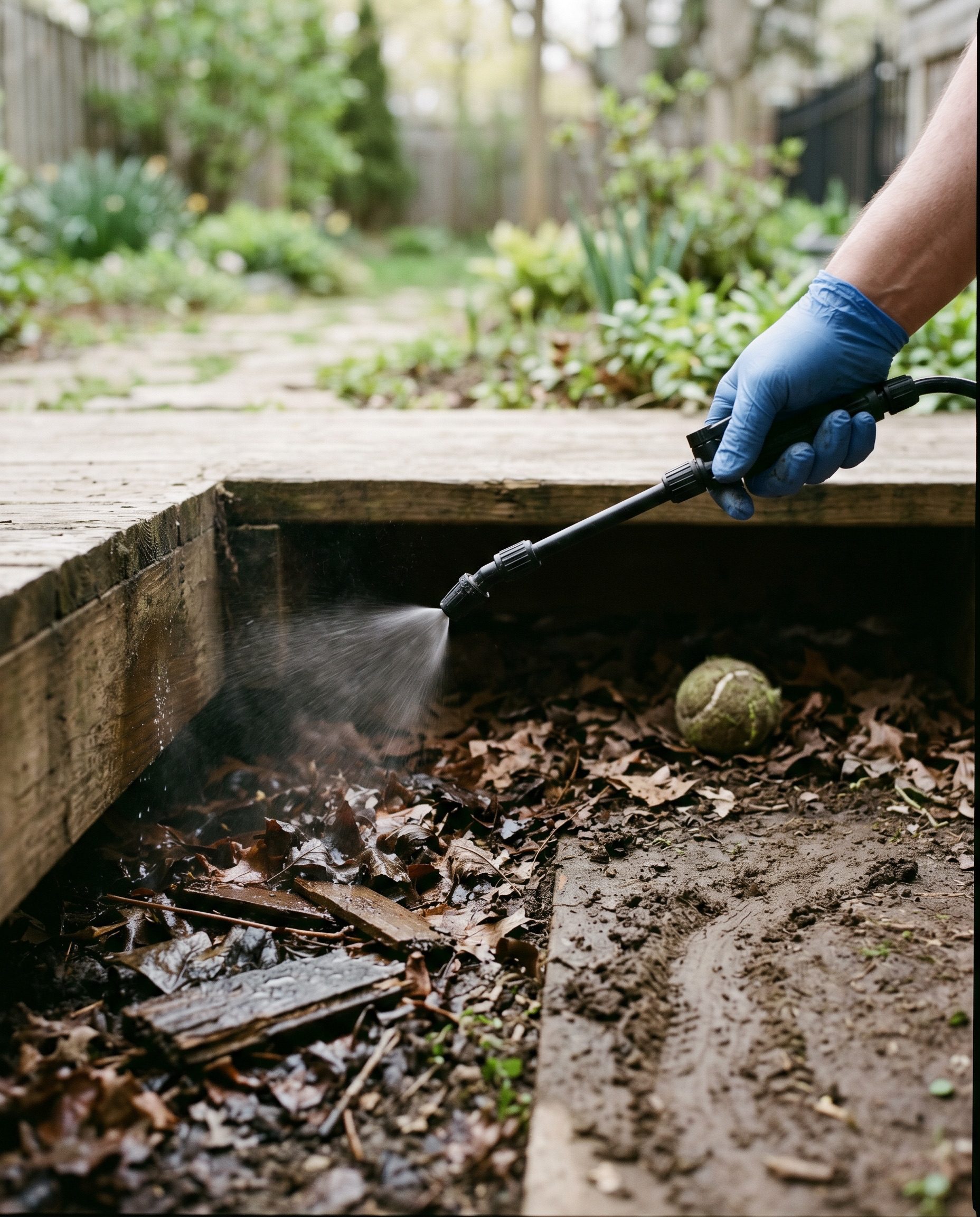
Picture your yard the way a flea larva does. A newly laid egg falls off your dog wherever the dog goes, but the larvae that hatch from those eggs cannot survive in the open. They dry out in direct sun and they avoid light, so flea larvae avoid light and burrow down into shaded, protected debris within hours of hatching. That single behavior is why the sunny center of your lawn is almost always flea-free and the cool strip under the deck is crawling.
The hot spots line up with two things: shade and your pet’s routine. Under decks and porches, the north side of the house, the base of dense shrubs, leaf litter banked against a fence, and the worn nap spot where your dog lies down all stay humid and dim. Those are flea nurseries. The open, mowed, sun-baked grass in the middle is not. Where your pet rests in the shade is where you treat, and if you map those spots first, you can solve the problem with a fraction of the product a whole-yard spray would burn through.
Why your pet keeps reloading
Here is the part that surprises people: most of a flea problem is not the biting adults you can see. About 95 percent of an infestation is the eggs, larvae, and pupae off the host, tucked into carpet indoors and into shaded soil and debris outdoors. The few adults on your pet are the visible tip. The yard is the reservoir quietly restocking them.
Fleas also need the right conditions to complete that cycle. As the CDC notes, fleas depend on a host animal and the warm, humid conditions that let their young develop, which is exactly what the shaded, moist corners of a yard provide through the warm months. So the durable fix is two-pronged and you cannot skip either half. Treat the pet on a vet-recommended product, and knock down the outdoor reservoir in the spots that feed it. If you want the full indoor-plus-outdoor picture, our complete guide to getting rid of fleas walks the house side, and the flea life cycle and why they are so hard to eliminate explains why one pass never finishes the job.
Start with the rake, not the sprayer
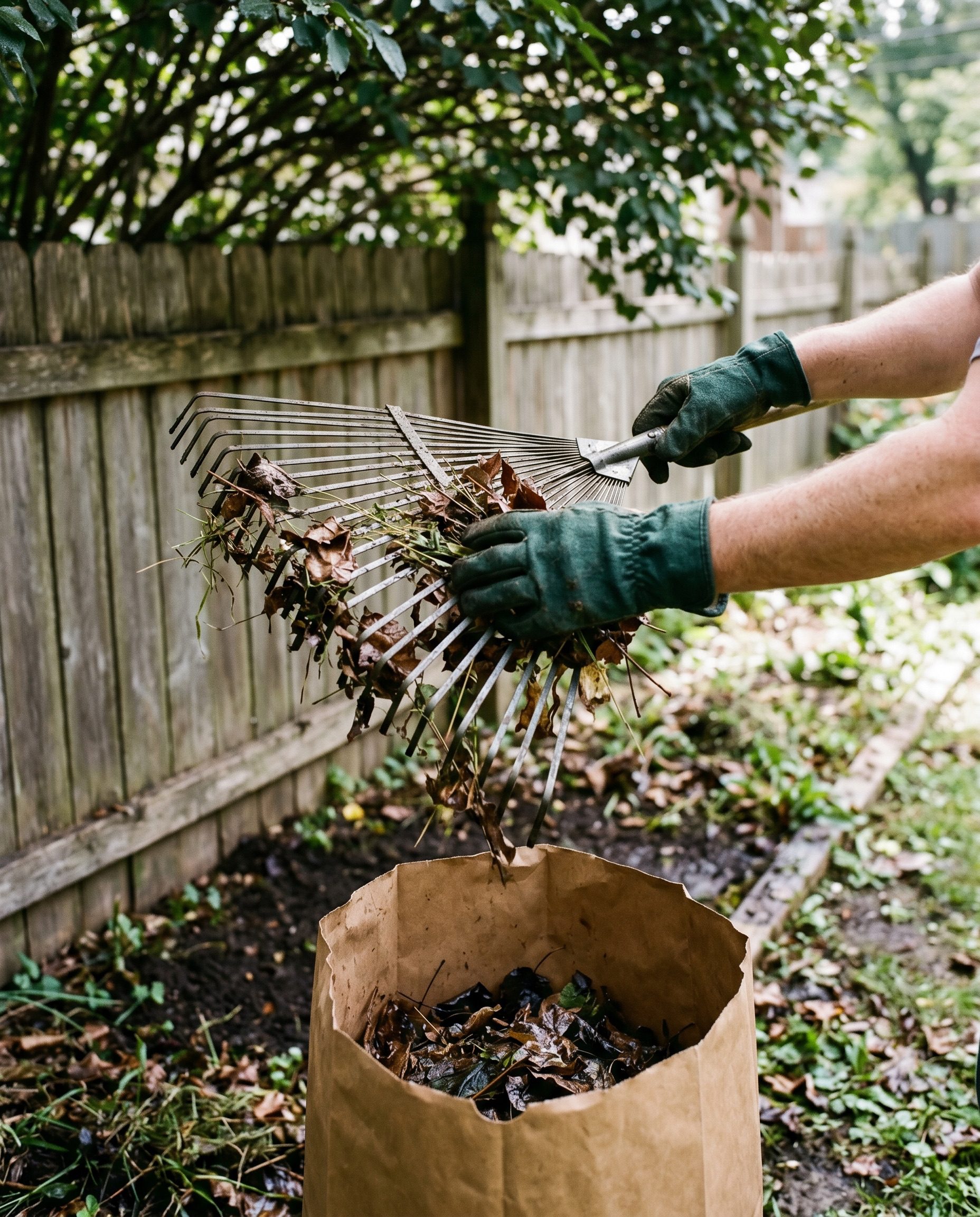
Before any chemistry, take away what fleas need, because removing the cause does half the work for free. Larvae need moisture, shade, and organic debris to feed and grow in. Strip that away and a lot of the population has nowhere to develop.
Rake up and bag leaf litter, grass clippings, and the mulch piled against the foundation, especially in shaded beds. Mow the edges and the shaded strips so sunlight and dryness reach the soil, since dry, sunlit ground is hostile to larvae. Cut back overgrown shrubs and ground cover that keep the under-deck and fence line dark and damp. Letting sun and air into the shady corners is the single cheapest control you have. Then wash or replace any outdoor bedding where your dog naps, on a hot dryer cycle if it is washable, and keep wildlife like feral cats, opossums, and raccoons from denning under the deck, because they restock the yard with fleas faster than you can treat it.
Match the treatment to the spot
If sanitation alone does not clear it within a couple of weeks, treat the harborage you mapped, and only that harborage. The right tool depends on the spot.
| Where it is | Best approach | Watch out for |
|---|---|---|
| Shaded soil, under deck, beds | Beneficial nematodes watered into moist shade | Keep the soil damp; they need moisture to work |
| Fence line, foundation strip | Yard insecticide with an insect growth regulator, spot-applied | Follow the label; do not broadcast the whole lawn |
| Open sunny lawn | No treatment needed | Fleas are not here; spraying it is wasted |
| Near flowers, pets, kids | Nematodes or careful spot-treat at dusk | Protect pollinators; keep kids and pets off until dry |
Beneficial nematodes are my first choice for the shaded soil, because they are a living control that goes after the problem directly. The species sold for fleas hunt and kill flea larvae in the top layer of soil, they are harmless to people, pets, earthworms, and bees, and you simply mix them with water and drench the shaded spots, keeping the ground moist so they stay active. Texas A&M’s veterinary team has practical advice on treating the pet and the environment together, and pairing nematodes outdoors with a vet-approved product on the pet is the least-toxic combination that actually holds.
If you do reach for a chemical, choose a product labeled for outdoor flea control that includes an insect growth regulator such as pyriproxyfen, which stops larvae from ever maturing, and spot-treat only the shaded harborage. Whatever you choose, read and follow the pesticide label, because that label is the law, and never apply a product to a site or in a way the label does not allow. Spray at dusk when bees have stopped foraging, keep it off open blooms, and keep children and pets off treated areas until everything is dry. If you have any pesticide-exposure worry for a person or animal, contact a doctor, your veterinarian, or your local poison control center rather than waiting. Skip the broadcast lawn spray entirely. It hits pollinators and the ground beetles and ants that prey on flea larvae, and it misses the shade where the fleas really are.
Keep them from coming back
Once you have knocked the yard reservoir down, prevention is mostly maintenance. Keep the shaded edges mowed, keep leaf litter raked out of the beds through the warm season, and keep that under-deck space dry and blocked off to denning wildlife. Fleas rebound fastest in late spring and summer when warmth and humidity climb, so do your big cleanup before that window rather than after the biting starts.
The non-negotiable half of prevention is the pet. Keep every cat and dog on a year-round flea preventive your veterinarian recommends, because an untreated animal walking the yard reseeds the soil no matter how clean you keep it. The AVMA is firm that you should never put a dog-labeled flea product on a cat and to ask your veterinarian first, since some dog ingredients are seriously toxic to cats. A treated pet plus a tidy, sun-reached yard is what actually keeps fleas gone.
When to call a pro
Most yard flea problems clear with sanitation, nematodes, and a treated pet. Call a licensed pest-control professional when the infestation keeps returning after you have done all three correctly, when the harborage is somewhere you cannot safely reach or treat, or when the yard is large and heavily shaded enough that spot-treating is not realistic. A pro can also confirm whether wildlife denning under a structure is the source. If anyone in the home is reacting badly to bites, that is a separate question for a doctor, not the exterminator.
Common questions
What kills fleas in the yard fast?
Nothing legitimate is instant, and the fastest real progress comes from cleanup plus a targeted treatment in the shade, not a quick spray. Rake out the debris, drench the shaded soil with beneficial nematodes or spot-treat with a yard product containing an insect growth regulator, and treat your pet the same day. Expect a couple of weeks as the existing larvae and pupae finish hatching.
Should I spray my whole lawn for fleas?
No. Fleas concentrate in shaded, moist, pet-trafficked spots and avoid the open sunny lawn, so a whole-yard spray wastes product where there are no fleas while killing pollinators and the predators that help control them. Treat only the shaded harborage you mapped.
Do beneficial nematodes really work on fleas?
Yes, in the right spots. The nematode species sold for fleas actively hunt flea larvae in moist soil and are safe for people, pets, bees, and earthworms. They need damp, shaded ground to survive, which is exactly where flea larvae hide, so they shine under decks and along beds and do little on dry open lawn.
Will the fleas come back?
They come back if the source comes back. An untreated pet, denning wildlife under the deck, or shade and debris creeping back in will all reseed the yard. Keep every pet on a vet-recommended preventive year-round, keep the shaded edges clean and sunlit, and the problem stays gone.
Are flea bites in the yard dangerous?
For most healthy people they are itchy and annoying rather than dangerous. Scratching can lead to infection, and fleas can carry illness in some regions, so it is worth taking them seriously. MedlinePlus covers how to care for itchy bites at home and when to see a doctor; if bites worsen, spread, or you feel unwell, see a healthcare provider.
Final verdict
Getting fleas out of your yard is a targeting problem more than a spraying problem. They live in the shady, moist, pet-trafficked corners, so map those spots, take away their shelter with a rake and a mower, then treat just the harborage with beneficial nematodes in the soil or a spot-applied yard product carrying an insect growth regulator. Treat your pet on a vet-recommended preventive at the same time, because the yard and the animal feed each other. Leave the open, sunny lawn alone, and skip the whole-yard broadcast spray that wastes money and kills the pollinators and predators you want on your side. Do the cleanup before the warm, humid stretch each year and the problem mostly stays solved.
Next steps:
– Cover the indoor half of the job with our complete guide to getting rid of fleas.
– Understand why one treatment never finishes it in the flea life cycle breakdown.
– If you are weighing a labeled spot-treatment, compare your options in our guide to flea sprays for home and yard.