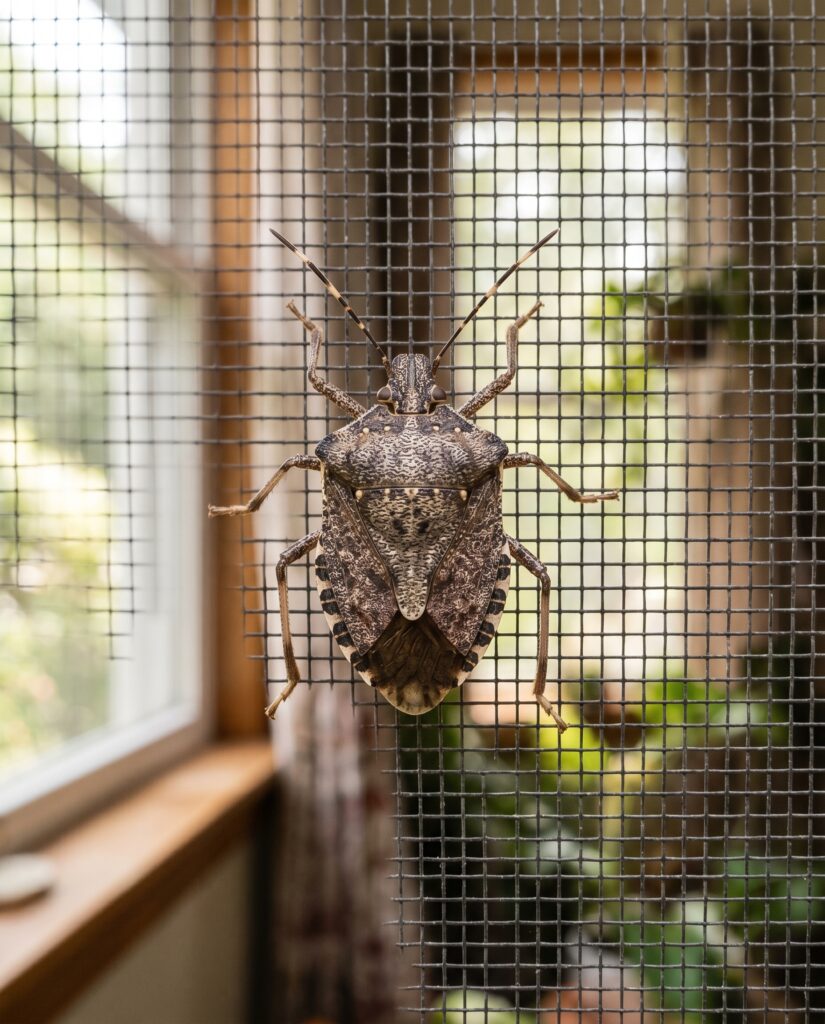
You watched something black and yellow land near the patio and the first question is the right one: is that a bee, a wasp, or a hornet, and does it matter? It matters a lot, because the name decides what you should do. The fastest way to tell them apart is body and behavior. Bees are fuzzy and rounded, dusted with pollen, and they are pollinators worth protecting; wasps are smooth and slender with a sharply pinched waist and can sting again and again; a hornet is just a large wasp. Get the ID right first, because you protect the bees and only manage the wasps and hornets, and you never want to reach for a can before you know which one you have.
Tell them apart by body and behavior: bees are fuzzy and rounded pollinators to protect, wasps are smooth and slender with a pinched waist and can sting repeatedly, and a hornet is simply a large wasp. The ID decides the response, so identify before you act.
- The confirming feature: Fuzzy and rounded with a thick waist means a bee; smooth, shiny, and sharply pinched at the waist means a wasp or hornet.
- Most-confused pair: A honey bee versus a yellowjacket, separated by body hair and the waist shape.
- What it means: Protect bees and call a local beekeeper for a swarm; manage wasps and hornets and treat a nest at dusk, or hire a pro.
Quick answer for the patio
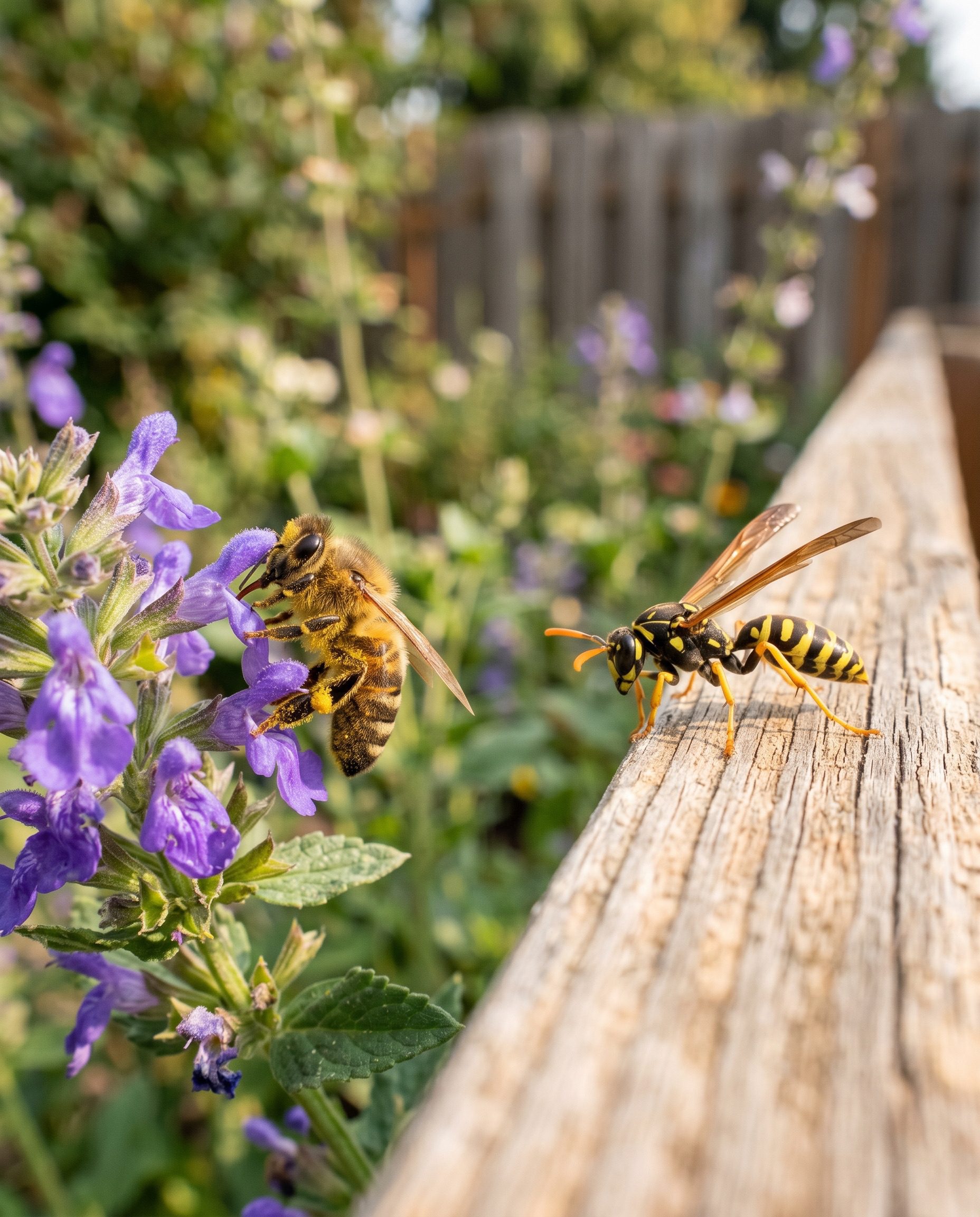
If the insect is fuzzy, looks rounded, and carries pollen on its legs or body, you are almost certainly looking at a bee, and bees are pollinators you want to leave alone. If it is smooth, shiny, and slender with an obvious thread-thin waist between its midsection and abdomen, you have a wasp, the group that includes paper wasps and yellowjackets. A hornet is not a separate riddle: hornets are simply the largest of the social wasps, so a very big wasp with the same pinched waist is a hornet.
The reason this three-way split is worth memorizing is that it maps directly onto what you should do next. Bees get protected and relocated, never killed. Wasps and hornets get managed, ideally at dusk and from a distance, or by a professional. The look-alike most people trip over is a honey bee versus a yellowjacket, and the tell is hair plus waist.
The waist tells you most
The single most reliable feature, the one entomologists reach for first, is the waist between the thorax and the abdomen. Bees have a thick, barely-noticeable waist, so the body reads as one continuous, slightly chunky shape. Wasps and hornets have a dramatically pinched, almost thread-like waist, which is why an old wasp looks like two segments joined by a wire. If you can get a clear side view and the waist is sharply nipped in, you are looking at a wasp, not a bee.
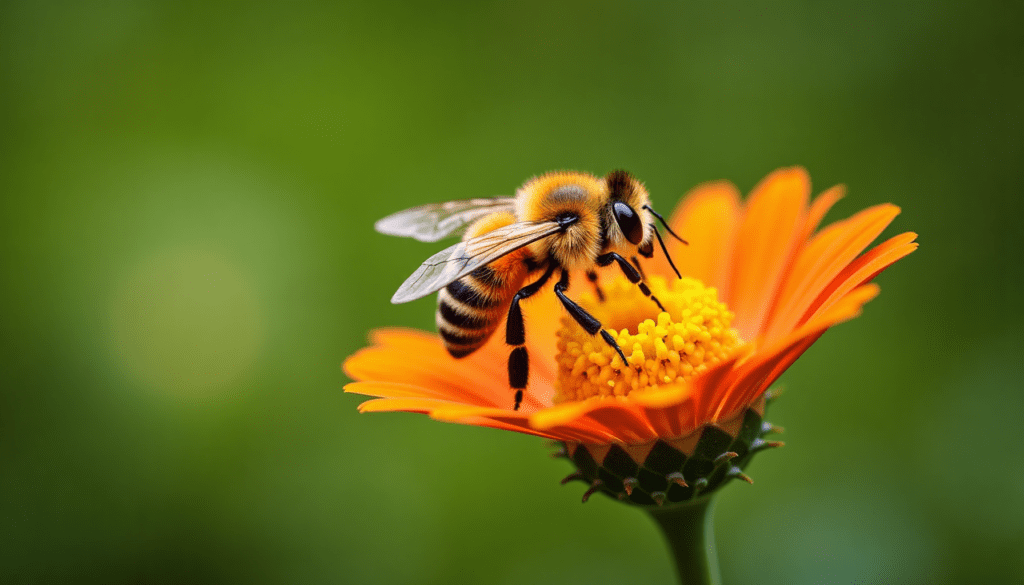
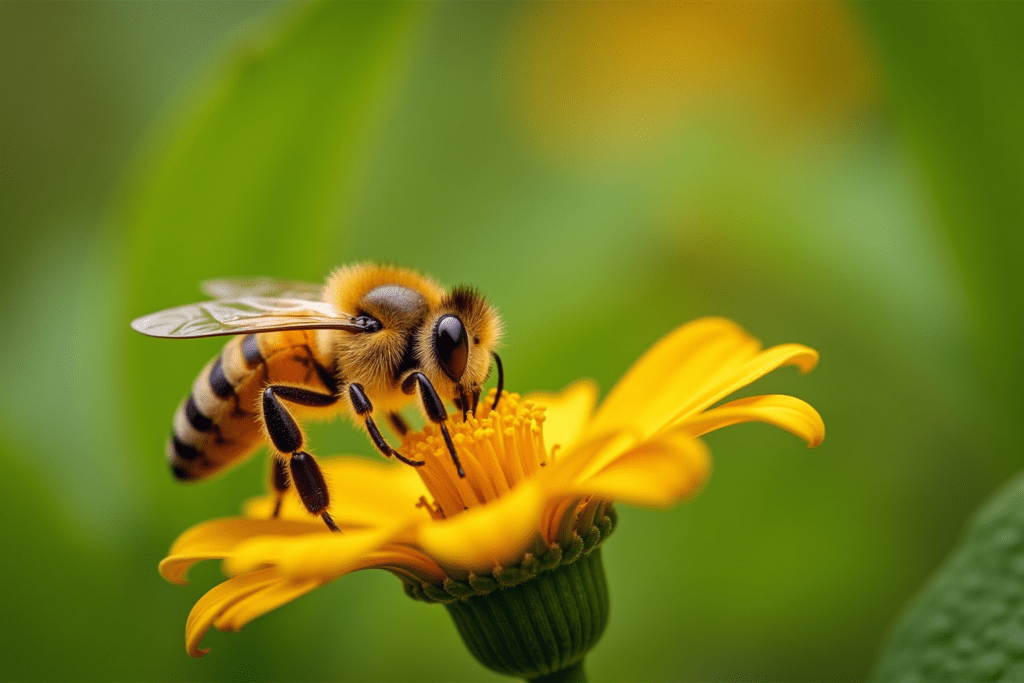
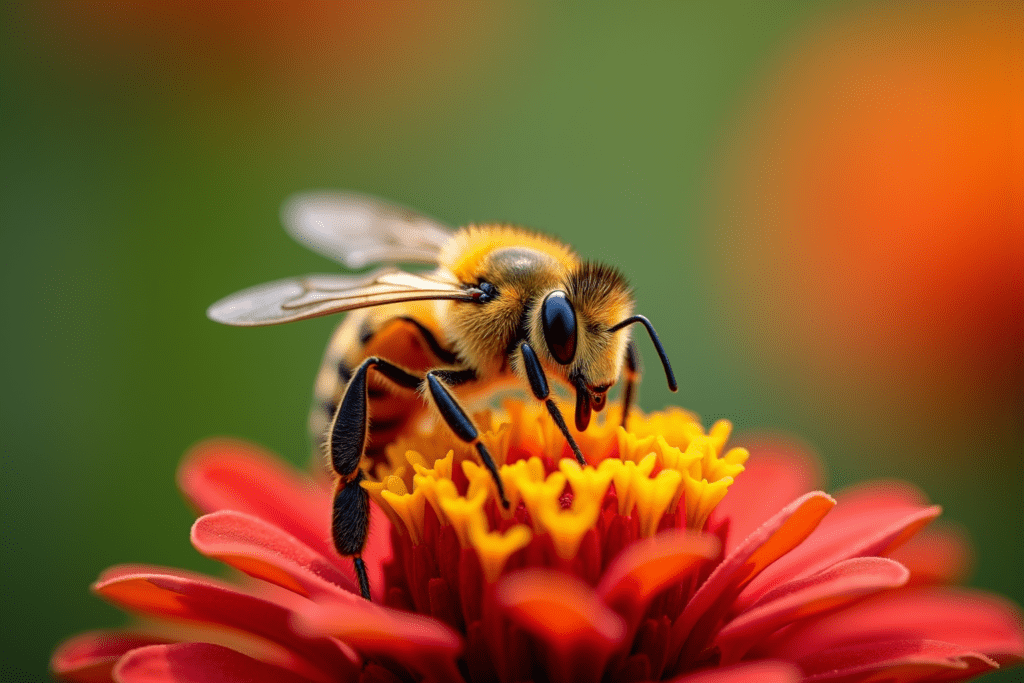
The second confirming feature is body hair. Bees are noticeably fuzzy because branched hairs across the body trap pollen, which is exactly what makes them such effective pollinators. Wasps and hornets are smooth and shiny with very little hair, so light bounces off them in a way it never does off a bee. The University of Kentucky’s ENTfact on wasps, hornets, and yellowjackets describes these social wasps as slender and smooth-bodied, which is the practical contrast to a bee’s rounded fuzz. When the angle is bad and you cannot read the waist, the hair settles it.
Bee, wasp, and hornet, side by side
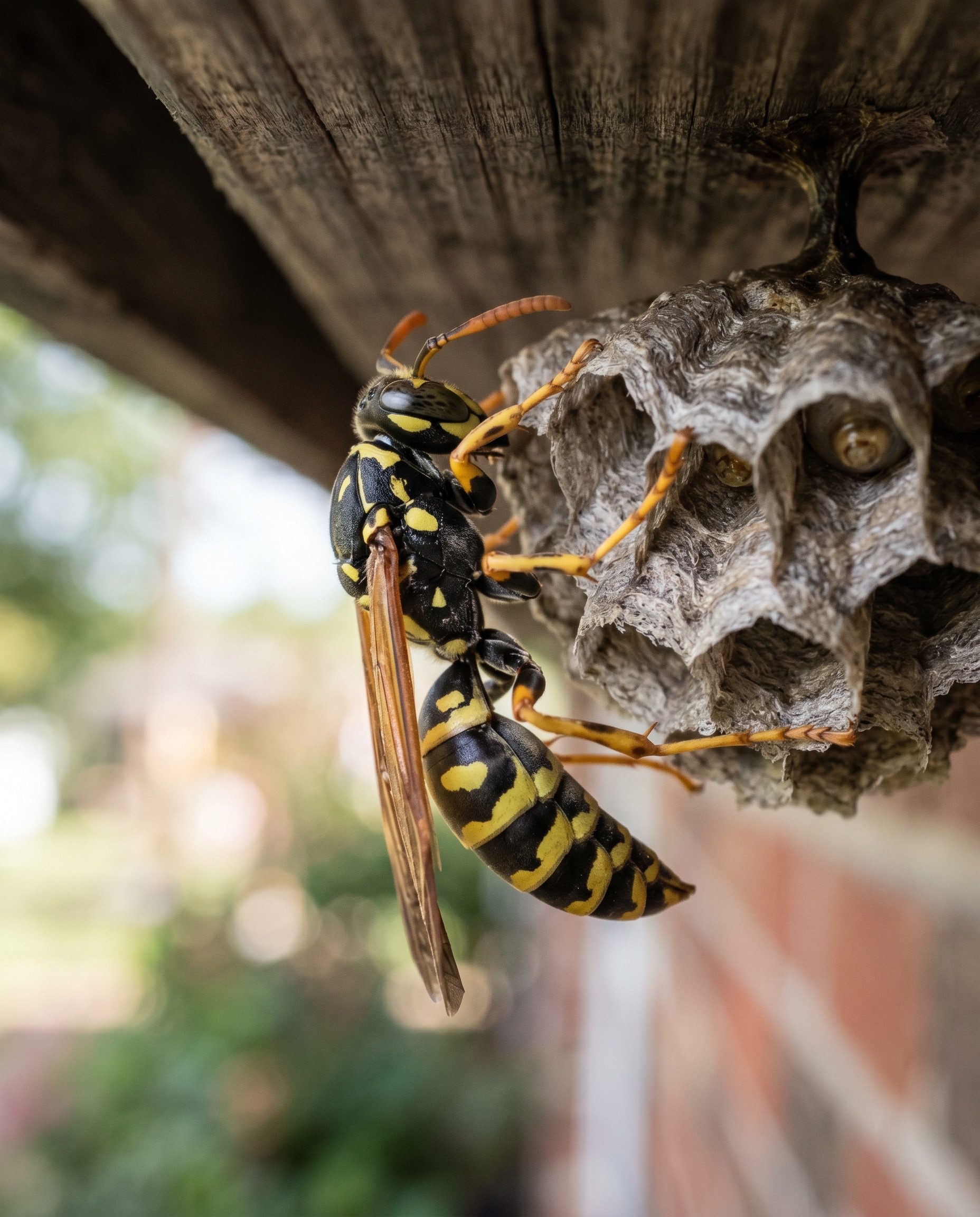
Run down the body in order and most IDs resolve in a few seconds. Bees are robust and rounded, often golden-brown and black, covered in fuzz, with flattened hind legs that carry visible pollen. They are usually calm while foraging on flowers and they sting only as a last resort, because a honey bee dies after stinging. Wasps are slimmer and harder-looking, smooth and brightly patterned, with that pinched waist and legs that often dangle in flight. Paper wasps build the open, umbrella-shaped nests you see under eaves, and yellowjackets nest in the ground or in wall voids.
Hornets are the heavyweights of the wasp world: same smooth body and pinched waist, just larger, with the bald-faced hornet (Dolichovespula maculata) being the familiar black-and-white one that builds big gray papery nests in trees and on houses. Because hornets are technically wasps, every wasp rule applies to them, only with more caution given the size of the colony.
A quick note on aggression, since it drives a lot of fear. A foraging bee on a flower has almost no interest in you. Wasps and hornets become defensive when you get close to the nest, which is why the where matters as much as the what.
| Insect | Key feature | What to do |
|---|---|---|
| Bee | Fuzzy, rounded, thick waist, carries pollen | Protect; call a local beekeeper for a swarm |
| Wasp | Smooth, slender, sharply pinched waist | Manage; treat the nest at dusk or hire a pro |
| Hornet | Like a wasp but large, big gray paper nest | Manage with extra caution; often a pro job |
If you want the finer split between the two wasps people meet most, our guide to paper wasp versus yellowjacket identification walks the nest shapes and markings in more detail.
Why the bee deserves protection
This is where the ID earns its keep. Bees are beneficial pollinators, and the responsible move is never to kill them. If you find a clustered swarm of honey bees on a branch or a fence, that is bees looking for a new home, and a local beekeeper will usually collect and relocate them at no cost to you. Do not spray a honey bee swarm or colony; contact a beekeeper instead. The same protective instinct applies to native bees in the yard, which do quiet, essential work and rarely bother anyone.
Carpenter bees are the one bee that drills round holes in fascia and decks, and even they are best excluded and redirected rather than killed. The University of Kentucky’s guidance on carpenter bees as pollinators notes their pollinator value and leans on sealing galleries and protecting wood over reaching for chemicals, with treatment as a last resort. Our walkthrough on getting rid of carpenter bees without killing them covers the exclusion-first approach. When you genuinely must manage any stinging insect outdoors with a product, follow the EPA’s safe pest control and IPM principles and read the label, because the label is the law and it keeps the treatment off pollinators and open blooms.
Handling wasps and hornets safely
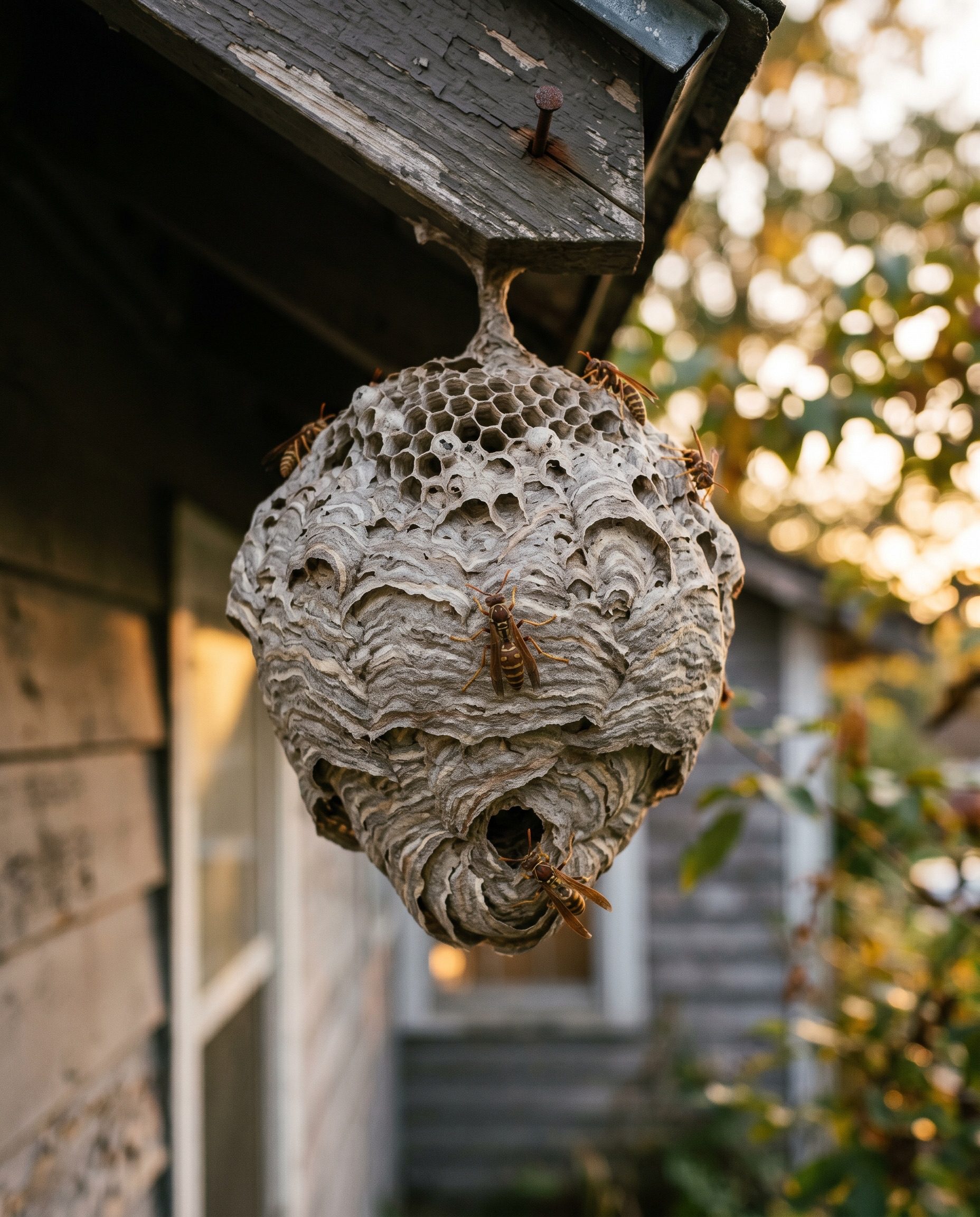
Wasps and hornets are the group you actually manage, and timing is the whole game. Treat a nest at dusk or after dark, when the colony is settled and far less active, and never in the middle of a sunny afternoon when foragers are coming and going. Stand back and use a product that projects a stream from a safe distance, and always plan an escape path before you start. The UC IPM Pest Notes on yellowjackets and other social wasps lays out the same dusk timing and distance logic, plus when a nest is simply too big or too risky to do yourself.
A few hard limits keep this from going wrong. Do not spray a live nest while standing on an unstable ladder, because a defensive colony and a wobbling ladder is exactly the accident you are trying to avoid. Do not try to burn or seal a live nest shut, which traps angry wasps and is a fire and sting hazard with no upside. If the nest is high, inside a wall, very large, or you have any allergy in the household, that is a job for a professional. For a step-by-step on the doable cases, see our guide on how to get rid of a wasp nest safely.
When a sting is an emergency
Most stings cause brief pain, redness, and swelling that fades on its own. The exception is a severe allergic reaction, and that one is not a wait-and-see situation. Anaphylaxis is a medical emergency. Get emergency medical help right away for signs of a severe reaction, including trouble breathing, swelling of the throat or tongue, dizziness or fainting, or hives spreading quickly, and use an epinephrine auto-injector if one has been prescribed. If you know you have a severe sting allergy, talk with a doctor or an allergist about carrying one.
For an ordinary sting, basic first aid is enough, and first aid for insect bites and stings from MedlinePlus covers the calm version: remove a stinger if one is left behind by scraping it sideways, wash the area, and use a cold pack for swelling. This is identification and first-response information, not a diagnosis. If a reaction worsens or you are unsure, contact a doctor.
Common questions
Is it a bee or a wasp if it is black and yellow?
Color alone will not settle it, because both can be black and yellow. Look at the body instead. A fuzzy, rounded insect carrying pollen is a bee, and a smooth, shiny insect with a sharply pinched waist is a wasp. The waist and the hair are far more reliable than the color pattern.
Are hornets just big wasps?
Essentially, yes. Hornets are a subset of the social wasps, so they share the smooth body and pinched waist and differ mainly in size and the large paper nests they build. Because they are wasps, the same dusk-timing and distance precautions apply, with more caution for the bigger colony.
Can bees sting more than once?
A honey bee can sting only once and then dies, which is why bees are reluctant to sting away from the hive. Wasps and hornets have smooth stingers and can sting repeatedly, which is part of why a disturbed wasp nest is more dangerous than a foraging bee.
Should I kill a swarm of bees on my property?
No. A honey bee swarm is searching for a new home and is usually docile, and it is valuable. Do not spray it. Contact a local beekeeper, who will typically relocate the swarm for free rather than destroy it.
What if I cannot tell whether it is a wasp or a hornet?
It rarely changes your move, because you manage both the same way. Treat the nest at dusk from a distance with an escape path, or call a professional if it is large, high, or near anyone with an allergy. The size and nest type usually reveal which one you have.
Final verdict
The whole ID comes down to body and behavior, and it is worth getting right because it decides everything you do next. Fuzzy, rounded, and dusted with pollen means a bee, and bees are pollinators you protect and relocate through a beekeeper, never kill. Smooth, shiny, and sharply pinched at the waist means a wasp, and a very large wasp with a big gray paper nest is a hornet. Protect the bees and manage the wasps and hornets, always at dusk, from a distance, with a way out, and bring in a professional when the nest is too big or anyone in the home is allergic. Identify first, then act, and you will never aim a can at the one insect your garden cannot spare.
Next steps:
– Split the two wasps you meet most with our paper wasp versus yellowjacket identification guide.
– Handle a nest the safe way with our walkthrough on how to get rid of a wasp nest safely.
– Save the wood and the bees with our guide to getting rid of carpenter bees without killing them.