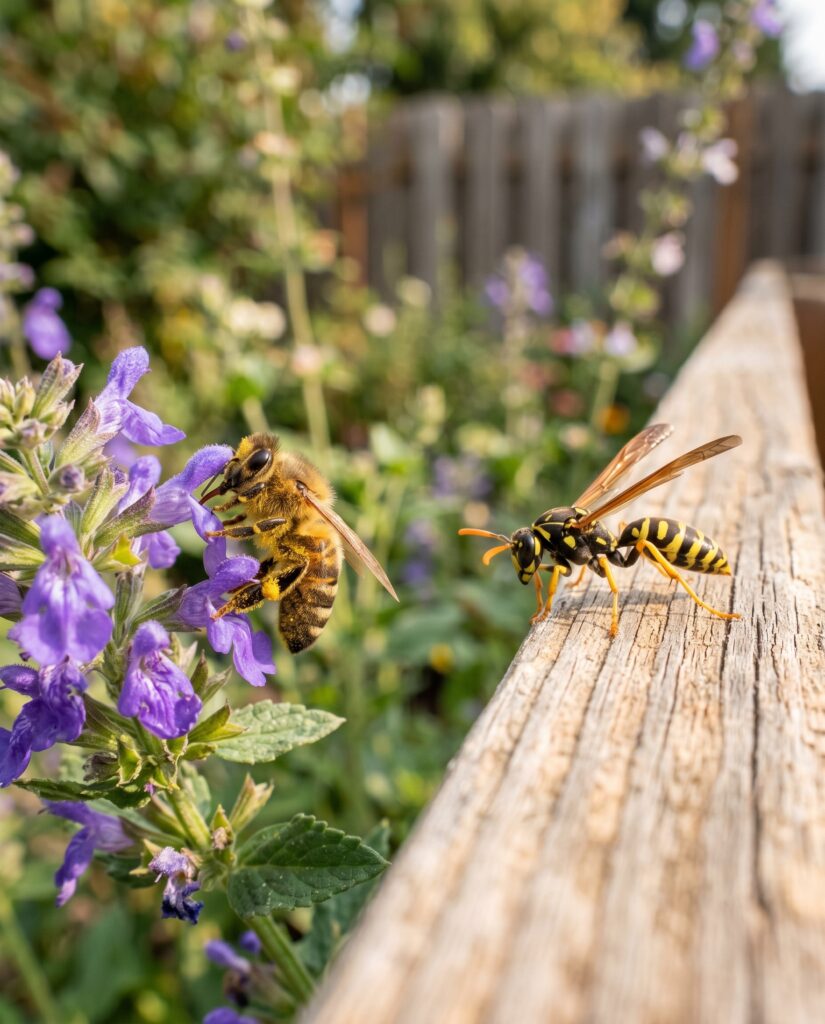
You found a wasp working the eaves or buzzing the soda can at a cookout, and the real question is which one you have, because that decides how careful you need to be. The nest gives it away faster than the markings do. Paper wasps build an open, downward-facing umbrella comb you can see straight into, hung under an eave or railing, and they are relatively docile. Yellowjackets hide their nest in the ground or inside a wall void, scavenge your food, and defend the colony hard. Same family, very different risk, and the location and temperament tell you more than the yellow-and-black stripes ever will.
If the nest is an open umbrella comb hanging under an eave, it is a paper wasp and usually mild-mannered. If the wasps vanish into a hole in the ground or a wall and crowd your food, it is a yellowjacket, and it is the aggressive one to treat with care.
- The confirming feature: Nest type and place. Open downward umbrella comb under cover means paper wasp; a hidden ground or wall nest means yellowjacket.
- Most-confused look-alike: Each other, separated by nest location and temperament, not stripe pattern.
- What it means: Paper wasps tolerate people; yellowjackets sting in numbers, so treat their nest at dusk or hand a big one to a professional.
Quick answer
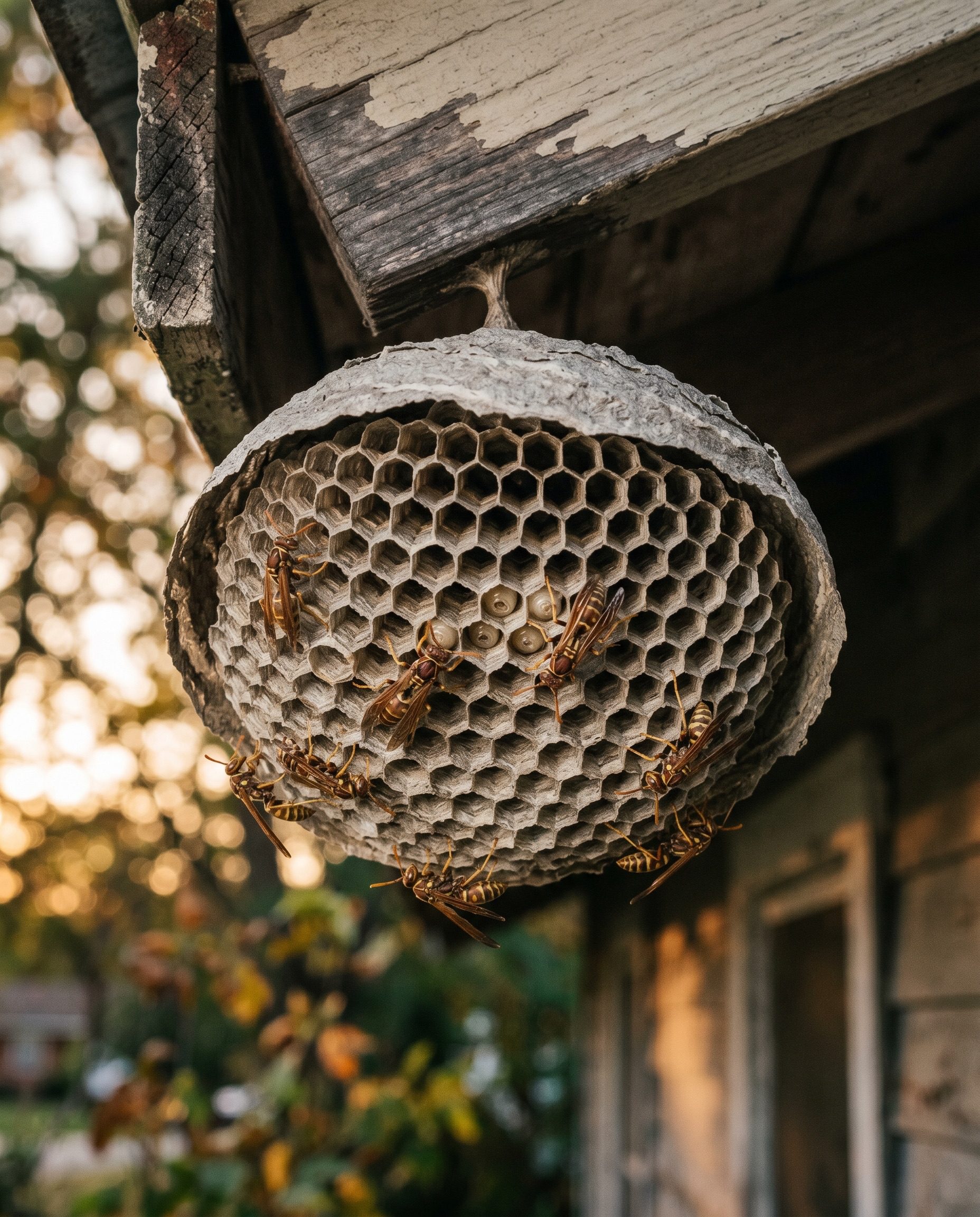
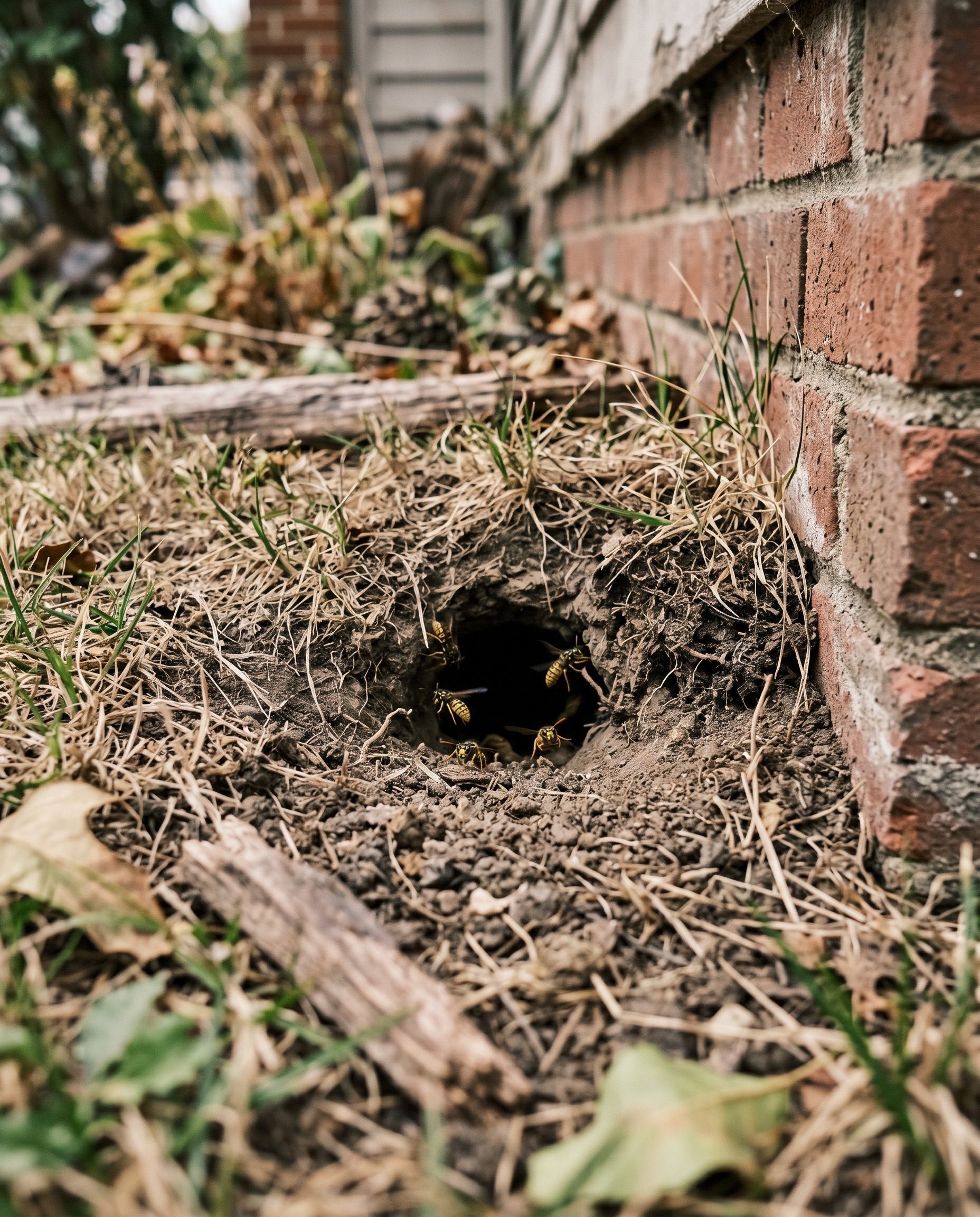
Paper wasps (genus Polistes) and yellowjackets (genus Vespula and Dolichovespula) are both social wasps, and from ten feet away they can look like the same yellow-and-black insect. The fast tell is the nest, not the body. A paper wasp nest is a single open comb of hexagonal cells facing the ground, with no paper envelope around it, so you can see the cells and the adults standing on them. A yellowjacket nest is a closed paper ball wrapped in a gray envelope, and most of the time you never see it because it sits underground or sealed in a wall. If you are watching wasps stream in and out of a hole in the lawn, you have yellowjackets. If they are tending a small open parasol under your porch roof, those are paper wasps. For the broader sort between bees, wasps, and hornets, our bee vs wasp vs hornet comparison lays out the whole family.
The detail on how the season changes the answer sits in paper wasp compared with hornet nests.
The nest tells you which one
The single feature that settles this is where and how the colony builds. Paper wasps make the open, stalked umbrella comb that gives the group its nickname, and they hang it in protected but visible spots: under eaves, inside porch ceilings, on deck railings, in mailboxes, and under patio furniture. You can count the cells. Because the nest is exposed and the colony is small, paper wasps stay calm unless you crowd the comb directly.
Yellowjackets build the opposite kind of home. They wrap their comb in layers of papery envelope and tuck the whole thing out of sight, most often in an abandoned rodent burrow in the ground, but also in wall voids, attics, and dense shrubs. The colony can grow into the thousands by late summer, and the hidden entrance is easy to step on without warning. The University of Kentucky’s ENTfact on wasps, hornets, and yellowjackets describes that concealed, enveloped nest as the reason yellowjacket encounters so often turn into multiple stings. When you cannot find an open comb but wasps keep funneling into one fixed point, that point is the nest, and it is a yellowjacket.
Telling the bodies apart
If you do get a close, safe look, the bodies differ in ways that back up the nest call. Paper wasps are longer and more slender, with a noticeably pinched, spindle-shaped waist and long legs that dangle visibly when they fly. Their color runs brownish to reddish with yellow markings, and many common Polistes species look more rust-and-yellow than the sharp lemon-and-black most people picture.
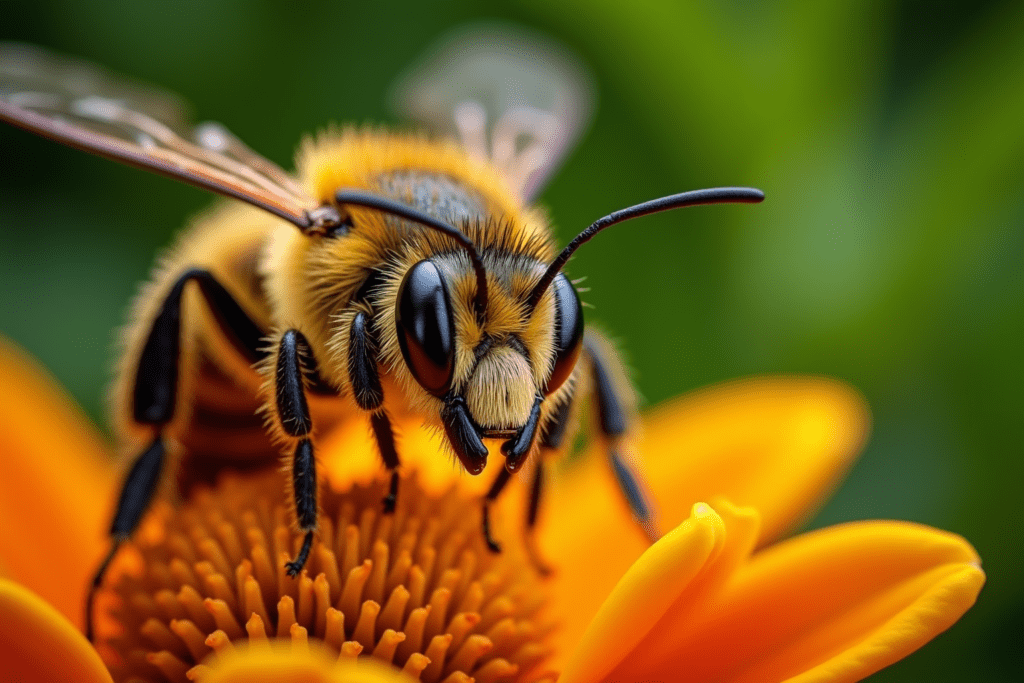
Yellowjackets are shorter, stockier, and more compact, with tighter, brighter black-and-yellow banding and legs they tuck close in flight rather than letting them trail. That trailing-leg flight of a paper wasp is one of the easiest in-air tells, since a yellowjacket flies more like a small, fast bullet. Neither one is a honeybee, which matters: a honeybee is fuzzy, golden-brown, and a beneficial pollinator you should never spray. If you are seeing fuzzy bees clustered on a structure, leave them alone and call a local beekeeper to relocate the colony rather than treating it as a pest.
Behavior and food are a clue
Watch what the insect does around people and you get a second confirmation that costs nothing. Paper wasps hunt caterpillars and other soft insects to feed their larvae and mostly ignore you; they are predators, not scavengers, so they rarely show interest in your lunch. A wasp that wants your burger or your cola is almost certainly a yellowjacket. Yellowjackets turn into aggressive scavengers of human food and sweets in late summer, which is why they swarm trash cans, picnic tables, and open drinks just as outdoor season peaks.
That scavenging habit is also why yellowjackets account for most of the painful late-season “wasp” encounters in the United States. They sting repeatedly, they recruit nestmates when the colony is threatened, and the ground nest puts the danger right where people walk and mow. The UC IPM Pest Notes on yellowjackets and other social wasps notes that the foraging-scavenger behavior peaks as colonies hit their seasonal size, which lines up exactly with when complaints spike.
Quick comparison
Use this as the at-a-glance check once you have watched the nest and the behavior for a minute.
| Trait | Paper wasp | Yellowjacket |
|---|---|---|
| Nest | Open umbrella comb, cells visible | Enveloped paper ball, hidden |
| Where | Under eaves, railings, porch ceilings | In the ground or a wall void |
| Temperament | Relatively docile, stings if crowded | Aggressive defender, stings in numbers |
The table makes the practical point clear: the riskier insect is the one you are least likely to see coming. A visible paper wasp comb is a manageable, low-drama situation, while an invisible yellowjacket colony underfoot is the one that sends people to urgent care.
How to treat each one safely
The ID changes the treatment, so match the method to the wasp. For a small paper wasp nest in a spot you genuinely need clear, the safe approach is to wait until after dark when the whole colony is home and slow, stand off to the side rather than directly underneath, keep a clear escape path behind you, and use a wasp spray with a long jet from a stable footing. Never do this from a wobbly ladder, and never try to burn or seal a live nest. If the nest is high or out of easy reach, that is a job to hand off rather than improvise. Our guide to removing a wasp nest safely walks the full dusk routine.
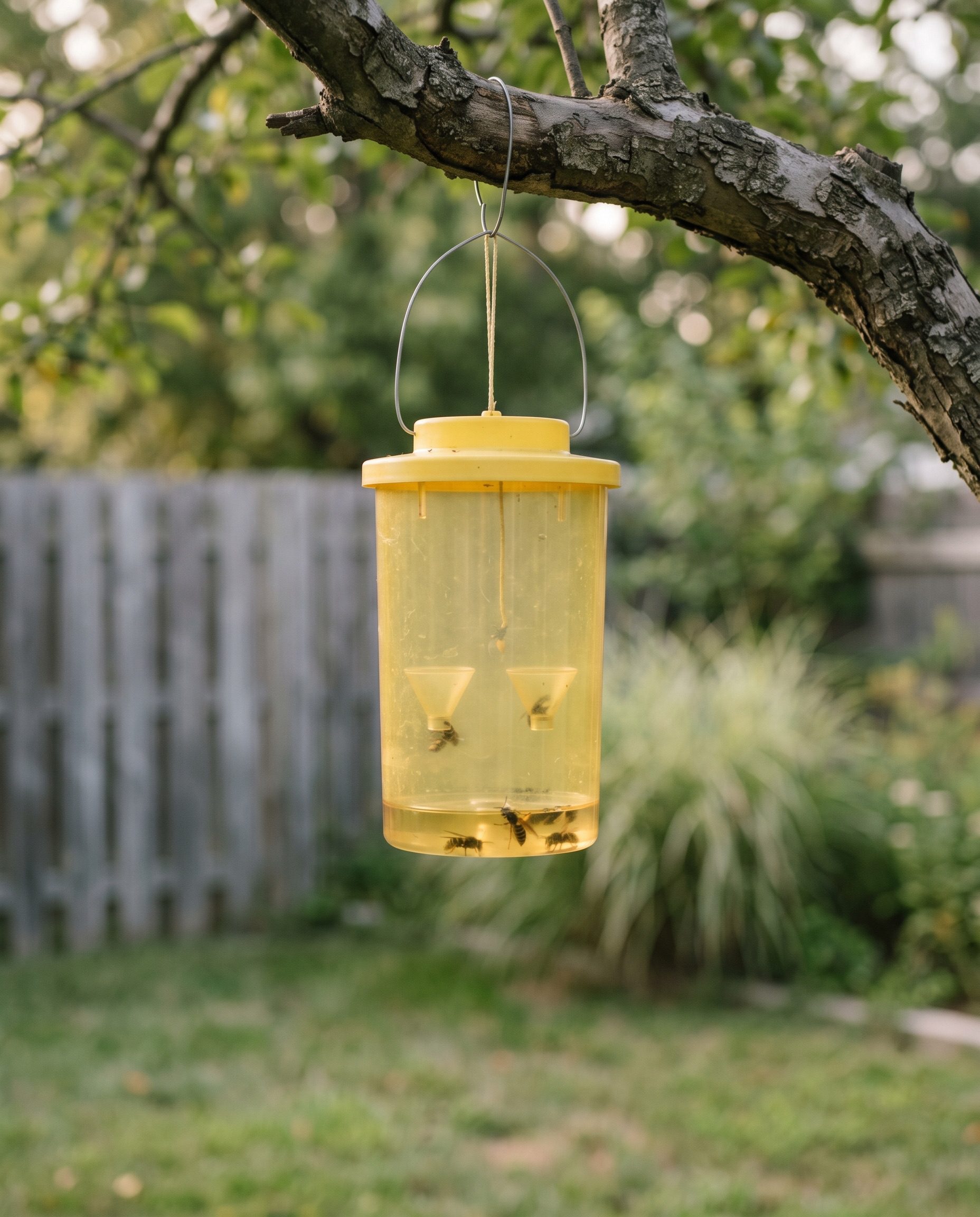
A yellowjacket ground or wall nest deserves more caution because the colony is large and hidden, and stirring it up can bring hundreds of defenders at once. Treat the entrance at dusk from a distance with an escape route, and for a big or wall-void colony, follow the advice to treat the nest at dusk and consider hiring a professional for a large colony rather than opening a wall yourself. Whatever product you use, read and follow the label, since under federal law the label is the law; the EPA’s principles for safe, integrated pest control put non-chemical steps and correct timing first. Hanging baited traps at the yard edge, away from where people gather, can thin scavenging yellowjackets without a nest fight at all. The best long game is removal of what draws them, which our tips to prevent wasp nests on your property covers.
When a sting is an emergency
Most stings from either wasp cause sharp local pain, redness, and swelling that fade in a day or two, and a cold pack plus an over-the-counter approach is usually enough. A severe allergic reaction is a different situation and a true emergency. Get emergency medical help right away for signs of anaphylaxis, including trouble breathing, swelling of the throat or tongue, dizziness or fainting, or hives spreading quickly, and use an epinephrine auto-injector if one has been prescribed for you. I identify wasps; I do not diagnose or treat reactions, so for what a sting looks like and exactly when a sting needs medical care, follow a clinician or an allergist rather than guessing at home. If you are not allergic, a single sting is painful but not dangerous; the real reason to respect a yellowjacket nest is the risk of many stings at once.
Common questions
Is a yellowjacket a type of wasp?
Yes. Yellowjackets are social wasps in the genera Vespula and Dolichovespula, the same broad family as paper wasps and hornets. The everyday split between “wasp” and “yellowjacket” is just nest and behavior, not a different kind of insect. Both are wasps, but the yellowjacket is the stockier, hidden-nesting, food-scavenging one.
Which one is more aggressive, a paper wasp or a yellowjacket?
The yellowjacket, by a wide margin. Paper wasps mostly tolerate people and sting only if you press right against the comb, while yellowjackets defend a large hidden colony in numbers and scavenge aggressively at food. That difference in temperament is exactly why the nest type matters so much for deciding how carefully to treat it.
Can I just leave a paper wasp nest alone?
Often, yes. A paper wasp comb in a spot nobody brushes against, like a high gable, can be left in place, and the colony dies off on its own by winter. Paper wasps are useful predators of pest caterpillars. Remove the nest only when it sits over a door, walkway, or play area where someone could crowd it by accident.
Do these wasps die off in winter?
Both colonies collapse with the first hard frost, and only newly mated queens survive to overwinter and start fresh nests in spring. An old gray paper nest is not reused the next year, so there is no need to treat an empty winter nest. Sealing entry points before spring is what prevents queens from rebuilding in the same wall or eave.
Final verdict
When you are sorting a paper wasp from a yellowjacket, look at the nest before you look at the stripes. An open umbrella comb hanging in plain sight under an eave is a paper wasp, the calmer cousin you can often leave alone or clear with a careful dusk treatment. Wasps pouring into a hole in the ground or a wall, and crowding your food, are yellowjackets, the aggressive ones whose hidden, crowded colony is the reason wasp encounters turn into multiple stings. The location and the temperament, not the markings, tell you which insect you have and how much caution it deserves.
Next steps:
– Place the species in the wider family with our bee vs wasp vs hornet comparison.
– If a nest has to go, follow the dusk routine in our guide to removing a wasp nest safely.
– Keep next year’s queens from rebuilding with our tips to prevent wasp nests on your property.