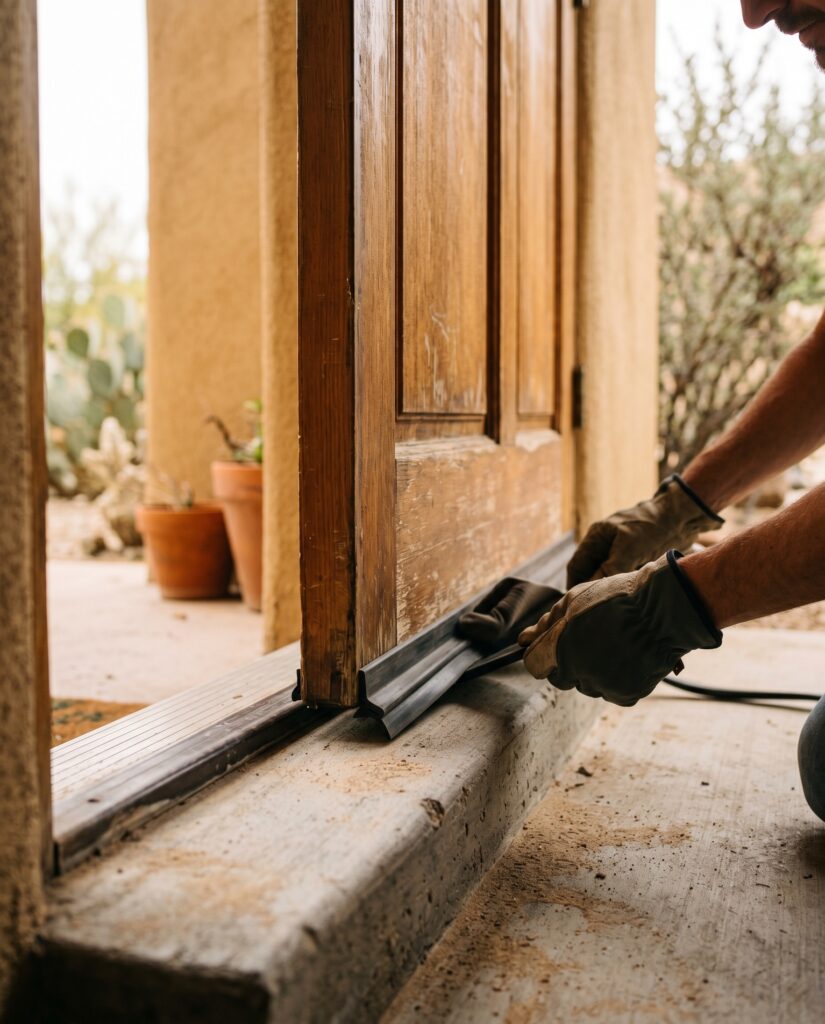
If scorpions keep turning up inside, the honest answer is that nothing about the house itself is pulling them in. Scorpions are drawn to the insects they hunt, the cool moisture they need to keep from drying out, and the rock, wood, and clutter they can hide under right against your foundation. Your home just happens to sit in the middle of all three. Cut the prey, fix the damp and the harborage, and seal the gaps they slip through, and you take away every reason a scorpion has to be near you. There is no scent or food on your counter that calls them; there is only opportunity, and opportunity is something you can remove.
Scorpions are not attracted to your house; they follow their prey, moisture, and hiding spots to it. Knock down the bugs they eat, dry out and declutter the perimeter, and seal entry gaps, and they lose every reason to come close.
- Do first (free): Clear rock piles, firewood, and debris off the foundation, fix drips and overwatering, and cut down porch lights that draw their prey.
- Best for the common case: Seal gaps under doors and around pipes, and knock down the insect population they hunt.
- Skip: Fogging the whole house; scorpions shrug off many sprays and just retreat to the voids you never reach.
Why scorpions end up near homes
Scorpions are ambush hunters, not foragers, so they go where the food is. The food is other arthropods, mostly crickets, roaches, spiders, and the small soft-bodied insects that gather around a house at night. A yard that feeds a lot of bugs feeds the scorpions that eat them, and your foundation is the dividing line where prey and predator both end up. According to UC IPM’s Pest Notes on scorpions and their habits, they hide by day and hunt by night, which is exactly why you find one in the morning that was nowhere to be seen the evening before.
The second pull is water. Scorpions lose moisture through their shells and need somewhere cool and damp to ride out the heat, so a yard with constant irrigation, a leaking spigot, or shaded mulch beds gives them what the open desert does not. The third pull is shelter, and this is the one homeowners control most directly. Rock, wood, and clutter against the wall are a five-star scorpion hotel. Remove the prey, the damp, and the harborage and the house stops being attractive, because there was never anything special about the house in the first place.
Clear the harborage first
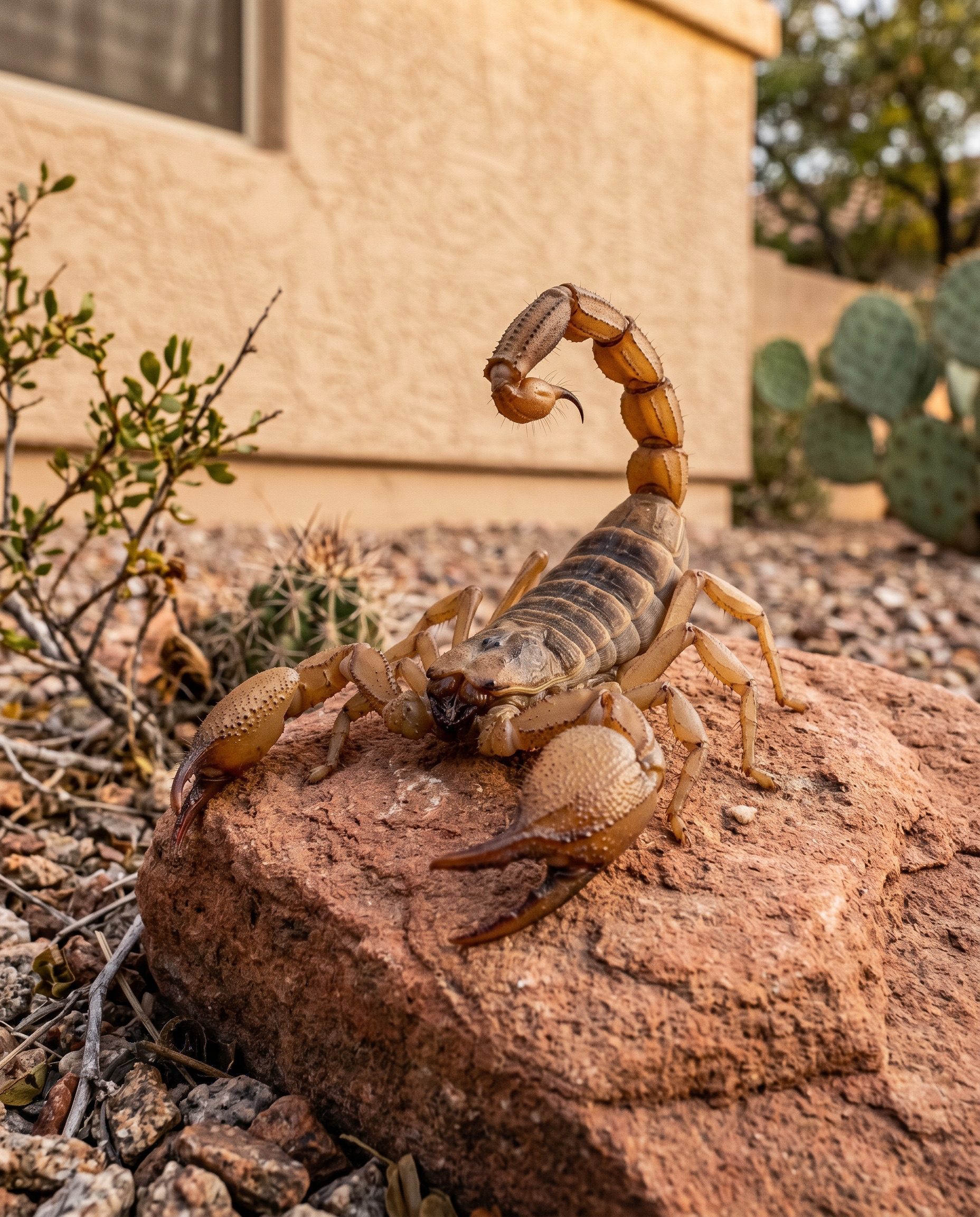
The cheapest and most effective move costs nothing but an afternoon, and it targets the hiding spots directly. Scorpions wedge themselves into tight, dark, humid cracks during the day, so the goal is to leave none of those within a few feet of your wall. Pull every loose object off the foundation line. That means stacked firewood moved well away and up off the ground, decorative rock and landscape stone raked back, leaf litter and yard debris bagged, and the cardboard, lumber, and clutter cleared out of the garage corners where they like to tuck in.
Next, deal with the moisture that keeps them comfortable. Fix the dripping hose bib, redirect downspouts away from the wall, and dial back overwatering so the soil along the foundation actually dries between cycles. Texas A&M AgriLife’s guidance on scorpion biology and control makes the same point: reducing harborage and moisture around the structure does more than any spray. Trim shrubs and tree limbs so nothing touches the roof or siding, because an overhanging branch is a bridge straight onto the house. For the full perimeter routine, our guide on how to scorpion-proof your house walks the yard zone by zone.
Cut the prey and the lights
Here is the lever most people miss: if you starve the scorpions, they leave on their own. A scorpion will not hang around a foundation that has no crickets or roaches to ambush, so a general knock-down of the insect population is half the job. Keep the yard mowed, the garage clean, and any standing food sources for bugs handled, and the predators thin out behind them. This is why an IPM-first approach, which the EPA lays out as habitat and prey reduction before chemicals, works better here than reaching for a can.
White outdoor lighting is the quiet culprit. Porch and floodlights pull in moths, crickets, and other flying insects all night, and the scorpions follow that buffet right up to your door. Swap white bulbs for yellow “bug” lights or warm LEDs, or move the fixture away from doors and windows so the insect swarm gathers somewhere a scorpion cannot reach the house from. You are not trying to kill the bugs at the light; you are trying to stop advertising a feeding station next to your entry. Less prey at the wall means fewer reasons for a scorpion to be there at all.
Seal the gaps they slip through
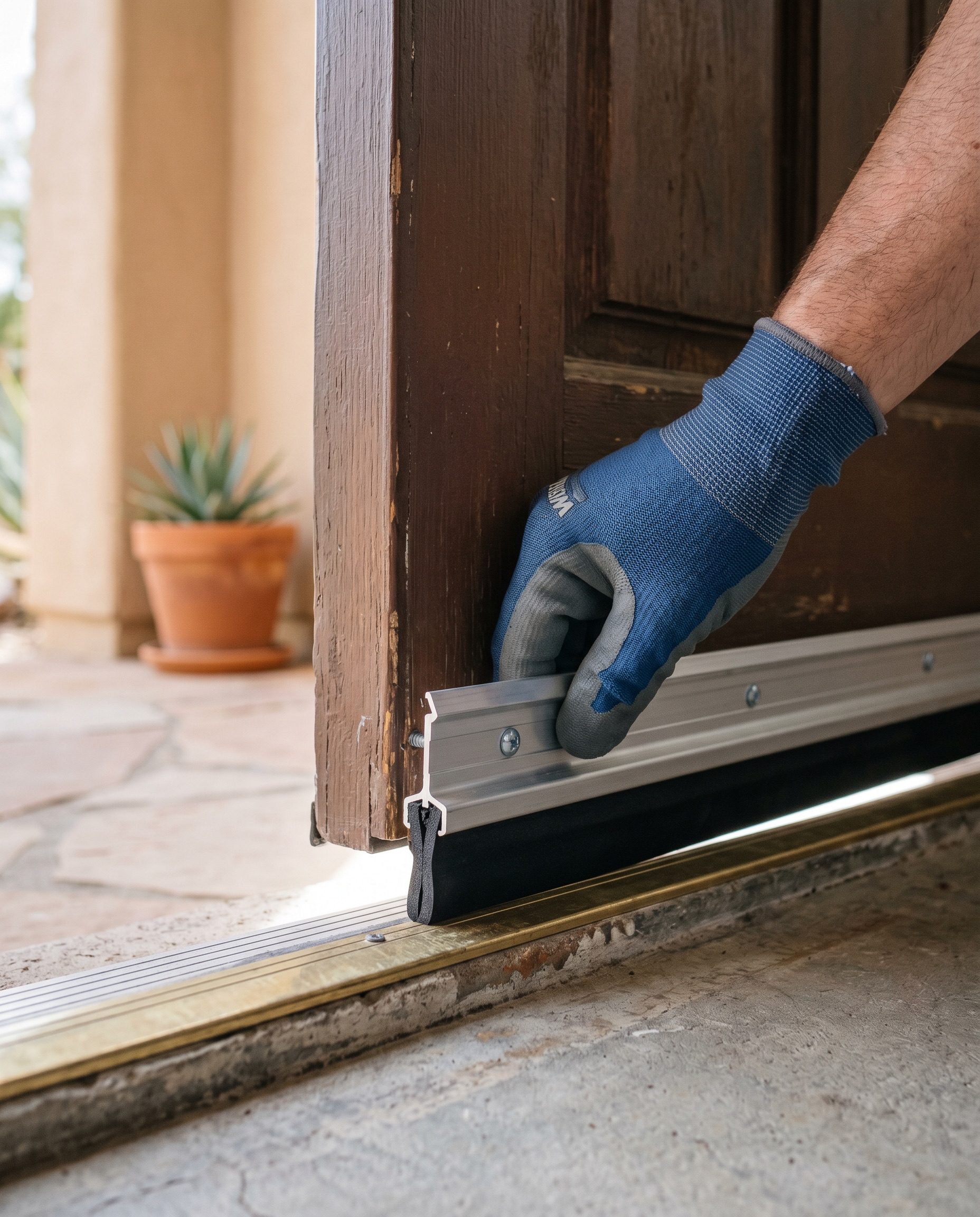
Once the outside is less inviting, close the door, literally. Adult scorpions can flatten themselves and squeeze through a gap about the width of a credit card, and bark scorpions in particular are good climbers, so they enter higher up than you would expect. The single highest-value seal is under your exterior doors. A tight door sweep and weatherstripping stop the most common entry point cold. Check that the threshold gap closes to nothing when the door is shut, since daylight under the door means a scorpion-sized opening.
Work outward from there. Caulk where pipes, cables, and the dryer vent pass through the wall, screen weep holes and attic vents, and seal cracks in the stucco or block foundation. Inside, keep an eye on the bathroom and laundry, where plumbing penetrations and floor drains give them a damp route in. If you have already found a few indoors and want a removal plan rather than just exclusion, see how to get rid of scorpions for the indoor steps. Below is the quick map of where each fix belongs.
| Where they enter | Best fix | Watch out for |
|---|---|---|
| Under exterior doors | Tight door sweep plus weatherstripping | Any daylight under the door is a gap |
| Pipe, cable, and vent gaps | Caulk and steel-wool packing | Don’t seal over an active weep system |
| Foundation and stucco cracks | Exterior-grade sealant | Recheck seasonally as it shrinks |
When a spray actually fits
Exclusion and habitat work clear most cases, but if you are in heavy bark-scorpion country a perimeter treatment can help as a backstop. The honest caveat: scorpions can survive months on very little and tolerate many sprays, so a chemical barrier alone, without the cleanup and sealing, mostly wastes money. If you do treat, read and follow the product’s EPA label, because under federal law the label is the law, and use only products labeled for the site you are treating. Keep children and pets off treated surfaces until they are fully dry, never apply where food is prepared, and for any exposure question contact a doctor or your local poison control center. Our breakdown of scorpion sprays and barrier products sorts the perimeter options from the indoor-safe ones. A licensed pest-control professional is the right call for a persistent bark-scorpion problem in a home with young children, where the safety stakes are higher.
A safety note on stings
Most US scorpion stings feel like a bee sting: sharp local pain, some swelling and numbness, and not much beyond that. The Arizona bark scorpion is the exception, and its sting can be a medical emergency, especially in young children. Get emergency medical help right away for trouble breathing, difficulty swallowing, roving or jerking eye movements, muscle twitching, drooling, or a child who cannot stop crying after a sting. MedlinePlus on scorpion sting symptoms and first aid covers what to watch for, and you can reach your regional poison center for sting guidance for help deciding whether a sting needs care. Do not try to handle scorpions to identify them.
Common questions
What smell or food attracts scorpions?
None, really. Scorpions are not drawn by kitchen odors, sugar, or garbage the way ants or roaches are, because they hunt live prey and do not scavenge. What “attracts” them is indirect: the insects your food and lights draw in, plus moisture and cover. Manage those and the smell question takes care of itself.
Does killing the bugs in my yard get rid of scorpions?
It helps a lot, because prey is the main draw. Knock down the crickets, roaches, and spiders along your foundation and the scorpions lose their food supply and thin out. Pair that with sealing entry points so the survivors cannot get in, and you cover both halves of the problem.
Why do I find scorpions in the house after rain or watering?
Heavy rain or overwatering floods their burrows and drives them to higher, drier ground, which often means up against or into your home. A spike of indoor sightings after a storm is normal in scorpion country. Drying out the perimeter and sealing gaps blunts that surge.
Are scorpions a sign of a dirty house?
No. Scorpions show up at clean and messy homes alike, since they follow prey, moisture, and shelter rather than mess. A spotless kitchen does not deter them; clearing rock and clutter off the foundation and sealing the doors does.
Will UV-checking my yard help?
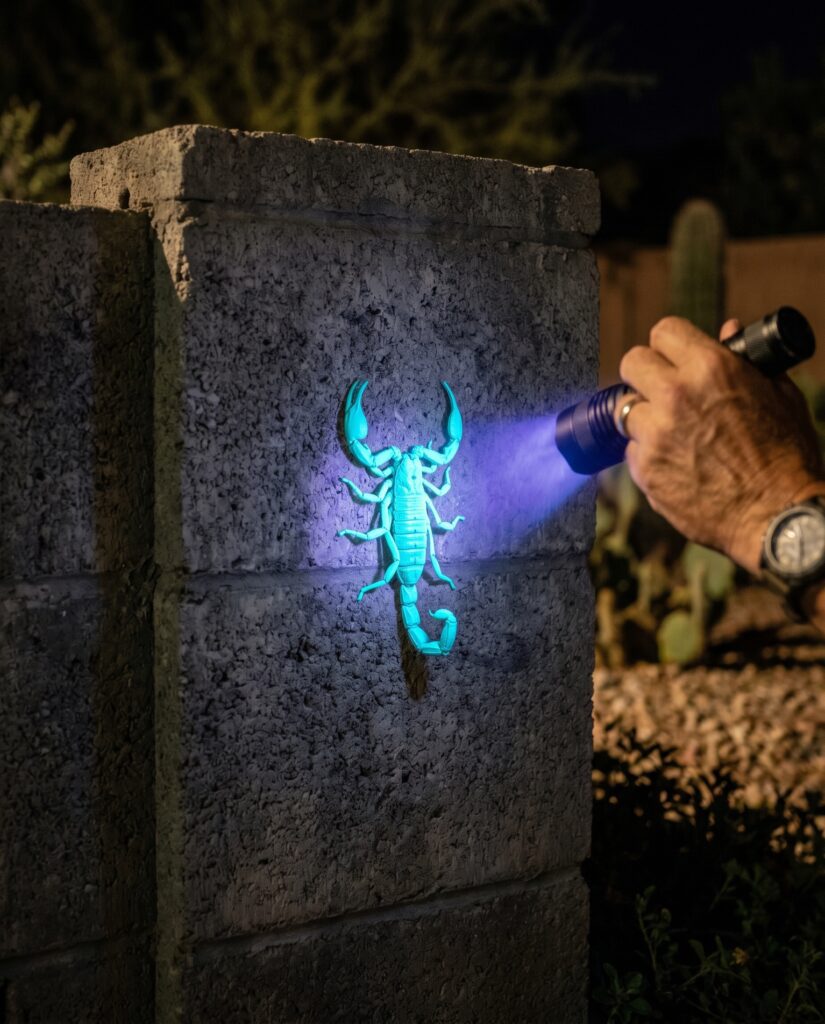
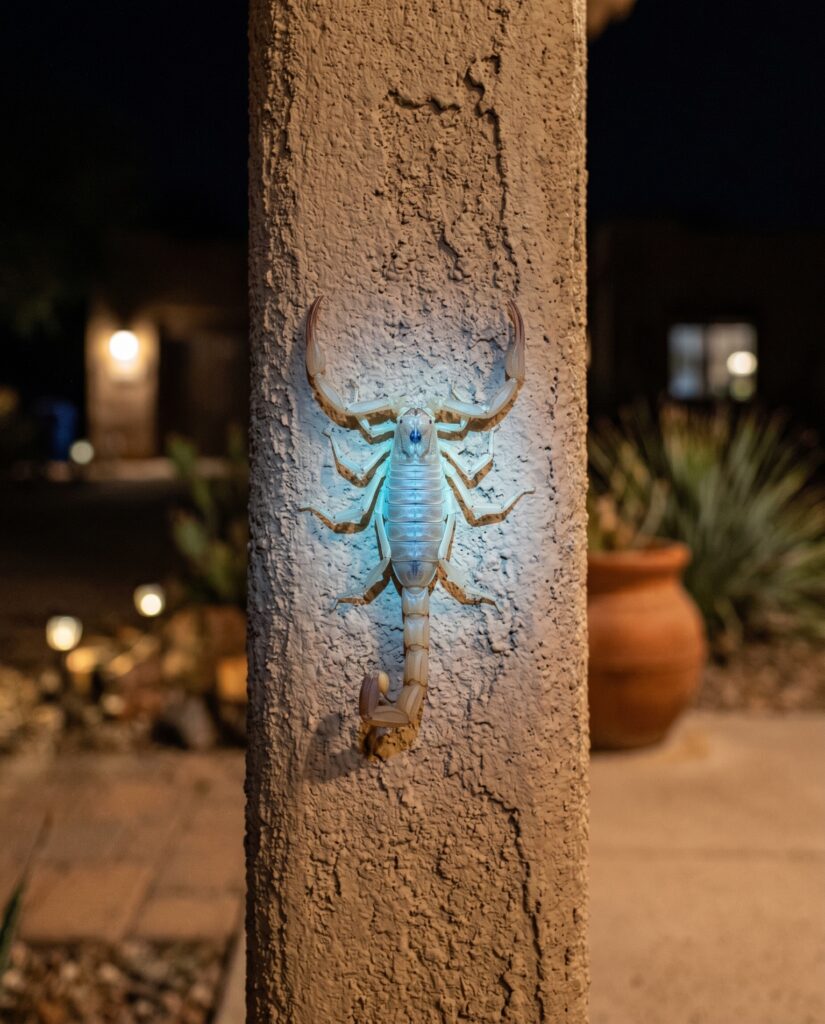
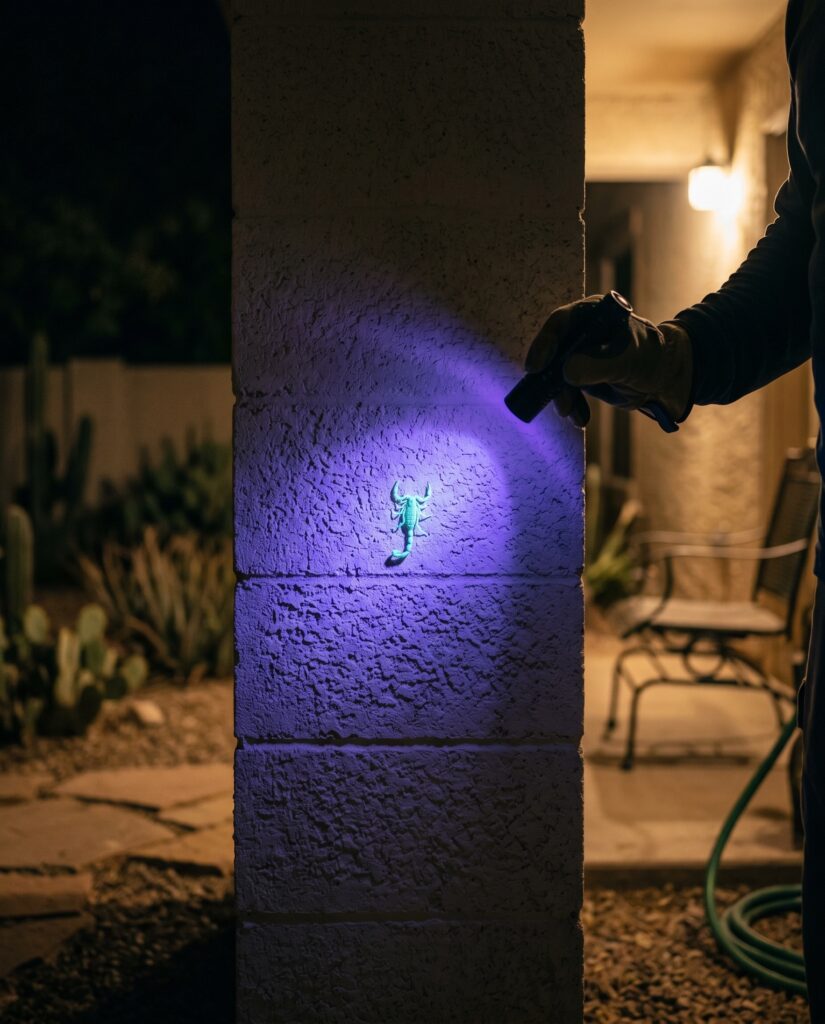
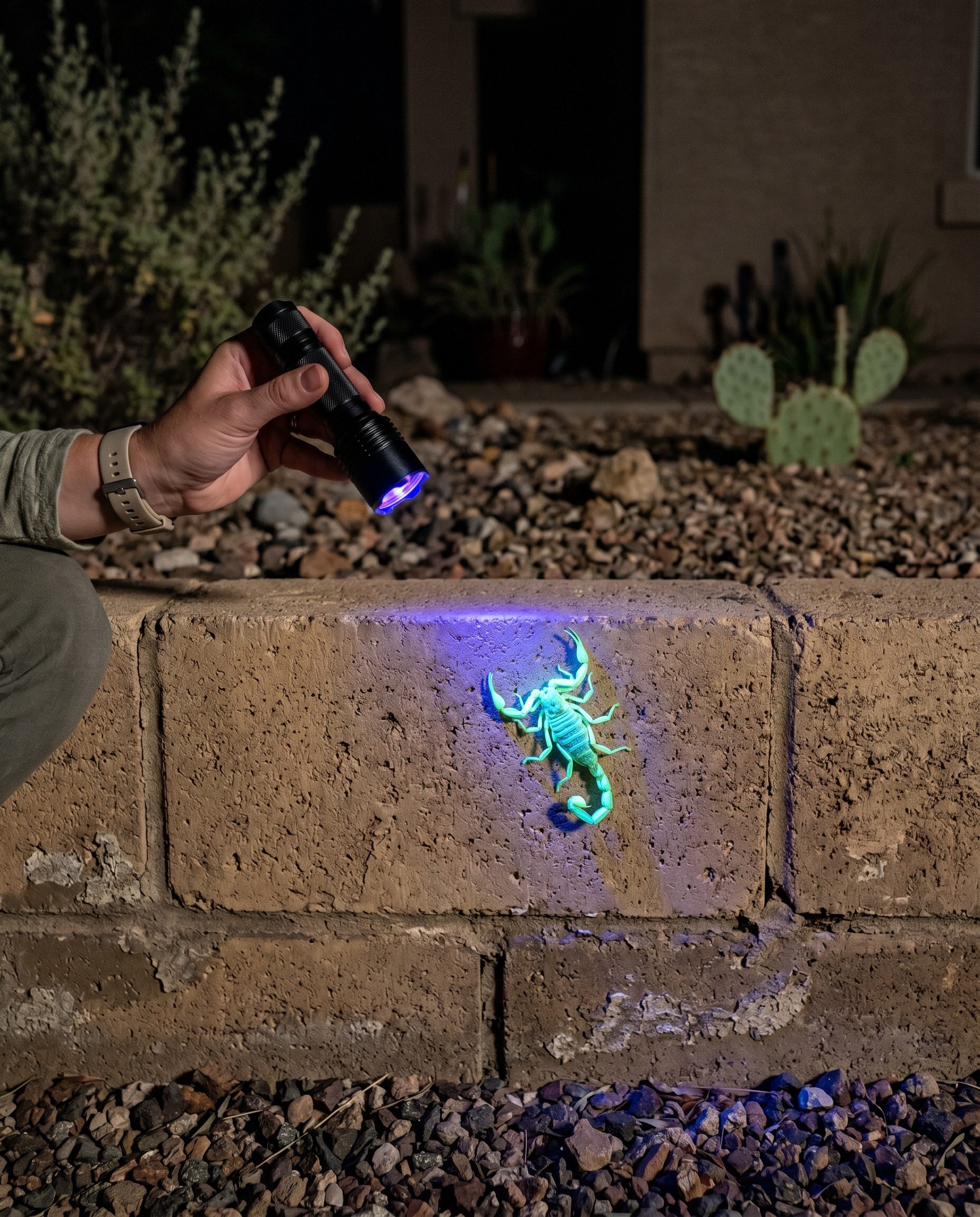
Yes, for finding them. Scorpions glow under a blacklight, so a UV flashlight sweep after dark shows you where they are and whether your changes are working. Wear closed shoes, use long tongs if you must move one, and never grab a scorpion by hand.
Final verdict
Scorpions do not want your house; they want what is around it. The free first move clears the rock, wood, and clutter off your foundation, fixes the drips and overwatering, and cuts the white lights that draw their prey to your door. Knock down the insect population they hunt, then seal the gaps under doors and around pipes so the few that remain cannot get in. A perimeter spray is a backstop, not a fix, because scorpions tolerate a lot of chemistry and simply retreat to the voids you cannot reach. Remove the prey, the damp, and the harborage, and you remove the reason they were ever near you.
Next steps:
– Lock in the full perimeter routine with our scorpion-proofing guide.
– If a few are already inside, run the indoor plan in how to get rid of scorpions.
– Weigh a backstop barrier with our scorpion sprays and barrier products breakdown.