n
n
n
If you have scorpions, the hard truth up front is that you cannot spray your way out of them. Scorpions are remarkably pesticide-tolerant, so a can of spray kills the one you hit and does nothing about the rest. The plan that actually works attacks everything else: knock down the insects they hunt, seal every gap since they slip through openings about a sixteenth of an inch wide, clear the rock and wood and clutter they hide under, and hunt the survivors at night with a UV light. Add a residual barrier last, not first. Remove the food and the harborage and the scorpions leave on their own.
nn
n
You cannot spray your way out of scorpions; they are too pesticide-tolerant. Cut off their food, seal every gap, clear their harborage, hunt them at night with a UV light, then add a residual barrier as a backstop. Remove the food and the hiding places and they leave.
n
- n
- Do first (free): Control the insects scorpions eat and clear rock, wood, and clutter from against the house so there is nothing to hunt and nowhere to hide.
- Best for the common case: Seal gaps down to a sixteenth of an inch, do nightly UV-light sweeps with long tongs, and lay a labeled residual barrier around the foundation.
- Skip: Spraying as your main weapon; scorpions shrug off most contact insecticides, so spray alone wastes money and time.
n
n
n
n
nn
nn
Why spray alone fails
nn
People reach for a spray because it is the obvious move, and it is the one that disappoints them most with scorpions. A scorpion has a waxy, sealed exoskeleton and a slow metabolism, so it absorbs far less of a contact insecticide than a soft-bodied insect does, and it can go for months on a single meal. UC IPM notes that scorpions are difficult to control with insecticides and that long-term control comes from changing the habitat, not from chemistry. So the bug you flatten on the patio is not the problem you have.
nn
The real lever is their food. Scorpions are predators that follow crickets, roaches, spiders, and other soft-bodied insects, so a house with a healthy insect population around it is a buffet. Cut the prey and the scorpions move on because there is nothing left to hunt. That is why the plan starts with the insects you can actually kill easily, then closes the gaps the survivors use to get in, and treats spraying as a backstop rather than the main event.
nn
How to tell if you have scorpions
nn
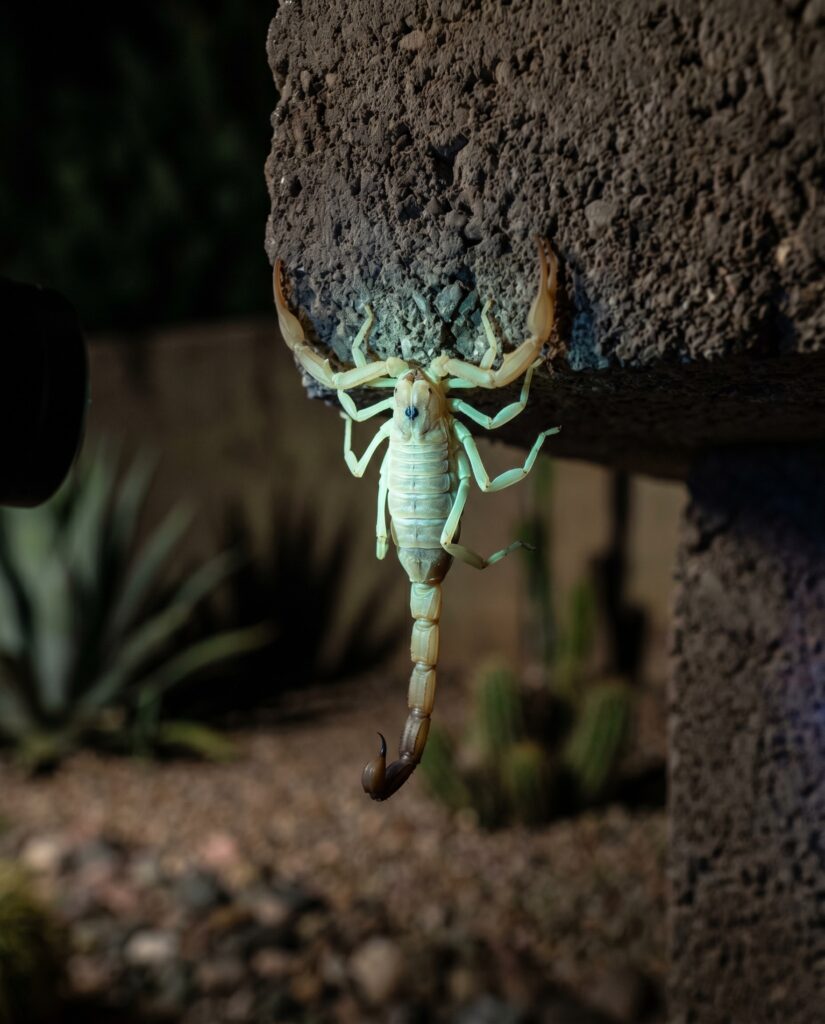
Before you treat, confirm what you are dealing with, because the right level of caution depends on the species. Most US scorpions deliver a sting that feels like a bee sting and clears on its own, which matters because it keeps you from panicking. The one exception worth knowing is the Arizona bark scorpion, common across Arizona and parts of the desert Southwest, which is slimmer, light tan, and the only US species whose sting is a genuine medical concern. Texas A&M AgriLife on the Arizona bark scorpion and why exclusion matters explains that bark scorpions climb walls and squeeze into very thin gaps, which most other scorpions do not.
nn
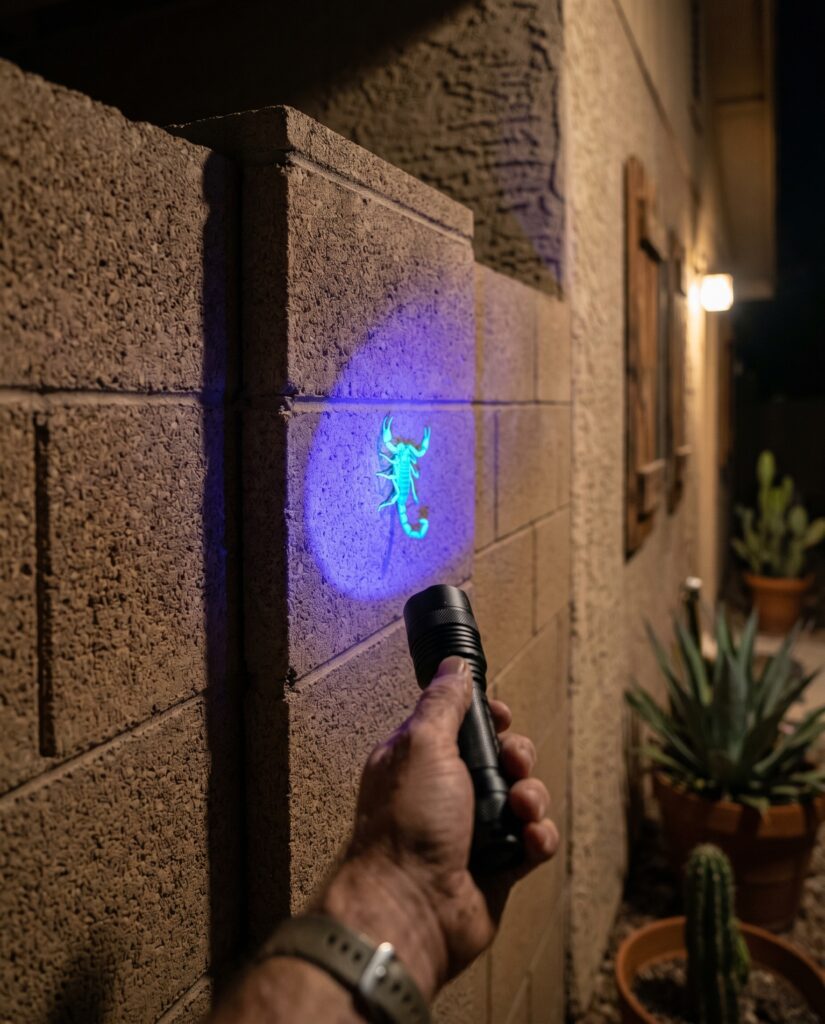
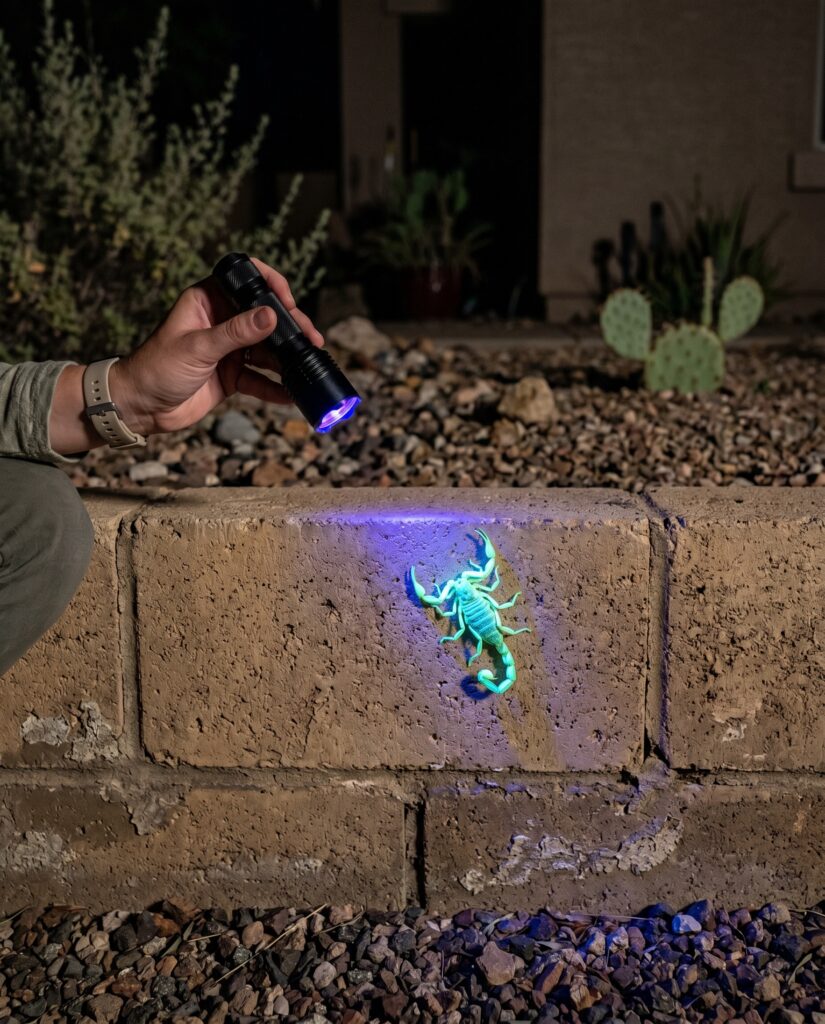
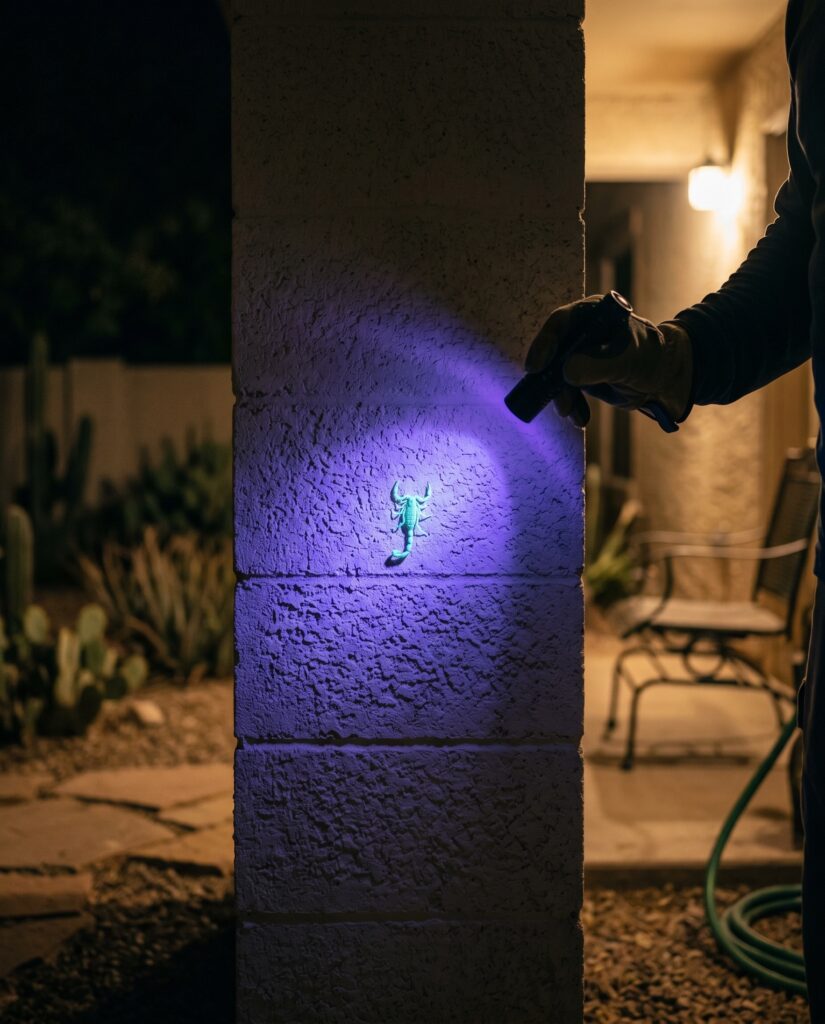
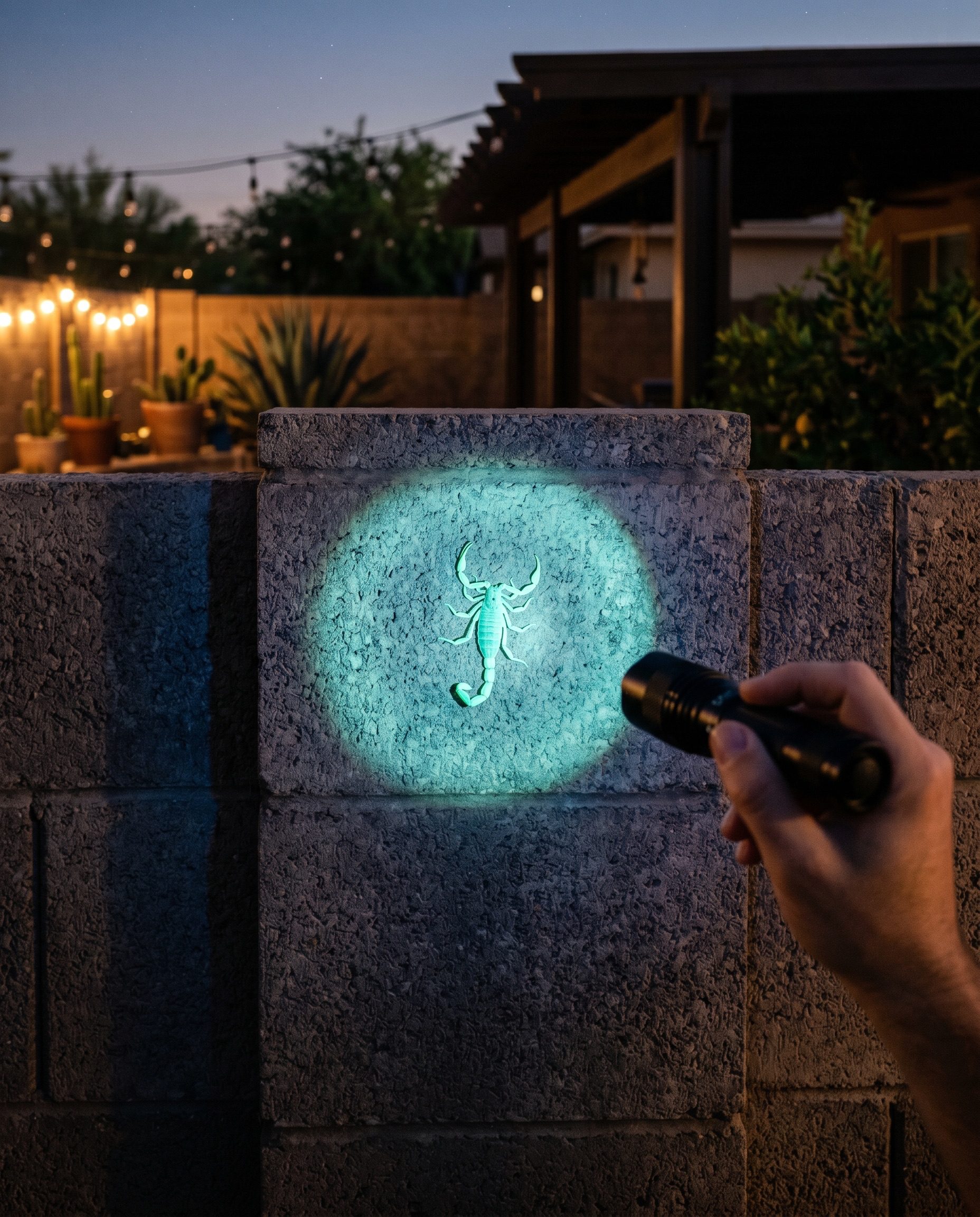
The easiest way to find them is a handheld UV flashlight after dark, because scorpions glow a bright cyan-green under ultraviolet light. Sweep the foundation, the patio, block walls, and woodpiles an hour or two after sunset and they light up against everything else. If you want the full method, our guide to finding scorpions with a UV light walks the timing and the spots to check. Never reach for one by hand. Use long tongs, wear closed shoes outside at night in scorpion country, and shake out shoes and gloves before you put them on.
The detail on why colour temperature beats brightness sits in our guide to why insects gather at a light.
nn
nn
What to do first
nn
This layer costs little and does the heavy lifting, so it comes before any chemical. Work it in order.
nn
Start with their food. Reduce the insects scorpions eat by fixing the things that draw bugs in: switch exterior bulbs to yellow or sodium-vapor lights that pull fewer insects, move those lights away from doors, fix leaks and standing water, and keep the yard from becoming a cricket nursery. Starve the scorpions by starving their prey. This is the step most homeowners skip, and it is the one that decides whether the rest of the plan holds.
nn
Next, clear the harborage. Scorpions hide by day under anything cool and dark, so pull rock piles, firewood, lumber, leaf litter, and stacked clutter away from the walls of the house. Store firewood off the ground and away from the structure, trim shrubs up off the soil, and keep a clean, dry band of gravel or bare ground against the foundation. The less cover there is touching the house, the fewer scorpions stage themselves next to your doors.
nn
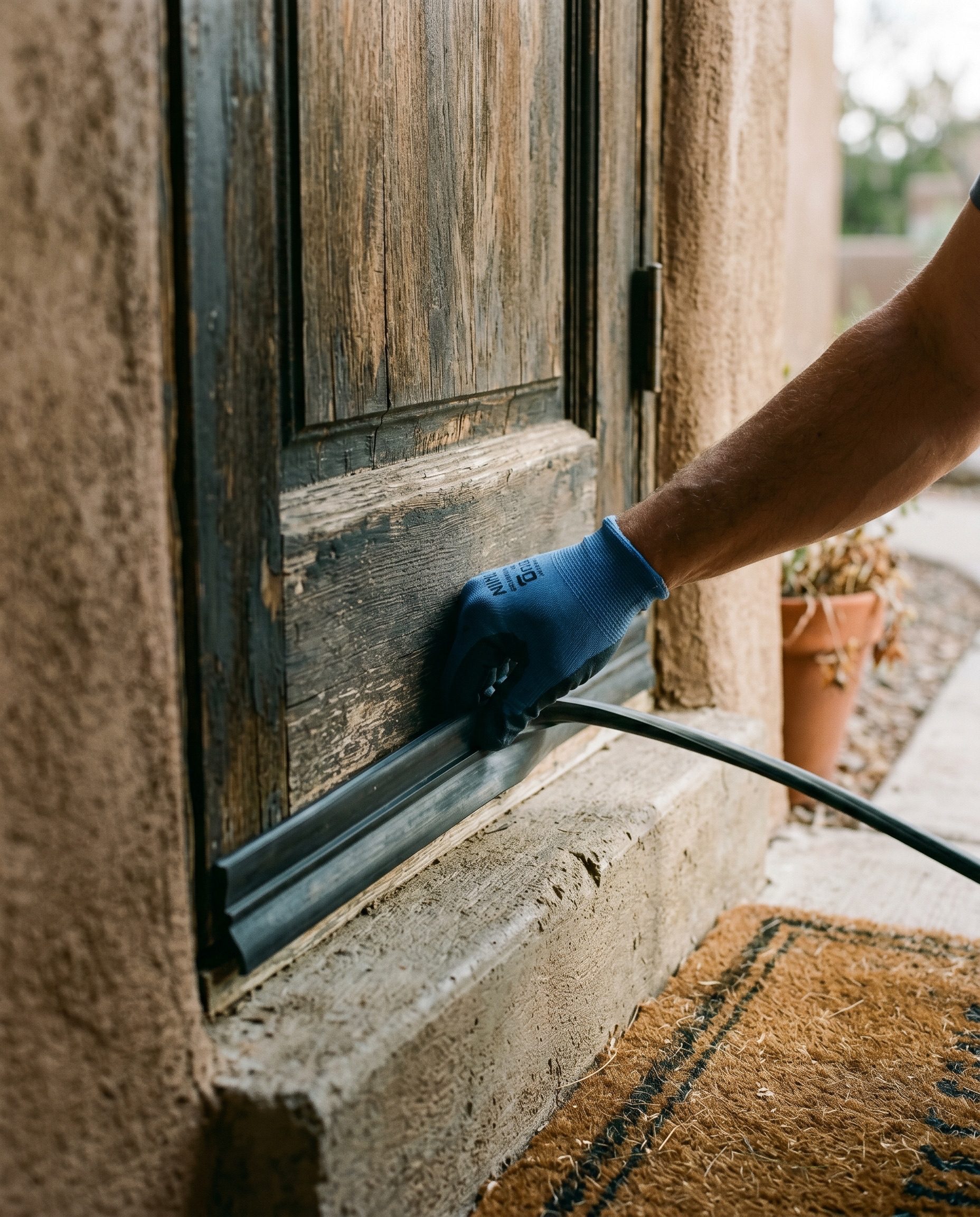
Then seal them out, which is the durable win. Sealing them out and removing harborage is the durable fix, and because a young scorpion can pass through a gap roughly a sixteenth of an inch wide, sealing has to be thorough. Caulk cracks in the foundation and stucco, screen weep holes and vents, weatherstrip doors, and fit tight door sweeps on every exterior door, since the gap under the door is the number-one entry point. Our scorpion-proofing walkthrough covers the spots people miss.
nn
Match the tool to the spot
nn
Where the scorpions are changes what you should reach for. This is the quick map for the common zones around a southwestern home.
nn
| Where they are | Best approach | Watch out for |
|---|---|---|
| Inside the house | Sticky glue boards along walls plus nightly UV checks | Place out of reach of kids and pets |
| Foundation and walls | Seal gaps to a sixteenth inch, then a labeled residual barrier | Follow the label; keep off until dry |
| Yard, rock, woodpiles | Remove harborage and cut the prey insects | Protect beneficial insects, no broadcast spray |
| Heavy or bark-scorpion case | Licensed pest-control professional | Bark scorpion sting risk to small children |
nn
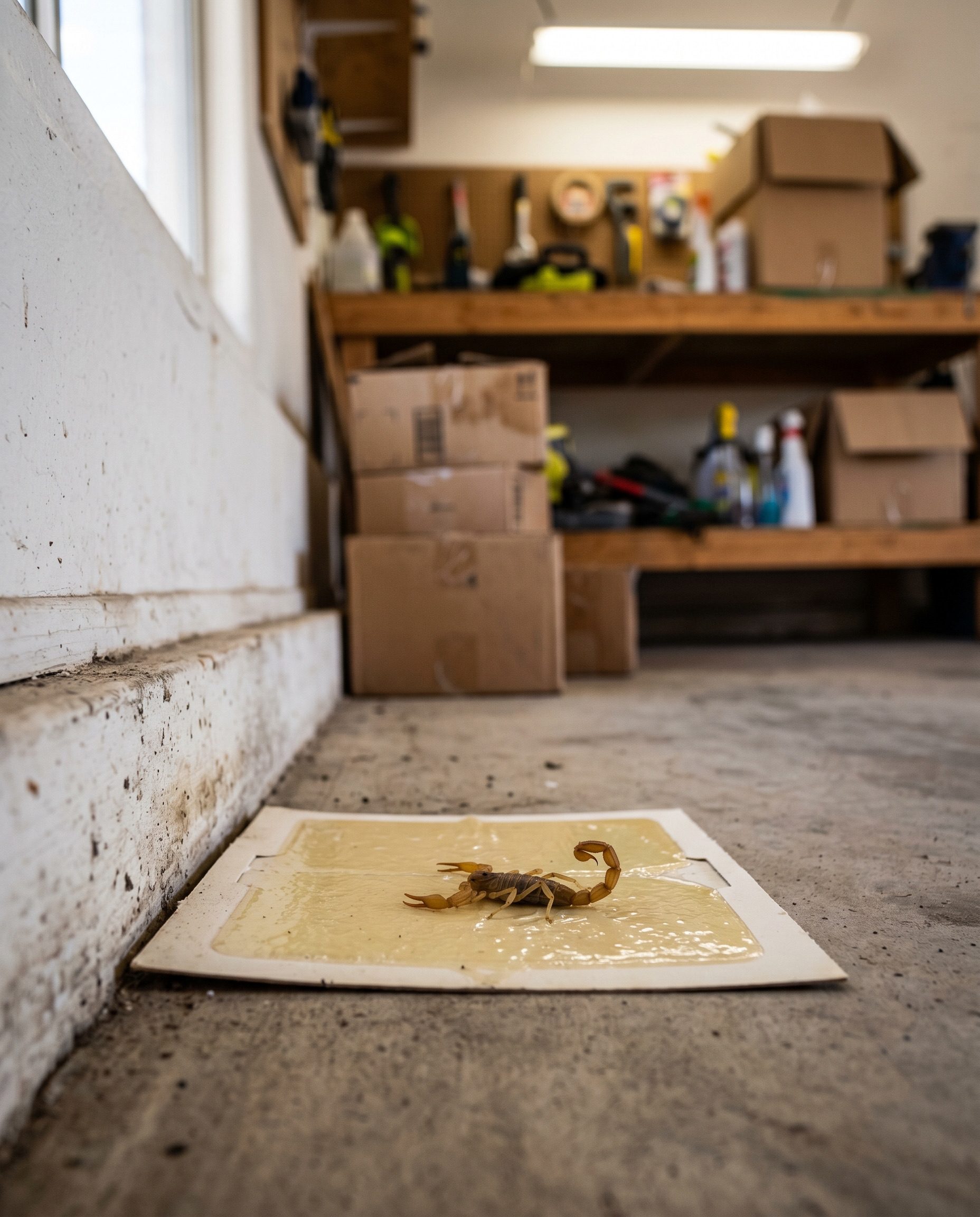
Walk the layers in that order. Glue boards are the best indoor tool because they catch scorpions as they travel along walls and they double as a monitor that tells you where the activity is; set them flat against baseboards, in closets, and in the garage, and check them every few days. Outdoors, mechanical work does more than spray, so removing cover and prey is the real treatment.
nn
If you do use a residual, treat it as a backstop after sealing, not a substitute for it. Apply a labeled outdoor residual as a band around the foundation, at entry points, and into cracks, and understand it slows movement rather than wiping out the population. Whenever you use any registered pesticide, read and follow the product label, because under federal law the label is the law. The EPA’s integrated pest management principles put prevention and the label first, which is exactly the order this plan follows. Keep children and pets off treated areas until everything is dry, never apply indoors against a product’s label, and do not improvise a stronger mix or a different site than the label allows. For category logic on what to actually buy, our comparison of scorpion sprays and barriers sorts the contact products from the residuals.
nn
nn
Stop them coming back
nn
Prevention is the part that makes the win stick, and it is mostly the maintenance version of what you already did. Keep the foundation band clear, keep firewood and rock away from the walls, and re-check door sweeps and caulk a couple of times a year, since weatherstripping wears and new cracks open. Keep the exterior lights insect-unfriendly so the food supply never rebuilds.
nn
Timing matters in scorpion country. Activity climbs in late spring and peaks through the hot summer nights, and bark scorpions in the Southwest often try to move indoors as the weather turns, so do your sealing and your UV sweeps before the season ramps up rather than after they are inside. Knowing what draws scorpions to a house in the first place helps you stay ahead of the next wave. Keep a UV flashlight by the door and run a quick sweep on warm nights; a clean sweep is your proof the plan is holding.
nn
When to call a pro
nn
Most scorpion problems are a homeowner job, but a few are not. Call a licensed pest-control professional if you are seeing Arizona bark scorpions and have young children in the home, if the activity survives a correct round of sealing and harborage removal, or if you simply cannot find where they are getting in. A pro can apply products and reach voids you cannot, and in bark-scorpion country they know the specific entry habits to chase. This is not a failure on your part; it is matching the tool to a higher-risk situation, and it is the responsible call when a sting could land on a small child.
nn
Common questions
nnWhat kills scorpions instantly?n
Direct contact does the most reliable instant damage: a hard tool, or a labeled contact spray applied straight onto the scorpion. The catch is that “instant” only applies to the one you are looking at, and scorpions are too pesticide-tolerant for spray to clear the rest. That is why the lasting fix is cutting their food and sealing them out, not chasing each one.
nnDoes spraying my yard get rid of scorpions?n
Not on its own. Scorpions shrug off most residual chemistry, and a yard full of prey insects keeps drawing new ones in. A barrier spray can slow movement at the foundation as a backstop, but it only works alongside removing harborage and reducing the bugs they eat. Lead with the habitat work, not the sprayer.
nnAre scorpion stings dangerous?n
For most US scorpions, no; the sting feels like a bee sting and settles down with ice and time. The Arizona bark scorpion is the exception, and its sting can be a medical emergency, especially in young children. Get emergency medical help right away for trouble breathing, throat or tongue swelling, severe pain spreading from the site, muscle twitching, or roving eye movements. MedlinePlus on scorpion sting symptoms and when to seek care lists the red flags, and you can also contact a doctor or your local poison control center for guidance.
nnDoes a UV light kill scorpions?n
No, it only finds them. Scorpions glow under ultraviolet light, which makes a handheld UV flashlight the best tool for locating them at night, but the light itself does nothing to them. Use it to spot and remove scorpions with long tongs, never your hands, and wear closed shoes outside after dark.
nnWill scorpions come back?n
They come back if the food and the cover come back. Keep the prey insects down, keep rock and wood off the walls, and keep gaps sealed, and there is little reason for a scorpion to choose your house. Skip those habits and the next warm season invites a fresh wave.
nn
Final verdict
nn
You cannot spray your way out of scorpions, so stop leading with the can. Knock down the insects they hunt and clear the rock, wood, and clutter against the house for free, then seal every gap down to about a sixteenth of an inch, because that is the entry point that lets them in. Hunt the survivors at night with a UV light and long tongs, set glue boards indoors as your monitor, and add a labeled residual barrier last as a backstop rather than a cure. Be patient and stay consistent, because removing the food and the harborage is what actually makes scorpions leave and stay gone.
nn
Next steps:
nn
– Locate the activity tonight with our guide to finding scorpions with a UV light.
n
– Close the entry points using the scorpion-proofing walkthrough.
n
– Understand the draw so it does not rebuild with what attracts scorpions to your house.
nn