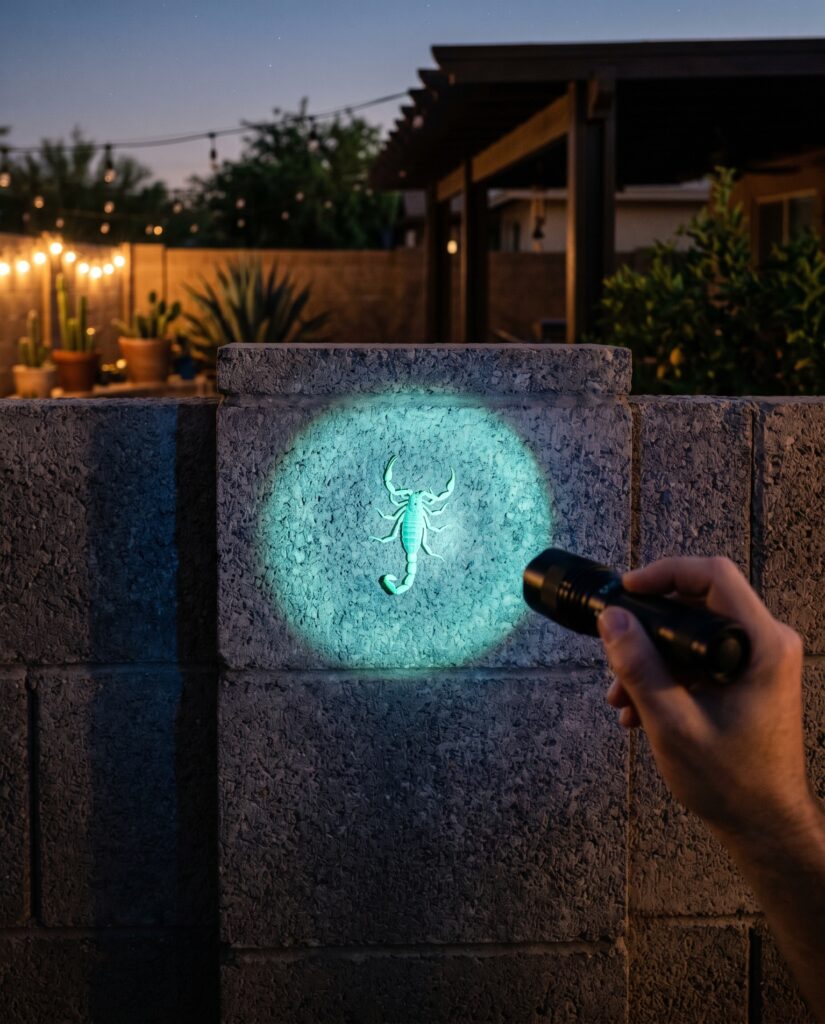
If scorpions keep turning up inside, the fix is not a stronger spray, it is sealing the house. Scorpions get in through gaps you would never think twice about: the slot under a door, the space around a pipe or cable where it enters the wall, the weep holes in a block or brick wall. Seal those openings, fit tight door sweeps, and pull rock piles, woodpiles, and landscape debris back from the foundation so nothing wants to live right against the house. Seal and de-clutter, and far fewer ever make it inside.
Exclusion is what keeps scorpions out, not insecticide. Seal entry gaps, fit tight door sweeps, and clear harborage off the foundation, and the indoor count drops far more than any perimeter spray delivers on its own.
- Do first (free): Pull rock piles, woodpiles, and yard debris away from the foundation so there is nowhere to hide next to the house.
- Best for the common case: Seal gaps under doors, around utility lines, and at weep holes, and fit tight door sweeps on every exterior door.
- Skip: Relying on a barrier spray alone; scorpions tolerate insecticide well and will keep walking in through gaps you never closed.
Why sealing beats spraying
Most people reach for a perimeter spray because it feels like doing something, and that is exactly where the money gets wasted. Scorpions have a hard, waxy exoskeleton and a low surface area against the ground, so they pick up far less product than a soft-bodied insect does. The UC IPM Pest Notes on scorpions and how poorly sprays work against them make the same point: chemical control is unreliable on its own, and exclusion plus habitat removal is the durable fix. A spray on the foundation does not close the gap a scorpion is about to walk through.
The other half is that scorpions follow their food and their cover. They eat insects and spiders, and they shelter in cool, dark, tight spaces during the day, so a yard full of harborage right against the wall is an open invitation. Texas A&M AgriLife guidance on scorpion biology and exclusion frames control the same way the EPA’s integrated pest management principles do: take away the shelter and seal the building first, then treat only if a problem remains. If you want the full removal playbook once you have a few inside, our guide to getting rid of scorpions covers the indoor side.
Clear harborage off the foundation
This layer costs nothing and it does the most work, so do it before you buy a tube of caulk. Scorpions want a cool dark hide within a short walk of the house, and a tidy two-foot dry zone around the foundation takes that away. Pull everything off the wall first. Move rock piles, decorative stone borders, woodpiles, stacked pavers, and bagged mulch away from the house, and store firewood off the ground and well clear of the wall.
Then trim back the rest. Cut shrubs and ground cover so foliage does not touch the siding, since a branch against the wall is a bridge straight up and over a sealed gap. Rake out leaf litter and yard debris along the foundation, clean out the gravel and clutter in window wells, and keep the bottom courses of the wall clear. Inside, the same logic applies to the garage and storage rooms: boxes off the floor, less clutter, fewer hides. Because scorpions are following prey, reducing the insects they hunt matters too, and our breakdown of what attracts scorpions to your house walks the moisture and insect triggers worth fixing.
Seal the gaps they actually use
Now the part that keeps them out for good. Walk the house slowly and seal the openings scorpions actually use, because a young scorpion can squeeze through a gap not much wider than a credit card. Work in this order:
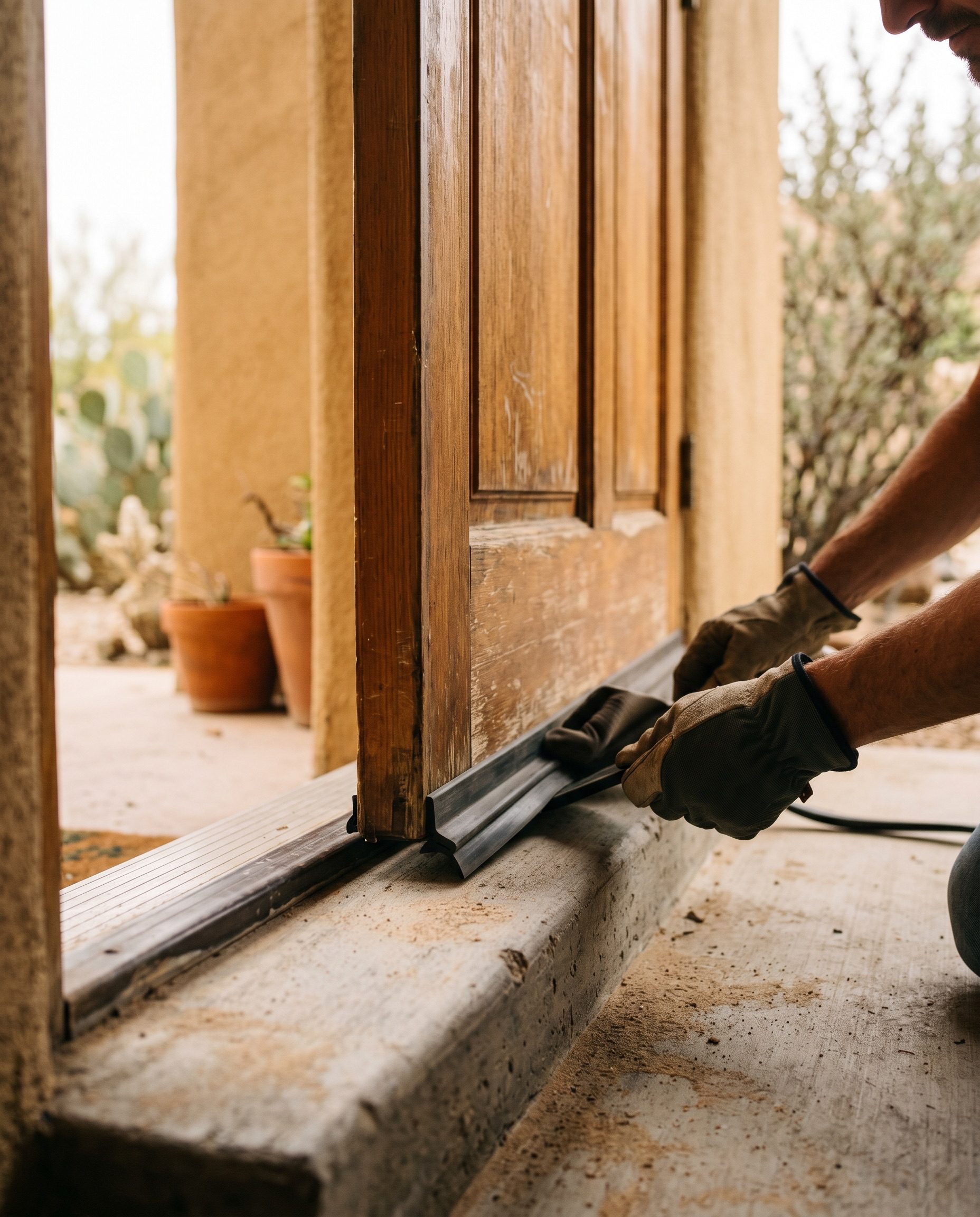
– Door sweeps and thresholds. The slot under an exterior door is the number one entry point. Fit a tight door sweep on every exterior door, including the door from the garage into the house, and add weatherstripping so daylight does not show at the edges.
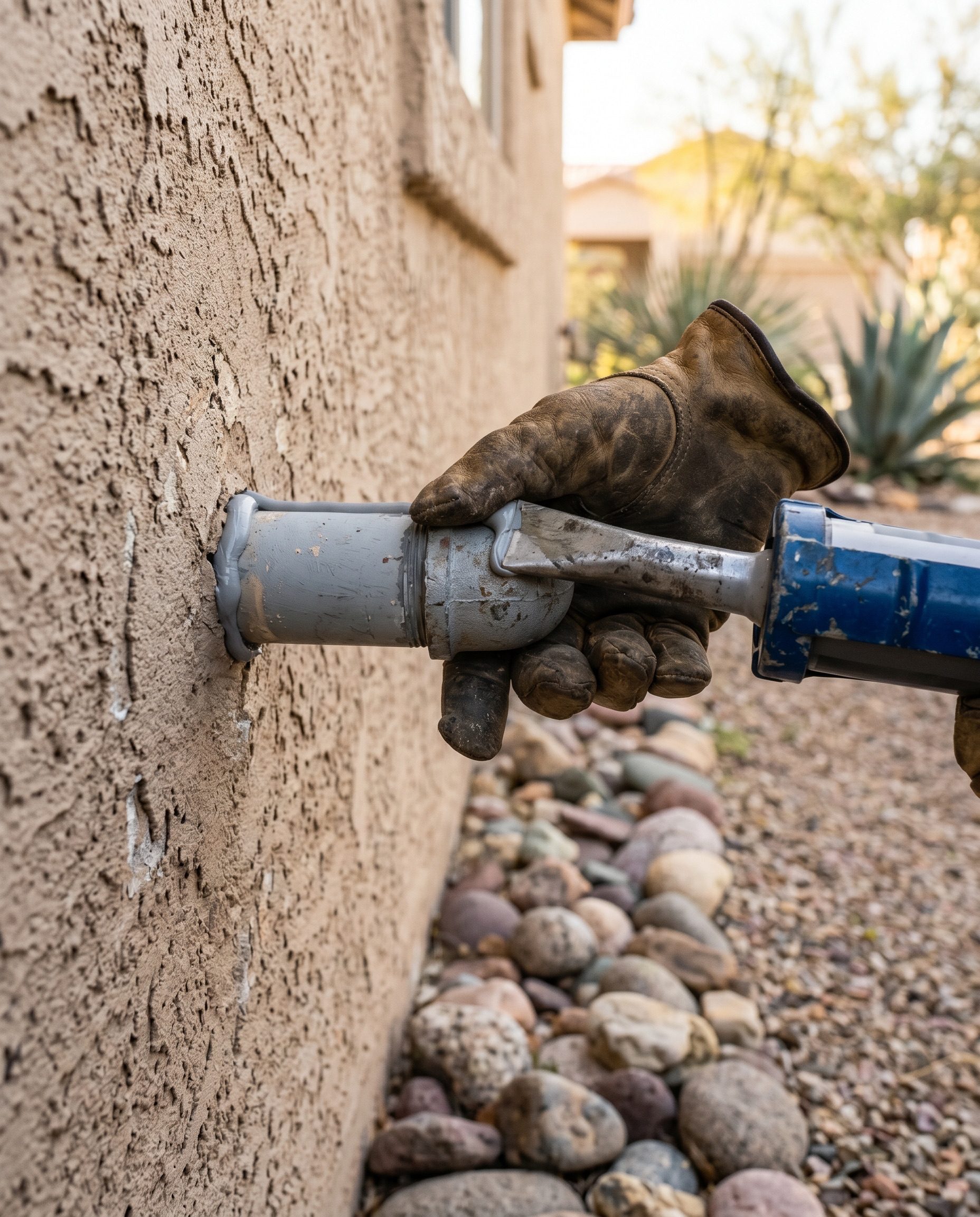
– Utility penetrations. Caulk or use expanding foam where pipes, cables, gas lines, AC line sets, and electrical conduit pass through the wall. These gaps are everywhere and almost always open.
– Weep holes. Block or brick walls have weep holes near the base for drainage. Fit stainless mesh weep covers that let water out but keep scorpions from crawling in, rather than caulking them shut.
– Windows, screens, and the roofline. Repair torn screens, seal around window and vent frames, and check where the roof meets the wall and where the soffit and fascia meet.
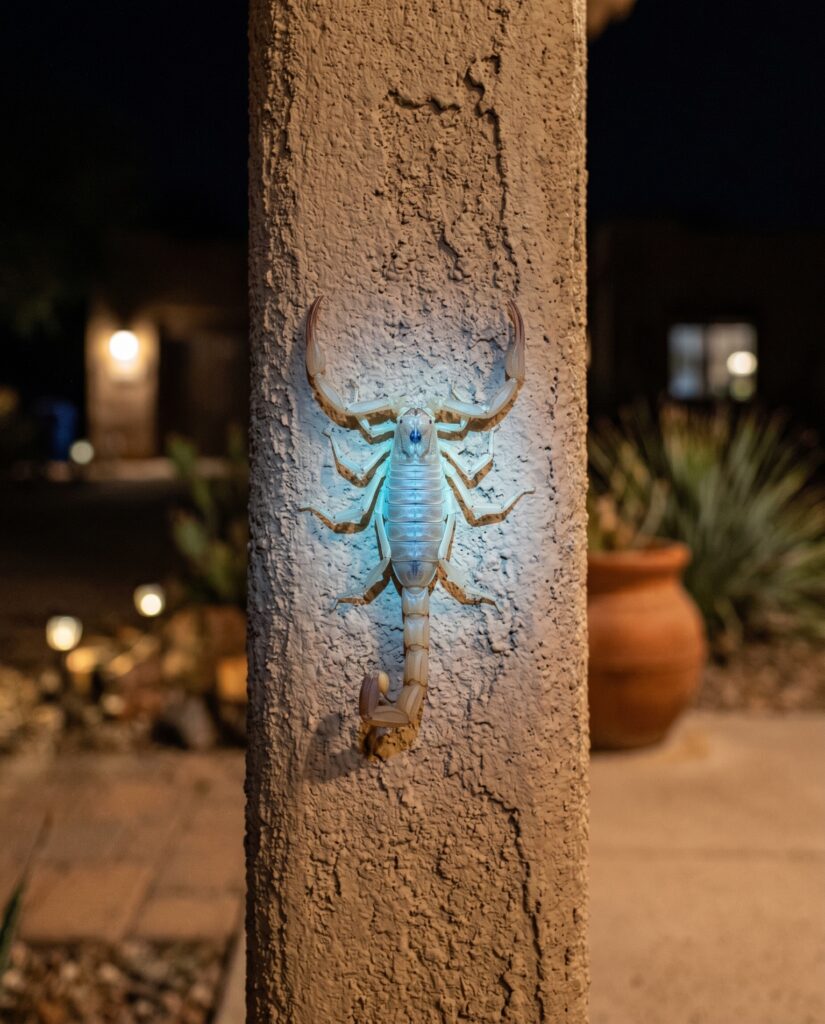
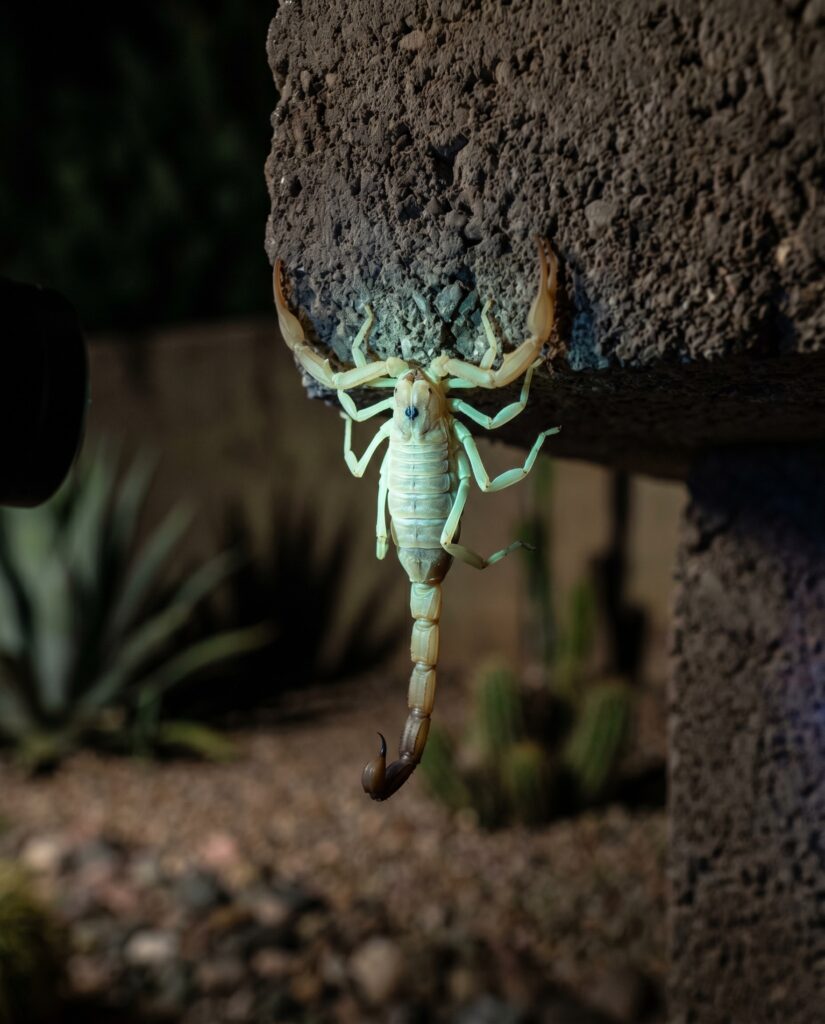
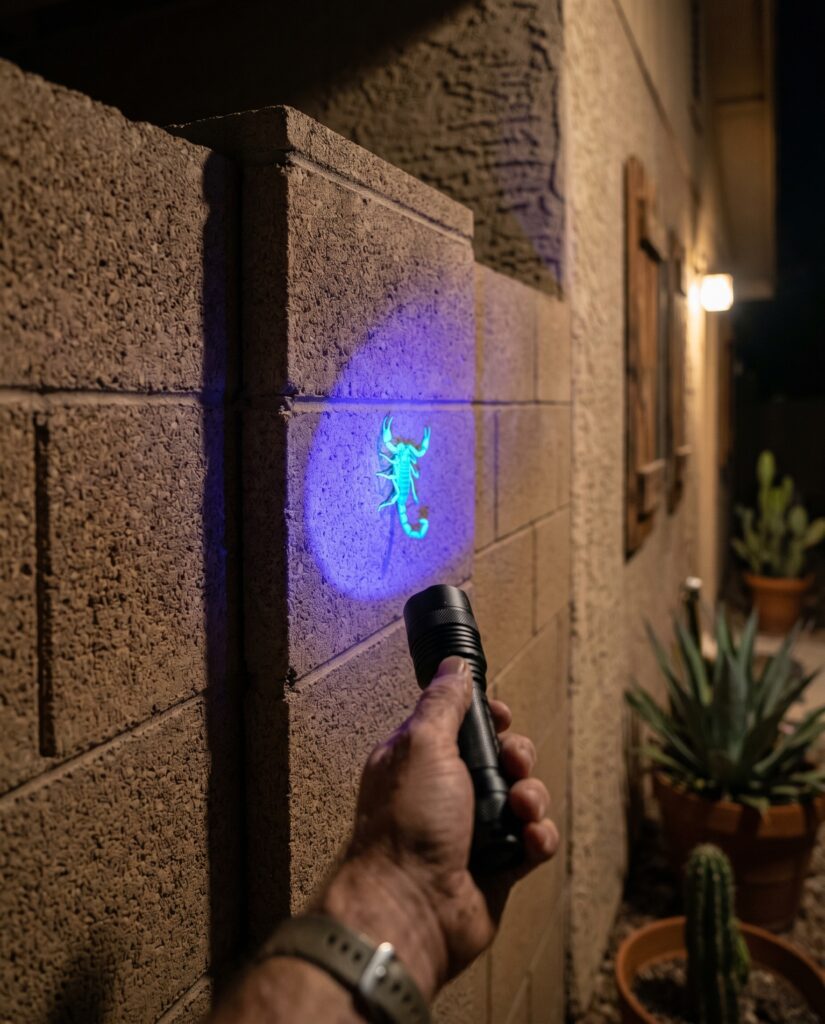
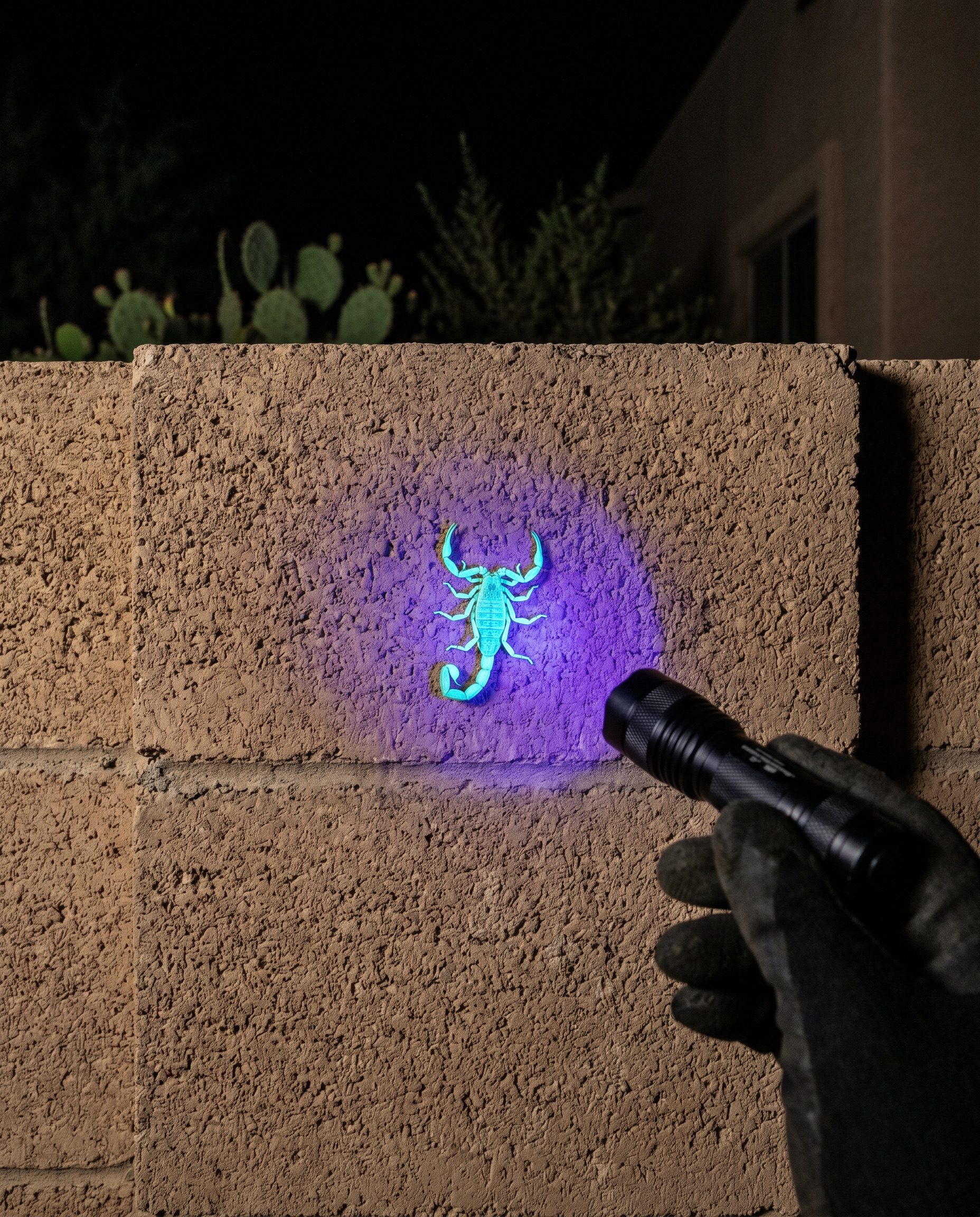
Use exterior-grade caulk or sealant for small gaps and steel wool or foam for larger ones, and check the work at night with a UV flashlight, since scorpions glow under it and that beam tells you fast where they are still getting in.
Seal vs spray at a glance
The two approaches are not equal, and it helps to see why before you spend on either. Here is the quick comparison for the common zones.
| Approach | What it actually does | Watch out for |
|---|---|---|
| Exclusion (seal gaps) | Physically blocks the way in for good | Slow, thorough work; miss one gap, they use it |
| Harborage removal | Removes shelter and food next to the house | Has to stay tidy; debris creeps back |
| Perimeter spray | Limited and temporary effect at best | Scorpions tolerate it; never the main plan, follow the label |
If you do choose to spot-treat as a backup, treat the product label as the rule, since under federal law the label is the law. Use only a product labeled for scorpions and for that site, keep children and pets off treated areas until everything is dry, and never apply on food-prep surfaces. For category logic on what is even worth using, our roundup of scorpion killer sprays and barriers sorts the few useful options from the theater.
Stings, kids, and when it matters
Most scorpion stings in the US feel like a bee sting: sharp pain, some swelling, and redness that fades in a day or so. The Arizona bark scorpion is the exception, and its sting can be a medical emergency, especially in young children. Watch for red-flag signs that go beyond local pain: trouble breathing, drooling or difficulty swallowing, muscle twitching or jerking, roving eye movements, slurred speech, or a child who cannot stay still or stops calm. If any of those show up, or for any sting in a small child, get emergency medical help right away.
The MedlinePlus guidance on scorpion sting symptoms and first aid says to wash the site, apply a cool compress, and keep the person calm while you decide on care; do not cut the wound or apply a tourniquet. For any sting where you are unsure, your local poison control center can advise on what to do next, and America’s Poison Centers is the body behind that guidance. When you hunt at night, never grab a scorpion by hand, use long tongs, and wear closed shoes outdoors after dark in scorpion country.
Common questions
What gap size keeps scorpions out?
Closer than you would guess. A scorpion can flatten and squeeze through a crack about the width of a credit card, and young ones fit through even less. That is why a tight door sweep matters and why caulking the obvious pipe gaps is not enough on its own. Seal anything you can slide a card into around doors, utility lines, and the foundation.
Does a perimeter spray keep scorpions out?
Not reliably. Scorpions tolerate insecticides far better than soft-bodied pests, so a barrier spray rarely earns its keep as the main plan. It can be a minor backup after you have sealed and de-cluttered, but it never substitutes for closing the gaps they walk through.
Why do I see scorpions under a UV flashlight?
Scorpions fluoresce, glowing blue-green under ultraviolet light, which makes a UV flashlight the best tool for finding them at night and for checking whether your sealing worked. Walk the foundation and entry points after dark, and never reach for one with your hands; use long tongs and wear closed shoes.
Are most scorpion stings dangerous?
Most US scorpion stings are mild and feel like a bee sting that fades within a day. The Arizona bark scorpion is the one to take seriously, and its sting can be an emergency in young children. Know the red-flag symptoms and get emergency care if they appear or for any sting in a small child.
Final verdict
Scorpion proofing comes down to two moves done well: take away the shelter and seal the building. Start free by pulling rock piles, woodpiles, and debris off the foundation and trimming foliage back from the wall, because that strips out the harborage and the prey scorpions follow. Then close the gaps they actually use: tight door sweeps on every exterior door, caulk around utility lines, and mesh covers on weep holes, checking your work at night with a UV flashlight. Skip leaning on a perimeter spray, because scorpions shrug it off and keep coming in through whatever you left open. Seal and de-clutter, stay on top of it, and the indoor count drops to almost nothing.
Next steps:
– If a few are already inside, work through our guide to getting rid of scorpions.
– Fix the triggers first by reading what attracts scorpions to your house.
– If you want a backup treatment after sealing, compare options in our scorpion killer sprays and barriers roundup.