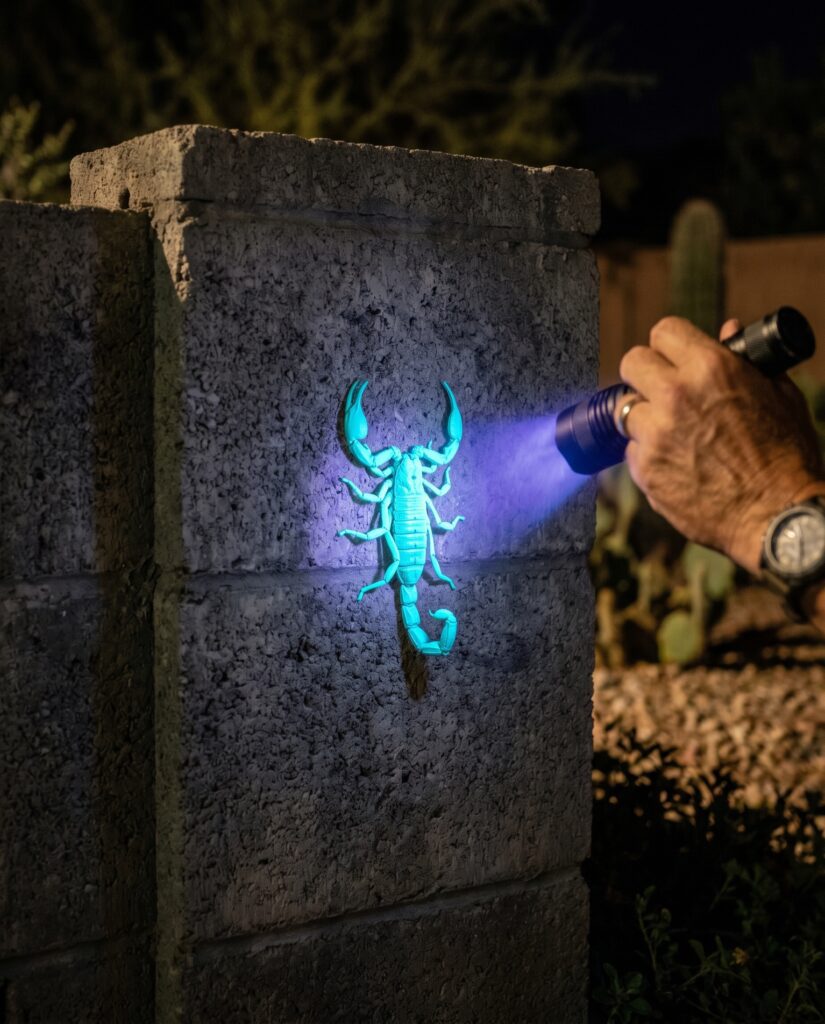
If scorpions are showing up in your house, the most useful tool you can own is not a can of spray, it is a UV flashlight. Scorpions glow a bright blue-green under ultraviolet light, so a black-light flashlight lets you hunt them at night and remove them on the spot, one by one. Pair that with glue traps set along the walls to catch and monitor the ones you miss while you sleep. Together, detection and capture beat spraying a pest that largely shrugs off pesticide. For our own place in scorpion country we keep one good UV light by the back door and a few glue traps tucked along the garage and closet walls, nothing fancier. Most roundups push a barrier spray as the hero; this guide shows why the flashlight earns that spot instead.
A UV flashlight is the single most useful scorpion tool because scorpions glow blue-green under black light, so you can night-hunt and remove them on the spot, then run glue traps along the walls to catch the ones you miss; detection and capture beat spraying a pesticide-tolerant pest.
- Do first (free): Seal door sweeps and gaps, clear yard clutter and woodpiles, and reduce the harborage scorpions hide in.
- Best for the common case: A 395nm UV flashlight for night hunts plus glue traps set flat along baseboards and walls.
- Skip: Relying on a perimeter spray alone; scorpions tolerate many pesticides and just walk over a treated surface.
What to do first
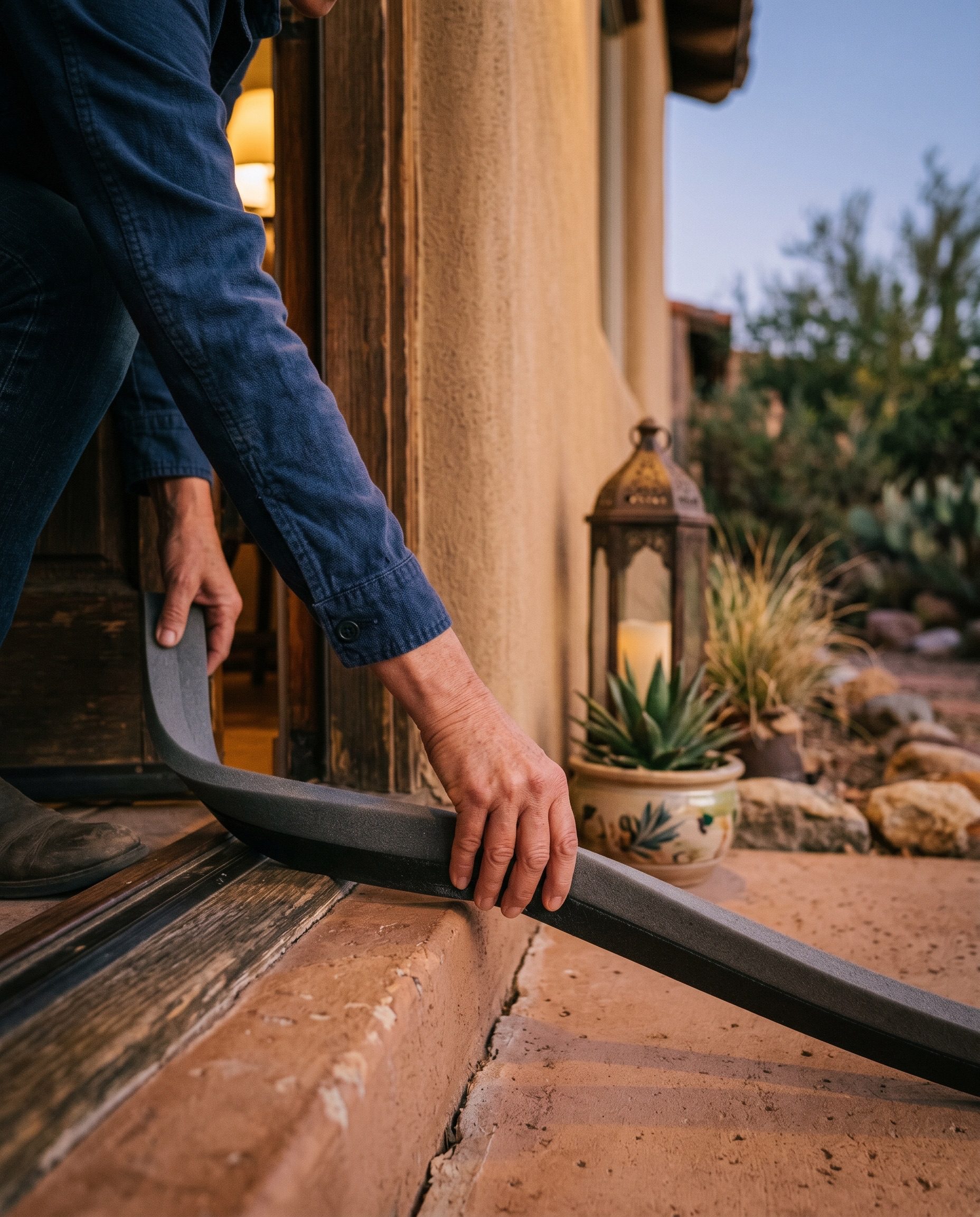
Before you buy anything, do the free part, because no tool clears scorpions out of a yard that keeps inviting them in. Seal the gaps they crawl through: fit door sweeps on exterior doors, caulk around pipes and utility penetrations, and fix torn window screens, since scorpions slip through openings as thin as a credit card. Outside, clear the harborage by moving woodpiles and stones away from the wall, trimming ground-touching shrubs, and clearing debris where scorpions and the bugs they eat hide. The UC IPM Pest Notes on scorpions puts exclusion and harborage removal at the top of the list because it is what actually lowers the indoor count. Our walkthrough on how to get rid of scorpions lays the full sequence out room by room.
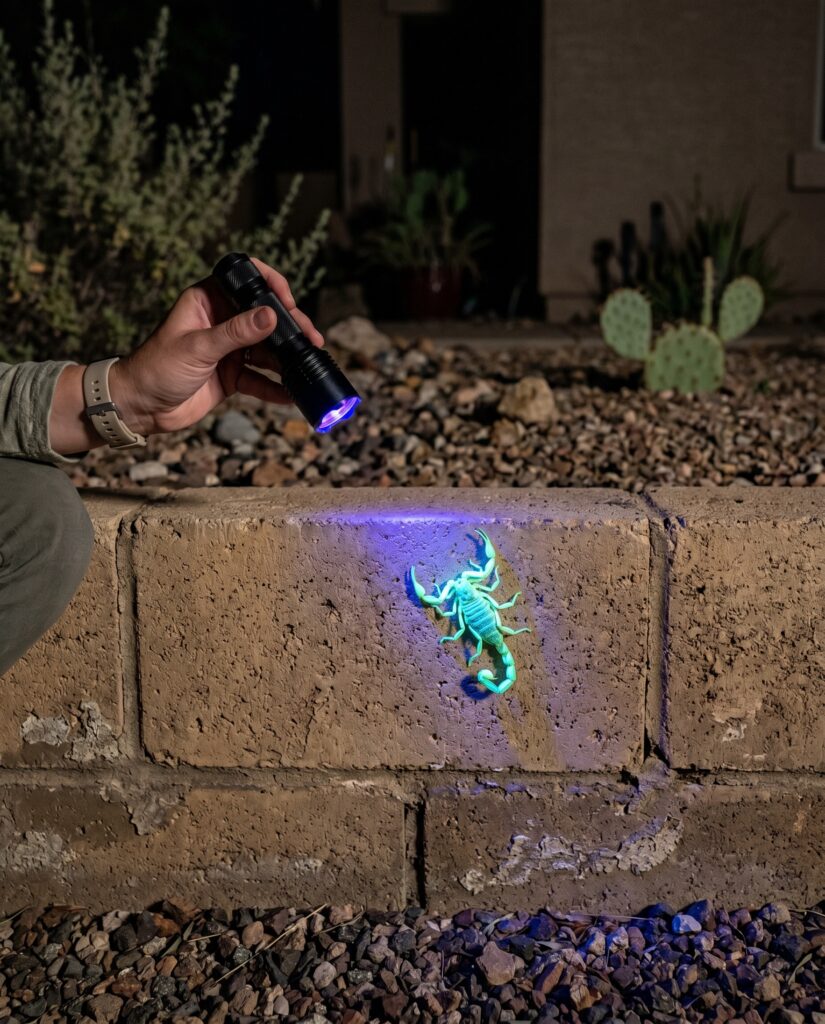
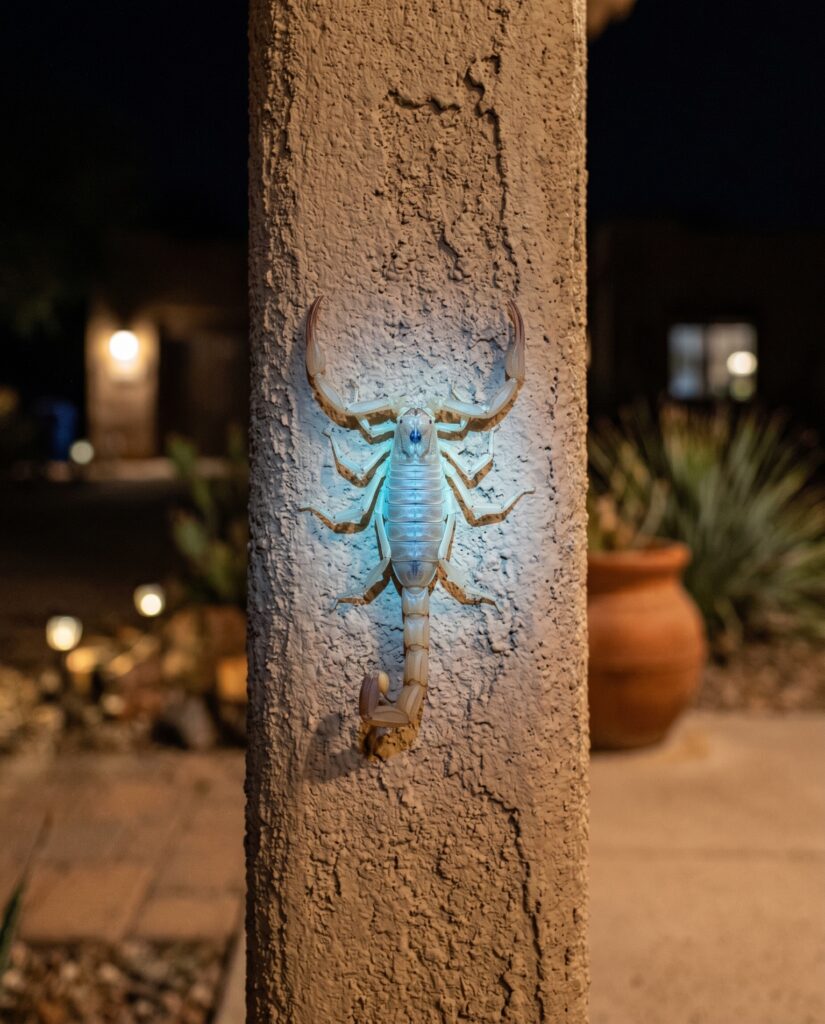
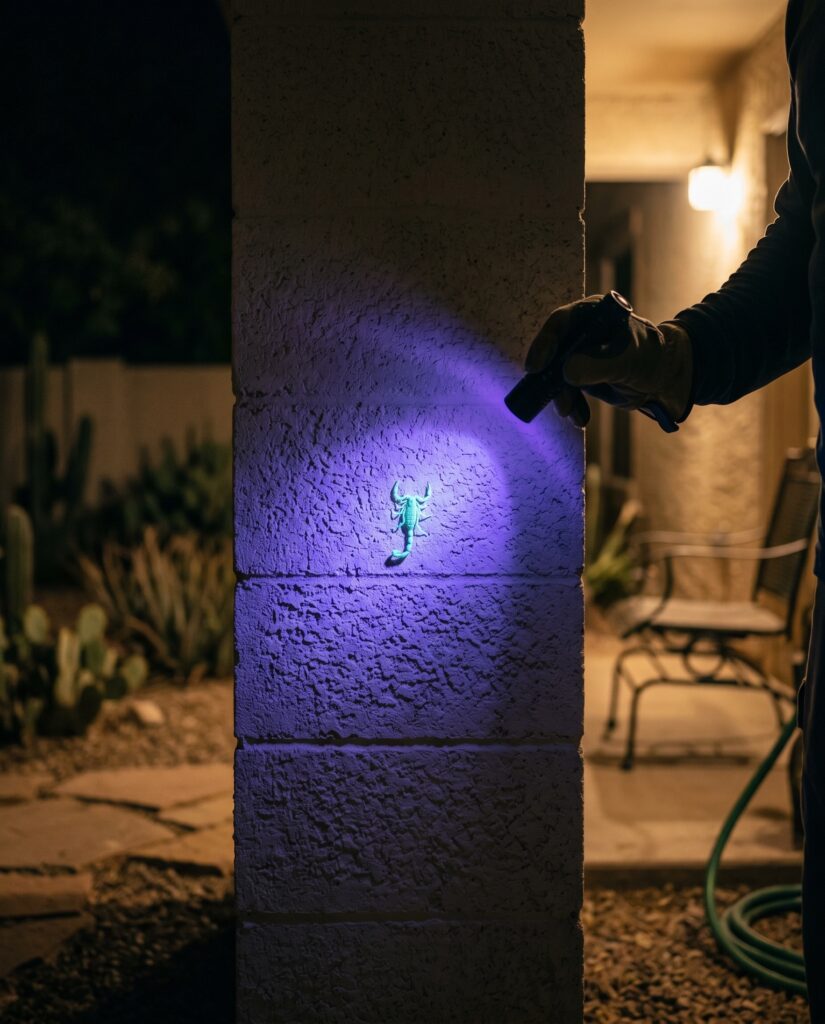
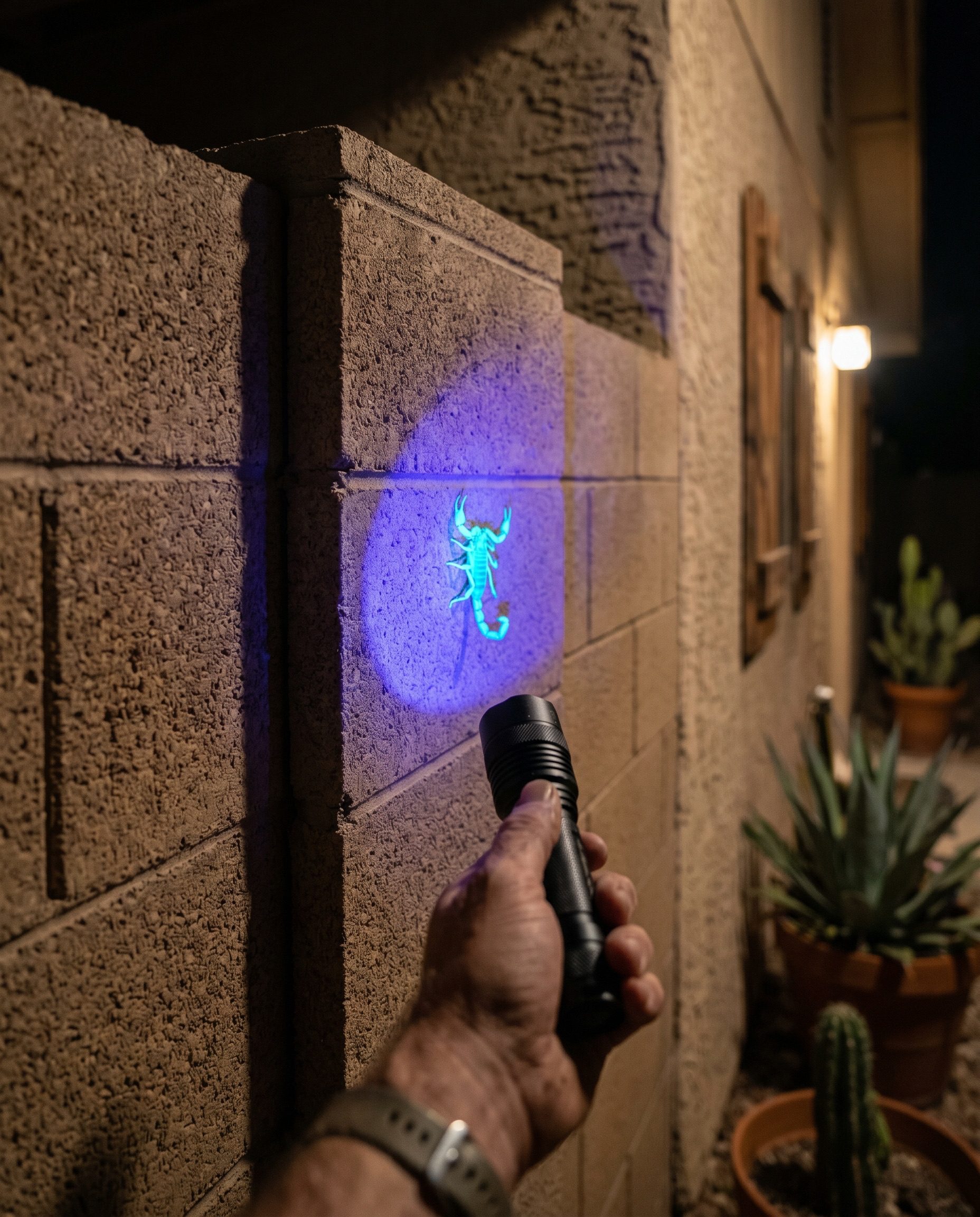
Then start hunting at night, because that is when the flashlight earns its keep. Scorpions fluoresce a vivid blue-green under ultraviolet light, which means a black-light flashlight turns an invisible, nocturnal pest into a glowing target on a wall or patio. Sweep the foundation line, block walls, and garage corners after dark, and you can spot and remove the live ones a spray would never reach. A product is worth buying once you have sealed the obvious gaps, not as a substitute for it.
Why spraying alone falls short
Here is the part most lists skip. Scorpions are surprisingly tolerant of common household pesticides, and they walk on the tips of their legs, so they pick up far less residue than a soft-bodied insect crossing the same treated band. The Texas A&M AgriLife guidance on scorpions is candid that chemical control gives limited results on its own and that sealing the structure and removing harborage matter more. A scorpion that shrugs off the barrier just crosses it and keeps hunting. That is why people spray, see a scorpion the next night, and wonder what went wrong.
This is the case for detection-and-capture over chemistry. A UV flashlight removes the live animals you can find, and glue traps quietly catch the ones moving along the walls at night while you sleep. The traps double as a monitor: where you keep finding scorpions stuck tells you which wall, door, or corner to seal next. A spray still has a narrow role as a spot or crack-and-crevice treatment, but it is a supporting tool, not the cure. If you do reach for one, follow the EPA safe pest control principles and the product label, because under federal law the label is the law. And know your limits: a heavy, recurring infestation, especially where Arizona bark scorpions are common, is a job to hand to a licensed professional rather than chase with more cans.
UV light vs glue traps
These two tools do different jobs, so you want both, not one. The flashlight is active removal on your schedule; the traps are passive capture and monitoring around the clock. Pick by what you need them to do, not by price.
| Tool | Best for | Watch-out |
|---|---|---|
| UV flashlight (395nm) | Active night hunts and on-the-spot removal | Only works when you are out using it; never grab a scorpion by hand |
| Glue traps | Passive overnight capture and monitoring along walls | No residual reach; replace when full or dusty |
| Spot/barrier spray | Cracks and entry points as a supporting tool | Scorpions are pesticide-tolerant, so it is not a standalone cure |
Why both? Because the flashlight only works the minutes you are holding it, and the traps only catch what happens to cross them. Run the UV light for an hour after dark to knock down the active population, then leave glue traps in place so the night-movers you missed get caught and counted. The traps also tell you whether your sealing worked: fewer catches week over week means the gaps you closed are doing their job. If you want a deeper field method, our guide to finding scorpions with UV light covers technique, timing, and the safe way to collect what you find.
Where to place glue traps
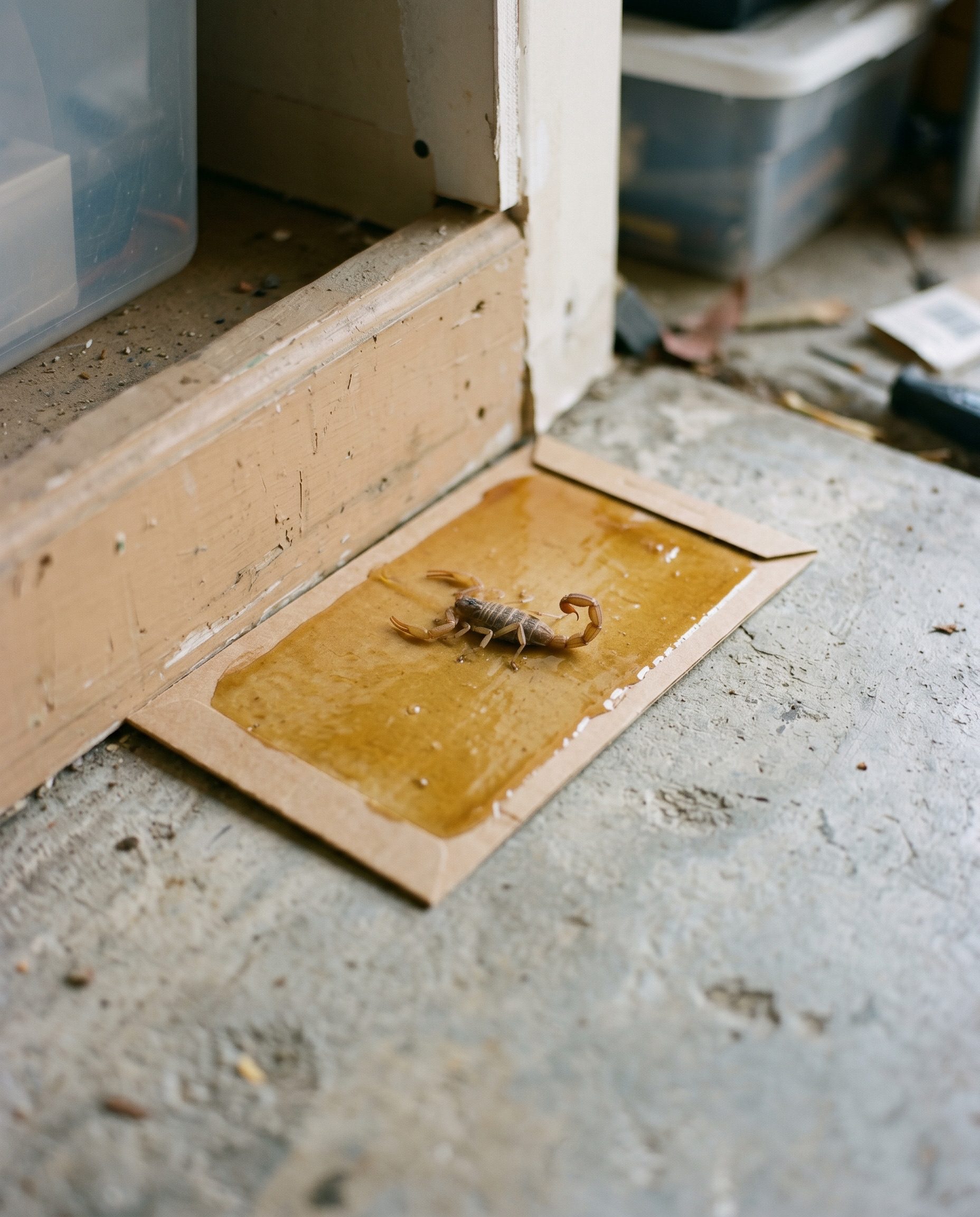
Placement is the whole game with glue traps, because scorpions travel along edges, not across open floors. Set the traps flat and flush against the wall, in corners, behind and beside furniture, inside closets, in the garage along the baseboard, and near plumbing penetrations and door thresholds where scorpions enter. Edges and corners catch far more than the middle of a room. Check them every few days, and replace any trap that is full, dusty, or has lost its tack.
Keep the safety rules simple. Never pick up a scorpion by hand, alive or stuck to a trap; use long tongs and slide the whole trap into a sealed bag for disposal. Wear closed-toe shoes when you walk outside at night in scorpion country, and shake out shoes and gloves left in the garage. For homes with curious pets or small kids, keep glue traps tucked tight behind furniture and out of reach, since the adhesive is a mess on fur and fingers. If you add a spot spray to the cracks, keep children and pets off treated areas until they are dry and follow the label exactly; a barrier product belongs in a supporting role, and our roundup of scorpion killer sprays and barriers covers that piece when it fits.
The picks
Cards come after the analysis on purpose, because the job decides which one you buy. These three cover the two tools that actually move the needle: a UV flashlight for night hunts and glue traps to catch and monitor what you miss.
InsectoGuide is reader-supported. As an Amazon Associate we earn from qualifying purchases at no extra cost to you.
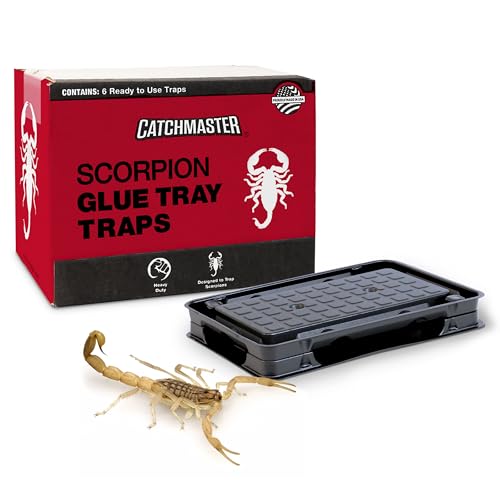
Adhesive trays sized for scorpions, set flat along walls and in closets.
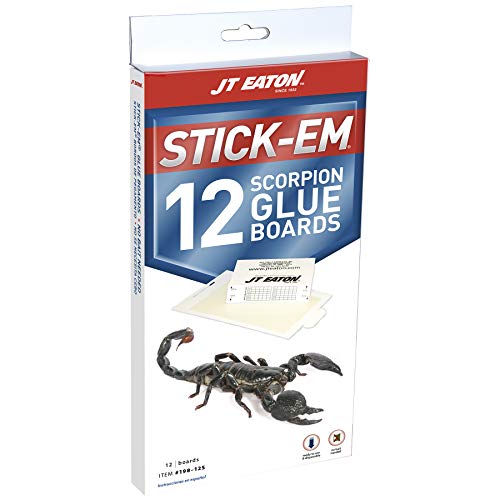
A 12-pack for cheap, whole-home coverage and monitoring.
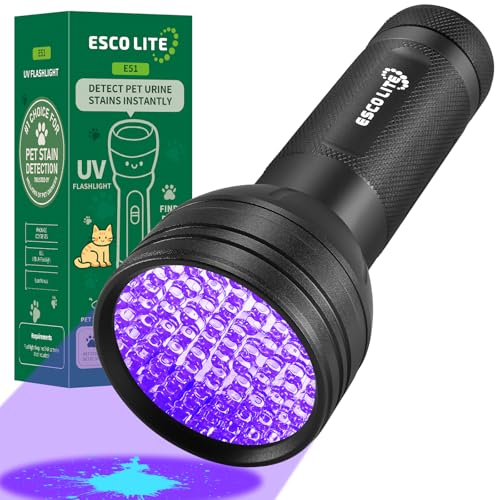
A 395nm light that makes scorpions glow for night hunts.
Common questions
Why do scorpions glow under UV light?
Their exoskeleton contains compounds that fluoresce, so they light up blue-green under ultraviolet. The UC IPM scorpion notes describe this fluorescence, which is exactly why a 395nm black-light flashlight is the most practical detection tool for a nocturnal pest you would otherwise never see.
Do glue traps actually control scorpions?
They capture and monitor rather than eliminate. Set along walls and in corners, they catch scorpions traveling at night and tell you where to seal next. Pair them with UV night hunts and gap-sealing, since the Texas A&M scorpion guidance stresses exclusion over any single device.
Is a scorpion sting dangerous?
Most US scorpion stings are mild and feel like a bee sting, with local pain and swelling. The Arizona bark scorpion is the exception and can be a medical emergency, especially in young children. Per MedlinePlus first-aid guidance, get emergency medical help right away for trouble breathing, throat or tongue swelling, muscle twitching, drooling, or a child who was stung; you can also contact your local poison control center, reachable through America’s Poison Centers, for advice.
Can I just spray a barrier and skip the rest?
No. Scorpions tolerate many pesticides and walk on their leg tips, so they pick up little residue and cross a treated band. Detection and capture do the real work; a spray is a supporting spot tool. Follow EPA safe pest control principles and the label if you use one.
When should I call a professional?
If you are in Arizona bark scorpion territory, have young children, or keep finding scorpions indoors despite sealing and hunting, bring in a licensed pest-control professional. They can treat harborage and structural gaps a homeowner cannot reach and advise on safe options for a home with kids or pets.
Final verdict
There is no spray that “solves” scorpions, and any list that names one as the hero is selling you the wrong tool. Start free by sealing door sweeps and gaps and clearing yard harborage, then put the two tools that actually work to use: a 395nm UV flashlight for night hunts and on-the-spot removal, and glue traps set flat along the walls to catch and monitor the ones you miss. Skip leaning on a barrier spray alone, since scorpions tolerate it and walk right over the band; keep any spray to cracks and entry points as a supporting move. Use long tongs, never your hand, wear closed shoes outdoors at night, and treat a recurring bark-scorpion problem as a job for a licensed pro.