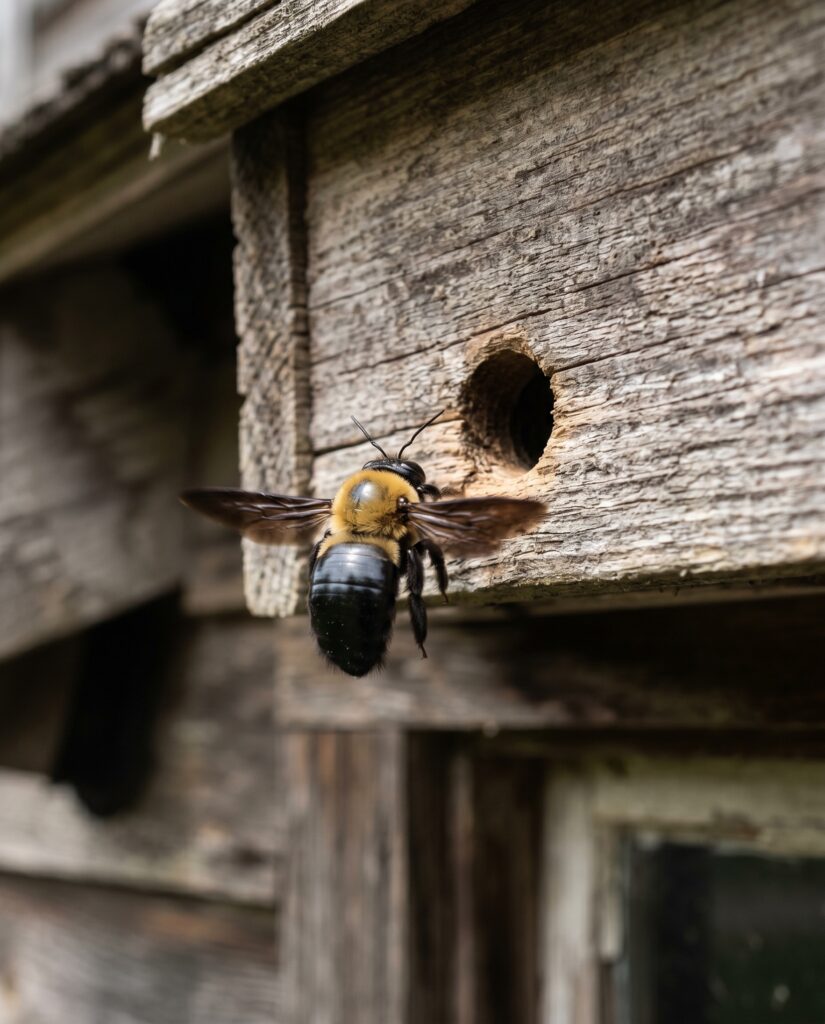
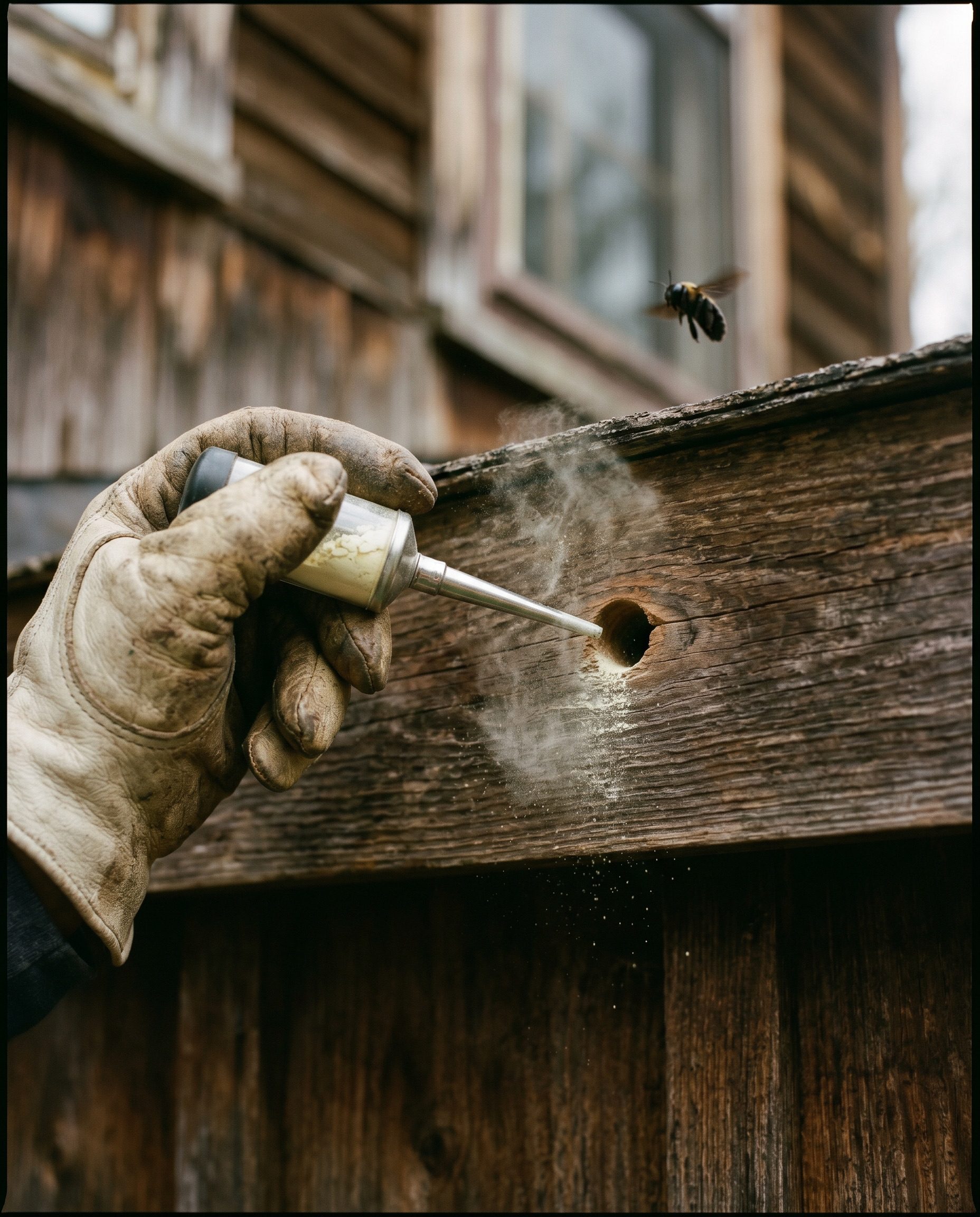
If carpenter bees are drilling into your eaves, deck rail, or fascia, the fix is a two-step job that most people get backwards. First, dust the active tunnel openings with an insecticidal dust so the returning female carries it back into the brood; wait a few days for that to work, and only then plug and seal the holes. Plug too early and you trap live bees that simply chew a fresh exit, and spraying the open air where they hover accomplishes nothing. Once the gallery is dead, protect the bare wood they targeted by painting or sealing it. Carpenter bees are valuable native pollinators, so treat only the galleries causing real structural damage and leave bees nesting away from the house alone.
Dust the active hole first, wait a few days so the female carries it to the brood, then plug and seal the wood. Plugging before treating just traps live bees that bore a new exit, and open-air spraying does nothing.
- Do first: Puff an insecticidal dust into each active tunnel at dusk and leave the hole open for a few days.
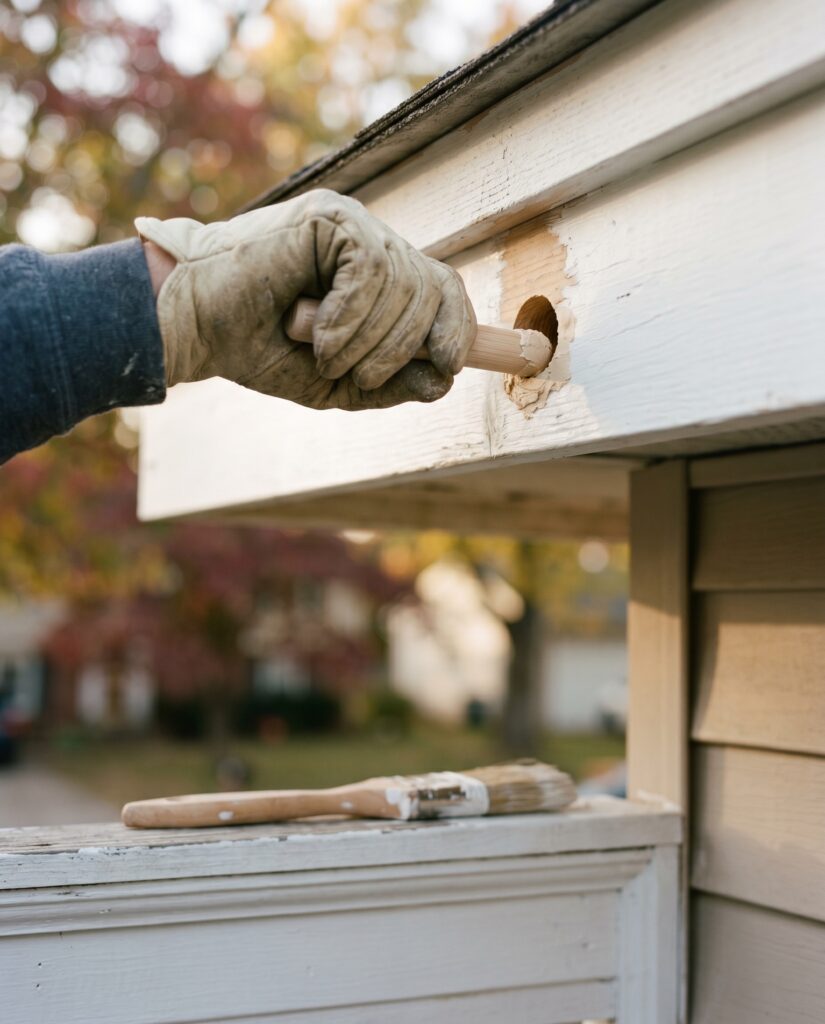
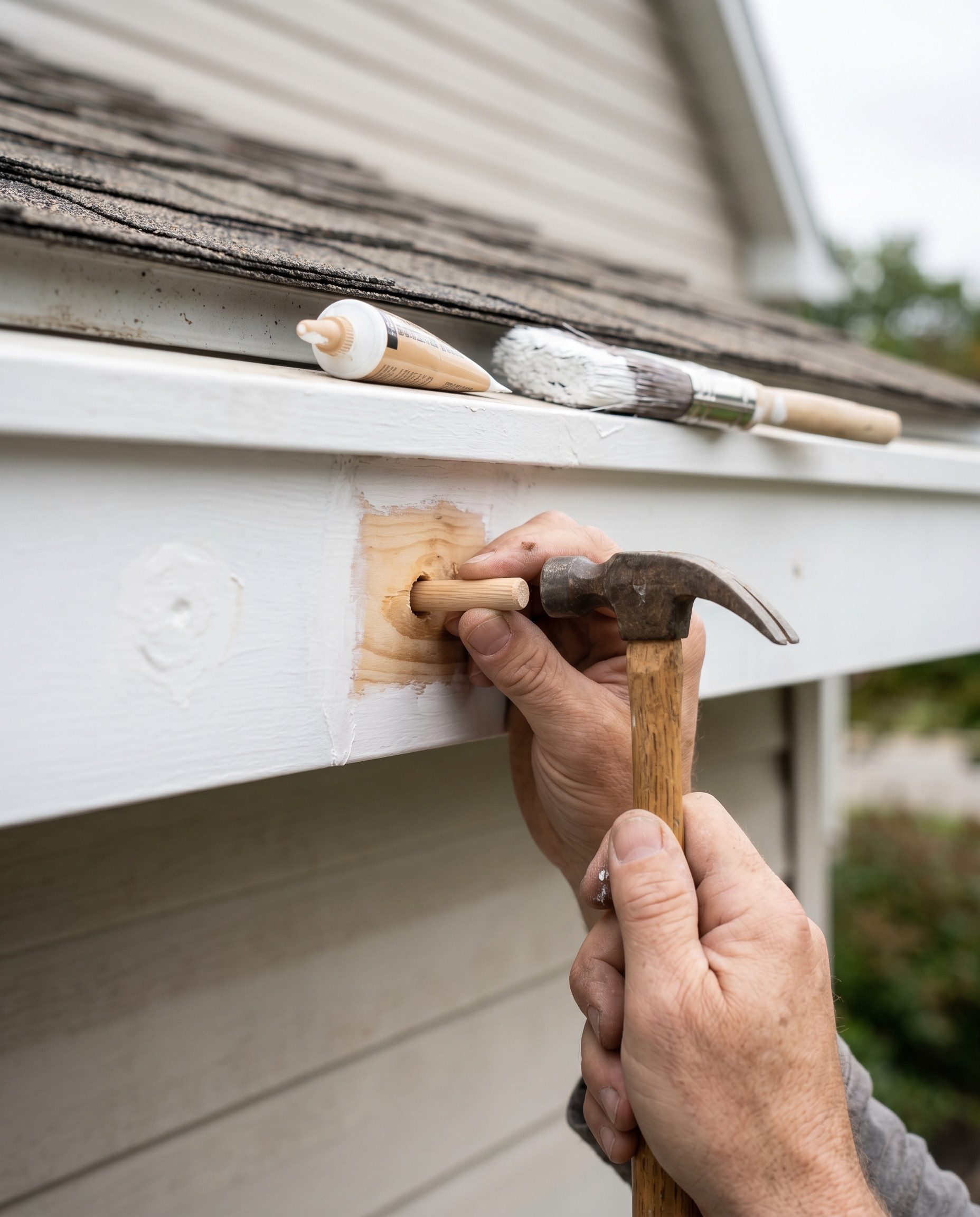
- Then seal: Plug the dead hole with a dowel and caulk, then prime and paint the bare wood so it is not reused.
- Skip: Spraying the air around hovering bees, and plugging a live tunnel before it is treated.
Why the order matters
The whole reason people fail with carpenter bees is sequence. The bee you see hovering and dive-bombing is almost always the male, and chasing him with a spray can is wasted effort because the problem is the female working inside the wood. She bores the tunnel, packs each cell with pollen, lays an egg, and seals it; the developing bees are deep in the gallery where surface spray never reaches. Dust changes that math because a returning female brushes through the powder at the entrance and tracks it back to the brood she is provisioning.
Plugging the hole before you treat is the classic mistake. A sealed tunnel still has live bees in it, and a carpenter bee will simply chew a fresh exit a few inches away, leaving you with two holes instead of one. So the order is fixed: dust, wait, then plug. According to UC IPM’s Pest Notes on carpenter bees, the reliable approach is to treat the active galleries and only seal them after the bees inside are dead.
Make sure it is carpenter bees
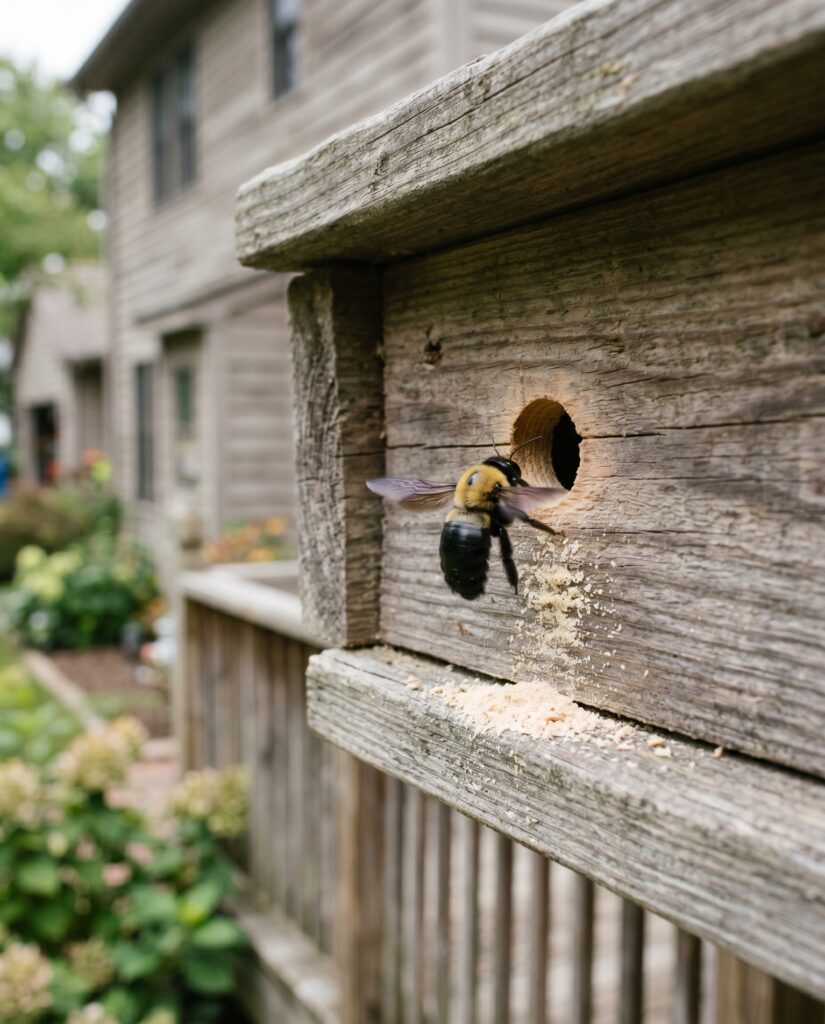
Before you treat anything, confirm what you have, because the look-alike does not need this treatment at all. A carpenter bee (genus Xylocopa) is the size of a bumblebee but has a shiny, hairless black abdomen, where a bumblebee’s rear is fuzzy and yellow. Iowa State’s guide to how to tell a carpenter bee from a bumblebee is the quickest way to be sure before you commit to a plan.
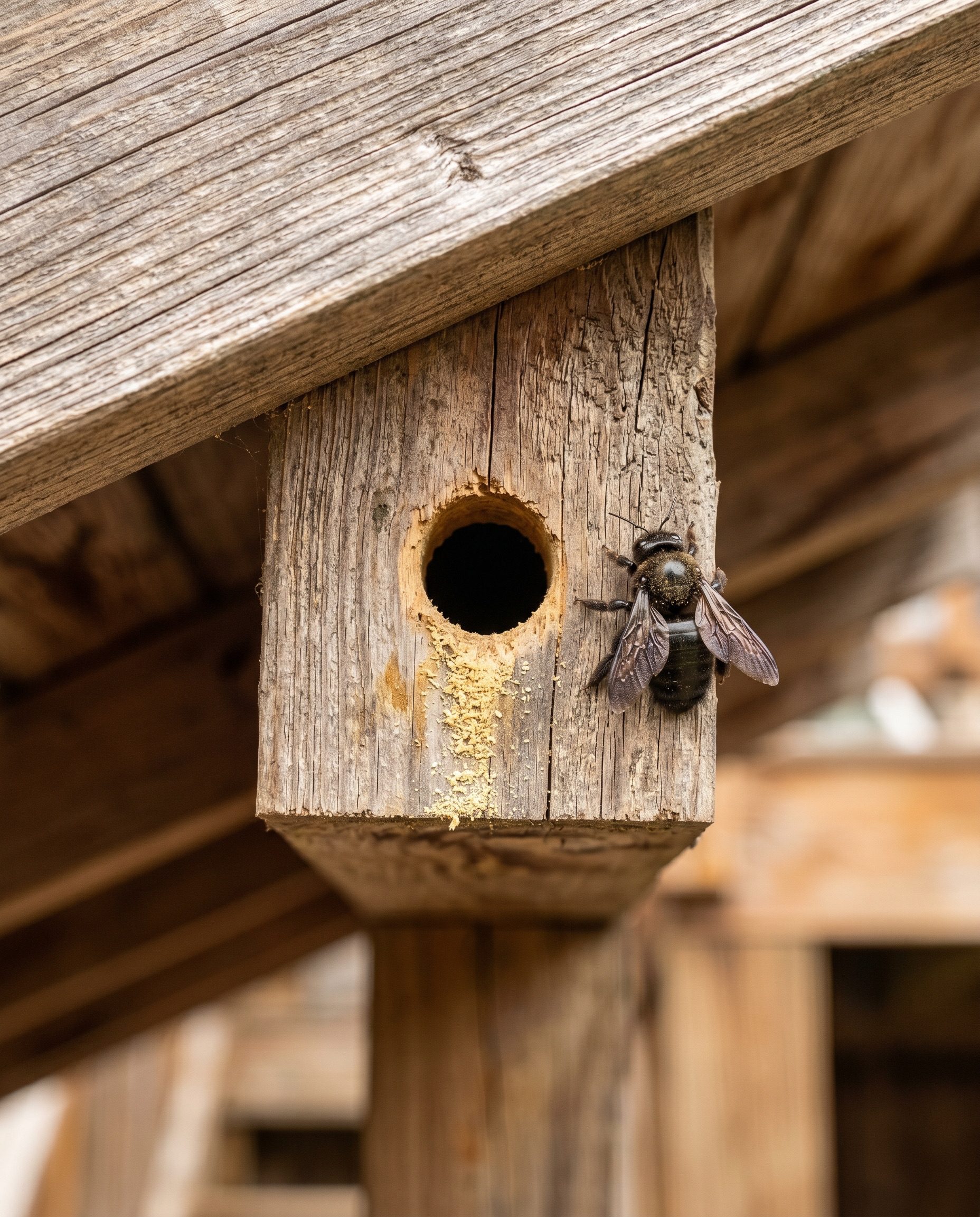
The tell on the structure is the hole itself: a clean, almost perfectly round half-inch entrance, usually on the underside of bare wood, often with a yellowish stain and coarse sawdust below it. Carpenter bees do not eat the wood; they excavate a tunnel to raise young in it. They strongly favor unpainted, weathered softwood like cedar, redwood, pine, cypress, and fir, which is exactly why eaves, deck rails, fascia, and fence posts get hit. If you want the full breakdown of what is happening inside the wood, our carpenter bee life cycle and damage guide walks through it.
How much damage is real
Here is the honest part most pages skip: a single fresh hole is not a structural crisis, and one season of one bee is cosmetic. The damage that matters is cumulative, and it comes from reuse. Carpenter bees and their offspring reuse and extend the same galleries year after year, so a tunnel that was four inches this year can branch into a foot of hollowed wood over several seasons, and a fascia board worked for years can genuinely weaken.
Woodpeckers make it worse. They hear or smell the larvae and tear the wood open to eat them, turning a tidy round hole into a ragged gash that lets in water and rot. That secondary damage is often the real reason a board needs replacing. So the trigger for treatment is not “I saw a bee,” it is “this gallery is in a structural board and it is being reused or chased by woodpeckers.” A bee drilling an old fence post at the back of the yard is doing no harm worth a chemical.
Dust the gallery, then seal it
This is the core procedure, in order. Treat at dusk when the bees are back inside and least active, and wear eye protection because you are working overhead.
First, puff a labeled insecticidal dust into each active tunnel using a hand duster with a long tip. A pump of dust a few inches up the entrance coats the surfaces the female crosses on her way in and out, which is what carries it to the brood. Do not plug the hole yet. Leave it open for several days so returning bees keep passing through the treated zone; the male carpenter bee has no stinger at all and the females are docile, so working near the holes at dusk is low risk, but keep your face clear of falling dust.
After a few days with no more activity at the hole, plug it. Tap in a wooden dowel with a dab of wood glue, or pack it with caulk or steel wool and caulk, so a survivor cannot reopen it and a new female cannot move into a ready-made tunnel. Then prime and paint or seal that bare wood, because finished wood is the single best deterrent there is. Our guide to repairing and sealing carpenter bee holes covers the filler-and-finish detail, and for product category logic on dusts versus the foam and aerosol options, see our carpenter bee sprays and dust comparison.
Whenever you use any registered pesticide, treat the label as the rule. Use only a dust labeled for carpenter bees and for the site you are treating, keep children and pets away from treated areas, and do not broadcast dust around open blooms or where pollinators are foraging. For an exposure question, contact a doctor or your local poison control center. Under federal law the label is the law, so do not improvise a stronger mix or a different application than the label allows.
Match the action to the spot
Not every carpenter bee calls for the same response, and the right move depends on where the gallery is.
| Where the gallery is | Best approach | Watch out for |
|---|---|---|
| Structural eave, fascia, deck rail | Dust the hole, wait, then plug and paint | Treat at dusk, seal only after bees are dead |
| Bare wood near blooms or a garden | Dust the hole only, avoid open flowers | Protect foraging pollinators from drift |
| Old fence post or snag away from the house | Leave it; let the pollinators nest | No structural risk, no treatment needed |
That bottom row is the one that separates responsible control from overkill. Carpenter bees are important native pollinators, so the goal is to stop damage to your structure, not to wipe them off the property. Broad outdoor spraying harms the bees you want and the other bees nearby and does nothing the targeted dust does not do better. If you have acres of cedar fence, repeated heavy galleries, or rot you cannot reach safely, that is the point to bring in a licensed pest control professional rather than escalate the chemistry yourself.
Keep them from coming back
Treatment without prevention just resets the clock for next spring. The durable fix is to take away what they want, which is bare softwood. Paint or seal every exposed surface they target, because a hard painted finish is far less attractive than raw or even stained wood; a clear sealer helps, but solid paint deters best.
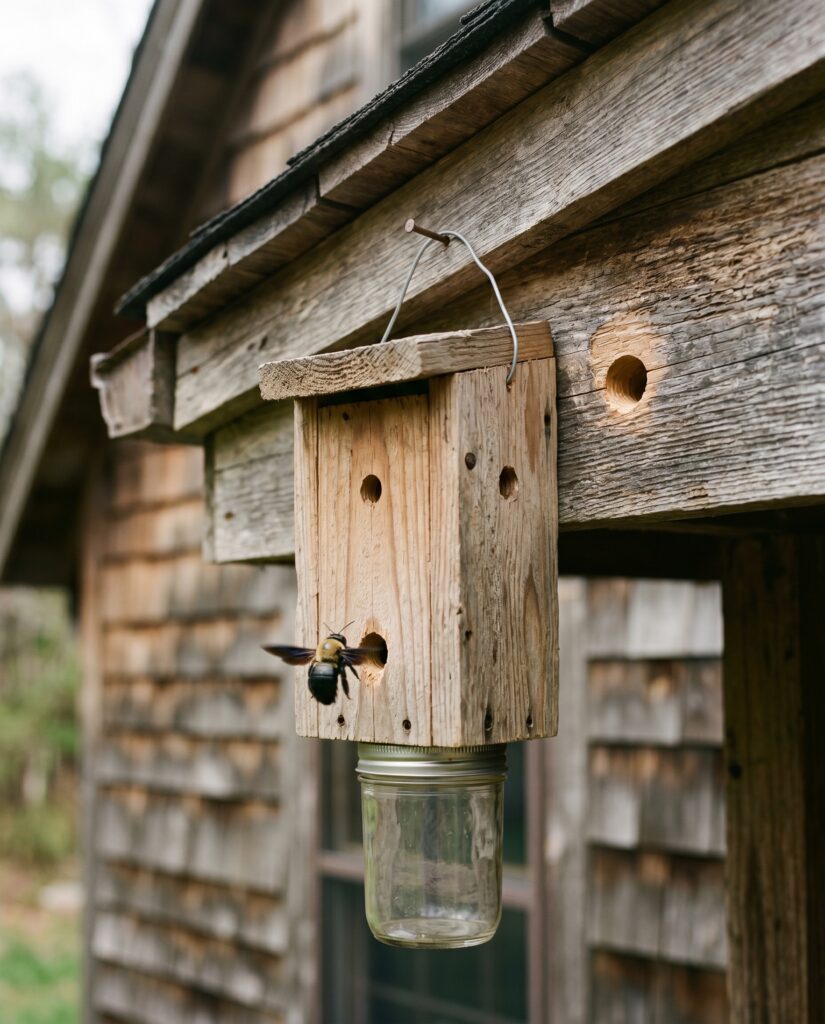
Timing matters too. Carpenter bees emerge and start new galleries in spring as the weather warms, so the work to do before that is finishing bare wood, plugging last year’s holes, and replacing any board too far gone to save. Where you cannot paint, like a rustic cedar pergola, consider swapping the most-attacked pieces for a harder or treated material, or offer them a bee block well away from the house so they nest where you do not mind. Our carpenter bee prevention guide lays out the seasonal checklist.
Common questions
What kills carpenter bees in the wood?
A labeled insecticidal dust puffed into the active tunnel is what reaches the bees inside, because the returning female tracks it back to the brood she is raising. Surface sprays and chasing the hovering males do almost nothing, since the problem is the female deep in the gallery. Dust, wait a few days, then seal the hole.
Why should I dust before plugging the hole?
Because plugging a live tunnel traps bees that simply chew a new exit a few inches away, giving you two holes. Dusting first lets the returning bees carry the treatment into the brood and die in place. Only after several days of no activity do you plug and paint the hole shut.
Are carpenter bees dangerous?
Not really. The males that buzz you and hover aggressively cannot sting at all, and the females can sting but are docile and almost never do unless handled. The real concern is cumulative structural damage from reused galleries and the woodpecker damage that follows, not the bees themselves.
Will painting the wood actually stop them?
Yes, more than anything else you can do. Carpenter bees strongly prefer bare, weathered softwood and largely avoid a hard painted finish, so priming and painting the eaves, rails, and fascia is the best long-term deterrent. Stain and clear sealer help less than solid paint.
Should I get rid of every carpenter bee on my property?
No. They are valuable native pollinators, so treat only the galleries doing real damage to structures you care about. A bee nesting in an old fence post or a dead snag away from the house is harmless and worth leaving alone for the pollination it provides.
Final verdict
Getting rid of carpenter bees is about order, not firepower. Dust the active tunnel first so the returning female carries the treatment to the brood, wait a few days, and only then plug the hole and paint or seal the bare wood so it is not reused. Plugging too early just traps live bees that bore a fresh exit, and spraying the air around the hovering males is wasted effort. Because these are native pollinators, treat only the galleries causing real structural damage and leave bees nesting away from the house alone.
Next steps:
– Confirm the damage pattern before you treat with our carpenter bee life cycle and damage guide.
– Lock in the repair with our guide to repairing and sealing carpenter bee holes.
– Stop next spring’s bees with the carpenter bee prevention guide.