If chiggers are turning your own yard into a minefield, the fix is not a tank sprayer and a whole-lawn drench. Chiggers concentrate in specific micro-spots, the tall grass, the weedy edges, the shady damp brush, and the transition zones where your lawn meets the woods, so yard control is really about changing those habitats, not blanket-spraying the property. Mow low, clear out weeds and leaf litter, and open up brush so sunlight dries the soil, and the population in the part of the yard you actually use drops fast. Treat only the worst edges if you must, and protect yourself with repellent and treated clothing before you head into rougher ground.
Chiggers cluster in tall grass, weedy edges, and shady brush, so you win by changing those habitats: mow low, clear weeds and leaf litter, and cut back brush to dry the soil, then spot-treat only the worst edges and protect yourself with repellent and treated clothing.
- Free first: Mow low, rake out leaf litter, pull weeds, and trim brush at the wood line so sun and air dry the soil chiggers need.
- If hot spots remain: Spot-treat only the worst edges with a labeled yard product; chiggers are patchy, so a whole-lawn drench is wasted.
- Skip: Nail polish and “suffocation” tricks on bites; the lingering itch is a reaction, not a live bug to smother.
What chiggers really are
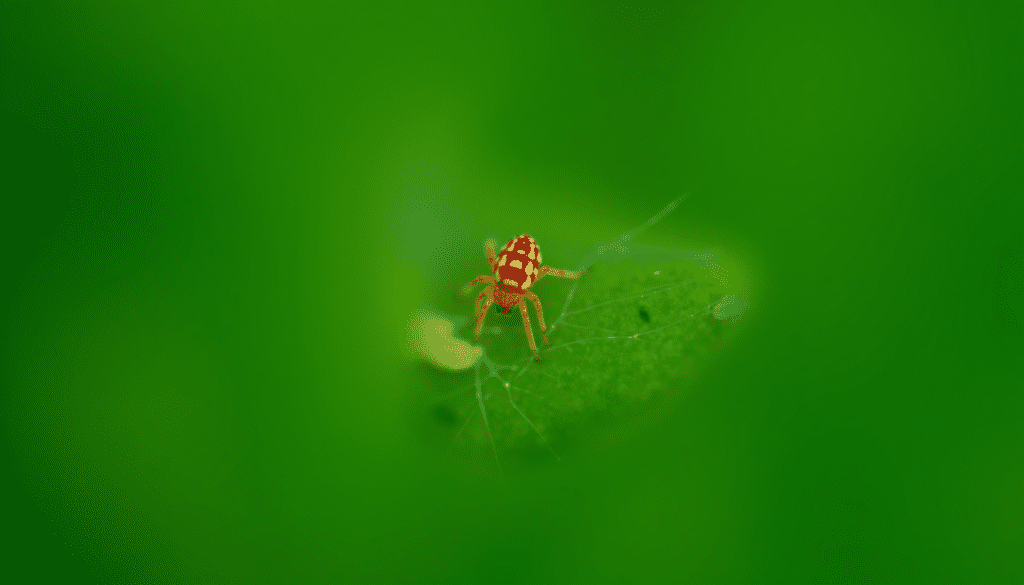
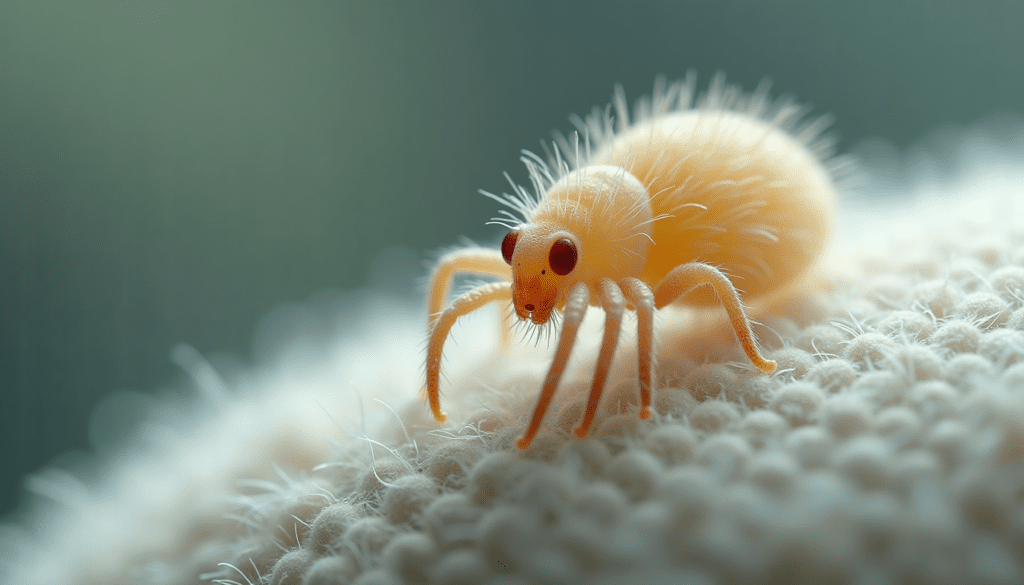
Before you treat anything, it helps to know what you are dealing with, because nearly everything people believe about chiggers is wrong. Chiggers are the larval stage of harvest mites, barely visible specks that wait on low plants and grass tips and grab onto whatever brushes past. The University of Florida describes them as larval harvest mites that climb up from low vegetation, which is exactly why they end up at your ankles, your waistband, and anywhere clothing fits snugly. They are not insects and they are not tiny ticks.
Here is the part that changes how you handle a bite. Chiggers do not burrow into you, they do not lay eggs in your skin, and they do not feed for days. A chigger attaches, feeds through a tiny tube called a stylostome for a few hours, then drops off. The Missouri Department of Conservation is blunt about the myth that chiggers burrow into your skin, and that single fact retires the nail-polish trick: you cannot suffocate a bug that is already gone. The itch that lasts for days is an allergic reaction to that feeding tube, not a live animal you can kill. Wash with soap and water soon after you have been in chigger country, and if you want the full life cycle, our guide to what chiggers are and where they live lays it out.
Why your yard has hot spots
Chiggers are not spread evenly across your grass, and that is the most useful thing to understand about controlling them. They need humidity at the soil surface, so they gather where the ground stays damp and shaded: tall grass, weed patches, leaf litter, the base of shrubs, and that ragged strip where a mowed lawn gives way to brush or woods. Iowa State Extension explains where chiggers actually live and why the itch lingers, and it maps onto your yard precisely, the open, sunny, short-cut middle of a lawn is usually nearly chigger-free while the shady edges are crawling.
That patchiness is your advantage. You do not have a yard problem, you have an edge problem, and edges are small and fixable. Because chiggers cannot survive long in hot, dry, sunlit, well-clipped turf, the same conditions that make a lawn look cared for also make it inhospitable. The goal is not to sterilize the whole property, it is to shrink the damp shady refuges down to nothing in the zones where your family walks, plays, and gardens.

Mow, clear, and open up first
This is the layer that does the heavy lifting, and it costs nothing but a Saturday. Start by mowing low and mowing often, especially along walkways, the play area, and the lawn-to-woods boundary, because short turf dries out the soil surface chiggers depend on. Then rake and remove leaf litter and grass clippings from the shady spots, since that damp mat is prime habitat. Sunlight and airflow are your real pesticide here.
Next, work the transition zones. Pull or cut the tall weeds at fence lines, thin the lower branches of dense shrubs, and cut back the brush where the lawn meets rougher ground so light reaches the soil and dries it. Keep a mowed buffer strip a few feet wide between your maintained lawn and any unmaintained brush or woodland, which gives chiggers nowhere to stage their climb onto you. If you have a damp, shaded corner that never dries out, that is your number-one suspect, fix the drainage or open the canopy and the chiggers leave on their own. Most yards that do only this never need to spray at all.
One quiet bonus of going light on chemicals: you protect the predators already on your side. Mowing and clearing does not harm the ground beetles, ants, and predatory mites that prey on harvest-mite eggs and larvae, whereas a broadcast insecticide wipes them out along with everything else. Working with the habitat keeps that free pest control intact.
Treating only the worst edges
Sometimes habitat work is not enough, usually in a humid Southern summer or a yard backed by woods, and a target or two still itches. The honest move is to spot-treat the worst edges, not the lawn. Here is how to match the response to the spot.
| Where it itches | Best approach | Watch out for |
|---|---|---|
| Open sunny lawn | Mow low, no spray needed | Drenching turf that has few chiggers |
| Shady weedy edge or wood line | Clear brush, then spot-treat only that band | Drift onto blooms; spray at dusk |
| Play area or where pets and kids roam | Habitat work first; choose a labeled product | Keep kids and pets off until fully dry |
If you do reach for a product, the label is the law, so read it and use only a product labeled for chiggers and for that site, and never improvise a stronger mix or a different spot than the label allows. Because chiggers cluster, you spot-treat the identified hot edge rather than the whole yard, which uses less product and spares the beneficials in the rest of the garden. Avoid spraying open blooms, treat at dusk when pollinators have left, and keep the spray off flowering plants to protect bees. Keep children and pets off any treated area until it has fully dried, never apply near a pond or where it can wash into water, and for any exposure question, contact a doctor or your local poison control center. A broad whole-lawn drench is the thing to skip, it is mostly wasted on grass that had few chiggers to begin with.
Protecting yourself when you go in
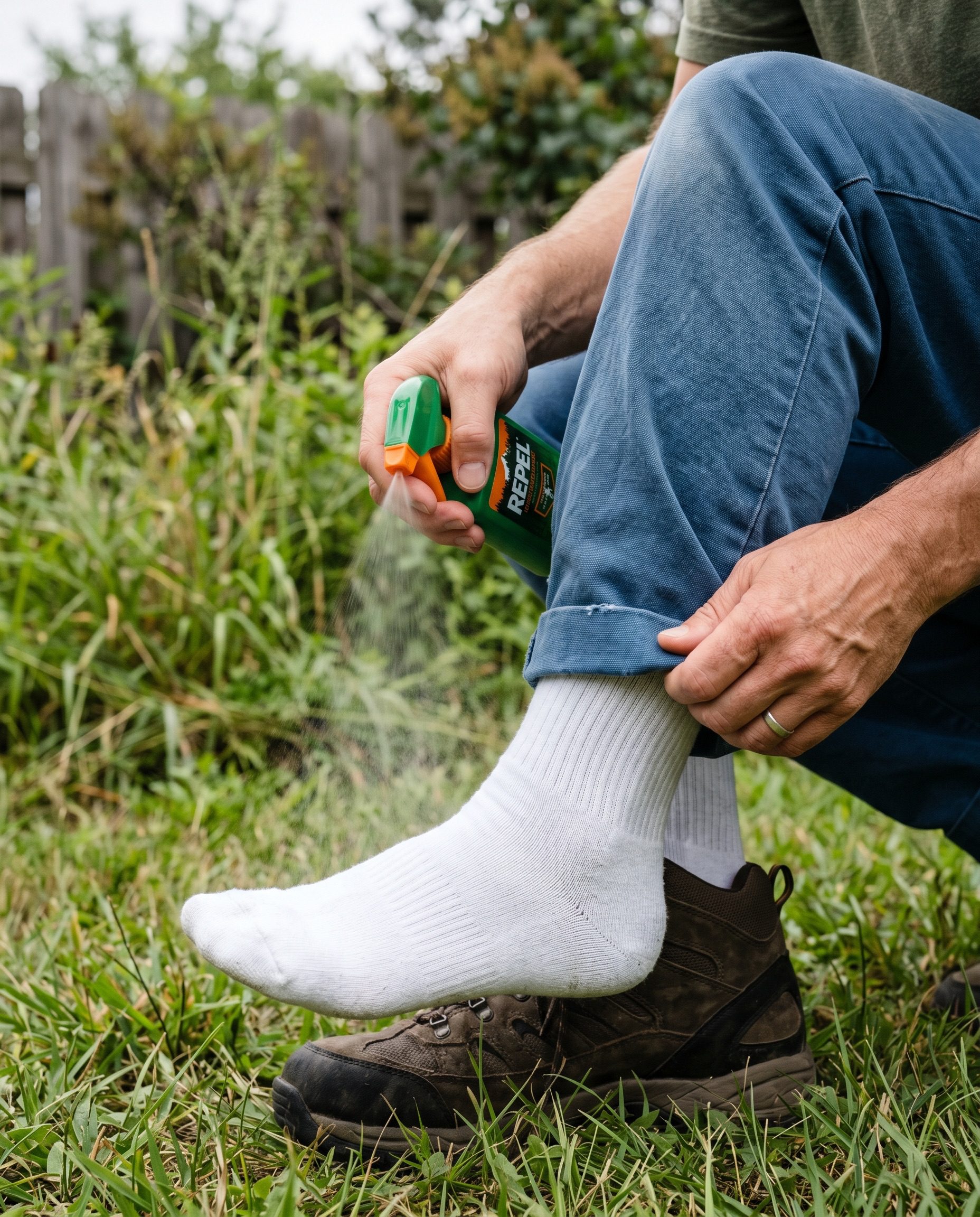
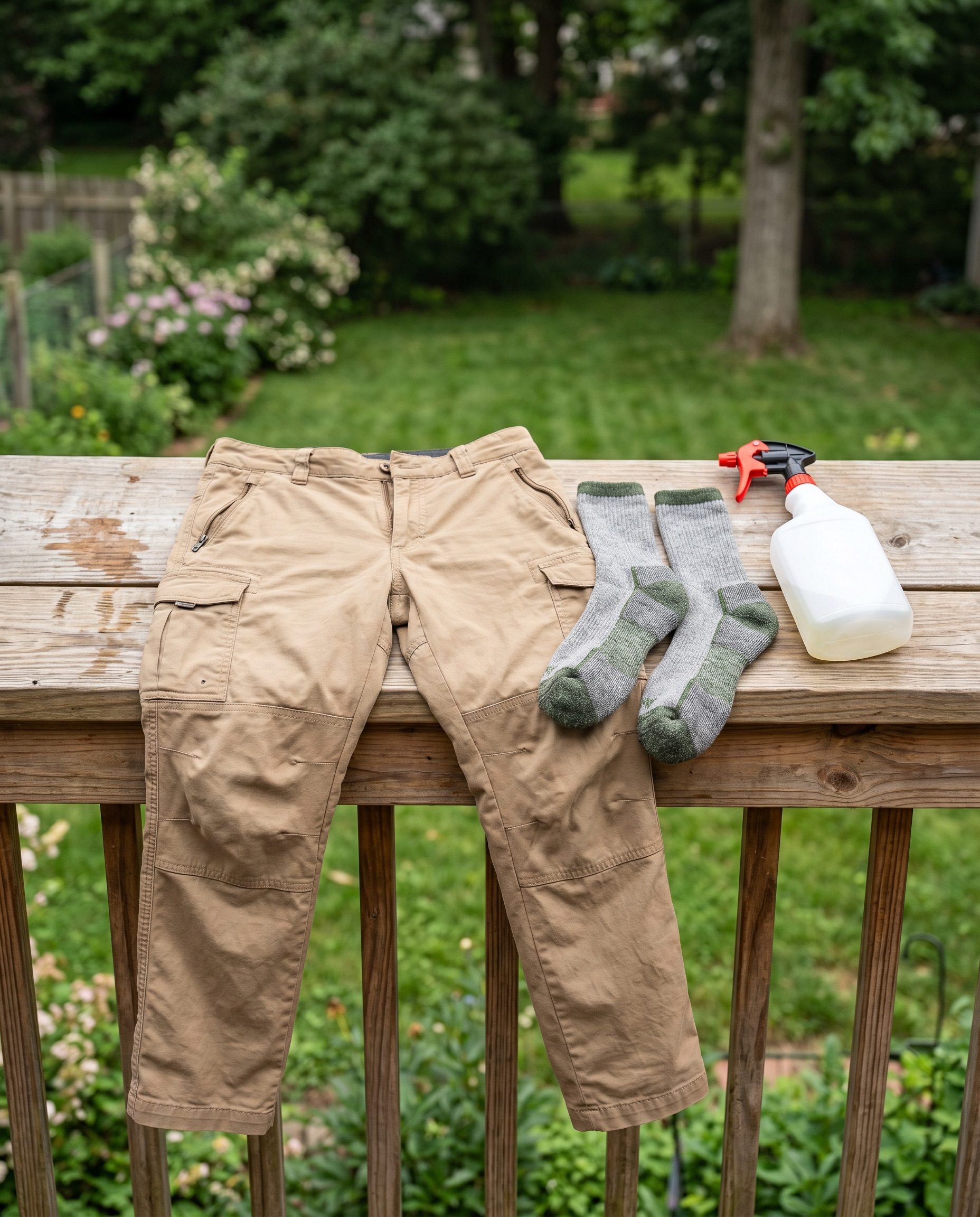
Habitat work shrinks the yard’s chigger zones, but rough ground, trailheads, and tall-grass field edges will always carry some, so the durable win is protecting yourself before you go in. The most reliable defense is two-part. On skin, use an EPA-registered repellent with picaridin, DEET, or oil of lemon eucalyptus and follow the product label, paying special attention to your ankles, lower legs, and waistband where chiggers climb to. On clothing, treat your socks, cuffs, and waistband with permethrin, a clothing and gear treatment only.
That distinction matters, and the CDC is clear that permethrin belongs on clothing and gear, never on skin. Treat the clothing, let it dry fully before you put it on, and keep treated items away from cats while still wet, since wet permethrin is toxic to them. Tuck your pants into your socks so there is no open gap to climb through, and when you come back inside, shower with soap and water and toss the clothes in a hot wash. For a deeper look at what to carry, our roundup of the best chigger repellents compares the options.
Common questions
What instantly kills chiggers on me?
Nothing needs to, because by the time you itch the chigger has usually already dropped off. A thorough shower with soap and water soon after exposure washes away any that are still attached, and that is the whole job. The lingering itch is your body reacting to the feeding tube, not a bug you have to kill, so skip the harsh home remedies and treat the itch instead.
Does nail polish smother a chigger in my skin?
No, and this is the most stubborn chigger myth there is. Chiggers never burrow in and they are long gone before the worst itching starts, so there is nothing under the polish to suffocate. All it does is irritate the skin. For relief, our notes on how to treat chigger bites cover what actually helps.
Will mowing alone get rid of chiggers?
Often, yes, in the part of the yard you use. Frequent low mowing plus clearing leaf litter and weeds dries out the damp, shady soil chiggers need, and that usually crashes the population in open lawn without any spray. The shady wood-line edges are where you may still need to clear brush or spot-treat.
Are chiggers dangerous?
In the United States, chiggers are an itchy nuisance rather than a health threat, since the species here are not known to spread disease to people. The main risk is scratching a bite open and getting a secondary skin infection, so keep bites clean and try not to scratch. If a bite looks infected or the reaction seems severe, see a clinician.
Why does only part of my yard have them?
Because chiggers need humid, shaded ground, they pool in low, damp, weedy, brushy spots and avoid hot, dry, sunny turf. That is why your open lawn can be fine while the wood-line edge or a shaded corner is miserable, and it is exactly why targeting those spots beats spraying everything.
Final verdict
Getting chiggers out of your yard is a habitat job, not a spraying job. Mow low and often, rake out leaf litter, pull the weeds, and open up the shady brush at the wood line so sunlight and air dry the damp soil chiggers cannot live without, and the population crashes in the part of the yard you actually use. Spot-treat only the worst edges if a hot spot survives, because chiggers are patchy and a whole-lawn drench is wasted money that also kills the beneficial bugs working for you. Protect yourself with an EPA-registered skin repellent plus permethrin-treated socks and cuffs whenever you head into rougher ground, and remember the lingering itch is a reaction, not a buried bug, so wash up instead of reaching for the nail polish.
Next steps:
– Understand the pest before you treat with our guide to what chiggers are and where they live.
– Pack the right protection from our best chigger repellents roundup.
– Already bitten? See how to treat chigger bites for relief that actually works.